
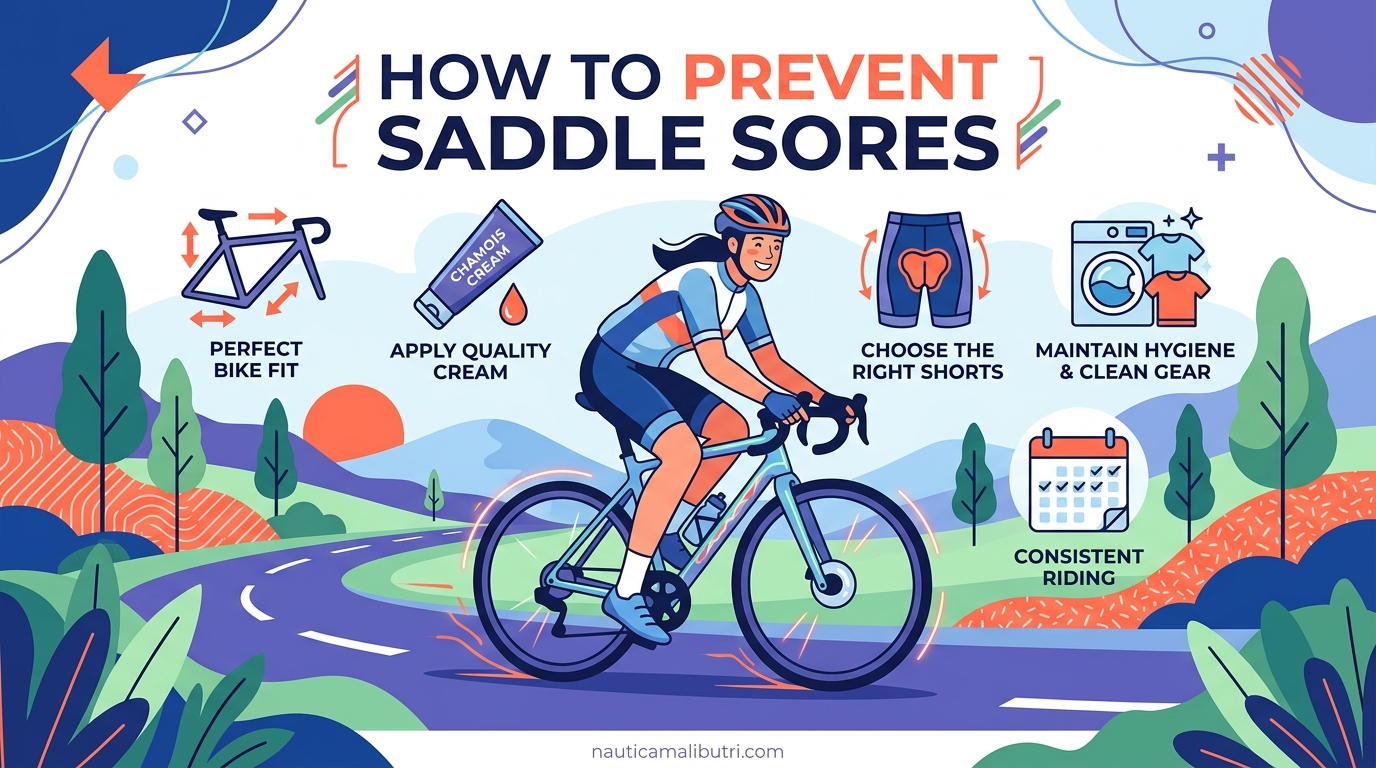
After finishing my first century ride, I spent the next week wincing every time I sat down. The saddle sores had won that round. Over the next three years and thousands of miles, I tested every prevention method I could find. Some worked. Many failed. This guide contains everything that actually kept me pain-free on the bike.
Learning how to prevent saddle sores matters for every cyclist. Whether you are training for your first triathlon, commuting to work, or logging indoor trainer hours, the wrong approach can turn cycling from joy into misery. The good news? Saddle sores are almost entirely preventable with the right combination of equipment, hygiene, and technique.
In this guide, you will learn exactly what causes saddle sores, how to prevent them through proven methods, and what to do if they develop despite your best efforts. No fluff. Just practical advice that works.
Table of Contents
What Are Saddle Sores
Saddle sores are painful skin irritations and infections that develop in the areas where your body contacts the bicycle saddle. They typically appear on the sit bones (ischial tuberosities), inner thighs, perineum, or groin region. These are not simple rashes or temporary discomfort. True saddle sores involve damaged skin that creates openings for bacterial infection.
Understanding the different types helps you recognize and treat them properly. Folliculitis appears as small red bumps or whiteheads around hair follicles. Furuncles, commonly called boils, are larger painful lumps that develop when infected hair follicles deepen. Abscesses represent the most serious form, requiring medical drainage. Chafing creates raw, irritated skin without the deeper infection but can lead to folliculitis if untreated.
These conditions develop because cycling creates the perfect storm for skin problems. Prolonged pressure compresses blood vessels and damages tissue. Friction repeatedly abrades the skin surface. Sweat creates a moist environment where bacteria multiply rapidly. Combined, these factors overwhelm your skin defenses.
What Causes Saddle Sores
Four primary factors create saddle sores, and addressing all four is essential for complete prevention. Each factor compounds the others, which explains why small changes in one area often fail if the others remain unaddressed.
Pressure
Your body weight pressing against a small saddle surface creates intense localized pressure. This pressure compresses blood vessels, reducing blood flow to skin tissue. Without adequate blood flow, skin cells die and create entry points for bacteria. The perineum, located between the sit bones, contains delicate structures including the pudendal nerve and blood vessels that are particularly vulnerable to compression damage.
Friction
Every pedal stroke creates slight movement between your skin and clothing or saddle. Over thousands of revolutions, this friction abrades the skin surface. Ill-fitting shorts, seams in the wrong places, and improper saddle position amplify friction dramatically. The result is chafing that breaks down skin barriers and prepares the ground for infection.
Moisture
Sweat is the enemy of healthy saddle contact skin. Moisture softens the outer skin layer, making it more susceptible to friction damage. Damp environments also promote bacterial growth. Cotton underwear traps moisture against the skin, which is why serious cyclists never wear underwear under cycling shorts. The chamois pad exists partly to manage moisture, but only if it works properly.
Bacteria
Your skin normally hosts bacteria that cause no problems. When pressure, friction, and moisture damage skin barriers, these bacteria enter hair follicles and sweat glands. Once inside, they multiply rapidly in the warm, moist environment, creating the infection we recognize as a saddle sore. Staphylococcus aureus is the most common culprit.
How to Prevent Saddle Sores
Preventing saddle sores requires a systematic approach addressing all four causes. Here are the proven methods that actually work, organized by category for easy reference.
Get Your Bike Fit Right
A proper bike fit is the foundation of saddle comfort. Small adjustments make enormous differences in pressure distribution and friction levels.
Saddle height matters most. When your saddle is too high, you rock side to side on each pedal stroke, creating excess friction. When too low, you place more weight on the saddle rather than supporting yourself through your legs. The correct height allows a slight bend in your knee at the bottom of the pedal stroke, approximately 25 to 30 degrees.
Saddle position fore and aft affects where you sit on the saddle. Position the saddle so that when your crank arms are horizontal, your forward knee cap is directly above the pedal spindle. This neutral position distributes pressure optimally across your sit bones rather than onto soft tissue.
Reach and handlebar height influence how much weight rests on the saddle. Lower, more aggressive positions shift weight forward onto the perineum. Raising handlebars or shortening reach moves weight back onto the sit bones, where your body handles pressure better. Consider a professional bike fit if you experience persistent discomfort despite basic adjustments.
Choose the Right Saddle
Your saddle must match your anatomy. Width is the critical factor. Saddles come in various widths to match different sit bone spacings. A saddle too narrow leaves your sit bones unsupported, pressing soft tissue into the saddle. A saddle too wide creates friction on your inner thighs.
Cutout saddles feature a channel or hole through the center that relieves perineal pressure. These work well for many riders, particularly those in aggressive positions or who experience numbness. However, cutouts are not universally better. Some riders find they create new pressure points on the edges of the cutout.
Saddle shape varies between flat and curved profiles. Flat saddles suit riders who maintain a stable position. Curved saddles help riders who move around more. Try several shapes before committing. Many bike shops offer saddle trial programs.
Replace worn saddles promptly. Compressed padding no longer distributes pressure properly. Most quality saddles last two to five years depending on use.
Invest in Quality Cycling Shorts
Cycling shorts exist specifically to prevent saddle sores. The chamois pad, originally made from leather but now typically synthetic foam, provides cushioning, moisture management, and friction reduction. Cheap shorts fail at all three tasks.
Bib shorts outperform waist shorts for most riders. The shoulder straps hold the chamois in place without the waistband pressure that can cause discomfort. Bibs also eliminate gaps between shorts and jersey that expose skin to sun and wind.
Chamois pad quality varies enormously. Multi-density foam provides support where needed while remaining flexible elsewhere. Seam placement matters. Flatlock or welded seams reduce irritation points. The pad should be thick enough to cushion but not so thick it creates bulk.
Never wear underwear beneath cycling shorts. Underwear seams create friction lines. Cotton traps moisture. The shorts are designed to be worn directly against skin.
Buy shorts that fit snugly without constriction. Loose shorts allow the chamois to move independently of your body, creating friction. Overly tight shorts compress blood vessels and reduce circulation.
Use Chamois Cream or Barrier Cream
Chamois cream creates a protective layer between skin and chamois pad. It reduces friction, moisturizes skin to prevent cracking, and many formulas contain antibacterial ingredients.
Apply cream to both your skin and the chamois pad before every ride. Use approximately a tablespoon-sized amount. Target the sit bone contact points, inner thighs, and any areas prone to chafing. Some riders apply additional cream to the chamois pad itself.
Water-based creams wash out of shorts easily and feel lighter. They suit shorter rides and warmer conditions. Oil-based or petroleum-based creams last longer and provide better protection for long rides or wet conditions, but can be harder to wash out.
Vaseline works as a basic barrier cream in emergencies, though dedicated chamois creams offer better performance. Vaseline is petroleum-based and creates a waterproof seal, but lacks the skin-conditioning ingredients found in quality cycling-specific products.
Medical-grade emollients like Doublebase gel offer another option. Originally developed for eczema, these products excel at maintaining skin barrier function. Some cyclists use them both before rides as a base layer and after rides for recovery.
If you experience sensitivity to certain ingredients, try different formulations. Tea tree oil provides natural antibacterial properties but irritates some skin types.
Practice Proper Hygiene
Hygiene separates cyclists who get saddle sores from those who do not. This is the most important category and the one many riders neglect.
Before riding: Start with clean, dry skin. Shower before morning rides when possible. If you cannot shower, at least clean the saddle contact area with a wet wipe. Apply chamois cream to clean skin. Never reuse shorts without washing. Even a short ride leaves bacteria-laden sweat in the chamois.
During long rides: For rides over three hours, consider a mid-ride cleaning. Multi-day tourers and century riders often carry small packs of unscented baby wipes. A quick wipe and fresh application of cream at the halfway point prevents bacterial buildup. Change into fresh shorts if possible.
After riding: Remove shorts immediately. Do not sit around in sweaty shorts drinking coffee. The warm, moist environment continues breeding bacteria. Shower as soon as possible using antibacterial soap. Many cyclists swear by tea tree oil soap for its natural antibacterial properties.
Dry thoroughly after showering. Pat rather than rub irritated areas. Apply a moisturizer or emollient to restore skin barrier function. Doublebase gel or similar medical-grade emollients work excellently here according to dermatologist recommendations.
Wash shorts properly after every ride. Turn them inside out. Use the delicate cycle with cold or warm water. Avoid fabric softeners, which coat fibers and reduce moisture-wicking. Hang dry rather than using a dryer, which degrades elastic and chamois foam.
Vary Your Position on the Bike
Static pressure causes damage. Moving around distributes pressure and allows blood flow to recover in compressed areas.
Stand on climbs. This removes all saddle pressure and restores circulation. Even short 30-second standing efforts help significantly on long rides.
Shift position regularly while seated. Slide forward or back slightly on the saddle every few minutes. Change hand positions on the handlebars, which subtly alters your pelvic angle and pressure distribution.
Indoor trainer riders face particular challenges. Without the natural position shifts that occur on the road, pressure remains constant. Set a timer to stand every 10 minutes during trainer sessions. Use a fan to reduce sweat buildup. Consider a more padded saddle specifically for indoor use, as you do not need to carry the weight penalty outdoors.
Build Up Mileage Gradually
Your skin adapts to cycling pressure over time, but adaptation requires progressive loading. Sudden mileage increases overwhelm skin defenses.
Increase weekly volume by no more than 10 percent. If you rode three hours last week, ride three hours and twenty minutes this week. This applies particularly to the longest ride of the week, which stresses skin most.
New cyclists often develop saddle sores in their first month as skin toughens. Use higher protection during this period. More chamois cream, shorter rides, and extra attention to hygiene help you through the adaptation phase.
Take rest days. Skin repairs itself during rest, not during rides. Consecutive long rides without recovery increase saddle sore risk dramatically.
Post-Ride Skin Care Routine
What you do immediately after riding determines whether minor irritation develops into full saddle sores. Establish a consistent routine.
Step one is immediate shorts removal. Do not delay. Every minute in sweaty shorts extends bacterial exposure time.
Step two is showering within 30 minutes. Use warm water and antibacterial soap. Focus on the saddle contact area without aggressive scrubbing. Some cyclists use a soft washcloth. Others prefer hands-only washing to minimize friction.
Step three is thorough drying. Moisture left on skin promotes bacterial growth. Pat dry with a clean towel.
Step four is skin restoration. Apply a medical-grade emollient like Doublebase gel to the entire saddle contact area. These products restore the skin barrier function that cycling stress damages. They also prevent the dryness that leads to cracking and infection entry points.
For riders prone to folliculitis, some apply a salicylic acid lotion after showering. This exfoliates gently and keeps hair follicles clear. Test on a small area first, as salicylic acid can irritate sensitive skin.
Inspect your skin regularly. Early intervention prevents minor irritation from becoming a ride-stopping infection. Redness, tenderness, or small bumps signal the need for extra care and possibly rest days.
How to Treat Saddle Sores If They Develop
Despite perfect prevention, saddle sores occasionally happen. Responding quickly prevents minor issues from becoming major problems.
Stop riding immediately. Continuing to ride on a developing saddle sore guarantees it will worsen. Take one to three days off the bike at the first sign of trouble.
Keep the area clean and dry. Wash twice daily with antibacterial soap. Apply a warm compress to encourage drainage if a boil is forming. Do not squeeze or pop lesions. This spreads bacteria and worsens infection.
Apply a topical antibiotic ointment to minor folliculitis. Bacitracin or neomycin work for superficial infections. For deeper or more painful sores, see a doctor. You may need prescription antibiotics or even surgical drainage for abscesses.
Signs you need medical attention include fever, spreading redness, significant pain, or any sore that does not improve after three days of home treatment. Untreated saddle sores can develop into serious infections requiring hospitalization.
Return to riding only after complete healing. The skin should look and feel normal. Start with short rides and extra chamois cream. Build back gradually to avoid recurrence.
Frequently Asked Questions
How do pro cyclists not get saddle sores?
Professional cyclists prevent saddle sores through obsessive hygiene, professional bike fitting, and high-quality equipment. They shower immediately after every ride, use fresh shorts daily, and apply chamois cream liberally. Many work with professional fitters to optimize saddle position. They also build up mileage gradually during training camps rather than jumping into high volume immediately.
How to get rid of saddle sores quickly?
Stop riding immediately at the first sign of a saddle sore. Keep the area clean with antibacterial soap twice daily. Apply warm compresses to encourage natural drainage. Use topical antibiotic ointment on superficial infections. Most minor saddle sores improve within three to five days with proper rest and hygiene. Deeper infections require medical attention and may take one to two weeks with prescription antibiotics.
When do saddle sores go away?
Minor folliculitis and chafing typically resolve within three to five days with proper rest and hygiene. Furuncles or boils may take one to two weeks to fully heal. Abscesses requiring medical drainage need two to three weeks for complete recovery. Returning to cycling before full healing increases the risk of recurrence and more serious infection.
Is vaseline good for preventing saddle sores?
Vaseline works as a basic barrier cream that reduces friction between skin and chamois. It is petroleum-based and creates a waterproof seal. However, dedicated chamois creams offer better performance with skin-conditioning ingredients and antibacterial properties. Vaseline is acceptable in emergencies but should not replace quality cycling-specific products for regular use.
Can I still ride with a saddle sore?
Riding with a saddle sore is not recommended. Continued pressure and friction worsen the condition and delay healing. Minor irritation might tolerate easy spinning, but any painful bump, boil, or open skin requires complete rest. Riding through saddle sores can turn minor folliculitis into deep abscesses requiring medical intervention.
Do I need to shave to prevent saddle sores?
Shaving is not required and may actually increase saddle sore risk. Shaving creates micro-cuts that serve as bacterial entry points. Ingrown hairs from shaving cause folliculitis. Many cyclists experience fewer saddle sores when they stop shaving. If you prefer hair removal, trimming rather than full shaving reduces risk. Some riders use depilatory creams, though these can irritate sensitive skin.
Conclusion
Preventing saddle sores requires attention to multiple factors simultaneously. A perfect bike fit helps, but without proper hygiene, saddle sores still develop. Premium shorts help, but without chamois cream, friction wins. Success comes from combining all the methods in this guide.
Start with the fundamentals. Check your bike fit. Invest in quality shorts. Never skip the post-ride shower. Apply chamois cream before every ride. Build mileage gradually. These habits, maintained consistently, will keep you comfortable on the bike for years to come.
If saddle sores do develop, respond immediately with rest and proper care. Do not try to ride through them. Your skin needs recovery time just like your muscles do.
Saddle sores threatened to end my cycling journey in that first year. They do not have to end yours. With the prevention strategies outlined here, you can focus on the joy of cycling rather than the pain of healing.