
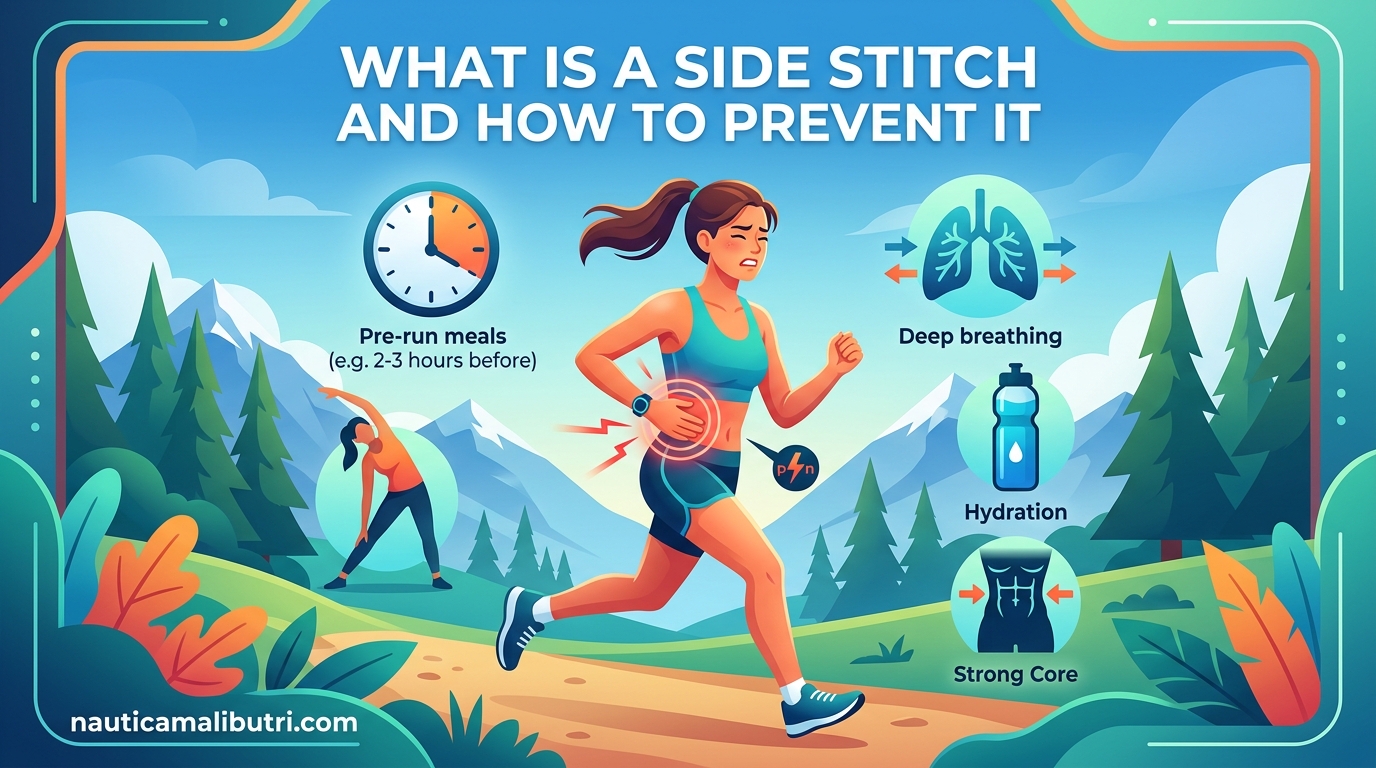
Nothing ruins a perfect run quite like that sudden, stabbing pain under your ribs. I remember my first 10K race vividly – not because of the finish line, but because a side stitch hit me at mile three and made every breath feel like a battle. If you have experienced this, you are not alone. Side stitches affect up to 70% of runners, from beginners to seasoned triathletes.
So what is a side stitch exactly? Medically known as exercise-related transient abdominal pain (ETAP), a side stitch is that sharp, cramping sensation that typically strikes just below the ribs on the right side of your body. Understanding what causes these pains and how to prevent them can transform your training and race day performance. In this guide, I will break down the science behind side stitches and share proven prevention strategies that have helped thousands of athletes run stitch-free.
Table of Contents
What Is a Side Stitch?
A side stitch, clinically called exercise-related transient abdominal pain or ETAP, is a sudden, intense pain that occurs during physical activity. The sensation is usually localized to the lower rib cage area, most commonly on the right side, though it can occasionally appear on the left.
The pain has been described as sharp, stabbing, cramp-like, or even similar to a muscle spasm. Some athletes also experience referred pain in the shoulder tip on the same side as the stitch. While incredibly uncomfortable, side stitches are generally harmless and resolve quickly once you stop exercising or apply relief techniques.
Despite being one of the most common complaints among runners, swimmers, and cyclists, side stitches remain somewhat mysterious to medical science. The good news is that researchers have identified several probable causes and, more importantly, effective prevention strategies that work for most athletes.
What Causes Side Stitches?
Scientists have debated the exact cause of side stitches for decades. While no single theory explains every case, three main hypotheses have emerged based on research and clinical observation. Understanding these can help you target your prevention efforts more effectively.
The Diaphragm Spasm Theory
The diaphragm is a dome-shaped muscle that sits beneath your lungs and plays a critical role in breathing. When you exercise, your breathing rate increases dramatically, and your diaphragm works harder to move air in and out of your lungs.
According to this theory, the rapid, shallow breathing common in new runners or during intense efforts can cause the diaphragm to fatigue and spasm. This spasm creates the sharp pain we recognize as a side stitch. The phrenic nerve, which controls the diaphragm, may also become irritated during repetitive movement, contributing to the sensation.
Supporting this theory is the observation that stitches often occur when athletes increase their pace suddenly or fail to warm up properly, both of which place sudden demands on the breathing muscles.
The Peritoneum Irritation Theory
The parietal peritoneum is a membrane that lines the abdominal wall and covers the organs within. This lining contains sensitive nerve endings that can become irritated when the abdominal organs pull on ligaments during movement.
When you run, your abdominal organs bounce with each stride. The liver, which sits on the right side of the body and is relatively heavy, may place particular stress on the parietal peritoneum. This could explain why most side stitches occur on the right side rather than the left.
The connective tissues that support your organs may also play a role. Weak or strained ligaments may allow more movement of the organs, increasing the friction against the peritoneum and triggering pain signals.
The Spinal Stress Theory
A more recent theory suggests that side stitches may actually be a form of referred pain originating from the spine rather than the abdominal area itself. The repetitive jarring motion of running, particularly with poor posture or on hard surfaces, can irritate the spinal nerves.
Because of how nerves are wired, irritation in the thoracic spine can be felt as pain in the rib cage area. Research has shown that athletes with a more rounded upper back posture (excessive kyphosis) and those with stiffness in the thoracic spine are more likely to experience side stitches.
This theory gained support when studies showed that improving spinal mobility and posture through specific exercises significantly reduced stitch frequency in affected runners.
Who Gets Side Stitches?
Side stitches do not discriminate, but some groups are definitely more susceptible than others. Understanding your risk profile can help you take targeted preventive measures.
Beginner runners are the most commonly affected group. If you are new to running or returning after a break, your respiratory muscles may not be conditioned for the demands of sustained exercise. Shallow, rapid breathing is more common in beginners, which correlates strongly with stitch occurrence.
Younger athletes experience side stitches more frequently than older runners. Studies suggest this may be related to growth patterns, fitness levels, or simply less developed breathing techniques. The good news is that stitch frequency typically decreases as fitness and experience increase.
Triathletes face unique challenges because of the transitions between disciplines. The sudden shift from swimming (horizontal, controlled breathing) to biking, or from the compressed aero position on the bike to running upright, can trigger stitches in athletes who are otherwise well-trained.
Anyone who exercises too soon after eating or drinking is also at higher risk. A full stomach increases the weight and movement of abdominal organs, putting more stress on the peritoneum and diaphragm.
How to Prevent Side Stitches
After suffering through dozens of stitches myself, I have tested virtually every prevention method out there. Some work consistently, others are hit-or-miss, and a few are pure myths. Here are the strategies that research and real-world experience support.
Master Belly Breathing
The single most effective prevention technique is learning diaphragmatic breathing, also called belly breathing. Instead of taking shallow breaths that lift your chest and shoulders, belly breathing engages your diaphragm fully, reducing strain and providing more oxygen.
To practice, place one hand on your chest and the other on your belly. Breathe in deeply through your nose, focusing on expanding your belly while keeping your chest relatively still. Your diaphragm will descend, creating space for your lungs to fill completely. Exhale slowly through pursed lips, feeling your belly contract.
Practice this technique while lying down first, then progress to walking, jogging, and finally running. It takes time to retrain your breathing pattern, but the stitch-prevention benefits are worth the effort. I spent two weeks practicing daily, and my stitch occurrences dropped by about 80 percent.
Time Your Pre-Run Nutrition
What and when you eat before exercise matters enormously for stitch prevention. Large meals should be consumed at least two to three hours before running to allow for digestion. If you need a quick snack closer to workout time, keep it small and simple.
Foods high in fat, fiber, or concentrated sugars are more likely to trigger stitches because they take longer to digest and can draw blood flow to the stomach. Common culprits include energy drinks, fruit juices, and sugary sports gels consumed in large quantities.
Hydration timing is equally important. Drinking large volumes of fluid immediately before or during exercise can distend the stomach and increase organ movement. Instead, maintain steady hydration throughout the day and take small sips rather than big gulps during your run. One triathlete on a forum I follow swore that stopping his habit of chugging water at aid stations completely eliminated his run-leg stitches.
Warm Up Properly
Jumping straight into intense exercise is a recipe for side stitches. Your breathing muscles, like any other muscles, need time to warm up and adapt to increased demands. A proper warm-up gradually raises your breathing rate and allows your diaphragm to adjust.
Start with five to ten minutes of easy walking or slow jogging. Add dynamic movements like arm circles, torso twists, and gentle side bends to mobilize your rib cage and diaphragm. Gradually increase your pace over the course of your warm-up rather than suddenly surging.
Deep breathing exercises during your warm-up can also help. Take several deep belly breaths, fully expanding and contracting your lungs to prepare your respiratory muscles for the work ahead.
Strengthen Your Core
A strong core provides better support for your abdominal organs and may reduce the movement that irritates the peritoneum. The transversus abdominis, a deep core muscle that wraps around your torso like a corset, is particularly important for stabilizing your midsection during running.
Exercises that target this muscle include planks, dead bugs, bird dogs, and vacuum exercises. Pilates and yoga are also excellent for developing core stability and body awareness. Consistency matters more than intensity – ten minutes of targeted core work three to four times per week can make a noticeable difference.
Research has shown that athletes with stronger core muscles experience fewer side stitches. An online running community I follow reported that members who added consistent core training saw their stitch frequency drop by half or more within six weeks.
Adjust Your Running Form
Your posture and stride pattern can influence stitch occurrence. Slouching or hunching forward compresses your abdominal cavity and restricts diaphragm movement. Focus on running tall with your chest open and shoulders relaxed.
Breathing rhythm can also help. Many runners find that coordinating their breathing with their foot strikes reduces stitch risk. Try inhaling for three steps and exhaling for two, alternating which foot strikes when you exhale. This distributes the impact stress more evenly and may reduce the repetitive strain on one side.
Avoid overstriding, which creates more vertical oscillation and organ bouncing. Aim for a slightly faster cadence with shorter steps to create a smoother, more efficient stride that minimizes jarring.
Side Stitches in Triathlon: T1 and T2 Transitions
Triathletes face unique stitch challenges because of the rapid transitions between disciplines. The shift from horizontal swimming to upright biking, or from the compressed aero position to running, can shock your respiratory system and trigger stitches precisely when you need to perform your best.
Swim-to-Bike (T1) Transition
Coming out of the water, your breathing has been controlled and rhythmic. The sudden transition to an upright position on the bike, often accompanied by the urgency of wetsuit removal and mounting your bike, can disrupt this pattern.
To minimize stitch risk in T1, focus on maintaining steady breathing during the final hundred meters of your swim. As you exit the water, take several deep belly breaths while running to transition. Resist the urge to sprint through transition in a panic – a few seconds of controlled movement pays dividends on the bike leg.
Once on the bike, start at a moderate pace for the first few minutes rather than immediately hammering. Allow your breathing to adjust to the new position and workload gradually.
Bike-to-Run (T2) Transition
The bike-to-run transition is where most triathlon stitches occur. The aero position compresses your diaphragm and encourages shallower breathing. When you suddenly stand up and start running, your breathing muscles must expand fully again while also meeting increased oxygen demands.
Forum discussions reveal a common pattern among triathletes: over-hydrating on the bike leg. Taking in too much fluid creates a heavy, full stomach that bounces uncomfortably during the run. One athlete shared that reducing his fluid intake on the bike and relying more on pre-hydration completely solved his run-stitch problems.
Practice your T2 transitions in training. Include brick workouts that simulate the bike-to-run switch, focusing on deep breathing from the first steps of your run. Start the run leg conservatively – your legs may feel great, but your breathing system needs time to catch up.
How to Stop a Side Stitch When Running
Even with the best prevention strategies, side stitches can still strike. When they do, these techniques can help you find relief and decide whether to push through or stop.
Immediate Relief Techniques
Slow your pace immediately. Reducing the intensity lowers your breathing rate and gives your diaphragm a chance to recover. Take slow, deep belly breaths, focusing on full exhalation to release tension.
Apply firm pressure to the painful area with your fingers while continuing to breathe deeply. Many runners find that pushing up and in under the ribs on the affected side provides relief. Hold the pressure for ten to twenty seconds while maintaining your reduced pace.
Raise the arm on the side of the stitch straight overhead and lean away from the pain. This stretches the intercostal muscles between your ribs and may relieve tension on the affected area. Some athletes find that bending forward slightly while raising the arm creates additional relief.
Try the forced exhale technique: breathe out completely, pushing every bit of air from your lungs, then push a little more. Sometimes a full expiration followed by a slow, controlled inhale can reset your breathing rhythm and eliminate the spasm.
One runner in a forum shared a unique tip that works for him: exhaling forcefully when the left foot strikes the ground. The theory is that the impact timing affects organ movement and nerve irritation. While not scientifically proven, many athletes report success with this technique.
Should You Keep Running?
In most cases, slowing down and applying relief techniques allows you to continue your run. Side stitches are generally harmless and will not cause injury if you push through at a reduced intensity.
However, if the pain is severe, does not improve with these techniques within a few minutes, or spreads to other areas, it is wise to stop and walk. Severe or persistent pain may indicate something other than a simple side stitch.
During a race, the decision to push through depends on your goals and the severity of the stitch. For a minor stitch in a B-priority race, slowing down briefly is usually worth maintaining your overall performance. For a sharp, debilitating stitch, walking for thirty to sixty seconds may be the faster strategy overall than struggling through at a crawl.
When to See a Doctor About Side Stitch Pain
While side stitches are benign, not all exercise-related abdominal pain is harmless. Knowing when to seek medical evaluation is important for your safety.
Consult a healthcare provider if your pain occurs at rest or during very light activity, if it localizes to a specific spot that remains tender after exercise, or if it is accompanied by other symptoms like fever, nausea, vomiting, or changes in bowel habits.
Persistent pain that does not improve with rest or the relief techniques described above warrants professional evaluation. Conditions like appendicitis, gallbladder issues, or stress fractures can sometimes masquerade as side stitches but require very different treatment.
If you are experiencing side stitches more frequently despite implementing prevention strategies, a sports medicine professional can assess your breathing mechanics, posture, and core strength to identify underlying issues.
Frequently Asked Questions About Side Stitches
Is there a way to prevent side stitches?
Yes, several proven strategies can prevent side stitches. The most effective methods include practicing belly breathing (diaphragmatic breathing), avoiding large meals 2-3 hours before exercise, warming up properly, strengthening your core muscles, and maintaining good running posture. Staying hydrated throughout the day while avoiding large fluid intake right before running also helps. Consistent application of these techniques can reduce or eliminate side stitches for most athletes.
Why does side stitching happen?
Side stitches likely occur due to one of three mechanisms: diaphragm muscle spasms from rapid shallow breathing, irritation of the parietal peritoneum (abdominal lining) from organ movement during exercise, or spinal stress creating referred pain in the rib cage area. The right side is more commonly affected, possibly because the liver’s weight creates additional stress on that side. Beginners, younger athletes, and those who exercise soon after eating are most susceptible.
Why did I randomly get a side stitch?
Random side stitches often result from sudden changes in your exercise routine or breathing pattern. Common triggers include starting a run too fast without warming up, eating or drinking too close to exercise time, switching from one activity to another quickly (like bike to run in triathlon), or breathing shallowly due to fatigue or stress. Even experienced athletes get occasional random stitches when conditions align – a full stomach, rapid pace, and shallow breathing create the perfect storm.
Who is most likely to get a side stitch?
Beginner runners are most susceptible to side stitches because their respiratory muscles are not yet conditioned for sustained exercise. Younger athletes also experience stitches more frequently than older runners. Triathletes face increased risk during transitions between disciplines. Anyone who exercises with a full stomach, maintains poor posture, or breathes shallowly is more likely to develop stitches. Fitness level helps – as you become more experienced and your breathing efficiency improves, stitch frequency typically decreases.
Is it okay to run through a side stitch?
Yes, it is generally safe to continue running with a side stitch, though slowing down is advisable. Side stitches are uncomfortable but harmless. Reduce your pace, apply pressure to the painful area, practice deep belly breathing, and raise your arm on the affected side. If the pain is severe, spreads to other areas, or does not improve within a few minutes of these techniques, stop running and walk. During a race, pushing through at reduced intensity is usually better than stopping completely, unless the pain is debilitating.
How long do side stitches last?
Most side stitches resolve within a few minutes of stopping exercise or applying relief techniques. If you slow down, breathe deeply, and apply pressure to the affected area, you can often continue running within two to five minutes. Without intervention, a stitch may persist for ten to fifteen minutes or until you stop exercising entirely. The pain typically disappears quickly once the underlying spasm or irritation subsides. Persistent pain lasting more than thirty minutes after stopping exercise warrants medical attention.
Conclusion
Side stitches are one of the most annoying yet manageable challenges athletes face. While the exact cause remains debated among scientists, the prevention strategies are clear and effective. Mastering belly breathing, timing your nutrition properly, warming up thoroughly, and building core strength can dramatically reduce your stitch frequency or eliminate them entirely.
For triathletes, paying special attention to transition breathing patterns and avoiding over-hydration on the bike leg can prevent those dreaded run-stitches that ruin race day. And when stitches do strike despite your best efforts, knowing how to apply immediate relief techniques lets you get back to performing your best.
What is a side stitch? Now you know it is exercise-related transient abdominal pain with multiple contributing factors – and more importantly, you have a complete toolkit for preventing and managing it. Start implementing these strategies in your training, and you will spend more time enjoying your runs and less time battling that sharp pain under your ribs.