
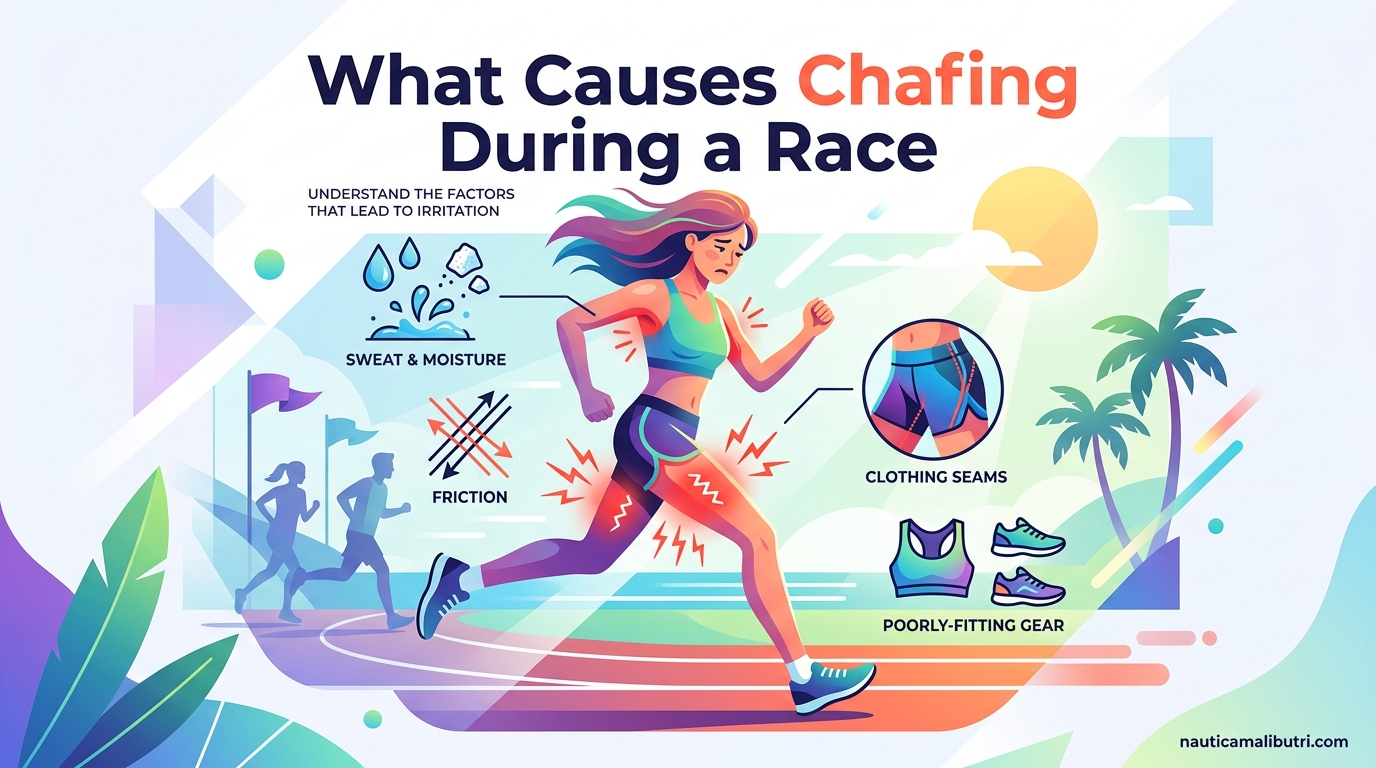
Chafing is skin irritation caused by repeated friction between skin and skin or skin and clothing, resulting in a painful rash or raw skin that can ruin your race day. Every endurance athlete needs to understand what causes chafing during a race because the combination of repetitive motion, heat, and moisture creates the perfect conditions for this painful problem. I have seen too many promising races derailed by chafing that could have been prevented with the right knowledge and preparation.
Whether you are training for your first 5K or preparing for the Nautica Malibu Triathlon, understanding the root causes of chafing will help you stay comfortable and focused on your performance. In this guide, I will break down exactly what triggers chafing during races, which body areas are most at risk, and the specific challenges triathletes face when switching between disciplines.
Table of Contents
What Is Chafing and Why Does It Happen During Races?
Chafing is a friction-induced skin injury that occurs when repetitive rubbing damages the outer layer of your skin. During races, this happens more frequently because you are maintaining continuous motion for extended periods, often in hot or humid conditions that amplify the problem.
The friction that causes chafing comes from two primary sources. First, skin-on-skin contact happens when body parts rub together, such as your inner thighs or under your arms. Second, skin-on-clothing friction occurs when fabric repeatedly moves against your skin, particularly at waistbands, sports bra bands, or shirt seams.
Race conditions make chafing worse than typical training runs. The excitement and adrenaline of race day increase your sweat production, creating more moisture that softens skin and reduces its natural resistance to friction. Our team at Nautica Malibu Triathlon has observed that athletes often push harder during races than in training, which means more aggressive motion patterns and longer durations spent in motion.
Endurance events like marathons, ultras, and triathlons are especially problematic because the duration gives friction more time to damage skin. A 30-minute training run might not trigger chafing, but three to four hours of continuous motion during a half-Ironman can turn a minor irritation into a serious wound that affects your performance and recovery.
The Primary Causes of Chafing in Racing Conditions
Understanding what causes chafing during a race requires looking at the combination of factors that create the perfect storm for skin irritation. Each factor alone might not cause problems, but together they can quickly escalate from mild discomfort to race-ending pain.
Friction: The Root Cause
Friction is the primary driver of all chafing. Every step you take creates micro-movements between skin surfaces or between skin and fabric. Over thousands of steps in a race, these small movements accumulate into significant damage. The rubbing essentially sands away your skin’s protective outer layer, exposing sensitive tissue underneath.
The intensity of friction increases with speed and stride length. When you are racing hard, your gait changes, and the force of each footstrike increases the movement between body parts. This is why chafing often appears during races when it never bothered you during easy training runs.
Moisture Accumulation From Sweat
Sweat is the accelerant that makes chafing exponentially worse. Wet skin is softer and more vulnerable to damage than dry skin. When sweat accumulates in areas like your groin, inner thighs, or underarms, it reduces the skin’s natural ability to resist friction.
The salt in your sweat adds another layer of irritation. As sweat evaporates, it leaves behind tiny salt crystals that act like sandpaper against your skin. In humid conditions where sweat cannot evaporate properly, this salt stays on your skin and continues grinding with every movement. I have finished races where my shorts felt like they were lined with sand because of accumulated salt.
Heat and Humidity Factors
Hot weather racing creates ideal conditions for chafing. High temperatures increase blood flow to your skin and raise your sweat rate, flooding vulnerable areas with moisture. The combination of heat and humidity means sweat cannot evaporate effectively, so it pools in skin folds and clothing contact points.
Coastal races like the Nautica Malibu Triathlon add another dimension because ocean air often carries high humidity even when temperatures are moderate. Morning fog and marine layer conditions can keep humidity levels elevated throughout your race, preventing proper sweat evaporation and extending the time your skin stays wet.
Duration and Distance Effects
The longer you are in motion, the more friction accumulates. A 5K race might not produce enough total friction to damage skin, but a marathon or half-Ironman creates thousands more rubbing cycles. By the later stages of long races, even small amounts of friction per step add up to serious skin damage.
Fatigue also plays a role. As you tire late in a race, your running form deteriorates. You might start scuffing your feet or letting your thighs rub together more than usual. These form breakdowns increase friction in areas that were not problematic earlier in the race.
Clothing Fabric and Fit Issues
Your clothing choices directly impact chafing risk. Cotton is the worst offender because it absorbs moisture and stays wet, creating a heavy, abrasive surface against your skin. Seams, tags, and elastic bands create pressure points where friction concentrates.
Ill-fitting clothing causes problems in both directions. Loose fabric moves around and rubs unpredictably, while tight clothing creates constant pressure and can trap moisture. Compression gear helps in some areas but can cause chafing if it rides up or bunches during movement. Our team recommends testing every piece of race clothing on long training runs before trusting it on race day.
Salt Crystal Formation
Many racers do not realize that dried sweat leaves abrasive salt crystals on their skin and clothing. As you sweat, salt deposits build up in fabric fibers. When that fabric moves against your skin, those crystals act like microscopic sandpaper. This is why chafing often gets worse in the final miles of a race when accumulated salt has had hours to build up.
Body Areas Most Vulnerable to Chafing During Races
Certain body parts are naturally prone to chafing because of their anatomy and movement patterns during running and cycling. Knowing these hot spots helps you take targeted prevention measures before they become problems.
Inner Thighs: The Most Common Location
Inner thigh chafing, often called chub rub, affects more runners than any other type. Your thighs naturally touch when you run, and the contact point rubs with every stride. This area is particularly vulnerable because it traps heat and moisture while experiencing constant friction.
The pain from inner thigh chafing can be severe enough to change your running gait. Many runners start taking shorter strides or running with their legs wider apart to reduce contact, which wastes energy and slows them down. In extreme cases, the raw skin can bleed and make continuing the race genuinely painful.
Groin Area Considerations
Groin chafing affects both men and women, though the specific contact points differ. For men, the issue usually involves friction between the upper inner thigh and the groin crease. Women often experience chafing where the groin meets the lower abdomen, particularly along underwear lines.
The groin area is particularly problematic because it is difficult to treat mid-race. You cannot easily apply products or adjust clothing without stopping completely. Prevention here is absolutely critical because once groin chafing starts, it rarely gets better without stopping to address it.
Nipple Chafing (Runner’s Nipple)
Nipple chafing is infamous in running communities, particularly for men who often race shirtless or in singlets. The constant rubbing of fabric against the nipple can abrade the sensitive skin until it bleeds. Many runners finish races with blood-streaked shirts from this issue.
The problem is particularly acute in cold weather when nipples are erect and more prominent, but it happens in all conditions. Even women with sports bra protection can experience chafing if the bra material is rough or the fit creates pressure points.
Armpits and Underarm Region
Armpit chafing occurs where your upper arm swings against your torso with each running stride. The combination of arm movement, trapped sweat, and clothing seams at sleeve edges creates a perfect environment for skin irritation. This area is often overlooked until it becomes seriously painful.
Sports bras can cause additional underarm chafing for women when the band or straps rub against the side of the chest. The elastic bands that provide support often create pressure points that worsen with miles.
Gluteal Cleft and Buttocks
Buttock chafing happens in the gluteal cleft, the vertical groove between the buttocks. This is one of the most embarrassing areas to discuss, but it affects many runners, especially in humid conditions. The trapped moisture and friction can create severe irritation that makes every step painful.
Forum discussions reveal this is a common complaint among ultra-runners and triathletes doing long-course events. The duration of these races means any moisture in this area has hours to cause damage, and the location makes mid-race treatment difficult.
Sports Bra Band and Straps for Women
Women face additional chafing risks from sports bras. The band around the ribcage can rub against the skin, particularly at the clasp or where the elastic tightens. Straps can dig into shoulders and create friction points where they cross the upper back.
Finding the right sports bra is often a trial-and-error process. A bra that feels fine for a 30-minute run might create serious chafing over three or four hours. I recommend testing every bra on at least one run that is 75% of your expected race duration before trusting it on race day.
Triathlon-Specific Chafing Causes
Triathletes face unique chafing challenges that runners and cyclists do not experience. The combination of three disciplines, wetsuits, and rapid transitions creates specific friction risks that require targeted prevention strategies.
Wetsuit Chafing During the Swim
Wetsuits are essential for open water swimming, but they are notorious for causing chafing. The tight fit that keeps you warm and buoyant also creates pressure points where the neoprene rubs against your skin. Common trouble spots include the neck, where the collar seals against your throat, and the underarms where arm movement creates constant friction.
Putting on a wetsuit requires lubricant around the neck and wrists to allow the material to slide over your skin during the swim. Without this lubrication, the rubber grinds against your neck with every breath and arm rotation. Many triathletes apply body glide or petroleum jelly liberally to these areas before the swim start.
Transition Area Moisture Issues
The transition from swim to bike creates a chafing risk many triathletes overlook. You exit the water soaking wet, and if you do not dry off properly before putting on your cycling gear, that trapped moisture becomes a friction accelerator. The combination of wet skin, tight cycling shorts, and the start of pedaling motion can trigger serious chafing within the first few miles.
T1 (swim-to-bike transition) is a critical window for chafing prevention. Experienced triathletes take an extra 30 seconds to towel off key areas before putting on their bike kit. That small time investment can prevent hours of discomfort on the bike leg.
Chamois and Saddle Contact on the Bike
The bike leg introduces saddle-related chafing that pure runners never experience. The chamois pad in cycling shorts is designed to reduce friction, but improper fit or insufficient lubrication can still cause problems. The pressure points where your sit bones contact the saddle, combined with the pedaling motion, create unique friction patterns.
Chamois cream is essential for triathletes doing Olympic-distance or longer events. This specialized lubricant reduces friction between your skin, the chamois pad, and the saddle. Apply it liberally to your groin area, inner thighs, and anywhere the chamois contacts your skin before the race starts.
Switching Between Disciplines
Each discipline change in a triathlon creates new chafing risks. Going from wet wetsuit to tight bike shorts exposes damp skin to new friction points. Transitioning from bike to run means switching from a seated position to upright running, which changes how your clothing contacts your body and introduces new areas of skin-on-skin contact.
The run leg is often where chafing becomes most severe because you are already fatigued and your form has degraded. The accumulated sweat from the swim and bike, combined with the jarring impact of running, creates perfect conditions for skin irritation to escalate rapidly.
Race Number Belt Irritation
Many triathletes wear race number belts to display their bib without pinning through expensive gear. However, these elastic belts can shift during the race and rub against the lower back or hips. The buckle and number plate create hard edges that press against your skin, particularly when you are in aero position on the bike.
Test your race number belt setup on training rides and runs before race day. Some athletes prefer pinning their number directly to their kit or using a magnetic number holder to avoid the elastic band entirely.
Early Warning Signs: Recognizing Hot Spots Before They Worsen
Hot spots are the early warning signs that chafing is starting to develop. Learning to recognize these signals can help you address problems before they become race-ending injuries.
A hot spot feels like a warm, slightly tender area of skin that is more sensitive than the surrounding tissue. You might notice a mild burning sensation or feel that a particular area of clothing is suddenly more noticeable. These sensations typically start subtly and intensify if left untreated.
Visually, hot spots appear as slightly reddened skin before the full rash develops. The area might look flushed or feel warmer to the touch than nearby skin. Catching chafing at this stage allows for mid-race intervention that can prevent serious damage.
Experienced endurance athletes check their hot spots at aid stations or transition areas. A quick application of petroleum jelly or adjusting clothing can stop a hot spot from progressing. I always carry a small packet of lubricant in my race belt for this exact purpose.
The pain from chafing follows a predictable progression. It starts as mild discomfort that you can easily ignore, escalates to a distracting burning sensation, and eventually becomes sharp pain that alters your movement. Do not wait until you are limping to address chafing; by that point, the skin damage is already significant.
How to Prevent Chafing During Your Next Race
Prevention is far easier than treating chafing mid-race. The right combination of clothing choices, products, and preparation can eliminate most chafing risk before you reach the starting line.
Choose moisture-wicking synthetic fabrics or merino wool for all base layers. These materials pull sweat away from your skin rather than trapping it like cotton does. Look for seamless construction or flat-locked seams that minimize potential friction points. Test every garment on a long training session before race day.
Apply anti-chafe balm or body glide to all known hot spots before the race starts. Common application points include inner thighs, underarms, nipples, groin, and anywhere clothing edges contact skin. Reapply at aid stations during longer events, particularly if conditions are hot or humid.
For men prone to nipple chafing, taping is a proven solution. Use waterproof medical tape or specialized nipple guards to create a protective barrier. This might seem excessive, but bleeding nipples can ruin an otherwise perfect race.
Women should invest time in finding the right sports bra. Look for moisture-wicking fabric, seamless construction, and a band that fits snugly without digging. The straps should not slide around or create pressure points on your shoulders.
Triathletes need discipline-specific prevention strategies. Use wetsuit lubricant on your neck and wrists before the swim. Apply chamois cream before the bike leg, even if you put bike shorts on in transition. Keep a small towel in your transition area to dry off before changing disciplines.
Frequently Asked Questions
How do I stop chafing when I run?
To stop chafing when running, apply anti-chafe balm or petroleum jelly to vulnerable areas before you start. Wear moisture-wicking synthetic clothing that fits properly without loose fabric that can rub. For men, tape your nipples with waterproof medical tape. For inner thigh chafing, wear compression shorts or apply lubricant to the inner thighs. Reapply lubricant during long runs if you feel hot spots developing.
What is the fastest way to heal chafing?
The fastest way to heal chafing is to keep the area clean and dry while allowing air circulation. Wash gently with mild soap and water, then pat dry. Apply a thin layer of antibacterial ointment or diaper rash cream like A+D or Desitin to protect the skin while it heals. Avoid friction on the affected area by wearing loose clothing. Most mild chafing heals within 2-3 days if you stop irritating it.
What do runners wear to avoid chafing?
Runners wear moisture-wicking synthetic fabrics or merino wool to avoid chafing. Men often wear compression shorts under regular running shorts to prevent thigh chafing. Women need well-fitted sports bras with seamless construction. Many runners use anti-chafe balms or body glide products as a protective layer. Tight-fitting base layers can reduce fabric movement, while loose outer layers should be made of smooth, technical fabrics.
Do all runners get chafing?
Not all runners get chafing, but most endurance runners experience it at some point, especially during longer races. Runners with larger body sizes or those who sweat heavily are more prone to chafing. Genetics play a role too, as some people have more sensitive skin. Proper prevention with the right clothing and lubricants can keep most runners chafe-free even during marathons and ultras. Even elite runners deal with chafing in hot or humid conditions.
Conclusion
Understanding what causes chafing during a race empowers you to prevent this painful problem before it starts. The combination of friction, moisture, heat, and duration creates conditions where skin irritation can escalate quickly, but the right preparation can keep you comfortable from start to finish.
Focus on the key prevention strategies: wear moisture-wicking fabrics that fit properly, apply anti-chafe products to known hot spots before the race, and learn to recognize early warning signs so you can intervene before damage becomes severe. Triathletes need additional discipline-specific preparation for wetsuit, bike, and run transitions.
Your next race should be about achieving your goals, not managing pain from skin irritation. Take the time to test your race-day setup on long training sessions, and arrive at the starting line confident that chafing will not hold you back. The Nautica Malibu Triathlon team wishes you chafe-free racing and your best performance yet.