
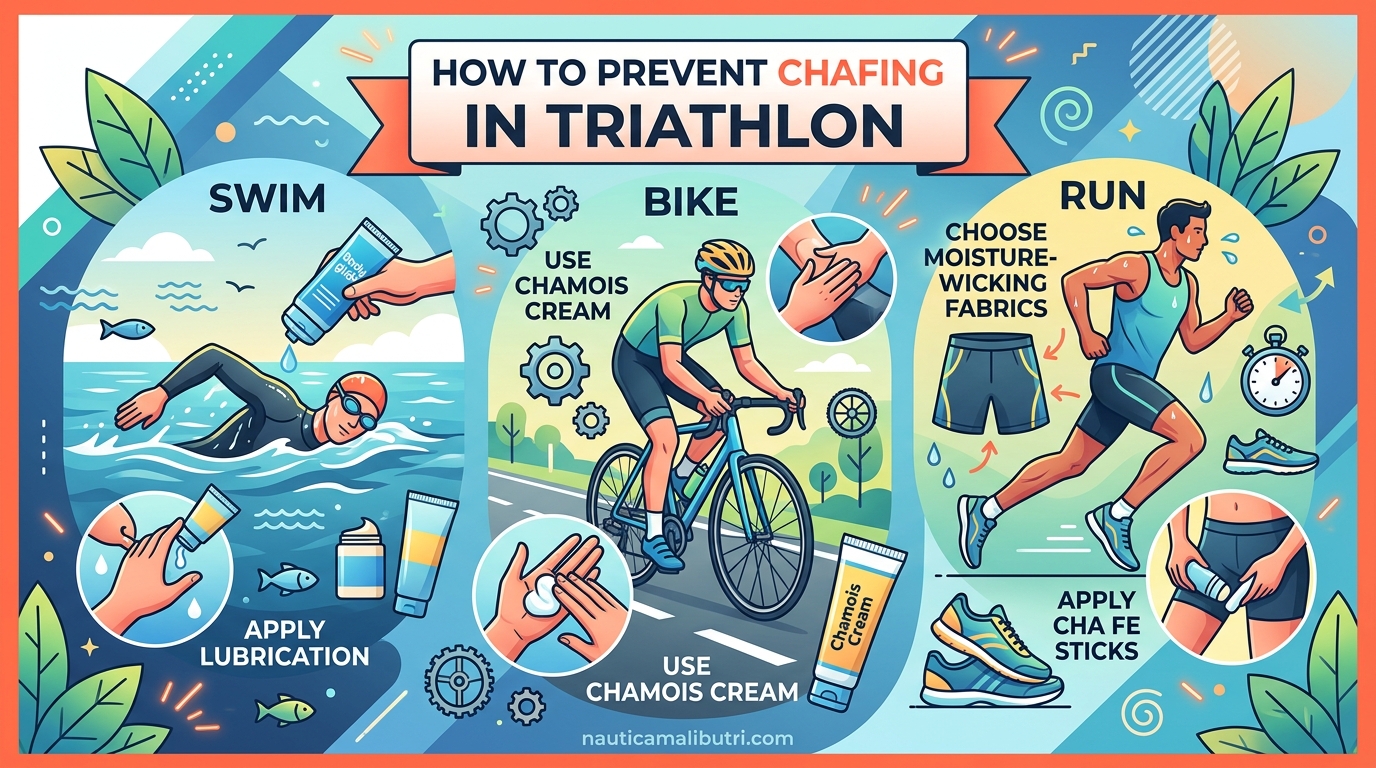
There is nothing quite like the burning sting of post-race shower water hitting chafed skin. I learned this the hard way after my first half-Ironman, when I hobbled to the showers only to experience what felt like molten lava cascading over my neck and inner thighs. That was the day I committed to never letting chafing ruin another race.
This guide will teach you how to prevent chafing in triathlon across all three disciplines. You will learn where to apply protection, which products actually work, and how to reapply during transitions. By the end, you will have a race-day strategy that keeps your skin comfortable from the swim start through the finish line.
Table of Contents
What Causes Chafing in Triathlon
Chafing happens when friction repeatedly rubs skin against skin or clothing. In triathlon, this friction gets amplified by three specific factors: moisture from sweat and water, salt from ocean swims or dried sweat, and the extended duration of multi-sport racing.
The science is straightforward. Friction wears away your skin’s protective outer layer. Once that barrier breaks down, the raw skin underneath becomes inflamed, creating painful rashes and even open sores. Salt and sweat act like sandpaper, accelerating the damage with every stroke, pedal, and stride.
Triathletes face unique challenges that single-sport athletes do not. Wetsuit neoprene creates different friction points than regular clothing. Transitions between disciplines shift how your gear contacts your skin. Long-course events like Ironman give chafing hours to develop into serious problems that can force you to modify your form or even drop out.
Key Friction Points Every Triathlete Must Protect
Not all chafing happens in the same places. Understanding your personal hotspots lets you target protection where you need it most. Here are the critical areas that cause problems for triathletes.
Neck and Collar Area (Wetsuit Chafing)
The wetsuit zipper and velcro tab are the biggest culprits here. Every time you sight in open water, your neck moves against the neoprene collar. The velcro tab at the top of your back zipper can rub raw spots that you will not notice until you peel off the wetsuit in T1.
Ocean swims make this worse. Saltwater gets trapped between your skin and the wetsuit, essentially creating a salt scrub with every stroke. Ironman finishers on Reddit consistently cite neck chafing as one of the most overlooked pain points, especially for long-course events where you are in the water 60-90 minutes or more.
Armpits and Underarms
Your stroke repetition creates constant friction in the armpits. Wetsuit seams sit right in this zone, and if the fit is even slightly off, you will feel the burn by the halfway point of your swim. This area also gets hit during the run as your arm swing continues the rubbing motion.
Inner Thighs and Groin
The bike-to-run transition is where inner thigh chafing strikes hardest. Cycling compresses the area, then running opens it up to skin-on-skin rubbing with every stride. The groin or “gooch” area is particularly vulnerable during long rides, something long-course triathletes know all too well.
Forum discussions on Slowtwitch consistently mention this as the hidden pain that gets worse as fatigue sets in. Your form breaks down late in the race, thighs rub together more, and suddenly you are waddling to the finish line.
Nipples and Chest
This is primarily a long-course issue, but it is devastating when it happens. Male triathletes particularly suffer from nipple chafing during the marathon portion of Ironman distances. A soaked tri suit or running top turns into sandpaper over 26.2 miles. Women can experience similar friction along sports bra seams.
Anti-Chafe Products That Actually Work
The market is full of options, but triathletes need specific formulations. Wetsuit compatibility, water resistance, and portability for transitions matter here. Here is what actually works based on real race experience.
Body Glide and Stick Balms
Body Glide is the industry standard for good reason. The stick format is wetsuit-safe, meaning it will not degrade neoprene like petroleum-based products. It goes on dry, stays on in water, and comes in a portable stick that fits perfectly in your transition bag.
Forum users consistently recommend the stick format over creams for race day. It is less messy, easier to apply precisely, and you do not risk getting slippery hands that could affect bike handling. Other solid options include Gold Bond Friction Defense and Trislide spray for hard-to-reach areas.
Chamois Butt’r for Cycling
Regular anti-chafe balms work for general protection, but cycling-specific chamois cream serves a different purpose. Products like Chamois Butt’r, Assos Chamois Cream, and Enzo’s Button Hole are formulated for long hours in the saddle.
These creams have a different texture than general balms. They often contain menthol or essential oils that create a cooling sensation, and they are designed to be applied directly to both skin and the chamois pad itself. For anything longer than an Olympic-distance bike leg, dedicated chamois cream makes a noticeable difference.
Aquaphor and Petroleum Alternatives
Vaseline and Aquaphor work exceptionally well for preventing chafing. They are inexpensive, widely available, and create a long-lasting barrier. However, there is a critical caveat for triathletes: petroleum-based products can degrade neoprene wetsuits over time.
The best strategy is to use wetsuit-safe balms for the swim leg, then switch to petroleum products for bike and run if you prefer. Many experienced triathletes on Reddit swear by a Bag Balm and Vaseline mixture for the bike leg specifically. It is cost-effective and stays put through hours of sweating.
Nuclear Option: KT Tape and Athletic Tape
When balms are not enough, the swimrun community has pioneered what they call the “nuclear option.” KT Tape or athletic tape applied directly to known hotspots creates a physical barrier that friction cannot penetrate. This is particularly effective for neck chafing and nipple protection.
The trick is applying it correctly. Skin must be completely clean and dry. Round the corners so they do not peel, and use a tape designed for water sports. Test this in training first. Removing tape from chafed skin is not an experience you want to discover on race day.
How to Prevent Chafing in Triathlon: Step-by-Step Application Guide
Now that you know the products, here is the exact sequence to apply them for maximum protection. Follow these steps in order, and you will cover every critical friction point before you hit the water.
Step 1: Pre-Race Skin Preparation
Start with clean, completely dry skin. Do not apply lotion or sunscreen before your anti-chafe balm. These create a layer that prevents the balm from bonding to your skin. Shower the night before or early race morning, then let your skin air dry completely.
Apply your first layer of protection 30-45 minutes before the swim start. This gives the balm time to set and creates a base layer that will survive the swim.
Step 2: Wetsuit Application Zones
Apply a generous layer around your entire neck, focusing on the front and sides where the wetsuit collar sits. Do not forget the back where the zipper velcro touches. Hit both armpits thoroughly, including the side and back of the arm where wetsuit seams rub.
For your lower body, apply balm to the inner thighs, groin, and anywhere the wetsuit leg openings will contact your skin. A Reddit user tip: spray Trislide on these areas right before putting on your wetsuit. It helps the neoprene slide on easier and adds another protection layer.
Step 3: Bike-Specific Protection
Apply chamois cream directly to your groin, sit bones, and any other saddle contact points. Also apply it to the chamois pad itself. This creates a dual barrier that lasts longer than skin application alone.
If you are doing a long-course event, plan to reapply in T2 before the run. The bike leg wipes away your initial application, and fresh protection for the marathon is essential.
Step 4: Run Leg Preparation
Men: protect your nipples with bandages, tape, or a dedicated product like NipGuards. Do not skip this for anything longer than a sprint distance. Women: ensure your sports bra has flat seams and apply balm along any potential rub lines.
Reapply balm to inner thighs in T2, even if they felt fine on the bike. Running opens your stride and increases skin contact in ways cycling does not. This is your last chance to prevent the waddle of shame in the final miles.
Step 5: Transition Reapplication Strategy
Transitions are your window to fix problems before they get serious. In T1 after removing your wetsuit, do a quick body check. If you feel any hot spots forming, hit them immediately with your stick balm.
T2 is even more critical. You are about to run, which generates the most friction of all three disciplines. A clever forum trick: put a ziploc bag turned inside out in your T2 bag. You can stick your hand inside it to apply balm without getting your hands slippery, then turn it right-side-out to store your bike gear.
Discipline-Specific Prevention Strategies
Each triathlon discipline presents unique chafing challenges. Here is how to handle each one based on real athlete experiences and race-tested strategies.
Swim Leg: Wetsuit Fit and Technique
Wetsuit fit is the foundation of swim chafing prevention. A wetsuit that is too loose moves around and creates friction. One that is too tight restricts your stroke and digs into your skin. You want snug contact without restriction.
Practice swimming in your wetsuit before race day. Open water practice sessions reveal friction points that pool swimming does not. Pay attention to your neck velcro tab placement. It should lie flat against your upper back, not sticking up where it can rub.
Saltwater vs. freshwater makes a difference. Ocean swims are more abrasive due to salt, which creates a scrubbing effect. Lake swims are gentler on skin but can mean longer time in the water since you are not fighting currents. Adjust your protection level based on your race location.
Bike Leg: Saddle and Chamois Considerations
The bike leg is where chamois cream earns its keep. Apply it generously to your sit bones, groin, and inner thighs. Do not be shy about quantity. A thin layer will wear off halfway through a half-Ironman bike leg, leaving you uncomfortable for the run.
Bike shorts fit matters as much as the cream. Too loose and you slide around, creating friction. Too tight and seams dig in. Try different brands in training to find what works for your body shape. The forum favorite combination mentioned repeatedly is Bag Balm mixed with a small amount of Vaseline for long training rides.
Long-course athletes need a reapplication plan. If your race has a special needs bag on the bike course, include a small container of chamois cream. Otherwise, plan to touch up in T2 before the run. That transition window is your last opportunity to add protection before the marathon.
Run Leg: Managing Heat and Friction
The run generates the most heat and sweat of all three disciplines. This moisture accelerates chafing dramatically. Your pre-run application in T2 needs to be thorough, especially for inner thighs.
Clothing choice matters here. A skin-tight running top eliminates fabric movement and the chafing it causes. Many triathletes on Reddit swear by compression shorts for the run leg specifically. They reduce skin-on-skin contact while providing muscle support.
Nipple protection is non-negotiable for men in long-course races. Band-aids, athletic tape, or dedicated products like NipGuards should be applied in T2. Do not wait until you feel the sting. By then, the damage is done and the shower pain awaits.
Post-Race Chafing Treatment
Sometimes despite your best efforts, chafing happens. Here is how to treat it and get back to training quickly.
The post-race shower is where you will discover how bad the damage is. Use lukewarm water, not hot. Hot water on chafed skin is the pain that Ironman finishers describe as worse than the race itself. Gently clean the area with mild soap, then pat dry. Do not rub.
Apply a healing ointment like Aquaphor, diaper rash cream, or antibiotic ointment if the skin is broken. Cover with a loose bandage if needed. Wear loose, breathable clothing for the next 24-48 hours to let the area heal.
If chafing is severe, take time off running until healed. Continuing to train on raw skin just makes it worse and extends recovery time. Better to miss a few days now than a week later when the area gets infected.
Frequently Asked Questions
How do you prevent chafing in chest and inner thighs?
Apply a generous layer of anti-chafe balm to clean, dry skin before putting on your wetsuit. For inner thighs, use Body Glide or similar wetsuit-safe formula on both skin areas that touch. For chest, men should use nipple guards or athletic tape, while women should ensure their sports bra has smooth seams and apply balm along any potential friction lines.
How do I prevent chafing in a triathlon swim?
Apply anti-chafe balm to your neck (especially around the wetsuit zipper), armpits, and any other contact points 15-20 minutes before the swim start. Ensure your wetsuit fits properly – too loose causes rubbing, too tight restricts movement. Check that the velcro zipper tab is flat and smooth against your skin. Consider Trislide spray for easier wetsuit removal and added protection.
Where to put anti-chafing gel and when to reapply during triathlon?
Apply anti-chafe gel to neck, armpits, inner thighs, groin, and nipples before the race. Use a ziploc bag turned inside out to carry extra balm in transition. Reapply quickly in T1 after removing your wetsuit (focus on areas that felt irritated) and again in T2 before the run (critical for inner thighs). A small stick format works best for on-the-fly application.
How to treat chafing after running or triathlon?
Shower with lukewarm water – hot water will cause excruciating pain on fresh chafing. Gently clean with mild soap, pat dry (don’t rub), and apply a healing ointment like Aquaphor or diaper rash cream. Wear loose, breathable clothing for 24-48 hours. If the skin is broken, apply antibiotic ointment and cover with a bandage. Avoid running until fully healed to prevent worsening.
Does Vaseline stop chafing when running?
Yes, Vaseline effectively prevents chafing and is the most budget-friendly option. However, avoid using Vaseline or petroleum-based products with wetsuits as they can degrade neoprene over time. For triathlon, use wetsuit-safe alternatives like Body Glide during the swim, then switch to Vaseline or Chamois Butt’r for the bike and run legs if preferred.
Final Thoughts on How to Prevent Chafing in Triathlon
Preventing chafing in triathlon comes down to three principles: preparation, protection, and reapplication. Start with clean, dry skin. Apply wetsuit-safe protection to every friction point before the swim. Reapply during both transitions, especially before the run. Test your strategy in training before race day so you know exactly what works for your body.
The forum wisdom is clear: chafing is completely preventable with the right approach. The athletes who suffer are usually the ones who skimped on protection or skipped reapplication in transitions. Do not let something this manageable ruin your race experience.
Now that you know how to prevent chafing in triathlon, put this knowledge into practice. Your next race should end with a celebration, not a painful hobble to the medical tent. Your skin will thank you when that post-race shower feels refreshing instead of torturous.