
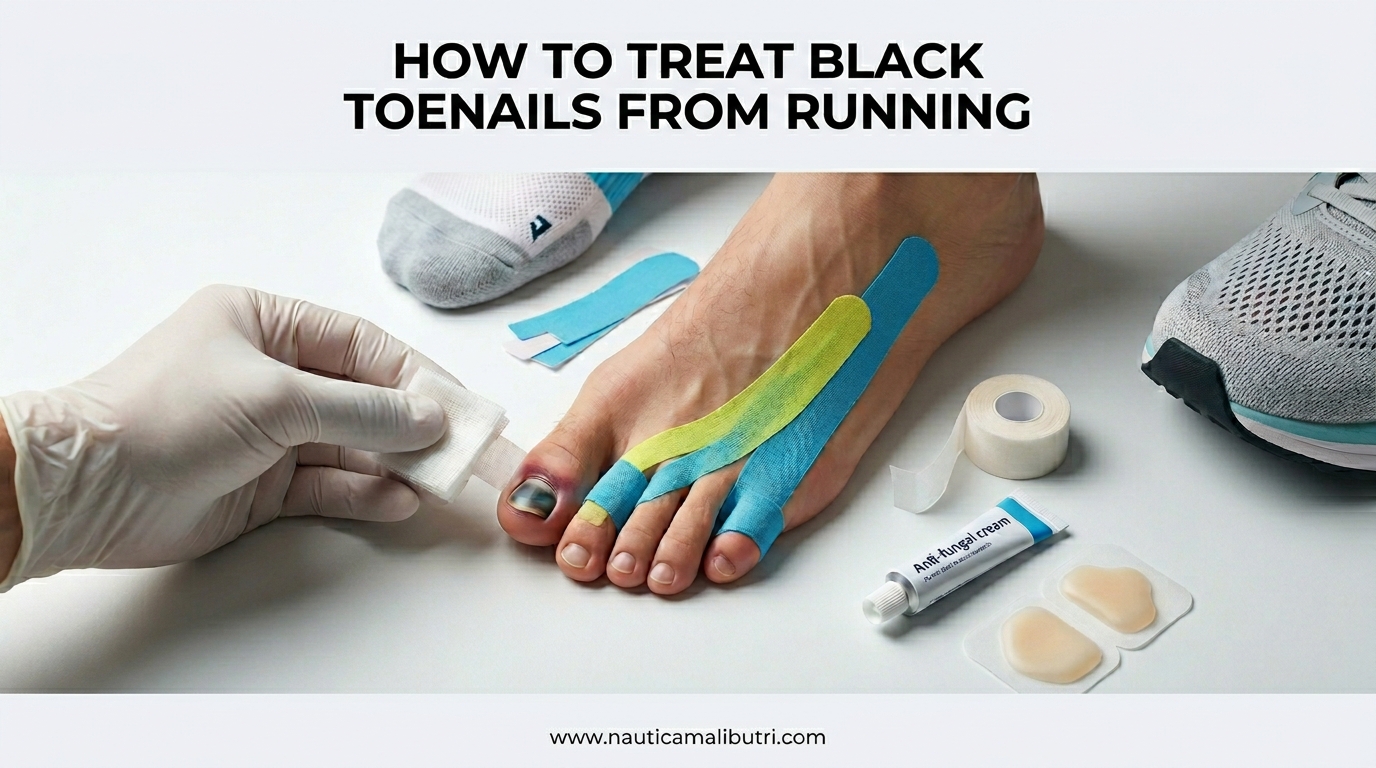
You glance down after a long run and notice your toenail has turned an alarming shade of black. I have been there more times than I care to admit during my years of marathon and triathlon training. That dark discoloration under your nail is not just an eyesore; it is a common running injury called runner’s toe, and knowing how to treat black toenails from running can save you weeks of discomfort.
Runner’s toe affects nearly every serious runner at some point. The medical term is subungual hematoma, which sounds intimidating but simply means blood has collected under your toenail due to repeated impact. I have dealt with this condition through three marathon training cycles, and I have learned what works for healing and what prevents it from happening again.
This guide covers everything you need to know about treating black toenails at home, when to seek professional help, and prevention strategies that actually work. Whether you are training for your first 5K or preparing for an Ironman, these evidence-based steps will get you back on the road comfortably.
Table of Contents
What Is Runner’s Toe?
Runner’s toe is a condition where trauma to the toenail causes bleeding underneath the nail plate. The medical name subungual hematoma breaks down simply: “subungual” means under the nail, and “hematoma” means a collection of blood. This blood becomes trapped between your nail and the nail bed, creating that characteristic black or dark purple discoloration.
The injury occurs when your toe repeatedly slams against the front or top of your shoe. During running, especially downhill segments or long-distance efforts, your foot slides forward inside your shoe with each stride. Your longest toe (usually the big toe or second toe) takes the brunt of this impact. The pressure damages small blood vessels in the nail bed, causing them to rupture and leak blood.
I first developed runner’s toe during a hilly half marathon where I ignored early warning signs of my shoes being too small. The discoloration appeared within 24 hours and stayed for months until the nail finally grew out. Understanding what is happening beneath the surface helps you make better decisions about treatment and prevention.
Symptoms of Black Toenails From Running
Recognizing the symptoms early helps you start treatment before the condition worsens. The first sign is usually a reddish or purplish spot under the nail that darkens to black over several days. You might feel tenderness or throbbing pain, especially when wearing tight shoes or during runs.
Here are the key symptoms to watch for:
- Dark discoloration ranging from red-purple to black under the nail
- Throbbing pain that may worsen with pressure or exercise
- Tenderness when touching the affected toe
- Swelling around the nail bed
- Fluid sensation under the nail (blood collection)
- Eventual nail loosening or separation from the nail bed
The pain typically peaks within the first 48 hours after the injury occurs. If the hematoma is large, the pressure of the blood trapped under the nail can cause significant discomfort. I have experienced everything from mild cosmetic discoloration with zero pain to severe throbbing that kept me awake at night.
It is important to differentiate runner’s toe from fungal infections. Fungal nails usually develop gradually over weeks or months, appear yellow or white rather than black, and often affect multiple nails. Runner’s toe appears suddenly after specific runs, is isolated to traumatized toes, and has that characteristic black or dark purple color from dried blood.
Why Do Runners Get Black Toenails?
The primary cause is repetitive trauma from your toe hitting the inside of your shoe. This trauma happens most often during activities that combine forward motion with impact forces. Several factors increase your risk of developing this annoying condition.
Ill-fitting shoes are the number one culprit. Shoes that are too short leave no room for natural foot swelling during long runs. Shoes with a narrow toe box squeeze your toes together, forcing them to absorb impact unevenly. I learned this lesson the hard way after wearing racing flats that were a half-size too small for a 20-mile training run.
Downhill running dramatically increases your risk. Gravity pulls your body forward as you descend, sliding your feet toward the front of your shoes with greater force. The braking motion required for downhill control adds extra impact to your toes. Trail runners and those training on hilly courses experience runner’s toe more frequently.
Other contributing factors include:
- Long-distance running where feet swell over time
- Thick or improperly trimmed toenails that contact shoe material
- Cotton socks that retain moisture and increase friction
- Loose lacing that allows excessive foot movement inside shoes
- Sudden increases in training volume or intensity
Triathletes face additional challenges. Wet feet from the swim portion before the bike and run legs create more friction inside shoes. Quick transitions often mean putting on running shoes when feet are still swollen from cycling. I always pack an extra pair of slightly larger running shoes for the run leg specifically to accommodate this swelling.
How to Treat Black Toenails From Running at Home
Most cases of runner’s toe respond well to home treatment if you act quickly and follow proper protocols. The goal is to reduce pain, prevent infection, and support natural healing. Here is the step-by-step approach I use whenever I notice early symptoms.
Step 1: Rest and Protect the Toe
Stop running immediately when you notice significant pain or discoloration. Continuing to run on an injured toe can worsen the hematoma and increase the chance of losing the nail entirely. Protect the toe by wearing open-toed shoes or sandals when possible to reduce pressure.
If you must wear closed shoes, use a donut-shaped moleskin pad around the affected toe to relieve pressure. I keep these pads in my gym bag specifically for this purpose. The cushioning prevents the shoe from pressing directly on the bruised nail.
Step 2: Apply Ice Therapy
Ice reduces inflammation and numbs pain during the first 48 hours after injury. Apply an ice pack wrapped in a thin towel to the affected toe for 15-20 minutes every 2-3 hours. Never apply ice directly to skin as this can cause tissue damage.
For better results, elevate your foot above heart level while icing. This combination of ice and elevation helps reduce blood flow to the area, minimizing the hematoma size. I have found this especially effective when I catch the injury early.
Step 3: Manage Pain Appropriately
Over-the-counter pain relievers help manage discomfort during the healing process. Ibuprofen or acetaminophen work well for most runners. Ibuprofen has the added benefit of reducing inflammation, but avoid it if you have stomach sensitivity or are taking other medications.
Never attempt to drain the hematoma yourself using needles, drills, or heated paperclips. While this procedure (called nail trephination) is sometimes performed by medical professionals, doing it yourself risks serious infection and permanent nail damage. I have seen runners attempt DIY drainage with disastrous results.
Step 4: Keep the Area Clean and Dry
Wash the affected toe daily with mild soap and water. Dry thoroughly, especially under the nail edge if it has begun to lift. Apply a thin layer of antibiotic ointment if the nail has separated or if there are any cracks where bacteria could enter.
Change socks frequently to keep the area dry. Moisture creates an environment where bacteria and fungi thrive. This is particularly important for triathletes who train in wet conditions or transition between sports.
When Professional Treatment Is Needed
Some cases require medical intervention beyond home care. Podiatrists can safely drain large hematomas using sterile instruments, providing immediate pain relief and potentially saving the nail.
Nail trephination involves creating a small hole in the nail to release the trapped blood. A podiatrist uses a sterile drill or heated instrument to make a tiny opening, allowing the hematoma to drain. The procedure is quick, relatively painless, and dramatically reduces pressure.
Seek professional help if you experience:
- Severe pain that does not improve after 48 hours of home treatment
- A hematoma that covers more than 50% of the nail surface
- Signs of infection (increasing redness, warmth, pus, or fever)
- Inability to wear shoes due to pain
- Multiple affected toes with severe symptoms
I visited a podiatrist once when a hematoma covered my entire big toenail and the pressure was unbearable. The drainage procedure took five minutes and provided immediate relief. The nail eventually grew back normally without any permanent damage.
Can You Run With a Black Toenail?
Many runners wonder whether they can continue training with an existing black toenail. The answer depends on the severity of your symptoms and how far along the healing process you are.
You can usually continue running if the discoloration is purely cosmetic with no pain or swelling. I have run multiple races with black toenails that were weeks into the healing process. The key is ensuring you are not causing additional trauma that could lead to nail loss.
Stop running immediately if you feel pain during your workout. Pain is your body’s warning signal that further damage is occurring. Running through pain can convert a manageable hematoma into a situation where the nail detaches completely.
Modify your training when returning after a painful episode. Choose flat routes over hilly ones to reduce downhill impact. Shorten your runs temporarily and avoid speed work that increases foot strike force. Consider cross-training with cycling or swimming to maintain fitness while your toe heals.
For triathletes, evaluate each leg separately. You might be fine cycling even if running causes discomfort. Swimming is usually safe unless the nail is severely lifted and could snag on equipment. I once completed a triathlon by walking the run portion to protect a healing toenail while still finishing.
How Long Does It Take for a Runner’s Toenail to Heal?
Healing timelines vary based on the severity of the hematoma and whether the nail detaches. Understanding the stages helps set realistic expectations and reduces anxiety about the process.
Initial healing (1-2 weeks): Pain subsides and swelling decreases. The dark color remains but becomes less sensitive to touch. You can usually resume normal activities if pain allows.
Nail lifting phase (2-6 weeks): The damaged portion of the nail may begin separating from the nail bed. This looks alarming but is a normal part of healing. Do not force the nail off; let it detach naturally.
Regrowth phase (3-12 months): New nail grows from the base to replace the damaged portion. Toenails grow approximately 1-1.5 millimeters per month, meaning complete replacement takes 12-18 months for a big toenail. Fingernails grow faster, but runner’s toe affects feet.
Do black toenails from running fall off? Sometimes, but not always. Small hematomas often heal with the nail intact. Larger ones that cover most of the nail surface frequently result in nail loss. The good news is that nails almost always grow back normally if the nail matrix (root) was not permanently damaged.
I lost a big toenail after my first marathon due to poorly fitted shoes. The regrowth took 14 months, but the new nail looked completely normal. Patience is essential during this process.
How to Prevent Black Toenails When Running
Prevention is far easier than treatment. After dealing with multiple cases of runner’s toe, I have developed a systematic approach that has kept my toenails healthy through several training cycles.
1. Trim Your Toenails Properly
Cut toenails straight across rather than rounding the corners. This prevents ingrown nails and keeps the nail edge from contacting shoe material. Keep nails short enough that they do not extend beyond the toe tip when standing.
File any sharp edges smooth to prevent them from catching on socks or shoe linings. I trim my nails the night before every long run as part of my pre-run routine. This simple habit has prevented many potential problems.
2. Ensure Proper Shoe Fit
Shop for running shoes in the evening when your feet are largest. Your feet swell throughout the day, mimicking the swelling that occurs during runs. Choose shoes with a thumb-width distance between your longest toe and the shoe front.
Consider sizing up a half or full size from your casual shoe size. Running shoes should feel slightly roomy in the toe box. I buy all my running shoes a full size larger than my dress shoes, which has eliminated front-of-shoe contact entirely.
Pay attention to toe box width as well as length. Some brands offer wider options that prevent the squeezing that contributes to runner’s toe. Try shoes on while wearing the socks you actually run in.
3. Wear Moisture-Wicking Socks
Choose synthetic or wool socks designed for running rather than cotton. Cotton retains moisture, increasing friction and creating an environment where skin softens and nails become more vulnerable. Moisture-wicking materials keep feet drier and reduce slippage inside shoes.
Some runners prefer double-layer socks that reduce friction between sock layers rather than between skin and sock. Experiment to find what works best for your feet and climate.
4. Master Proper Lacing Technique
Use the heel lock or runner’s lock lacing technique to prevent your foot from sliding forward in the shoe. This involves creating loops through the extra eyelets at the top of your shoe and threading the laces through them before tying.
The heel lock anchors your heel firmly in place, reducing forward sliding during downhill segments. I use this technique for all trail runs and races with significant elevation change. It makes a noticeable difference in foot stability.
5. Consider Protective Accessories
Silicone toe pads or caps provide cushioning for toes prone to trauma. These slip over individual toes and absorb impact forces. They are especially useful if you have one toe that consistently contacts your shoe despite proper fitting.
Some runners apply lubricants like petroleum jelly to toes before long runs to reduce friction. While this can help with blister prevention, ensure it does not make your foot slide more inside the shoe.
6. Adapt for Triathlon-Specific Conditions
Triathletes face unique challenges that increase runner’s toe risk. Wet feet from the swim create more friction and softening. Quick transitions mean putting on running shoes quickly without careful adjustment.
Pack an extra pair of running shoes sized slightly larger than your bike shoes for the run leg. This accommodates foot swelling from cycling and gives your toes more room. Practice transitions to ensure you can lace shoes properly even when rushed.
Consider toe socks or individual toe sleeves if you frequently have issues with specific toes. These create barriers that distribute pressure more evenly across the toe surface.
When to See a Doctor for Black Toenail
Most cases of runner’s toe heal without medical intervention. However, certain symptoms require professional evaluation to rule out serious conditions or complications.
Infection Warning Signs
Seek immediate medical attention if you notice increasing redness spreading from the nail, warmth in the surrounding skin, pus or drainage, red streaks up the foot, or fever. These indicate infection that requires antibiotic treatment.
People with diabetes, poor circulation, or compromised immune systems should see a doctor for any foot injury, even minor ones. These conditions increase infection risk and can lead to serious complications if untreated.
Melanoma Warning Signs
While runner’s toe is caused by trauma, dark lines under nails can occasionally indicate subungual melanoma, a serious form of skin cancer. See a dermatologist or podiatrist if you notice:
- A dark streak that does not grow out with the nail over months
- Pigmentation extending onto the cuticle or nail fold (Hutchinson sign)
- Irregular coloration with multiple shades of brown or black
- A spot that increases in size or changes appearance
- No history of trauma that would explain the discoloration
Melanoma under nails is rare but serious. Early detection dramatically improves outcomes. When in doubt, have any persistent nail discoloration evaluated by a professional.
Fungal Infection Differentiation
If the discoloration appears gradually without a specific injury event, or if multiple nails are affected, consider fungal infection as a possibility. Fungal nails are typically yellow, white, or brown rather than black, and often cause thickening and crumbling of the nail.
A podiatrist can take a nail sample to test for fungus. Treatment options include topical antifungals, oral medications, or laser therapy depending on severity.
Frequently Asked Questions
How to get rid of a black toenail from running?
Most black toenails from running heal on their own over time. Apply ice for 15-20 minutes every few hours during the first 48 hours to reduce swelling. Rest the toe, wear roomy shoes, and keep the area clean. The discoloration fades as the nail grows out, which takes 3-12 months for complete replacement.
How long does it take for a runner’s toenail to heal?
Pain and swelling typically improve within 1-2 weeks. The black discoloration remains until the nail grows out completely, which takes 3-12 months depending on severity. Toenails grow approximately 1-1.5 millimeters per month. If the nail falls off, regrowth from base to tip takes 12-18 months for a big toenail.
Do black toenails from running fall off?
Sometimes, but not always. Small hematomas often heal with the nail intact. Larger hematomas covering most of the nail may cause the nail to loosen and eventually detach. This is a normal healing process and not dangerous. The nail typically grows back normally if the nail matrix was not permanently damaged.
Why do runners get black toenails?
Runners get black toenails from repetitive trauma caused by toes hitting the inside of shoes. This commonly occurs during downhill running, long-distance efforts where feet swell, or when wearing shoes that are too small. The impact ruptures small blood vessels under the nail, creating a subungual hematoma that appears black or purple.
Can I run with a black toenail?
You can run if there is no pain or swelling. If the discoloration is purely cosmetic and healed, running is generally safe. Stop immediately if you feel pain, as this indicates ongoing damage. Modify training by choosing flat routes and shorter distances until fully healed.
Should I drain a black toenail myself?
Never attempt to drain a black toenail yourself. While medical professionals sometimes perform nail trephination to release pressure, doing this yourself risks serious infection and permanent nail damage. See a podiatrist if pain is severe or the hematoma covers more than 50% of the nail.
Final Thoughts
Black toenails from running are frustrating but manageable with the right approach. Remember that this condition is extremely common among serious runners and rarely causes permanent damage when treated properly. Focus on prevention through proper shoe fit, nail care, and technique modifications. When runner’s toe does occur, respond with rest, ice, and patience rather than aggressive interventions. Your toenails will thank you, and you will be back to pain-free miles before you know it.