
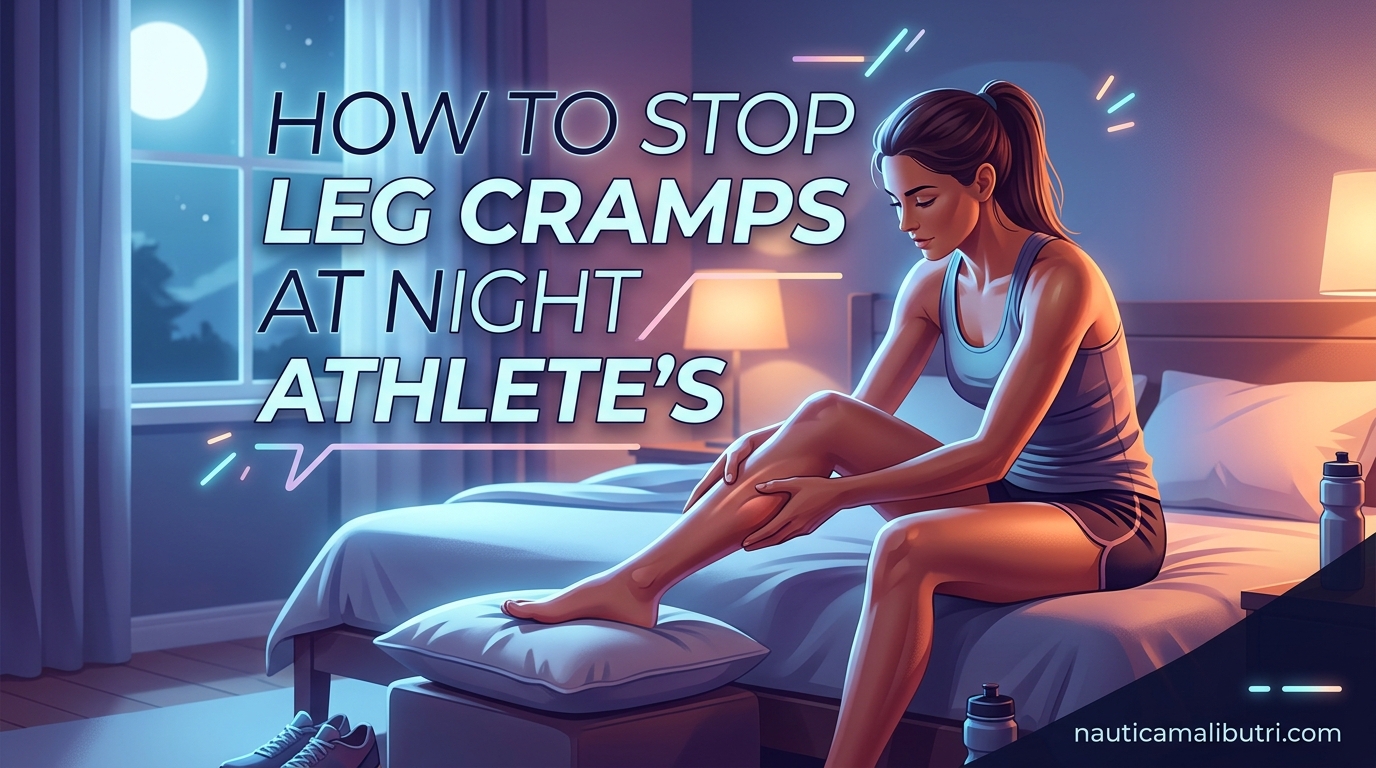
You’re three weeks out from your A-race. Training has gone perfectly. Then at 2:47 AM, it hits. Your calf seizes into a hard knot of pain that shoots you out of bed, gasping and hopping around the bedroom like a deranged flamingo. By morning, your muscle feels bruised. Your scheduled long run? Compromised. Again.
If this scene feels familiar, you are not alone. Learning how to stop leg cramps at night is one of the most common concerns I hear from triathletes at every level. These sudden, involuntary muscle contractions can disrupt your sleep, wreck your training consistency, and leave you dreading the next episode.
The good news? You can take control. This guide combines current research with practical strategies that work specifically for endurance athletes. We will separate fact from fiction, debunk some persistent myths, and give you actionable steps to end those midnight muscle rebellions for good.
Table of Contents
What Are Nocturnal Leg Cramps
Nocturnal leg cramps are sudden, involuntary contractions of one or more muscles in your leg that occur during sleep. They typically strike the calf muscles, though your feet and thighs can also be affected. When a cramp hits, the muscle tightens into a visible, hard knot that you can often feel and sometimes even see beneath the skin.
These episodes last anywhere from a few seconds to several excruciating minutes. After the cramp releases, the muscle may remain sore and tender for hours or even days. For athletes, this lingering soreness can directly impact training quality and race performance.
It is important to distinguish nocturnal leg cramps from Restless Legs Syndrome. RLS causes an uncomfortable urge to move your legs, often described as crawling or tingling sensations. Moving your legs brings relief with RLS. With true leg cramps, you have no choice. The muscle locks down until it decides to release.
Why Athletes Get Night Cramps
Most medical websites will tell you that dehydration and electrolyte imbalances cause night cramps. While those factors matter, they are not the whole story for athletes. Research and real-world experience from the triathlon community reveal a more complex picture.
The primary culprit for athletes is often neuromuscular fatigue. When you push your body through long training sessions, brick workouts, or race simulations, your neuromuscular system becomes overloaded. The communication between your nerves and muscles starts to break down. At night, when your body attempts to relax completely, this fatigued system misfires. The result? A cramp.
This explains why many athletes experience cramps despite being well-hydrated and consuming plenty of electrolytes. As one competitive triathlete noted: “95% of cramping is due to over exertion of muscles. Too little salt will make cramping worse, but won’t stop cramping if you are over extending your muscles.”
Training load spikes are another major trigger. Sudden increases in volume or intensity, common during training camp weeks or pre-race taper confusion, stress muscles that have not adapted to the new demands. Your nervous system gets overwhelmed, and it protests at night when you finally stop moving.
Electrolyte depletion does play a role, particularly sodium. Heavy sweaters who train in hot conditions can lose significant sodium through sweat. If you only replace water without adequate sodium, you create an imbalance that can trigger cramps. However, this is usually secondary to neuromuscular fatigue in trained athletes.
How to Stop Leg Cramps at Night Immediately
When a cramp strikes, you need relief fast. Here is an eight-step protocol that works:
1. Do not fight it. Fighting against the contraction often makes it worse. Instead, breathe deeply and accept that you need to work with the muscle.
2. Straighten the leg. If it is your calf, straighten your knee completely. This lengthens the muscle and prepares it for stretching.
3. Flex your foot upward. Pull your toes toward your shin. This is called dorsiflexion, and it stretches the calf muscle directly. Hold this position firmly.
4. Stand up slowly. If possible, stand and place your weight on the affected leg with your heel flat on the floor. Lean forward slightly to deepen the stretch.
5. Walk it out. Once the initial intensity passes, walk around the room. Gentle movement encourages blood flow and helps the muscle reset.
6. Apply heat. A warm towel, heating pad, or warm shower can help relax the muscle fibers. Heat increases blood flow and promotes relaxation.
7. Massage gently. Once the cramp releases, massage the muscle lightly. Do not dig in aggressively, as the muscle is sensitive and may cramp again.
8. Drink water with a pinch of salt. After the episode, hydrate with water containing a small amount of salt. This helps address any electrolyte component.
Most cramps resolve within a few minutes using this approach. The key is staying calm and working systematically through the steps.
Prevention Strategies That Actually Work
Prevention beats treatment every time. Here are evidence-based strategies that reduce your risk of nocturnal leg cramps:
Daily Stretching Routine
Stretching before bed is one of the most effective preventive measures. Focus on your calves, hamstrings, and hip flexors. The wall stretch is particularly effective. Stand facing a wall, place your hands on the wall at shoulder height, and step one foot back. Keep your back heel on the floor and lean forward until you feel a stretch in your calf. Hold for 30 seconds, then switch legs.
Do this routine every night, not just on hard training days. Consistency matters more than intensity. A five-minute stretching session performed daily beats a twenty-minute session done sporadically.
Smart Hydration Timing
Drink water consistently throughout the day rather than chugging large amounts at once. Aim for pale yellow urine as a simple hydration indicator. For athletes training in heat or heavy sweaters, include electrolytes in your hydration strategy.
However, avoid overhydrating right before bed. Getting up to use the bathroom disrupts sleep, and poor sleep increases cramp risk. Taper your fluid intake in the final hour before sleep while ensuring you are well-hydrated from daytime consumption.
Training Load Management
Follow the 10% rule. Increase your weekly training volume by no more than 10% from week to week. Sudden spikes overload your neuromuscular system and trigger cramps.
Include recovery weeks every third or fourth week of training. Reduce volume by 30-50% for one week to let your nervous system recover. This is especially important during Ironman builds where cumulative fatigue accumulates.
Pre-Race and Post-Race Protocols
In the days before a race, avoid drastic changes to your routine. Some athletes unintentionally cause cramps by suddenly increasing rest days before an event. Muscles that have become accustomed to daily movement may protest when suddenly idle.
After hard sessions or races, prioritize recovery. A 10-minute walk or easy spin before bed can prevent cramps by keeping blood flowing without adding fatigue. This is particularly effective after brick workouts that stress your legs with back-to-back disciplines.
Footwear and Bike Fit
Wear supportive shoes during the day, especially if you spend hours on your feet. Poor arch support contributes to foot and calf strain that manifests as night cramps.
If you experience unilateral cramping (one leg only), check your bike fit. A common pattern among triathletes is left-leg cramping caused by improper saddle position or cleat alignment. A professional bike fit can resolve this issue.
The Magnesium Myth: What Research Actually Shows
Walk into any supplement store and ask about leg cramps. You will almost certainly be directed to magnesium. It has become the default recommendation for cramp prevention. But here is the uncomfortable truth: the evidence does not support it for most people.
A comprehensive 2020 Cochrane review examined 11 studies on magnesium for idiopathic leg cramps. The conclusion was clear. Magnesium supplementation is unlikely to provide meaningful benefit for most cramp sufferers. The research showed no significant difference between magnesium and placebo for either cramp frequency or intensity.
This challenges the widespread belief that cramps indicate magnesium deficiency. While severe deficiency can cause muscle problems, most athletes with night cramps have normal magnesium levels. Supplementing beyond normal levels does not provide additional cramp protection.
The persistence of this myth creates real problems. Athletes spend money on magnesium supplements, experience no relief, and feel frustrated. Some even increase doses to unsafe levels, risking side effects like diarrhea and abdominal cramping.
There is one exception to this general rule. Pregnant women appear to benefit from magnesium supplementation for leg cramps. Multiple studies show improvement in this specific population. If you are pregnant and experiencing night cramps, magnesium glycinate may be worth discussing with your doctor.
For the rest of us, magnesium should not be the first-line strategy. Focus instead on the prevention methods discussed earlier. They have stronger evidence and better real-world results.
Supplements and Nutrients That May Help
While magnesium disappoints, other supplements show more promise:
Vitamin K2
Emerging research suggests vitamin K2, specifically the MK-7 form, may help with leg cramps. This nutrient plays a role in calcium metabolism and muscle function. Some studies indicate it may reduce cramp frequency, though more research is needed. If you want to try a supplement, K2 is a reasonable choice with a better emerging evidence base than magnesium.
Hydration Tablets
For heavy sweaters, electrolyte tablets used during and after training can help maintain sodium balance. Look for products with sodium as the primary electrolyte rather than potassium-heavy formulas. Timing matters. Use these during long sessions and in the hours after hard training.
What to Drink Before Bed
Many athletes wonder what to drink before bed to stop leg cramps. Water remains your best choice. You can add a small pinch of salt if you trained hard that day. Some athletes swear by pickle juice, which contains vinegar and sodium. The acetic acid in vinegar may trigger a neural reflex that reduces cramp intensity. While research is limited, anecdotal reports from the triathlon community are positive.
Tonic water is not recommended. It contains quinine, which the FDA warns against for leg cramps due to serious side effect risks including cardiac arrhythmias and bleeding problems. The minimal quinine in modern tonic water is unlikely to help and could potentially harm.
When to See a Doctor
Most night cramps are benign and manageable with the strategies outlined above. However, certain patterns warrant medical evaluation:
Seek medical attention if your cramps are frequent, severe, or accompanied by muscle weakness. This could indicate nerve compression, peripheral neuropathy, or other neurological conditions. Numbness, tingling, or pain that radiates down your leg also requires professional assessment.
Cramps that begin after starting a new medication should be discussed with your doctor. Diuretics, statins, and some asthma medications can trigger muscle cramps as a side effect. Your physician may adjust the dosage or switch medications.
If you experience swelling, redness, or warmth in the affected leg along with cramping, get evaluated immediately. These symptoms could indicate a blood clot, which requires urgent treatment. This is particularly important for athletes who travel frequently for races and may be at increased risk for deep vein thrombosis.
Underlying conditions like diabetes, thyroid disorders, and peripheral artery disease can manifest as leg cramps. If you have any of these conditions, or if cramps persist despite implementing prevention strategies, schedule an appointment with your healthcare provider.
Frequently Asked Questions
What to drink before bed to stop leg cramps?
Water with a small pinch of salt is your best option. For athletes who trained hard that day, this helps maintain sodium balance. Some triathletes report success with pickle juice, which contains vinegar that may trigger a neural reflex reducing cramp intensity. Avoid tonic water, as the quinine it contains carries FDA warnings for serious side effects.
What is your body lacking when you have severe leg cramps?
Most often, severe leg cramps indicate neuromuscular fatigue rather than a specific nutrient deficiency. While magnesium deficiency is commonly blamed, research shows magnesium supplements rarely help idiopathic cramps. For athletes, the primary deficit is usually adequate recovery time between hard training sessions. In some cases, sodium depletion from heavy sweating can contribute, particularly in hot conditions.
How do you stop night leg cramps fast?
When a cramp strikes, straighten your leg and flex your foot upward toward your shin. Stand up slowly and place weight on the affected leg with your heel flat. Walk gently to increase blood flow. Apply heat with a warm towel or shower to relax the muscle. Massage the area lightly once the cramp releases. Most episodes resolve within a few minutes using this approach.
What does it mean when I have cramps in my legs at night?
Night leg cramps typically indicate muscle fatigue or neuromuscular overload. For triathletes, they often signal that your training load has exceeded your current recovery capacity. The cramps occur when your fatigued neuromuscular system misfires during sleep. While usually benign, persistent cramps may indicate medication side effects or underlying conditions requiring medical evaluation.
What type of magnesium is best for nocturnal leg cramps?
Research shows magnesium supplements are unlikely to help most people with idiopathic leg cramps. A 2020 Cochrane review of 11 studies found no significant benefit for either frequency or intensity. The exception is pregnant women, who may benefit from magnesium glycinate. For other athletes, focus on stretching, training load management, and hydration instead of magnesium supplementation.
Why do athletes get leg cramps even when hydrated?
Athletes often cramp despite proper hydration because the primary cause is usually neuromuscular fatigue, not dehydration. When you push beyond your training capacity, your nerves and muscles lose coordination. Electrolyte imbalances can contribute, but they are secondary to the neuromuscular overload. This is why cramps often occur after particularly hard sessions or during training volume spikes.
Are leg cramps a sign of something serious?
Most leg cramps are harmless and manageable with self-care. However, seek medical attention if cramps are accompanied by muscle weakness, numbness, swelling, redness, or warmth in the leg. These symptoms could indicate nerve compression, blood clots, or circulatory problems. Also consult a doctor if cramps begin after starting new medications or persist despite implementing prevention strategies.
How can I prevent leg cramps during Ironman training?
Follow the 10% rule for weekly volume increases and include recovery weeks every third or fourth week. Stretch your calves, hamstrings, and hip flexors nightly. Maintain consistent hydration with electrolytes during long sessions. Do a 10-minute easy walk or spin before bed after hard training. Get a professional bike fit if you experience one-sided cramping. Prioritize sleep quality as part of your recovery protocol.
Final Thoughts
Learning how to stop leg cramps at night requires understanding what actually causes them. For triathletes and endurance athletes, the answer usually lies in neuromuscular fatigue and training load management rather than magical supplements. The strategies in this guide work because they address the root cause.
Start with the basics. Stretch every night. Manage your training progression thoughtfully. Stay hydrated with appropriate electrolytes. Get your bike fit checked if you have unilateral issues. These fundamentals solve the problem for most athletes.
If you have been struggling with persistent cramps, try implementing these changes for three weeks. Track your training load, hydration, and cramp frequency. Most athletes see significant improvement within this timeframe. Your sleep will improve. Your training consistency will increase. And you will show up on race day fully prepared to perform at your best.