
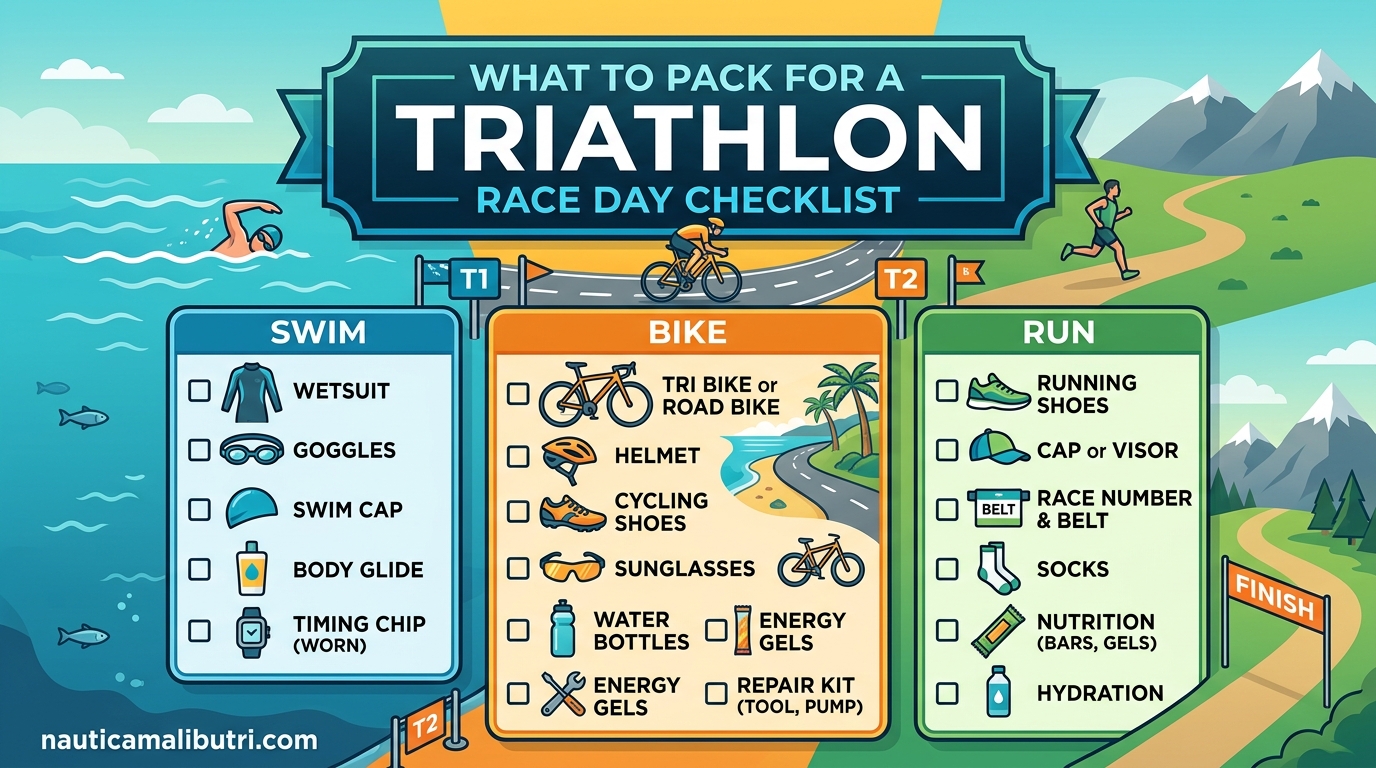
I still remember my first triathlon. I was so nervous about the swim that I completely forgot my cycling shoes. I ended up biking 25 kilometers in my running sneakers. That was a long ride. After 15 years of racing and helping hundreds of beginners through our team, I have learned that what you pack matters just as much as how you train.
This guide will walk you through exactly what to pack for a triathlon, organized by discipline and based on real race day experience. Whether you are doing your first sprint or tackling an Ironman, this checklist will keep you prepared.
Table of Contents
What to Pack for a Triathlon: Quick Answer
Here is the short version for experienced athletes who need a refresher:
Swim: Wetsuit or tri suit, goggles (plus backup), swim cap, bodyglide, ear plugs, sandals
Bike: Helmet (required), cycling shoes, sunglasses, water bottles, spare tube, CO2 cartridge, tire levers
Run: Running shoes, race belt with number, hat or visor, elastic laces (optional)
Transition: Brightly colored towel, bag for wet gear, nutrition gels, sunscreen
Below, we break down each category with detailed explanations and beginner tips.
The 3-Bag Organization System
Our team learned this method from pro triathlete Lisa Tertsch, and it has transformed how we approach race day. Instead of dumping everything into one bag, organize your gear into three separate bags.
Bag 1: Swim Start — Pack everything you need before the horn sounds. This includes your wetsuit, goggles, swim cap, bodyglide, ear plugs, and a small towel. Keep this bag with you until you head to the water.
Bag 2: Transition Zone — This is your command center. Lay out your bike gear on one side and run gear on the other. Include your helmet, cycling shoes, sunglasses, race belt, running shoes, and nutrition. Use a bright towel as your visual marker in the sea of bikes.
Bag 3: Post-Race — Pack dry clothes, recovery sandals, a full-size towel, and post-race nutrition. Stash this bag in the designated gear area or your car for easy access after you finish.
This system prevents that panicked rummaging that wastes precious transition time. When you know exactly which bag holds what, you move with confidence.
Swim Gear: What to Pack for the First Leg
The swim leg intimidates most beginners, but having the right gear eliminates half the stress.
Wetsuit or Tri Suit: For water temperatures below 78 degrees Fahrenheit, a wetsuit provides buoyancy and warmth. Many beginners find wetsuits make swimming easier because the material helps you float. If the water is warm or you want simplicity, a tri suit works for all three disciplines.
Goggles: Always pack two pairs. I learned this lesson at my third race when a strap snapped minutes before the start. Anti-fog spray helps, but a backup pair saves races.
Bodyglide: Apply this anti-chafe balm around your neck, underarms, and ankles before the swim. It prevents wetsuit rub and makes removal faster in transition.
Swim Cap: Most races provide a colored cap for your wave, but bring your own black backup. If the race cap rips or you practice before the start, you will be glad you have it.
Sandals and Small Towel: The walk from transition to the swim start often crosses rough pavement or grass. Protect your feet with cheap flip-flops you can toss in a donation bin. A small towel helps dry your feet before the swim and marks your transition spot after.
Bike Gear: Transition Zone Essentials
Your bike setup determines how smoothly your first transition goes. Lay everything out in the order you will use it.
Helmet: This is non-negotiable. You cannot leave transition without your helmet properly buckled. Race officials will stop you. Make sure yours meets safety standards and fits snugly.
Cycling Shoes: If you use clip-in cycling shoes, stage them clipped to your pedals with rubber bands holding them horizontal. This lets you jump on the bike and slip into the shoes as you ride. Beginners often feel more confident leaving shoes on the ground and putting them on in transition.
Sunglasses: Eye protection matters at 20-plus miles per hour. Clear or photochromic lenses work for early morning starts when light changes quickly.
Flat Repair Kit: Pack a spare tube, CO2 cartridge with inflator, and tire levers. Practice changing a flat at home before race day. Nothing wastes time like fumbling with tire levers while your heart rate stays elevated.
Water Bottles: Fill at least one bottle with water and consider a second with electrolyte drink. Most sprint distances need only one bottle, but Olympic and longer races require two.
Bike Pump: Bring a floor pump for pre-race tire inflation if you drive to the event. Keep a mini hand pump attached to your bike frame during the race as backup.
Run Gear: Finishing Strong
The run leg comes when you are already tired. Make your transition as simple as possible.
Running Shoes: Never wear brand new shoes on race day. Break them in with at least 50 miles of training. Lay them out with the heels open and tongue pulled up for quick entry.
Race Belt: This simple elastic belt holds your race number. Clip it on in T2 (the bike-to-run transition) with the number facing front. Some belts include loops for gels.
Hat or Visor: Sun protection matters, especially in afternoon races. A visor keeps sun off your face while allowing heat to escape from your head.
Elastic Laces: These bungee-cord style laces let you slide into shoes without tying. They save 30 to 60 seconds in transition and eliminate the risk of your shoes coming untied mid-run.
Socks: This sparks endless debate. For sprint triathlons, many experienced athletes skip socks to save transition time. For Olympic distance or longer, socks prevent blisters. If you wear them, roll them down for quick donning.
Weather-Specific Packing Tips
No competitor covers this topic well, yet weather changes everything. Our team races in conditions from 45-degree water to 105-degree heat, and preparation makes the difference between finishing strong and dropping out.
Cold Water Races: When water temperatures drop below 65 degrees, pack a thermal swim cap to wear under your race cap. Neoprene booties and gloves help if allowed by race rules. Bring a thermos of warm liquid for post-swim comfort.
Hot Weather: Extra sunscreen goes in your transition bag for reapplication. Cooling towels worn around your neck during the run lower body temperature. Pack extra electrolyte tablets for your water bottles.
Rainy Conditions: Seal your dry clothes in plastic bags inside Bag 3. A lightweight rain jacket helps during pre-race setup. Clear lenses for your sunglasses let you see through precipitation.
Wind: Use extra rubber bands to secure gear in transition. A cycling jacket that packs small helps on windy bike courses.
Nutrition and Race Day Timing
What you eat matters as much as what you pack. Here is the timing that works for our team.
Pre-Race Breakfast (2-3 hours before): Eat something familiar. Oatmeal with banana, a bagel with peanut butter, or toast with honey all work. Avoid high fiber and high fat foods that might cause GI distress.
Transition Bag: Pack 2 to 3 energy gels in your transition area. Most athletes take their first gel 10 minutes before the swim start and additional gels every 45 minutes during the race.
Bike Bottle: For races longer than 90 minutes, add electrolyte powder to one bottle. Practice with your chosen brand in training to avoid surprises.
Post-Race Recovery: Pack a protein bar or chocolate milk in Bag 3. Consuming protein within 30 minutes of finishing aids recovery significantly.
Common Beginner Mistakes to Avoid
After watching hundreds of first-time triathletes, these errors show up repeatedly.
Do Not Wear New Shoes on Race Day. Blisters form quickly when you add sweat, water, and new material. Always train in the shoes you will race in.
Do Not Change Socks Mid-Race. This seems logical when your feet are wet, but it wastes precious minutes in transition. Either go sockless or wear thin triathlon socks that handle moisture.
Always Pack Backup Goggles. Straps snap. Anti-fog fails. A $15 backup pair prevents a DNS (did not start).
Arrive Early for Setup. Rushed transitions lead to forgotten items. Plan to arrive 90 minutes before your wave start.
Label Your Gear. Transition areas look identical from the swim exit. A bright pink towel or personalized race mat helps you spot your bike instantly.
Frequently Asked Questions
Do you wear undies under a trisuit?
No, you do not wear underwear under a trisuit. These suits are designed with a built-in chamois pad for comfort on the bike, and underwear creates chafing. Wear the trisuit directly against your skin for all three disciplines.
What not to eat before a triathlon?
Avoid high-fiber foods like beans and large salads, high-fat foods like fried items and cheese, and anything new or unfamiliar. These can cause GI distress during the race. Stick to familiar carbohydrates that you have tested in training.
What is the minimum gear needed for a triathlon?
The absolute minimum includes a swimsuit or trisuit, bike, helmet, sunglasses, running shoes, and a race belt. You can complete a sprint triathlon with just these items, though accessories like goggles, cycling shoes, and nutrition will improve your experience.
Should I wear socks during a triathlon?
For sprint distances, many experienced triathletes skip socks to save transition time. For Olympic distance or longer, socks help prevent blisters. If you choose to wear them, use thin triathlon-specific socks and roll them down for quick entry.
What do I put in my transition bag?
Your transition bag should contain your bike gear (helmet, cycling shoes, sunglasses, nutrition) and run gear (running shoes, race belt, hat). Many athletes also include a brightly colored towel to mark their spot, chamois cream, and extra nutrition.
Final Checklist: What to Pack for a Triathlon
Print this list and check off each item the night before your race:
Swim Start Bag:
– Wetsuit or tri suit
– Goggles (plus backup pair)
– Swim cap (backup)
– Bodyglide or anti-chafe balm
– Ear plugs (optional)
– Sandals for walking
– Small towel
Transition Zone:
– Helmet
– Cycling shoes
– Sunglasses
– Race belt with number
– Running shoes
– Hat or visor
– Elastic laces (optional)
– Brightly colored towel
– Nutrition gels
– Sunscreen
Bike Tools:
– Spare tube
– CO2 cartridge and inflator
– Tire levers
– Mini bike pump
Post-Race Bag:
– Dry clothes
– Recovery sandals
– Full-size towel
– Protein snack
– Phone and wallet
Conclusion
Knowing what to pack for a triathlon removes the pre-race panic that ruins first experiences. Use the 3-bag system, pack backups of critical items like goggles, and arrive early enough to set up without rushing. Your first triathlon should be about crossing the finish line with a smile, not worrying about forgotten gear. We will see you at the starting line.