
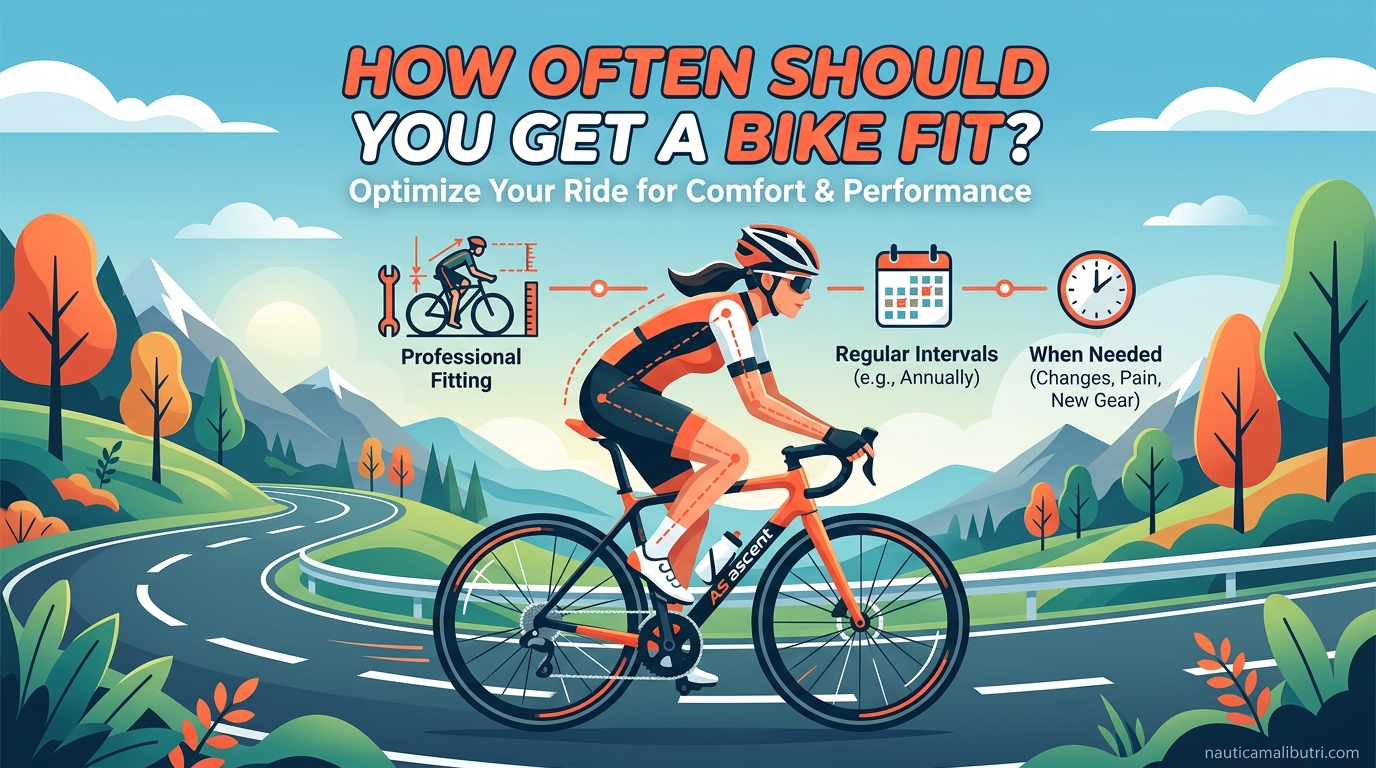
Most cyclists riding 2,000 miles or more annually should get a professional bike fit once per year as a baseline check-up. This frequency increases to every 6-12 months if you are over 50, training for competition, or recovering from injury. A proper bike fit reassessment prevents overuse injuries, maximizes power output, and ensures your position evolves with your changing body.
Our coaching team has guided hundreds of triathletes through bike fit decisions over the past decade. We have seen the difference between athletes who maintain their fit annually and those who wait until pain forces their hand. The former group trains more consistently and reports fewer setbacks.
Getting your fit checked is not just about fixing problems that already exist. It is about catching small misalignments before they become chronic issues that sideline you from training. A minor saddle height drift of just 3 millimeters can create knee pain that takes months to resolve.
Table of Contents
Why Regular Bike Fit Reassessment Matters
Your body is not a static machine. Flexibility, strength, weight, and riding style all shift over months and years of training. These changes directly impact your ideal position on the bike.
Dr. Andy Pruitt, a pioneer in cycling biomechanics with over 40 years of experience, emphasizes that adaptation is constant. Athletes develop asymmetries, lose mobility, or gain strength in ways that alter their optimal fit. What worked perfectly 18 months ago may now be limiting your power or causing micro-traumas.
Many riders adapt to poor positions without realizing it. Your body compensates by altering pedal stroke, shifting weight, or recruiting different muscle groups. These compensations reduce efficiency and increase injury risk. A fresh fit assessment catches these issues before they manifest as chronic pain or overuse injuries like patellar tendinitis or lower back strain.
How Often Should You Get a Bike Fit
For most adult cyclists completing 2,000 miles or more per year, an annual professional bike fit is the gold standard. This check-up serves as preventive maintenance, similar to seeing a dentist or getting a physical. The fitter reviews your current measurements against your biomechanics and makes small adjustments to maintain optimal efficiency.
Age plays a significant role in fit frequency recommendations. Athletes over 50 often benefit from reassessment every 6-12 months rather than annually. Joint mobility, muscle elasticity, and recovery capacity change more rapidly in this population. Small adjustments to reach, saddle height, or handlebar position can prevent the neck and hand numbness that older riders frequently experience.
Competitive triathletes and serious cyclists should consider semi-annual fits, especially when training volume exceeds 10 hours weekly. The combination of high mileage and aggressive positions creates faster adaptation demands. A fit check before your build phase and again before race season helps optimize your aero position without sacrificing comfort over long distances.
Recreational riders logging under 1,500 miles yearly may extend to every 18-24 months if they remain symptom-free. However, this group should still prioritize getting a new fit when purchasing a different bike or after any physical changes. The cost of a professional fit is minimal compared to the discomfort and medical bills that result from poor positioning over thousands of miles.
Key Signs You Need a Bike Fit Reassessment
Your body sends clear signals when your position no longer matches your biomechanics. Recognizing these signs early prevents them from developing into serious overuse injuries that require time off the bike.
Physical Discomfort and Pain
Knee pain is the most common indicator that saddle height, fore-aft position, or cleat alignment needs adjustment. Front knee pain often suggests the saddle is too low or too far forward. Pain at the back of the knee usually indicates the saddle is too high or too far back.
Hand numbness or tingling points to excessive reach or improper handlebar height. Back pain, especially in the lower region, suggests your core cannot support your current aero position. Neck pain typically results from craning to see forward when bars are too low or too far away.
Groin numbness or saddle sores that persist beyond the first few rides of the season demand immediate attention. These symptoms indicate saddle pressure distribution issues that can lead to serious vascular and nerve problems if ignored.
Performance Plateaus
Feeling stuck despite consistent training is often a fit issue disguised as a fitness issue. Your position may be preventing you from recruiting power efficiently. A professional bike fit can reveal whether your hip angle, knee extension, or foot placement is limiting your pedal stroke.
Wattage drops late in long rides, difficulty holding an aero position, or feeling unable to generate power in the drops all warrant a reassessment. Your fitter can measure whether your current setup matches your current flexibility and strength capabilities.
Trigger Events That Demand Immediate Re-Fitting
Certain life and training events create sudden changes that override any regular schedule. These triggers require immediate attention regardless of when your last fit occurred.
New Bike Purchase
Every new bike needs a professional fit, even if it is the same model and size as your previous machine. Manufacturing tolerances, component variations, and wear patterns mean no two bikes are identical. A fit ensures you transfer your optimal position accurately rather than assuming the setup is correct.
This is especially critical for triathletes purchasing time trial or triathlon bikes. The aggressive geometries and unique handling characteristics of these machines require precise fitting to achieve both speed and sustainability for the run that follows.
Injury and Recovery
Any significant injury affecting your back, hips, knees, or feet demands a post-recovery fit check. Physical therapy and healing processes alter your biomechanics, flexibility, and strength balance. Your pre-injury position may no longer suit your recovered body.
Piriformis syndrome, herniated discs, and hip impingements commonly affect cyclists and often require position changes during and after recovery. A fitter working with your medical team can adjust your setup to accommodate healing while maintaining training consistency.
Major Fitness and Weight Changes
Losing or gaining more than 10-15 pounds alters how you interact with your bike. Weight loss often increases flexibility and reduces cushioning needs, potentially allowing a more aggressive position. Weight gain may compress hip flexors and reduce core stability, requiring a more conservative setup.
Significant strength gains from off-season training can also change your optimal position. Stronger glutes and core muscles may allow you to sustain a lower, more aero position comfortably. A fitter can measure whether your current setup captures these gains.
Postpartum Considerations
Returning to cycling after pregnancy requires careful fit reassessment. The body undergoes profound changes in core strength, pelvic floor function, and spinal alignment. Hormonal fluctuations can affect ligament laxity for months after delivery.
Most postpartum athletes benefit from a conservative position initially, with gradual progression toward their pre-pregnancy setup as strength and stability return. A professional fitter can guide this transition safely.
Seasonal Transitions
Moving from indoor trainer season to outdoor riding is an ideal time for a fit check. Static indoor positions often differ from dynamic outdoor riding. Cleat positions may shift, saddle preferences may change, and the demands of handling a moving bike differ from pedaling in place.
Many triathletes find their outdoor position needs to be slightly more conservative than their aggressive indoor setup. The steering, braking, and terrain management of real-world riding require additional stability and reach comfort.
Equipment Changes
Changing any contact point on your bike warrants reconsideration of your overall fit. New saddles, different handlebars, stem length changes, or new shoes with different stack heights all affect your position. Even new cleats with different bolt patterns can shift your effective foot placement by several millimeters.
Special Considerations for Triathletes
Triathlon bike fitting involves unique demands that road cyclists do not face. Your position must optimize not just cycling power, but also the ability to run well off the bike. A position that maximizes pure cycling efficiency may leave your legs too fatigued for a strong run split.
The aero position common in triathlon creates specific fit challenges. Your hip angle closes significantly, affecting breathing capacity and comfort over long distances. Proper fit balances aerodynamic gains against the sustainability needed for a marathon or half-marathon run.
Time trial bikes with steep seat tube angles require special attention to saddle choice and fore-aft positioning. The forward position shifts weight distribution and changes hamstring recruitment. Triathletes often need more frequent reassessment than road cyclists because the position is inherently less forgiving of small changes.
Our team recommends that competitive triathletes get a pre-season fit check 6-8 weeks before their first A-race. This timing allows adaptation to changes while leaving room for minor tweaks as race day approaches.
Bike Fit for Growing Athletes
Young cyclists and junior triathletes need more frequent fit attention than adults. Growth spurts can alter leg length, torso proportions, and flexibility dramatically within months. A bike fit that was perfect in January may be completely wrong by June.
Parents should watch for signs that their young athlete has outgrown their fit. Knee pain, complaints of discomfort, or visible stretching to reach handlebars all indicate reassessment is needed. For rapidly growing teens, checking fit every 3-4 months during growth phases is not excessive.
Junior triathletes face the additional challenge of balancing proper fit against the temptation to size up bikes for longevity. Buying a bike that a child will grow into often results in poor positioning that creates bad habits or causes injury. A professional fitter can advise on whether a larger frame can work with appropriate component changes or if the bike is simply too big.
Professional vs DIY Fit Adjustments
Some minor adjustments are safe to make at home with basic knowledge. Saddle height changes of a few millimeters, minor handlebar angle tweaks, and small fore-aft saddle adjustments fall into this category. Document your current measurements before changing anything so you can revert if needed.
However, significant changes to stem length, crank arm length, cleat position, or major saddle repositioning should involve a professional. These adjustments have cascading effects on your entire position. Moving your saddle back 10 millimeters may require a shorter stem to maintain proper reach, creating a chain of necessary changes.
A professional fit also includes dynamic assessment that DIY methods cannot replicate. Video analysis, pressure mapping, and on-bike observation reveal issues that static measurements miss. The investment in professional fitting pays dividends in injury prevention and performance optimization over the season.
Frequently Asked Questions
How often should you get a bike fitting?
Most cyclists riding 2,000+ miles annually should get a professional bike fit once per year as a baseline. Athletes over 50, competitive triathletes, or those recovering from injury should consider reassessment every 6-12 months. Recreational riders doing under 1,500 miles yearly may extend to every 18-24 months if symptom-free.
What is the 80% rule in cycling?
The 80% rule suggests cyclists should spend about 80% of their training time at low intensity and 20% at moderate to high intensity. This principle relates to training distribution and aerobic base building rather than bike fit frequency, though proper fit is essential for comfortably executing long low-intensity training sessions.
Is biking bad for piriformis syndrome?
Cycling is not inherently bad for piriformis syndrome, but improper bike fit can aggravate the condition. A saddle that is too high or cleats that force external hip rotation may compress the piriformis muscle. Working with a fitter experienced in injury accommodation can create a position that allows continued riding while healing.
What are the signs that I need a bike fit?
Key signs include knee pain, hand numbness, back or neck discomfort, groin numbness, saddle sores, and performance plateaus despite consistent training. Any persistent discomfort that occurs consistently on rides rather than just during hard efforts suggests a fit issue requiring professional assessment.
Should I get a bike fit before buying a new bike?
Yes, a pre-purchase consultation with a bike fitter helps determine the correct frame size and geometry for your body. Many fitters offer a sizing session that provides specific frame recommendations, saving you from purchasing a bike that cannot accommodate your optimal position.
Maintaining proper bike fit is not a one-time event but an ongoing practice that evolves with your body and training. Making fit reassessment a regular part of your training routine prevents injuries before they start and keeps you riding stronger for years to come.
How often you should get a bike fit depends on your individual circumstances, but the annual check-up is the foundation that serves most adult cyclists well. Prioritize your position, and your performance will follow.