
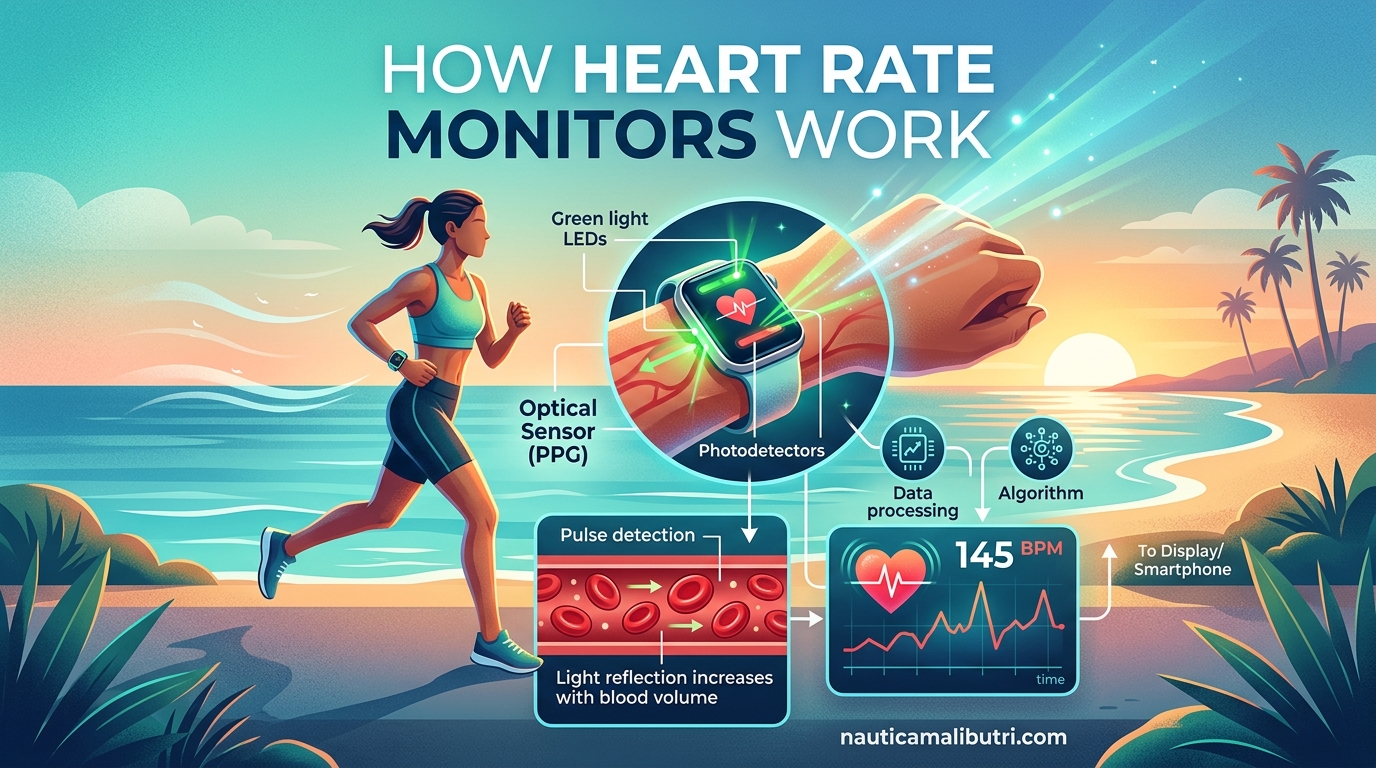
Every time your heart beats, it sends a signal. Whether you are training for your first sprint triathlon or preparing for an Ironman, understanding how heart rate monitors work can transform your approach to training. These devices do far more than display a number on your wrist. They decode the electrical and optical patterns your body produces with every contraction of your heart muscle.
I have spent years testing different monitors across swimming, cycling, and running. The difference between a chest strap and a wrist-based optical sensor is not just about comfort. It is about the fundamental technology capturing your heart’s rhythm. This guide breaks down exactly how heart rate monitors work, from the electrodes detecting electrical impulses to the green LEDs measuring blood flow through your skin.
Table of Contents
What Is a Heart Rate Monitor?
A heart rate monitor is a device that measures your heart rate in beats per minute (BPM). It tracks how many times your heart contracts each minute, giving you real-time data about your cardiovascular activity.
These devices evolved from bulky medical equipment to compact wearables you can wear during a triathlon. Modern monitors connect wirelessly to watches, smartphones, and bike computers through Bluetooth or ANT+ protocols. They have become essential tools for athletes who want to train smarter, not just harder.
The core purpose remains the same across all devices: detecting each heartbeat and converting that biological signal into digital data you can use to optimize your performance and recovery.
How Heart Rate Monitors Work: The Two Main Technologies
Heart rate monitors work using one of two primary technologies. Understanding both helps you choose the right device for your specific training needs and accuracy requirements.
| Feature | ECG (Chest Strap) | PPG (Optical) |
|---|---|---|
| Detection Method | Electrical impulses from heart | Blood flow using LED light |
| Sensor Location | Chest | Wrist, arm, or finger |
| Accuracy Level | 99%+ accuracy | 85-95% accuracy |
| Best For | High-intensity intervals | All-day monitoring, rest |
| Comfort | Can feel restrictive | Natural, watch-like feel |
| Battery Life | 200-400 hours | 5-20 days (varies by features) |
Electrocardiography (ECG) monitors detect the electrical signals your heart generates with each beat. Photoplethysmography (PPG) monitors use light to measure changes in blood volume through your capillaries. Each approach has distinct advantages depending on your activity.
How Chest Strap Monitors Work: ECG Technology Explained
Chest strap monitors use electrocardiography (ECG or EKG) technology, the same approach used in hospitals for medical-grade heart monitoring. This method detects the electrical impulses that trigger your heart muscle to contract.
Every heartbeat begins with an electrical signal from your sinoatrial node, the heart’s natural pacemaker. This signal spreads through the heart muscle, causing the chambers to contract in the familiar lub-dub rhythm. ECG sensors pick up these electrical currents as they pass through your body.
The chest strap contains electrode pads that make contact with your skin, usually positioned near the sternum. These electrodes detect the micro-voltage changes that occur with each heartbeat. A transmitter pod clipped to the strap amplifies this signal and sends it wirelessly to your watch or phone.
For optimal signal detection, the electrodes need moisture to conduct electricity. Many athletes wet the strap before workouts or use conductive gel. Sweat during exercise naturally improves the connection.
The proximity to your heart is why chest straps deliver such precise readings. They capture the electrical signal at its source before it weakens traveling through your body. This is why the triathlon community consistently recommends chest straps like the Polar H10 for interval training and racing where accuracy matters most.
How Optical Monitors Work: PPG Technology Explained
Optical heart rate monitors use a technology called photoplethysmography (PPG). Instead of detecting electricity, they use light to measure blood flow through your capillaries.
The monitor emits LED light, typically green wavelengths, into your skin. This light penetrates the outer layers and reaches the blood vessels beneath. When your heart beats, blood rushes through these vessels. Between beats, less blood flows through. This changing blood volume affects how much light reflects back to the sensor.
The monitor’s photodetector captures the reflected light variations. An algorithm translates these optical changes into heart rate data. The more blood flowing, the less light reflects back. The sensor tracks these fluctuations to count your beats per minute.
Green light works best for this measurement because hemoglobin in your blood absorbs green wavelengths efficiently. Some devices also use infrared light, particularly for monitoring blood oxygen levels alongside heart rate.
Wrist-based monitors face challenges during high-intensity exercise. The rapid arm movement in running, the flexing during cycling, and the water pressure during swimming can all affect accuracy. Blood flow also changes with muscle tension, temperature, and wrist position. This explains why optical monitors sometimes show lag or spikes during intense intervals.
Arm strap monitors using PPG technology, like the Scosche Rhythm Plus mentioned frequently in fitness forums, solve some of these issues. The upper arm has less movement and more consistent blood flow than the wrist, providing more stable readings during vigorous activity.
Types of Heart Rate Monitors
Understanding the different form factors helps you match the technology to your training preferences and comfort requirements.
Chest Strap Monitors
Chest straps wrap around your torso just below the sternum. They use ECG technology and deliver the highest accuracy available in consumer devices. The Polar H10 has become the gold standard that other monitors are measured against.
These devices excel during high-intensity efforts, interval training, and racing. The consistent contact with your chest and proximity to your heart produce medical-grade accuracy. Most chest straps are water-resistant and work well for swimming.
Wrist-Based Monitors
Smartwatches and fitness trackers use PPG sensors on the back of the device. Apple Watch, Garmin Forerunner, Fitbit, and Samsung Galaxy Watch all employ this approach.
The convenience of all-day wear makes wrist monitors ideal for tracking resting heart rate, sleep data, and recovery metrics. They seamlessly transition from daily activity tracking to workout monitoring. However, accuracy drops during high-intensity exercise with rapid arm movement.
Arm Strap Monitors
Arm straps position PPG sensors on your upper arm or forearm. Devices like the Polar Verity Sense and Scosche Rhythm Plus use this placement.
The upper arm experiences less motion than the wrist during running and cycling. More consistent blood flow and reduced movement artifacts improve accuracy over wrist-based options. Many triathletes find arm straps more comfortable than chest straps for long workouts.
Smart Rings and Emerging Technologies
Smart rings like the Oura Ring and newer fitness rings incorporate PPG sensors on the inner surface. Finger placement offers excellent blood flow detection due to the dense capillary networks in your fingers.
These devices focus heavily on recovery metrics, sleep quality, and resting heart rate variability. The form factor appeals to users who want health tracking without visible wearables. Current limitations include battery life and real-time workout display capabilities.
Accuracy Comparison: Which Technology Is More Reliable?
ECG chest straps consistently achieve 99% or higher accuracy compared to medical-grade ECG machines. This makes them the reference standard for serious training.
PPG optical sensors on the wrist typically achieve 85-95% accuracy during rest and light activity. During high-intensity exercise, this can drop to 80% or lower. Arm-based optical monitors improve this to 90-95% during moderate exercise.
Several factors affect accuracy regardless of technology type. Poor fit causes signal loss. Dry electrodes on chest straps create static. Loose wrist straps allow light leakage. Motion artifacts from rapid movement confuse optical algorithms. Cold weather reduces blood flow to extremities, weakening optical signals.
User error accounts for many accuracy complaints. A chest strap positioned too low misses the strongest electrical signals. A loose watch allows ambient light to interfere with the PPG sensor. Understanding proper placement solves most accuracy issues.
For triathlon training specifically, many athletes use both technologies. They wear a wrist device for all-day health tracking and easy workout viewing, then add a chest strap for key interval sessions and races where precise zone targeting matters.
How to Wear Your Heart Rate Monitor for Best Results
Proper positioning transforms a mediocre reading into reliable data. Each monitor type has specific requirements for optimal performance.
For chest straps, position the sensor module dead center on your sternum. The strap should sit just below your chest muscles. Wet the electrode pads before starting your workout. The strap needs to be snug but not constricting breathing. As you sweat, the connection improves.
For wrist monitors, wear the device 2-3 finger widths above your wrist bone on the non-dominant hand. The sensor needs skin contact without being so tight it restricts circulation. Avoid wearing it over tattoos, as the ink can interfere with light transmission.
Arm strap placement matters significantly. Position the sensor on the upper arm, about midway between shoulder and elbow on the muscle belly. This location has consistent blood flow and less tendon movement than near the elbow. Secure the strap firmly during high-intensity efforts.
Wait 5-10 minutes after starting exercise before relying on optical readings. Blood flow to extremities increases as you warm up, improving signal quality. Cold starts produce the worst optical accuracy.
Heart Rate Zones for Triathlon Training
Understanding how your monitor works matters because it feeds data into your training zones. These zones determine your workout intensity and guide your fitness development.
Zone 1 covers 50-60% of your maximum heart rate. This is recovery territory. Easy spinning, light jogging, and relaxed swimming build aerobic base without stress. Most of your training should happen here.
Zone 2, at 60-70% of max, is your aerobic endurance zone. Long steady-state workouts develop mitochondrial density and fat-burning efficiency. Ironman athletes spend massive hours training in this zone.
Zone 3, 70-80% of max, is the tempo zone. Marathon pace and Olympic-distance triathlon effort live here. You can speak in short phrases but not hold conversations. This zone builds lactate clearance capacity.
Zone 4, 80-90% of max, is threshold territory. Half-Ironman race pace and hard intervals push you here. Your body accumulates lactate rapidly. Training here improves your ability to sustain high efforts.
Zone 5, 90-100% of max, is anaerobic sprint capacity. Short intervals, hill repeats, and finishing kicks tap this zone. You can only sustain efforts here for minutes at most.
Accurate monitors ensure you train in the intended zone. An inaccurate reading might have you crushing easy runs or dogging hard intervals. The reliability of ECG chest straps makes them worth the extra gear for zone-critical workouts.
Heart Rate Variability (HRV): The Next Level Metric
Beyond simple beats per minute, advanced monitors now track heart rate variability (HRV). This measures the variation in time between consecutive heartbeats.
Counterintuitively, higher HRV generally indicates better fitness and recovery. A healthy heart adapts constantly to your body’s needs, creating natural variation. A lower HRV often signals stress, overtraining, or inadequate recovery.
Monitors capture HRV by analyzing the precise timing between beats rather than just counting them. This requires more sophisticated sensors and algorithms than basic heart rate measurement.
Triathletes use HRV to guide training decisions. A low morning HRV score might indicate you should swap a hard interval session for recovery work. Over weeks, trending HRV improvements show your body adapting positively to training loads.
Chest straps and high-end optical monitors like the Whoop strap specialize in HRV tracking. The accuracy demands make basic fitness trackers less reliable for this metric.
Frequently Asked Questions
Do you need a heart monitor if you have a pacemaker?
If you have a pacemaker, consult your cardiologist before using a heart rate monitor. Some monitors can interfere with pacemaker function, particularly those using electrical detection (ECG). Your doctor can recommend compatible devices and safe usage guidelines.
Is 140 bpm high for walking?
140 BPM is elevated for casual walking and suggests you are walking briskly uphill or carrying load. Normal walking heart rates typically range from 90-115 BPM for most adults. However, fitness level, age, medications, and temperature all affect your walking heart rate.
Can a heart monitor detect AFib?
Some advanced heart rate monitors with ECG capabilities can detect irregular rhythms suggestive of atrial fibrillation (AFib). The Apple Watch Series 4 and newer, as well as dedicated medical devices, offer AFib detection. These are screening tools, not diagnostic devices. Always consult a doctor if you suspect heart rhythm issues.
Is 72 heartbeats per minute healthy?
Yes, 72 BPM is within the normal resting heart rate range of 60-100 BPM for adults. Well-trained athletes often have resting rates between 40-60 BPM due to increased cardiac efficiency. Your personal normal depends on age, fitness level, and overall health.
Why does my wrist monitor lose accuracy during intense exercise?
Wrist optical monitors struggle during high-intensity exercise due to arm motion, muscle tension, and changes in blood flow. The sensors can lose contact with skin or get confused by movement artifacts. Switching to a chest strap or arm band placement typically solves this issue for interval training.
How do I improve heart rate monitor accuracy?
For chest straps, wet the electrodes before use and position the sensor centrally on your sternum. For optical monitors, wear the device snugly 2-3 finger widths above your wrist bone, avoid tattoos, and wait 5-10 minutes after starting exercise for blood flow to increase. Keep devices clean and charged.
Conclusion
Heart rate monitors work by translating your body’s biological signals into actionable training data. ECG chest straps detect the electrical impulses that trigger each heartbeat. PPG optical sensors measure blood flow changes using LED light. Both technologies serve important roles depending on your activity and accuracy needs.
Understanding how heart rate monitors work empowers you to choose the right device and use it correctly. Whether you prioritize the precision of a chest strap for race day or the convenience of a wrist monitor for daily health tracking, the key is matching the technology to your training goals. With proper placement and realistic expectations about each method’s limitations, you can train with confidence knowing your heart rate data guides you toward peak performance.