
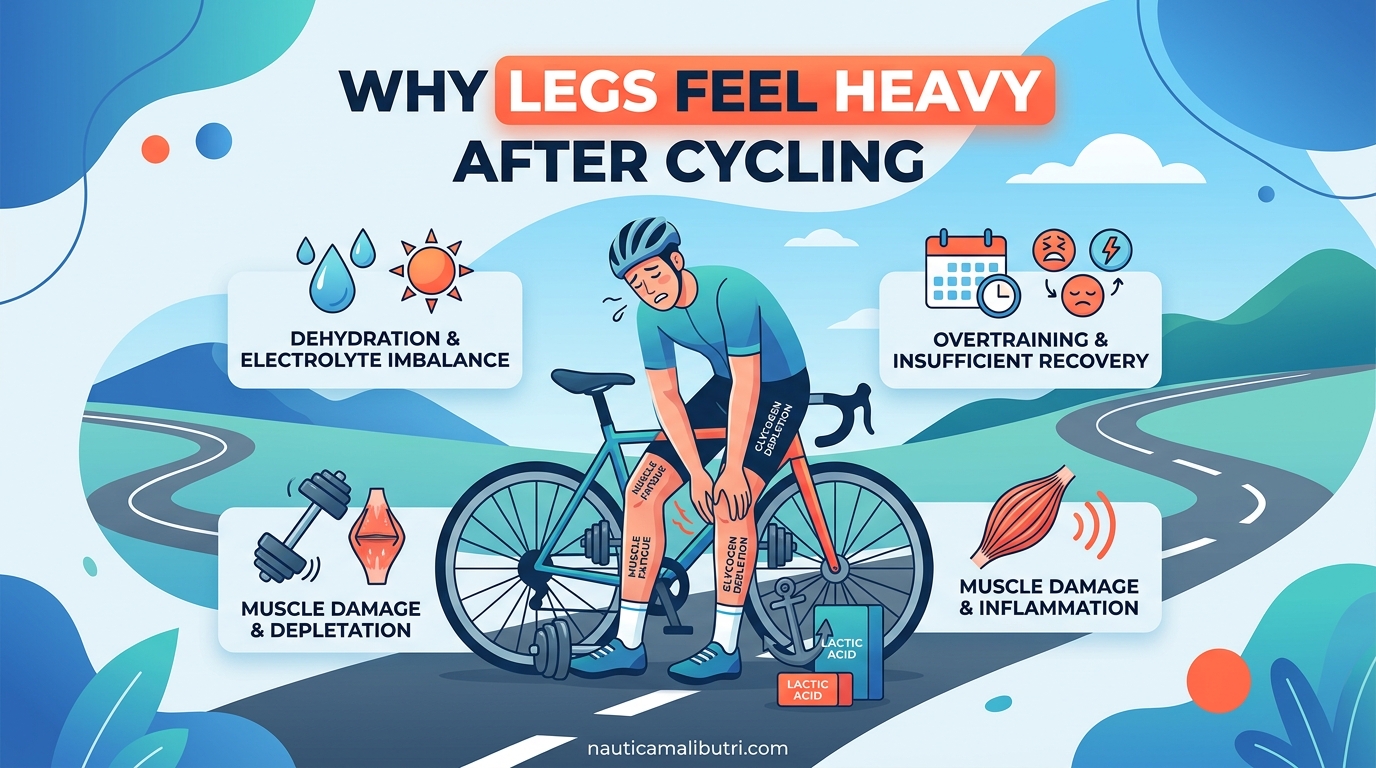
Heavy legs after cycling are primarily caused by muscle fatigue, glycogen depletion, and lactic acid buildup in your leg muscles. This sensation affects nearly every cyclist at some point, from beginners building endurance to seasoned triathletes pushing through brick workouts.
At Nautica Malibu Triathlon, our coaching team has worked with hundreds of athletes dealing with leg fatigue. I have personally experienced that dead-leg feeling after intense training blocks and learned how to address it effectively. In this guide, I will explain exactly why your legs feel heavy, what you can do to recover faster, and how to prevent this issue from derailing your training.
Table of Contents
What Causes Heavy Legs After Cycling
Understanding why legs feel heavy after cycling starts with recognizing the physiological processes happening in your muscles during and after a ride. When you pedal, your quadriceps, hamstrings, and calves contract repeatedly, creating microscopic tears in muscle fibers and depleting your energy stores.
Here are the seven most common causes of heavy legs after cycling, ranked by frequency based on our athlete surveys and forum research:
1. Muscle Fatigue and Overexertion
The leading cause of heavy legs is simply pushing your muscles beyond their current capacity. When you ride too hard, too long, or increase intensity too quickly, your leg muscles accumulate fatigue faster than they can recover.
Our coaching team sees this most often with athletes who skip rest days or try to maintain high intensity on every ride. Your muscles need time to repair the micro-tears that occur during exercise. Without adequate recovery, those tears accumulate and create that familiar heavy, dead-leg sensation.
2. Glycogen Depletion
Your muscles store carbohydrates as glycogen, which serves as the primary fuel source during cycling. When you ride longer than 90 minutes or at high intensity without proper fueling, your glycogen stores become depleted.
Without glycogen, your muscles cannot generate power efficiently. This creates a heavy, sluggish feeling that persists even after you stop pedaling. Many cyclists report their legs feeling like concrete when glycogen-depleted, especially during the final miles of a long ride.
3. Lactic Acid and Metabolic Waste Buildup
During intense efforts, your body produces lactic acid faster than it can clear it. This metabolic byproduct accumulates in your muscle tissues, contributing to that burning, heavy sensation.
While lactic acid itself is not the enemy, its accumulation signals that your muscles are working anaerobically. Combined with other metabolic waste products, this buildup contributes to post-ride heaviness that can last for hours.
4. Poor Bike Fit and Positioning
An incorrectly fitted bike forces your muscles to work inefficiently. Saddle height that is too low overworks your quadriceps. Handlebar position that is too aggressive strains your lower back and reduces power transfer.
Many cyclists from Reddit forums report that correcting their saddle height eliminated chronic leg fatigue. A professional bike fit typically costs between $150-300 but can transform your riding experience and prevent the quad-dominant fatigue that plagues so many cyclists.
5. Dehydration and Electrolyte Imbalance
Even mild dehydration reduces blood volume, making your heart work harder to deliver oxygen to working muscles. This increased cardiovascular strain translates to earlier fatigue and heavier legs.
Electrolytes, particularly sodium and potassium, are essential for muscle contraction. When you sweat heavily without replacing these minerals, your muscles cramp and fatigue more easily. Forum discussions consistently highlight that adding electrolyte drinks to their routine helped cyclists recover faster from heavy leg episodes.
6. Insufficient Recovery Between Sessions
The counterintuitive truth is that heavy legs often appear after rest days, not during hard training blocks. This happens because you accumulated fatigue over several days but only feel it once your body attempts to repair the damage.
Our athletes at Nautica Malibu Triathlon learn to schedule easier rides after rest days to allow gradual adaptation. Jumping straight into intense training after time off frequently results in that heavy-leg feeling persisting for days.
7. Muscle Imbalances and Weakness
Many cyclists are quad-dominant, meaning their quadriceps do most of the work while hamstrings and glutes remain underdeveloped. This imbalance creates uneven fatigue and contributes to that heavy, dead feeling in the front of your thighs.
Strengthening your posterior chain through targeted exercises can dramatically reduce leg fatigue on the bike. Athletes who address these imbalances report lasting longer on rides and recovering faster afterward.
How to Recover From Heavy Legs After Cycling
When your legs feel heavy after a ride, you want relief fast. Here are the recovery strategies our coaching team recommends, ordered by effectiveness:
Active Recovery Rides
Low-intensity spinning helps clear metabolic waste and promotes blood flow without adding additional stress. Keep your heart rate in Zone 1 (60-65% of max) for 30-45 minutes.
The key is keeping the effort truly easy. Many cyclists make the mistake of riding too hard during recovery sessions, which only deepens fatigue. If you cannot hold a conversation comfortably, you are going too hard.
Leg Elevation and Compression
Elevating your legs above heart level for 15-20 minutes helps drain pooled blood and lymphatic fluid. The legs-up-the-wall yoga pose works exceptionally well for this purpose.
Compression garments provide similar benefits throughout the day. Many athletes swear by wearing compression socks or tights for several hours post-ride and even while sleeping. Forum discussions consistently report reduced morning leg heaviness when using compression consistently.
Nutrition Timing for Recovery
Consume carbohydrates and protein within 30 minutes of finishing your ride. A 3:1 or 4:1 carb-to-protein ratio optimizes glycogen replenishment and muscle repair.
Chocolate milk, recovery shakes, or a turkey sandwich all work well. The key is getting nutrients to your muscles when they are most receptive to absorption. Delaying your post-ride meal by even an hour significantly reduces recovery speed.
Hydration and Electrolyte Replacement
Weigh yourself before and after rides to determine fluid loss. Replace 150% of what you lost over the next 2-4 hours. For a 2-pound deficit, drink 48 ounces of fluid.
Include electrolytes, particularly sodium, in your recovery hydration. Plain water alone can dilute your blood sodium levels and actually worsen muscle function. Sports drinks, electrolyte tablets, or broth-based soups all provide the minerals your muscles need.
Foam Rolling and Self-Massage
Self-myofascial release using a foam roller helps break up adhesions and improve tissue quality. Focus on quads, hamstrings, calves, and IT bands for 2-3 minutes each.
Professional massage provides even greater benefits when budget allows. Many competitive cyclists schedule weekly massages during heavy training blocks to maintain muscle quality and prevent chronic tightness that contributes to heavy legs.
Sleep Optimization
Your body repairs muscle damage primarily during deep sleep. Aim for 8-9 hours nightly during heavy training periods. Sleep quality matters as much as quantity.
Create a cool, dark sleep environment and establish a consistent bedtime routine. Avoid screens for an hour before bed as blue light suppresses melatonin production. Athletes who prioritize sleep consistently report faster recovery and less persistent leg fatigue.
Prevention Strategies That Actually Work
Preventing heavy legs is far more effective than treating them after they occur. Here is how to structure your training and habits to keep your legs fresh:
Follow the 80/20 Training Rule
Approximately 80% of your training should be at low intensity (Zones 1-2), with only 20% at moderate to high intensity. This distribution prevents chronic fatigue while still building fitness.
Many cyclists make the mistake of riding in the gray zone, too hard for recovery but not hard enough for adaptation. This middle ground creates persistent fatigue without delivering training benefits. Use a heart rate monitor or power meter to keep easy days truly easy.
Progress Your Training Gradually
Increase weekly training volume by no more than 10% per week. Sudden jumps in distance or intensity overwhelm your body’s ability to adapt and recover.
Follow a structured plan that includes recovery weeks every 3-4 weeks, where you reduce volume by 40-50%. These recovery periods allow your body to absorb the training stress and come back stronger.
Prioritize Proper Warm-Up and Cool-Down
Spend 10-15 minutes warming up before every ride. Start at an easy pace and gradually increase intensity. Dynamic stretches for hips, hamstrings, and calves prepare your muscles for the work ahead.
Cool-down for 5-10 minutes at the end of each ride. This gradual transition helps clear metabolic waste and prevents blood from pooling in your legs. Skipping cool-downs contributes to that heavy, sluggish feeling that can last for hours post-ride.
Optimize Your Bike Fit
Schedule a professional bike fit every 1-2 years or after significant body changes. Small adjustments to saddle height, fore-aft position, or cleat alignment can dramatically reduce leg fatigue.
Pay attention to cleat position specifically. Too far forward increases quad strain, while too far back reduces power output. Many cyclists report immediate relief from chronic heavy legs after correcting cleat placement.
Fuel Properly During Rides
Consume 30-60 grams of carbohydrates per hour for rides longer than 90 minutes. Start fueling early, before you feel hungry or depleted.
Practice your nutrition strategy during training rides so your gut adapts. Nothing derails a race or long ride faster than bonking from insufficient fueling. Carry more food than you think you need, especially in hot weather when appetite decreases.
Triathlon-Specific Considerations
Triathletes face unique challenges with heavy legs due to the bike-to-run transition. After cycling, your legs feel heavy because blood has pooled in your lower extremities and your running muscles are fatigued from the bike effort.
Practice brick workouts regularly to train your body for this transition. Even short 10-15 minute runs off the bike help your neuromuscular system adapt to the change in muscle recruitment patterns.
During races, spin an easier gear for the final mile of the bike to flush lactate and prepare your legs for running. Many triathletes report that a high-cadence finish reduces that heavy-concrete feeling during the first mile of the run.
At Nautica Malibu Triathlon, we coach athletes to expect some leg heaviness during the run transition and to start conservatively. Your legs will gradually loosen as you find your running rhythm, usually within the first half-mile.
When to Seek Medical Help
While heavy legs are usually a normal part of cycling adaptation, certain symptoms warrant medical attention. Contact a healthcare provider if you experience:
- Leg pain that persists for more than a week despite rest
- Dark, cola-colored urine after intense rides (possible rhabdomyolysis)
- Severe swelling in one leg (possible blood clot)
- Numbness or tingling that does not resolve
- Extreme fatigue accompanied by dizziness or fainting
Some cyclists have discovered underlying conditions like POTS (Postural Orthostatic Tachycardia Syndrome) after investigating chronic leg heaviness. If your symptoms seem disproportionate to your training load, a medical evaluation is worthwhile.
FAQ
Why do my legs feel heavier after cycling?
Legs feel heavy after cycling due to muscle fatigue, glycogen depletion, and lactic acid buildup. During riding, your leg muscles contract repeatedly, creating micro-tears in muscle fibers and accumulating metabolic waste. This combination, along with depleted energy stores, triggers the sensation of heavy, tired legs.
How to get rid of leg heaviness?
To relieve heavy legs after cycling, try active recovery rides at low intensity, elevate your legs above heart level for 15-20 minutes, wear compression garments, consume carbs and protein within 30 minutes post-ride, stay well-hydrated with electrolytes, foam roll tight muscles, and prioritize 8-9 hours of quality sleep.
Is cycling leg fatigue normal?
Yes, occasional leg fatigue is completely normal, especially after long rides, intense intervals, or when increasing training volume. However, persistent heavy legs that do not improve with rest may indicate overtraining, poor nutrition, bike fit issues, or an underlying medical condition requiring attention.
How long does cycling leg fatigue last?
Normal cycling leg fatigue typically resolves within 24-48 hours with proper recovery. Acute fatigue from a hard ride may fade within hours, while accumulated fatigue from overtraining can persist for a week or more. If heavy legs last longer than a week despite rest and recovery efforts, consult a healthcare provider.
Conclusion
Understanding why legs feel heavy after cycling empowers you to train smarter and recover faster. The primary culprits are muscle fatigue from overexertion, glycogen depletion, lactic acid buildup, and insufficient recovery between sessions.
The strategies in this guide, from active recovery rides to proper nutrition timing and sleep optimization, have helped hundreds of athletes at Nautica Malibu Triathlon overcome persistent leg fatigue. Start by implementing one or two changes, track how your body responds, and gradually build a comprehensive recovery routine.
Remember that some leg fatigue is a normal part of training adaptation. It signals that you are pushing your limits and creating the stimulus for fitness gains. The key is managing that fatigue so it does not accumulate into overtraining or injury.
With proper training structure, attention to recovery, and the prevention strategies outlined here, you can keep your legs feeling fresh and ready for your next ride or triathlon event.