
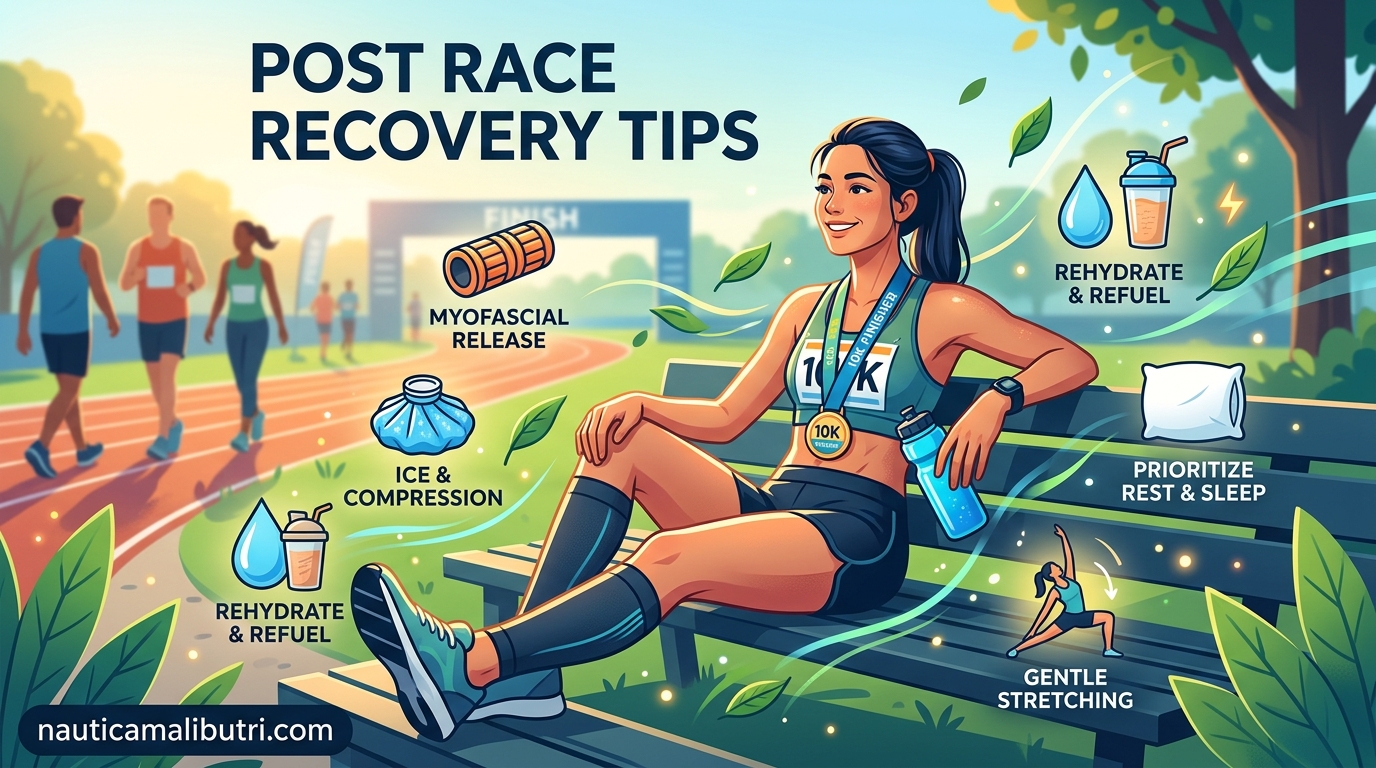
Crossing the finish line is just the beginning of your race journey. What you do in the hours and days following your race will determine how quickly you bounce back and how strong you’ll be for your next training cycle.
Our team has worked with hundreds of athletes who have raced the Nautica Malibu Triathlon and other endurance events across Southern California. We’ve seen the difference that proper recovery makes firsthand.
This guide covers everything you need to know about post race recovery tips that actually work. From the moment you stop your watch to your first run back, here’s how to recover like a pro in 2026.
Table of Contents
Why Post-Race Recovery Matters More Than You Think
Racing puts your body through significant stress. A marathon depletes glycogen stores, creates micro-tears in muscle fibers, and suppresses your immune system for up to 72 hours. Even a 5K creates inflammation that needs addressing.
Recovery is not passive rest. It is an active process of replenishing energy, repairing tissue, and resetting your nervous system. Skip it, and you risk extended soreness, injury, or burning out mentally before your next event.
The good news: your body wants to heal. Give it the right inputs, and it will reward you with faster fitness gains and reduced downtime between races.
Immediate Post-Race Actions: The First Two Hours
The window immediately after you finish is critical. What you do here sets the tone for your entire recovery.
Keep Moving for 10 to 15 Minutes
Resist the urge to sit down right away. Walk through the finish chute, grab your medal, and keep moving for at least 10 minutes. This prevents blood from pooling in your legs and helps flush metabolic waste from your muscles.
I have watched athletes cramp up badly because they stopped cold after a hard effort. Light walking maintains circulation and reduces the severity of delayed onset muscle soreness (DOMS) that hits 24 to 48 hours later.
Change Out of Wet Clothes Immediately
If you did the ocean swim at the Malibu Triathlon, get out of that wetsuit and wet gear as soon as possible. Wet clothing drops your body temperature and can lead to chills that stress your already-fatigued system.
Pack a dry bag with a complete change of clothes, including socks and shoes. Put it in your gear check or have a friend hold it near the finish area.
Start Rehydrating Within 30 Minutes
Begin drinking fluids before you feel thirsty. Your thirst mechanism lags behind actual fluid needs. Aim for 16 to 20 ounces of fluid in that first half hour after finishing.
Hydration Guidance: How Much and What to Drink
Proper hydration goes beyond water. You have lost electrolytes through sweat that plain water cannot replace.
The 32-Ounce Rule
For every hour you raced, drink approximately 32 ounces of fluid in the 4 hours following the finish. A 3-hour marathoner should target 96 ounces total.
Include electrolytes in at least half of those fluids. Sports drinks, electrolyte tablets, or coconut water all work well. Watch for signs of dehydration: dark urine, headache, dizziness, or persistent fatigue beyond normal post-race tiredness.
Monitor Your Urine
Your urine color tells the story. Pale yellow means you are hydrated. Dark yellow or amber means keep drinking. You want to return to pale yellow within 6 hours of finishing your race.
Avoid alcohol for at least 24 hours post-race. I know the post-race beer tent is tempting, but alcohol dehydrates you further and impairs muscle protein synthesis when your body needs it most.
Nutrition and Refueling: The 30-Minute Window
Your muscles are most receptive to glycogen replenishment in the first 30 minutes after exercise. Miss this window, and your recovery slows significantly.
The 4:1 Carb-to-Protein Ratio
Consume 0.5 to 0.7 grams of carbohydrate per pound of body weight within that 30-minute window. Pair it with 15 to 25 grams of protein. The classic ratio is 4 grams of carbs for every 1 gram of protein.
Chocolate milk has become the go-to recovery drink for a reason. It hits the ratio perfectly and is widely available at race finish lines. Other solid options include a turkey sandwich, Greek yogurt with fruit, or a protein smoothie with banana and berries.
Anti-Inflammatory Foods for the Win
Focus on foods that reduce inflammation rather than increase it. Tart cherries, turmeric, ginger, salmon, walnuts, and leafy greens all support muscle repair and reduce soreness.
Avoid processed foods and excessive sugar. They spike insulin and increase inflammation when your body needs the opposite. Stick to whole foods for your first few post-race meals.
Your First Full Meal
Within 2 hours of finishing, eat a balanced meal with quality protein, complex carbohydrates, and vegetables. Think grilled chicken with sweet potato and broccoli, or salmon with quinoa and roasted vegetables.
Active Recovery Techniques That Actually Work
Complete rest is not always best. Strategic light movement accelerates recovery by promoting blood flow without adding stress.
The Day After: Keep It Easy
Take a 20 to 30 minute walk the day after your race. Do some gentle stretching or yoga. The movement should feel restorative, not challenging. If you are breathing hard, you are going too hard.
Swimming is excellent active recovery. The water supports your body while allowing gentle movement. Many Malibu Triathlon athletes will do an easy ocean swim the day after racing to loosen up stiff muscles.
Foam Rolling for Sore Muscles
Spend 10 to 15 minutes foam rolling major muscle groups: quads, hamstrings, calves, IT bands, and glutes. Roll slowly, pausing on tight spots for 20 to 30 seconds until you feel release.
Wait until the day after your race to foam roll. Rolling immediately post-race can increase inflammation when your muscles are already stressed. Give your body that first night to begin the healing process.
Gentle Stretching Protocol
Hold stretches for 30 to 60 seconds without bouncing. Focus on hips, hamstrings, calves, and lower back. Never stretch to the point of pain, only mild tension.
Dynamic stretching works better than static immediately post-race. Leg swings, hip circles, and walking lunges help restore range of motion without overstretching cold muscles.
Cold Therapy and Compression Gear
Cold therapy reduces inflammation and numbs soreness. Compression gear aids circulation and reduces swelling. Both have their place in your recovery toolkit.
Ice Baths and Cold Plunges
Sit in cold water at 50 to 59 degrees Fahrenheit for 10 to 15 minutes within 2 hours of finishing. This constricts blood vessels, flushing metabolic waste and reducing tissue breakdown.
Not everyone tolerates cold well. If you skipped the ice bath immediately post-race, you can still benefit from a cold shower or a 10-minute cold plunge later that evening. Do not wait longer than 24 hours for the full anti-inflammatory effect.
Compression Gear: What Actually Helps
Compression socks and calf sleeves reduce swelling in the lower legs and improve venous return. Wear them for 2 to 4 hours after racing, or even sleep in them that first night.
Compression tights provide broader coverage for quads and hamstrings. They are especially helpful after marathon or half-ironman distances. The key is graduated compression that is tighter at the ankle and looser toward the thigh.
Epsom Salt Baths
After the first 24 hours, switch to warm Epsom salt baths. The magnesium sulfate may help muscle relaxation and reduce next-day soreness. Soak for 15 to 20 minutes in water as warm as you can comfortably tolerate.
Sleep: Your Secret Recovery Weapon
Deep sleep is when muscle repair and growth hormone release peak. No recovery modality can replace quality sleep.
Prioritize the First Night
Aim for 8 to 10 hours of sleep the night after your race. Your body does its most significant repair work during deep sleep cycles, which occur primarily in the first half of the night.
Many runners struggle to sleep well after evening races or when still buzzing from race day excitement. Create a wind-down routine: dim lights, avoid screens for an hour before bed, and keep the room cool and dark.
Naps Count Too
If nighttime sleep was poor, take a 20 to 30 minute nap the next day. Keep naps short to avoid entering deep sleep, which can leave you groggy. A brief nap reduces cortisol and supports recovery without disrupting your sleep schedule.
Monitor Your Heart Rate Variability
If you use a fitness tracker, watch your heart rate variability (HRV) in the days following your race. Low HRV indicates your nervous system is still stressed and needs more rest. High HRV means you are recovering well and can gradually return to activity.
Distance-Specific Recovery Timelines
Not all races require the same recovery approach. A 5K demands far less downtime than a marathon. Here is how to adjust based on your race distance.
| Race Distance | Light Activity Next Day | Return to Easy Running | Full Training Resume |
|---|---|---|---|
| 5K / 10K | Walking or light cross-training | 2 to 3 days post-race | 5 to 7 days post-race |
| Half Marathon | Walking, yoga, or swimming | 4 to 5 days post-race | 10 to 14 days post-race |
| Marathon | Complete rest or gentle walking only | 7 to 10 days post-race | 3 to 4 weeks post-race |
| Triathlon (Olympic) | Swimming or easy cycling | 5 to 7 days post-race | 10 to 14 days post-race |
| Triathlon (Half-Ironman) | Walking or gentle yoga only | 10 to 14 days post-race | 4 to 6 weeks post-race |
5K and 10K Recovery
Races under an hour require minimal structured recovery. Take one rest day or do light cross-training the next day. Resume easy running within 2 to 3 days. Your body bounces back quickly from shorter efforts.
Half Marathon Recovery
The half marathon is a deceptively taxing distance. You likely ran hard for 90 minutes to 3 hours. Take 3 to 5 days of complete rest or very light activity before attempting any structured running.
Marathon Recovery
A full marathon depletes your body deeply. Take 7 to 10 days of no running whatsoever. Walk, swim, or do yoga if you must move, but resist the urge to test your legs with a run. They are not ready, even if they feel okay.
The marathon recovery rule of thumb: one easy day per mile raced. That means roughly 26 days of reduced training before returning to full intensity. Your immune system remains compromised for weeks, so prioritize sleep and nutrition.
Triathlon-Specific Recovery Considerations
Triathletes face unique recovery challenges. You have stressed three different muscle groups, dealt with two transitions, and likely raced longer than most pure runners.
Ocean Swim Recovery
The Malibu Triathlon features an ocean swim that challenges your shoulders and upper back differently than pool swimming. Rinse off salt water immediately after finishing to prevent skin irritation. Pay attention to shoulder mobility in the days following.
Gentle shoulder rolls and doorway stretches help restore range of motion. If you feel any sharp shoulder pain, back off and consider seeing a physical therapist. Swimming injuries can become chronic if ignored.
Bike Leg Fatigue
The bike leg creates unique fatigue patterns. Your quads and hip flexors work in a fixed position for an extended period. After the Malibu bike course, expect stiffness in your lower back and tight hip flexors.
Spend extra time foam rolling your hip flexors and glutes. Gentle hip-opening yoga poses like pigeon pose and figure-four stretch work wonders in the days following a hard bike effort.
Brick Workout Recovery
The transition from bike to run creates a specific kind of leg fatigue. Your running muscles are already pre-fatigued from cycling, which increases the damage done during the run portion. This is why triathlon recovery often takes longer than pure running events.
Mental Recovery: Avoiding Post-Race Blues
Physical recovery is only half the battle. Many athletes experience a mental crash after achieving a big goal.
The Post-Race Letdown
You trained for months, sacrificed social events, and structured your life around this race. Then it is over in a few hours. That anticlimactic feeling is normal and nearly universal.
Give yourself permission to feel a bit lost. Talk to training partners who understand. Sign up for your next event within a few weeks to give yourself a new focus, even if it is months away.
Rebuilding Motivation
Do not rush back into structured training until you are mentally ready. Forcing workouts when you are burned out leads to poor performance and potential injury. Take 2 to 4 weeks of unstructured running: no pace goals, no distance requirements, just running for enjoyment.
Cross-train to maintain fitness without the mental load of running. Cycling, swimming, hiking, or even walking keep your cardiovascular system active while giving your mind a break from the sport.
When to Seek Medical Attention
Some post-race symptoms are not normal and require professional care. Know the warning signs.
Seek medical help if you experience: chest pain or pressure, difficulty breathing that does not improve with rest, severe muscle pain accompanied by dark urine (possible rhabdomyolysis), swelling in one leg more than the other (possible blood clot), fever over 101 degrees lasting more than 24 hours, or inability to bear weight on a limb.
Also consult a doctor if normal soreness has not improved after 7 days, or if you feel progressively worse instead of better after day 3.
Frequently Asked Questions
How do I speed up post-race recovery?
Focus on the fundamentals immediately after finishing: keep moving for 10-15 minutes, consume carbs and protein within 30 minutes, rehydrate with electrolytes, and prioritize sleep that night. In the following days, use foam rolling, compression gear, and active recovery like walking or swimming. Avoid alcohol and anti-inflammatory medications that can impair healing.
What is an average recovery time after a big race?
Recovery time depends on race distance and effort level. A 5K requires 5-7 days, a half marathon needs 10-14 days, and a full marathon demands 3-4 weeks before full training resumes. Triathlons follow similar timelines based on total duration. Listen to your body and use the easy day per mile raced rule for marathons.
What to do after half marathon for optimal recovery?
Keep walking for 10-15 minutes after crossing the finish line. Drink 16-20 ounces of fluid immediately. Eat a snack with 4:1 carbs to protein within 30 minutes. Change into dry clothes. Take 3-5 days of rest or light cross-training before running again. Resume easy running on day 4-5 if you feel ready.
Should I take an ice bath after a race?
Ice baths help reduce inflammation and soreness when taken within 2 hours of finishing. Sit in water at 50-59 degrees Fahrenheit for 10-15 minutes. If you cannot do it immediately, a cold shower or plunge later that day still provides benefits. Skip ice baths if you have circulation issues or simply cannot tolerate cold therapy.
When can I run again after a marathon?
Wait at least 7-10 days before attempting any running after a marathon. Your muscles, joints, and immune system need time to recover. Walking, swimming, or yoga are fine during this period. When you do run again, keep it easy and short: 20-30 minutes at a conversational pace. Follow the one easy day per mile raced guideline.
What are the best foods for post-race recovery?
Prioritize foods with a 4:1 carbohydrate to protein ratio within 30 minutes: chocolate milk, turkey sandwich, Greek yogurt with fruit, or a recovery smoothie. Focus on anti-inflammatory foods like tart cherries, salmon, turmeric, ginger, walnuts, and leafy greens. Avoid processed foods, excessive sugar, and alcohol for at least 24 hours.
Final Thoughts on Post Race Recovery Tips
Recovery is not a luxury. It is a necessary part of training that allows your body to adapt and grow stronger. The athletes who recover well are the ones who continue improving year after year without burning out or breaking down.
Follow the post race recovery tips outlined in this guide, and you will bounce back faster and stronger for your next event. Whether you are racing the Nautica Malibu Triathlon or any other endurance event, give your body the care it deserves after you cross that finish line.
Your next personal record starts with how well you recover today.