
You wake up, swing your legs over the bed, and take that first step. The sharp, stabbing pain in your heel stops you cold. If you are a runner or triathlete, that morning heel pain is the dreaded calling card of plantar fasciitis.
I have been there myself. Three months before my first half-Ironman, that familiar ache started creeping in. What began as minor morning discomfort turned into a daily battle that threatened my race plans. Learning how to treat plantar fasciitis at home became my mission, and the strategies in this guide saved my season.
This article covers everything you need to know about treating plantar fasciitis at home. We will walk through proven treatment protocols, specific exercises that actually work, and triathlon-specific training modifications to keep you moving while you heal.
Table of Contents
What Is Plantar Fasciitis?
Plantar fasciitis is inflammation of the plantar fascia, a thick band of fibrous tissue that connects your heel bone to your toes. This strong ligament supports your foot’s arch and acts as a shock absorber with every step you take.
The condition develops when repetitive strain causes microtears in the fascial tissue. These tiny tears trigger inflammation, leading to the characteristic heel pain that plagues so many athletes. The pain typically concentrates at the bottom of your heel or along the inner arch of your foot.
Runners and triathletes are particularly susceptible due to the repetitive impact forces involved in training. Training errors like sudden mileage increases, inadequate recovery, or worn-out running shoes commonly trigger the condition. Biomechanical factors including flat feet, high arches, tight calves, and overpronation further increase your risk.
The hallmark symptom is that first-step pain. You will feel a sharp, stabbing sensation with your initial steps after sitting or sleeping. This happens because the plantar fascia contracts and tightens during rest. As you move, the tissue stretches and the pain typically subsides, though it often returns after prolonged activity.
Many athletes confuse plantar fasciitis with heel spurs, but they are different conditions. Heel spurs are bony calcium deposits that may or may not cause pain. Plantar fasciitis involves soft tissue inflammation and causes the actual symptoms you experience.
How to Treat Plantar Fasciitis at Home: The Complete Protocol
Treating plantar fasciitis at home requires a multi-pronged approach. You need to reduce inflammation, stretch tight tissues, strengthen supporting muscles, and modify your activities. Here is the evidence-based protocol that has helped thousands of athletes recover without surgery.
Rest and Activity Modification
The first rule of treating plantar fasciitis is to stop running through the pain. I know this is not what you want to hear. Every runner and triathlete I have talked to fights this reality, hoping the pain will magically disappear. It will not. Running through plantar fasciitis turns a six-week recovery into a six-month nightmare.
Reduce your running volume by at least 50 percent immediately when symptoms appear. If pain continues, stop running completely. Many athletes from forums report that complete rest was the turning point in their recovery. One runner shared that stopping running entirely and focusing on aggressive stretching finally healed their six-year battle with the condition.
Cross-training becomes your best friend during recovery. Swimming, deep water running, and cycling can maintain cardiovascular fitness without the impact forces that aggravate plantar fasciitis. We will cover triathlon-specific modifications in detail later in this guide.
Listen to your pain signals carefully. Mild discomfort that warms up and disappears during activity is different from sharp pain that worsens as you go. Use a pain scale of one to ten. If your pain exceeds three out of ten during activity, stop immediately.
Ice Therapy (The Frozen Water Bottle Method)
Ice therapy reduces inflammation and numbs pain. The frozen water bottle technique stands out as the most effective method for plantar fasciitis specifically. It combines cooling therapy with gentle massage.
Fill a plastic water bottle three-quarters full and freeze it solid. Place the bottle on the floor and roll your foot over it for ten to fifteen minutes. Apply gentle pressure and move from your heel to the ball of your foot. The ridges of the bottle provide myofascial release while the cold reduces inflammation.
Perform this treatment three to four times daily, especially after activity. Many athletes report significant morning pain relief when they do this before bed and immediately upon waking. The cold penetrates deep into the tissue, constricting blood vessels and reducing the inflammatory response.
Alternative ice methods include ice packs wrapped in thin towels or ice massage using ice cubes directly on the heel. Never apply ice directly to skin for extended periods as this can cause tissue damage. Always use a barrier and limit sessions to fifteen minutes.
NSAIDs and Pain Management
Non-steroidal anti-inflammatory drugs help manage pain and reduce inflammation during the acute phase. Ibuprofen and naproxen are the most common over-the-counter options available.
Take NSAIDs according to package directions for seven to fourteen days during the initial inflammatory phase. Use them strategically around your most painful times, typically first thing in the morning and after activity. Do not exceed recommended dosages or use them for extended periods without medical supervision.
NSAIDs mask pain, which can be dangerous for athletes. If you take them and continue training hard, you risk worsening the injury without feeling the warning signs. Use these medications to get through daily activities comfortably while following the rest of your treatment protocol.
Consider topical NSAID gels for localized relief with fewer systemic side effects. These can be applied directly to the heel and arch area up to four times daily. Oral NSAIDs can affect stomach lining and kidney function, so topical options may be preferable for some athletes.
Supportive Footwear and Orthotics
Your shoe choices dramatically impact plantar fasciitis recovery. Wearing unsupportive footwear at any point during the day can undo all your other treatment efforts. This includes time spent at home, not just during workouts.
Wear shoes with good arch support and cushioning at all times. Avoid walking barefoot on hard surfaces, even in your home. Many athletes make the mistake of diligently following their treatment protocol but then walking barefoot on tile floors every morning. This immediately re-aggravates the condition.
Running shoes should be replaced every 300 to 500 miles. Worn-out midsoles lose cushioning and stability, increasing strain on the plantar fascia. Rotate between two pairs of running shoes if possible, allowing foam midsoles time to decompress between runs.
Over-the-counter orthotic inserts provide additional arch support for many sufferers. Look for semi-rigid inserts with deep heel cups. Custom orthotics may be worth the investment if over-the-counter options do not provide sufficient relief. A podiatrist can assess your specific biomechanical needs.
Consider zero-drop or minimalist shoes cautiously. Some athletes report relief after switching to Altras or similar brands, while others find they worsen symptoms. Changes in heel-to-toe drop alter how forces transmit through your foot. If you experiment with different shoe types, transition gradually.
Night Splints and Sleep Positioning
Night splints are one of the most effective yet underutilized home treatments. These devices hold your foot in a dorsiflexed position overnight, gently stretching the plantar fascia and Achilles tendon while you sleep.
The classic morning pain occurs because the plantar fascia contracts during sleep. When you take that first step, the suddenly stretched tissue tears slightly, causing sharp pain. Night splints prevent this contraction, eliminating the morning pain cycle that perpetuates the injury.
Wear a night splint consistently for at least four to six weeks. Most athletes find them uncomfortable initially, but you adapt within a few nights. Strassburg socks offer a less bulky alternative to rigid splints. These fabric socks use elastic tension to maintain foot position.
Even without a splint, sleep positioning matters. Try to avoid sleeping with your toes pointed, which shortens the plantar fascia. Keep your bed sheets loose at the foot of the bed. Tight sheets that pull your toes downward contribute to tissue contraction overnight.
Several athletes in online forums specifically credit night splints for finally curing their chronic plantar fasciitis after other methods failed. One runner reported that wearing a night splint made their foot feel much better in the morning and was a game-changer in their recovery.
Stretching and Strengthening Exercises That Actually Work
Stretching forms the foundation of plantar fasciitis recovery. However, not all stretches are equally effective. Research consistently shows that calf stretching produces the best outcomes for this condition.
Calf and Achilles Stretches
The wall stretch targets your gastrocnemius muscle, the large calf muscle that attaches to your Achilles tendon. Stand facing a wall with your hands against it at shoulder height. Step one foot back, keeping it straight with the heel flat on the floor. Bend your front knee and lean forward until you feel a stretch in your back calf. Hold for thirty seconds, repeat three times per leg, and perform three times daily.
The stair stretch provides a deeper stretch for both calf muscles. Stand on a step with just the balls of your feet on the edge. Let your heels drop below the step level until you feel a strong but comfortable stretch. Hold for thirty seconds, repeat three times, and do this three times daily. Hold onto a railing for stability.
Many athletes neglect the soleus muscle, the deeper calf muscle that plays a crucial role in plantar fasciitis. For the soleus stretch, assume the wall stretch position but bend your back knee slightly while keeping the heel flat. This shift targets the deeper muscle fibers. Hold for thirty seconds and repeat three times per leg.
Consistency trumps intensity with these stretches. I stretched my calves three times daily for three months during my recovery. The cumulative effect of frequent gentle stretching produces better results than occasional aggressive stretching sessions.
Plantar Fascia-Specific Stretches
Direct stretching of the plantar fascia tissue helps reduce tension and promote healing. These stretches specifically target the injured tissue rather than just the surrounding muscles.
The toe stretch is simple but effective. While seated, cross your affected leg over your opposite knee. Grasp your toes and gently pull them back toward your shin until you feel a stretch in your arch. Hold for thirty seconds and repeat three times. You can massage your arch with your other thumb while holding the stretch for added benefit.
The seated foot stretch requires no equipment. Sit in a chair and place your affected foot flat on the floor. Keeping your heel planted, gently pull your toes and forefoot back toward your shin as far as comfortable. Hold for thirty seconds, rest, and repeat three times.
Perform these fascia-specific stretches three to four times daily, especially before taking your first steps after resting. Stretching before getting out of bed in the morning can significantly reduce that first-step pain. Keep a towel or yoga strap by your bed to help with stretching before standing.
Strengthening Exercises
While stretching addresses tightness, strengthening builds the support structures that protect your plantar fascia. Research increasingly supports eccentric loading exercises for tendon and fascial tissue healing.
Towel curls strengthen the intrinsic foot muscles that support your arch. Sit with your foot flat on the floor and a small towel under your toes. Use your toes to scrunch the towel toward you, gathering it into folds. Perform three sets of fifteen repetitions. This exercise strengthens the small muscles supporting your arch.
Marble pickups develop toe strength and coordination. Place twenty marbles on the floor and a cup nearby. Use your toes to pick up each marble and place it in the cup. Complete this with both feet. Perform this exercise once daily.
Eccentric calf raises specifically target tissue remodeling. Stand on the edge of a step with your heels hanging off. Rise up onto your toes using both feet, then shift your weight to the affected foot and slowly lower your heel below the step level over a count of five seconds. Perform three sets of fifteen repetitions once daily. The controlled lowering phase stimulates collagen production in the healing tissue.
One forum member who struggled with plantar fasciitis for six years reported finally curing it through heavy strength work. They noted that the plantar fascia usually becomes irritated because surrounding muscles lack the flexibility and strength to support the foot properly.
Myofascial Release Techniques
Self-massage helps break up fascial adhesions and improve blood flow to healing tissue. These techniques complement stretching and strengthening efforts.
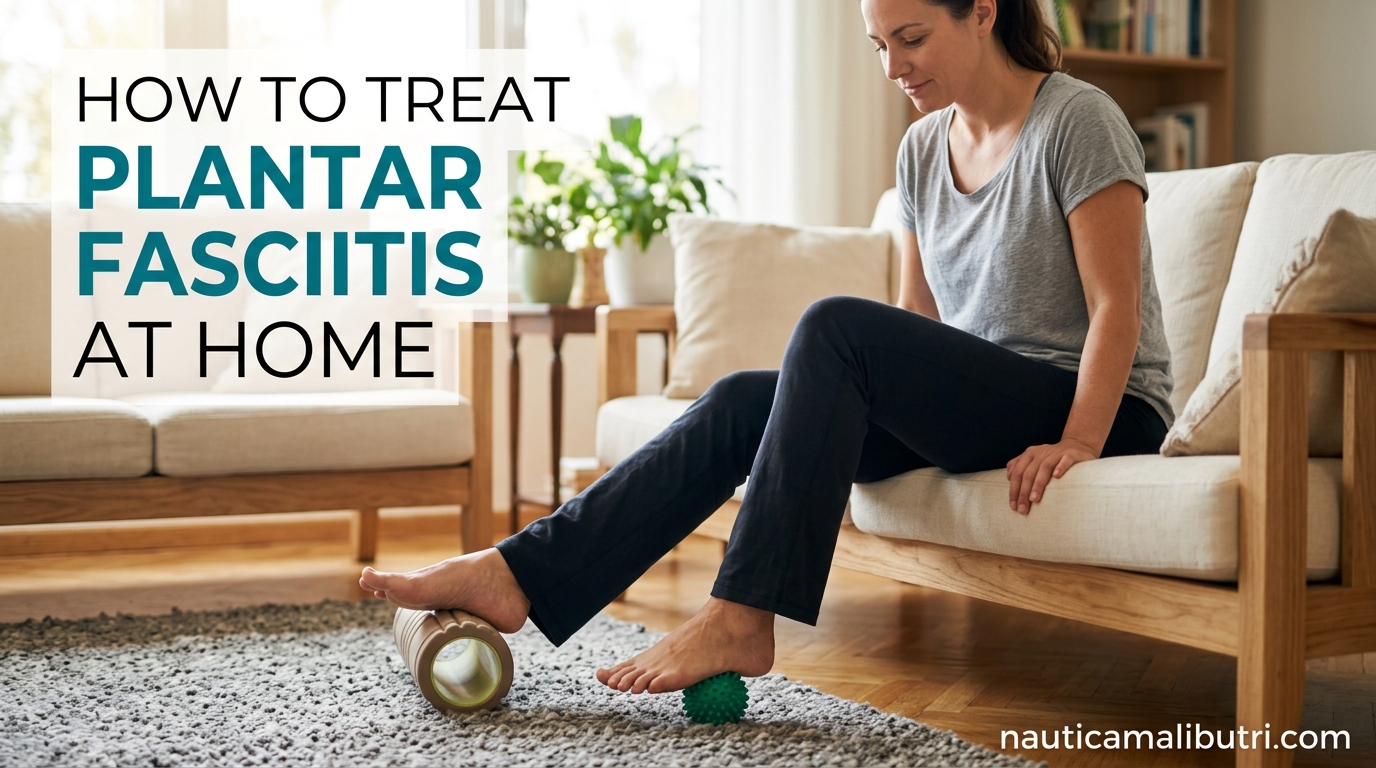
The tennis ball or lacrosse ball massage is the most accessible myofascial technique. While seated, place a ball under your arch and apply gentle pressure. Roll slowly from your heel to the ball of your foot, pausing on tender spots. Continue for five to ten minutes daily. Lacrosse balls provide firmer pressure than tennis balls for deeper release.
Frozen water bottle rolling combines myofascial release with ice therapy, giving you dual benefits. The bottle’s ridges create pressure points that release tight tissue while the cold reduces inflammation.
Some athletes use specialized foot rollers or massage balls designed specifically for plantar fasciitis. These tools provide consistent pressure and may be easier to control than standard balls. However, a simple tennis ball works just as effectively.
Massage your feet before getting out of bed in the morning to warm up the tissue before that first step. This pre-activation reduces the sharp pain that typically greets plantar fasciitis sufferers each morning.
Triathlon-Specific Training Modifications During Recovery
Here is where this guide differs from generic plantar fasciitis articles. As triathletes, we face unique challenges when dealing with this injury. Complete rest feels devastating when you have invested months in training. The good news is you can maintain significant fitness while letting your foot heal.
Swimming as Your Primary Cross-Training
Swimming becomes your best training option during plantar fasciitis recovery. The zero-impact nature of swimming allows intense cardiovascular training without stressing your injured foot. Most competitors completely overlook this advantage in their content.
Pool running or aqua jogging deserves special attention. Using a flotation belt, you simulate running motion in deep water. This maintains running-specific neuromuscular patterns and cardiovascular fitness without any impact. Elite runners regularly use aqua jogging during injury recovery because it transfers almost perfectly to land running fitness.
Perform pool running sessions that mirror your planned land workouts. If you had an interval session scheduled, do intervals in the pool. Maintain the same intensity using perceived effort or heart rate. Sessions of thirty to sixty minutes maintain remarkable running fitness.
Regular swimming workouts also maintain cardiovascular capacity. Focus on technique work and build swimming volume while your foot recovers. Many triathletes use plantar fasciitis recovery periods to improve their swim, turning injury time into opportunity.
Add kicking sets carefully. Vigorous flutter kicking can actually aggravate plantar fasciitis by pointing your toes repeatedly. Use a pull buoy to isolate your upper body if kicking causes discomfort. Fins can help by reducing the work your plantar fascia must do during propulsion.
Cycling Adjustments and Bike Fit
Cycling is generally foot-friendly during plantar fasciitis recovery, but certain adjustments maximize comfort and prevent aggravation. No competitor currently addresses these specific considerations.
First, check your cleat position. Cleats positioned too far forward increase pressure on the ball of your foot and transfer more load through the plantar fascia. Move your cleats slightly rearward so the pedal axle sits closer to the midfoot. This reduces forefoot pressure and arch strain.
Avoid excessive standing climbing while recovering. Standing places significantly more load through your feet than seated riding. Keep your riding seated as much as possible, using easier gears to maintain cadence rather than standing for power.
Consider your bike shoes carefully. Stiff carbon soles transfer power efficiently but offer no cushioning. During recovery, slightly more flexible shoes or adding cushioned insoles may reduce foot strain. Some athletes switch to mountain bike shoes with more flexible soles temporarily.
Indoor training on a bike trainer allows immediate stopping if pain develops. You can control every aspect of the workout and avoid the cumulative stress of outdoor rides. Short, frequent indoor sessions often work better than long outdoor rides during early recovery.
Transition Zone Footwear Strategy
Triathletes face a unique plantar fasciitis challenge during races and brick workouts. The transition from bike to run creates a sudden change in foot loading that can trigger severe pain.
Plan your transition zone footwear carefully. Many triathletes race barefoot or in minimal racing flats to save seconds. With plantar fasciitis, this approach courts disaster. The sudden shift from stiff cycling shoes to unsupported running creates maximum strain on an already irritated plantar fascia.
Wear supportive running shoes in transition, even if they cost you thirty seconds. The time lost changing shoes is nothing compared to the time lost limping through the run with seized-up calves and an inflamed plantar fascia. Some athletes use slip-on shoes with elastic laces to minimize transition time while maintaining support.
Practice your transition routine repeatedly before race day. Know exactly how your feet feel when switching disciplines. If you feel warning signs during brick workouts, adjust your race plan accordingly. Consider a more conservative bike effort to preserve your feet for the run.
Warm up your calves and plantar fascia immediately before the run portion. Even thirty seconds of calf raises and gentle stretching in transition helps prepare your tissue for the load change. Many triathletes report that the first half-mile of the run is the most dangerous time for plantar fasciitis flare-ups.
Prevention: Stop Plantar Fasciitis from Coming Back
Once you have experienced plantar fasciitis, you become prone to recurrence. Prevention strategies become essential parts of your ongoing training routine. The habits that help you heal also keep the condition from returning.
Increase training volume gradually using the ten percent rule. Never increase your weekly running mileage by more than ten percent from the previous week. Sudden spikes in training load trigger most plantar fasciitis cases. Track not just miles but also intensity, terrain changes, and shoe age.
Prioritize calf flexibility as an ongoing practice. Continue your stretching routine even after symptoms resolve. Tight calves are the strongest predictor of plantar fasciitis development. Five minutes of daily calf stretching prevents far more training time loss than it costs.
Warm up properly before every run. Cold tissues tear more easily than warm ones. Start runs with five to ten minutes of easy jogging before picking up the pace. Dynamic stretches that include calf and ankle mobilization prepare your tissues for impact.
Rotate your running shoes and replace them before they break down. Running in worn-out shoes alters your biomechanics in subtle ways that stress the plantar fascia. Many runners use shoe age as a warning sign for injury risk.
Listen to early warning signs. Mild morning heel stiffness that resolves quickly differs from the sharp pain of full plantar fasciitis. If you notice early symptoms, implement the home treatment protocol immediately. Early intervention prevents the condition from becoming chronic.
Consider working with a physical therapist to identify biomechanical weaknesses. Many athletes have underlying issues like hip weakness or ankle mobility restrictions that contribute to plantar fasciitis. Addressing these root causes prevents recurrence more effectively than treating symptoms alone.
Recovery Timeline: What to Expect
Patience becomes your most important virtue when treating plantar fasciitis. This condition rarely resolves quickly, and unrealistic expectations lead to frustration and re-injury.
Most cases of plantar fasciitis resolve within six to twelve months with consistent home treatment. The timeline varies significantly based on severity, adherence to treatment, and individual healing factors. Some athletes recover in six weeks, while others battle the condition for over a year.
The first two to four weeks of proper treatment typically bring noticeable symptom reduction. Morning pain becomes less severe, and daily activities become more comfortable. This improvement can be deceptive, as the underlying tissue may still be healing.
Signs that plantar fasciitis is healing include decreasing morning pain intensity, ability to walk barefoot without discomfort, and tolerance of longer activity periods. Many athletes report that the location of pain shifts from sharp heel pain to a more diffuse arch soreness as healing progresses.
Return to running must be gradual even after symptoms resolve. Start with walk-run intervals of one minute running and two minutes walking for twenty minutes. Increase running time gradually over several weeks. Any return of pain means you progressed too quickly.
One important truth many athletes learn the hard way: plantar fasciitis can get slightly worse before it gets better. As you begin stretching and strengthening, you may temporarily increase discomfort. This is normal if the pain remains mild and improves with continued treatment. Sharp or worsening pain indicates you need to back off.
When to See a Doctor
Home treatment resolves most plantar fasciitis cases, but certain situations require professional medical intervention. Knowing when to seek help prevents unnecessary suffering and identifies cases needing advanced treatment.
Consult a doctor if your heel pain persists beyond three months despite consistent home treatment. Also seek medical evaluation if pain severely limits daily activities, if you experience numbness or tingling, or if pain occurs at rest without weight-bearing.
A podiatrist or sports medicine physician can confirm the diagnosis and rule out other conditions. Stress fractures, nerve entrapment, and tarsal tunnel syndrome can mimic plantar fasciitis but require different treatments. Imaging studies like X-rays or ultrasound may be necessary.
Medical treatments available for persistent cases include custom orthotics, physical therapy with specialized modalities, corticosteroid injections, extracorporeal shockwave therapy, and platelet-rich plasma injections. Surgery remains a last resort for the small percentage of cases that fail all conservative treatments.
Do not let pride delay seeking help. Many athletes struggle needlessly for months or years when a simple medical intervention could have resolved their condition. The goal is returning to the sport you love, not proving you can tough out an injury.
Frequently Asked Questions
What is the fastest way to heal plantar fasciitis?
The fastest way to heal plantar fasciitis combines rest from aggravating activities, aggressive daily calf stretching, ice therapy using a frozen water bottle, wearing a night splint, and using supportive footwear at all times. Most athletes see improvement within two to four weeks when following this comprehensive protocol consistently.
Can plantar fasciitis go away naturally?
Yes, approximately 80 percent of plantar fasciitis cases resolve within twelve months without surgical intervention. However, active home treatment dramatically speeds recovery compared to simply waiting. Athletes who implement stretching, ice therapy, and activity modifications typically heal in six to twelve weeks rather than waiting many months.
What vitamin deficiency causes plantar fasciitis?
Vitamin D deficiency has been associated with plantar fasciitis in some research studies. Low vitamin D levels may impair tissue healing and contribute to chronic inflammation. However, most plantar fasciitis cases result from biomechanical factors and training errors rather than nutritional deficiencies alone.
Can I still run with plantar fasciitis?
Running through plantar fasciitis pain typically prolongs recovery from weeks to months. During the acute phase, reduce running by 50 percent or stop completely. As symptoms improve, return gradually using walk-run intervals. Stop immediately if pain exceeds three out of ten during activity or persists the next morning.
Does plantar fasciitis get worse before it gets better?
Some athletes experience temporary increased soreness when beginning a stretching and strengthening program. This mild discomfort should resolve within a few days as tissues adapt. However, sharp pain or pain that progressively worsens indicates you are pushing too hard and need to reduce treatment intensity or activity level.
Final Thoughts
Plantar fasciitis tests both your patience and your commitment to recovery. The athletes who heal fastest are not necessarily those who spend the most on treatments, but those who consistently apply the fundamentals day after day. How to treat plantar fasciitis at home is not complicated, but it requires discipline.
Follow the protocol outlined in this guide: rest and modify activities, ice consistently, stretch your calves aggressively, strengthen your feet, wear supportive footwear, and use a night splint. For triathletes, embrace swimming and cycling modifications that maintain fitness while your foot heals.
Remember that this condition almost always resolves with proper treatment. The vast majority of athletes return to full training and racing. Your current pain is temporary, but the habits you build during recovery will benefit your athletic career for years to come.
Start your treatment protocol today. Do not wait for the perfect moment or hope the pain disappears on its own. Every day you delay extends your recovery timeline. Your future self, crossing that finish line pain-free, will thank you for the work you put in now.