
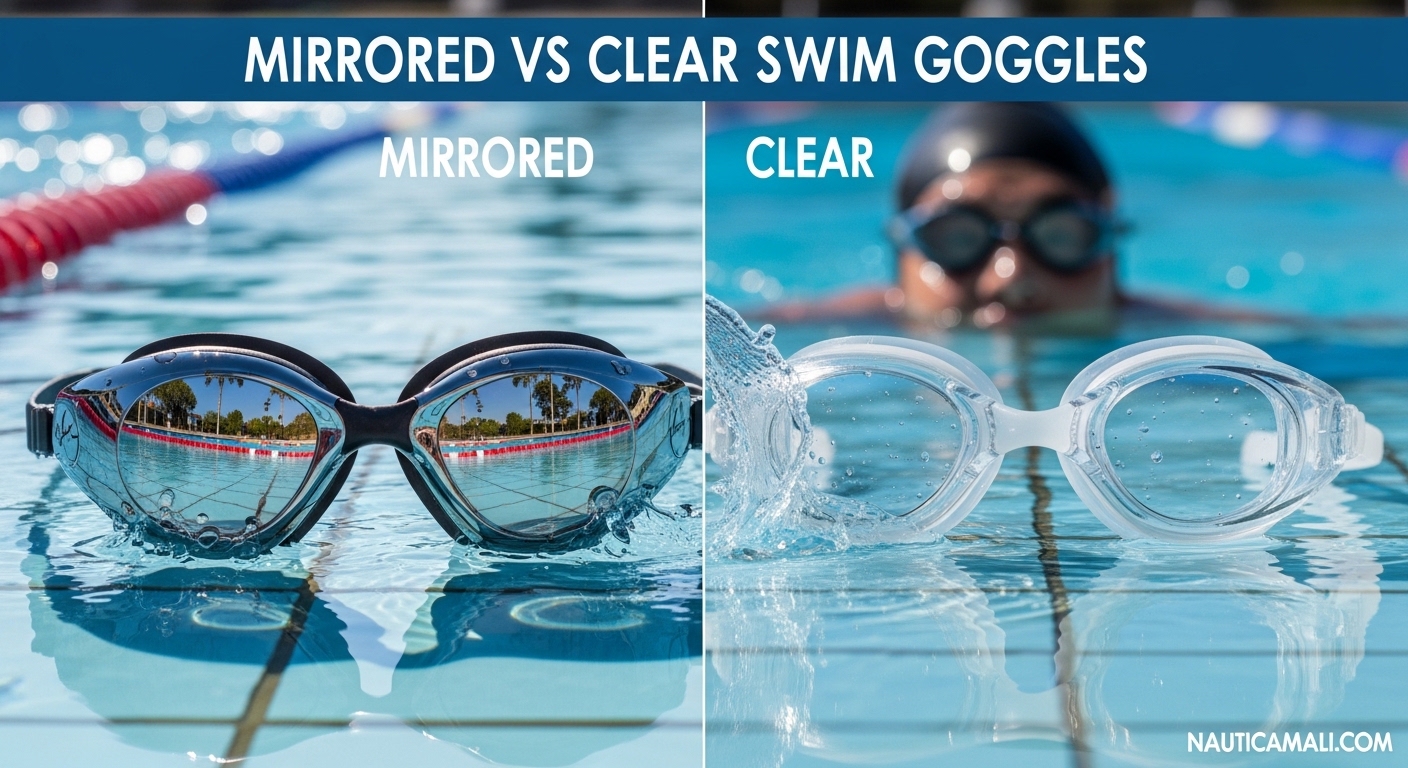
Choosing between mirrored and clear swim goggles trips up swimmers of all levels. I have spent years in both pool lanes and open water, and I can tell you that the right lens choice can make or break your swim session.
The debate over mirrored vs clear swim goggles comes down to one factor: where and when you swim most often. Each lens type is designed for specific lighting conditions, and using the wrong pair can leave you squinting in bright sun or struggling to see in dimly lit pools.
In this guide, I will walk you through everything you need to know about both lens types. You will learn exactly when to reach for clear lenses versus mirrored, how they affect your visibility, and which option fits your swimming routine.
Table of Contents
What Are Clear Swim Goggles and When Should You Use Them?
Clear swim goggles have lenses with zero tint. They allow maximum light to pass through, giving you the most natural view of the water and your surroundings.
These goggles shine in low-light environments. Indoor pools with limited natural light, early morning swims before sunrise, and evening training sessions are where clear lenses truly excel. The untinted glass ensures you see every lane line, wall, and fellow swimmer clearly.
Fitness swimmers who train at community pools often prefer clear goggles for their versatility. The absence of any coating means consistent visibility regardless of the pool’s lighting setup. Competitive swimmers doing indoor training also favor clear lenses for the same reason.
Clear goggles also work well in overcast outdoor conditions. When the sun is hidden behind clouds, mirrored lenses can feel unnecessarily dark. Clear lenses let you see buoys and markers without the dimming effect of a tinted coating.
What Are Mirrored Swim Goggles and Why Do Swimmers Choose Them?
Mirrored swim goggles feature a reflective metallic coating on the outside of the lens. This coating bounces light away from your eyes, significantly reducing brightness and glare from the sun and water surface.
The primary benefit is glare reduction. When swimming outdoors on bright days, sunlight reflecting off the water creates intense glare that can strain your eyes and reduce visibility. The mirrored coating acts like sunglasses, filtering out harsh light so you can focus on your stroke.
Outdoor swimmers and open water enthusiasts gravitate toward mirrored lenses for this reason. Triathletes swimming in open water races almost always choose mirrored or polarized options to handle unpredictable lighting conditions. The eye protection extends to UV rays, as most mirrored lenses include UV protective coating.
There is also a psychological component. Many competitive swimmers wear mirrored goggles because the reflective exterior hides their eyes from opponents. This small advantage can matter in high-stakes races where mental focus is everything.
Mirrored vs Clear Swim Goggles: Side-by-Side Comparison
Understanding the differences at a glance helps you make the right choice quickly. Here is how these two lens types stack up across the factors that matter most to swimmers.
Best Conditions for Each Type
Clear goggles dominate indoor and low-light scenarios. They are the go-to choice for pool training, early morning laps, and overcast days. Mirrored goggles rule in bright outdoor settings. Sunny pool decks, open water swimming, and midday training sessions are their natural habitat.
Glare Reduction and Brightness Control
Mirrored lenses significantly reduce glare thanks to their reflective coating. Clear lenses offer no glare reduction, which can be a problem in bright conditions but is perfect when you need maximum light. If glare gives you headaches or eye strain, mirrored is the clear winner for outdoor use.
Light Transmission and Visibility
Clear lenses transmit 100% of available light, giving you the brightest possible view. Mirrored lenses block a portion of light, making everything appear darker. In dim conditions, this can work against you. In bright sun, it protects your eyes and improves contrast.
UV Protection
Most mirrored goggles come with built-in UV protective coating. Clear goggles may or may not include UV protection depending on the model. For regular outdoor swimming, UV protection is essential for long-term eye health.
Target Swimmer Type
Clear goggles suit fitness swimmers, indoor pool regulars, and competitive swimmers doing pool-based training. Mirrored goggles fit triathletes, open water swimmers, outdoor fitness swimmers, and competitive racers who want the psychological edge.
Mirrored vs Polarized Swim Goggles: What Is the Difference?
Many swimmers confuse mirrored and polarized goggles. While both reduce glare, they work through different mechanisms and offer distinct benefits.
Mirrored goggles use a reflective coating to bounce light away. They reduce overall brightness but do not specifically target glare. Polarized goggles use a special filter that blocks horizontal light waves, which are the primary source of glare. This technology eliminates up to 99% of glare while maintaining clarity.
Polarized lenses are the top choice for open water swimming where sunlight reflects off the water surface from multiple angles. They provide superior clarity of vision compared to mirrored lenses in bright, reflective conditions. However, polarized goggles often cost more and may be harder to find than mirrored options.
For casual pool swimmers, mirrored lenses usually provide enough glare reduction. For serious open water athletes and triathletes, polarized is worth the investment.
Other Swim Goggle Lens Colors Explained
Beyond clear and mirrored, manufacturers offer several lens tint options. Each serves a specific purpose.
Smoke or Gray Lenses
Smoke lenses offer a middle ground between clear and mirrored. They reduce brightness without the full reflective coating. These work well for outdoor swimming on moderately sunny days and can handle some indoor use better than mirrored options.
Blue Lenses
Blue-tinted lenses enhance contrast in bright conditions while reducing glare. They are popular for outdoor pool swimming and can improve visibility in open water. The tint is lighter than mirrored, making them more versatile.
Amber or Orange Lenses
Amber lenses excel in low-light and overcast conditions. They enhance contrast and depth perception, making them favorites for early morning and evening swimmers. Many open water swimmers prefer amber when the sun is not directly overhead.
Pink or Red Lenses
Pink and red tints brighten your view in dim conditions. They filter out blue light, which can cause eye fatigue. These lenses are ideal for indoor pools with poor lighting and overcast outdoor days.
How to Choose the Right Swim Goggles for Your Needs
After testing dozens of pairs across different conditions, I have developed a simple framework for choosing the right lens.
Step 1: Identify Your Primary Swimming Location
If you swim 80% indoors, start with clear goggles. If you split time between pool and open water, consider smoke or blue lenses. If you are primarily an outdoor open water swimmer, mirrored or polarized is your best bet.
Step 2: Consider Your Schedule
Early morning swimmers often face low light and benefit from clear or amber lenses. Midday outdoor swimmers need maximum glare protection from mirrored or polarized options. Evening pool swimmers can stick with clear.
Step 3: Think About Competition Goals
Triathletes need versatility. The ability to sight buoys clearly in changing light is critical. Competitive pool swimmers might want mirrored for the psychological boost. Fitness swimmers can prioritize comfort and visibility over lens type.
The Multi-Pair Strategy
Experienced swimmers often own multiple pairs. I keep clear goggles for indoor training and mirrored for outdoor sessions. Race day calls for a backup pair in a different tint in case conditions change. This approach ensures you are prepared for any lighting scenario.
Expert Insights on Eye Protection and Goggle Selection
Eye health matters just as much as performance when selecting goggles. The eyes are vulnerable to UV damage, especially during prolonged outdoor swimming sessions.
Dr. Thomas Steinemann, a clinical spokesperson for the American Academy of Ophthalmology, emphasizes that UV protection should be non-negotiable for outdoor swimmers. Even on cloudy days, UV rays penetrate water and reflect off surfaces, potentially causing cumulative damage over time.
Glare poses another threat. Extended exposure to bright light without proper filtration can cause eye strain, headaches, and reduced visual acuity. The right lens tint acts as a protective barrier.
Fit trumps lens type for many swimmers. A poorly fitting goggle with the perfect lens will leak and distract you. Prioritize a seal that works with your face shape, then select the lens tint that matches your swimming environment.
Goggle Care Tips to Extend Lens Life
Proper maintenance keeps your goggles functional longer, regardless of lens type.
Rinse goggles in fresh water after every swim. Chlorine and salt degrade anti-fog coating over time. Let them air dry instead of wiping the lenses, which can scratch the coating. Store goggles in a protective case away from direct sunlight.
Avoid touching the inside of the lenses. Oils from your fingers break down anti-fog treatments. If fogging becomes persistent, it is usually time to replace the pair rather than applying aftermarket anti-fog sprays that rarely work well.
Replace goggles every 6 to 12 months with regular use. The silicone gaskets lose elasticity, and coatings wear down. Racing goggles may need replacement sooner depending on training volume.
Frequently Asked Questions
Are clear or mirrored goggles better?
Neither is universally better. Clear goggles excel indoors and in low-light conditions, providing maximum visibility. Mirrored goggles perform better outdoors in bright sun by reducing glare. The best choice depends entirely on where and when you swim.
What’s the point of mirrored swimming goggles?
Mirrored goggles reduce brightness and glare through a reflective coating, making outdoor swimming more comfortable. They also provide UV protection and can give competitive swimmers a psychological edge by hiding their eyes from opponents.
Should swimming goggles be clear?
Swimming goggles should be clear if you primarily swim indoors, during early morning or evening hours, or in overcast conditions. Clear lenses allow maximum light transmission, giving you the brightest possible view in low-light environments.
What’s the best goggle lens color for pools?
For indoor pools, clear lenses are optimal. For outdoor pools in sunny conditions, mirrored or smoke lenses work best. Blue lenses offer a good balance for pools that get mixed lighting.
Are mirrored goggles good for indoor swimming?
Mirrored goggles are generally not ideal for indoor swimming. The dark tint can make visibility challenging in typical pool lighting. Only use mirrored goggles indoors if the facility has exceptional natural lighting or if you prefer darker vision for specific training purposes.
Conclusion
The mirrored vs clear swim goggles debate has no single winner. Your swimming environment determines the right choice. Clear goggles dominate indoor pools and low-light conditions with their maximum light transmission. Mirrored goggles protect your eyes and reduce glare during bright outdoor sessions.
Consider owning both if your swimming takes you between different environments. Many experienced swimmers keep multiple pairs ready for whatever conditions they face. Start with the lens type that matches your primary swimming location, and expand your collection as needed.
Remember that fit matters as much as lens type. A comfortable goggle that seals properly will serve you better than the perfect lens on a leaky frame. Test different options, care for your gear, and choose based on where you actually swim rather than marketing claims.