
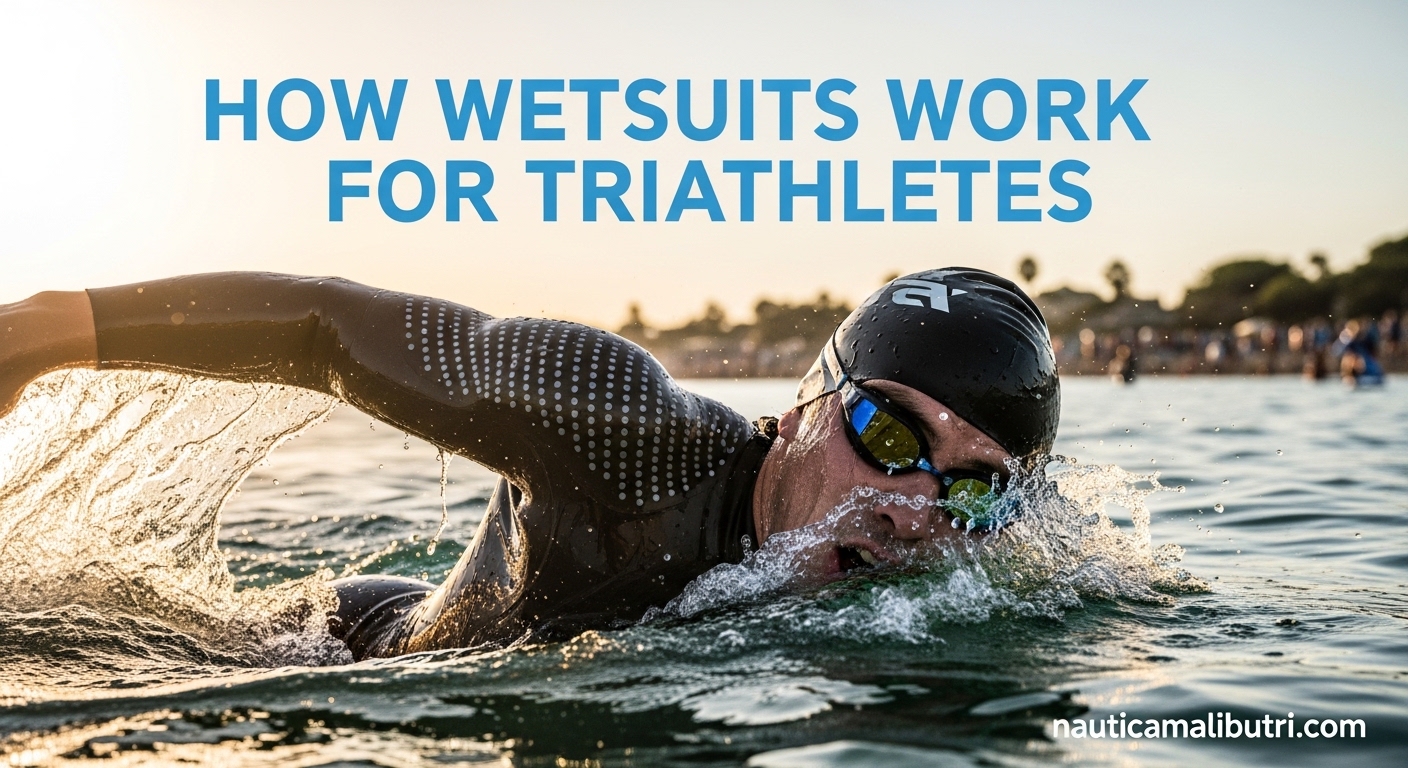
Understanding how wetsuits work for triathletes can transform your swim leg from a struggle into a strength. I remember my first open water triathlon swim without a wetsuit. The cold water shocked my system, my legs sank like anchors, and I wasted precious energy just trying to stay afloat. After switching to a proper triathlon wetsuit, I cut over two minutes from my swim time.
A triathlon wetsuit is not just a thick rubber suit you throw on for cold water. It is a carefully engineered piece of performance equipment designed to help you swim faster, stay warmer, and exit the water with energy to spare. In this guide, I will explain the science behind how wetsuits work, the specific benefits they provide, and practical tips for getting the most out of yours.
Table of Contents
What Is a Triathlon Wetsuit and How Does It Work
A triathlon wetsuit is a specially designed neoprene suit that provides buoyancy, warmth, and hydrodynamics to help triathletes swim faster and more efficiently in open water. Unlike surfing or diving wetsuits, triathlon-specific suits are built for the unique demands of swimming in a race environment.
The magic starts with neoprene, a synthetic rubber material filled with tiny nitrogen gas bubbles. When you enter the water wearing a wetsuit, a thin layer of water seeps between your skin and the neoprene. Your body heat warms this water layer to near body temperature, creating a thermal barrier that keeps you comfortable even in cold conditions.
But warmth is just one piece of the puzzle. The nitrogen bubbles in neoprene make the material naturally buoyant. This buoyancy lifts your body higher in the water, particularly your legs and hips, which tend to sink in swimmers with less-than-perfect technique. The result is a more horizontal body position that slices through the water with less resistance.
Buoyancy: How Wetsuits Keep You Afloat and Improve Body Position
Buoyancy is the most significant advantage a wetsuit provides. Neoprene has a density of about 0.23 grams per cubic centimeter, while water has a density of 1.0. This means neoprene naturally wants to float, and when wrapped around your body, it pulls you toward the surface.
The real benefit comes from where that buoyancy is placed. Most triathlon wetsuits use thicker neoprene (3-5mm) around the legs and core, with thinner material (1.5-2mm) in the shoulders for flexibility. This strategic thickness distribution lifts your lower body higher in the water, correcting the sinking-leg problem that plagues many triathletes.
When your legs float closer to the surface, you experience what swimmers call a better “body position.” Your body becomes more horizontal, which means less of you is pushing against the water. This reduces drag significantly. In my experience testing different suits, a proper wetsuit can reduce drag by up to 20 percent compared to swimming without one.
The energy savings are substantial. When your legs stay afloat without constant kicking, you can reduce your kick rate or use a two-beat kick instead of a six-beat kick. This conserves energy for the bike and run legs that follow. Many age-group athletes report feeling fresher exiting the water when wearing a wetsuit, even after swimming faster.
Warmth and Thermal Insulation for Cold Water Swimming
Beyond performance, wetsuits serve a critical safety function through thermal insulation. Water conducts heat away from your body about 25 times faster than air. Without protection, cold water can quickly lead to hypothermia, muscle cramping, and reduced coordination.
The same trapped water layer that provides warmth works through a simple mechanism. When water enters the wetsuit, it sits in a thin film against your skin. Your body warms this water to approximately 90-92 degrees Fahrenheit, and the neoprene insulates this warm layer from the colder surrounding water. The suit essentially creates a personal microclimate around your body.
Different water temperatures require different wetsuit thicknesses. For water between 65-78 degrees Fahrenheit, a standard 3-5mm wetsuit works perfectly. Below 65 degrees, you might want additional thermal accessories like neoprene caps, boots, or gloves. Above 78 degrees, wetsuits may become uncomfortably warm, and many races actually prohibit them.
USA Triathlon rules state that wetsuits are legal when water temperature is 78 degrees Fahrenheit or below. Between 78-84 degrees, wetsuits are allowed but you are not eligible for awards or rankings. Above 84 degrees, wetsuits are prohibited for safety reasons due to overheating risk. Always check your specific race rules before race day.
Flexibility and Freedom of Movement for Your Swim Stroke
A wetsuit would be worthless if it restricted your stroke. Triathlon wetsuits solve this problem through strategic panel design and varying neoprene thickness. The shoulders and arms use ultra-flexible 1.5-2mm neoprene that stretches with your movement, while the chest and legs use thicker, more buoyant material.
This design creates what manufacturers call a “swim-specific” fit. The suit needs to be tight enough to prevent water from flushing in and out (which would defeat the warming mechanism), but flexible enough to allow full range of motion through your stroke. The catch, pull, and recovery phases of swimming should feel natural and unrestricted.
When choosing between full sleeve and sleeveless wetsuits, flexibility becomes a key consideration. Sleeveless wetsuits offer maximum shoulder mobility and are easier to put on and remove during transitions. They are popular for shorter races and warmer water. Full sleeve wetsuits provide additional buoyancy in the arms and reduce surface drag, but some swimmers find them slightly more restrictive. I recommend full sleeve for most triathletes, as the buoyancy benefits outweigh any minor flexibility reduction.
Hydrodynamics and Drag Reduction: Swimming Faster with Less Effort
Hydrodynamics refers to how water flows around your body as you swim. A wetsuit improves hydrodynamics through three mechanisms: surface coating, body position, and surface area reduction.
Modern triathlon wetsuits feature special surface treatments like silicone or SCS (Super Composite Skin) coatings. These coatings create a slippery surface that water flows over with minimal friction. The effect is similar to how a competitive swimmer shaves body hair before a big race. The smoother surface reduces drag and helps you glide through the water more efficiently.
The improved body position we discussed earlier also plays a major role in hydrodynamics. When your hips and legs ride higher in the water, you present a smaller profile to the water. Less surface area hitting the water means less resistance. This is why even experienced swimmers with good technique often swim faster in wetsuits. The suit optimizes their position beyond what technique alone can achieve.
The third factor is the compression effect. A well-fitted wetsuit compresses certain areas of your body, smoothing out contours that might otherwise create turbulence. This streamlined profile helps water flow smoothly around you rather than catching and creating drag.
The combination of these factors means you can swim faster while expending less energy. Studies show that wetsuits can improve swim times by 5-10 percent for most triathletes. For a 30-minute swimmer, that translates to 1.5-3 minutes saved, a huge margin in a competitive race.
How to Put On a Triathlon Wetsuit: Step-by-Step Guide
Getting into a wetsuit can feel like wrestling a rubber band at first, but with practice and the right technique, it becomes second nature. Here is the method I use before every race:
Step 1: Prepare your skin. Put on your triathlon suit or swimwear first. If your race suit has a zipper, leave it open. Some athletes use a small amount of body glide or wetsuit lubricant on their wrists, ankles, and neck to help the suit slide on.
Step 2: Start with the legs. Step into the wetsuit one leg at a time. Pull the material up gradually, working it over your calves and knees. Take your time here; rushing leads to tears and frustration.
Step 3: Work the legs up. Continue pulling the wetsuit up toward your hips. Make sure the crotch sits high and snug. Any excess material bunched at the knees should be worked upward toward your hips.
Step 4: Insert your arms. Put one arm into the sleeve, then the other. Reach through the wrist cuffs and work the material up toward your shoulders. The suit should feel snug but not painfully tight on your arms.
Step 5: Zip up. Reach behind your head to grab the zipper cord. Some suits have a long cord to help with this. Pull the zipper up smoothly. If it catches, do not force it. Adjust the suit and try again.
Step 6: Check the fit. Once zipped, do a few arm circles and bend forward at the waist. The suit should feel tight but allow full range of motion. Pay attention to any pinching or restriction.
Step 7: Adjust the neck. Make sure the neck sits comfortably without chafing. Some suits have a Velcro closure at the neck. Adjust this to prevent water from flushing in while swimming.
Step 8: Final adjustments. Before entering the water, do some light stretching or jogging to settle the suit into place. Make sure everything feels right before the swim start.
Practice putting on your wetsuit before race day. I recommend doing a full practice at least once during training, including swimming in it. The more familiar you are with the process, the faster and less stressful your race morning will be.
Fit Guidelines: What to Look for in a Properly Fitting Wetsuit
Fit is the single most important factor when choosing a wetsuit. A poorly fitting wetsuit can actually slow you down and cause discomfort, no matter how expensive or advanced the materials.
A properly fitting wetsuit should feel like a second skin, snug everywhere without gaps or folds. When you stand upright, the suit should touch your body at all points. There should be no loose areas where water could pool or flush through.
Check these specific areas for proper fit:
Neck: The collar should sit snugly without choking you. You should be able to turn your head and breathe comfortably. If the neck gap opens when you look up (the sighting position for open water swimming), it is too loose.
Shoulders and armpits: The suit should allow full arm rotation without pulling or restriction. Lift your arms overhead as if reaching for the catch phase of your stroke. You should feel slight tension but not pain or pinching.
Torso and back: The suit should lie flat against your spine and stomach. Any gaping or bunching here indicates the suit is too big or the wrong cut for your body type.
Hips and crotch: The crotch should sit high and snug. Low-riding crotches create drag and restrict leg kick. Excess material in this area needs to be worked upward before swimming.
Ankles and wrists: These should seal tightly without cutting off circulation. Water should not flow freely into the suit at these points.
Common fit problems include suits that are too long in the torso (causing shoulder restriction), suits that are too loose overall (allowing water flushing), and suits that are too tight in the neck (causing chafing). If you are between sizes, most manufacturers recommend sizing down for a tighter fit, as neoprene will stretch slightly with use.
Care and Maintenance: Making Your Wetsuit Last for Years
A quality triathlon wetsuit represents a significant investment, with entry-level models starting around $200 and high-end suits reaching $800 or more. Proper care can extend the life of your suit from one season to five or more.
Rinsing: After every swim, rinse your wetsuit thoroughly with fresh water. Salt, chlorine, and lake water can all degrade neoprene over time. Turn the suit inside out and rinse both sides. Do this as soon as possible after your swim.
Drying: Hang your wetsuit to dry in a shaded, well-ventilated area. Never leave it in direct sunlight, as UV rays break down neoprene rapidly. Hang it by the waist or over a wide bar, never by the shoulders, which can stretch the material. Allow it to dry inside out first, then turn it right-side out to complete drying.
Storage: Store your wetsuit flat or hanging loosely in a cool, dry place. Do not fold it tightly or store it compressed, as this can create permanent creases. Avoid storing it in a hot car or garage, as heat degrades the neoprene and glued seams.
Cleaning: Occasionally wash your wetsuit with a wetsuit-specific cleaner or mild soap. Regular detergents can damage the neoprene. Rinse thoroughly after washing.
Repairs: Small tears or nicks can be repaired with neoprene cement or wetsuit repair kits available at most triathlon shops. Address damage promptly before it spreads. Major tears may require professional repair.
Avoid these common mistakes: Do not use petroleum-based products like Vaseline, as they degrade neoprene. Do not machine wash or dry your wetsuit. Do not iron or use heat to dry it. And never use bleach or harsh chemicals.
Frequently Asked Questions About How Wetsuits Work for Triathletes
How does a triathlon wetsuit work?
A triathlon wetsuit works by trapping a thin layer of water between your body and the neoprene material. Your body heat warms this water, creating a thermal barrier while the buoyant neoprene lifts your body higher in the water, reducing drag and helping you swim faster with less effort.
Do you wear undies under a trisuit?
No, you do not wear underwear under a trisuit. Trisuits are designed with a built-in chamois pad for cycling comfort and quick-drying fabric for swimming. Wearing underwear creates chafing issues and slows transition times.
Do triathlon wetsuits make you float?
Yes, triathlon wetsuits make you float. The neoprene material contains nitrogen gas bubbles that make it naturally buoyant. This buoyancy lifts your body position in the water, especially your legs and hips, which helps reduce drag and conserve energy.
Do triathletes change out of wetsuits?
Yes, triathletes remove their wetsuits during the first transition (T1) after the swim leg. Wetsuits are only worn for the swim portion. In transition, athletes quickly peel off the wetsuit and switch to bike gear. The faster you can remove your wetsuit, the better your transition time.
What temperature requires a wetsuit for triathlon?
According to USA Triathlon rules, wetsuits are legal and optional when water temperature is 78 degrees Fahrenheit or below. Between 78-84 degrees, wetsuits are allowed but you are not eligible for awards. Above 84 degrees, wetsuits are prohibited. Many triathletes choose to wear wetsuits in water below 70 degrees for warmth.
Full sleeve or sleeveless wetsuit for beginners?
Sleeveless wetsuits are often recommended for beginners because they are easier to put on and remove during transitions, offer maximum shoulder mobility, and are less likely to cause overheating in marginal temperatures. However, full sleeve wetsuits provide more buoyancy and reduced drag, making them the better choice for most triathletes once they are comfortable with transitions.
Conclusion
Understanding how wetsuits work for triathletes gives you a significant advantage on race day. The combination of buoyancy, warmth, flexibility, and hydrodynamics can transform your swim from a struggle into a confident, efficient effort. Whether you are a beginner doing your first sprint triathlon or an experienced age-grouper targeting a personal best, a properly fitted wetsuit is one of the best investments you can make.
Remember that fit matters more than price. A $200 wetsuit that fits perfectly will outperform an $800 suit that gaps or pinches. Take the time to try on multiple brands and sizes, practice your transitions, and care for your suit properly. With the right wetsuit and these fundamentals in mind, you will exit the water faster, warmer, and ready to tackle the bike and run ahead.