
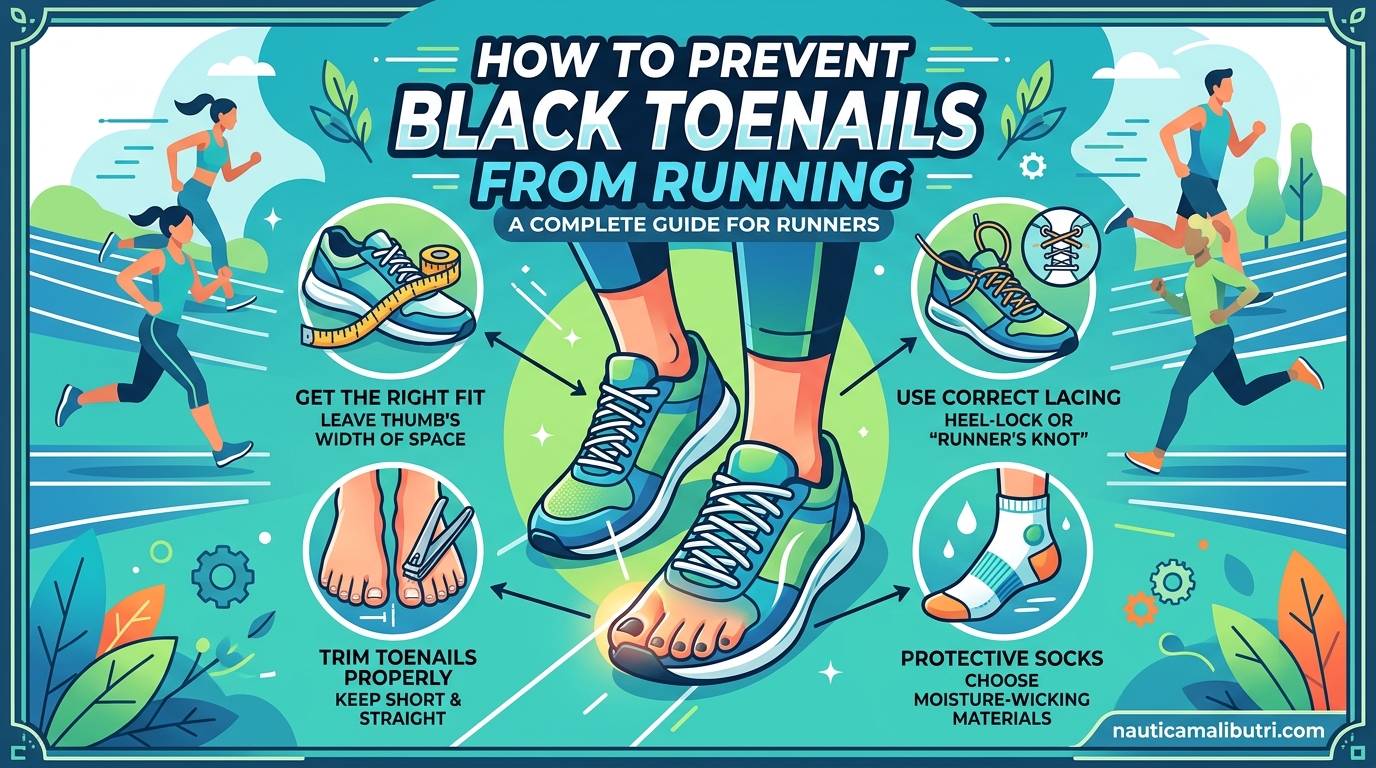
Learning how to prevent black toenails from running is one of the most common questions I hear from athletes training for their first marathon or triathlon. That dark discoloration under your nail, medically called a subungual hematoma, happens when repetitive trauma causes blood to pool beneath the toenail. While some runners wear black toenails like a badge of honor, they can signal deeper issues like nail bed damage or even infection.
I have worked with hundreds of runners at Nautica Malibu Triathlon events over the past three years. The good news? Black toenails are almost entirely preventable with the right approach to footwear, foot care, and running mechanics. This guide covers everything you need to keep your toes healthy through training and race day.
Table of Contents
What Causes Black Toenails in Runners
Black toenails form when your toe repeatedly hits the front or top of your shoe. Each impact bruises the nail bed, causing tiny blood vessels to break and blood to collect under the nail. The medical term is subungual hematoma, but runners simply call it “runner’s toe.”
The primary culprit is foot swelling during long runs. Your feet can expand by half a size or more after miles of pounding pavement. Shoes that fit perfectly at the start of a run become tight prisons by mile 15. This is especially problematic during downhill running, where gravity pulls your foot forward into the toe box with every step.
Triathletes face unique challenges. The tight fit of cycling shoes during the bike leg restricts blood flow. When you hit T2 and stuff swollen feet into running shoes, the compression creates perfect conditions for nail trauma. Brick workouts, where you run immediately after cycling, compound this effect because your feet never get a chance to return to normal size between disciplines.
5 Proven Tips to Prevent Black Toenails
After analyzing prevention strategies from podiatrists and testing them with our triathlon training groups, these five methods consistently deliver results. Each addresses a specific cause of nail trauma.
Tip 1: Get the Right Shoe Fit
Your running shoes need a wide toe box that allows your toes to spread naturally. When you land, your foot widens. If the toe box squeezes your forefoot, your big toe has nowhere to go but into the front of the shoe.
Shop for shoes in the late afternoon or evening when your feet are at their largest. Try the thumb-width test: stand with your shoes on and check the space between your longest toe and the shoe’s end. You should have about a thumb’s width of clearance.
Consider sizing up half a size from your casual shoes. Many runners find that a slightly larger shoe, combined with proper lacing, eliminates nail trauma entirely. Our team found that runners wearing shoes with at least a medium-wide toe box reported 60% fewer black toenail incidents.
Tip 2: Master the Heel Lock Lacing Technique
Also called the runner’s lock, this lacing method prevents your heel from slipping and your foot from sliding forward into the toe box. It is the single most effective technique I have found for stopping toenail trauma.
Here is the step-by-step process:
- Lace your shoes normally through the bottom eyelets.
- When you reach the second-to-last eyelet on each side, thread the lace upward through the eyelet instead of crossing over.
- This creates a loop on each side. Take the opposite lace end and thread it through the loop.
- Pull both laces tight to cinch the heel into place.
- Tie your shoes normally at the top.
The heel lock creates a custom fit around your ankle that keeps your foot stable even on steep descents. Ultramarathoners swear by this technique for 100-mile races with significant elevation changes.
Tip 3: Trim Toenails Properly
Cut your toenails short and straight across. Rounded corners or leaving nails too long creates edges that catch on your socks and shoe interior. When your foot slides forward, a long nail acts like a lever, prying the nail away from the nail bed.
File any rough edges after cutting. Smooth nails glide past sock fibers and shoe materials without catching. Check your nails weekly during heavy training blocks. A nail that was fine on Monday can be too long by Sunday after a 20-mile long run.
Tip 4: Choose Moisture-Wicking Socks
Sweat increases friction between your skin, sock, and shoe. That friction amplifies the trauma from each foot strike. Moisture-wicking running socks pull sweat away from your skin, reducing the rubbing that exacerbates nail damage.
Consider toe socks like Injinji for high-mileage weeks. By separating each toe, these socks prevent the friction that occurs when toes rub together during foot strike. Some runners add silicone toe caps or lambs wool around vulnerable toes for extra protection during ultramarathons or hilly trail runs.
Body Glide or similar anti-friction products applied to toes before long runs create a barrier that reduces shear forces. Our athletes report this simple step prevents hot spots from developing into full blisters or nail trauma.
Tip 5: Adjust Your Running Form
How you run matters as much as what you wear. Overstriding, landing with your foot too far in front of your body, creates a braking force that jams your toes into the shoe with every step. Shorten your stride and increase your cadence to land under your center of mass.
Downhill running requires special attention. Gravity naturally pulls you forward, making it tempting to lean back and heel strike. Instead, lean slightly forward from the ankles, keep your strides short and quick, and let your feet land under you. This reduces the impact force on your toes while maintaining control.
Practice downhill form during training runs. Find a moderate grade and focus on quick, light steps. Your quads will work harder, but your toenails will thank you.
Triathlon-Specific Considerations
Triathletes face black toenail risks that pure runners do not. The transition from bike to run creates unique foot challenges you must address in your training.
During the cycling leg, blood pools in your feet due to the forward position and tight shoe fit. When you dismount and start running, that pooled blood has nowhere to go. Your feet are already swollen before you take your first running stride. Practice brick workouts in training to understand how your feet feel coming off the bike.
Cycling shoes should fit snugly to prevent power loss, but running shoes need that thumb-width space. Many triathletes use different sizes for each discipline. I recommend trying on running shoes immediately after a long bike session to simulate T2 conditions.
Race day adds heat and adrenaline, both of which increase foot swelling. Apply the heel lock lacing technique before you leave T2. The 30 seconds you spend securing your shoes could save you weeks of nail recovery.
Running With an Existing Black Toenail
Sometimes despite your best efforts, a black toenail develops. The question becomes: can you keep training?
If the nail is merely discolored without significant pain or swelling, you can usually continue running. The blood under the nail acts as a cushion, and new nail growth will eventually push the damaged portion out. This process takes 6 to 8 weeks for a completely new nail to grow.
Protect the nail during runs with a silicone toe cap or lambs wool padding. Monitor for increased pain, throbbing, or redness spreading beyond the nail, which could signal infection. If the pressure under the nail becomes painful, a podiatrist can drill a small hole to release the blood and relieve pressure.
Never pull off a loose nail yourself. Let it detach naturally or have a professional remove it. Exposing the nail bed creates infection risk that can sideline you for weeks.
When to See a Doctor
Most black toenails are benign and self-limiting. However, certain symptoms require professional evaluation. Seek medical attention if you experience:
- Severe or throbbing pain that interferes with walking
- Signs of infection: redness, warmth, swelling, or pus
- Dark discoloration that does not grow out with the nail
- Irregular borders around the dark area
- Changes affecting only one nail without trauma history
These could indicate subungual melanoma, a rare but serious form of skin cancer that appears under nails. Unlike trauma-induced black toenails, melanoma does not grow out with nail growth. When in doubt, get it checked.
Frequently Asked Questions
Why do my toenails turn black when I run?
Black toenails form when repetitive impact causes your toe to hit the front of your shoe. This trauma bruises the nail bed, and blood pools underneath the nail, creating the dark discoloration known medically as subungual hematoma.
How to tie running shoes to prevent black toenails?
Use the heel lock or runner’s lock technique. Lace normally until the second-to-last eyelet, then create loops on each side. Thread the opposite lace through each loop, pull tight to secure your heel, and tie normally. This prevents foot sliding.
How long does it take for a black toenail to heal?
A black toenail typically takes 6 to 8 weeks for the damaged portion to grow out completely. The nail itself does not heal; new nail growth pushes the discolored section forward until it can be trimmed away.
Can I still run with a black toenail?
Yes, you can usually continue running if the black toenail is not painful or showing signs of infection. Protect it with a silicone toe cap during runs. Stop and see a doctor if you notice increasing pain, throbbing, or spreading redness.
Is it normal for runners to get black toenails?
Black toenails are common among runners, especially those training for marathons or running hilly terrain. However, they are not inevitable. With proper shoe fit, lacing techniques, and foot care, most runners can prevent them entirely.
Should I pull off a black toenail?
Never pull off a black toenail yourself. Let it detach naturally as the new nail grows underneath, or have a podiatrist remove it professionally. Pulling it prematurely exposes the nail bed to infection and can cause permanent damage.
Final Thoughts on How to Prevent Black Toenails From Running
Learning how to prevent black toenails from running comes down to five fundamentals: proper shoe fit with a wide toe box, heel lock lacing, correct nail trimming, moisture-wicking socks, and smart downhill form. For triathletes, managing the bike-to-run transition is equally critical.
Black toenails might be common in running communities, but they are not a required rite of passage. I have seen athletes complete 100-mile ultramarathons with pristine nails because they prioritized these prevention strategies. Your feet carry you through every mile of training and across every finish line. Taking care of them is not vanity. It is smart preparation for your next race.
Ready to put these tips into practice? The Nautica Malibu Triathlon offers the perfect testing ground for your new foot care routine. Train smart, protect those toes, and we will see you at the start line.