
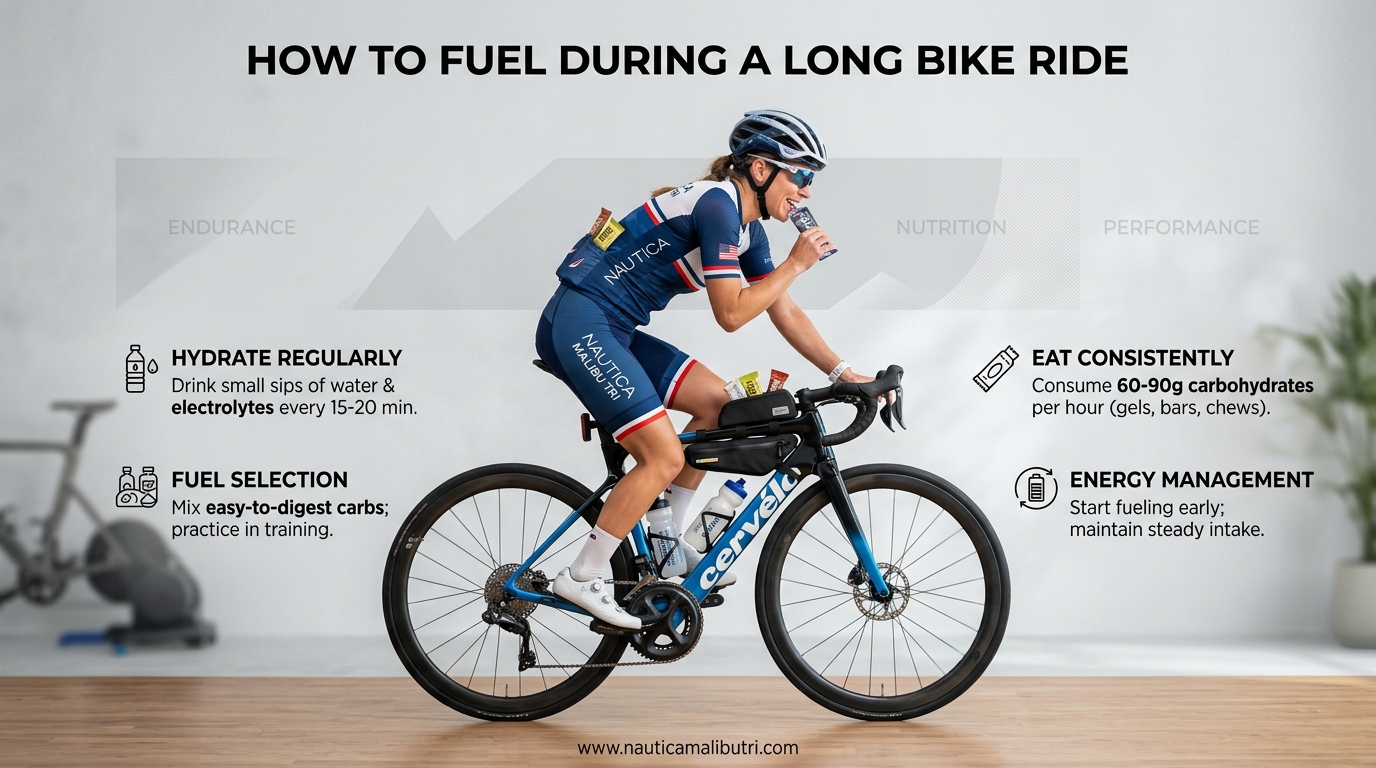
Learning how to fuel during a long bike ride separates cyclists who finish strong from those who hit the wall. Whether you are training for your first century ride or preparing for a gran fondo, proper nutrition strategy keeps your energy steady and your legs turning. I have learned through countless long rides that fueling is not just about eating enough, it is about eating the right foods at the right times.
This guide covers everything you need to know about cycling nutrition, from carbohydrate intake guidelines to hydration strategy and gut training. You will learn specific gram recommendations based on ride duration, timing strategies that prevent the dreaded bonk, and practical tips from real cyclists who have figured out what works. By the end, you will have a complete fueling framework you can test and adapt for your own cycling goals.
Table of Contents
How to Fuel During a Long Bike Ride: The Fundamentals
Understanding how to fuel during a long bike ride starts with knowing why your body needs external fuel in the first place. Your muscles store carbohydrates as glycogen, which powers your pedaling for about 90 minutes of moderate effort. Once those stores run low, your body cannot maintain power output, your brain gets foggy, and you hit what cyclists call the bonk.
The solution is consuming carbohydrates while you ride to keep blood glucose levels stable and spare your glycogen stores for when you really need them. Research from USA Cycling recommends 45 to 90 grams of carbohydrate per hour for rides over two and a half hours. The exact amount depends on your ride intensity, duration, and how well you have trained your gut to process food while exercising.
Carbohydrate Intake by Ride Duration
Your fueling needs change based on how long you will be in the saddle. Shorter rides rely more on stored glycogen, while longer rides demand consistent fueling to avoid depletion.
For rides under 60 minutes, you typically do not need to eat during the ride if you have had a proper pre-ride meal. Your stored glycogen should carry you through, though having a banana or energy gel available is wise insurance.
For rides lasting 1 to 3 hours, aim for 30 to 60 grams of carbohydrates per hour. This could be one energy gel (20-25g carbs) plus half an energy bar (20-30g carbs) each hour. Start eating within the first 30 minutes rather than waiting until you feel hungry.
For rides between 3 and 6 hours, increase your intake to 60 to 90 grams per hour. At this duration, glycogen depletion becomes a real threat. Mix glucose-based foods (gels, sports drinks) with fructose sources (fruit, honey) for better absorption. Your gut can process more total carbs when you use multiple carbohydrate pathways.
For ultra-endurance rides over 6 hours, experienced cyclists can train their guts to handle 90 grams per hour or more. These efforts require careful planning, varied food textures to prevent palate fatigue, and often include real food like sandwiches or rice cakes alongside commercial products.
Pre-Ride Nutrition: Setting Yourself Up for Success
What you eat before you clip in matters just as much as what you consume on the bike. Proper pre-ride nutrition tops off your glycogen stores and ensures you start with a full tank.
Timing Your Pre-Ride Meal
Eat your main pre-ride meal 2 to 3 hours before you plan to start pedaling. This gives your body time to digest and absorb the nutrients without causing stomach distress. A good meal includes carbohydrates for glycogen, moderate protein for satiety, and limited fat and fiber to speed digestion.
Good options include oatmeal with banana and honey, a bagel with peanut butter and jam, or rice with a small portion of lean protein. Aim for 1 to 4 grams of carbohydrates per kilogram of body weight depending on ride duration. For a 3-hour endurance ride, a 70kg cyclist might target 140-210g of carbs pre-ride.
If your ride starts early and you cannot eat 2 hours ahead, have a light snack 30 to 60 minutes before. A banana, energy gel, or small energy bar provides quick carbs without overloading your stomach. These smaller portions digest faster and get into your bloodstream quickly.
Carb Loading for Events
For century rides, gran fondos, or races, consider carb loading in the 24 to 48 hours before the event. This means increasing carbohydrate intake to 8 to 12 grams per kilogram of body weight daily while reducing training volume. Your muscles can store more glycogen than normal, giving you a larger fuel reserve when the event starts.
Focus on low-fiber, high-carb foods like white rice, pasta, potatoes, and bread. Too much fiber can cause digestive issues during the ride. Practice your carb loading strategy before long training rides to make sure your body handles it well.
During-Ride Fueling Strategy
The timing and consistency of your on-bike eating determines whether you maintain steady energy or suffer energy crashes. Most cycling nutrition mistakes happen because riders start fueling too late or eat too much at once.
Start Early and Eat Often
Begin eating within the first 30 minutes of your ride, even if you do not feel hungry. Once glycogen depletion and hunger kick in, it is difficult to catch up. Your stomach also processes food better early in a ride before fatigue and heat stress reduce digestion efficiency.
Take in small amounts every 15 to 20 minutes rather than large amounts hourly. This keeps a steady stream of glucose entering your bloodstream without overwhelming your digestive system. Think of it as grazing rather than eating meals.
Choosing Your Fuel Types
Energy gels provide 20 to 25 grams of fast-absorbing carbohydrates in a portable, easy-to-consume format. They work best for high-intensity efforts when chewing is difficult. The downside is that some cyclists find them overly sweet or sticky, and they do not provide much satiety.
Energy bars and chews offer more substance and variety in texture and flavor. They typically contain 25 to 45 grams of carbs and feel more like real food. Bars require more effort to chew and can be hard to eat during hard efforts or climbs.
Whole foods like bananas, fig bars, rice cakes, and sandwiches work well for longer, lower-intensity rides. They provide satisfaction, varied nutrients, and break up the monotony of commercial products. However, they can be harder to carry, spoil in heat, and may not digest as quickly during intense efforts.
Based on forum discussions, many experienced cyclists prefer a mix. One Reddit user doing 8-plus hour rides noted that while gels are friendly on the gut, they do not last long. Their best performances came on rides with a sit-down lunch halfway through, combining quick carbs early with real food later.
How to Fuel a 100 Mile Bike Ride
A century ride typically takes 5 to 7 hours for most cyclists, putting you squarely in the 60 to 90 grams per hour fueling zone. Plan your fuel stops and carry enough food to avoid relying entirely on convenience stores or feed stations.
A practical 100-mile fueling plan looks like this: Start with a gel or chews within 30 minutes. Continue every 20 minutes with alternating gels and half bars. At the 3-hour mark, consider a more substantial food stop with real food if possible. Many cyclists find their stomach tolerates solid foods better after several hours of riding.
Carry a mix of 6 to 8 gels, 3 to 4 bars, plus backup options like chews or waffles. Practice your exact race-day nutrition on your longest training rides to confirm your gut handles it well.
How to Fuel for a 200 Mile Bike Ride
Double centuries and ultra-endurance events require different strategies than shorter rides. Your gut can only process so much, and palate fatigue becomes a real issue when you have been eating sugary foods for 10-plus hours.
Plan for 80 to 90 grams of carbs per hour using multiple carbohydrate sources. Alternate between glucose-heavy products (gels, maltodextrin drinks) and fructose sources (fruit, honey-based foods) to maximize absorption. Include savory options like sandwiches, chips, or rice balls to break up the sweetness.
Schedule regular stops for real food every 3 to 4 hours. A 15-minute sit-down meal with a sandwich and salty snacks resets your palate and gives your digestive system a break from processing sugars on the move. Many ultra-cyclists find their performance drops off after hour 6 if they stick only to gels and bars.
Hydration and Electrolyte Strategy
Hydration drives your fueling strategy more than most cyclists realize. Dehydration reduces your ability to digest food and can cause cramping, dizziness, and decreased power output even with adequate carbohydrate intake.
Separating Hydration from Fuel
A key principle from elite coaches is to separate your hydration from your energy intake. When you mix everything into one super-concentrated bottle, you create a gut distress risk. If you get behind on fluid intake, you also miss out on calories.
Carry one bottle with water or a light electrolyte drink for hydration, and another with a sports drink mix or use solid foods for fuel. This lets you adjust fluid intake based on temperature and sweat rate without overloading your stomach with sugar.
Calculating Your Fluid Needs
Weigh yourself before and after a 1-hour ride to estimate sweat rate. Each pound lost represents approximately 16 ounces of fluid you need to replace. If you lose 2 pounds in an hour, you need 32 ounces of fluid per hour during similar conditions.
General guidelines suggest 16 to 20 ounces of fluid per hour for moderate conditions, increasing to 24 to 32 ounces in heat. These are starting points. Your individual needs vary based on body size, fitness level, and genetics.
Electrolytes and Salty Sweaters
Sodium is the primary electrolyte lost in sweat, and replacement becomes crucial for rides over 2 hours. Most sports drinks contain 200 to 500mg of sodium per serving. If you finish long rides with salt crust on your jersey or shorts, you are likely a salty sweater who needs higher sodium intake.
Salty sweaters may need 500 to 1000mg of sodium per hour, particularly in hot conditions. Consider adding electrolyte tablets to your bottles, eating salty snacks like pretzels or chips, or using higher-sodium drink mixes. Signs you need more sodium include muscle cramps, dizziness, and persistent fatigue despite adequate calorie intake.
One content gap identified in competitor analysis is specific salty sweater advice. If you notice white salt lines on your clothing after rides, experiment with higher sodium products like Sodium Plus capsules or salty food options at rest stops.
Training Your Gut for Long Rides
Your digestive system adapts to processing food during exercise just like your muscles adapt to pedaling. This gut training is essential for long-distance cycling success.
Why Gut Training Matters
During exercise, blood flow shifts away from your digestive system to your working muscles. This reduced blood flow makes digestion harder, which is why many cyclists experience stomach distress when eating on the bike. Regular practice teaches your gut to keep functioning despite the exercise stress.
Untrained cyclists often max out at 30 to 40 grams of carbs per hour before experiencing bloating, nausea, or diarrhea. Trained cyclists can process 90 grams per hour or more with practice. This difference determines whether you can fuel adequately for your longest events.
How to Train Your Gut
Start by eating small amounts during moderate training rides. Even a 90-minute endurance ride is long enough to practice. Begin with 20 to 30 grams of carbs per hour using easily digestible foods like gels or chews.
Gradually increase both the amount and variety of foods over several weeks. Add 10 grams per hour every few rides as long as your stomach tolerates it. Introduce different textures and carbohydrate sources to expand what your gut can handle.
Practice eating at different intensities. Your gut processes food best at steady endurance paces. Hard efforts and climbs slow digestion. Learn what your stomach tolerates during easy riding versus threshold efforts.
Post-Ride Recovery Nutrition
What you eat after your ride affects how quickly you recover and adapt to the training stimulus. The first 30 minutes post-ride is a critical window for glycogen replenishment.
The Recovery Window
Your muscles are most receptive to absorbing carbohydrates in the 30 to 60 minutes after exercise. During this window, enzymes that convert glucose to glycogen work at higher efficiency. Missing this window delays recovery and reduces your glycogen stores for your next ride.
Aim for 1 to 1.2 grams of carbohydrates per kilogram of body weight in the first hour post-ride. A 70kg cyclist should target 70 to 85 grams of carbs. Include 15 to 25 grams of protein to support muscle repair.
Recovery Food Options
Commercial recovery drinks provide a convenient 3:1 or 4:1 carb-to-protein ratio designed for post-workout nutrition. Chocolate milk is a favorite among cyclists for its similar ratio, affordability, and taste. Real food options include a turkey sandwich, rice with chicken, or Greek yogurt with granola and fruit.
Rehydration should also begin immediately. Replace 150% of fluid losses over the 2 to 4 hours post-ride. If you lost 2 pounds during the ride, drink 48 ounces of fluid with electrolytes. Urine color should return to pale yellow within a few hours.
Common Fueling Mistakes to Avoid
Even experienced cyclists make nutrition mistakes that sabotage their rides. Learning from these common errors will save you from unnecessary suffering.
Starting Too Late
The most common mistake is waiting until you feel hungry or tired to start eating. By then, glycogen depletion has already started. It takes time for consumed carbs to reach your bloodstream, so you cannot catch up from a deficit quickly.
Practice starting your fueling within the first 30 minutes until it becomes automatic. Set a timer on your bike computer or watch if needed. Consistency matters more than perfection.
Overeating on the Bike
Consuming too much food at once overwhelms your digestive system and can cause nausea, cramping, or the need for bathroom stops. This is particularly common at rest stops where cyclists load up on calories they have been craving.
Stick to your planned hourly intake even when you feel hungry. Eating a large sandwich or massive cookie at a rest stop might taste great but can wreck the next hour of your ride. Portion control matters even when food is available.
Under-Fueling on Long Rides
Many cyclists simply do not eat enough during rides over 4 hours. They pack for a 3-hour ride but bonk at hour 5. Carry more food than you think you need, especially for events with unknown feed station availability.
Based on forum insights, Reddit user shaun byrne shared their experience doing 8-plus hour rides and almost always under-fueling. They found gels friendly on the gut but noted they do not last long. Having backup food and a plan for real food stops prevents this common problem.
Trying New Foods on Race Day
Never use a new fueling product for the first time during an important event. Your gut might react poorly to unfamiliar ingredients, flavors, or textures. Practice with the exact products and timing you plan to use on race day.
This applies to feed station offerings too. Do not count on trying whatever they have available. Carry your planned nutrition and only use feed station foods as backup if your stomach tolerates them.
Ignoring Gut Training
Assuming your digestion will handle whatever you throw at it is a recipe for disaster. Gut training requires weeks of progressive practice. Do not expect to jump from no fueling to 90 grams per hour without building up gradually.
Include gut training as a specific goal during your long training rides. Note what works and what causes issues. Your nutrition strategy should be as well-rehearsed as your pacing strategy.
Frequently Asked Questions
What is the 80% rule in cycling?
The 80% rule in cycling refers to doing 80% of your training at low intensity (conversational pace) and 20% at high intensity. This approach builds aerobic endurance while providing enough stimulus for fitness gains. For fueling purposes, easy rides under 2 hours may not require eating during the ride, while the harder 20% efforts demand more carbohydrate support.
What is the 75 rule in cycling?
The 75 rule, also known as the 75% rule, suggests that 75% of your training should be at an intensity where you can comfortably hold a conversation. This is similar to the 80% rule and emphasizes building a strong aerobic base. For nutrition planning, these easier rides typically require less on-bike fueling than high-intensity sessions.
How to fuel a 100 mile bike ride?
For a 100 mile bike ride, aim for 60-90 grams of carbohydrates per hour starting within the first 30 minutes. Carry a mix of 6-8 gels and 3-4 bars, eating small amounts every 15-20 minutes. Plan a real food stop around the 3-hour mark if possible. Hydrate with 16-24 ounces of fluid per hour including electrolytes. Practice your exact fueling plan on training rides before your event.
How to fuel for a 200 mile bike ride?
For a 200 mile bike ride, target 80-90 grams of carbs per hour using multiple carbohydrate sources. Alternate between glucose-based and fructose-based foods for better absorption. Include savory whole foods like sandwiches or rice balls every 3-4 hours to prevent palate fatigue. Schedule regular sit-down meals for 15 minutes to reset your digestion. Carry backup food and do not rely solely on feed stations.
Conclusion: Putting It All Together
Learning how to fuel during a long bike ride takes practice, but the framework is straightforward. Consume 30 to 60 grams of carbohydrates per hour for rides 1 to 3 hours, and 60 to 90 grams per hour for longer efforts. Start fueling within the first 30 minutes, eat small amounts every 15 to 20 minutes, and separate your hydration strategy from your calorie intake.
Train your gut progressively just like you train your legs. Practice your planned nutrition on long training rides, not just on event day. Pay attention to what works for your body, keep notes, and adjust your strategy based on real experience.
With proper fueling, long rides become more enjoyable and your performance becomes more predictable. You will finish strong instead of crawling home, and you will be ready to ride again sooner. The cyclists who figure out their nutrition are the ones who keep improving year after year.