
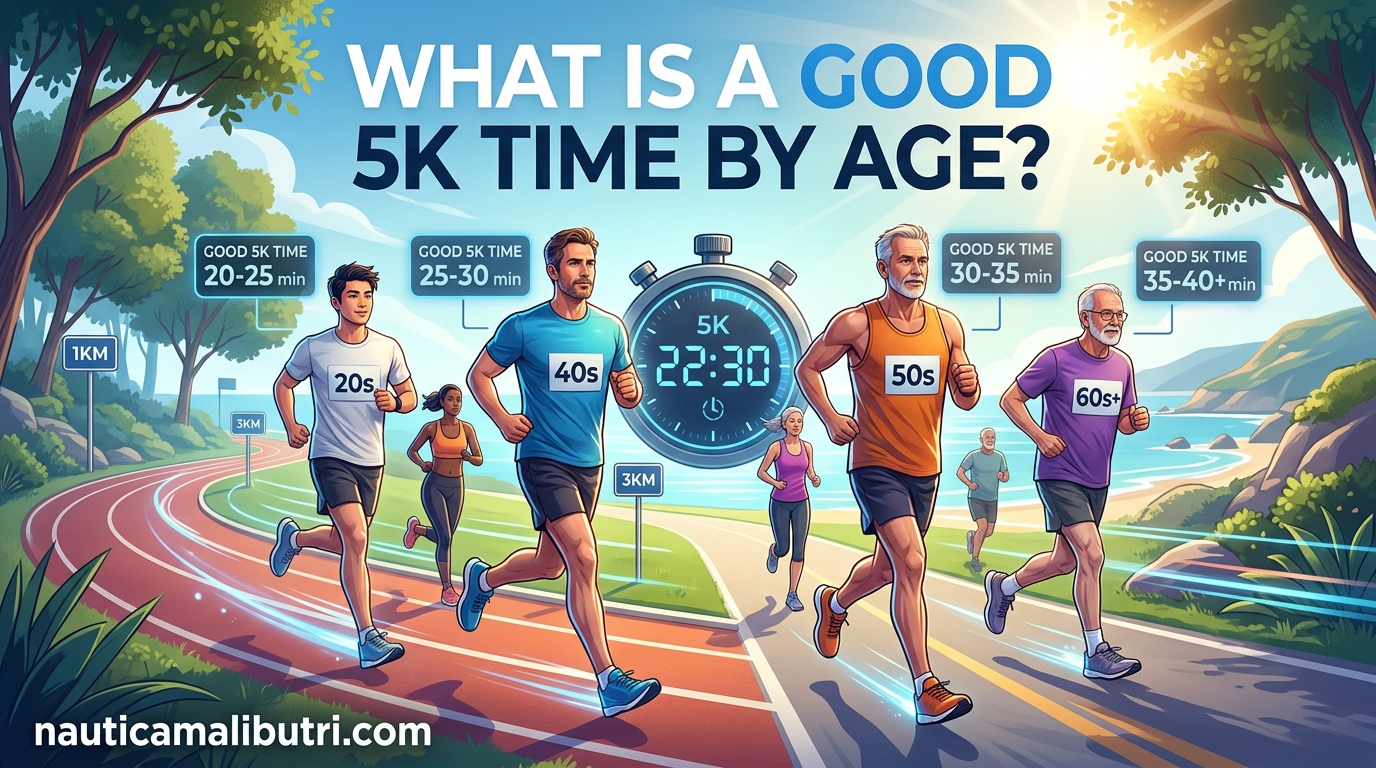
When I crossed the finish line of my first 5K race, I remember glancing at my watch and seeing 28:47. I had no idea if that was decent or embarrassing. The truth is, a good 5K time depends heavily on your age, gender, and experience level. Understanding what is a good 5K time by age helps you set realistic goals and celebrate real progress rather than comparing yourself to elite runners.
The overall average good 5K time across all ages and genders is 23 minutes and 58 seconds. But that number tells only part of the story. A 25-minute finish might be competitive for a 55-year-old woman but modest for a 25-year-old man. Age affects our aerobic capacity, muscle mass, and recovery ability. Gender introduces physiological differences in muscle fiber composition and VO2 max potential. Experience level determines training adaptations and running economy. These factors combine to create a wide spectrum of what counts as “good” for different people.
At Nautica Malibu Triathlon, we see thousands of runners tackle the 5K distance every year. Some are pure runners chasing personal records. Others are triathletes finishing the final leg of a sprint race after swimming and cycling. Your expected time changes depending on which category you fall into. This guide breaks down the data so you can understand exactly where you stand.
Table of Contents
Quick Answer: What Is a Good 5K Time?
Before diving into the detailed breakdowns, here is the straight answer most people want. A good 5K time generally falls between 20 and 30 minutes for recreational runners. Breaking 25 minutes puts you in solid company. Finishing under 20 minutes is genuinely impressive for most age groups.
Here are the key benchmarks to remember:
- Overall average: 23:58 across all ages and genders
- Beginners: 30-40 minutes is perfectly respectable
- Intermediate runners: 25-30 minutes shows solid fitness
- Advanced runners: 20-25 minutes indicates dedicated training
- Elite athletes: Under 17 minutes (men) or under 19 minutes (women)
These numbers come from analyzing millions of race results from events across the United States. The data includes everything from local charity fun runs to competitive road races. Your age group matters significantly, as we will explore in the detailed tables below.
Average 5K Times by Age and Gender
Race data reveals clear patterns in how 5K finishing times vary by age and gender. Men typically finish faster than women across all age groups due to higher average muscle mass and VO2 max capacity. Performance generally peaks in the late 20s to early 30s, then gradually declines with age. However, the decline is gradual, and many runners maintain impressive times well into their 50s and beyond.
The following tables show median finishing times by age group. These represent the middle point of all finishers, meaning half the runners in that demographic run faster and half run slower. Use these as benchmarks for understanding where you stand among your peers.
Average 5K Times for Men by Age Group
| Age Group | Average Time | Pace per Mile | Pace per KM |
|---|---|---|---|
| 20-24 | 29:27 | 9:28 | 5:53 |
| 25-29 | 29:47 | 9:35 | 5:57 |
| 30-34 | 30:32 | 9:49 | 6:06 |
| 35-39 | 31:22 | 10:05 | 6:16 |
| 40-44 | 32:26 | 10:26 | 6:29 |
| 45-49 | 33:45 | 10:52 | 6:45 |
| 50-54 | 35:12 | 11:19 | 7:02 |
| 55-59 | 36:40 | 11:48 | 7:20 |
| 60-64 | 38:30 | 12:23 | 7:42 |
| 65-69 | 41:10 | 13:14 | 8:14 |
| 70+ | 45:30 | 14:38 | 9:06 |
The data shows that men in their early 20s post the fastest average times, with performance remaining relatively stable through the 30s. A noticeable decline begins in the 40s, accelerating slightly in the 60s and beyond. Even so, a 60-year-old man running a 38:30 5K demonstrates excellent fitness for his age group.
Average 5K Times for Women by Age Group
| Age Group | Average Time | Pace per Mile | Pace per KM |
|---|---|---|---|
| 20-24 | 35:15 | 11:20 | 7:03 |
| 25-29 | 35:50 | 11:31 | 7:10 |
| 30-34 | 36:40 | 11:47 | 7:20 |
| 35-39 | 37:25 | 12:02 | 7:29 |
| 40-44 | 38:30 | 12:23 | 7:42 |
| 45-49 | 40:05 | 12:54 | 8:01 |
| 50-54 | 41:45 | 13:26 | 8:21 |
| 55-59 | 43:30 | 14:00 | 8:42 |
| 60-64 | 45:50 | 14:45 | 9:10 |
| 65-69 | 48:40 | 15:39 | 9:44 |
| 70+ | 53:30 | 17:13 | 10:42 |
Women show similar patterns to men, with peak performance in the 20s and gradual decline thereafter. The gender gap in average times ranges from about 5-6 minutes in younger age groups to 7-8 minutes in older brackets. This reflects physiological differences in muscle mass, testosterone levels, and aerobic capacity between men and women.
Percentile Rankings: Where Do You Stand?
Understanding percentiles helps you gauge your relative performance more precisely than simple averages. If you finish in the top 25 percent of your age group, you are performing well regardless of the absolute time.
For men aged 30-39, the percentiles break down roughly as follows:
- Top 5%: Under 19:00
- Top 10%: Under 20:30
- Top 25%: Under 23:00
- Top 50%: Under 28:00
- Bottom 25%: Over 33:00
For women aged 30-39, the percentile benchmarks are:
- Top 5%: Under 22:00
- Top 10%: Under 24:00
- Top 25%: Under 27:30
- Top 50%: Under 33:00
- Bottom 25%: Over 40:00
These percentiles shift with age. A 22-minute 5K puts a 50-year-old woman in the top 5 percent of her age group, while a 25-year-old woman would need to run under 20 minutes to achieve the same ranking.
Understanding Running Ability Levels
Not everyone approaches the 5K distance with the same goals or training background. Breaking down ability levels helps you find realistic benchmarks and appropriate training approaches. Here is how we categorize runners based on typical finishing times and training commitments.
Beginner Runners
Beginners are those new to running or returning after a long break. They typically run 1-2 times per week and have not yet built a consistent aerobic base. A beginner 5K time usually falls between 30 and 40 minutes. Many beginners mix running with walking, especially in their first few races.
If you are just starting out, focus on finishing rather than speed. Completing your first 5K is a significant achievement regardless of time. Most beginners see rapid improvement in their first 3-6 months of consistent training.
Intermediate Runners
Intermediate runners have established a regular running habit, typically training 3-4 times per week. They understand pacing and have completed several 5K races. Their times usually range from 25 to 30 minutes.
These runners have moved beyond the beginner phase but are not yet following structured training plans. They might incorporate some tempo runs or occasional intervals but primarily focus on building mileage. An intermediate runner can hold a conversation during easy runs but breathes hard at race pace.
Advanced Runners
Advanced runners follow structured training plans and understand concepts like lactate threshold and VO2 max intervals. They run 4-6 times per week and may compete in multiple races per year. Their 5K times typically fall between 20 and 25 minutes.
These athletes have developed good running economy and understand how to pace themselves through a 5K. They train with purpose, incorporating speed work, tempo runs, and long runs into their weekly schedules. Advanced runners often target age-group awards at local races.
Elite Runners
Elite runners compete at the highest levels of the sport, often having trained competitively since high school or college. Men run under 17 minutes, while women run under 19 minutes. These times require exceptional genetics, years of dedicated training, and often professional coaching support.
Elite runners train twice daily, follow strict nutrition protocols, and treat running as their primary focus. They represent the top fraction of one percent of all runners. While inspiring, their times should not serve as benchmarks for recreational runners.
Factors That Affect Your 5K Time
Multiple variables influence how fast you can run a 5K. Understanding these factors helps you set appropriate goals and identify areas for improvement.
Age and Physiological Changes
Aging affects running performance through several mechanisms. VO2 max, the maximum amount of oxygen your body can use during exercise, declines by approximately 1 percent per year after age 25. Muscle mass decreases, particularly fast-twitch fibers responsible for speed. Tendons and ligaments lose elasticity, reducing running economy. Recovery takes longer, meaning older runners need more rest between hard efforts.
However, these declines are not inevitable. Masters athletes who maintain consistent training can slow the aging process significantly. A 50-year-old who trains regularly often outperforms a sedentary 25-year-old.
Gender Differences
Men generally run faster than women due to higher muscle mass, greater testosterone levels, and larger heart and lung capacity. The performance gap is typically 10-12 percent at the elite level and slightly larger among recreational runners. Women often show better pacing discipline and fatigue resistance in longer distances.
These differences reflect population averages, not individual potential. Many women outperform the majority of men in any given race. Training history, body composition, and genetics matter more than gender alone.
Training Experience
Running is a skill that improves with practice. Your body adapts to the specific demands you place on it. Beginners see dramatic improvements as their cardiovascular system strengthens and their running form becomes more efficient. Experienced runners make smaller gains but can target specific weaknesses through targeted training.
The 5K distance rewards both aerobic endurance and anaerobic speed. A well-rounded training program develops both energy systems. Consistency over months and years matters more than any single workout.
Environmental Factors
Weather significantly impacts 5K performance. Ideal conditions are temperatures between 45 and 55 degrees Fahrenheit with low humidity and minimal wind. Hot weather slows everyone down as your body diverts blood flow to cooling. Cold weather tightens muscles and reduces range of motion. Wind can add significant resistance, particularly on out-and-back courses.
Course terrain matters too. Hilly courses run slower than flat ones. Trail 5Ks typically take longer than road races due to uneven surfaces and elevation changes. Altitude affects performance, with times slowing significantly above 5,000 feet elevation.
Body Composition
Extra body weight makes running harder because you must lift and propel that mass with each step. A general rule suggests every pound lost improves 5K time by approximately 1-2 seconds, assuming the weight loss comes from fat rather than muscle. However, being too light reduces power and increases injury risk. Finding your optimal racing weight requires individual experimentation.
Triathlon Context: How 5K Times Differ
If you are training for a triathlon, your 5K time expectations should differ from standalone running races. The 5K in a sprint triathlon presents unique challenges that affect finishing times.
The Bike-to-Run Transition
Running after cycling feels completely different from starting fresh. Your legs feel heavy and unresponsive for the first half-mile to mile. This “brick” sensation occurs because your cycling muscles are fatigued and your running muscles need time to activate. Most triathletes run 30-90 seconds per mile slower in a triathlon than in a standalone 5K.
Practicing brick workouts during training helps minimize this effect. Running immediately after cycling teaches your body to transition between movement patterns more efficiently.
Accumulated Fatigue
A sprint triathlon involves a 750-meter swim and 20-kilometer bike ride before the 5K run. Even at moderate intensities, these efforts deplete glycogen stores and create central fatigue. Your heart rate runs higher for a given running pace compared to a fresh 5K. Your perceived exertion increases significantly.
Elite triathletes minimize this through precise pacing and superior fitness. Age groupers should expect their triathlon 5K times to be 10-20 percent slower than their standalone race times.
Pacing Strategy Differences
Standalone 5K races allow you to start hard and hang on. Triathlon runs require more conservative starts to avoid blowing up after the bike. Negative splitting, or running the second half faster than the first, is more common in triathlon. Experienced triathletes know that passing people in the final mile feels better than being passed.
Course Variations
Triathlon run courses vary more than certified road races. Some are multiple loops of a short course. Others point-to-point with challenging terrain. Malibu Triathlon features a beach finish that adds character and challenge. Always preview the course beforehand and adjust expectations accordingly.
How to Improve Your 5K Time
Whether you are preparing for your first 5K or chasing a personal record, specific training strategies can help you run faster. These tips apply to both pure runners and triathletes.
Build Your Aerobic Base
Most runners, even experienced ones, do not do enough easy running. Aerobic base building develops the cardiovascular infrastructure needed for faster running. Spend 80 percent of your training time at a conversational pace. This feels almost too easy but creates the foundation for speed work. A strong aerobic base also improves recovery between hard sessions.
Add Interval Training
Intervals train your body to run faster by repeatedly stressing and recovering. For 5K improvement, try workouts like 6 x 800 meters at 5K race pace with 2-3 minutes recovery. Or do 12 x 400 meters slightly faster than 5K pace with 90 seconds recovery. These sessions teach your body to buffer lactate and maintain form when tired.
Incorporate Tempo Runs
Tempo runs develop your lactate threshold, the point where your body cannot clear lactate as fast as it produces it. Run 20-40 minutes at a comfortably hard pace, roughly your hour-race effort. You should feel like you are working but could sustain the pace for a while. Tempo runs improve your ability to hold a solid pace throughout the 5K distance.
Practice Race Pacing
Many runners start 5Ks too fast and fade badly. The first mile should feel almost too easy. The second mile tests your discipline. The third mile reveals your fitness. Practice this progression in training. Negative splitting races, or running the second half faster, indicates mature pacing.
Strength Train Regularly
Running economy improves with stronger muscles and better coordination. Two to three strength sessions per week focusing on core, hips, and legs can reduce injury risk and improve power. Exercises like squats, lunges, planks, and calf raises translate directly to faster running.
Prioritize Recovery
Training breaks your body down. Recovery builds it back stronger. Sleep 7-9 hours nightly. Take at least one complete rest day weekly. Fuel properly before and after workouts. Manage life stress, as emotional stress affects physical performance. The fittest runners are often those who recover best.
Frequently Asked Questions
What is a respectable time for a 5K run?
A respectable 5K time is generally between 25 and 35 minutes for most recreational runners. Breaking 30 minutes is a common milestone for beginners, while finishing under 25 minutes shows solid fitness. The key is finishing comfortably and feeling proud of your effort. Respectability depends on your age, gender, and experience level. A 35-minute finish might be excellent for a 60-year-old beginner but modest for a 25-year-old collegiate athlete.
What is Mark Zuckerberg’s 5K time?
Mark Zuckerberg reportedly runs a 5K in approximately 20 minutes, which translates to about 6:26 per mile pace. This places him in the advanced category for his age group and shows serious dedication to training. His time would be competitive in most local road races and demonstrates that busy professionals can achieve impressive running fitness with consistent training.
Is a 35 minute 5K slow?
A 35-minute 5K is not slow for a beginner or recreational runner. This pace of 11:15 per mile is faster than walking and represents a legitimate running effort. Many runners complete their first 5K in 35-40 minutes. For context, the average woman in her 40s finishes around 38 minutes. With consistent training, most people can improve from 35 minutes to under 30 minutes within 3-6 months. Focus on your personal progress rather than comparing yourself to others.
What is a good 5K time for a 60 year old?
A good 5K time for a 60-year-old man is approximately 34-38 minutes, while for a 60-year-old woman it is around 40-46 minutes. These times represent solid fitness for the age group and would place you in the middle to upper half of most local races. The average 60-year-old man runs about 38:30, and the average 60-year-old woman runs about 45:50. Breaking 30 minutes as a 60-year-old man or 36 minutes as a 60-year-old woman is excellent and would likely earn age-group awards.
What is the 80/20 rule for 5K training?
The 80/20 rule, also known as polarized training, means spending 80 percent of your training time at low intensity and 20 percent at high intensity. For 5K training, this translates to running easy and conversational for four out of five workouts, with one session involving intervals, tempo work, or hills. This approach maximizes aerobic development while providing enough stimulus for speed improvement. Research shows this distribution optimizes fitness gains while minimizing injury and burnout risk. Most recreational runners do too much moderate-intensity running and not enough easy running.
How fast should a 65 year old run a 5K?
A 65-year-old man should expect to run a 5K in approximately 36-42 minutes, while a 65-year-old woman should expect 42-50 minutes. The average times are 41:10 for men and 48:40 for women at this age. These times assume regular running training. Sedentary individuals starting at 65 might initially run 45-50 minutes or longer, which is perfectly normal. Age-related decline continues gradually, but consistent training can slow this process significantly. Many 65-year-olds who train regularly outperform sedentary people decades younger.
What is a good 5K time based on age?
Good 5K times vary significantly by age. For men in their 20s, under 25 minutes is good. For men in their 40s, under 28 minutes is good. For men in their 60s, under 34 minutes is good. For women in their 20s, under 28 minutes is good. For women in their 40s, under 32 minutes is good. For women in their 60s, under 40 minutes is good. These benchmarks place you in the top 25-30 percent of your age group. Remember that good is subjective, personal improvement matters most, and consistency over years beats sporadic intensity.
Conclusion
Understanding what is a good 5K time by age helps you set realistic goals and appreciate your progress. The overall average of 23:58 provides a reference point, but individual performance varies dramatically based on age, gender, and experience. A 28-minute finish might be a personal record for one runner and a disappointing day for another. Both perspectives are valid.
Focus on your own journey. Beginners should celebrate finishing. Intermediate runners can chase sub-25 or sub-30 milestones. Advanced runners might target age-group awards or personal records. Remember that consistency over months and years matters more than any single race result. The best 5K time is the one you earn through dedicated training and smart racing. Whether you are running your first 5K or your fiftieth, the distance offers a challenge accessible to everyone willing to put in the work.