
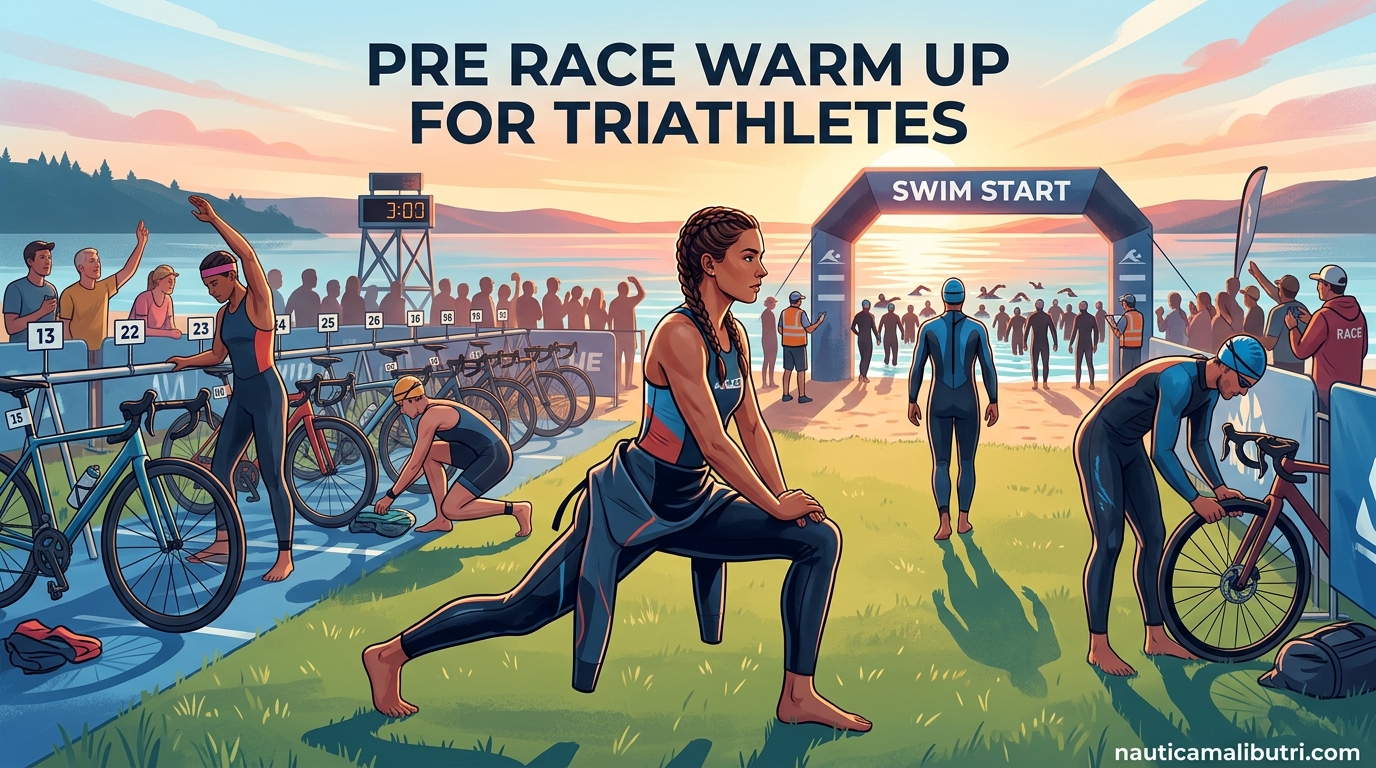
The swim start is 30 minutes away. You are standing in the transition area, heart racing, wondering if you have done enough to prepare your body for what is coming. After years of racing and working with hundreds of athletes, I can tell you that a proper pre race warmup for triathletes makes the difference between a smooth first mile and heavy legs that never seem to wake up.
In this guide, I will walk you through everything I have learned about race morning preparation. We will cover the science behind why warmup works, the exact protocols for every race distance, and the specific exercises that activate your muscles without draining precious energy stores. Whether you are tackling your first sprint triathlon or preparing for an Ironman, this protocol will help you start strong.
By the end, you will have a clear, step-by-step warmup routine you can implement immediately. No guesswork. No wondering if you are doing too much or too little. Just a proven system that prepares your body and mind for peak performance.
Table of Contents
Why Pre Race Warmup Matters for Triathletes
A proper warmup does more than just loosen tight muscles. It triggers a cascade of physiological changes that directly impact your race performance from the first stroke to the final stride.
When you warmup correctly, your core body temperature rises by 1 to 2 degrees Celsius. This increase improves muscle elasticity, allowing your tissues to contract and relax more efficiently. Studies consistently show that athletes who complete a structured warmup perform 2 to 5 percent better than those who skip it.
The warmup also activates your neural pathways, essentially waking up the communication system between your brain and muscles. This neural priming improves coordination, reaction time, and power output. You will feel more connected to your body, and your movements will feel fluid rather than forced.
Blood flow increases dramatically during a warmup, delivering oxygen and nutrients to working muscles while clearing metabolic waste. This vascular preparation is especially important for the swim leg, where cold water can cause an initial shock to your system if your circulation is not already elevated.
Perhaps most importantly, the warmup gives you a psychological edge. Racing produces anxiety, and that anxiety can tighten muscles and cloud judgment. A familiar warmup routine grounds you, provides a sense of control, and transitions your mind from nervous spectator to focused competitor.
The Reverse Order Warmup Approach
Here is a principle that confuses many first-time triathletes: you warmup in the reverse order of the race. Instead of swim-bike-run, you warmup run-bike-swim. I learned this from USA Triathlon coaching materials years ago, and it has transformed how my athletes approach race morning.
The logic is simple and practical. You start with the run because it is the most effective way to raise core temperature quickly. Running engages large muscle groups and generates heat faster than cycling or swimming. A 10 to 15 minute easy jog gets your cardiovascular system firing and starts the sweat response.
Next comes the bike segment, which transitions your warmed muscles into the specific movement patterns you will use during the race. The cycling motion activates your quads, hamstrings, and hip flexors in a way that complements the running you just completed. This 10 to 15 minute spin maintains your elevated temperature while adding sport-specific preparation.
You finish with the swim warmup because the water provides the most variable conditions. Pools may be available at some venues, but often you are limited to stretch cords or arm movements on deck. By saving the swim preparation for last, you keep your upper body muscles activated and ready without having to dry off and change before heading to the start line.
The reverse order also helps with transition logistics. You can run and bike in your race kit, then add your wetsuit for the swim warmup if needed. This mirrors what you will do in transition during the race, giving you one more mental rehearsal of the process.
Distance-Specific Warmup Protocols
Not all triathlons demand the same preparation. A sprint race requires less warmup time than an Ironman, but the intensity demands are higher. Here is how to adjust your protocol based on race distance.
Sprint Triathlon Warmup
Sprint races are short and intense, typically lasting 60 to 90 minutes for most athletes. The warmup needs to be thorough but not exhausting. I recommend 15 to 20 minutes total.
Start with a 10 minute easy run that includes 4 to 6 strides of 20 to 30 meters each. These short accelerations wake up your fast-twitch fibers without accumulating fatigue. Follow with 5 minutes of easy cycling on your bike in the transition area. Finish with arm circles and stretch band work for your shoulders.
The key for sprint races is hitting that sweet spot where you are warm but not tired. Because the race intensity is high from the start, your warmup needs to mirror that readiness without depleting glycogen stores.
Olympic Distance Warmup
Olympic distance races require 20 to 25 minutes of warmup. The longer duration means you can afford a slightly more gradual approach, but you still need to be ready for a hard swim start and aggressive first transition.
Begin with 12 to 15 minutes of running. Include 5 to 6 strides and some dynamic leg swings to open your hips. Transition to 8 to 10 minutes on the bike with a few short pickups to race pace effort. Complete your warmup with swim-specific arm movements and, if possible, a few minutes of easy swimming.
This distance allows a bit more flexibility in timing. You can start your warmup slightly earlier and extend the easy portions while maintaining the same structure.
Half Ironman Warmup
Half Ironman races, also known as 70.3 events, demand respect. You are looking at 4 to 7 hours of racing, and the warmup sets the tone for the entire day. Plan for 25 to 30 minutes of progressive activation.
The run segment should be 15 minutes of easy jogging with just 3 to 4 light strides. You are not trying to spike your heart rate; you are establishing rhythm and warmth. Follow with 10 to 12 minutes of easy spinning, keeping your cadence comfortable and your power output low.
Many 70.3 races have rolling swim starts or time-trial entries, which reduces the intensity of the initial chaos. However, this also means you might be standing around after your warmup. Have a backup plan for maintaining warmth if delays occur.
Full Ironman Warmup
Ironman distance is the longest day in triathlon, and your warmup should reflect the endurance nature of what is ahead. A 30 to 40 minute warmup provides comprehensive preparation without premature fatigue.
Start with 15 to 20 minutes of very easy running. Think conversation pace, not training pace. Add just 2 to 3 light strides to check your turnover. Follow with 15 minutes of easy cycling, focusing on smooth pedaling rather than power.
Ironman swim starts are often chaotic, especially in mass-start events. Your swim warmup might be limited to deck exercises if the water is crowded or cold. Stretch cords become your best friend here, allowing shoulder activation without getting wet prematurely.
Sport-Specific Warmup Exercises
Each discipline has unique movement patterns, and your warmup should target the specific muscles and ranges of motion you will use. Here are the exercises I have found most effective after testing dozens of protocols.
Run Warmup Segment
The foundation of your run warmup is a light jog at least 2 minutes per mile slower than your planned race pace. This easy effort gradually elevates heart rate and increases blood flow to your legs. I typically have athletes jog for 8 to 12 minutes depending on race distance.
Strides are the secret weapon of run warmups. These are short accelerations of 20 to 30 meters where you build to roughly 90 percent effort over the first half, then decelerate over the second half. They prime your nervous system for fast running without creating fatigue. Complete 4 to 6 strides with full recovery walking between each.
Dynamic stretches complete the run segment. Leg swings, both forward-backward and side-to-side, open your hip joints. Walking lunges with a twist activate your glutes and core simultaneously. High knees and butt kicks reinforce proper running mechanics.
Bike Warmup Segment
The bike warmup happens at your transition spot, which makes it logistically simple. Start by spinning easy in a low gear for 5 to 7 minutes. Focus on smooth circles rather than mashing big gears.
Progress through your gear range with 2 to 3 short pickups lasting 30 to 60 seconds each. These should reach race effort but not exceed it. You are reminding your legs what the sensation feels like, not testing your fitness.
Single-leg drills are valuable if you have space and balance. Pedaling with one leg for 30 seconds highlights dead spots in your stroke and activates stabilizing muscles. If the transition area is crowded or chaotic, skip this and stick to simple spinning.
Swim Warmup Segment
Swim preparation presents unique challenges because you might not have pool access or might be wearing a wetsuit. Adapt based on what the venue offers.
If you can get in the water, a 5 to 10 minute easy swim works wonders. Mix freestyle with backstroke to vary muscle activation. Finish with 2 to 3 short build-ups of 25 to 50 meters to check your stroke tempo.
On-deck exercises become essential when water access is limited. Arm circles, both forward and backward, activate your rotator cuff muscles. Old-school arm shakeouts, where you relax your shoulders and let your arms swing freely, release tension in your upper body. Stretch bands allow simulation of swim strokes against resistance, engaging your lats and shoulders.
Wetsuit preparation deserves special attention. Practice putting your wetsuit on efficiently during training so race morning feels routine. Once suited up, do a few arm movements to check range of motion. The suit should feel snug but not restrictive.
Race Morning Timeline and Logistics
Execution matters as much as the exercises themselves. Here is how to structure your race morning to ensure your warmup happens smoothly.
Arrive at the venue 90 to 120 minutes before your wave start. This buffer allows time for parking, body marking, transition setup, and bathroom visits without rushing. Once your gear is organized, you can focus entirely on preparation.
Begin your warmup 40 to 50 minutes before your swim wave. This timing gives you 30 minutes of actual warmup activity plus 10 to 20 minutes to make final preparations and get to the start line. Adjust based on your race distance using the protocols outlined above.
Coordinate your nutrition with your warmup schedule. If you eat a final snack 60 to 90 minutes pre-race, your warmup helps with digestion and blood sugar stabilization. Avoid consuming calories during the 30 minutes before your start to prevent gastrointestinal issues.
Check the weather and water temperature as soon as you arrive. Cold conditions might require extending your warmup slightly or adding extra clothing layers you can discard just before the start. Hot conditions mean prioritizing shade and hydration during your preparation.
Mental Preparation During Warmup
Your body is not the only thing that needs warming up. Your mind requires preparation too, and the warmup window is perfect for mental training.
Visualization is my go-to technique during easy portions of the warmup. I picture the swim start, the first buoy, the transition mount line. This mental rehearsal primes your brain to recognize these moments when they actually happen, reducing decision fatigue and anxiety.
Use the rhythmic nature of jogging and cycling to establish a breathing pattern. Controlled, deep breathing counteracts the shallow, rapid breathing that anxiety produces. I count breaths in time with my steps or pedal strokes, creating a meditative state that calms nerves.
The warmup is also your time to review your race strategy. Remind yourself of your pacing plan, nutrition schedule, and any course-specific notes. This keeps you focused on controllable factors rather than worrying about competitors or conditions.
Confidence comes from familiarity. Following the same warmup routine you practiced in training triggers a sense of normalcy. Even on race morning, when everything feels amplified, your warmup should feel like any other training day.
Weather and Condition Adjustments
Real-world racing rarely happens in perfect conditions. Here is how to adapt your pre race warmup for triathletes when Mother Nature throws challenges your way.
Cold weather and cold water require the most significant modifications. Your body loses heat rapidly in chilly conditions, so extend your run and bike segments by 5 to 10 minutes total. Keep your wetsuit on as long as possible before the swim. If the air temperature is below 50 degrees Fahrenheit, consider wearing throwaway layers during your run warmup that you can ditch just before the start.
Hot weather demands the opposite approach. Shorten your warmup slightly and seek shade whenever possible. Reduce the intensity of your strides and pickups to prevent premature overheating. Hydration becomes critical, so sip electrolyte fluids throughout your preparation.
Rain and wind create logistical challenges more than physiological ones. Protect your race gear in transition with waterproof bags, and keep a dry pair of shoes for your run warmup if the ground is soaked. Wind actually helps with cooling, which can be beneficial in warmer races but requires monitoring in cold conditions.
Wetsuit-legal swims in cold water give you an advantage if you warmup properly. The suit provides buoyancy and insulation, but only if your body is generating heat when you enter the water. A thorough warmup ensures you can take full advantage of the wetsuit benefits rather than shivering through the first 500 meters.
Common Pre Race Warmup Mistakes to Avoid
After coaching athletes for years, I have seen the same errors repeat themselves. Learn from these mistakes so you do not make them on race day.
Over-warming up is the most common problem, especially for enthusiastic athletes at their first race. A 45-minute intense warmup for a sprint triathlon leaves you depleted before the starting gun fires. Stick to the distance-specific guidelines above and trust that less is often more.
Skipping segments because of time pressure is another frequent error. I have seen athletes skip the bike warmup because transition closed early, only to suffer heavy legs on the first miles of the ride. Protect your warmup time as fiercely as you protect your race time.
Static stretching before the race is counterproductive. Long holds on cold muscles reduce power output and can increase injury risk. Save static stretching for after the race when your muscles are warm and pliable. Stick to dynamic movements during your warmup.
Trying new exercises on race morning is a recipe for disaster. Your warmup should consist of familiar movements you have practiced in training. Race day is not the time to experiment with that new dynamic stretch you saw in a video last week.
Frequently Asked Questions
What do you do on race morning to warm up for a sprint tri?
For a sprint triathlon, complete a 15-20 minute warmup starting 40-50 minutes before your swim wave. Begin with a 10-minute easy run including 4-6 strides of 20-30 meters. Follow with 5 minutes of easy cycling in the transition area. Finish with arm circles and stretch band exercises for your shoulders. This protocol raises core temperature and activates muscles without causing fatigue before your high-intensity race.
How to warm up day of race?
On race day, follow the reverse order approach: run first, then bike, then swim. Start with 10-15 minutes of easy running to raise core temperature. Continue with 10-15 minutes of cycling to activate cycling-specific muscles. Finish with swim preparation through either a short pool swim or deck exercises like arm circles and stretch band work. Begin this routine 40-50 minutes before your start time.
What’s your warm up routine?
My proven warmup routine follows three phases: First, an easy jog with dynamic stretches and strides to activate running muscles. Second, easy spinning on the bike with short race-pace pickups. Third, swim-specific preparation through arm movements and stretch band work. The total duration varies by race distance: 15-20 minutes for sprint, 20-25 for Olympic, 25-30 for half Ironman, and 30-40 minutes for full Ironman events.
How long should a triathlon warmup be?
Triathlon warmup duration depends on race distance. Sprint races need 15-20 minutes, Olympic distance requires 20-25 minutes, half Ironman events call for 25-30 minutes, and full Ironman races benefit from 30-40 minutes of preparation. These timeframes provide adequate physiological activation without causing premature fatigue. Always start your warmup 40-50 minutes before your scheduled swim wave start.
Why is warmup important for triathlon?
Warmup is crucial for triathlon because it raises core body temperature by 1-2 degrees Celsius, improving muscle elasticity and power output by 2-5%. It activates neural pathways between brain and muscles, enhancing coordination and reaction time. Increased blood flow delivers oxygen and nutrients while clearing metabolic waste. The warmup also provides psychological benefits, reducing pre-race anxiety and transitioning your mindset from nervous spectator to focused competitor.
Conclusion
A well-executed pre race warmup for triathletes transforms your race day experience from uncertain to confident. By following the reverse order protocol of run, bike, then swim, you activate your body efficiently while maintaining energy stores for the competition ahead.
Remember that your warmup is both physical and mental preparation. The routine you establish becomes an anchor of familiarity on race morning when everything else feels new and intense. Practice your protocol in training so it becomes automatic.
Start with the distance-specific guidelines outlined here, then refine based on your individual response. Some athletes run slightly warmer and need less time; others take longer to feel ready. Learn your body, trust the process, and arrive at the start line prepared to perform at your best.