
You are 20 miles into the bike leg of your first Ironman. Your legs feel strong, your nutrition plan is working, and you are catching up to a group of riders ahead. Your competitive instinct kicks in. You close the gap, tuck in behind the rider in front, and suddenly feel the wind resistance disappear. You are saving precious energy without working harder. Then you hear a whistle blast. A referee on a motorcycle pulls alongside, holds up a blue card with your race number, and shouts “Penalty.” You have just received a drafting penalty, and it will cost you five minutes in the penalty tent.
This scenario plays out at hundreds of triathlons every year. Drafting rules in triathlon confuse many athletes, especially newcomers who come from cycling backgrounds where drafting is not only legal but strategically essential. Understanding these rules before race day can mean the difference between a PR celebration and a frustrating penalty tent visit.
In this guide, I will break down everything you need to know about drafting rules in triathlon. I spent three years racing across USAT-sanctioned events and Ironman competitions, and I have seen athletes get penalized for rules they simply did not understand. By the end of this article, you will know the exact measurements, the passing rules, the penalties, and practical strategies to race clean while still competing at your best.
Table of Contents
What is Drafting in Triathlon?
Drafting in triathlon means riding within the slipstream of another cyclist to reduce wind resistance and save energy. When you ride directly behind another athlete, they block the wind for you. Research shows this can reduce your energy expenditure by 15 to 30 percent depending on conditions and positioning. In cycling races like the Tour de France, teams strategically use drafting to protect their leaders and conserve energy. In most triathlons, this practice is strictly prohibited.
Why is Drafting Not Allowed in Triathlon?
Triathlon is designed as an individual test of endurance across three disciplines. Non-drafting rules ensure that each athlete completes the bike leg entirely under their own power without assistance from others. This maintains fair competition, particularly for age-group athletes who train countless hours preparing for race day.
Unlike professional cycling teams with multimillion-dollar budgets and complex strategies, triathlon celebrates individual achievement. The prohibition on drafting preserves this spirit. It also improves safety on courses shared by hundreds or thousands of athletes with varying skill levels. Imagine 2,000 cyclists at an Ironman event all trying to draft strategically. Chaos would ensue. The non-drafting rule keeps spacing between riders and reduces crash risks.
Understanding the Slipstream Effect
The slipstream, also called the draft zone, extends behind a moving cyclist in a roughly rectangular area. At typical triathlon bike speeds of 18 to 25 miles per hour, this zone creates a pocket of reduced air pressure. When you enter this pocket, you work less to maintain speed. The effect becomes stronger the closer you ride to the athlete ahead.
Many athletes accidentally enter the draft zone without realizing it. They focus on maintaining pace, gradually close a gap, and suddenly find themselves saving energy unintentionally. Race officials understand this happens, which is why the rules allow a brief window to either complete a pass or drop back. However, staying in that zone beyond the legal time limit constitutes drafting and triggers penalties.
Drafting Rules in Triathlon: The Complete Breakdown
Now let me walk you through the specific rules you need to understand. These vary slightly depending on which governing body sanctions your race, so always check your specific event regulations before race day.
The Draft Zone: Exact Measurements
The draft zone is the rectangular area immediately behind and beside a moving cyclist. Think of it as a box extending backward from the front wheel of the leading bike. Officials measure from the leading edge of the front wheel.
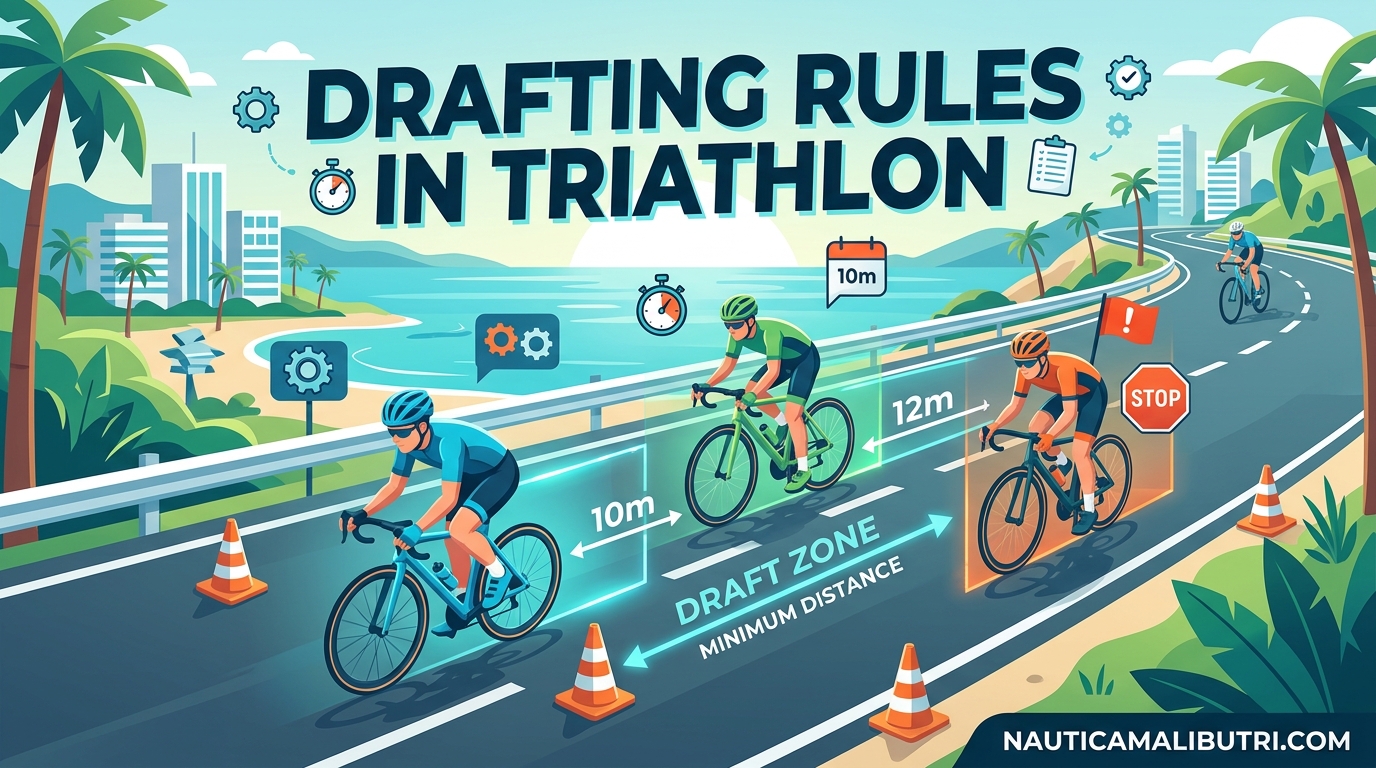
For Ironman and Ironman 70.3 races, the draft zone extends 12 meters behind the leading cyclist. This equals approximately six bike lengths for standard road bikes. If you ride within this 12-meter zone for longer than the legal passing time, you commit a drafting violation.
For USA Triathlon-sanctioned sprint and Olympic distance races, the draft zone is 10 meters, or about five bike lengths. This shorter distance reflects the shorter overall race duration and typically higher athlete density on the bike course.
In 2026, Ironman introduced a significant rule change for professional athletes. Pro races now feature a 20-meter draft zone, extending the non-draft area to roughly 10 bike lengths. This change aims to reduce pack formation at the elite level and ensure individual efforts determine results. Age-group athletes continue under the 12-meter rule at Ironman events.
Visualizing the Draft Zone on Course
Many athletes struggle to judge distances while riding at race pace. Twelve meters is longer than most people estimate. To visualize it, picture three large SUVs parked bumper to bumper. That approximates the draft zone length. When you think you are far enough back, you probably need to add more space.
Forum discussions among triathletes reveal a common pain point. Many age-groupers do not know the exact six-bike-length rule. They guess distances based on feel, often riding too close without realizing it. Referees on motorcycles can judge these distances accurately from their vantage point, catching violations athletes thought were legal positioning.
Passing Rules: Time Limits and Requirements
When you enter the draft zone, the clock starts ticking. You have a limited window to complete your pass or drop back.
At Ironman events, you have 25 seconds from entering the draft zone to move completely past the leading cyclist. Your pass completes when your front wheel passes the front wheel of the other rider. Until that moment, you remain subject to drafting rules.
At USAT-sanctioned events, the passing window is 20 seconds. This shorter time reflects the shorter draft zone and faster-paced nature of sprint and Olympic races.
If you cannot complete your pass within the allotted time, you must immediately drop back out of the draft zone. Continuing to ride within the zone beyond the time limit constitutes drafting. The safe approach: commit to passing quickly or back off early.
The Overtaken Rider’s Responsibility
Here is where many athletes create violations unintentionally. When another rider passes you legally, you have responsibilities too. Once the passing rider’s front wheel passes your front wheel, you must immediately drop back. Continuing to ride alongside or ahead after being passed constitutes blocking, which carries the same penalties as drafting.
I have seen this scenario countless times. A faster athlete approaches from behind, attempts to pass, but the rider being overtaken speeds up or maintains pace alongside. This “yo-yo” effect traps both riders in a drafting situation. If a referee observes this, both athletes could receive penalties.
The correct response when being passed: ease slightly, allow the faster rider to complete their pass, then resume your own pace at legal distance behind them.
Where You Can Pass
Passing rules require you to overtake on the left side in countries where traffic drives on the right. This mirrors standard road safety practices. However, practical race situations sometimes require flexibility. If the left side is blocked by traffic, road conditions, or another athlete, you may pass on the right while maintaining safety.
Never pass on the right immediately before or within an aid station. These zones become crowded with athletes slowing for hydration and volunteers distributing supplies. Officials closely monitor aid station approaches, and dangerous passing here triggers immediate penalties.
Penalty Types: What Happens When You Draft
Understanding penalties helps you gauge risks and respond appropriately if cited. Triathlon penalties follow a card system similar to soccer.
Yellow Card: First Warning
A yellow card serves as an official warning for minor infractions. The referee records your violation and race number. If you commit additional violations, subsequent penalties escalate. A yellow card alone does not require stopping, but it puts you on notice.
Blue Card: Time Penalty
The blue card is the standard drafting penalty at most races. It requires you to stop at the next penalty tent, dismount your bike, and serve a timed penalty. For Ironman races, this penalty lasts 5 minutes. For USAT events, penalties typically range from 2 to 4 minutes depending on race distance.
Penalty tents sit adjacent to the bike course, usually near aid stations or course intersections. Volunteers track your time and release you when complete. These stops feel agonizing as competitors ride past, but attempting to skip a penalty tent results in immediate disqualification.
Red Card: Disqualification
A red card means immediate disqualification from the race. Officials issue these for dangerous riding, repeated drafting violations after previous penalties, or particularly egregious blocks. You must exit the course immediately upon receiving a red card.
Multiple Infractions and Escalation
Penalty escalation follows a pattern at most races. A first drafting violation typically earns a blue card. A second violation after serving your first penalty brings a longer time penalty or disqualification depending on severity. Some races use a “three strikes” approach; others disqualify immediately on the second offense.
How Penalties Are Communicated
When a referee observes a violation, they typically blow a whistle to get your attention, then display the colored card corresponding to the penalty. They shout your race number and sometimes the violation type. Referees on motorcycles also have electronic systems to log penalties in real time.
If you hear a whistle and see a referee approaching, look at them. They will direct their communication toward you if you are the cited athlete. Do not ignore whistles; unacknowledged penalties still count and create bigger problems at the finish line.
Draft-Legal vs Non-Draft Racing
Not all triathlons prohibit drafting. Understanding the difference between race formats helps you choose events matching your strengths and equipment.
Draft-Legal Triathlons
Draft-legal races allow athletes to ride in groups and use drafting strategically. These events follow rules established by World Triathlon (formerly ITU) and feature at the Olympic Games, Commonwealth Games, and elite-level competitions.
Draft-legal racing requires different equipment and skills. Aero bars are prohibited because they make group riding dangerous. Only traditional drop-handlebar road bikes are permitted. These rules prioritize bike handling and tactical awareness over raw power.
Draft-legal courses are typically closed to traffic and feature multiple loops. This creates exciting spectator experiences and allows referees to monitor the field more effectively. The format suits athletes with strong bike handling skills and tactical racing backgrounds.
Non-Draft Triathlons
The majority of age-group triathlons, including all Ironman and Ironman 70.3 events, follow non-drafting rules. You must maintain the legal distance behind other riders at all times except when actively passing.
Non-drafting races favor pure cyclists who can sustain individual time trial efforts. Time trial bikes and aero bars are permitted. The format rewards athletes who can push steady power without relying on group dynamics.
Most beginner and intermediate triathletes encounter non-drafting races first. The individual nature suits athletes training primarily alone and reduces concerns about group riding inexperience.
Which Format Should You Choose?
Consider your background when selecting races. If you come from road cycling with experience in pelotons and pack riding, draft-legal events might suit you. The tactics feel familiar, though the swim and run requirements add complexity.
If you train primarily alone or come from running or swimming backgrounds, non-drafting races provide a more comfortable entry point. You control your own pace without worrying about group dynamics or strangers’ handling skills.
How to Avoid Drafting Penalties: Practical Strategies
After discussing rules and penalties, let me share practical strategies I have developed through years of racing. These tips come from personal experience and conversations with referees and fellow athletes.
Strategy 1: Maintain Extra Distance
When in doubt, add space. If you think you are 12 meters back, you are probably closer. Back off another few bike lengths until the rider ahead looks distinctly smaller. This buffer protects you from accidental drafting if they slow suddenly or if you drift forward during intense efforts.
Strategy 2: Pass Decisively
When you commit to passing, do it with authority. Increase power significantly, move left quickly, and maintain speed until you are well clear. Hesitant passes take longer and increase drafting risk. A strong pass completes within seconds, well under the 25-second limit.
Strategy 3: The “Drop Back” Mentality
If you close a gap but realize you cannot complete a pass quickly, back off immediately. Do not sit in the draft zone hoping they will slow down. The 25-second window passes faster than you think. Better to lose a few seconds dropping back than to lose minutes in a penalty tent.
Strategy 4: Communicate on the Course
While you cannot draft, you can communicate. Call out “on your left” when passing. This alerts the rider ahead to hold their line and prevents them from drifting left unexpectedly. Some athletes also use hand signals to indicate their intentions, though this is not required.
Strategy 5: Handle Crowded Sections
Big races create unavoidable crowding on hills, turns, and technical sections. In these moments, focus on safety first. If you find yourself accidentally drafting because of traffic, drop back as soon as safely possible. Referees understand that crowded sections create temporary drafting situations. What matters is your effort to correct the situation promptly.
Strategy 6: Know Your Course
Flat, straight courses make drafting rules easier to follow. You can see riders ahead clearly and maintain steady spacing. Hilly or technical courses require constant attention. Athletes bunch on climbs and spread on descents. Anticipate these patterns and adjust your positioning proactively.
Race Day Preparation: Your Pre-Race Checklist
Preparation prevents penalties. Use this checklist in the days before your event.
Know Your Specific Race Rules
Every race publishes an athlete guide before the event. Read it completely, paying special attention to the drafting section. Some races have course-specific modifications due to road conditions or local regulations. Do not assume all races follow identical rules.
Confirm Your Race Distance Category
Verify which rules apply to your specific race. Is it Ironman-sanctioned or USAT-sanctioned? What is the draft zone measurement? What is your passing time limit? Write these numbers on your bike stem or tape them to your top tube for quick reference during the race.
Plan Your Passing Strategy
Review the course map and identify sections where passing will be easy or difficult. Wide, straight roads allow quick passes. Narrow, winding sections make passing harder. Plan to be extra cautious in technical areas where drafting violations become more likely.
Mental Preparation for Solo Riding
Accept that non-drafting racing means riding alone most of the time. This mental shift helps you avoid the temptation to close gaps. Train solo frequently during preparation so race-day isolation feels normal rather than unusual.
What to Do If You Receive a Penalty
If a referee cites you, acknowledge them with a nod or wave. This shows you understand and accept the penalty. Proceed immediately to the next penalty tent and serve your time completely. Do not argue with volunteers or officials. Disputes happen after the race through proper protest channels, not during the event.
At the penalty tent, volunteers will guide you to the designated area. Remain calm. Use the time to hydrate, eat, and reset mentally. Many athletes have won their age groups despite serving penalties. Five minutes feels devastating in the moment but represents a small fraction of a full Ironman day.
Frequently Asked Questions About Drafting Rules in Triathlon
Why is drafting not allowed in triathlon?
Drafting is prohibited in most triathlons to ensure fair individual competition. When athletes draft, they save 15 to 30 percent energy by riding in another rider’s slipstream. Triathlon tests individual endurance across three disciplines, and non-drafting rules ensure each athlete completes the bike leg entirely under their own power without assistance from others.
What are the rules for drafting in a triathlon?
The main drafting rules include: maintaining a 12-meter draft zone at Ironman events or 10 meters at USAT races, completing passes within 25 seconds (Ironman) or 20 seconds (USAT), overtaking on the left side, and immediately dropping back if you cannot complete a pass in time. The draft zone extends behind the leading cyclist, measured from front wheel to front wheel.
What is the 80/20 rule in triathlon?
The 80/20 rule refers to training intensity, not drafting. It suggests athletes should spend 80 percent of training time at low intensity and 20 percent at high intensity. This principle, popularized by coach Matt Fitzgerald, applies to training methodology and has no connection to drafting regulations on the race course.
What does drafting mean in a triathlon?
Drafting in triathlon means riding within the slipstream of another cyclist to reduce wind resistance. This occurs when you ride within the draft zone (12 meters at Ironman, 10 meters at USAT) behind another athlete. While legal in cycling road races, drafting is prohibited in most triathlon formats to ensure individual competition fairness.
How long do you have to pass in triathlon?
At Ironman events, you have 25 seconds to complete a pass after entering the draft zone. At USAT-sanctioned sprint and Olympic races, you have 20 seconds. A pass completes when your front wheel passes the front wheel of the other cyclist. If you cannot complete the pass within the time limit, you must immediately drop back out of the draft zone.
Can you draft in Olympic triathlon?
It depends on the specific race format. Draft-legal Olympic triathlons, typically elite-level World Triathlon sanctioned events, allow drafting and follow ITU rules with road bikes only and no aero bars. Age-group Olympic races sanctioned by USAT generally follow non-drafting rules with 10-meter draft zones. Always check your specific race regulations.
What happens if you get a drafting penalty in Ironman?
A drafting penalty in Ironman results in a 5-minute time penalty served in a designated penalty tent. A referee issues a blue card, and you must stop at the next penalty tent, dismount your bike, and serve the full 5 minutes. Multiple violations can result in longer penalties or disqualification. Skipping the penalty tent leads to automatic disqualification.
Is swim drafting legal in triathlon?
Yes, swim drafting is completely legal in all triathlon formats. Unlike the bike leg, the swim allows athletes to draft behind or beside other swimmers to save energy. Many experienced triathletes consider swim drafting one of the smartest tactics for improving swim performance, as it can reduce drag and help you maintain pace with minimal additional effort.
Conclusion
Understanding drafting rules in triathlon protects you from penalties and helps you race with confidence. The key points to remember: maintain a 12-meter draft zone at Ironman events or 10 meters at USAT races, complete your passes within 25 or 20 seconds respectively, and immediately drop back if you cannot pass quickly. These rules exist to ensure fair competition and safety for all athletes.
Race officials do not expect perfection in crowded race conditions. They look for good-faith efforts to follow the rules and prompt corrections when violations occur. By maintaining extra distance, passing decisively, and backing off when necessary, you demonstrate the sportsmanship that makes triathlon special.
Before your next race, review the specific rules for your event. Check the athlete guide, know your draft zone measurements, and visualize your passing strategy. With preparation and awareness, you can focus on your performance rather than worrying about penalties. Race hard, race fair, and enjoy your drafting rules in triathlon knowledge on the course.