
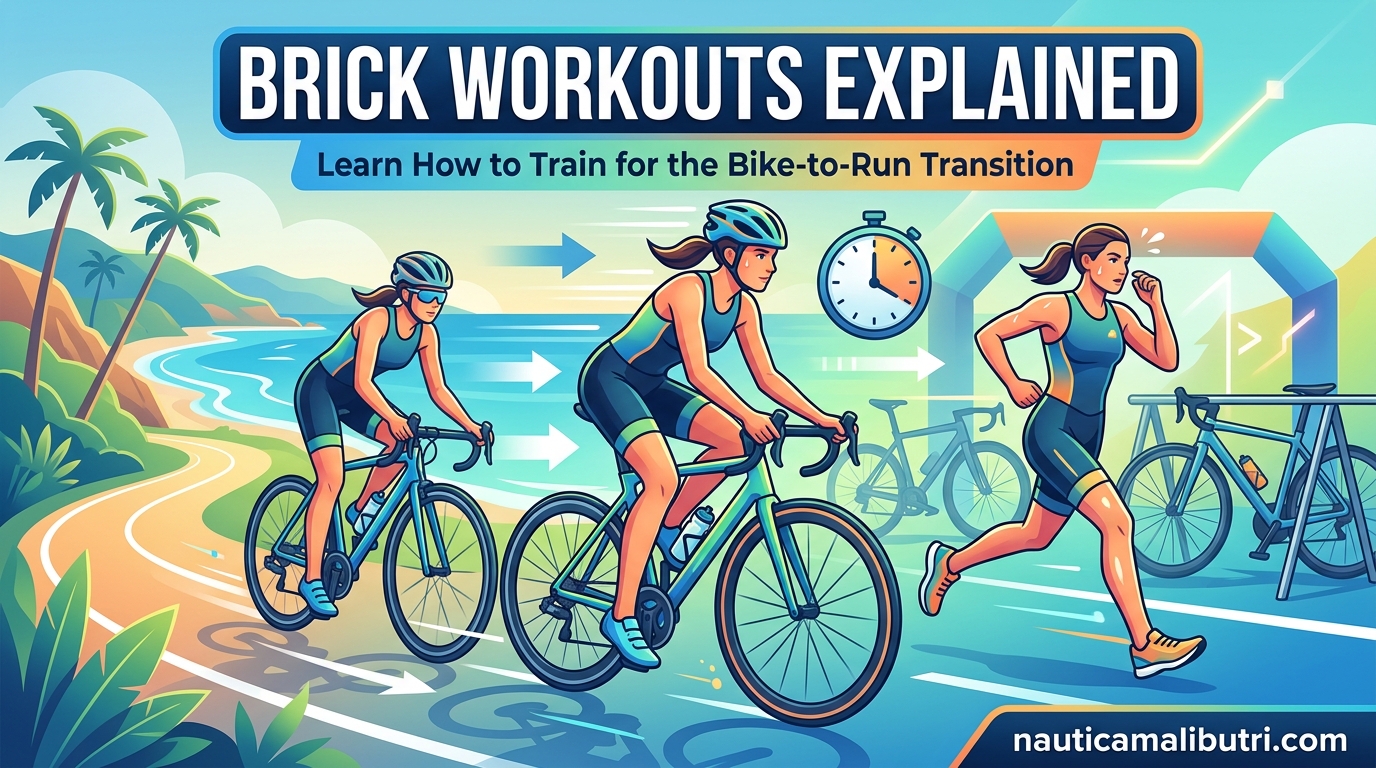
I still remember my first brick workout like it was yesterday. I hopped off my bike after a 90-minute ride, slipped into my running shoes, and took three steps before my legs completely betrayed me. They felt like concrete blocks attached to my hips, heavy and unresponsive, refusing to move at anything resembling a normal running pace. That wobbly, surreal sensation is exactly why we call it running off the bike, and it is something every triathlete needs to master.
Brick workouts are the secret weapon that separates prepared triathletes from those who suffer on race day. If you have ever wondered what these back-to-back training sessions are all about, why they matter, and how to do them right, this guide will walk you through everything you need to know about brick workouts explained.
By the end of this article, you will understand exactly what a brick workout is, why it is called that, how to structure your own sessions, and the common mistakes that trip up beginners. Whether you are training for your first sprint triathlon or your tenth full IRONMAN, brick workouts will become a staple of your training plan.
Table of Contents
What Is a Brick Workout?
A brick workout is a training session where you perform two triathlon disciplines back-to-back with minimal or no rest in between. The most common combination is the bike-to-run brick, where you cycle for a set duration or distance, then immediately transition to running. You can also do swim-to-bike bricks or even run-bike-run combinations, though the bike-to-run session is what most triathletes mean when they talk about brick training.
The defining characteristic of a brick workout is the immediate transition between sports. You are not finishing your ride, showering, eating lunch, and then heading out for a run three hours later. You are finishing your ride, racking your bike, slipping on your running shoes, and starting your run within minutes. This compressed timeline forces your body to adapt to the unique demands of triathlon racing.
The sensation you feel when you start that run is what triathletes call jelly legs or heavy legs. Your cycling muscles have been working hard for an extended period, flooding your legs with blood and fatigue. When you suddenly ask them to switch to a completely different movement pattern, they protest. Your running stride feels awkward, your pace feels painfully slow, and you might even wonder if something is wrong. This is completely normal and exactly what brick workouts are designed to address.
Why Is It Called a Brick Workout?
The origin of the term brick workout is one of triathlon’s favorite folklore stories. The most widely accepted explanation credits Dr. Matt Brick, a former pro triathlete and coach who was known for combining multiple disciplines in single training sessions. His athletes started referring to these stacked workouts as Bricks, and the name stuck throughout the triathlon community.
Another popular theory suggests the name comes from the sensation itself. When you first start doing bike-to-run bricks, your legs feel like bricks attached to your body. They are heavy, uncooperative, and make you feel like you are running with concrete blocks strapped to your feet. The metaphor fits so perfectly that many triathletes assume this is the true origin, regardless of the actual history.
Whatever the true etymology, the term is now universal in triathlon culture. When you hear someone mention they have a brick on Saturday, every triathlete within earshot knows exactly what they mean. It is one of those pieces of insider language that marks you as part of the triathlon tribe.
What Is the Point of Brick Workouts?
The primary purpose of brick workouts is to prepare your body and mind for the unique challenge of transitioning between disciplines during a race. Running off the bike is fundamentally different from running fresh. Your legs are fatigued from cycling, your muscle fibers are primed for a different movement pattern, and your neuromuscular system needs time to recalibrate.
Without brick training, your first experience with this sensation happens on race day. That is a recipe for panic, pacing mistakes, and potentially blowing up your entire race. When you have practiced bricks regularly, you know what to expect. You recognize the heavy leg feeling as normal rather than alarming. You understand that the first few minutes will feel terrible before your running legs finally show up.
Beyond the physical adaptation, bricks teach you valuable skills about pacing and transition efficiency. You learn how hard you can push on the bike while still leaving enough in your legs for a respectable run. You figure out the quickest way to switch from cycling shoes to running shoes. You test nutrition strategies to see what your stomach can handle when moving from one sport to another. These are race-day skills that cannot be developed any other way.
There is also a significant time efficiency benefit. For busy triathletes juggling work, family, and training, combining two workouts into one session saves precious hours. A 90-minute ride followed immediately by a 30-minute run delivers more specific training stimulus than doing those workouts separately with hours of recovery in between.
How to Do a Brick Workout Correctly
Step 1: Plan Your Setup
Before you start your ride, set up your transition area exactly like you would in a race. Lay out your running shoes, socks if you wear them, hat, sunglasses, race belt, and any nutrition you will need for the run. Practice this setup until it becomes automatic. Every second you save in transition is a second you do not have to make up on the course.
If you are training at home, set up your bike and run gear in a designated spot. If you are training outdoors, park your car or set up your gear bag so you can transition efficiently. The goal is to simulate race conditions, not to take a leisurely break between disciplines.
Step 2: Execute Your Bike Segment
Complete your bike workout as prescribed. This might be an easy aerobic ride, a tempo session, or interval work depending on your training plan. Pay attention to how your legs feel during the final 10 minutes of the ride. This is the fatigue level you will be carrying into your run.
For race-specific training, try to finish your bike segment at a similar intensity to what you plan to race. If you are training for a half IRONMAN, your brick rides should simulate the effort you can sustain for 56 miles while still being able to run afterward.
Step 3: Execute a Fast Transition
As soon as you finish your ride, start your transition. Rack your bike or set it down, slip off your cycling shoes, put on your running shoes, grab your nutrition, and get moving. The whole process should take under two minutes. Do not sit down, do not check your phone, do not linger. Race day waits for no one, and your training should reflect that urgency.
Step 4: Start Your Run with Patience
The first few minutes of your brick run will feel terrible. Your legs will be heavy, your stride will feel choppy, and your pace will likely be 30 to 60 seconds per mile slower than your normal easy run pace. This is expected and normal. Do not panic. Do not try to force your way through it by running harder. Simply settle into your target effort and wait for your running legs to arrive.
Most triathletes find that the heavy leg sensation starts to fade after 5 to 10 minutes of running. By the 15-minute mark, you should feel relatively normal. The goal of brick training is to shorten this adaptation period so that on race day, you are running smoothly within the first mile.
Mastering Brick Workout Pacing
Pacing off the bike is a skill that separates successful triathletes from those who blow up on the run. The general rule is to start conservatively and build into your target pace. Trying to hit race pace immediately out of transition is a recipe for early fatigue and a miserable second half of your run.
For half IRONMAN racing, coach Pete Alfino suggests targeting roughly 6 percent slower than your fresh half marathon pace for the first few miles. For full IRONMAN racing, the recommendation is closer to 12 percent slower than your fresh marathon pace early in the run. These percentages account for the accumulated fatigue from the bike while still allowing you to run a smart, negative-split race.
Heart rate can be a valuable guide during brick runs, but be aware that your heart rate response may be blunted from the bike effort. Perceived exertion becomes even more important. If you are breathing hard and your legs feel destroyed in the first mile, you went too hard on the bike or started the run too fast.
Sample Brick Workouts by Race Distance
Sprint Triathlon Brick
For sprint distance racing, your bricks should be relatively short and sharp. A typical session might include a 45 to 60-minute ride at moderate intensity followed immediately by a 15 to 20-minute run. The goal is to practice the transition and get comfortable running with moderately fatigued legs.
Sample workout: Ride 60 minutes with the final 15 minutes at race effort. Transition in under 90 seconds. Run 20 minutes easy for the first 10 minutes, then build to race pace for the final 10 minutes.
Olympic Distance Brick
Olympic distance bricks extend the duration to match the demands of a 40K bike and 10K run. These sessions build endurance and teach you to manage your effort across a longer transition.
Sample workout: Ride 75 to 90 minutes with 3 x 10-minute intervals at race effort during the second half. Transition immediately. Run 30 to 40 minutes with the first 15 minutes at easy pace, then settle into steady race effort.
Half IRONMAN Brick
Half IRONMAN bricks are where the training gets serious. You need to practice running after a significant bike effort while managing nutrition and pacing appropriately. These sessions are crucial for developing the durability needed for 70.3 racing.
Sample workout: Ride 2.5 to 3 hours with the final 45 minutes at steady race effort. Practice your race nutrition strategy throughout. Transition in under 2 minutes. Run 45 to 60 minutes at target race pace, focusing on staying relaxed and efficient despite the fatigue.
Full IRONMAN Brick
Full IRONMAN bricks are less about volume and more about practicing the specific demands of marathon running off a long bike. You do not need to do a 5-hour ride before every brick run in training, but you should occasionally practice the full transition to build confidence.
Sample workout: Ride 3.5 to 4 hours at aerobic endurance pace with some tempo segments. Execute your complete race-day nutrition plan. Transition efficiently. Run 60 to 90 minutes with the first 20 minutes very easy, then settle into your target marathon pace. Focus on staying present and managing the mental challenge of running with heavy fatigue.
Reverse Brick Option
Reverse bricks, where you run before you bike, are a less common but valuable variation. These sessions are particularly useful for duathletes or triathletes who want to practice running on fresh legs while still getting bike volume.
Sample workout: Run 30 to 45 minutes at easy to moderate effort. Transition immediately to the bike. Ride 60 to 90 minutes, starting with 15 minutes easy to shake out the run before settling into your main workout.
Common Mistakes to Avoid
Brick workouts are simple in concept but easy to mess up in execution. Here are the most common mistakes I see triathletes make, and how to avoid them.
Running Too Hard Off the Bike
The number one mistake is treating your brick run like a standalone run workout. You finish your ride, feel surprisingly decent, and decide to push the pace on the run. Ten minutes later, you are breathing like a freight train and questioning your life choices. Start easy, be patient, and let your pace come to you rather than forcing it.
Neglecting Transition Practice
Many triathletes focus entirely on the bike and run portions while treating the transition as an afterthought. They finish their ride, wander over to their gear, leisurely change shoes, check their phone, grab a snack, and eventually start running 10 minutes later. This misses a huge opportunity to practice one of the most important skills in triathlon. Treat your transitions with the same respect you give your main workouts.
Doing Brick Workouts Too Frequently
Bricks are valuable, but they are also stressful on your body. The accumulated fatigue from combining two disciplines creates significant recovery demands. Most triathletes should limit bricks to once per week during general training, perhaps increasing to twice per week during specific race preparation. Doing bricks every day or even every other day will likely lead to overtraining and injury.
Poor Nutrition Timing
The transition from bike to run is a challenging time for your digestive system. Many triathletes make the mistake of consuming a gel or significant calories right before starting their run, only to suffer stomach distress for the first 20 minutes. Practice your nutrition strategy during bricks to learn what your stomach can handle and when you should take your last calories before the run.
Starting the Run Too Fast
Even if you know you should start easy, the adrenaline of transition often leads to a too-fast opening pace. You feel okay for 90 seconds, so you assume you can hold that pace. Then reality hits at the 5-minute mark. Use the first few minutes as a dedicated easy jog, regardless of how you feel. Your actual effort level will catch up to your perception soon enough.
How Often Should You Do Brick Workouts?
The frequency of your brick workouts should vary based on your race distance, training phase, and overall training load. Here are general guidelines to help you structure your training.
By Race Distance
For sprint and Olympic distance triathletes, one brick workout per week is typically sufficient. These races are short enough that basic fitness and occasional transition practice will carry you through. Focus on making that one brick session high quality with race-specific pacing.
For half IRONMAN athletes, aim for 1 to 2 brick workouts per week during the specific preparation phase. These sessions are crucial for developing the durability needed for a strong 13.1-mile run off the bike. One session might be a shorter midweek brick, while the other is your longer weekend brick.
For full IRONMAN athletes, brick frequency depends on where you are in your training cycle. During base building, one brick per week is plenty. During peak training, you might increase to 2 bricks weekly, with one being a shorter session and one being a longer, race-simulation brick.
By Training Phase
In the base phase, bricks are primarily about adaptation and skill development. One moderate brick per week is enough to maintain your transition skills without creating excessive fatigue.
During the build phase, bricks become more race-specific. Increase the intensity and duration to match your target race demands. This is when you should be practicing your exact race-day nutrition and pacing strategies.
In the peak and taper phase, reduce brick frequency while maintaining some transition practice. You want to stay sharp without accumulating unnecessary fatigue before your race.
Recovery Between Bricks
Brick workouts create significant fatigue because they stress multiple systems in a compressed timeframe. Make sure you allow adequate recovery between brick sessions. If you do a hard brick on Saturday, your Sunday workout should be easy, and you might need Monday completely off or very light before attempting another quality session.
Brick Training for Beginners
If you are new to triathlon, brick workouts might seem intimidating. The good news is that you can start simple and build gradually. You do not need to ride for hours before attempting your first run off the bike.
Start with Short Runs
Your first brick workout can be as simple as a 30-minute easy ride followed by a 10-minute easy run. The goal is not to build fitness in that first session, it is simply to experience the sensation of running off the bike. Even 10 minutes is enough to feel the heavy leg effect and start the adaptation process.
Focus on Feel, Not Pace
As a beginner, do not worry about hitting specific paces during your brick runs. Your focus should be on learning what the transition feels like and developing the mental skill of staying calm when your legs feel terrible. Turn off your pace alerts and run by feel for the first few weeks of brick training.
Practice Transitions at Home
You can practice the mechanics of transition without even doing a full workout. Set up a mock transition area in your driveway or living room. Practice running in from your bike, changing shoes, and running out. Time yourself and look for ways to become more efficient. Small improvements in transition speed are free speed on race day.
Expect the Heavy Leg Sensation
Every beginner is shocked by how terrible their legs feel when they first start running off the bike. This is universal. I have coached hundreds of triathletes, and every single one has the same wide-eyed expression after their first brick. Expect it, accept it, and trust that it gets better with practice. The adaptation happens relatively quickly if you are consistent.
Be Patient with Adaptation
The neuromuscular adaptation to brick workouts typically takes 4 to 6 weeks of consistent practice. You will not feel like a different runner after one brick session. But after a month of regular bricks, you will notice that the heavy leg sensation fades faster and your running feels more natural off the bike. Stick with it.
Frequently Asked Questions
What is the point of the brick workout?
The point of brick workouts is to train your body to adapt to the unique challenge of transitioning from cycling to running during a triathlon. They prepare you physically for running with fatigued legs and mentally for managing the heavy, wobbly sensation that occurs when you first start running off the bike. Without brick training, your first experience with this sensation happens on race day, which often leads to pacing mistakes and panic.
What is a brick workout for beginners?
For beginners, a brick workout is simply any training session where you do two triathlon disciplines back-to-back, typically bike-to-run. Start with short sessions like a 30-minute easy ride followed by a 10-minute easy run. The goal is not intensity or pace, but simply experiencing the transition sensation and starting the adaptation process. Focus on practicing efficient transitions and staying calm when your legs feel heavy.
What are the pros and cons of brick workouts?
Pros: Brick workouts develop specific fitness for triathlon racing, improve transition skills, teach pacing off the bike, build mental toughness, and offer time efficiency by combining two workouts. Cons: They create significant fatigue requiring more recovery, can be intimidating for beginners, and doing them too frequently increases injury and overtraining risk. The key is balancing the specific benefits with proper recovery.
What is the 80/20 rule in triathlon?
The 80/20 rule in triathlon training states that approximately 80 percent of your training should be done at low intensity (conversational pace), while 20 percent should be done at moderate to high intensity. This principle applies to brick workouts as well. Most of your bricks should be aerobic base sessions, with only occasional high-intensity bricks during specific race preparation phases.
How long should a brick run be?
The length of your brick run depends on your race distance and training phase. For sprint triathletes, 15 to 20 minutes is sufficient. Olympic distance athletes should aim for 30 to 40 minutes. Half IRONMAN athletes need 45 to 60 minute bricks. Full IRONMAN athletes should occasionally practice 60 to 90 minute bricks to build the durability needed for the marathon.
Are brick workouts necessary for my first triathlon?
While not absolutely mandatory, brick workouts are highly recommended even for first-time triathletes. You can finish a sprint triathlon without ever doing a brick, but you will likely suffer in the run and feel unprepared for the transition sensation. At minimum, complete 3 to 4 brick sessions before your first race to build confidence and familiarity with running off the bike.
Why do my legs feel so heavy after getting off the bike?
Heavy legs after cycling are caused by several factors. Your cycling muscles have been working hard and are flooded with blood and metabolic byproducts. Your muscle fibers are primed for the circular pedaling motion, not the linear running stride. Your neuromuscular system needs time to recalibrate for the different movement pattern. This heavy sensation is normal and fades as your body adapts through regular brick training.
Should brick runs be zone 2 or harder?
Most brick runs should be done at zone 2 or easy aerobic intensity, especially for long-course triathletes. The goal is practicing the transition and building durability, not creating additional stress. However, occasional higher-intensity bricks have value for short-course racers practicing race pace. A common approach is 80 percent easy bricks and 20 percent race-pace or tempo bricks during specific preparation phases.
Conclusion
Brick workouts are one of the most specific and valuable training sessions for triathletes of all levels. They teach your body to handle the unique challenge of running off the bike, develop your transition skills, and build the mental toughness needed for race day. Whether you are training for a sprint triathlon or a full IRONMAN, regular brick sessions should be a staple of your training plan.
The key to successful brick training is starting conservatively, being patient with the adaptation process, and avoiding the common mistakes that trip up beginners. Remember that every triathlete experiences the heavy leg sensation when they first start brick training. It is not a sign of weakness or poor fitness. It is simply your body’s natural response to a new and specific demand.
Start incorporating one brick workout per week into your schedule. Begin with short, easy sessions and gradually build duration and intensity as you approach your target race. Practice your transitions with the same focus you give your main workouts. Trust that the adaptation will come with consistency. By race day, you will step off your bike with confidence, knowing exactly what to expect and how to manage the run ahead.