
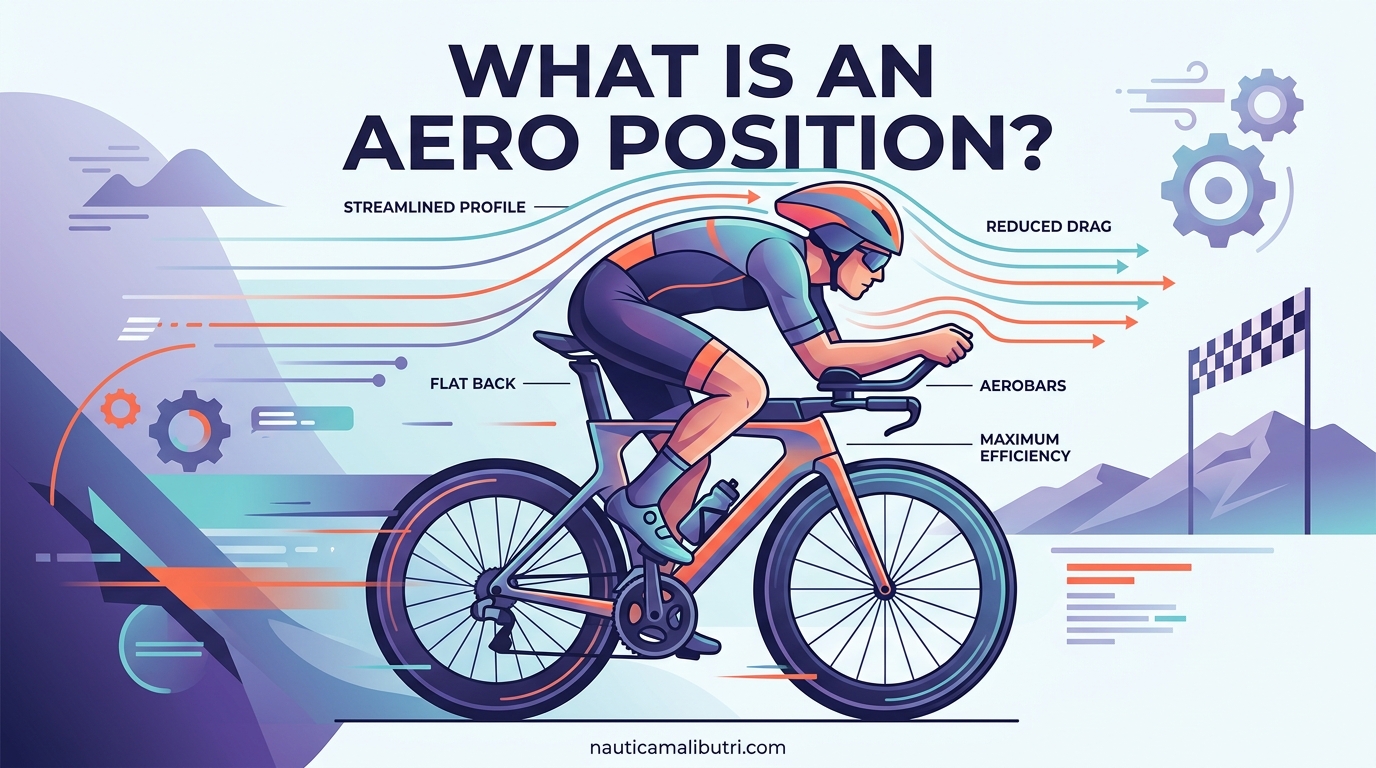
An aero position is a semi-horizontal cycling posture where your elbows rest on the arm cups of aerobars with your arms extended forward on aerobar extensions. This position reduces your frontal area and lets air flow over your body instead of pushing against it, which is why triathletes call it “free speed.”
When I first started triathlon, I thought aero position looked uncomfortable and maybe even dangerous. But after working with a bike fitter and spending 12 weeks building up my tolerance, I now spend 90% of my race in aero and have shaved 8 minutes off my bike split. In this guide, I will explain exactly what an aero position is, why it matters, and how you can get comfortable using it.
Table of Contents
What Is an Aero Position?
An aero position is the semi-horizontal riding posture that triathletes and time trialists use to reduce wind resistance. In this position, your elbows rest on padded arm cups attached to aerobars, while your forearms extend forward on narrow extensions.
Your torso becomes more horizontal compared to riding on the hoods or drops of a standard road bike. This reduces the frontal area that hits the wind, which is the single biggest factor in cycling aerodynamics.
According to bike fit specialist Missy Erickson, “The aero position is about balancing aerodynamics with sustainability. If you cannot hold the position for your entire race, the aerodynamic gains do not matter.”
Why Aero Position Matters for Triathletes
Around 80% of your total drag on a bike comes from your body, not your equipment. That is why your position matters far more than having an expensive aero frame.
Wind tunnel testing consistently shows that a proper aero position can save 50 to 70 watts at racing speeds compared to riding on the hoods. On a flat Ironman bike course, that translates to 10 to 20 minutes saved.
A road.cc test compared a modern aero bike ridden in an upright position versus an older bike ridden in proper aero position. The rider in aero position on the older bike was faster despite the less aerodynamic frame. This proves that position beats equipment almost every time.
Key Components of the Aero Position
Understanding the parts that make up an aero position helps you communicate with fitters and make informed equipment choices. Here are the key components:
Aerobars and Arm Cups
Aerobars consist of two main parts: the arm cups where your elbows rest and the extensions where you place your hands. The arm cups should support your elbows without creating pressure points.
Hip Angle
Your hip angle is the angle between your torso and thighs when pedaling. Too tight of a hip angle can restrict breathing and reduce power output. Most fitters target a hip angle between 90 and 100 degrees for triathletes.
Saddle Position
Triathlon-specific saddles often have a wider nose and different padding distribution compared to road saddles. Your saddle position in aero is typically further forward than on a road bike, which opens up your hip angle.
Stack and Reach
Stack is the vertical height of your handlebars. Reach is the horizontal distance from saddle to bars. Lower stack and longer reach create a more aggressive aero position, but only if you can sustain it.
A Back vs B Back: Which Rider Type Are You?
Legendary bike fitter John Cobb developed a simple classification system based on how your back naturally curves in aero position. Understanding your back type helps you find a sustainable position faster.
A Back Riders
A Back riders have a relatively flat back when in the aero position. Their spines stay straighter and their hips rotate forward easily. These riders can typically get very low and narrow without discomfort. If you can touch your toes easily and have good hamstring flexibility, you are likely an A Back rider.
B Back Riders
B Back riders have a more rounded back in the aero position. Their spines naturally curve, and they may struggle to get as flat as A Back riders. This is not a flexibility limitation but a structural difference. B Back riders often need higher arm cups and wider extension spacing to find comfort.
Trying to force a B Back rider into an A Back position leads to neck pain, breathing restriction, and inability to hold the position. A good bike fitter will identify your back type and work with it, not against it.
How to Get Started in Aero Position
If you are new to triathlon or switching from a road bike, getting into aero position requires a methodical approach. Here is what I recommend based on my own experience and conversations with coaches.
Step 1: Get a Professional Bike Fit
A professional triathlon bike fit is not optional if you want to be comfortable and fast. Expect to pay between $200 and $400 for a comprehensive fit that includes position adjustments, cleat alignment, and saddle recommendations.
Step 2: Start With Short Intervals
Begin with just 5 to 10 minutes in aero position during your rides. Alternate between the base bar and aerobars every few minutes. Gradually increase your aero time over 8 to 12 weeks.
Step 3: Build Core Strength
Core strength is the limiting factor for many athletes in aero position. Your core muscles stabilize your upper body so your legs can generate power. Add planks, dead bugs, and bird dogs to your routine twice per week.
Step 4: Practice on Safe Roads
Start practicing on flat, straight roads with minimal traffic. Avoid busy streets, rough pavement, and technical descents until you are completely comfortable reaching the brakes from the aerobars.
Is Aero Position Comfortable? Tips for Holding It Longer
The most common question I hear about aero position is whether it is comfortable. The honest answer: it depends on your fit, your flexibility, and how much you have trained in the position.
When I started, aero position felt impossible. My neck ached, my shoulders burned, and I could not breathe deeply. After a proper bike fit and 10 weeks of progressive training, I can now ride 56 miles in aero without discomfort. Many forum users report the same transformation.
Tip 1: Relax Your Shoulders
Shoulder tension travels up to your neck and creates pain. Consciously drop your shoulders away from your ears every few minutes while riding.
Tip 2: Change Hand Positions
Some aerobars allow multiple hand positions on the extensions. Shifting your hands forward or backward by just an inch can relieve pressure points.
Tip 3: Tilt Your Head, Do Not Crank Your Neck
Rolling your eyes up to see the road creates neck strain. Instead, tilt your entire head back slightly and look through your eyebrows. This uses bigger neck muscles and reduces fatigue.
Tip 4: Stand Up Periodically
Even in races, I stand out of aero for 10 to 15 seconds every 10 minutes to restore blood flow and reset my posture. This small break prevents the position from becoming unsustainable.
When NOT to Use Aero Position
Aero position is faster in most situations, but there are clear times when you should sit up on the base bar. Safety always comes before speed.
Descending and Cornering
Never ride in aero position on descents, technical turns, or anywhere you might need to brake suddenly. Your hands are far from the brake levers on most aerobar setups, and your weight distribution makes quick maneuvers difficult.
Wet or Slick Conditions
Rain, gravel, painted road lines, and wet leaves all reduce traction. In these conditions, stay on the base bar where you have better bike control and faster brake access.
Group Riding
Most triathlons are non-drafting, so you ride alone. But if you are training in a group or riding a draft-legal race, do not use aero position when riding close to other cyclists. You need quick steering response to avoid collisions.
Steep Climbing
On steep climbs, power output matters more than aerodynamics. Sitting upright opens your hip angle and lets you generate more torque. Most riders find they climb faster out of aero position.
Common Aero Position Mistakes to Avoid
After talking with bike fitters and reading hundreds of forum posts, I have identified the mistakes that trip up beginners most often.
Mistake 1: Going Too Low Too Fast
Slamming your stem or removing spacers to get as low as possible is a recipe for injury and burnout. Your body needs time to adapt to new positions. Lower your position gradually over months, not days.
Mistake 2: Neglecting the Bike Fit
Trying to set up your own aero position based on internet guides or copying a pro’s measurements usually fails. Your body is unique. A professional fit accounts for your flexibility, limb lengths, and riding history.
Mistake 3: Ignoring Discomfort Signals
Numbness, sharp pain, or inability to breathe are not normal parts of adapting to aero position. These are warnings that something is wrong with your fit. Stop and get reassessed before you develop overuse injuries.
Mistake 4: Sacrificing Power for Aerodynamics
The best aero position is one you can hold while maintaining your target power. If going lower forces you to drop 30 watts, you might actually be going slower despite the improved aerodyn
FAQ
What is the aero position in a triathlete?
The aero position in a triathlete is a semi-horizontal riding posture where the cyclist’s elbows rest on padded arm cups attached to aerobars, with arms extended forward on narrow extensions. This position reduces the rider’s frontal area and wind resistance, allowing them to travel faster at the same power output compared to riding in an upright position.
Is aero position comfortable?
Aero position becomes comfortable with proper bike fit and gradual adaptation. Initial discomfort is normal, but persistent pain indicates a fit issue. Most triathletes report that aero position feels natural after 8 to 12 weeks of progressive training and a professional bike fit. Core strength and flexibility play major roles in long-term comfort.
How to stay in aero position longer?
To stay in aero position longer, get a professional bike fit first, then build up gradually with short intervals. Strengthen your core muscles twice per week. Relax your shoulders and avoid neck craning by tilting your head instead. Stand up briefly every 10 minutes to restore blood flow. Practice on safe, flat roads until the position feels natural.
What is the 80% rule in cycling?
The 80% rule in cycling refers to the estimate that approximately 80% of aerodynamic drag comes from the rider’s body, while only 20% comes from the bike and equipment. This is why body position matters far more than having an expensive aero bike frame. Improving your aero position typically yields greater speed gains than upgrading your equipment.
Conclusion
An aero position is simply a semi-horizontal cycling posture that reduces wind resistance by minimizing your frontal area. With elbows on aerobar arm cups and arms extended forward, you present less surface area to the wind and can ride faster with the same power output.
The key to success is a professional bike fit that works with your body type, followed by gradual adaptation. Start with short intervals, build your core strength, and be patient. Within a few months, you could be riding 10 to 20 minutes faster on your next triathlon bike split. If you have been hesitant to try aero position, make 2026 the year you get fitted and discover your free speed.