
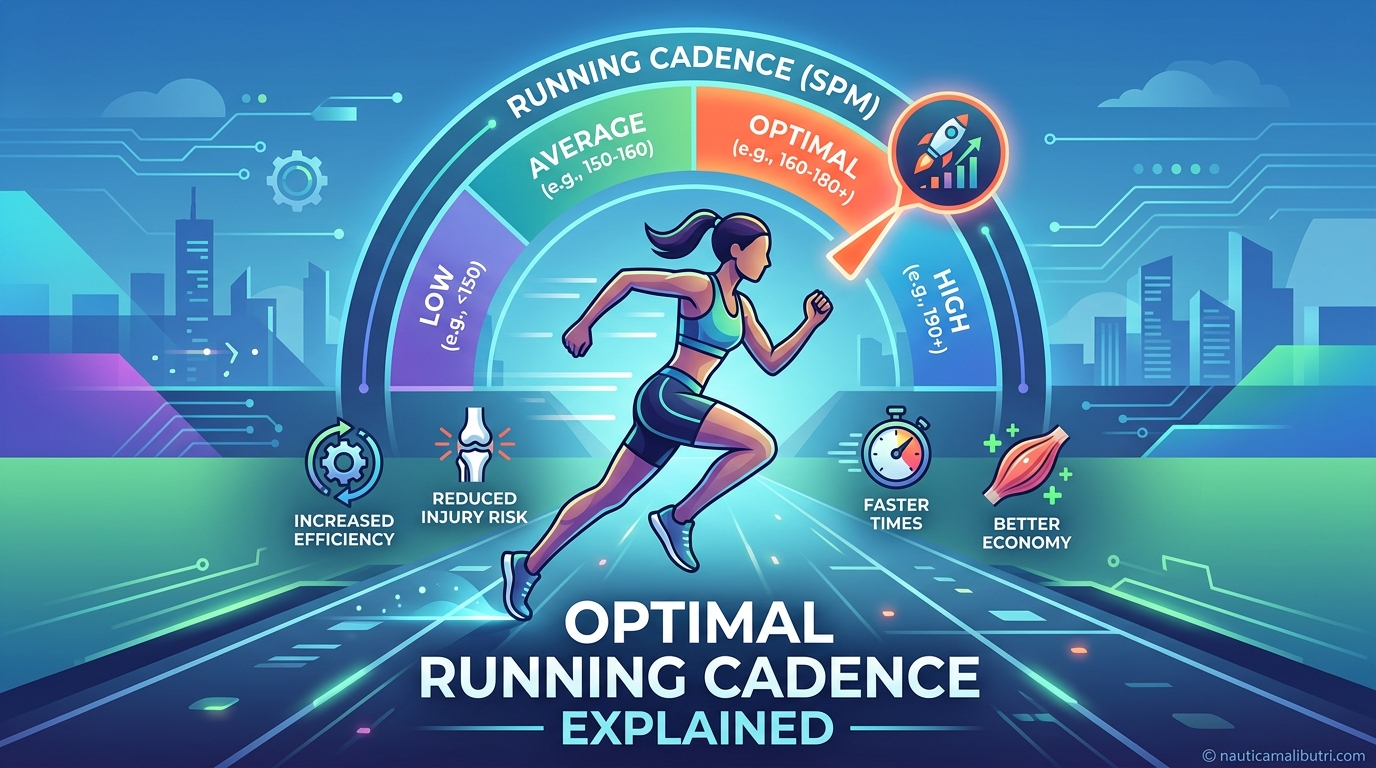
When I first started tracking my running metrics, I noticed my cadence hovered around 165 steps per minute. Fellow runners told me I was overstriding. After three months of focused work, I brought it up to 175 SPM and my knee pain vanished. Optimal running cadence explained simply means finding the step rate that lets you run efficiently while reducing injury risk. In this guide, I will share everything I have learned about steps per minute, why the 180 SPM target is not mandatory, and how triathletes can maintain proper cadence through bike-to-run transitions.
Table of Contents
What Is Running Cadence?
Running cadence is the number of steps you take per minute, measured as steps per minute or SPM. It represents how many times your feet hit the ground in 60 seconds. Unlike stride length, which measures the distance covered in each step, cadence measures the frequency of those steps.
A runner with a cadence of 180 SPM takes three steps every second. This might sound fast, but experienced runners often maintain this rate without conscious effort. Your natural cadence depends on factors like height, leg length, and running experience.
Why Optimal Running Cadence Matters
Higher cadence reduces ground contact time. When your feet spend less time on the pavement, impact forces decrease significantly. This reduction in force helps prevent common running injuries like shin splints, plantar fasciitis, and runner’s knee.
Proper cadence also corrects overstriding. Many beginners land with their foot far ahead of their center of mass, creating a braking effect with each step. A quicker step rate naturally shortens your stride and moves foot placement closer to your body.
From forum discussions, I learned that runners report these benefits when optimizing cadence:
- Reduced joint stress, especially in knees and ankles
- Better running economy at moderate paces
- Smoother transitions between different speeds
- Less fatigue during long runs
What Is the Optimal Running Cadence?
The 170-180 SPM range works well for most runners, but this is not a universal rule. The famous 180 SPM recommendation originated from coach Jack Daniels, who observed elite runners during the 1984 Olympics. He noticed most competitive athletes ran at or near 180 SPM regardless of their speed.
However, recreational runners should not force themselves to hit 180 SPM immediately. Your optimal cadence depends on your pace, height, and experience level. Taller runners naturally have lower cadence due to longer legs. Beginners often start around 150-160 SPM and increase naturally as their fitness improves.
Here is how cadence typically varies by running effort:
| Run Type | Typical Cadence Range | Feel |
|---|---|---|
| Easy recovery runs | 160-170 SPM | Relaxed, conversational |
| Moderate runs | 170-180 SPM | Steady, controlled |
| Threshold/tempo | 180-190 SPM | Quick turnover, focused |
| Intervals/sprints | 190-210 SPM | Fast, explosive |
A cadence of 170 SPM is perfectly acceptable for easy runs. Many experienced runners vary their cadence by 10-15 SPM depending on the workout type. The key is avoiding extremes below 150 SPM or above 200 SPM for normal training.
How to Measure Your Running Cadence
You do not need expensive equipment to measure your cadence. Here are three reliable methods:
Method 1: Manual Counting
Count how many times your right foot hits the ground in 30 seconds. Double that number to get your SPM. For accuracy, count during the middle of your run when you have settled into your natural rhythm. Avoid counting right after starting or during a sprint finish.
Method 2: GPS Running Watch
Most modern GPS watches display cadence automatically. Check your watch face during a run or review the data afterward in your app. Wrist-based cadence measurement works well but may lag slightly during rapid pace changes.
Method 3: Metronome Apps
Download a metronome app and set it to your target cadence. Run with the beat for a few minutes, then turn it off and see if you can maintain the rhythm. Apps like Run Tempo or Cadence work well for this purpose.
How to Increase Your Running Cadence
Increasing cadence requires patience. Your body needs time to adapt to a faster step rate without causing new problems. I recommend increasing your cadence by no more than 5-10% over several weeks.
Step 1: Establish Your Baseline
Measure your current cadence during an easy run over three separate days. Average these numbers to get your starting point. Do not try to change anything during these baseline runs.
Step 2: Set Small Goals
If your baseline is 160 SPM, aim for 165-168 SPM initially. Small increases feel natural and allow your muscles to adapt. Large jumps often lead to tense running form and early fatigue.
Step 3: Use Cadence Drills
Try these drills twice per week to train your nervous system for quicker turnover:
- High Knees: Run 50 meters with exaggerated knee lift and quick steps. Focus on speed, not height.
- Fast Feet: Run 30 meters taking as many steps as possible. Keep strides tiny and rapid.
- Downhill Striders: Find a gentle slope and run down it with quick, light steps. Gravity helps increase turnover naturally.
Step 4: Practice With Music or Metronome
Find songs with beats per minute matching your target cadence. Many streaming services offer running playlists organized by BPM. Run to the beat for a few minutes, then try maintaining the rhythm without music.
Step 5: Monitor and Adjust
Check your cadence weekly using the same method. If you have hit your target and feel comfortable, consider whether to increase further. Most runners settle between 170-180 SPM.
Warning: Do not sacrifice form for cadence. If increasing your step rate causes you to hunch, tense your shoulders, or shorten your stride excessively, back off and progress more slowly.
Running Cadence for Triathletes
Triathletes face unique cadence challenges. After cycling, your legs feel heavy and your running mechanics change. Many triathletes report their cadence drops 5-10 SPM in the first mile off the bike.
To maintain optimal running cadence through transitions:
- Practice brick workouts: Run immediately after every long bike session, even if only for 10 minutes. This trains your body to switch movement patterns quickly.
- Start with a higher target: Aim for 180-185 SPM in the first half-mile of your run leg. This compensates for the natural drop and prevents overstriding when fatigued.
- Shorten your stride intentionally: Think “quick and light” for the first few minutes. Your stride will naturally lengthen as your cycling fatigue fades.
During long-course triathlons, cadence often decreases late in the run as fatigue sets in. Experienced triathletes combat this by focusing on arm swing. Pumping your arms faster naturally increases leg turnover without conscious effort.
Frequently Asked Questions
What is my ideal cadence for running?
Most runners perform best between 170-180 steps per minute, though this varies by height and pace. Taller runners often naturally fall toward 165-175 SPM, while shorter runners may naturally hit 175-185 SPM. Your ideal cadence should feel comfortable, reduce impact, and allow you to maintain your target pace without strain.
Is 140 cadence too slow?
A cadence of 140 SPM is generally considered too low for most runners and may indicate overstriding. At this rate, you likely land with your foot well ahead of your center of mass, creating braking forces that increase injury risk. Most runners should aim to increase cadence gradually toward at least 160 SPM.
What is Usain Bolt’s cadence?
Usain Bolt’s cadence during his 100-meter world record was approximately 250 steps per minute. However, elite sprinters use radically different mechanics than distance runners. Bolt also took only 41 steps to cover 100 meters due to his exceptional stride length. Distance runners should not compare their cadence to sprinters.
Is 170 cadence too low for running?
A cadence of 170 SPM is perfectly acceptable for easy and recovery runs. Many experienced runners naturally fall into the 165-175 SPM range during conversational-pace runs. However, 170 SPM might be slightly low for faster workouts like tempo runs or intervals, where 180-190 SPM is more typical.
Conclusion
Optimal running cadence explained comes down to finding the step rate that lets you run efficiently and stay injury-free. The 170-180 SPM range works well for most runners, but your personal ideal depends on height, experience, and the type of run you are doing. Triathletes should pay special attention to cadence during bike-to-run transitions when fatigue naturally slows turnover.
Start by measuring your current cadence. If it falls below 160 SPM, work on increasing it gradually through drills and metronome training. If you are already in the 170-180 SPM range, focus on maintaining that rhythm consistently rather than pushing higher. Remember that running should feel natural, and your optimal running cadence is the one that lets you train day after day without pain or excessive fatigue.