
You finish a grueling brick workout and feel surprisingly good. The next morning, you roll out of bed and your legs scream in protest. By day two, simple tasks like walking down stairs or getting into your car become genuine challenges. This is DOMS (delayed onset muscle soreness), and if you are training for your first triathlon or pushing your limits in 2026, you have almost certainly experienced it.
DOMS is not just regular soreness. It is a specific physiological response that hits 24 to 72 hours after intense exercise. Understanding what causes it, how long it lasts, and most importantly, how to relieve it can make the difference between a successful training block and a frustrating cycle of pain and setbacks.
In this guide, I will break down everything triathletes need to know about DOMS. We will cover the science behind why your muscles hurt, evidence-based relief methods that actually work, and triathlon-specific strategies for training through soreness without compromising your performance.
Table of Contents
What is DOMS (Delayed Onset Muscle Soreness)
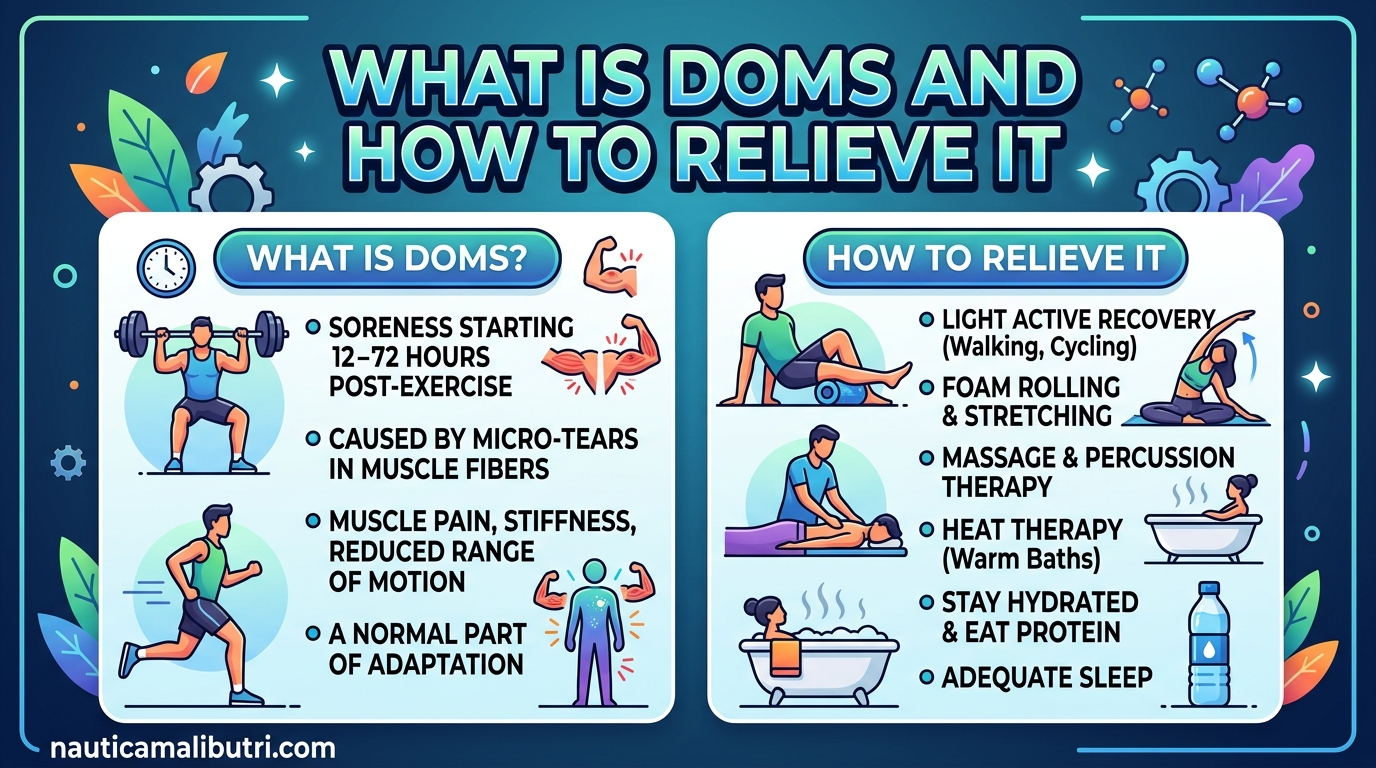
DOMS (delayed onset muscle soreness) is muscle pain and stiffness that develops one to three days after intense or unfamiliar exercise. Unlike acute soreness that fades within hours, DOMS is a delayed response that signals your body is adapting and rebuilding. While uncomfortable, it is typically not dangerous and resolves on its own within three to seven days.
The Science Behind DOMS
The primary cause of DOMS is microscopic damage to muscle fibers, specifically during eccentric exercise. Eccentric movements occur when your muscle lengthens under tension, think of lowering yourself during a squat, running downhill, or the catch phase of your swim stroke. These controlled lengthening contractions create tiny tears in the muscle fibers.
Your body responds to this damage with an inflammatory process. White blood cells rush to the affected area, releasing chemicals that trigger pain receptors and cause localized swelling. This inflammation is actually part of the healing process. Your muscles repair themselves by building new protein structures, which ultimately makes them stronger and more resistant to future damage.
Research from PubMed studies shows that enzyme markers like creatine kinase increase in the bloodstream following eccentric exercise. These elevated levels correlate with the severity of DOMS symptoms and provide measurable evidence of muscle fiber damage and subsequent repair.
Let me clear up a persistent myth: DOMS is not caused by lactic acid buildup. Lactic acid (or lactate) is cleared from your muscles within hours after exercise. The soreness you feel days later comes from inflammation and the actual repair process, not residual lactate. This misconception has lingered in fitness circles for decades, but modern sports science has definitively debunked it.
Timeline: When DOMS Hits and How Long It Lasts
DOMS follows a predictable timeline. Symptoms typically begin 12 to 24 hours after your workout. You might feel completely fine the evening after a hard session, only to wake up the next morning with noticeable stiffness and tenderness.
The pain peaks between 24 and 72 hours post-exercise. This is when most triathletes experience the worst symptoms. Walking, climbing stairs, or even sitting down can feel genuinely uncomfortable. The affected muscles may feel tender to touch, and your range of motion is often reduced.
Most cases of DOMS resolve completely within three to seven days. The exact duration depends on the severity of the initial muscle damage, your fitness level, recovery practices, and whether you continue training through the soreness. First-time triathletes or those returning after a break often experience more prolonged DOMS compared to seasoned athletes.
DOMS Symptoms and Causes
Common Symptoms
DOMS presents with several recognizable symptoms that differ from regular workout fatigue. The hallmark sign is muscle tenderness, a dull, aching pain that intensifies when pressure is applied to the affected area. This tenderness distinguishes DOMS from the sharp, immediate pain of an acute injury.
Reduced range of motion is another telltale sign. You might struggle to fully straighten your arms after a pull-heavy swim session or find your hip flexors tight and restricted following a hilly run. This stiffness typically improves with gentle movement but returns after periods of inactivity.
Many athletes also experience localized swelling in the affected muscles. You might notice your quads look slightly larger or feel firmer than usual after a hard cycling session. This swelling results from the inflammatory response and fluid accumulation as your body repairs damaged tissue.
Muscle fatigue and weakness accompany the pain. You might find your legs feel heavy or your normal training paces feel significantly harder. This temporary weakness is normal and resolves as your muscles complete their repair cycle.
What Causes DOMS
Several factors trigger DOMS in triathletes. Unaccustomed exercise is the most common culprit. If you have never done heavy squats before and add them to your routine, expect significant DOMS in your glutes and quads for several days. Similarly, your first open water swim of the season often leaves your shoulders and lats surprisingly sore.
High-intensity workouts push muscles beyond their accustomed workload. Threshold intervals on the bike, track sessions, or race-pace efforts create more muscle damage than steady-state training. The higher the intensity, the greater the eccentric load, and consequently, the more severe the DOMS.
Eccentric movements specifically target the lengthening phase of muscle contraction. Downhill running creates substantial eccentric load on your quads as they control your descent. Lowering weights slowly during strength training maximizes eccentric tension. Even the catch phase of swimming involves controlled lengthening of shoulder muscles.
Trying a completely new exercise routine or movement pattern also triggers DOMS. Your muscles adapt to familiar movements over time, but novel patterns create fresh stress. This is why cross-training can leave you sore in unexpected places, even if your primary sport fitness is high.
DOMS vs Acute Muscle Soreness
Understanding the difference between DOMS and acute muscle soreness helps you make better training decisions. Acute muscle soreness (sometimes called immediate soreness) develops during or directly after exercise. It typically results from metabolite accumulation and resolves within minutes to hours after you stop.
DOMS, by contrast, has that distinctive delayed onset. You feel fine immediately post-workout, then wake up to stiffness and pain 24 hours later. The pain lasts days rather than hours and comes with tangible muscle tenderness and reduced range of motion.
Acute soreness generally does not prevent you from training again the same day or the next morning. DOMS often forces training modifications or complete rest days. Knowing which type you are experiencing helps determine whether to push through or back off.
How to Relieve DOMS: 8 Evidence-Based Methods
1. Active Recovery and Light Movement
Counterintuitive as it sounds, moving helps sore muscles recover faster than total rest. Light activity increases blood flow, which delivers oxygen and nutrients to damaged tissues while removing metabolic waste products. The key word is light, this is not the time for hard efforts.
Walking is one of the most effective active recovery methods. A 20 to 30 minute easy walk stimulates circulation without adding significant stress to sore muscles. Many triathletes find their legs feel significantly better after a gentle walk than they do after sitting on the couch all day.
Easy cycling at a very low intensity also works well. Spinning at a high cadence with minimal resistance increases blood flow to your legs without creating additional muscle damage. Swimming is another excellent option, the water supports your body weight while providing gentle resistance.
Avoid high-intensity work when experiencing DOMS. Hard intervals, heavy strength training, or long endurance sessions will compound muscle damage and extend your recovery timeline. Save those efforts for when your muscles have fully repaired.
2. Foam Rolling and Self-Massage
Foam rolling provides myofascial release that can temporarily reduce DOMS symptoms. The pressure helps release tight fascia, the connective tissue surrounding muscles, and can improve range of motion even while soreness persists.
Roll slowly over affected muscle groups, pausing on tight spots or trigger points. Spend 60 to 90 seconds on each major muscle group, applying moderate pressure that feels slightly uncomfortable but not painful. Your quads, IT bands, calves, and glutes typically benefit most from foam rolling.
Research on foam rolling shows mixed but generally positive results for DOMS relief. While it may not dramatically speed healing, it consistently improves perceived soreness and range of motion. Many athletes report feeling significantly better after a rolling session, even if objective recovery markers show minimal change.
Self-massage using your hands, a massage ball, or a percussion device offers similar benefits. Target specific areas of tension and work methodically through sore muscle groups. Consistency matters more than intensity, daily short sessions beat occasional marathon rolling.
3. Cold Therapy and Ice Baths
Cold water immersion, commonly known as ice baths, reduces inflammation and numbs pain receptors. The cold causes blood vessels to constrict, decreasing fluid accumulation in damaged tissues. When you warm up afterward, fresh blood flushes the area, potentially speeding waste removal.
Effective cold therapy does not require extreme temperatures. Water between 50 and 59 degrees Fahrenheit (10 to 15 degrees Celsius) provides benefits without the shock of near-freezing immersion. Sit in the cold water for 10 to 15 minutes, or alternate between cold immersion and room temperature rest periods.
Cold therapy works best within the first 24 hours after exercise, before DOMS fully develops. Some research suggests it may slightly blunt the muscle adaptation process if used excessively, so reserve it for your hardest training blocks or after particularly damaging workouts.
If full ice baths are not accessible, cold showers or local ice packs provide partial benefits. Focus on the specific muscles that received the hardest training stimulus. Cold plus compression back-to-back, as many forum athletes report, provides the most noticeable immediate relief.
4. Heat Therapy
Heat therapy works through different mechanisms than cold treatment. Warmth increases blood flow, relaxes tight muscles, and improves tissue elasticity. Unlike cold therapy, which addresses inflammation directly, heat focuses on comfort and mobility.
Warm baths, particularly with Epsom salts, provide both heat and buoyancy benefits. The magnesium in Epsom salts may help with muscle relaxation, though scientific evidence for transdermal magnesium absorption remains limited. Regardless, the warmth and weightlessness feel genuinely soothing.
Heating pads or warm compresses work well for localized soreness. Apply heat for 15 to 20 minutes to specific muscle groups that feel especially tight. The increased blood flow helps loosen stiff tissues and can improve your range of motion before training.
Contrast therapy, alternating between hot and cold treatments, combines benefits from both approaches. Try three minutes of heat followed by one minute of cold, repeating the cycle several times. This pumps blood through the tissues, potentially accelerating the healing process.
5. Sports Massage
Professional sports massage can significantly reduce DOMS symptoms and improve recovery. A skilled therapist manipulates soft tissues, breaks up adhesions, and increases circulation to damaged areas. Many elite triathletes schedule regular massage as a non-negotiable recovery tool.
Timing matters for massage effectiveness. Getting a massage immediately after a hard workout helps prevent severe DOMS from developing. Waiting until peak soreness (24 to 48 hours post-workout) can still provide relief but may be more uncomfortable during the treatment.
Deep tissue massage works best for established DOMS, though it can feel intense on tender muscles. Communicate with your therapist about your current soreness level so they can adjust pressure accordingly. Lighter Swedish massage still provides circulation benefits without the intensity.
If professional massage is not in your budget, self-massage techniques and massage guns offer accessible alternatives. While not as comprehensive as hands-on work from a trained therapist, regular self-massage still contributes meaningfully to recovery.
6. Proper Nutrition for Recovery
What you eat significantly impacts how quickly you recover from DOMS. Protein provides the building blocks your muscles need to repair microscopic tears. Aim for 20 to 30 grams of quality protein within 30 minutes after exercise, then distribute additional protein evenly throughout the day.
Anti-inflammatory foods help manage the inflammatory response that causes DOMS pain. Fatty fish like salmon, walnuts, flaxseeds, and chia seeds provide omega-3 fatty acids that modulate inflammation. Colorful fruits and vegetables deliver antioxidants that combat oxidative stress.
Tart cherry juice has emerged as a popular recovery aid with research backing. Studies show it reduces inflammation and muscle damage markers, potentially speeding recovery. Drink 8 to 12 ounces of tart cherry juice or concentrate in the days following hard training.
Curcumin, the active compound in turmeric, also demonstrates anti-inflammatory properties. Combine turmeric with black pepper to enhance absorption, or look for curcumin supplements with piperine. Some athletes report significant DOMS reduction when taking curcumin regularly.
7. Sleep and Rest
Sleep is when your body does its most important repair work. During deep sleep stages, growth hormone release peaks, protein synthesis increases, and damaged tissues undergo active rebuilding. Skimping on sleep directly compromises your recovery from DOMS.
Triathletes should aim for 8 to 9 hours of sleep per night, particularly during high-volume training blocks. Research consistently shows that sleep extension improves athletic performance and recovery markers. Many professional triathletes prioritize 9+ hours during race preparation.
Sleep quality matters as much as quantity. Create a cool, dark, quiet sleep environment and establish a consistent bedtime routine. Avoid screens for an hour before bed, as blue light suppresses melatonin production and can delay sleep onset.
Naps can supplement nighttime sleep for athletes with demanding schedules. A 20 to 30 minute afternoon nap provides additional recovery time without interfering with nighttime sleep. Longer naps may leave you groggy and can disrupt your sleep cycle.
8. Gentle Stretching (When Appropriate)
Stretching can help relieve DOMS, but timing is crucial. Gentle stretching improves range of motion and reduces stiffness once the initial inflammatory peak has passed. However, aggressive stretching during peak soreness (24 to 48 hours) can actually worsen symptoms.
Wait until day three or four post-workout before doing extensive stretching. Focus on gentle, sustained holds rather than bouncing or aggressive pulling. Hold each stretch for 30 to 60 seconds, breathing deeply and relaxing into the position.
Dynamic stretching, moving through ranges of motion rather than holding static positions, works well for warm-ups even when sore. Leg swings, arm circles, and gentle torso rotations prepare your body for activity without the intensity of static stretching.
Yoga and mobility work provide structured stretching in a supportive format. Many triathletes find that a gentle yoga session helps them work through DOMS while also addressing mental stress. Just avoid power yoga or hot yoga classes when severely sore.
DOMS for Triathletes: Swim, Bike, and Run Considerations
Discipline-Specific DOMS Patterns
Each triathlon discipline creates distinct DOMS patterns based on the specific muscles engaged and the type of contraction involved. Understanding these patterns helps you anticipate soreness and adjust your training schedule accordingly.
Swimming primarily stresses your shoulders, lats, and upper back. The constant overhead reaching and pulling motion creates eccentric load during the catch phase of your stroke. New swimmers or those returning after a break often experience significant shoulder DOMS after long pool sessions or open water workouts.
Cycling generates quad and glute soreness, particularly after hilly rides or high-intensity intervals. The downstroke involves powerful concentric contraction, but controlling your pedal stroke and managing climbs creates substantial eccentric load. Many triathletes report their glutes feeling surprisingly sore after their first serious cycling block of the season.
Running produces the most familiar DOMS pattern for most athletes. Downhill running specifically targets the quads with heavy eccentric demands as they brake your descent. Trail running, with its constant elevation changes and technical terrain, often creates more severe DOMS than flat road running.
The combination of all three disciplines in triathlon training means triathletes often experience widespread, overlapping DOMS. You might have sore shoulders from yesterday’s swim while your legs recover from Saturday’s long run. Managing this cumulative soreness is a unique triathlon challenge.
Training with DOMS: Active Recovery vs Rest
One of the most common questions triathletes ask is whether to train through DOMS or rest completely. The answer depends on soreness severity, which muscle groups are affected, and what your upcoming training session requires.
Training on stiff or tired legs occasionally is not necessarily bad, especially during base training phases. Light movement often reduces perceived soreness and maintains fitness without causing additional damage. Many experienced triathletes report feeling better after an easy session than they would after complete rest.
However, training through severe DOMS with high intensity creates problems. Your movement patterns change when sore, potentially creating compensation injuries. Power output drops, form degrades, and you risk turning normal DOMS into overuse injuries.
As a general guideline, train through mild DOMS with easy sessions, but rest or modify your plan for moderate to severe soreness. If your gait changes when running, your pedal stroke feels restricted, or you cannot complete a full stroke in the pool, take the day off or cross-train very lightly.
Brick Workouts and DOMS
Brick workouts, training sessions that combine two disciplines with minimal transition time, create unique DOMS considerations. The accumulated fatigue from the first discipline compounds the stress of the second, often resulting in more severe and widespread soreness than single-discipline training.
Bike-to-run bricks are particularly notorious for creating intense leg DOMS. Your quads already fatigued from cycling must then handle the eccentric demands of running. This double-loading explains why many triathletes struggle with walking normally the day after their first serious brick session.
When experiencing DOMS from previous training, modify your brick workouts. Shorten the duration of each discipline, reduce intensity, or insert longer transition periods. The goal is to practice the bike-to-run transition sensation without creating excessive muscle damage.
Scheduling brick sessions later in your training week allows more recovery time before your next hard workout. Avoid scheduling bricks when you already have significant DOMS from previous sessions. The cumulative stress often extends recovery timelines beyond what your schedule can accommodate.
Strength Training DOMS and Triathlon Performance
Strength training has become standard practice for serious triathletes, but it comes with significant DOMS implications. Squats and deadlifts, the cornerstones of most triathlon strength programs, create substantial glute, quad, and hamstring soreness that can interfere with swim, bike, and run sessions.
Glute soreness from strength work particularly impacts cycling and running comfort. Your glutes drive power in both disciplines, and soreness significantly reduces your ability to generate force. Many triathletes find their power meter numbers drop for 48 to 72 hours after heavy lower body lifting.
Strategic scheduling solves most strength training DOMS conflicts. Schedule heavy strength sessions after your hardest swim, bike, or run days rather than before. This sequencing ensures your quality endurance work happens with fresh muscles while you recover from strength work on easier days.
Consider periodizing your strength training to manage DOMS impact. Heavy lifting phases, with their significant soreness, work best during base training when workout intensity is generally lower. Maintenance lifting during race season should be lighter to minimize DOMS while preserving strength gains.
How to Prevent DOMS
Warm-Up Properly
A thorough warm-up prepares your muscles for the demands ahead and can reduce DOMS severity. Cold, tight muscles are more susceptible to damage than warm, pliable ones. Taking 10 to 15 minutes to prepare your body pays dividends in reduced post-workout soreness.
Dynamic stretching, moving through controlled ranges of motion, works better than static stretching for warm-ups. Leg swings, walking lunges, arm circles, and torso rotations activate your muscles without the performance decrease sometimes associated with static holds.
Gradually increase intensity during your warm-up rather than jumping straight into hard efforts. Start with easy aerobic activity, progress to moderate intensity, then begin your main workout. This progressive approach gives your muscles time to adapt to increasing demands.
Sport-specific warm-up movements prepare the exact muscles you will use. For swimming, include shoulder circles and band work. For cycling, spin easy before attacking climbs. For running, start with a walk progressing to an easy jog before faster work.
Cool Down and Recovery Routine
What you do immediately after training significantly impacts DOMS development. An abrupt stop after hard exercise allows blood to pool in your muscles and metabolic waste to accumulate. A proper cool down facilitates recovery processes and can reduce next-day soreness.
Spend 10 to 15 minutes cooling down with easy aerobic activity. This maintains circulation that helps clear metabolic byproducts from your muscles. Gentle spinning, easy jogging, or relaxed swimming all work effectively.
Post-workout stretching, while not definitively proven to prevent DOMS, helps restore range of motion and provides a transition between intense exercise and rest. Focus on the major muscle groups you just trained, holding each stretch for 30 seconds without bouncing.
Begin your nutrition and hydration recovery immediately. Consume protein and carbohydrates within 30 minutes of finishing, even if it is just a shake or chocolate milk. Start rehydrating right away, drinking 8 ounces of water every 15 to 30 minutes until you have replaced fluid losses.
Progressive Training Load
The most effective DOMS prevention strategy is gradual progression. Sudden spikes in training volume or intensity create the worst DOMS because your muscles have no adaptation to the new stress. Progressive overload, increasing demands gradually over time, allows your body to adapt with minimal soreness.
Follow the 10% rule for running and cycling volume increases. Do not add more than 10% to your weekly distance or time from one week to the next. This conservative progression lets your muscles, tendons, and bones adapt without excessive damage.
Introduce new exercises or disciplines gradually. Your first week of serious strength training should use light weights and focus on form. Your first open water swim of the season should be shorter than your typical pool workout. Build intensity and duration over several sessions.
Periodization, structuring your training in phases, naturally manages DOMS by cycling stress and recovery. Hard training blocks create expected soreness, then recovery weeks allow adaptation. This planned variation prevents the chronic soreness that comes from constant high stress without adequate rest.
Supplements That May Help
Several supplements show promise for reducing DOMS, though evidence varies in strength. Omega-3 fatty acids, found in fish oil supplements, demonstrate anti-inflammatory effects that may reduce muscle damage markers and soreness perception.
Tart cherry juice or concentrate provides anthocyanins that combat inflammation and oxidative stress. Research shows reduced muscle damage and faster strength recovery in athletes consuming tart cherry products. The effect size is modest but meaningful for competitive triathletes.
Curcumin, the active compound in turmeric, has anti-inflammatory properties that may help with DOMS. Look for supplements with piperine (black pepper extract) to enhance absorption. Some studies show significant reductions in pain and inflammation markers with regular curcumin use.
Creatine monohydrate, primarily known for strength benefits, may also reduce muscle damage and inflammation. The protective effect is relatively small but consistent across studies. If you already take creatine for performance, you may experience slightly less severe DOMS as a side benefit.
Protein supplements ensure you meet recovery needs, particularly after training sessions. Whey protein provides fast-absorbing amino acids ideal for post-workout consumption. Casein offers slower release that may support overnight recovery. Whole food protein sources work equally well if you prefer eating over supplementing.
When to Seek Medical Help
Most DOMS resolves on its own with time and basic self-care. However, certain symptoms indicate problems beyond normal muscle soreness. Knowing when to seek medical help protects you from serious complications.
Distinguish DOMS from injury using several key markers. DOMS is diffuse, affecting broad muscle groups. Injury pain is localized to a specific spot. DOMS improves with gentle movement, injury pain often worsens with activity. DOMS peaks at 24 to 72 hours then improves, injury pain persists or intensifies.
Rhabdomyolysis is a rare but serious condition where damaged muscle tissue breaks down rapidly, releasing proteins into your bloodstream that can damage kidneys. Warning signs include severe muscle pain out of proportion to your workout, significant swelling, weakness, and dark cola-colored urine. This requires immediate emergency medical attention.
Compartment syndrome, though uncommon in endurance athletes, causes dangerous pressure buildup within muscle compartments. Symptoms include severe pain, numbness or tingling, and visible muscle swelling that feels firm to touch. This also requires emergency treatment.
Seek medical care if your pain does not improve after 7 days, if pain prevents any normal movement, or if you notice any of the warning signs mentioned above. A sports medicine physician can distinguish between normal DOMS and conditions requiring intervention. Most importantly, trust your instincts. If something feels wrong beyond normal soreness, get it checked.Frequently Asked Questions About DOMS
How to make DOMS go away quickly?
You can relieve DOMS faster through active recovery like walking or easy cycling, foam rolling, cold water immersion, proper nutrition with adequate protein, and prioritizing 8-9 hours of sleep. While you cannot instantly eliminate DOMS, combining these methods reduces severity and duration from 7 days down to 3-5 days typically.
How long do DOMS usually last?
DOMS typically lasts between 3 to 7 days, with most cases resolving within 5 days. Symptoms begin 12-24 hours after exercise, peak at 24-72 hours, and gradually fade as your muscles repair. First-time exercisers may experience longer DOMS than trained athletes.
How long does it take for DOMS to heal?
DOMS heals completely within 3-7 days as your body repairs microscopic muscle fiber tears through natural inflammatory processes. The healing timeline depends on workout intensity, your fitness level, recovery practices, and whether you continue training through soreness. Proper nutrition and sleep can accelerate healing toward the 3-day end of the range.
What worsens DOMS?
Training through severe DOMS with high intensity, inadequate protein intake, poor sleep, dehydration, and aggressive stretching during peak soreness (24-48 hours) all worsen DOMS. Additional stressors include sudden training spikes, eccentric-heavy activities like downhill running, and training cold muscles without proper warm-up.
Is DOMS a sign of muscle growth?
DOMS indicates muscle adaptation is occurring but is not a necessary sign of growth. You can build strength and endurance without experiencing severe DOMS through progressive training. DOMS simply means your muscles experienced novel or intense stress requiring repair, not necessarily that you had a successful workout.
Should I workout with DOMS?
You can workout with mild DOMS using active recovery like easy walking, gentle cycling, or swimming at low intensity. However, avoid high-intensity training or heavy strength work while experiencing moderate to severe DOMS, as this extends recovery and risks injury. If your movement patterns change due to soreness, take a rest day instead.
Conclusion
DOMS (delayed onset muscle soreness) is an inevitable part of triathlon training, but it does not have to derail your progress. Understanding that this 3 to 7 day window of discomfort represents your body actively rebuilding stronger muscle tissue reframes the experience from annoyance to adaptation.
For triathletes specifically, managing DOMS requires discipline-specific awareness. Swim shoulders, bike legs, and run impact create different soreness patterns that overlap in unique ways. Strategic scheduling, proper warm-ups and cool-downs, and intelligent training through mild soreness while resting through severe DOMS separates successful athletes from frustrated ones.
Your action plan moving forward: prioritize 8 to 9 hours of sleep, consume protein within 30 minutes post-workout, use active recovery on sore days, and progress your training gradually. When DOMS hits, combine foam rolling, proper nutrition, and patience rather than seeking instant fixes that do not exist. The triathletes who master DOMS management are the ones who consistently show up for training, build fitness year after year, and cross the finish line stronger in 2026.