
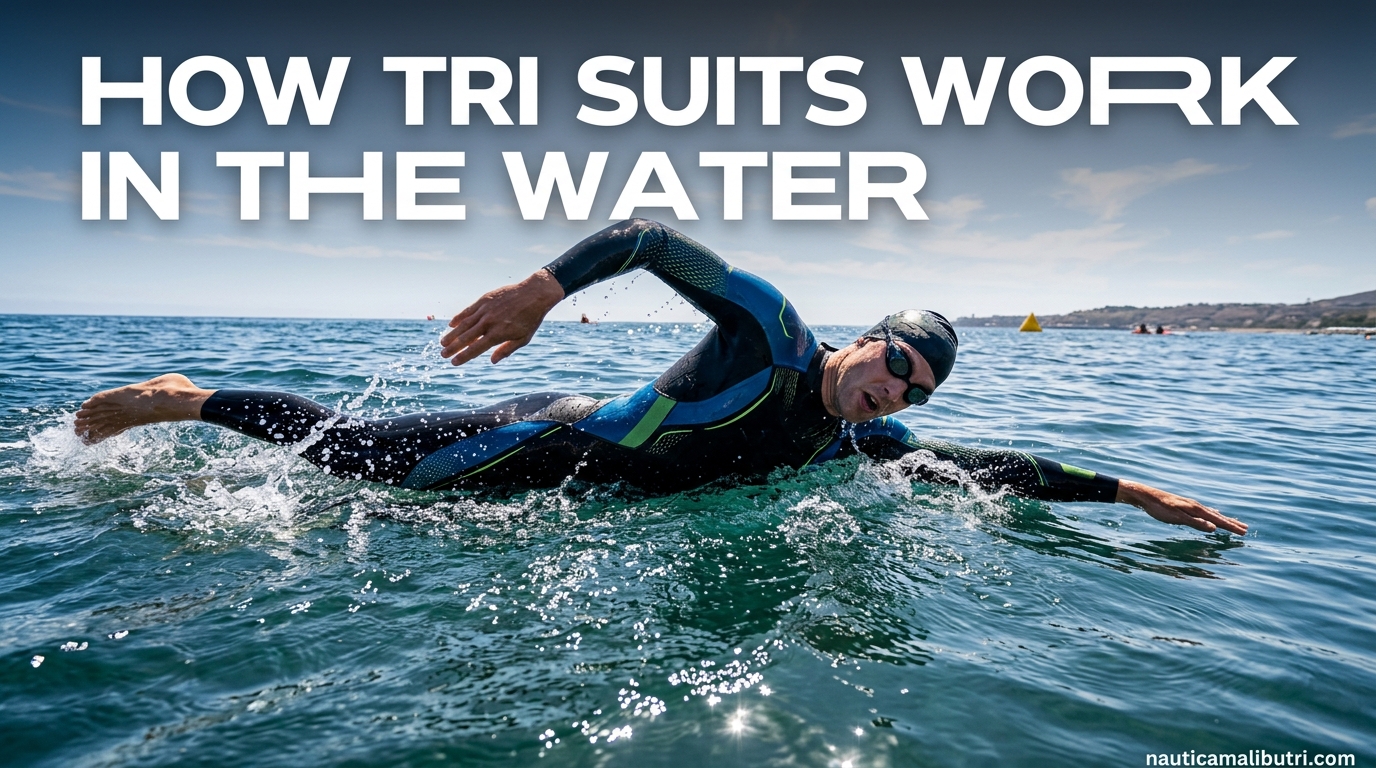
Tri suits work in water by fitting snugly against your body to reduce drag while allowing water to flow through the fabric rather than trapping it. Unlike wetsuits, tri suits don’t provide buoyancy or warmth. They simply create a smooth surface that helps you glide through the water with less resistance.
I remember my first open water swim. I stood at the edge of the lake wondering if my tri suit would somehow keep me afloat or if I’d sink like a stone. That confusion is common among beginners, and it is what inspired me to write this guide.
Understanding how your tri suit interacts with water will help you make better decisions on race day. You will know when you need a wetsuit and when you can get away with just the tri suit.
Table of Contents
What Is a Tri Suit and How It Works in Water
A tri suit is a one-piece garment specifically designed to be worn throughout an entire triathlon. It functions as your base layer for all three disciplines: swimming, cycling, and running.
The fabric is typically a blend of Lycra and elastane that stretches and moves with your body. When submerged in water, the material does not repel water like a wetsuit would. Instead, it allows water to pass through while maintaining its shape and fit.
Drag Reduction: The Science Behind the Fit
The primary way tri suits work in water is through drag reduction. A loose swimsuit creates pockets of turbulence that slow you down. A well-fitted tri suit eliminates those pockets.
Think of it like shaving your legs. The smooth surface lets water flow past with minimal resistance. Your tri suit achieves the same effect across your entire body.
During my first season of racing, I tested this myself. Swimming in baggy board shorts versus my fitted tri suit made a noticeable difference in my times. The suit felt like it was part of my body rather than something fighting against the water.
What Happens to the Fabric When Wet
When your tri suit gets wet, it absorbs some water into the fabric fibers. This is normal and expected. The material is designed to handle saturation without becoming heavy or sagging.
Quality tri suits use quick-drying synthetic materials that shed water quickly once you exit the swim. You will feel some added weight when you first come out of the water, but this diminishes within minutes of starting the bike leg.
The fabric does not create a thermal barrier like neoprene. If the water is cold, you will feel that cold. There is no insulation layer to trap warmth.
The Chamois Factor: What Happens to the Pad
One aspect many beginners overlook is the chamois, the padded section designed for cycling comfort. When submerged, the chamois absorbs water just like the rest of the suit.
A thick chamois can hold a surprising amount of water. I learned this lesson during a practice swim in 2026. My generously padded tri suit felt like I was wearing a waterlogged diaper when I got out.
For this reason, many experienced triathletes recommend a thinner chamois for shorter races. You get enough padding for the bike without the water absorption penalty during the swim. Longer races may warrant a thicker pad despite the extra water weight.
Can You Swim in Just a Tri Suit Without a Wetsuit?
Yes, you can absolutely swim in just a tri suit without a wetsuit. Many races, especially in warmer climates, are wetsuit-illegal anyway due to temperature regulations.
Swimming in just a tri suit feels different than swimming in a wetsuit. You will not have the buoyancy assistance that helps keep your legs higher in the water. Your body position relies entirely on your technique and core strength.
Some triathletes actually prefer swimming in just the tri suit. They find the freedom of movement outweighs the buoyancy benefits of a wetsuit. This is especially true for strong swimmers who already maintain good body position.
Buoyancy and Warmth: How Tri Suits Compare
Let me be clear about something that confused me as a beginner. Tri suits do not provide buoyancy. They are not designed to help you float.
If buoyancy is what you need, that is the job of a wetsuit. Understanding the difference between these two pieces of gear is essential for making smart race day decisions.
Why Tri Suits Do Not Float
Tri suits are made from thin, stretchy fabric that offers no flotation assistance. The material has essentially the same density as water, meaning it neither sinks nor floats.
When you swim in a tri suit alone, your body position depends entirely on your swim technique. Your core engagement, kick efficiency, and head position determine whether your legs drag or stay high in the water.
This is why weak swimmers often struggle in tri suit-only swims. Without the artificial buoyancy of neoprene, their sinking legs create significant drag.
How Wetsuits Create Buoyancy
Wetsuits are made from neoprene, a synthetic rubber filled with tiny nitrogen bubbles. These bubbles make the material less dense than water, creating natural flotation.
When you wear a wetsuit, your body position improves immediately. Your hips and legs rise higher in the water, reducing drag and making swimming more efficient.
The thicker the neoprene, the more buoyancy it provides. Triathlon wetsuits typically range from 3mm to 5mm thickness, with thicker panels in the legs where buoyancy matters most.
Thermal Properties: Why You Still Feel Cold
Another misconception I had early on was that my tri suit would provide some warmth. It does not.
The thin Lycra material of a tri suit offers essentially zero thermal insulation. When you swim in cold water wearing just a tri suit, your body loses heat rapidly.
Wetsuits, on the other hand, work by trapping a thin layer of water between your skin and the neoprene. Your body warms this water layer, and the neoprene insulation helps maintain that warmth. It is a completely different mechanism than how tri suits work in water.
Water Temperature Guidelines
Most triathlon organizations have specific rules about when wetsuits are allowed. For example, USA Triathlon permits wetsuits in water temperatures below 78 degrees Fahrenheit.
Between 78 and 84 degrees, wetsuits are allowed but you are ineligible for awards. Above 84 degrees, wetsuits are banned entirely for safety reasons due to overheating risk.
These rules exist because swimming in cold water without proper thermal protection can lead to hypothermia. Your tri suit alone will not protect you in truly cold conditions.
Tri Suit vs Wetsuit: Understanding the Layer System
Now that you understand how each piece works individually, let us look at how they work together. The tri suit plus wetsuit combination is the standard setup for most triathletes in cooler water.
This layering system exists for good reasons. Each piece serves a distinct purpose, and understanding this will help you appreciate why the transition from swim to bike works the way it does.
The Tri Suit as Base Layer
Your tri suit serves as your underwear, cycling shorts, and running outfit all in one. You put it on first, before anything else.
When worn under a wetsuit, the tri suit provides a smooth surface that helps the wetsuit slide on more easily. It also prevents direct contact between your skin and the neoprene, which can reduce chafing.
Most importantly, wearing your tri suit under the wetsuit means you are already dressed for the bike and run when you finish the swim. You simply peel off the wetsuit in transition and you are ready to go.
The Wetsuit as Outer Layer
The wetsuit goes on over your tri suit. Its job is to provide buoyancy and warmth during the swim leg only.
When you enter the water, some water seeps into the wetsuit. This is intentional and necessary. The water enters, fills the space between your tri suit and the neoprene, and then your body warms that water layer.
This trapped water layer is what keeps you warm. It is not the neoprene itself, but the warmed water trapped against your body that provides thermal protection.
The Water Layer Mechanism Explained
Here is the part many beginners find confusing. When water enters your wetsuit, it does not immediately drain out. The seals at your wrists and ankles, combined with the snug fit around your neck, create a contained environment.
Water seeps in slowly as you swim. Once inside, it stays there, warmed by your body heat. The neoprene acts as insulation, preventing that warmed water from mixing with the colder water outside.
Your tri suit sits between your skin and this water layer. It gets wet, of course, but it does not interfere with the warming process. The tri suit fabric actually helps distribute the warmed water across your body.
When to Wear Tri Suit Alone vs Under Wetsuit
The decision depends primarily on water temperature and race rules.
Wear just your tri suit when water temperatures are above 78 degrees or when wetsuits are banned. Some experienced triathletes also choose tri suit only if they are strong swimmers who do not need buoyancy assistance.
Wear your tri suit under a wetsuit when water temperatures are below 78 degrees and wetsuits are permitted. The combination provides warmth, buoyancy, and the convenience of being fully dressed for the remaining disciplines.
In very cold water below 65 degrees, some triathletes add a thermal layer under the wetsuit. This goes over the tri suit and provides additional insulation for extreme conditions.
Practical Tips for Managing Your Tri Suit in the Water
After years of racing and countless hours in open water, I have learned some practical lessons about managing tri suits in aquatic environments. These tips come from both my own mistakes and conversations with fellow triathletes.
Pre-Race Wetsuit Application
If you are wearing a wetsuit over your tri suit, put the tri suit on first. Make sure it is positioned correctly with the chamois in the right place.
Apply a small amount of body glide or anti-chafe balm to your neck, shoulders, and anywhere the wetsuit might rub. The tri suit provides some protection, but the neoprene can still cause irritation during a long swim.
When putting on the wetsuit, use plastic bags over your feet and hands to help it slide on smoothly over the tri suit fabric.
Chamois Sizing for Wet Conditions
Consider your race distance when choosing a tri suit. For sprint and Olympic distance races, a thinner chamois is usually better. It absorbs less water and dries faster.
For half and full Ironman distances, the extra padding of a thicker chamois may be worth the water absorption penalty. Your comfort on the bike leg matters more over longer distances.
I made the mistake of wearing a thick-padded tri suit for a sprint race once. The chamois held so much water that my run leg felt like I was carrying extra weight. Now I match my suit to my race distance.
Chafing Prevention When Wet
Wet fabric against skin is a recipe for chafing. Even high-quality tri suits can cause irritation after hours of wet contact during the bike and run.
Apply anti-chafe products liberally before the race. Pay special attention to areas where the tri suit seams contact your skin, under your arms, and along the leg grippers.
Some triathletes apply a thin layer of petroleum jelly to the chamois itself. This creates a moisture barrier that helps prevent the pad from becoming a source of friction.
T1 Transition Efficiency
The first transition from swim to bike can be chaotic. Practice removing your wetsuit quickly while wearing your tri suit underneath.
The key is getting the wetsuit off your shoulders and arms quickly. Once it is down to your waist, you can run to your bike while peeling it off your legs.
Remember that your tri suit will be wet. Have a towel in transition to quickly dry your feet before putting on bike shoes. Wet feet slide around in cycling shoes and can cause blisters.
What to Expect After Exiting the Water
When you come out of the water, your tri suit will be completely saturated. It will feel heavier than when you started, and you may notice water streaming off the fabric.
This is normal. The suit will begin drying almost immediately once you are exposed to air. The wind from cycling helps the evaporation process significantly.
By the time you start the run leg, most quality tri suits will be nearly dry. You may still feel some dampness in the chamois area, but it should not be uncomfortable.
Frequently Asked Questions
Can I wear a trisuit to swim?
Yes, you can absolutely swim in a trisuit without a wetsuit. Many triathletes do this in warmer water conditions or when wetsuits are not permitted. The trisuit provides drag reduction through its snug fit but does not offer buoyancy or warmth like a wetsuit would.
Do you wear undies under a trisuit?
No, you do not wear underwear under a trisuit. The trisuit is designed to be worn directly against your skin. It has a built-in chamois pad for cycling comfort, and wearing additional layers underneath would cause chafing and discomfort.
Do triathlon wetsuits make you float?
Yes, triathlon wetsuits do provide buoyancy. They are made from neoprene, which is less dense than water. This material helps keep your hips and legs higher in the water, reducing drag and making swimming more efficient. However, trisuits themselves do not provide any flotation.
Why does my tri suit feel heavy after swimming?
Your tri suit feels heavy after swimming because the fabric absorbs water. Quality tri suits are made from quick-drying materials that shed water relatively quickly once you are out of the water. The weight is temporary and will diminish as you cycle and the fabric dries.
What temperature water can you swim in a tri suit without a wetsuit?
Most triathletes can comfortably swim in water temperatures above 70-75 degrees Fahrenheit wearing just a tri suit. Below 65 degrees, a wetsuit becomes highly recommended for warmth. USA Triathlon allows wetsuits in races with water temperatures below 78 degrees, and they are required for safety below 60 degrees.
Do you wear anything under a wetsuit for triathlon?
Yes, you wear your tri suit under your wetsuit for triathlon. The tri suit serves as your base layer that you will wear for the entire race. The wetsuit goes on over it for the swim portion only and is removed in the first transition.
Final Thoughts
Understanding how tri suits work in the water removes the mystery from your race day experience. You now know that tri suits reduce drag but do not provide buoyancy or warmth. You understand why they are worn under wetsuits and what to expect when you emerge from the water.
My hope is that this knowledge gives you confidence at your next start line. Instead of wondering what will happen when you hit the water, you can focus on executing your race plan.
The tri suit is a simple piece of gear with a straightforward job. Let it do its work while you focus on yours: swimming strong, cycling hard, and running fast.