
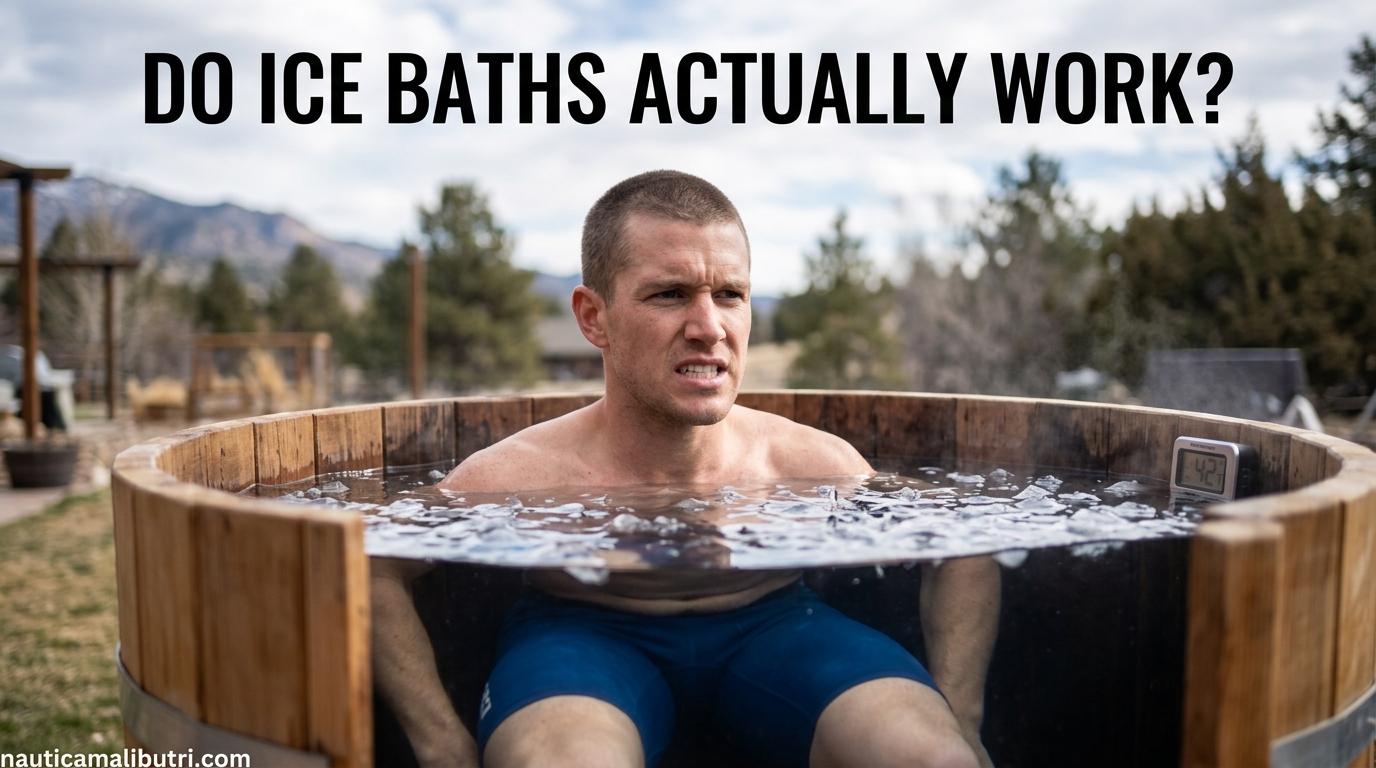
You have just finished a brutal brick workout. Your legs are screaming. Your training plan says you need to run again tomorrow. You scroll through social media and see pro triathletes submerged in ice-filled tubs, looking stoic while claiming faster recovery.
The question keeps coming up in every triathlon forum: do ice baths actually work, or is this just another expensive trend dressed up in science?
Our team at Nautica Malibu Triathlon has spent months reviewing the latest research on cold water immersion for endurance athletes. We looked at studies from the NIH, Mayo Clinic, and peer-reviewed sports medicine journals. The answer is not a simple yes or no. Ice baths can reduce soreness and inflammation after hard training, but they might also interfere with the muscle adaptations you are working to build.
In this guide, we will break down exactly what the science says, when ice baths help versus when they hurt, and how triathletes should approach cold water immersion strategically throughout their training cycles.
Table of Contents
What Are Ice Baths and How Do They Work
Ice baths, also called cold water immersion or cryotherapy, involve submerging your body in water between 50 and 60 degrees Fahrenheit (10 to 15 degrees Celsius) for 5 to 15 minutes. The practice has been used by elite athletes for decades and has exploded in popularity among age-group triathletes over the past few years.
When you first hit cold water, your blood vessels constrict in a process called vasoconstriction. This reduces blood flow to your muscles and decreases metabolic activity in the tissue. The theory is that this reduced blood flow helps limit inflammation and flush waste products like lactate from your system.
Your body also triggers a cold shock response, releasing norepinephrine and dopamine. These neurotransmitters can create feelings of alertness and even euphoria. Some triathletes report feeling energized and mentally sharp after an ice bath, which can be a welcome boost during heavy training blocks.
What the Research Says About Ice Bath Benefits
Scientific studies on ice baths have produced mixed results, but several benefits are supported by research. Understanding these can help you decide whether the practice fits your recovery strategy.
Reduced Inflammation and Muscle Soreness
Research published in the NIH journal suggests that cold water immersion at 12 to 15 degrees Celsius can reduce markers of inflammation after intense exercise. A 2010 study found that post-exercise ice baths were a common practice among elite athletes, with many reporting reduced soreness in the days following hard efforts.
For triathletes dealing with delayed onset muscle soreness (DOMS) after long runs or brick workouts, this can mean the difference between skipping tomorrow’s swim and hitting the pool as planned. The cold appears to limit the inflammatory cascade that causes that stiff, painful feeling 24 to 48 hours after a hard session.
However, it is worth noting that reduced soreness does not necessarily equal faster recovery. The sensation of feeling better might not reflect underlying tissue repair.
Mental Health and Alertness Benefits
According to Mayo Clinic research, cold water therapy may help lift fatigue and improve mood by triggering the release of endorphins and noradrenaline in the brain. These neurotransmitters are associated with improved focus, reduced stress, and enhanced well-being.
For long-course triathletes preparing for Ironman events, the mental resilience developed through regular cold exposure can be valuable. Sitting in uncomfortable cold water teaches you to manage discomfort, breathe through stress, and maintain composure when your body wants to quit. These are exactly the skills you need at mile 18 of the marathon.
Circulation and Recovery Perception
When you exit an ice bath and begin rewarming, your blood vessels dilate. This process can increase blood flow and theoretically help deliver nutrients to damaged muscle tissue. Some research suggests the hydrostatic pressure of water itself aids circulation, which may explain why athletes report feeling fresher after immersion.
The placebo effect also deserves mention. If you believe ice baths help you recover, that belief can produce real physiological benefits. Your expectations shape your experience, and the ritual of an ice bath signals to your body that recovery has begun.
The Other Side: Why Ice Baths Might Not Help (And Could Hurt)
Not all research supports ice bath use. Several studies suggest the practice might interfere with the very adaptations you are training to achieve.
Blunted Training Adaptations
Here is the critical issue for triathletes. Inflammation after exercise is not just a problem to be eliminated. It is a signal that tells your body to adapt, repair, and grow stronger. When you consistently suppress that signal with ice baths, you might short-circuit the muscle-building process.
Research has shown that frequent cold water immersion can reduce muscle hypertrophy and strength gains compared to active recovery or simple rest. For triathletes in base and build phases, this is a serious concern. You want your muscles to adapt to the training stress, not have that adaptation dampened.
The science is clear on this point: if your goal is building fitness and strength, daily ice baths are counterproductive.
Inconclusive Evidence on Performance
Harvard Health notes that studies about ice bath benefits remain inconclusive. While many athletes report feeling better, objective measures of performance improvement are harder to demonstrate. Some controlled studies show no difference in actual recovery markers between athletes who use ice baths and those who do not.
This does not mean ice baths are worthless. It means their primary benefit might be subjective relief rather than objective recovery acceleration. For some athletes, that subjective relief is valuable enough. For others, the discomfort and time investment might not be worth uncertain returns.
When Ice Baths Can Work Against You
Timing matters. Research suggests that using ice baths immediately after strength training is particularly counterproductive. The inflammatory response triggered by lifting weights is essential for muscle growth. Suppressing it with cold water can limit the gains from your strength sessions.
For triathletes who strength train during base season, waiting at least four hours after lifting before using cold therapy is recommended. This gives your muscles time to receive and respond to the adaptation signals before you shut down the inflammatory process.
Ice Baths for Triathletes: Training Phase Considerations
The question is not simply whether ice baths work. It is when they work best for triathletes managing complex training cycles. Your approach should shift depending on where you are in your season.
Base and Build Phases: Use Sparingly
During base and build phases, your goal is creating physiological adaptations. You want your body to respond to training stress by building mitochondria, increasing capillary density, and strengthening muscles. This requires the inflammatory signaling that ice baths suppress.
Reserve ice baths for exceptionally hard sessions that leave you worried about completing the next day’s workout. A weekly long run that went longer than planned or a particularly brutal hill repeat session might justify cold water immersion. Daily use during these phases is counterproductive.
Instead, focus on active recovery, proper nutrition, and sleep. These fundamentals produce adaptations without interfering with your body’s natural response to training stress.
Brick Workouts and Race Simulation
Brick workouts that simulate race effort and duration can leave even experienced triathletes hobbling. The combination of depleted glycogen stores and accumulated muscle damage from bike to run transitions creates significant soreness.
In these cases, ice baths can help you manage the immediate aftermath and prepare for the next training session. The key is using them strategically, not habitually. Save the cold plunge for your longest and hardest bricks, especially those in the final weeks before taper.
Some triathletes also use ice baths as mental training. The discomfort of cold water mimics the mental challenge of pushing through the final miles of a race. Learning to control your breathing and stay calm in the cold carries over to race day composure.
Taper and Race Day Recovery
This is where ice baths shine for triathletes. During taper, you are no longer trying to build fitness. You are maintaining fitness while shedding fatigue. Ice baths can help manage the accumulated soreness and inflammation from your final training block without interfering with adaptation.
Post-race, especially after Ironman and 70.3 distances, ice baths can help manage the significant inflammation your body experiences. The Mayo Clinic suggests that cold water immersion may reduce post-exercise soreness and help you return to normal walking and daily activities faster.
For multi-day events or stage races, ice baths between efforts can help you recover enough to perform again the next day. The priority shifts from long-term adaptation to short-term readiness, making cold therapy more appropriate.
Ice Baths vs. Other Recovery Methods
How do ice baths stack up against other recovery tools triathletes commonly use?
Compression boots like Normatec systems offer similar benefits for circulation without the cold shock response. Research suggests compression can be as effective as cold water for recovery perception while avoiding the potential adaptation-blunting effects of ice baths. Many triathletes find compression more comfortable and convenient.
Active recovery remains the gold standard. Easy spinning, light swimming, or walking promotes blood flow without suppressing inflammation signals. A 20-minute easy spin often produces better recovery outcomes than an ice bath while supporting fitness maintenance.
Contrast therapy alternating hot and cold water may offer the best of both worlds. The hot phases promote blood flow and nutrient delivery, while cold phases reduce inflammation and pain. This approach is less likely to interfere with adaptations while still providing relief.
Sleep and nutrition matter more than any recovery modality. If you are skimping on sleep or under-fueling, ice baths are a band-aid on a broken system. Prioritize eight hours of sleep and adequate protein intake before investing time and money in cold therapy.
Safety Risks Every Triathlete Should Know
Ice baths are not without risks. Understanding these dangers helps you approach cold water immersion safely.
Cold Shock Response
The initial cold shock can trigger a gasp reflex, rapid breathing, and increased heart rate. For some athletes, this response can be dangerous, especially if you have underlying heart conditions. The sudden stress on your cardiovascular system requires caution.
Never jump into an ice bath. Enter gradually, starting with your feet and working up to full submersion. Focus on slow, controlled breathing. The first 30 seconds are the hardest. Once you settle in, the shock response typically subsides.
Hypothermia and Overexposure
Harvard Health warns that ice baths carry hypothermia risks, particularly if water is too cold or immersion lasts too long. Water below 50 degrees Fahrenheit increases risk significantly. Staying in longer than 10 to 15 minutes offers no additional benefit and substantial additional risk.
Signs you have been in too long include shivering that continues or worsens after exiting, confusion, slurred speech, or loss of coordination. If you experience these symptoms, warm up gradually and seek medical attention if they persist.
Never ice bath alone. Have someone nearby who can check on you and assist if you experience trouble. This is particularly important for your first few sessions as you learn your tolerance.
Medical Contraindications
Certain medical conditions make ice baths dangerous. If you have heart disease, arrhythmias, circulation problems, or Raynaud’s syndrome, consult your doctor before trying cold water immersion. Cold water can trigger cardiac events in susceptible individuals.
Pregnancy, open wounds, and certain neurological conditions also require medical clearance. Do not assume that because pro athletes use ice baths, they are automatically safe for everyone. Your individual health status matters.
Practical Guidelines for Triathletes
If you decide to incorporate ice baths into your recovery routine, follow these evidence-based guidelines:
Temperature: Aim for 50 to 59 degrees Fahrenheit (10 to 15 degrees Celsius). Colder is not better and increases risk. A standard home bathtub with ice and water typically reaches this range.
Duration: Limit immersion to 10 to 15 minutes. Longer sessions offer no additional benefit and increase hypothermia risk. Set a timer and get out when it rings.
Timing: Use ice baths after your hardest sessions, especially during taper and after races. Avoid them immediately after strength training. Wait at least four hours after lifting before cold water immersion.
Frequency: Limit ice baths to 2 to 3 times per week maximum. Daily use interferes with training adaptations. Reserve cold therapy for when you really need it.
Entry protocol: Enter feet first. Sit down slowly. Focus on controlled breathing. Submerge to your shoulders if comfortable, or stop at your chest if the cold feels too intense. Listen to your body.
Rewarming: After your session, dry off and dress in warm clothes. Let your body rewarm naturally. Avoid hot showers immediately after ice baths, as rapid temperature changes can stress your cardiovascular system.
Frequently Asked Questions
Do ice baths actually do something?
Yes, ice baths do have measurable physiological effects. Cold water causes vasoconstriction, reduces inflammation markers, and triggers the release of norepinephrine and dopamine. These effects can reduce muscle soreness and improve alertness. However, whether these changes translate to better athletic performance remains inconclusive according to current research.
Do ice baths help with DOMS?
Research suggests ice baths can reduce delayed onset muscle soreness (DOMS) after intense exercise. Cold water immersion appears to limit the inflammatory response that causes the stiff, painful feeling 24 to 48 hours after hard training. While the soreness reduction is real, some studies question whether this translates to faster underlying muscle repair.
Is a 10 minute ice bath safe?
A 10-minute ice bath is generally safe for healthy adults when done correctly. Keep water temperature between 50 to 59 degrees Fahrenheit, never ice bath alone, and enter gradually to manage cold shock response. If you have heart conditions, circulation problems, or other medical issues, consult a doctor first. Stop immediately if you experience chest pain, severe shivering, or confusion.
Are cold plunges good for athletes?
Cold plunges can be beneficial for athletes when used strategically. They help manage inflammation and soreness after hard sessions, particularly during competition periods or multi-day events. However, frequent use during base training may interfere with muscle adaptation and strength gains. Athletes should reserve cold plunges for specific recovery needs rather than daily use.
Do NFL players cold plunge?
Yes, many NFL players use cold plunges as part of their recovery routine. The practice is common across professional sports including football, basketball, and endurance athletics. Teams often have dedicated cold plunge facilities. However, like triathletes, pros use this tool strategically rather than daily, and individual protocols vary based on position, training phase, and personal preference.
How long does it take to see results from cold plunging?
The soreness-reducing effects of cold plunging are typically felt immediately or within hours after your first session. Mental alertness and mood improvements often occur after just a few minutes in the water. However, long-term physiological adaptations from regular cold exposure take weeks to months of consistent practice. For triathletes, the immediate post-session recovery benefits are more relevant than long-term adaptations.
Final Verdict: Should Triathletes Use Ice Baths
So, do ice baths actually work? The evidence says yes, with important caveats. Ice baths do reduce inflammation and muscle soreness. They can help you feel fresher after hard training and may provide mental benefits that carry over to race day.
However, they are not a daily recovery tool for triathletes in training. During base and build phases, frequent cold water immersion can interfere with the very adaptations you are working to achieve. Ice baths should be reserved for your hardest sessions, taper periods, and post-race recovery when the priority shifts from building fitness to managing fatigue.
For triathletes preparing for races in 2026, the smart approach is strategic use. Keep ice baths in your toolkit for when you really need them. Prioritize sleep, nutrition, and active recovery as your foundation. When you do use cold water immersion, follow safety guidelines: 50 to 59 degrees Fahrenheit, 10 to 15 minutes maximum, and never alone.
Recovery is individual. Some triathletes swear by ice baths and use them successfully for years. Others find them uncomfortable and unnecessary, achieving excellent results with other methods. Experiment cautiously, pay attention to how your body responds, and adjust your approach based on your training phase and race schedule.
Medical Disclaimer: This article is for informational purposes only and does not constitute medical advice. Consult a healthcare provider before beginning any cold water therapy, especially if you have underlying health conditions.