
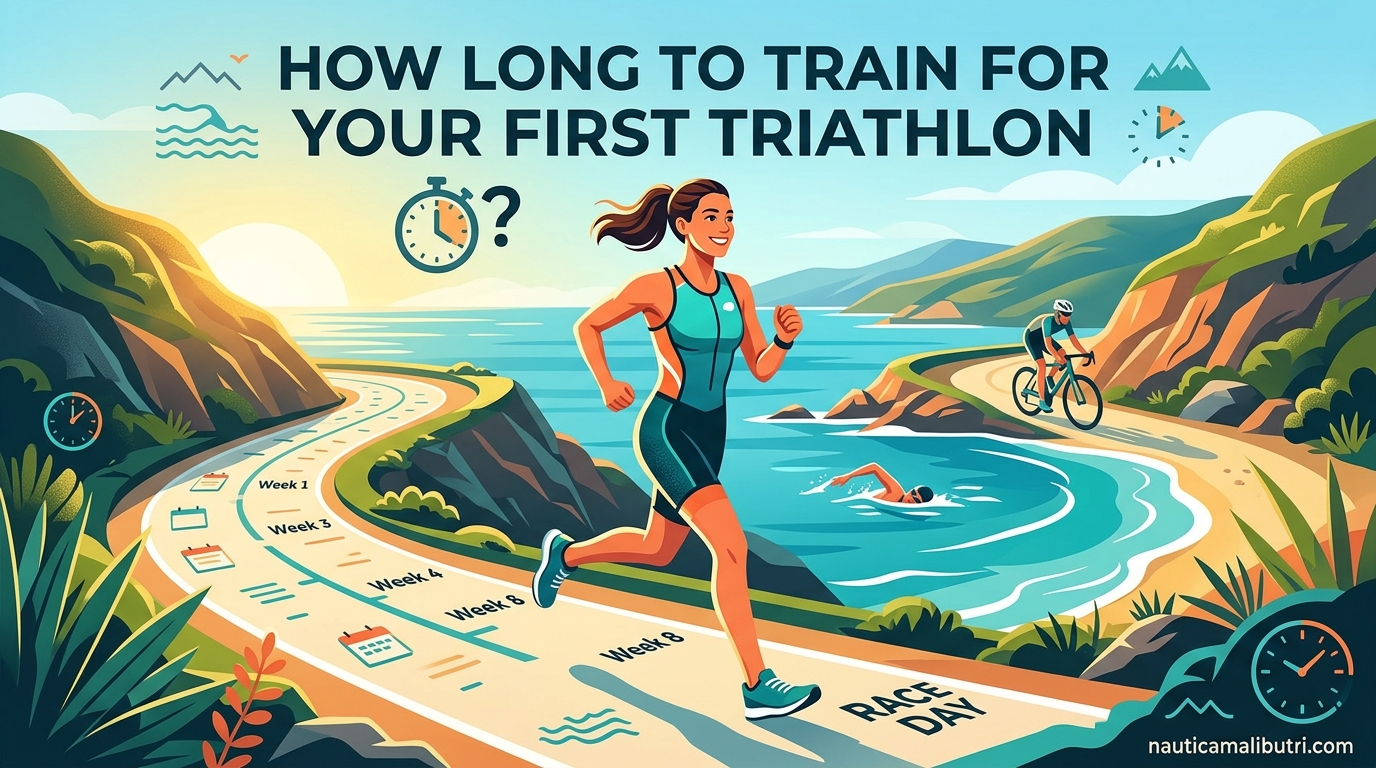
Training for your first triathlon typically takes between 8 and 16 weeks depending on which distance you choose. A sprint triathlon requires 8-12 weeks for most beginners, while an Olympic distance needs 12-16 weeks to build adequate fitness across all three disciplines. Your existing athletic background matters significantly here. If you already run marathons or have a swimming background, you might train successfully in as little as 8 weeks for a sprint event.
Our team has worked with hundreds of first-time triathletes at the Nautica Malibu Triathlon over the past several years. We have seen people go from complete beginners to confident finishers in just three months. The key is matching your training timeline to your current fitness level and the race distance you select.
In this guide, I will walk you through exactly how long you need to train for each triathlon distance. You will learn weekly time commitments, training principles that prevent injury, and sample schedules you can follow starting this week.
Table of Contents
Understanding Triathlon Distances
Before setting your training timeline, you need to understand what each triathlon distance actually involves. The four main categories range from beginner-friendly sprints to grueling full Ironman events.
Sprint Triathlon
A sprint triathlon consists of a 750-meter swim (0.47 miles), a 20-kilometer bike ride (12.4 miles), and a 5-kilometer run (3.1 miles). This is the most popular starting point for first-timers because the distances feel achievable with consistent training. Most sprint events take beginners between 1 hour 30 minutes and 2 hours 30 minutes to complete.
Olympic Triathlon
The Olympic distance doubles the sprint: a 1,500-meter swim (0.93 miles), a 40-kilometer bike ride (24.8 miles), and a 10-kilometer run (6.2 miles). This is the standard distance used in Olympic Games competition. First-timers typically finish Olympic triathlons in 2 hours 45 minutes to 4 hours.
Half Ironman (70.3)
The Half Ironman, also called 70.3 for the total miles covered, includes a 1.2-mile swim, a 56-mile bike ride, and a 13.1-mile half marathon run. This distance requires serious endurance training and typically takes first-timers 5 to 7 hours to complete.
Full Ironman (140.6)
The full Ironman is the ultimate test: a 2.4-mile swim, a 112-mile bike ride, and a full 26.2-mile marathon run. First-time Ironman finishers usually take between 12 and 17 hours, with cutoff times typically around 17 hours.
How Long to Train for Your First Triathlon by Distance
Now let us break down specific training timelines based on the distance you choose and your starting fitness level. These ranges come from analyzing dozens of training plans and real athlete experiences.
Sprint Triathlon: 8-12 Weeks
Most beginners need 8 to 12 weeks to prepare for their first sprint triathlon. If you already exercise regularly and can swim, bike, and run at a basic level, 8 weeks might suffice. Complete beginners with no athletic background should plan for the full 12 weeks.
Forum discussions on Reddit consistently show that 12 weeks of structured training has most beginners feeling strong and confident. Several athletes mentioned that 5 months felt like more than enough time for a sprint distance.
Olympic Triathlon: 12-16 Weeks
The Olympic distance demands 12 to 16 weeks of dedicated training for first-timers. The longer swim and run segments require building more aerobic endurance. You need time to adapt your body to handle 2 to 3 hours of continuous activity.
Your existing fitness matters here significantly. A marathon runner might need only 12 weeks by focusing on swimming and cycling skills. Someone coming off the couch needs the full 16 weeks minimum.
Half Ironman: 16-20 Weeks
First-time Half Ironman athletes should plan for 16 to 20 weeks of training. This timeline allows you to build the specific endurance needed for a 5+ hour event. The 56-mile bike ride alone requires substantial training volume.
Full Ironman: 20-30 Weeks
Training for your first Ironman typically requires 20 to 30 weeks. Most established Ironman training plans span 24 to 30 weeks. This extended timeline allows you to build the massive aerobic base needed while staying healthy.
Jumping into an Ironman with insufficient training time is a recipe for injury or a DNF (did not finish). Respect the distance and give yourself adequate preparation time.
Weekly Training Time Commitment
Beyond total weeks needed, you need to understand the weekly hours required. Time management becomes crucial, especially for busy professionals balancing work and family.
Sprint Triathlon: 4-6 Hours Per Week
A typical sprint triathlon training week involves 4 to 6 hours of structured training. This breaks down to roughly 2 swim sessions, 2 bike sessions, and 2 run sessions. One of those sessions should be a brick workout combining bike and run.
Olympic Triathlon: 6-8 Hours Per Week
Olympic distance training typically requires 6 to 8 hours weekly. As the race approaches, peak weeks might reach 8 to 10 hours. The extra time goes toward building endurance for the longer distances.
Half Ironman: 8-12 Hours Per Week
Half Ironman training demands 8 to 12 hours per week consistently. Weekend long rides become a significant time commitment, often 2.5 to 4 hours. You need family support and schedule flexibility at this level.
Full Ironman: 12-20 Hours Per Week
Ironman training typically peaks at 12 to 20 hours per week during the build phase. Long rides extend to 5 or 6 hours, and long runs reach 2.5 to 3 hours. Many Ironman athletes describe training as a part-time job.
Training Hours by Discipline Breakdown
For sprint and Olympic distances, your weekly hours typically split as follows: swimming occupies about 20% of your time, cycling takes 40-50%, and running gets 30-40%. Cycling demands the most time because it covers the greatest distance in the race.
Swimming is the most technical discipline and benefits from consistent practice, even if the time investment is smaller. Many first-timers find swimming the hardest discipline to master, as noted repeatedly in forum discussions.
Building Your Training Plan: Key Principles
Now that you understand timelines and time commitments, let us cover the training principles that make your preparation effective and injury-free.
The 10% Weekly Progression Rule
The golden rule of endurance training is to increase your weekly training volume by no more than 10% each week. If you run 10 miles this week, run 11 miles next week, not 15. This gradual progression allows your muscles, tendons, and cardiovascular system to adapt safely.
Violating this rule is one of the fastest ways to end up with overuse injuries like IT band syndrome or Achilles tendinitis. Your cardiovascular fitness improves faster than your structural strength, so patience matters.
The 80/20 Training Rule
The 80/20 rule states that 80% of your training should be at low intensity, and only 20% at moderate to high intensity. This means most of your runs, rides, and swims should feel conversational.
Many beginners make the mistake of going too hard too often. They end up chronically fatigued without building the aerobic base that endurance sports require. Easy training builds mitochondria and capillary density, the foundations of endurance.
What Is a Brick Workout?
A brick workout involves doing two disciplines back-to-back without rest, typically bike followed by run. This prepares your legs for the unique feeling of running off the bike during your race.
The first 5-10 minutes of running after cycling feel heavy and awkward. Your legs need to transition from circular pedaling motion to running stride. Practicing this transition prevents race-day shock and improves your pacing.
Resistance Training for Triathletes
Two to three strength training sessions per week support your triathlon preparation. Focus on core stability, posterior chain strength (glutes, hamstrings, back), and shoulder mobility for swimming.
Stronger muscles handle training loads better and resist injury. You do not need to become a bodybuilder, but basic strength work pays dividends throughout your training.
Rest and Recovery Are Training Too
Your body adapts and gets stronger during rest, not during workouts. Schedule at least one complete rest day per week. Include recovery weeks every third or fourth week where training volume drops by 20-30%.
Sleep 7-9 hours nightly. Poor sleep undermines training adaptation and increases injury risk. Prioritize recovery as seriously as you prioritize workouts.
Open Water Swimming Preparation
Pool swimming does not fully prepare you for open water. The lack of walls, sighting for buoys, choppy water, and proximity to other swimmers create unique challenges.
Practice open water swimming at least 4-6 times before your race. Learn to sight efficiently without breaking your stroke rhythm. Many first-timers cite open water swimming as their biggest anxiety source.
Sample 12-Week Sprint Triathlon Training Schedule
Here is a practical framework for your first sprint triathlon preparation. Adjust based on your specific fitness level and schedule constraints.
Weeks 1-4: Base Building
Focus on establishing consistency across all three disciplines. Each discipline gets 2 sessions per week at easy intensity. Week 4 is a recovery week with reduced volume.
Monday: Rest or light stretching
Tuesday: 30-minute easy run
Wednesday: 30-minute swim (technique focus)
Thursday: 45-minute easy bike
Friday: Rest
Saturday: 45-minute bike followed by 15-minute run (brick)
Sunday: 60-minute easy bike or 30-minute easy run
Weeks 5-8: Building Endurance
Gradually increase duration while maintaining the 80/20 intensity balance. Add a third session to your weakest discipline. Include your first longer open water swims if possible.
Week 8 is another recovery week. Your longest bike ride reaches 90 minutes, and your longest run extends to 35-40 minutes.
Weeks 9-11: Race Preparation
Training volume peaks here. Practice race-specific pacing. Complete at least 2-3 open water swims. Do a practice race simulation covering full race distances.
Include transition practice: set up your gear and practice moving from swim to bike and bike to run efficiently. The 90-second transition is a common benchmark for age-group athletes.
Week 12: Taper and Race
Reduce training volume by 40-50% while maintaining some intensity. Arrive at the race rested, not tired. Trust your training and enjoy the experience.
Common Mistakes First-Timers Make
Learn from the errors others have made before you. These mistakes appear repeatedly in forum discussions and coaching conversations.
Underestimating Swimming Difficulty
Many strong runners and cyclists discover that swimming humbles them. Water is 800 times denser than air, and technique matters more than raw fitness. Start swimming early in your training cycle.
If you cannot swim at all, consider adult swim lessons before beginning triathlon training. A few technique sessions save weeks of inefficient solo practice.
Neglecting Brick Workouts
Skipping brick workouts leaves you unprepared for the bike-to-run transition. That first mile off the bike feels terrible without practice. Schedule brick sessions every week or two throughout your training.
Skipping Rest Days
The enthusiasm of starting something new pushes people to train daily. This enthusiasm leads to burnout or injury within weeks. Rest days are not optional; they are when you get stronger.
Inadequate Open Water Practice
Pool swimmers often panic in their first open water race. The dark water, inability to see the bottom, contact with other swimmers, and sighting challenges overwhelm unprepared athletes. Respect this difference and practice accordingly.
Gear Obsession Over Training
Triathlon has expensive gear, but you do not need the best equipment to finish your first race. A decent bike, goggles, and running shoes suffice. Focus your energy on consistent training, not shopping.
Frequently Asked Questions
How long do you need to train for a triathlon as a beginner?
Most beginners need 8-12 weeks to train for a sprint triathlon and 12-16 weeks for an Olympic distance. Complete beginners with no athletic background should choose the longer end of these ranges. Your existing fitness level in swimming, cycling, and running significantly affects how much time you need.
What is the 80/20 rule in triathlon?
The 80/20 rule means 80% of your training should be at low intensity (conversational pace) and only 20% at moderate to high intensity. This approach builds aerobic endurance efficiently while preventing overtraining and injury. Many beginners make the mistake of training too hard too often.
Can I train for a triathlon in 8 weeks?
Yes, 8 weeks is sufficient for a sprint triathlon if you already have a basic fitness foundation in swimming, biking, and running. Marathon runners or cyclists often successfully prepare for sprint triathlons in 8-12 weeks. Complete beginners should allow 12 weeks minimum for proper preparation.
How many hours a week should I train for my first triathlon?
For a sprint triathlon, plan for 4-6 hours per week. Olympic distance requires 6-8 hours weekly. Half Ironman needs 8-12 hours, and full Ironman demands 12-20 hours per week. These hours include swimming, cycling, running, and any strength training sessions.
What if I can only train on weekends?
Weekend-only training is challenging but possible for sprint distances. You would do long sessions Saturday and Sunday, covering all three disciplines across the two days. However, you lose the benefits of frequency and recovery that distributed training provides. Consider whether your schedule truly allows time for triathlon preparation.
Do I need a coach for my first triathlon?
A coach is not required for your first triathlon, especially for sprint or Olympic distances. Many free training plans exist online. A coach becomes more valuable for Half Ironman or full Ironman preparation, or if you have specific weaknesses (like learning to swim) that need expert guidance.
Final Thoughts: Start Your Triathlon Journey
How long to train for your first triathlon depends on your chosen distance, current fitness level, and available time commitment. Most beginners successfully prepare for a sprint triathlon in 8-12 weeks, investing 4-6 hours per week in training.
Remember that consistency beats intensity every time. Three months of steady, gradual training will prepare you better than six weeks of panic-driven overtraining. Follow the 10% progression rule, respect your rest days, and practice open water swimming before race day.
Your first triathlon is about finishing with a smile, not setting records. Thousands of people just like you complete their first triathlon every year. Start with a sprint distance, give yourself 12 weeks of preparation, and trust the process.
The triathlon community welcomes beginners. At the Nautica Malibu Triathlon, we see first-timers cross that finish line transformed by the experience. Your journey starts with a single decision to begin. Pick your race, count back 12 weeks, and start training today.