
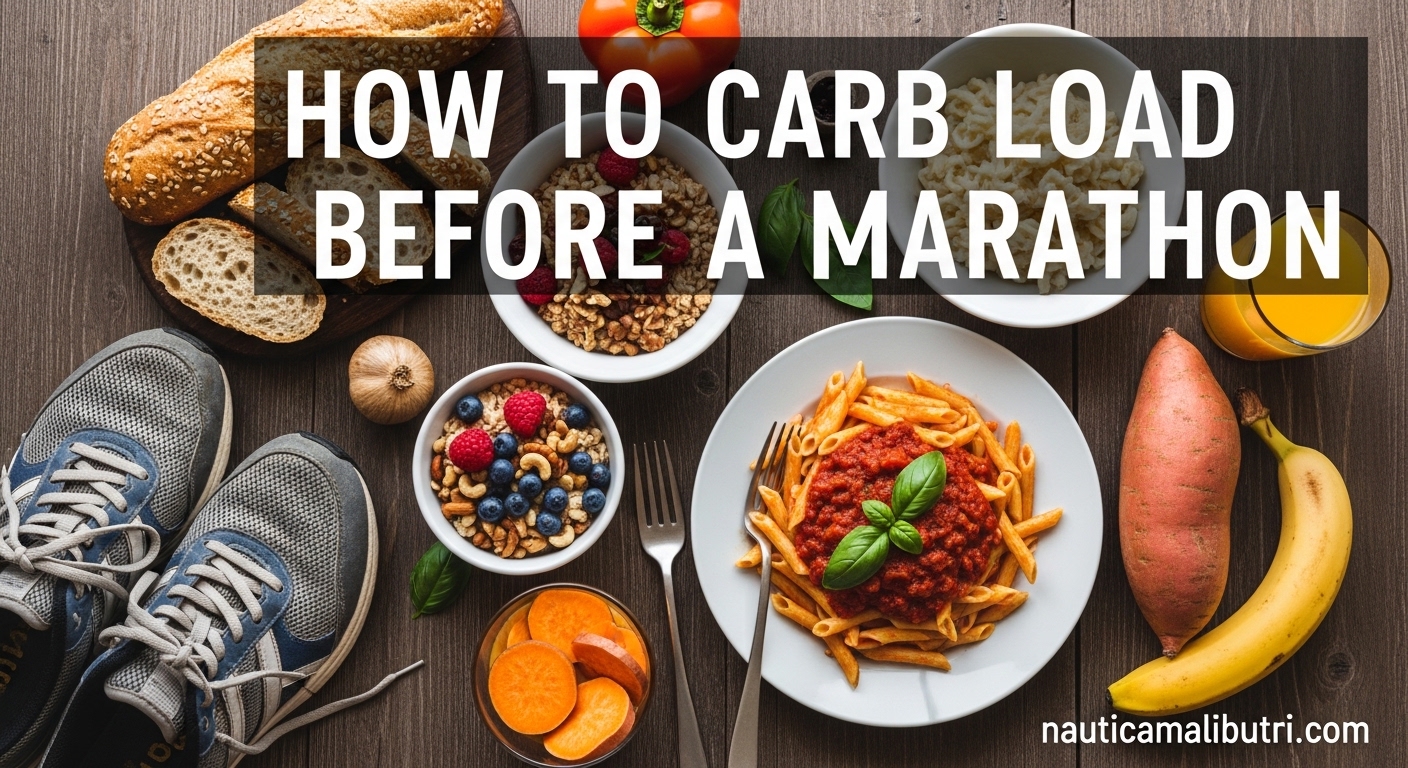
Learning how to carb load before a marathon can be the difference between crossing the finish line strong and hitting the wall at mile 20. After coaching hundreds of athletes through the Nautica Malibu Triathlon and other endurance events over the past decade, I have seen this nutrition strategy make or break race day performance.
Carb loading is not just about eating more pasta. It is a calculated approach to maximizing your body’s energy stores so you can maintain pace when glycogen would normally run out. The science is straightforward: your muscles can store enough carbohydrate to fuel about 90 minutes of exercise, but a marathon takes most runners 3 to 6 hours to complete.
In this guide, I will walk you through exactly when to start carb loading, how much to eat, which foods work best, and the common mistakes that sabotage even experienced runners. Whether you are preparing for your first marathon or your tenth triathlon, this step-by-step approach will help you arrive at the starting line fully fueled and ready to perform.
Table of Contents
What Is Carb Loading and Why It Matters
Carb loading is a nutrition strategy where you increase your carbohydrate intake while reducing training volume to maximize muscle glycogen stores before an endurance event. Your body converts carbohydrates into glycogen, which it stores in your muscles and liver as its preferred fuel source for high-intensity exercise.
Think of glycogen as your body’s premium gasoline. When your tank is full, you can run efficiently at marathon pace. When it runs dry, you are forced to switch to burning fat, which requires more oxygen and produces energy more slowly. This sudden slowdown is what runners call hitting the wall, and it happens because your brain and muscles are literally running out of fuel.
The Science of Supercompensation
The concept of carbohydrate loading was discovered in the late 1960s when Swedish researchers noticed that athletes could store more glycogen than previously believed possible. By combining a period of glycogen depletion with high carbohydrate intake during a training taper, athletes trigger supercompensation. This means your muscles actually store more glycogen than they would under normal conditions.
Your muscles can typically store around 400 to 500 grams of glycogen when fully loaded. Each gram of glycogen binds with 3 to 4 grams of water, which is why you may gain 1 to 2 kilograms during a proper carb load. This is not fat gain. It is your body storing the fuel and hydration it needs to perform.
Why 90 Minutes Is the Critical Threshold
Research consistently shows that most athletes have enough stored glycogen to sustain about 90 to 120 minutes of moderate to hard exercise. After that point, without additional fuel from gels or drinks, performance drops dramatically. A well-executed carb load can extend that window, giving you a buffer before you need to rely entirely on race-day fueling.
For triathletes, this is even more critical. Unlike marathon runners who only face one discipline, triathletes must transition from swim to bike to run. Each leg depletes glycogen differently, and the cumulative effect makes proper pre-race fueling essential for a strong finish.
When to Start Carb Loading (Timing Is Everything)
The timing of your carb load matters just as much as what you eat. Starting too early causes unnecessary weight gain and bloating. Starting too late means you will not fully maximize your glycogen stores. The sweet spot is 36 to 48 hours before your race begins.
Most athletes do best with a 2 to 3 day carb loading window. This aligns perfectly with the final days of your taper week, when training volume drops significantly and your muscles have time to absorb and store carbohydrates rather than burning them for fuel.
The Taper Week Connection
Carb loading only works when combined with reduced training. If you continue running high mileage while trying to load up on carbs, your muscles will burn through those carbohydrates as quickly as you consume them. This is why the standard marathon taper reduces volume by 40 to 60 percent in the final week.
I recommend starting your carb focus three days before the race. Two days out, shift to about 70 percent carbohydrates. The day before the race, push to 80 percent or higher. Your final meal the night before should be substantial but not heavy, eaten early enough that you sleep comfortably.
Common Timing Mistakes
One of the biggest errors I see is athletes who start carb loading a full week before the race. They hear carb loading and immediately switch to all pasta, all the time. This leads to feeling sluggish, gaining unnecessary weight, and potentially dealing with digestive issues before race day even arrives.
Another mistake is trying to cram all your carbohydrates into the final 12 hours. Your body can only absorb and store glycogen at a certain rate. Eating a massive bowl of pasta at 10 PM the night before will not top off your stores any more than eating it at 6 PM. It will just disrupt your sleep.
How Much Carbohydrate to Eat (The Numbers)
The scientific consensus recommends consuming 8 to 12 grams of carbohydrates per kilogram of body weight during your carb loading period. This is significantly more than the 3 to 5 grams most endurance athletes eat during normal training. For a 70 kilogram athlete, that translates to 560 to 840 grams of carbohydrates per day.
Let me break this down with practical examples. A 50 kilogram runner needs 400 to 600 grams of carbs daily. A 70 kilogram runner needs 560 to 840 grams. A 90 kilogram athlete needs 720 to 1,080 grams. These numbers sound intimidating, but they are achievable when you focus on carbohydrate-dense foods rather than trying to eat huge volumes of vegetables and lean proteins.
Why You Will Gain Weight (And Why It Is Okay)
Many runners panic when they see the scale climb 1 to 2 kilograms during carb loading. This weight gain is entirely normal and actually indicates you are doing it correctly. Every gram of glycogen your body stores binds with approximately 3 to 4 grams of water.
If you store an extra 300 grams of glycogen, you will also store 900 to 1,200 grams of water. That is 1.2 to 1.5 kilograms of perfectly normal, performance-enhancing weight. This water actually helps with hydration during the race. Do not try to fight it or restrict fluids. Trust the process.
Liquid Calories Can Help
Hitting 8 to 12 grams per kilogram through solid food alone is challenging, especially for athletes with smaller appetites or those prone to feeling stuffed. This is where liquid carbohydrates become valuable. Sports drinks, fruit juices, smoothies, and specialized carbohydrate drinks like Maurten can add 50 to 100 grams of carbs per serving without the bulk of solid food.
I often recommend that athletes get 20 to 30 percent of their carb load from liquids. A large glass of orange juice with breakfast adds 30 grams. A sports drink between meals adds another 40 grams. These liquid calories make the total target much more manageable.
Best Foods for Carb Loading
Not all carbohydrates are created equal when it comes to carb loading. You want foods that are high in carbs but low in fiber, fat, and protein. These digest quickly, cause minimal stomach discomfort, and allow you to consume large quantities without feeling overly full.
Here are the top foods I recommend for effective carb loading:
White rice is arguably the best carb loading food available. It contains 45 grams of carbohydrates per cooked cup, is virtually fat-free, and is low in fiber. Many experienced runners I have coached actually prefer rice to pasta because it digests more cleanly and causes less bloating.
White pasta remains the classic choice for good reason. A large bowl provides 80 to 100 grams of carbohydrates. Stick to simple tomato-based sauces rather than heavy cream or meat sauces that add fat and slow digestion.
Bananas offer about 27 grams of carbohydrates each and are easy to eat between meals. They also provide potassium, which helps with hydration and muscle function.
Bagels and white bread pack 35 to 50 grams of carbs per serving. Top with a thin layer of jam or honey rather than peanut butter or cream cheese to keep fat content low.
Pancakes and waffles made with white flour are excellent breakfast options during carb loading. A short stack with maple syrup can deliver 80 to 100 grams of carbohydrates.
Sports drinks and fruit juice provide concentrated carbs without bulk. Orange juice contains about 25 grams per cup. Most sports drinks offer 15 to 20 grams per serving.
Rice cakes and pretzels make perfect snacks, offering 7 to 10 grams of carbs per serving with minimal fat or fiber.
Oatmeal made with water or low-fat milk provides 25 to 30 grams per cup. Sweeten with honey or brown sugar rather than loading up on nuts and seeds.
Honey and maple syrup can be added to almost anything for an instant carbohydrate boost. One tablespoon provides about 17 grams of pure carbs.
Specially formulated carbohydrate drinks like Maurten 320 or similar products offer 80 grams of carbs in a bottle that is isotonic and easy to digest.
The Rice vs Pasta Debate
After years of coaching and reading countless forum discussions, I have noticed a clear pattern. Athletes who struggle with pasta-induced bloating often thrive on rice. Both work well for carb loading, but rice seems to cause fewer digestive issues for sensitive stomachs.
If you have always used pasta without problems, there is no need to change. But if you have experienced GI distress during past races, switching to white rice for your carb load might be worth trying. Test this during your long training runs to see how your body responds.
Foods to Avoid During Carb Loading
Just as important as what you eat is what you avoid. The wrong foods during carb loading can sabotage your race day with digestive issues or prevent you from hitting your carbohydrate targets.
High-fiber foods are the number one thing to avoid. Whole grains, beans, lentils, large salads, and cruciferous vegetables like broccoli and cauliflower fill you up without providing the carb density you need. They also increase the risk of GI distress on race day. Save the whole grain bread and quinoa for after the race.
High-fat foods slow digestion and reduce the total amount of carbs you can consume. Avoid fried foods, creamy sauces, cheese-heavy dishes, and fatty meats during your carb loading period. A cheeseburger with a side of fries might sound tempting, but it delivers far more fat than carbs relative to its volume.
High-protein foods are necessary in moderation but should not dominate your plate. During carb loading, aim for meals that are 80 percent carbohydrate, 10 percent protein, and 10 percent fat. A huge steak with a side of vegetables is not a carb loading meal, even if you add a dinner roll.
Alcohol interferes with glycogen storage and dehydrates you. Skip the beer or wine during your carb load, even if you are celebrating at the pre-race expo. Save it for the finish line celebration.
New or untested foods are a major risk. Race week is not the time to try that interesting pasta dish you saw on social media or experiment with a new energy drink. Stick to foods you have eaten before long runs without issues.
Excessive caffeine can disrupt sleep, which becomes critical in the final days before a marathon. While a morning coffee is fine, avoid energy drinks and excessive pre-workout supplements that might keep you awake the night before the race.
Practical Tips and Common Mistakes
Knowing what to eat is only half the battle. The execution matters just as much. Here are the practical strategies I have refined over years of helping athletes nail their carb loading protocol.
Practice During Training
You should not be experimenting with carb loading for the first time on race week. Practice your carb loading strategy before your longest training runs, particularly your 18 to 20 mile runs. This gives you confidence that your chosen foods work for your digestive system and helps you learn how much you need to eat to feel properly fueled.
Many triathletes overlook this step because their training involves swimming and cycling too. But the digestive principles are the same across all three disciplines. Practice eating your carb loading meals before long brick workouts to simulate race day conditions.
Spread Your Intake Throughout the Day
Trying to hit 600 grams of carbs in two or three large meals is miserable and ineffective. Instead, eat five to six smaller meals or snacks spread evenly from morning to evening. This keeps you comfortable, maintains steady blood sugar, and ensures your body can absorb the carbohydrates efficiently.
I recommend eating something every 2 to 3 hours during your carb loading days. Breakfast, mid-morning snack, lunch, afternoon snack, dinner, and an optional evening snack if you still need to hit your target.
Stay Hydrated But Do Not Overdo It
Hydration is essential during carb loading because water is required to store glycogen. However, some athletes interpret this as drink as much water as possible, which leads to frequent bathroom trips and electrolyte dilution. Aim for pale yellow urine as your hydration target, not clear.
During the final 24 hours before the race, back off slightly on fluid intake if you find yourself waking up multiple times at night to use the bathroom. You want to arrive at the starting line hydrated but not desperate for a porta-potty.
Do Not Panic About Weight Gain
I cannot stress this enough. The weight you gain during carb loading is not fat. It is fuel and water. Every athlete I have coached who obsessed over the number on the scale during race week ended up under-fueled and struggling in the final miles. Trust the science, ignore the scale, and focus on how you feel.
Mental Approach to Volume
Eating 600 to 800 grams of carbohydrates feels like a lot of food because it is. Many athletes struggle psychologically with eating more while training less. Remind yourself that this is part of your race preparation, not gluttony. You are literally filling your gas tank for the work ahead.
If you find yourself feeling stuffed, switch to more liquid calories. A large smoothie or sports drink goes down easier than another plate of pasta when your appetite is fading.
Sample Carb Loading Meal Plan
Here is what a practical carb loading schedule looks like for a 70 kilogram athlete targeting 700 grams of carbohydrates. Adjust portions based on your body weight and appetite.
Two Days Before the Race
Breakfast: Large bowl of oatmeal made with water, topped with sliced bananas and honey. Two pieces of white toast with jam. Large glass of orange juice. Total: 140 grams carbs.
Mid-morning snack: Two rice cakes with a thin spread of honey. One banana. Bottle of sports drink. Total: 60 grams carbs.
Lunch: Large serving of white rice with grilled chicken breast and teriyaki sauce. Side of white bread roll. Iced tea with sugar. Total: 120 grams carbs.
Afternoon snack: Bagel with small amount of jam. Large smoothie made with banana, orange juice, and frozen mango. Total: 80 grams carbs.
Dinner: Large bowl of pasta with simple marinara sauce. Side of garlic bread. Glass of fruit juice. Total: 140 grams carbs.
Evening snack: Pretzels and sports drink if needed to reach daily target. Total: 40 grams carbs.
Daily total: 580 grams of carbohydrates.
The Day Before the Race
Breakfast: Pancake stack with maple syrup and sliced bananas. Glass of orange juice. Total: 120 grams carbs.
Mid-morning snack: Two bananas and a handful of pretzels. Sports drink. Total: 70 grams carbs.
Lunch (Your Biggest Meal): Large serving of white rice or pasta. This should be your most substantial meal of the day. Add a lean protein source like grilled fish or chicken, but keep the focus on the carbs. Total: 150 grams carbs.
Afternoon snack: Bagel with honey. Fruit juice. Rice cakes. Total: 80 grams carbs.
Dinner (Early and Moderate): Moderate serving of pasta or rice with a simple sauce you have eaten before. Eat this meal by 6 PM to allow time for digestion before bed. Total: 100 grams carbs.
Evening: Small snack only if hungry. A banana or a few rice cakes. Nothing heavy. Total: 30 grams carbs.
Daily total: 550 grams of carbohydrates.
Race Morning Breakfast
Eat your final pre-race meal 2 to 3 hours before the start. This meal should contain about 150 grams of carbohydrates and be something you have tested before long runs.
A good example is a large bagel with peanut butter and banana slices, a bottle of sports drink, and a small coffee if you normally drink coffee. Alternatively, a bowl of oatmeal with honey and banana plus juice works well. Keep fat and fiber minimal. Finish eating with enough time that you can use the bathroom before heading to the start line.
For triathletes, this timing can be trickier because transition areas often open early. Plan to eat before you leave for the race venue, then sip a sports drink in the hour before the swim start to top off without overloading your stomach.
Triathlon-Specific Carb Loading Considerations
While the basic principles of carb loading apply equally to marathon running and triathlon, there are some nuances specific to multi-sport racing that triathletes should understand.
Open Water Swim Considerations
Swimming on a full stomach is uncomfortable for most people. Triathletes need to finish their race morning breakfast earlier than marathon runners to allow for gastric emptying before the swim start. I recommend eating 3 to 4 hours before the swim for Olympic distance races, and potentially 3.5 to 4 hours before half and full Ironman events.
Many triathletes struggle with nausea in the water, especially in choppy conditions. A properly timed carb load plus an earlier breakfast reduces this risk. Consider liquid carbs in the final hour before the swim rather than solid food if you are prone to sea sickness.
Bike Fueling vs Run Fueling
The bike leg of a triathlon is where you have the best opportunity to absorb additional carbohydrates. Your stomach handles nutrition better while cycling than running, and you can carry more fuel. This means your pre-race carb load does not need to be quite as aggressive for shorter triathlons as it does for standalone marathons.
However, for half and full Ironman distances, the total energy demand exceeds what you can consume during the race. Your carb load becomes the foundation that on-course fueling builds upon. Do not rely entirely on gels and sports drinks during the race. They supplement your stored glycogen but cannot replace it entirely.
Back-to-Back Race Strategies
Triathletes training for multiple races in a season, or doing back-to-back weekend events, need a different approach than marathoners running one target race. You cannot fully carb load for every training race or you will be perpetually overeating.
For B-priority races, a moderate 36-hour mini-load is sufficient. Save the full 2 to 3 day protocol for your A races. Between events, refuel with carbohydrate-rich meals within 30 minutes of finishing to jumpstart glycogen restoration. This is especially important if you are doing a Saturday Olympic distance race and a Sunday sprint event.
Half-Ironman and Ironman Differences
The longer your race, the more critical your carb loading becomes. For a 70.3 or 140.6 triathlon, consider extending your carb load to a full 3 days rather than 2. You will burn through significantly more glycogen over 5 to 17 hours of racing than you would in a 3-hour marathon.
Ironman athletes should also pay special attention to their nutrition in the final week of taper, not just the final 2 to 3 days. Maintaining elevated carbohydrate intake throughout race week while dramatically cutting training volume sets you up for a strong bike and run leg.
Frequently Asked Questions
How early should I start carb loading before a marathon?
Start carb loading 36 to 48 hours before your marathon, or approximately 2 to 3 days out from race day. This timing aligns with your taper week when training volume drops and your muscles can absorb and store carbohydrates rather than burning them. Starting earlier than 3 days before provides no additional benefit and may cause unnecessary bloating and weight gain.
What is the 10-10-10 rule for marathons?
The 10-10-10 rule is a pacing strategy where you run the first 10 miles slower than goal pace, the middle 10 miles at goal pace, and the final 10 kilometers (6.2 miles) faster than goal pace if you have energy left. While not directly related to carb loading, this conservative approach works well with a proper carb load because you arrive at mile 20 with glycogen still available to support that final push.
What is the best carb load for marathon?
The best carb load for a marathon involves consuming 8 to 12 grams of carbohydrates per kilogram of body weight for 2 to 3 days before the race while reducing training volume. Focus on low-fiber, low-fat carbohydrates like white rice, pasta, bananas, bagels, pancakes, and sports drinks. Avoid high-fiber foods, fatty sauces, alcohol, and any new foods you have not tested in training.
Does carb loading cause weight gain?
Yes, carb loading typically causes 1 to 2 kilograms (2 to 4 pounds) of weight gain, and this is completely normal and expected. Every gram of glycogen your body stores binds with 3 to 4 grams of water. This is not fat gain. It is stored fuel and hydration that will help you perform during the race. The weight will disappear within a few days after the marathon as your glycogen stores return to normal levels.
Can you carb load too much?
Yes, you can carb load excessively by continuing to eat high-carb foods beyond the 2 to 3 day window or by consuming more than 12 grams per kilogram of body weight. Over-carb loading causes excessive bloating, digestive discomfort, poor sleep, and potentially feeling heavy and sluggish on race day. Stick to the recommended 36 to 48 hour window and target 8 to 12 grams per kilogram for optimal results.
Is carb loading necessary for a half marathon?
Carb loading is less critical for a half marathon than a full marathon because most runners finish within 90 to 120 minutes, which is within the body’s normal glycogen storage capacity. However, if you expect to take longer than 2 hours to complete a half marathon, or if you want to perform at your absolute best, a moderate 36-hour carb load can still provide benefits. Focus on eating carbohydrate-rich meals the day before and a solid breakfast race morning.
Conclusion
Learning how to carb load before a marathon is one of the most impactful nutrition strategies you can implement for race day success. By consuming 8 to 12 grams of carbohydrates per kilogram of body weight during the final 36 to 48 hours before your race, you maximize your muscle glycogen stores and extend the window before you hit the wall.
Remember the key principles: time your carb load with your taper, focus on low-fiber carbohydrates like rice and pasta, spread your intake across multiple meals, and do not panic about the temporary weight gain. Whether you are running the Boston Marathon, competing at the Nautica Malibu Triathlon, or tackling your first local 26.2, proper carb loading gives you the fuel you need to finish strong.
Practice your strategy before your longest training runs, trust the science on race week, and arrive at the starting line confident that your tank is full. Good luck out there, and may your glycogen stores carry you all the way to the finish line.