
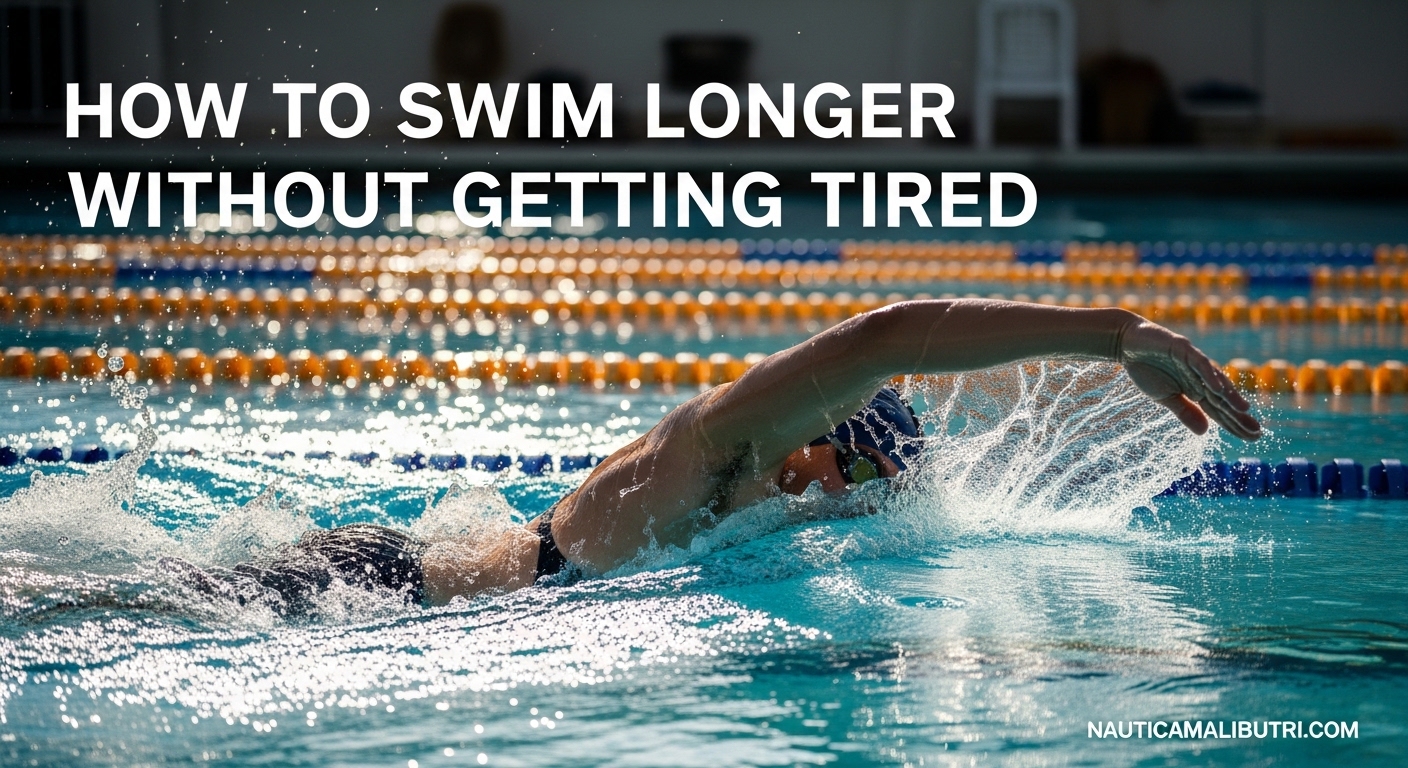
I remember the first time I tried to swim continuously for more than 50 meters. My lungs were burning, my legs felt like anchors, and I had to grab the wall after just one lap. If you are reading this, you probably know exactly how that feels.
Learning how to swim longer without getting tired is one of the most rewarding skills you can develop as a triathlete. Unlike running or cycling, where you can stop and catch your breath without consequence, swimming requires you to manage your energy while partially submerged with limited air access. It is a unique challenge that demands both physical and technical mastery.
The good news? Swimming endurance is not about being born with some special aquatic gene. It is about technique, breathing control, and smart training. After years of coaching triathletes and spending countless hours in the pool myself, I have seen complete beginners transform into confident open water swimmers. The transformation happens when you understand why swimming tires you out so quickly and what specific changes will fix it.
Table of Contents
How to Swim Longer Without Getting Tired: The Foundation
Before diving into specific techniques, here is the fundamental truth about how to swim longer without getting tired: you need to waste less energy, not build more fitness. Most beginners exhaust themselves because they fight the water instead of working with it. Swimming is about efficiency first, endurance second.
The foundation of endless swimming stamina rests on four pillars:
- Controlled breathing – Getting oxygen efficiently without disrupting your stroke
- Streamlined body position – Reducing drag so you move forward with less effort
- Efficient kicking – Using your legs for balance and propulsion without draining energy
- Smart pacing – Finding a sustainable rhythm you can maintain indefinitely
Get these four elements right, and you will be shocked at how far you can swim without stopping. Let us break each one down so you can apply them immediately.
Breathing Technique: The Secret to Swimming Endurance
Ask any swim coach what separates struggling beginners from smooth swimmers, and they will tell you the same thing: breathing. Proper breathing technique is the single biggest factor in how to swim longer without getting tired. When you breathe inefficiently, you create resistance, disrupt your rhythm, and fail to get enough oxygen to your muscles.
The most common mistake I see is explosive breathing. This happens when you hold your breath underwater, then gasp for air when you turn your head to breathe. Your body panics, your stroke falls apart, and you tire out within minutes. The solution is trickle breathing.
Master Trickle Breathing
Trickle breathing means exhaling continuously underwater through your nose and mouth. By the time you turn your head to breathe, you have already emptied your lungs. This creates space for a quick, calm inhale without gasping. You spend less time with your head turned, which keeps your body position stable and reduces drag.
Practice this drill: stand in chest-deep water, bend forward until your face is in the water, and practice exhaling a steady stream of bubbles. When you need air, lift your head just enough to inhale, then immediately put your face back in the water and start exhaling again. Do this for 30 seconds at a time until it feels automatic.
Bilateral Breathing for Balance
Bilateral breathing means breathing to both sides, typically every three strokes. This keeps your stroke balanced and prevents the muscle imbalances that develop when you only breathe to your dominant side. For triathlon swimmers, bilateral breathing is essential in open water because waves and sunlight may force you to breathe to one side or the other.
If bilateral breathing feels challenging at first, start with a 2-2 pattern: two strokes breathing right, two strokes breathing left. Gradually work toward breathing every three strokes as your comfort increases.
Exhale Fully Underwater
Many beginners hold their breath underwater without realizing it. This creates CO2 buildup, which triggers that urgent need to breathe even when you have plenty of oxygen remaining. Focus on emptying your lungs completely before you rotate to breathe. A full exhale makes your inhale automatic and effortless.
Body Position: Minimize Drag, Maximize Efficiency
Water is about 800 times denser than air. This means any flaw in your body position creates enormous resistance that you have to overcome with every stroke. Swimming longer without getting tired requires you to become as streamlined as possible.
Think of your body like a seesaw in the water. Your head acts as the fulcrum. If your head lifts, your legs sink. If your head stays neutral and your eyes look down, your hips and legs rise toward the surface. This is the key to reducing drag.
Neutral Head Position
Your head should feel heavy in the water, with water hitting you at the hairline or just above your goggles. Your eyes should look straight down at the pool floor, not forward. This position keeps your spine aligned and your hips high. When I coach swimmers, I often tell them to imagine they are trying to press their chest into the water while keeping their head relaxed.
Hip Height Matters
Sinking hips and legs are the biggest source of drag for most swimmers. When your legs drop, you are essentially dragging an anchor through the water. High hips create a narrow profile that slices through the water with minimal resistance.
One drill that helps: push off the wall in a streamlined position with your arms extended, and hold that tight, narrow shape for as long as possible. Notice how much farther you glide when your body is aligned. That is the feeling you want to maintain while swimming.
Body Rotation
Rotating your body from side to side helps you swim longer without getting tired because it engages your back muscles instead of just your shoulders. This distributes the workload across larger muscle groups. Aim to rotate about 45 degrees on each side, driven by your hip rotation rather than shoulder twisting. Your hips should lead, and your shoulders should follow.
Kick Efficiency: The Two-Beat Kick for Endurance Swimming
Here is a truth that surprises many triathletes: your kick provides only about 10-15% of your propulsion in freestyle. The rest comes from your arm pull. Yet many swimmers exhaust themselves with a frantic, continuous kick that burns through their limited oxygen supply.
For endurance swimming and triathlon, the two-beat kick is your best friend. Instead of kicking six times per stroke cycle, you kick twice. Each kick coincides with your hand entry on the opposite side. This creates a rhythm: right hand enters, left leg kicks. Left hand enters, right leg kicks.
Why the Two-Beat Kick Works
The two-beat kick keeps your legs near the surface for minimal drag without consuming much energy. It provides just enough propulsion to counterbalance your arm pull and maintain body rotation. Your legs become stabilizers rather than primary engines, saving your energy for the bike and run legs of your triathlon.
Practice the two-beat kick with a pull buoy between your legs. Focus on the timing: hand entry triggers the opposite leg kick. Once you feel the rhythm, try it without the pull buoy. Your legs should stay relaxed and floppy, not rigid and churning.
Common Kicking Mistakes
Bending your knees excessively is the most common kicking error. This creates massive drag and burns energy. Your kick should originate from your hips with relatively straight legs, like a gentle flutter rather than a bicycle pedal motion. Keep your ankles flexed and your feet just breaking the surface.
Stroke Technique: Early Vertical Forearm and the Catch
Once your breathing, body position, and kick are efficient, you can focus on getting more power from each stroke. The catch phase is where you anchor your hand in the water and begin pulling yourself forward. Done well, it multiplies your distance per stroke. Done poorly, you slip through the water without gaining traction.
The Early Vertical Forearm technique, commonly called EVF, is the gold standard for efficient swimming. Instead of dropping your straight arm straight down, you bend at the elbow while keeping your hand and forearm vertical early in the pull. This creates a paddle with your forearm that catches more water.
Developing the Catch
Start your catch immediately after your hand enters the water and extends forward. Tip your fingertips down while your elbow stays high and forward. Your hand should move downward and outward, never crossing under your body centerline. Imagine you are reaching over a barrel and pulling yourself over it.
A good drill for this: swim with your fists closed. This forces you to engage your forearm in the pull since your hand is not providing much surface area. When you open your hands again, you will feel the difference in catch pressure.
Body Rotation and the Pull
Your pull and body rotation should work together. As your right arm pulls, your left hip should drive downward. As your left arm pulls, your right hip drives down. This counter-rotation creates power and keeps your stroke long. A long stroke with good rotation lets you swim longer without getting tired because you glide farther between strokes.
Pacing Strategy: Start Slow to Go Long
Swimming is unique among the three triathlon disciplines because you cannot see your pace easily and you cannot slow down without sinking. Many beginners start too fast, feel great for 50 meters, then hit a wall and struggle to finish.
The key to swimming longer without getting tired is starting slower than you think you should. Your first lap should feel almost too easy. You should be able to hold a conversation, though you would not want to. This easy start preserves your energy and lets your body adapt to the water.
Finding Your Sustainable Pace
Your sustainable pace is the speed you can maintain while keeping your breathing controlled, your stroke long, and your heart rate steady. To find it, swim 100 meters and focus on technique over speed. Count your strokes per length. Note how you feel. Then swim another 100 trying to take one fewer stroke per length while maintaining the same time. The stroke that feels easier at the same speed is your efficient pace.
Negative Split Training
Negative splitting means swimming the second half of a distance faster than the first half. Practice this in training to build pacing discipline. Start your 200-meter swims easy and controlled, then build to a strong finish. This teaches your body to swim efficiently when fresh and powerfully when tired.
For triathletes, CSS pace (Critical Swim Speed) is a useful benchmark. It is approximately the pace you could sustain for a 1500-meter time trial. Training at CSS pace builds your threshold endurance without destroying you for the bike and run.
Progressive Training: Building Swim Stamina Over 4 Weeks
Technique improvements will get you surprisingly far, but to swim truly long distances without stopping, you need progressive training that gradually expands your comfort zone. Your body adapts to the demands you place on it, but only if those demands increase gradually.
The Reddit swimming community consistently emphasizes this point: slow down and extend your distance bit by bit. The beginners who succeed are the ones who build patiently, not the ones who try to swim a mile on day one.
Week 1: Foundation (10 to 15 minutes)
If you currently exhaust yourself after 50 meters, start here. Break your swimming into short repeats with rest. Try 10 sets of 50 meters with 30 seconds rest between each. Focus entirely on technique, not speed. If 50 meters is too far, do 20 sets of 25 meters with 20 seconds rest.
Your goal this week is swimming form that feels relaxed. You should finish each repeat feeling like you could do another one. If you are gasping at the wall, you are going too fast.
Week 2: Extending (15 to 20 minutes)
Reduce your rest intervals and start combining repeats. Try 5 sets of 100 meters with 45 seconds rest, or 8 sets of 75 meters with 30 seconds rest. Practice your two-beat kick and bilateral breathing on these longer repeats. You are teaching your body to maintain technique while slightly fatigued.
Add one swim-specific drill each session. Spend 100 meters practicing catch-up stroke to work on your pull timing. Spend another 100 meters with a pull buoy focusing on body rotation.
Week 3: Building (20 to 30 minutes)
Now you start stringing longer pieces together. Try 3 sets of 200 meters with 60 seconds rest. Or attempt your first continuous 400-meter swim at an easy pace. Many swimmers have their breakthrough moment in week three when they realize they can actually keep going.
Include a test set this week: swim 400 meters for time while maintaining your technique focus. Record your time and stroke count per length. This gives you a baseline to measure progress.
Week 4: Consolidating (30 to 45 minutes)
By now you should be capable of swimming 30 minutes continuously at a relaxed pace. Try 2 sets of 400 meters with 90 seconds rest, or a continuous 800-meter swim. Practice sight breathing every 6 strokes to prepare for open water.
Include intervals at CSS pace this week. Swim 8 sets of 100 meters at your threshold pace with 20 seconds rest. This builds your ability to hold form when working harder.
Making It Stick
The key to this progression is consistency. Three swims per week will transform you faster than one long swim on weekends. Your body needs regular exposure to adapt. Missing a week sets you back more than you would expect.
Track your progress in a simple notebook or app. Record total distance, how you felt, and any breakthrough moments. Seeing your improvement on paper keeps you motivated when the water feels challenging.
Triathlon-Specific Tips: Open Water and Race Day
Pool swimming and open water swimming are different sports. The techniques that work in a calm, lane-lined pool need adaptation for race day conditions. As a triathlete, you need to know how to swim longer without getting tired while dealing with waves, currents, and other swimmers.
Wetsuit Buoyancy Advantage
Most triathlons allow wetsuits when water temperature permits. A wetsuit provides buoyancy that keeps your hips and legs high without any effort from you. This dramatically reduces drag and saves energy. However, wetsuits also restrict your shoulder rotation slightly and can feel constricting around the chest.
Practice swimming in your wetsuit before race day. Get used to the feeling of floating higher in the water. Focus on a slightly wider hand entry to accommodate the reduced shoulder mobility. The buoyancy advantage is substantial, often improving swim times by 5 to 10 percent.
Sight Breathing Technique
In open water, you need to see where you are going. Sight breathing means lifting your eyes forward to spot buoys or landmarks while taking a breath. The key is keeping this motion quick and low. Lift just your eyes, not your whole head. Look forward while inhaling, then immediately return to neutral position.
Practice sight breathing in the pool by looking up at the end wall every 6 strokes. Time it so you are looking forward as you would in open water. The more efficient your sight breathing, the less energy you waste lifting your head.
Drafting for Energy Conservation
Drafting in open water can save enormous energy. Swimming directly behind another swimmer reduces your drag by about 20 percent. Swimming beside someone at their hips reduces drag by about 10 percent. In a race, find feet that are slightly faster than your solo pace and stick with them.
Practice drafting in training when the pool is crowded. Swim close behind another swimmer in your lane, staying in their wake. Get comfortable with the proximity so it does not feel strange on race day.
Mental Techniques: Staying Relaxed in the Water
Physical fatigue is only part of why swimmers get tired. Mental tension drains energy just as surely as muscle exertion. The Reddit swimming community repeatedly mentions anxiety as a major cause of early fatigue. When you are nervous, you hold your breath, tighten your muscles, and fight the water.
Swimming longer without getting tired requires a calm, almost meditative mindset. Your face is in the water. You cannot talk to anyone. You are alone with your thoughts and your breathing. This environment either creates panic or peace, depending on your mental approach.
Breathing as Meditation
Turn your stroke rhythm into a meditation practice. Focus entirely on the sound of your bubbles, the feeling of water flowing past your skin, and the regular pattern of your breathing. When your mind wanders to how tired you feel or how far you have to go, gently bring it back to the present moment.
Count your strokes to 100, then start over. This gives your mind a simple task that keeps it occupied without requiring much attention. Many distance swimmers report entering a flow state around the 10-minute mark where swimming feels automatic and effortless.
Progressive Relaxation
During your swim, consciously relax each body part. Start with your face: are you clenching your jaw? Relax it. Move to your neck and shoulders: are they hunched up near your ears? Let them drop. Check your hands: are they in tight fists? Open them slightly. Work through your body every few minutes, releasing tension you do not even realize you are holding.
A relaxed swimmer uses dramatically less energy than a tense one. Your stroke lengthens, your breathing deepens, and you can swim indefinitely.
Frequently Asked Questions
How to swim lengths without getting tired?
Start by swimming slowly with proper technique focus. Use trickle breathing to maintain oxygen flow, keep your body streamlined with hips high, and employ a relaxed two-beat kick. Break your swim into manageable intervals with short rests, gradually reducing rest time as your endurance improves. Consistency matters more than intensity.
What is the 80 20 rule in swimming?
The 80/20 rule means spending 80% of your training time at low intensity and 20% at high intensity. For swimming endurance, this translates to mostly easy, technique-focused swimming with occasional hard intervals. This approach builds aerobic fitness while allowing adequate recovery, preventing the chronic fatigue that comes from training too hard too often.
What is the 25/10 rule in swimming?
The 25/10 rule is a safety guideline suggesting that after swimming 25 meters underwater, you should rest for at least 10 seconds before beginning another underwater lap. This prevents shallow water blackout by allowing CO2 to clear and oxygen levels to normalize. Never swim underwater alone or push breath-hold limits without proper training and supervision.
How can I prevent fatigue during long swims?
Prevent fatigue by focusing on technique efficiency rather than speed. Maintain a sustainable pace from the start, use bilateral breathing for balanced stroke mechanics, and practice mental relaxation techniques. Stay hydrated before swimming and consider electrolyte balance for swims over 30 minutes. Build distance gradually over weeks rather than attempting dramatic increases in single sessions.
Why do I get tired after swimming one lap?
Getting tired after one lap typically indicates inefficient technique, breath-holding underwater, or excessive kicking. Most beginners hold their breath instead of exhaling continuously, creating CO2 buildup that triggers panic breathing. Sinking legs from poor body position also increase drag dramatically. Slow down, focus on exhaling underwater, and work on keeping your hips near the surface.
Conclusion
Learning how to swim longer without getting tired is a journey of small improvements that compound over time. Each technique refinement, from mastering trickle breathing to perfecting your two-beat kick, adds seconds of comfort to every lap. Each week of consistent training expands what feels possible.
The triathletes I coach who make the fastest progress share one trait: they approach swimming with patience and curiosity rather than frustration. They celebrate small wins, like swimming their first 200 meters without stopping or finally feeling their hips float to the surface. They understand that swimming efficiently is a skill that takes time to develop, and they trust the process.
Start with the techniques in this guide. Focus on your breathing this week. Work on your body position next week. Add the progressive training plan when you are ready. Before you know it, you will be swimming distances that once seemed impossible, feeling strong and controlled in the water. The pool or open water will transform from a place of exhaustion to a place of flow. That is the promise of efficient swimming, and it is available to anyone willing to learn.