
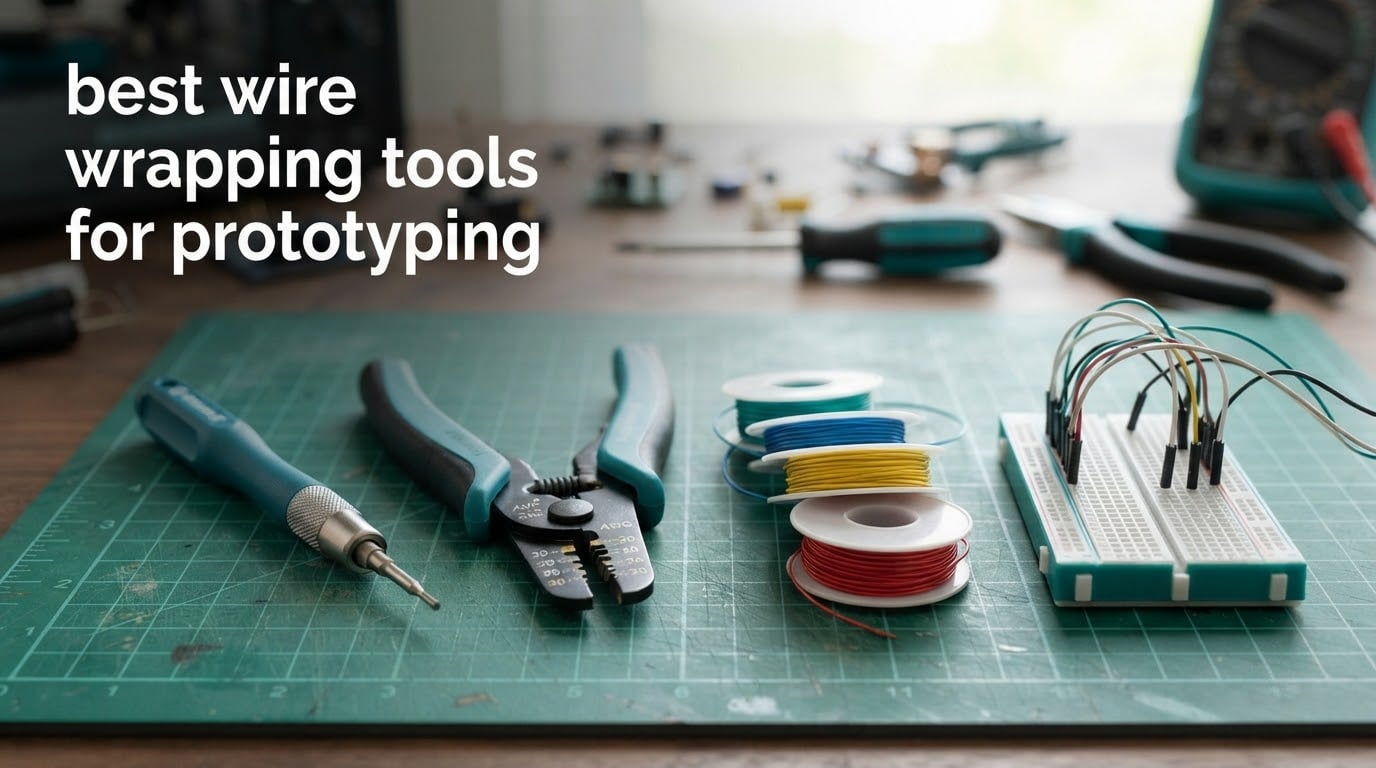
Wire wrapping is a solderless connection method where 30 AWG solid wire with thin Kynar or Tefzel insulation is coiled tightly around the sharp corners of a square terminal post using a dedicated wrapping tool. The tool shears the insulation and presses the bare conductor into the post, shearing off oxide and creating a gas-tight metal-to-metal contact that is stronger and fully reversible. If you have been searching for the best wire wrapping tools for prototyping, this guide covers every tool in the chain, from the wrap tool itself to the stripper that feeds it.
Wire wrap is still very much in use. Telecom technicians, field service engineers and instrument makers rely on it daily, and a growing number of hobbyists use it for dev board headers, DIP sockets and mechanical keyboard builds. The reason is simple: a wrapped connection takes seconds, needs no iron, and can be unwrapped and redone with a tool that costs almost nothing. That matters enormously on a prototype board, where a third of the connections you make today will be moved or deleted tomorrow.
We spent weeks working through the tools on this list, matching bits to sleeves, checking wire gauge coverage and watching which tools produced consistent tension without the user pressing down. What follows is the full roundup, followed by a buying guide covering wire gauges, wrap volume, bit and sleeve matching, and where to source replacement parts. If you are also building the mechanical side of a prototype, our picks for large format 3D printers for prototyping and vacuum forming machines for prototyping cover the enclosure and fixture side of the same workflow.
Table of Contents
Top 3 Wire Wrapping Tools for Prototyping in 2026

Klein Tools 11057
- Strips 20-30 AWG solid and 22-32 AWG stranded
- Precision ground stripping holes
- Shears 6-32 and 8-32 screws
- Coil spring self-opening

DOWELL 22-30 AWG
- Reaches 30 AWG fine wire
- Stainless steel construction
- Ergonomic TPE handle
- Spring-loaded

Hakko CSP-30-1
- Cuts and strips 30-20 AWG
- Combination stripper shear and pliers
- Metal stopper for partial opening
- Serrated plier nose
Best Wire Wrapping Tools for Prototyping in 2026
Every tool below is chosen on the same three criteria: does it reach 30 AWG without damaging the conductor, does it hold consistent tension, and is it something you can reach for without a manual. Prices change, so use the buttons to check current figures.
| Product | Specifications | Action |
|---|---|---|
| Klein Tools 11057 Wire Cutter Stripper |
|
Check Latest Price |
| DOWELL 22-30 AWG Wire Stripper |
|
Check Latest Price |
| Hakko CHP CSP-30-1 Wire Stripper |
|
Check Latest Price |
 ENGINEER PA-06 Precision Wire Stripper ENGINEER PA-06 Precision Wire Stripper |
|
Check Latest Price |
 ENGINEER PA-14 Precision Wire Stripper ENGINEER PA-14 Precision Wire Stripper |
|
Check Latest Price |
 iFixit Mandible Wire Strippers iFixit Mandible Wire Strippers |
|
Check Latest Price |
 EX ELECTRONIX Express 03WTE Wrap Tool EX ELECTRONIX Express 03WTE Wrap Tool |
|
Check Latest Price |
 EX ELECTRONIX Express 03WT2224 EX ELECTRONIX Express 03WT2224 |
|
Check Latest Price |
 Jonard Tools JIC-2030 Wire Stripper Jonard Tools JIC-2030 Wire Stripper |
|
Check Latest Price |
 KATA 7 Inch Precision Wire Stripper KATA 7 Inch Precision Wire Stripper |
|
Check Latest Price |
1. Klein Tools 11057 Wire Cutter and Stripper, Best All-Round Finishing Tool
Klein Tools 11057 Wire Cutter/Stripper, Made in USA, Heavy Duty Cutter for 20-30 AWG Solid and 22-32 AWG Stranded Wire
- Strips 30 AWG solid cleanly with no cut strands
- Heavy duty alloy steel with no play
- Coil spring self-opening action
- Strips
- cuts
- loops and shears screws
- Serrated nose for shaping and pulling
- Cutter section is adequate rather than excellent on heavier conductor
- Bulkier than dedicated precision strippers
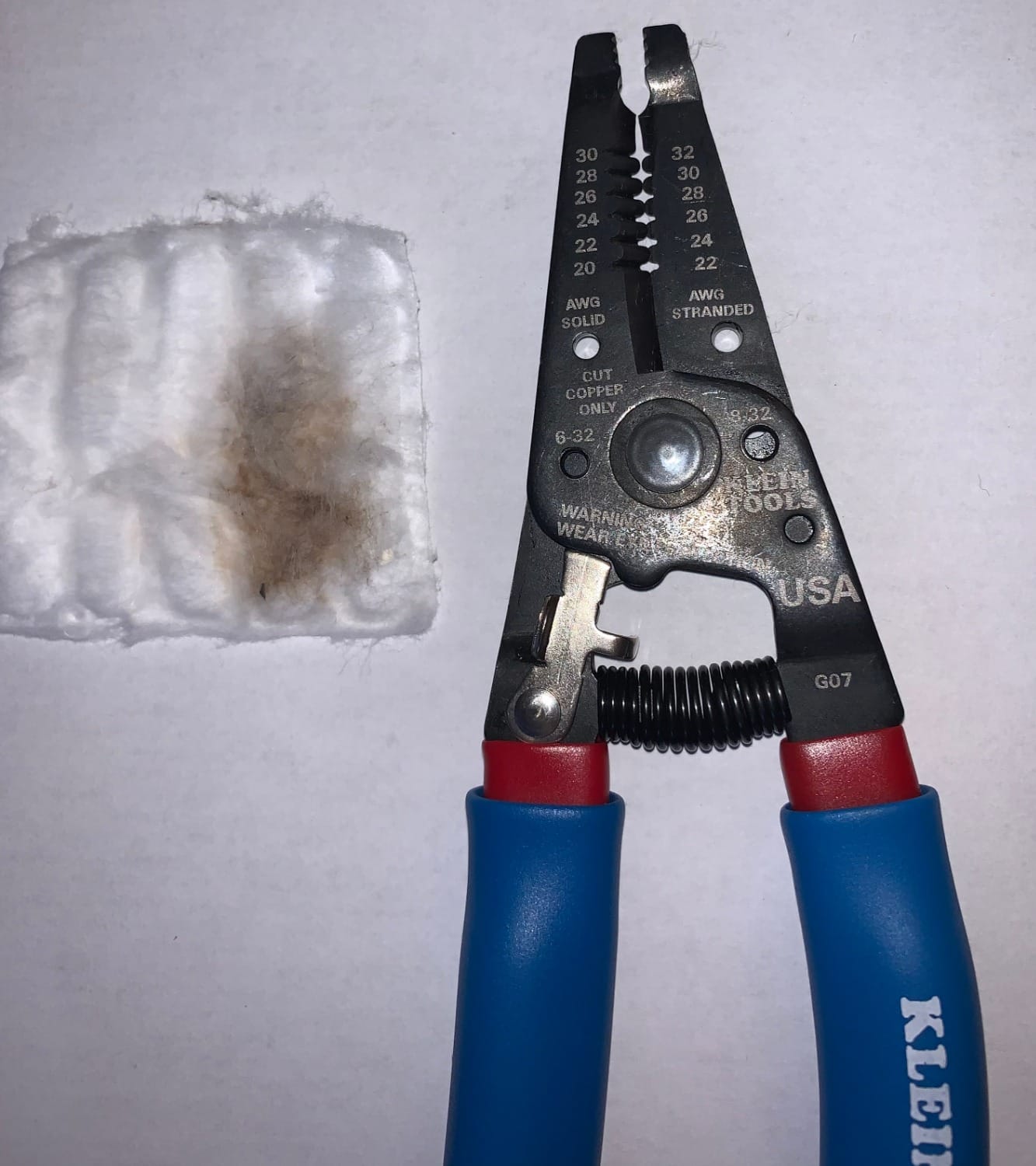
This is the tool we keep coming back to. It cuts, strips and loops 20-30 AWG solid wire and 22-32 AWG stranded wire, which means one tool covers 30 AWG Kynar for the wrap post and 28 AWG silicone for the lead going into a module. Over more than two thousand reviews the build quality is the thing people single out again and again: alloy steel, no play, no wobble in the handles.
The precision ground stripping holes are marked clearly enough to find the right gauge without guessing, and the coil spring gives fast self-opening action between strips. That spring matters more than it sounds, because on a dense prototype board you might make forty strips in a row and a stiff tool shows up in your hand long before it shows up in the joint.
What it does not have is a dedicated wrap function. This is a finishing tool, not a wrapping tool, and the reason it earns the top slot here is that it pairs with any wrap tool on the market. Our 30 AWG strips come out consistent in length every time, which is what keeps the finished wrap neat when seven turns of insulated wire are stacked up over the bare section.
It also shears 6-32 and 8-32 screws cleanly and has holes for forming loops. The serrated nose handles bending and pulling wire, which covers the mechanical side of a point-to-point board. If you are building a fixture with standoffs, the same tool handles the hardware.
Who the Klein 11057 suits
It suits almost anyone building electronics, not just wire wrap users. If you already own a wrap tool and are still cutting and stripping wire with scissors or a cheap side-cutter, this is the one replacement that removes the most annoyance per purchase.
For 30 AWG work specifically, the 20-30 AWG solid range covers Kynar and Tefzel, and the 22-32 AWG stranded range covers the tinned or multi-strand hookup you find on JST leads. Made in USA with a one year manufacturer warranty, it is a tool you can leave on a bench for years.
Who should skip it
Skip it if your only job is cutting 30 AWG solid on a project board and you work somewhere with no bench space. At 5.1 ounces and 12 inches long it is a full size electrician tool, not a pocket precision stripper, and the integrated cutter is described by owners as adequate rather than excellent on heavier conductors.
If you are working exclusively with hair-thin wire below 30 AWG, the stripping holes here do not go that fine. Look at the ENGINEER PA-14 instead, which is built the other way up around micro-thin wire.
2. DOWELL 22-30 AWG Wire Stripper, Budget Pick Stripper for 30 AWG
- Strips 22-24 AWG and finer wire without residue
- Reaches 30 AWG
- finer than most budget strippers
- Solid build with a good grip and tight spring recoil
- Gauge sizes marked on the cutting area
- Safety lock pops open on its own because there is no real catch
- Ships with light manufacturing oil on the metal parts
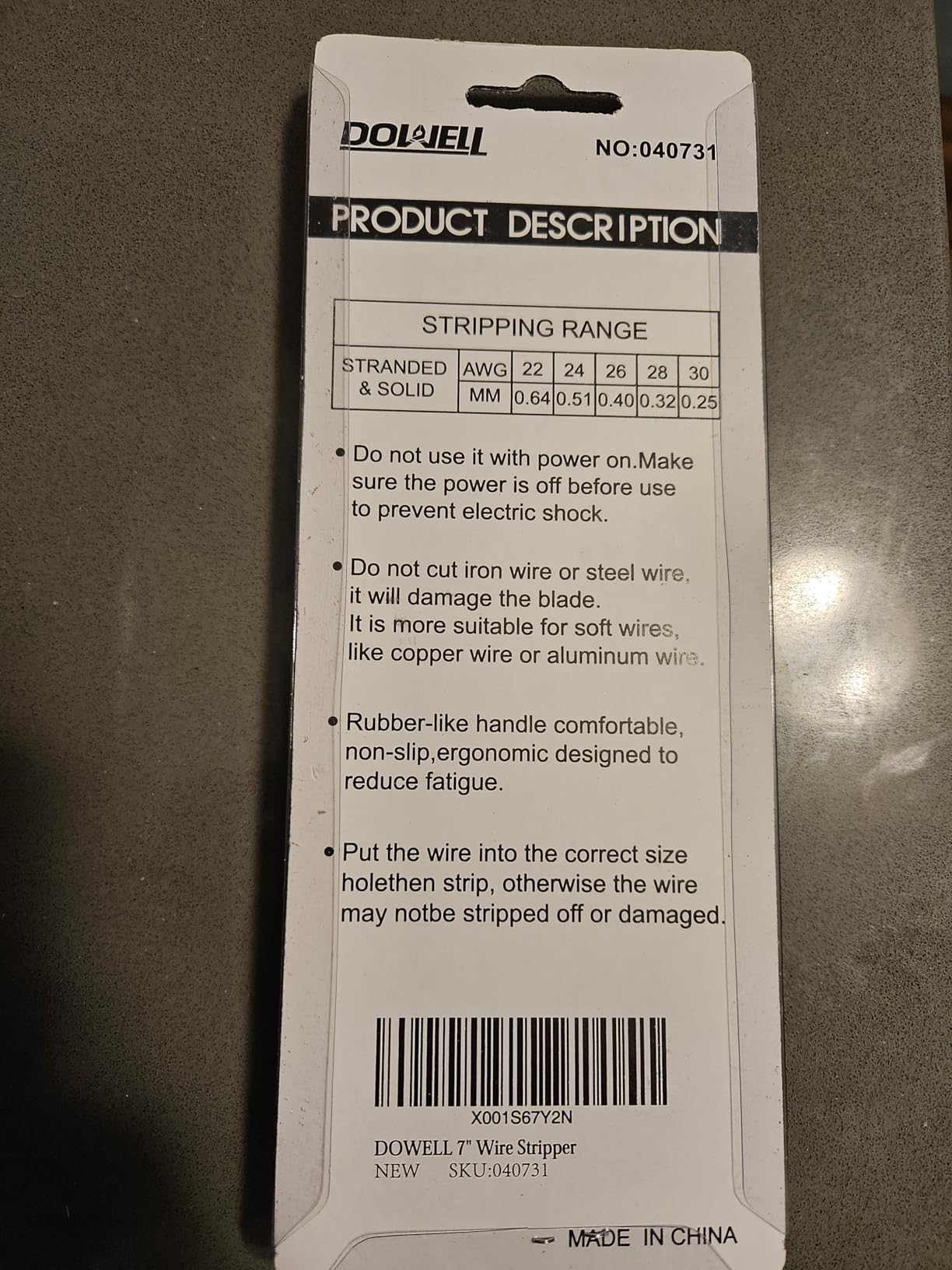
This is the answer to the most common complaint in beginner wire wrap threads, which is that a stripper which stops at 22 AWG is useless for prototype work. The DOWELL reaches 30 AWG and strips it cleanly, with no coating residue and no cut strands, which is exactly what Kynar and Tefzel need before the wire goes into a wrap bit.
Construction is stainless steel with an ergonomic TPE handle that reviewers praise for staying secure in wet or oily hands. The spring recoil is tight, gauge sizes are marked right on the cutting area, and the whole thing weighs 127 grams with a 7 inch length. For PCB work, guitar rewiring and general electronics bench tasks it does the job without a fuss.
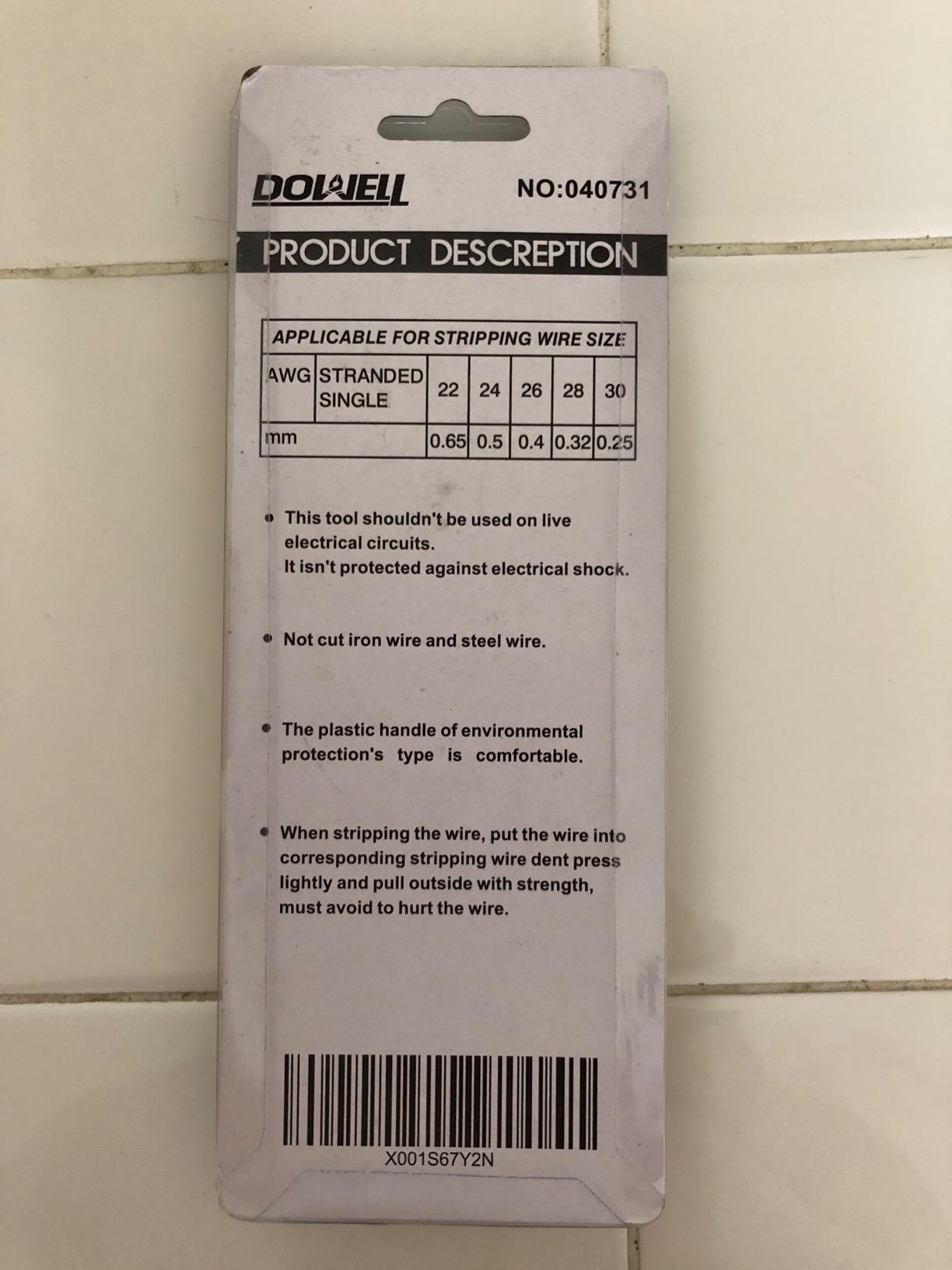
The one recurring physical flaw is the safety lock. Several owners note it releases spontaneously because there is no positive catch, which means the tool can open in a tool bag and blunt a jaw edge. Worth knowing, and easy to work around by keeping the stripper in a pouch rather than loose.
A few reviewers also mention light manufacturing oil on the metal parts out of the box. It wipes off, but strip your first few wires after wiping the jaws so the oil does not end up on an insulation layer you just cut.
When this is the right pick
Pick this when you are starting out and building a first bench, and when cost per tool matters more than heirloom durability. A single stripper that covers 22-30 AWG removes the most common early mistake, which is damaging a 30 AWG conductor before it ever reaches the wrap bit.
It is also the sensible second stripper to keep alongside a heavier duty tool, because a dedicated wrap workbench produces a lot of fine wire and no fatigue allowance. The model number HYT040731 and the marked gauge positions make it straightforward to compare against anything else you are considering.
When to look elsewhere
Look elsewhere if you want a tool that will live on a bench for a decade without a latch problem, or if you strip wire that is stripped by a machine anyway. The intermittent lock and the oil residue are minor, but they are the kind of detail that annoys you at hour four of a long session.
For working below 30 AWG, this does not go there. Move up the list to the ENGINEER PA-06 or the PA-14 depending on whether your wire is stranded or solid.
3. Hakko CHP CSP-30-1 Wire Stripper, Best Multi-Function Stripper
- Strips 30 AWG stranded without marring strands
- Soft rubber grips stay secure
- Very smooth spring action with no flex
- Metal stopper holds the jaws half-open
- Built-in shear and serrated pliers
- Embossed gauge numbers are hard to read
- Not intended for household or commercial power wiring
Hakko built this one for bench electronics and it shows. The CSP-30-1 combines a wire stripper, a shear and a set of serrated pliers in a 1.28 ounce body, and the review consensus is that it strips 30 AWG stranded cleanly with no snagged or marred strands on a single pull. That single-pull behaviour is the whole game when you are prepping fifty wires for a socketed board.
The detail nobody mentions in the listing but everybody notices in the hand is the metal stopper, which holds the handles part-open so you can work very thin wire without the jaws snapping shut on it. Combined with the soft rounded rubber grips and genuinely smooth spring action, it is the most comfortable of the three Hakko-style strippers we compared.
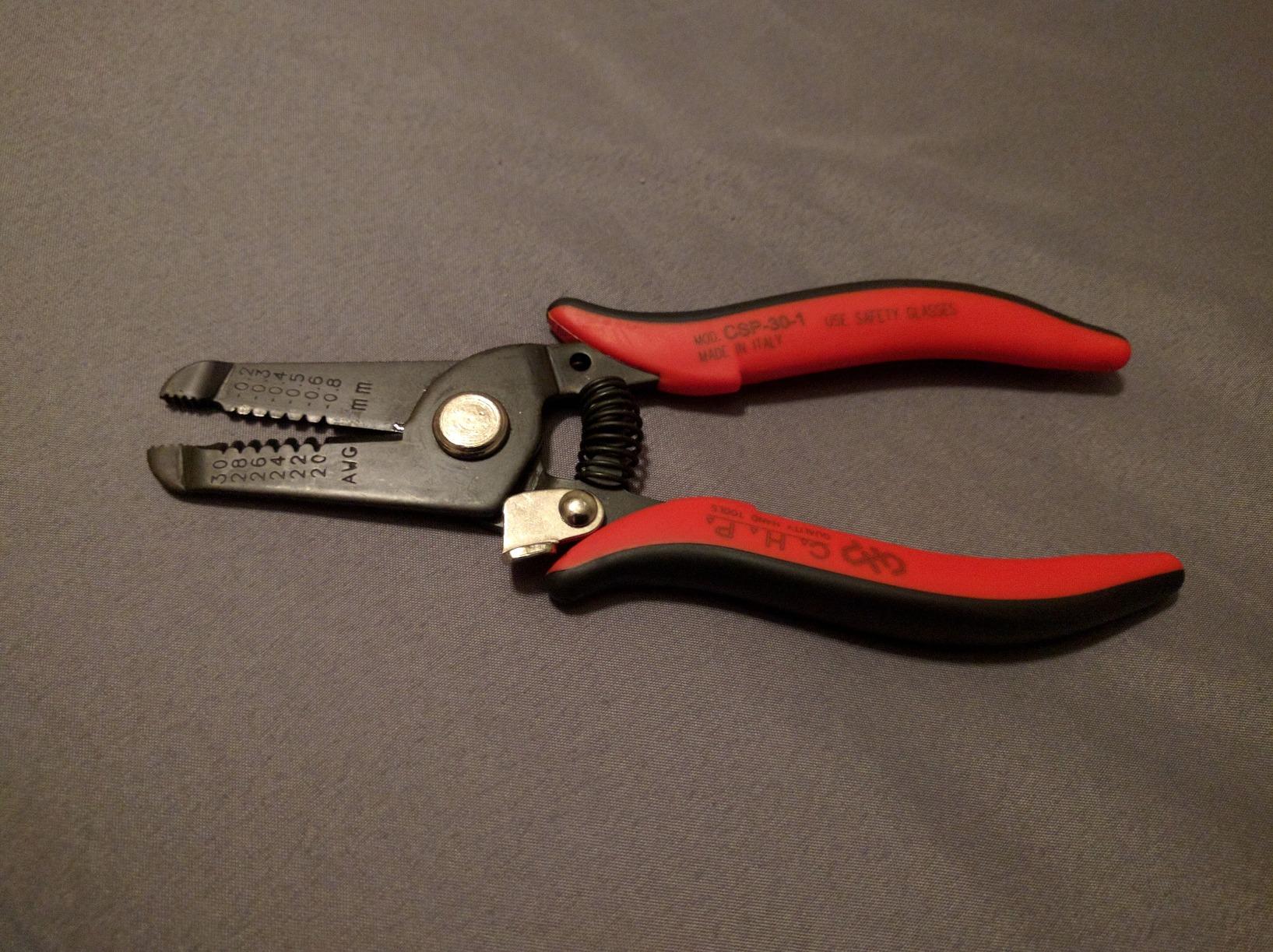
Technical notes worth carrying over to your buying decision: heat treated alloy steel, gauge sizes labelled on both sides of the jaws, and a serrated plier nose that also handles manual crimping. It weighs almost nothing, so it stays where your hand is.
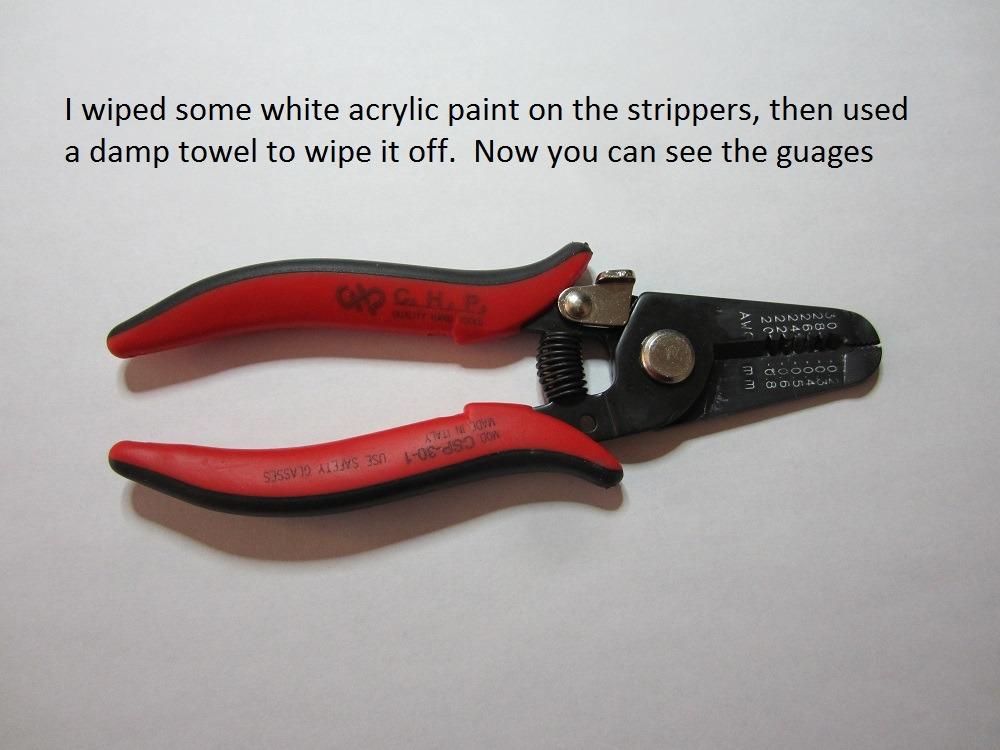
The compromise is legibility. The embossed gauge numbers are small and several owners flag them as hard to read without enhancement, so expect to check the chart a few times before the numbers are memorised. And the tool is explicitly not intended for household or commercial power wiring, which is correct but sometimes overlooked.
Where the Hakko earns its place
This is the one to buy if you want one tool at the bench that covers stripping, cutting and gripping without a second implement in your hand. On a point-to-point prototype board the serrated nose doubles as the tool for pulling a lead tight or bending a strain relief, so the workflow shortens noticeably.
It is also a strong match for mechanical keyboard builds, where you strip a lot of fine stranded wire, form loops and trim close to the case. The half-open stopper keeps your strips short and consistent, and a 30-20 AWG range covers the switch wiring as well as the row-to-row jumpers.
Who should pass
Pass if you work almost exclusively with solid 30 AWG Kynar on a wrap post, because a wrap tool and a dedicated precision stripper will serve that one task better. This is a broad general purpose tool rather than a specialist one, and specialists win on the specific job.
Pass also if tiny embossed markings frustrate you. The gauges are on both sides, but they are small, and if you will be reading them under a magnifying lamp the ENGINEER models print larger.
4. ENGINEER PA-06 Precision Wire Stripper, Best for 28 AWG and Silicone Wire
- Strips without nicking or chewing strands
- Handles silicone
- PTFE and FEP insulation
- Light smooth spring action reduces fatigue
- Rear cutter is genuinely usable
- Correctly aligned jaws out of the box
- Gauge markings are small at a glance
- No protective case for the precision jaws
The PA-06 is the stripper we reach for when the wire stops being Kynar. It handles solid AWG 28-16 and stranded AWG 30-18, which pulls in silicone, PTFE and FEP insulated wire from 28 AWG to 20 AWG. That range is exactly the territory between a 30 AWG wrap lead and a heavier hookup run, and reviewers consistently call out that it removes insulation without nicking or chewing the copper.
What makes it feel like a professional instrument is the jaw quality. High carbon steel alloy with exceptionally sharp edges, correctly aligned straight out of the box, and spring pressure light enough that you can do hundreds of strips without your hand complaining. The oil resistant thermoplastic rubber handles are marked RoHS compliant and measure 175mm by 50mm at 134 grams.
Two honest downsides. The gauge markings are printed small, so plan on learning the positions rather than reading them mid-build. And there is no protective case, which means the precision jaws live exposed in a toolbox where a stray pair of pliers can do real damage to an edge you cannot replace.
One further note from owners: the printed gauge range applies to stranded wire, and solid conductor sizes are not separately marked. Check the chart once before your first session rather than assuming the number you need is printed on the tool.
Why this sits at number four
It ranks here because of how rarely the bottom of the 30 AWG range is needed. If your prototyping is standard 30 AWG wrap work, the simpler tools above cover it at a fraction of the outlay. This is the upgrade that pays off the moment you add a silicone jumper or a PTFE insulated sensor lead.
For anyone building with dev boards, this is the tool that keeps a from b to a to MCU clean. Reviewers report the rear cutter is genuinely usable rather than decorative, which saves carrying a second cutter for trimming leads after the wrap is in place.
Who should skip it
Skip it if you are on a strict budget and only ever handle 30 AWG solid wire. Nothing in the tool is wasted, but the 28-16 solid range is range you may never touch, and the exposed precision jaws are an argument for a safer storage arrangement than most benches have.
Skip it if you need to go finer than 30 AWG stranded, or below 28 AWG solid. That is the PA-14 territory, and the two are not interchangeable.
5. ENGINEER PA-14 Precision Wire Stripper, Best for Micro-Thin Wire
ENGINEER PA-14 Precision Wire Stripper for Micro-Thin Wire Made in Japan
- Strips down to 34 AWG with no nicks under magnification
- Extremely sharp jaws with no drag
- Well balanced spring pressure
- Comfortable over long sessions
- Cuts and grips as well as strips
- Some units have undersized smallest slots that sever the wire
- Markings show core diameter in mm not cross-section
- Hanger slot is too narrow for a bench hook
Where the PA-06 covers the mainstream, the PA-14 goes to the edge. It strips stranded copper wire from AWG 34 to AWG 22 and solid wire from AWG 32 to AWG 20, with a high carbon steel jaw set and a clean rounded finishing edge. Users with electronics and audio repair backgrounds describe stripping hair-thin wire with no conductor damage, and several say it outperforms other well-regarded strippers at cutting precision.
For wire wrap work specifically, the AWG 32-20 solid range is the relevant one. It covers 30 AWG Kynar and Tefzel with room to spare on the fine end, and it takes 28 AWG comfortably, so one tool serves both of the gauges most prototypes use. The jaws are sharp with no resistance or dragging during the pull, and the spring pressure is well balanced for delicate work.
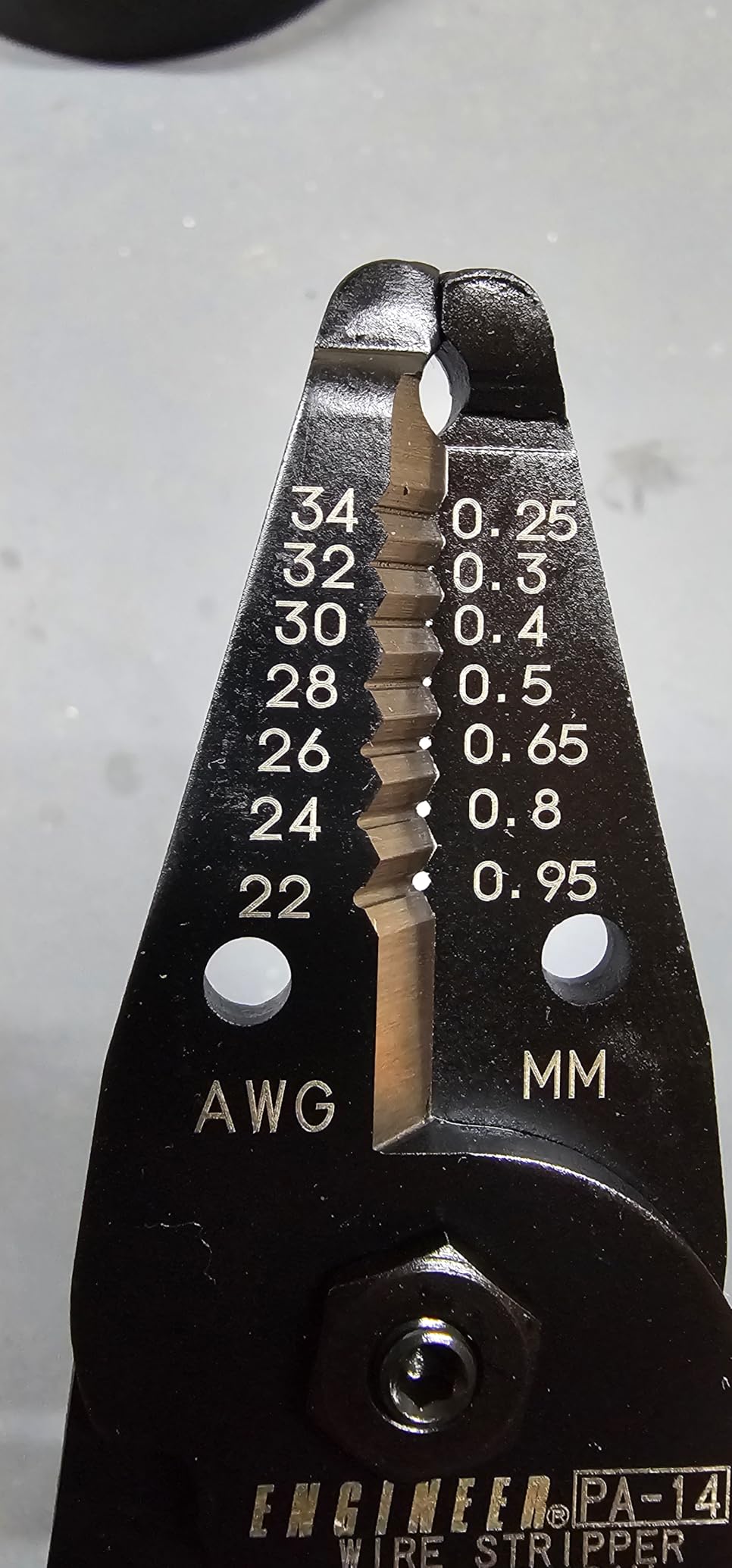
There is a real caveat in the reviews about the smallest slots. Some units have undersized bottom slots that sever the wire when fully closed, so treat the bottom of the range as something to test with a sacrificial length before you commit an important lead to it. It is a minority report, but it is specific enough to act on.
Also worth knowing: the markings on the right side show core diameter in millimetres rather than cross-section, which confuses people who read AWG markings all day. And the hanger opening is too narrow for a standard bench hook, so it needs a separate ring if you want it on a pegboard.
When the PA-14 is the right tool
It is right when your board contains hair-thin wire rather than just thin wire. Fine enamel, magnet wire, headphone rebuilds, small sensor harnesses and audio crossover work all fall in that band, and a stripper that reaches 34 AWG stranded removes the frustration of improvising a way to strip it.
It is also the more forgiving of the two ENGINEER options on battery and low-voltage harness work, because the 22 AWG stranded ceiling matches the leads you find on small packs. Reviews mention it cuts and grips as well as strips, so it earns its bench space.
Who should pick the PA-06 instead
Pick the PA-06 instead if you want 28-16 AWG solid range, or if small embossed-versus-printed markings bother you, or if you are working with silicone and PTFE insulation in the 20 AWG band where the PA-06 is more at home.
Also pick it if you strip hundreds of wires a session and hand comfort across a long stretch is the deciding factor. The two share the same 175mm body and 134 gram weight, so the difference is purely the jaw range and the finish edge.
6. iFixit Mandible Wire Strippers, Best for Repair Focused Benches
iFixit Mandible Wire Strippers – Auto-Open Latch for Electronics Repair
- Strips 30-10 AWG cleanly without nicking the copper
- Compact and ergonomic versus trade strippers
- Spring-loaded auto-reset reduces fatigue
- Rubberized handles give precision control
- Built-in cutter and small plier nose
- Lifetime manufacturer guarantee
- Locking latch can pop open in a crowded tool bag
- Not suitable for thick or heavy industrial cable
The Mandible is built by a repair company for repair benches, and it shows in the shape. At 3.2 ounces it is noticeably more compact than strippers designed for house or HVAC wiring, and electronics repair users rate it well for that reason. The jaws are sharp and well aligned, cutting, stripping and bending 30-10 AWG wire without harming the conductor once you select the correct slot.
The auto-open latch is the feature repair users mention most. After each use the handle resets automatically, which makes it quicker than automatic strippers of similar cost, and the spring-loaded action reduces hand fatigue during repetitive rework. Small plier grips at the nose handle shaping, and the rubberized handles give real control on fine wire.
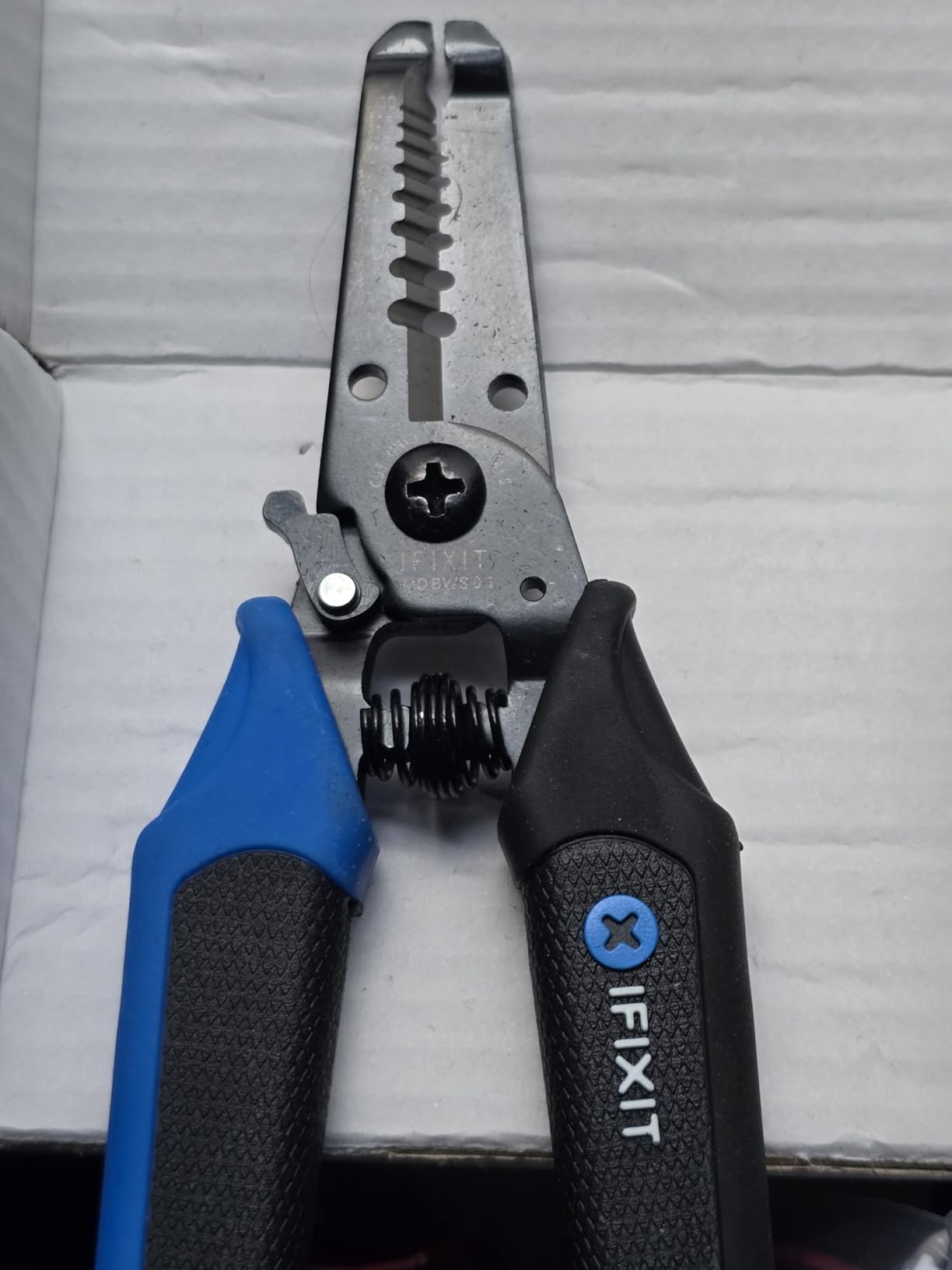
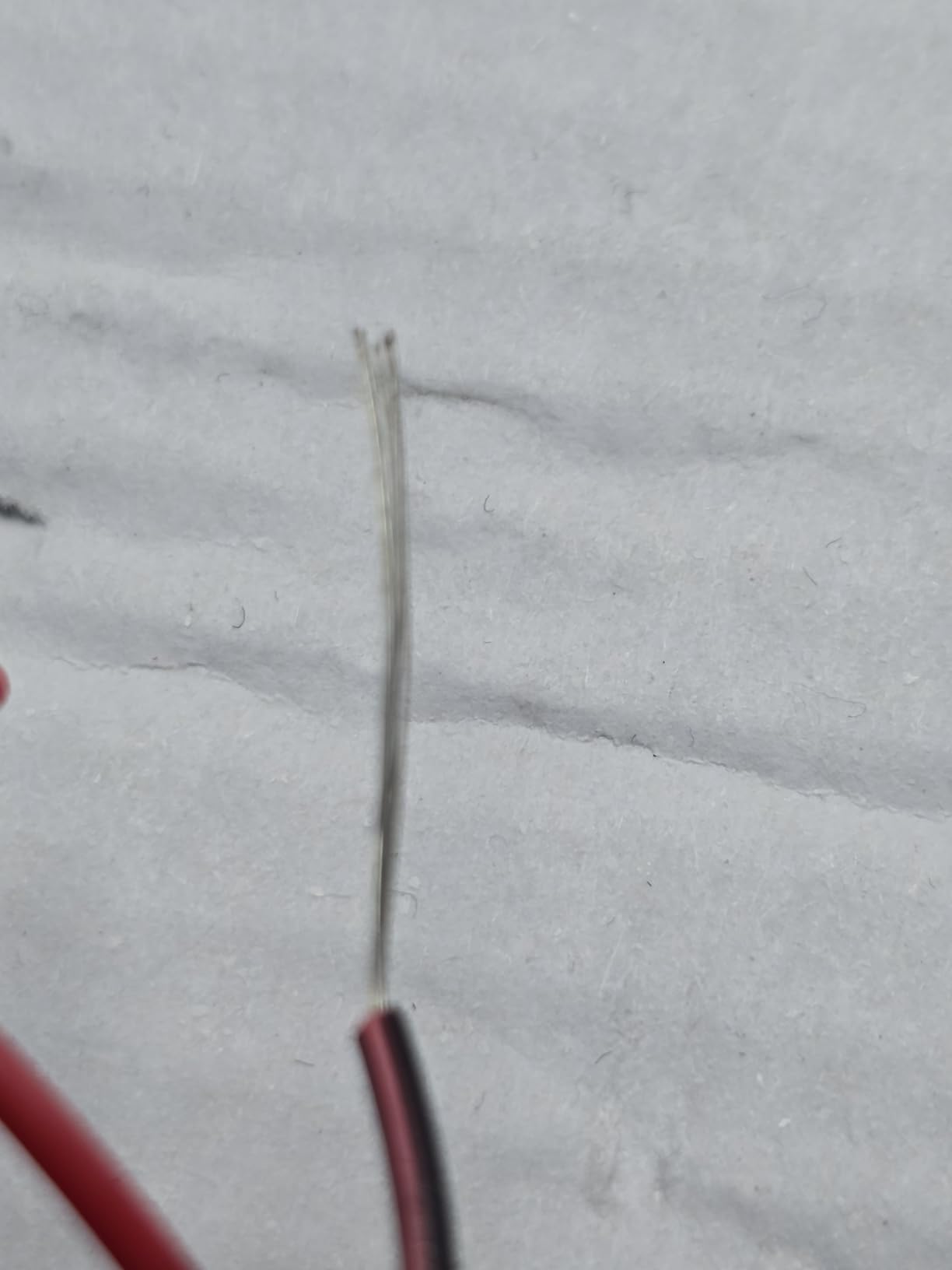
It is backed by a lifetime manufacturer guarantee, which is a meaningful difference from the budget strippers on this list when you are standing at a bench eight hours a day. The 30 AWG slot strips Kynar cleanly, and the wider range means the same tool handles a heavier feed to a module without changing implements.
Two limits to plan around. The locking latch can disengage on its own inside a crowded tool bag, and the tool is not suitable for thick or heavy industrial cable. If your bench sees mains work as well as signal work, you will want a second tool for that.
Why repair benches like it
Repetition is the reason. On a repair teardown you may strip, cut and bend the same gauge dozens of times, and a self-resetting handle removes the small thumb action that adds up over a long session. Compact size matters too, because a repair bench is crowded and a short tool is easier to control over a laptop battery or a phone board.
For a prototyping setup that doubles as a repair setup, the compound plier nose and built-in cutter cover breadboard and connector work without a second implement, and the guarantee removes the replacement anxiety that comes with a cheaper precision stripper.
Who should skip it
Skip it if heavy cable is part of the work, and skip it if you need a stripper you can drop in a pocket without thinking about it. The 30-10 AWG range is the design centre, so anything heavier is out of scope and anything much lighter needs the ENGINEER pair.
Some owners also report needing practice to select the right gauge slot, which is a fair warning for anyone new to fine wire. Read the slot markings before your first strip rather than working them out on a good wire.
7. EX ELECTRONIX Express 03WTE Wire Wrap Tool, Best All-in-One Wrap Tool
Wire Wrap Tool for 28 Gauge and 30 Gauge by EX ELECTRONIX Express
- Wraps
- strips and unwraps in one hand tool
- Produces tight dense point-to-point connections
- No soldering so prototypes stay reworkable
- Handles temporary connections to standard pin headers
- Built-in stripper is awkward and often unusable
- Needs practice to avoid catching the component lead
- Some buyers report 30 AWG only despite listing claims
- Applying force breaks the wire
Most of this roundup is stripping and finishing, but this is the tool that actually makes the connection. The 03WTE strips, wraps and unwraps, and it is built for AWG 30 wire on a .025 inch square post, which is the standard wrap terminal geometry used on wire wrap IC sockets, project boards and 0.1 inch headers. No soldering is involved, so every joint on your prototype stays reversible.
Owners report that it makes point-to-point prototype wiring much faster than tweezers or soldering, producing tight, dense connections, and several describe it as transformative for solderless prototyping. It is also useful for vintage audio repair and for temporary connections to standard pin headers, where you do not want a permanent joint.
The most repeated complaint is the integrated stripper. Several reviewers find it counter-intuitive or unusable, which is the same feedback that shows up on many combined wrap tools, and it is why the Klein, Hakko and ENGINEER picks above still earn their place. Plan on buying a separate stripper.
Two more practical notes from the reviews. Some buyers report it handles 30 AWG only, despite listings claiming 28 AWG support, so treat it as a 30 AWG tool. And the failure mode beginners hit is applying force instead of letting the tool rotate the wire, which breaks the conductor. Users who follow the tip orientation and let the tool do the twisting report flawless wraps.
What it does well
It handles three jobs in one hand: stripping the end, wrapping it around the post, and unwrapping a joint you no longer want. That last function is the reason wire wrap beats solder for prototyping, and having unwrap in the same tool means reworking a board does not require a second implement or a rework station.
The .025 inch square post specification is the important compatibility check. It lines up with standard wire wrap terminals and sockets, so it works with the hardware that is actually available in DIP and SIP socket form. Its metal construction is also a plus for a bench tool that gets dropped.
Where it falls short
It falls short on the built-in stripper and on gauge claims. If your prototyping uses 28 AWG regularly, verify the behaviour before you commit, and budget for a separate stripper regardless. A tool that is slightly ambiguous about its stripper is a tool that will have you hunting for a dedicated one anyway.
It also has a real learning curve, and the reviews are explicit that people who pick the wrong hole end up wrapping the component lead and the wire together. Budget an afternoon of practice on scrap wire before you point it at a board you care about.
8. EX ELECTRONIX Express 03WT2224 Wire Wrap Tool, Best for Heavier Gauge Wrapping
EX ELECTRONIX EXPRESS 22-24AWG Wire Wrap Tool By Electronix Express
- Produces tight clean wraps with easy use
- Handles 22 and 24 AWG lighter tools cannot
- Wrap diameter suits terminal blocks and larger pitch
- Strong for vintage audio and receiver repair
- Cannot unwrap
- there is no claw or notch to catch the wire
- Too fat for DIP sockets and fine-pitch headers
- Wire is wider than 0.1 inch spacing
- A bit stiff in use
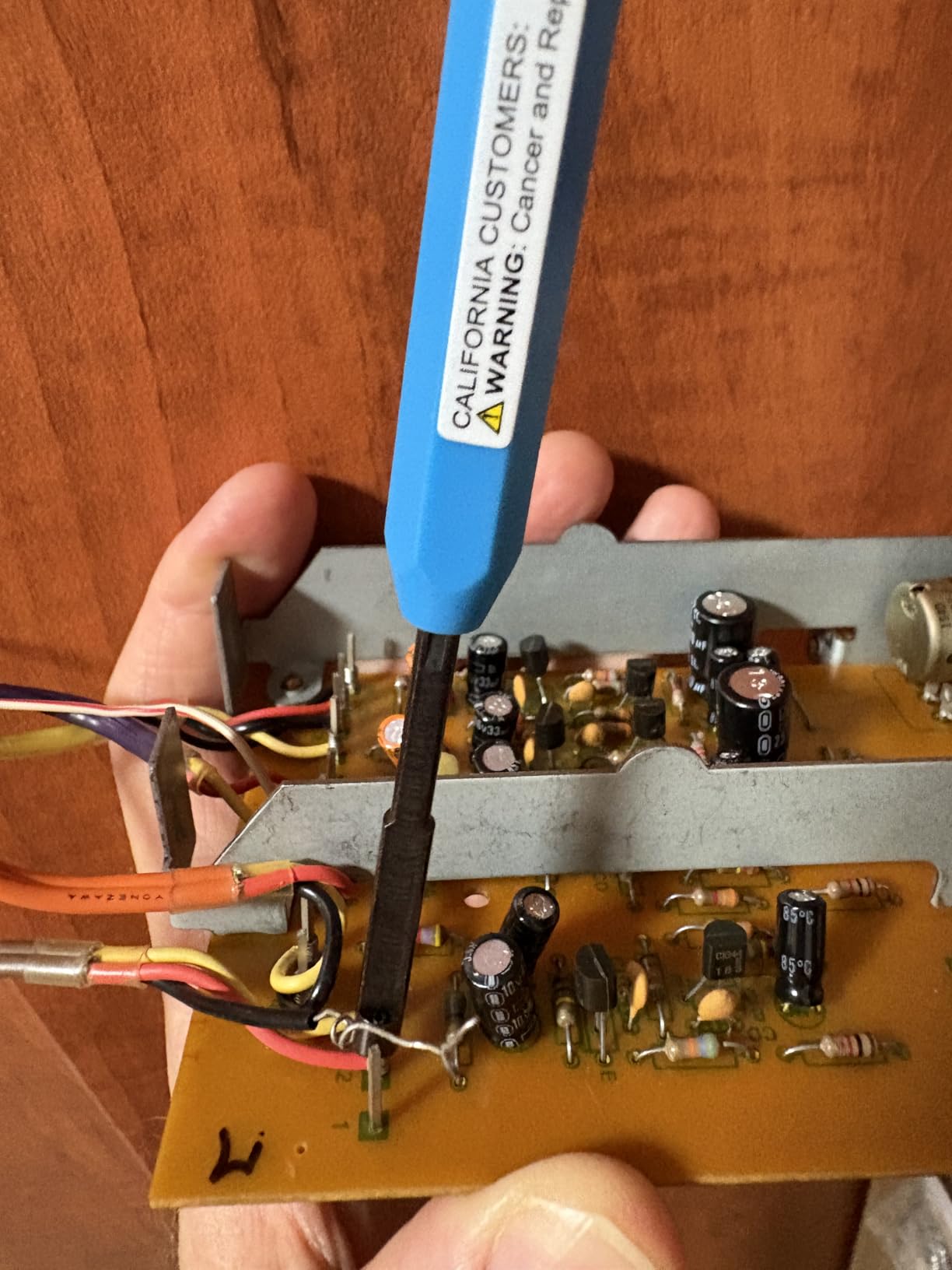
This is the companion to a 30 AWG wrap tool rather than a replacement for one. It wraps and unwraps 22 and 24 AWG wire, which is a gauge band that lighter wrap tools simply cannot handle, and buyers value it exactly there: as a heavier-gauge companion for terminal blocks and larger pitch connectors.
The wraps themselves are described as beautiful, tight and easy to make. It measures 6 by 0.5 by 0.5 inches, weighs 0.3 ounces, and uses a plastic handle with a metal shaft and a two-hole end. There is strong endorsement for vintage audio and receiver restoration, where heavier hookup wire is the norm and solder is the alternative.
The consistent limitation is rework. There is no claw or notch to catch the wire, so it cannot unwrap, which matters the moment a prototype changes. On a solderless workflow built around being able to change your mind, that is a real design constraint rather than a nitpick.
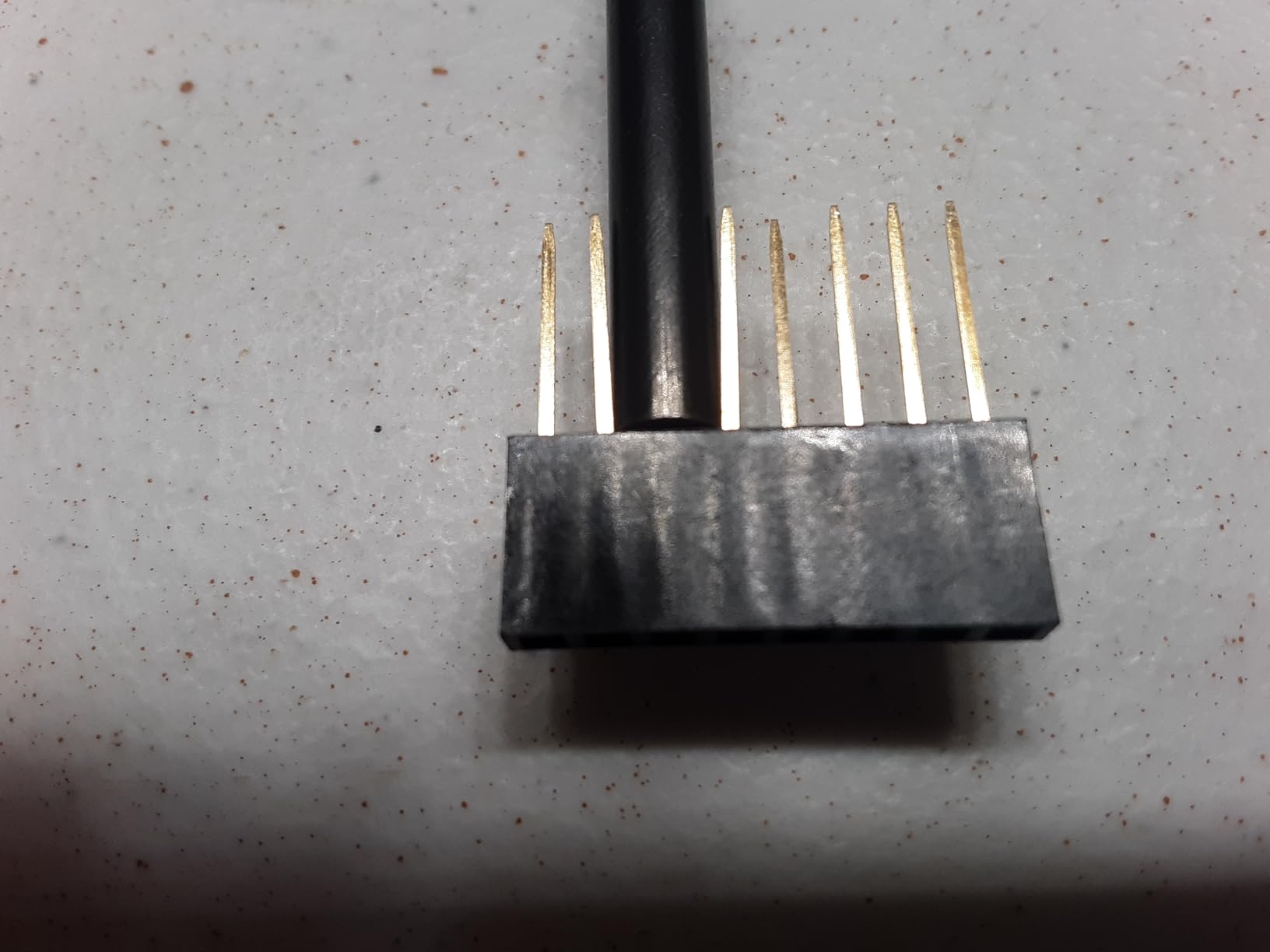
The second limitation is physical. The wrap diameter is slightly wider than standard 0.1 inch spacing, so alternating pin orientation helps, and it is too fat for DIP sockets and narrow-spaced header pins. It also cannot work with 0.2 inch pitch connectors, and reviewers describe it as a bit stiff in use.
Where heavy gauge wrapping earns its place
It earns its place when your connections carry more current than 30 AWG can reasonably handle, or when you are restoring older gear that used heavier hookup. Terminal blocks with wide pitch are the natural home for it, and the two-hole end lets you work the wire into position before spinning.
For anyone who works on both modern 30 AWG prototype boards and older equipment, having both wrap tools on the bench is a genuine capability rather than duplication. The 03WTE covers the modern side and this covers the older side.
Who should skip it
Skip it if your work is entirely 30 AWG, or if you need unwrapping as a core capability, which it cannot do. Skip it if you are working on DIP sockets or fine-pitch headers, where the diameter is simply wrong for the post spacing.
For most beginners, this is the second wrap tool you buy rather than the first. Learn on a 30 AWG tool, then add this when a job actually calls for 22 or 24 AWG.
9. Jonard Tools JIC-2030 Wire Stripper, Best Lightweight Bench Stripper
Jonard Tools JIC-2030 20-30 AWG Wire Stripper and Cutter, 6-3/4″ Length
- Strips 28-30 AWG accurately without nicking conductors
- Sharp blades give consistent strip length
- Light and comfortable for daily use
- Simple spring-loaded design
- Looping hole for forming hookup wire
- Spring can walk out of the handle when the lock is released
- One owner reports it will not strip certain 30 AWG wire
- Lowest average rating in this group
The JIC-2030 strips 20-30 AWG single and stranded wire, covering 0.81 down to 0.25 mm, and most users find it an effective, precise stripper for fine hookup. The 28-30 AWG range is called out as accurate without nicking conductors, and the hardened, tempered and ground cutting edges give a consistent strip length with no potato-peeling at the edge.
It is light in the hand, 6-3/4 inches long, and the coil spring is designed to reduce hand fatigue over extended use. The looping hole is useful for forming hookup wire quickly, and the 50 HRC black oxide finish is a sensible durability choice for a bench tool. It carries a Made For Life warranty from Jonard Tools.
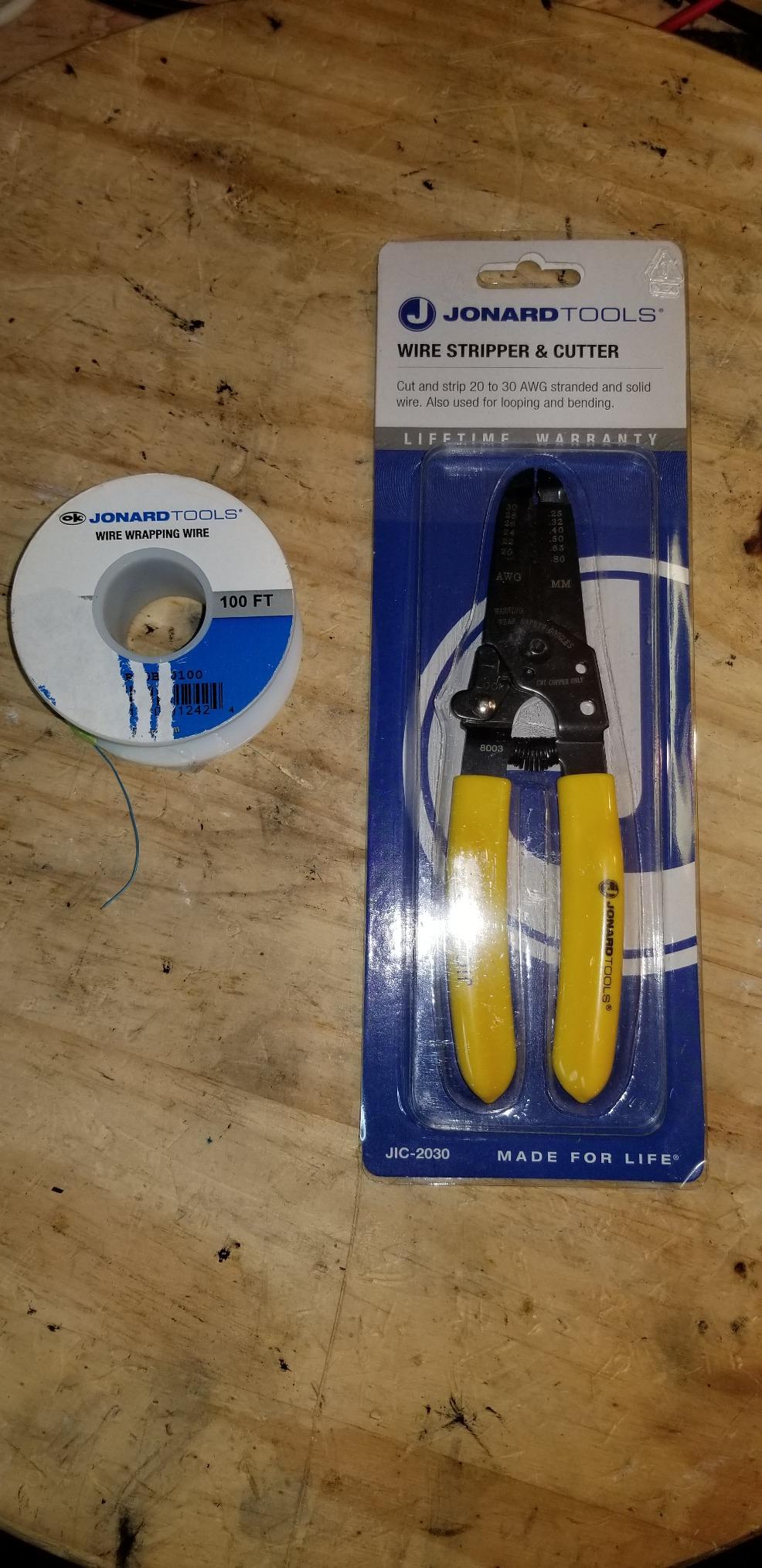
There is a specific physical problem worth flagging. The coil spring can fall out of the handle because the safety lock lets the jaws open wider than intended, which is more than an irritation because a spring-free stripper will not return to position. Check it after any time it sits in a bag.
A separate owner disputes that the tool strips 30 AWG on certain wire types, and this model has the lowest average rating of the group with a larger share of one-star reviews. That does not make it a bad tool, but it is the one here with the most room for improvement.
Why it still belongs on the list
It belongs because the grip and weight are excellent for long daily use, and because Jonard Tools is a maker-adjacent brand known for repairable, serviceable tools rather than disposable ones. A Made For Life warranty on a bench stripper is a real differentiator in a category full of unbranded tools.
It is also a natural companion to the 30 AWG wrap tool above, covering the heavier side of the same 20-30 AWG span that the wrap tool handles at the fine end. Together they cover most hookup work on a prototyping bench.
Who should look elsewhere
Look elsewhere if you are buying once and want the lowest chance of a defect, because this model has the weakest consistency of the ten. Look elsewhere if you strip in bulk for a living and a spring walking out of the handle would cost you time.
For a lighter duty occasional stripper, the DOWELL at number two covers a similar range with far more owner feedback behind it. For a broader bench tool, the Hakko adds shear and pliers to the same job.
10. KATA 7 Inch Precision Wire Stripper, Best Value for Fine Wire
- Strips 30 AWG stranded cleanly and quickly
- Sharp blades on fine insulation
- Solid feel that compares to big-box store tools
- Comfortable grip even with arthritic hands
- Good range of stripping diameters
- Blades are not perfectly aligned on some units
- Not intended for household mains wiring
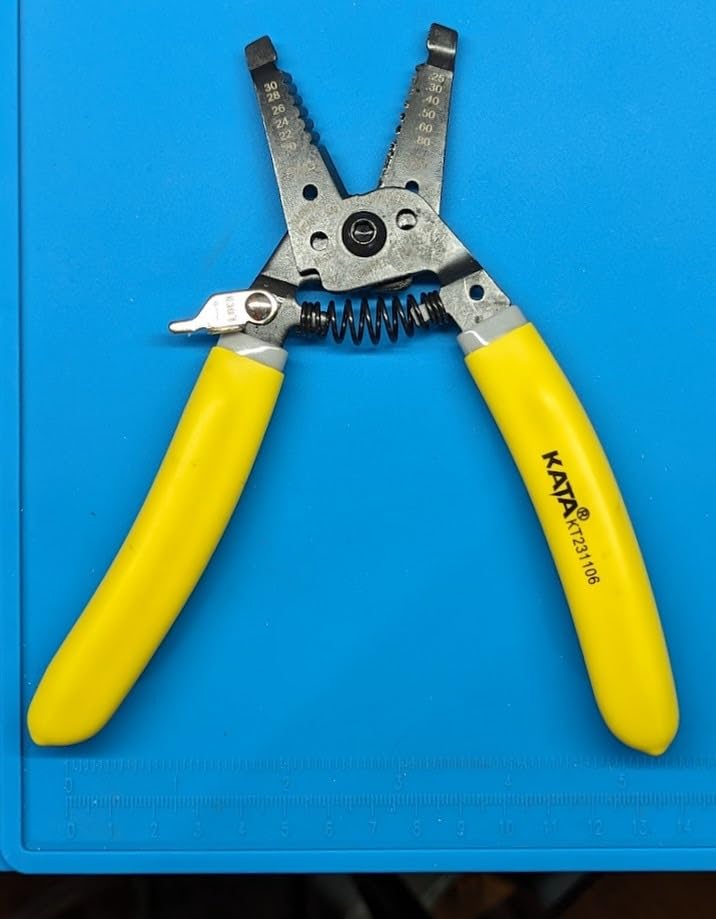
The KATA covers 20-30 AWG solid wire and 22-32 AWG stranded wire with 50# heat treated carbon steel blades, and owners specifically call out that it reaches 30 AWG stranded where many cheaper alternatives stop at 22 AWG. For a first stripper on a tight budget, that gauge reach is the whole reason it works for prototyping.
Reviewers find it sharper and better made than inexpensive tools available locally, with a solid, well-constructed feel. It also cuts, clamps and crimps insulation terminals, which is more function than most budget strippers offer, and the ergonomic 7 inch design gets a mention for comfort from users with arthritic hands.
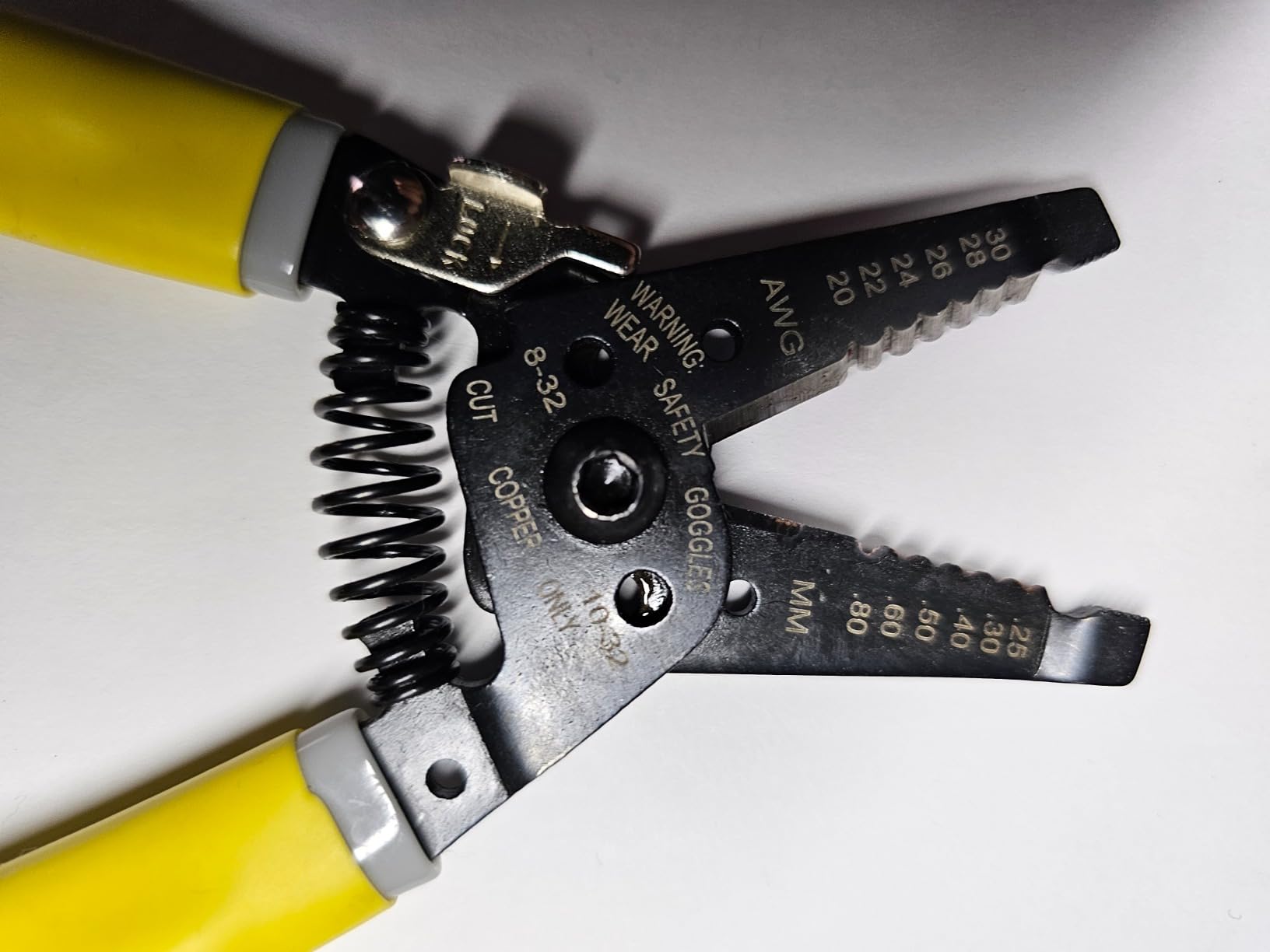
One reviewer found the jaws slightly misaligned, which caused fine stranded wire to bend rather than strip cleanly. That is a single report, but alignment is exactly the thing you cannot work around on 30 AWG, so test it on scrap wire before your first important connection and check your returns window.
It is also explicitly intended for low voltage electronics, 3D printer, LED and model projects, not household mains wiring. At 179 grams and 7 inches long it sits at the boundary between a bench tool and a general tool, which is where a lot of first purchases land.
When the budget pick makes sense
It makes sense when the budget is the binding constraint and you need to reach 30 AWG. Anything that stops at 22 AWG is a false economy for prototype work, because you end up damaging the conductor or improvising another method for every fine wire.
It also makes sense as a second stripper for a second bench or a shared workspace, where a dedicated tool per person costs less than one premium stripper. The crimping capability on the jaws covers insulated terminals, which widens its use beyond wire wrap.
Who should buy something else
Buy something else if you cannot accept any risk of blade misalignment on critical work, or if you want a gauge marking you can read without squinting. Buy the Hakko or the Klein at number one and three if you want a tool that also cuts and loops in the same pass.
And if your work is below 30 AWG, this does not reach it. The ENGINEER models at numbers four and five cover 28 AWG solid down to 34 AWG stranded.
How to Choose Wire Wrapping Tools for Prototyping
Match the tool to your wrap volume first, then worry about everything else. The widely used rule of thumb from electronics suppliers is simple: a hand tool suits under about 50 wraps a day, a manual or battery gun suits 50 to 200, and a powered or electric gun only makes sense above roughly 200 wraps a day. If your project is a handful of headers and a mechanical keyboard, you will never leave hand tool territory, and buying a powered gun to do forty connections is spending money for nothing.
That framework also explains why every tool in this roundup is hand operated. Below 200 wraps a day, a careful hand wrap matches powered output, and the difference in consistency comes down to technique rather than motor torque. The genuine advantage of a motorised tool is volume plus reduced fatigue over a full day, not quality at a hobby scale.
Now the part people get wrong, which is bit and sleeve matching. A wrapping bit has a small inner hole for the bare conductor and a larger centre hole for the post, and both must match your wire gauge and your terminal diagonal. A bit that is too small for the wire produces a pigtail or a loose wrap. A sleeve that does not match the post width produces a spiral instead of tight turns. This single compatibility check is the number one source of failed connections, far more than the quality of the tool itself.
On wire gauge, 30 AWG is the default for prototyping and the reason most of the strippers here reach it. 28 AWG suits slightly higher current and slightly easier handling, and 26 AWG is for power or audio work where 30 AWG is too fragile. Going finer is for special cases. Match your bit to the gauge you actually buy rather than the gauge the tool listing mentions.
On wire insulation, Kynar and Tefzel are the two names you will see, and both are fluoropolymers rated for the heat and handling that prototyping generates. Cheaper PTFE-insulated wire is workable but does not handle repeated flexing as well, and a wire that snaps in the middle of a wrapped connection wastes the whole joint. If you are unsure, buy the smaller quantity of the better wire first.
On connection type, understand the difference between regular and modified wrap. A regular wrap puts seven or more turns of insulated wire around the post with one turn of bare conductor. A modified wrap adds a half turn of bare conductor on top, which gives a stronger mechanical grip at the cost of slightly more unwrapping difficulty. Modified wrap is the safer default for a board you will revisit.
Do not underestimate the stripper. Standard V-notch strippers nick and weaken 30 AWG, and a nicked conductor snaps inside a wrap where you cannot see it. This is why five of the ten tools on this list are precision strippers rather than wrap tools, and why the top pick is a cutter and stripper at all.
Finally, think about the board you are connecting to. Breakaway headers and wire wrap DIP and SIP sockets are designed for this, with square posts on .1 inch centres and .025 inch diagonals. A project board gives you point-to-point layout freedom, while a perf board fights you because it has plated holes that were never meant to take a wrap. If you also machine enclosures, our guide to desktop CNC mills for PCB prototyping covers the fixture side.
Source replacement parts from specialist electronics suppliers such as Digi-Key and Mouser with the part number in hand, and from general marketplaces for the tool bodies. A dedicated wrap tool is a small fraction of the cost of the connections it makes, so it repays quickly once you start. For cable and conductor handling on a broader electrical bench, wire pulling tools for electricians covers the heavier end of the trade.
The most common beginner errors are worth naming. Pushing down instead of letting the tool rotate causes overwrap, where the wire wraps over itself and fatigues. A loose wrap or pigtail means insufficient turns. An open or spiral wrap means the sleeve did not match the post. All three are fixable, and all three become rare after an afternoon of practice on scrap wire.
Frequently Asked Questions
What are the most important tools for wire wrapping?
For electronics prototyping you need four things: a hand wrap tool with a bit and sleeve matched to 30 AWG wire, a precision stripper that reaches 30 AWG without nicking the conductor, flush cutters for trimming leads close to a post, and the right hardware such as breakaway headers or wire wrap DIP and SIP sockets. Optional but useful are round nose pliers for forming wires and a magnifying lamp for inspecting finished joints. This is the minimum kit that produces gas-tight, fully re-workable connections.
Which tool is used in wire wrapping?
The main tool is a wire wrap gun, also called a hand wrap or wrap and unwrap tool. It has a bit with a small inner hole for the bare wire and a larger centre hole sized to the terminal post. You insert the stripped end, place the larger hole over the post, and rotate the tool until resistance stops, letting the tool do the twisting rather than pressing down.
What is the best brand of wire for wire wrapping?
Kynar and Tefzel are the two standard insulation choices for 30 AWG wire wrap wire, both fluoropolymers chosen for heat tolerance and flex life. Most prototype work uses 30 AWG solid conductor with one of these coatings, and 28 AWG is a reasonable step up when you need more current or easier handling. Buy a small quantity of good wire before committing, because a conductor that snaps inside a joint wastes the whole connection.
What tools do I need for wire sculpture?
Wire sculpture and jewellery wire wrapping use a different tool set from electronics. You want round nose pliers for loops, chain nose and flat nose pliers for shaping, flush cutters, a mandrel or triblet to form the wire, a rawhide or repousse hammer, a rule, and files plus sandpaper for finishing. A wrap gun is not used in sculpture work, so do not buy one for that purpose.
Is wire wrap still used?
Yes. Wire wrap is used every day in telecom, field service and instrument repair, where high connection counts and the ability to re-work a joint without a soldering iron make it the standard method. Hobby and maker communities use it for dev board headers, DIP socket wiring and mechanical keyboard builds. The connections are stronger than a cold solder joint and can be unwrapped without damaging the terminal.
Final Verdict on the Best Wire Wrapping Tools for Prototyping
After working through all ten, the Klein Tools 11057 is the best wire wrapping tool companion in this roundup because it covers 20-30 AWG solid and 22-32 AWG stranded with a build that has held up across more than two thousand reviews, and it pairs with whatever wrap tool you choose. If your budget is the constraint, the DOWELL 22-30 AWG stripper does the same core job with a broader owner base behind it.
Add the EX ELECTRONIX Express 03WTE to make the actual connections, match its bit and sleeve to your terminal diagonal, and use 30 AWG Kynar or Tefzel wire. Above roughly 200 wraps a day, revisit the volume rule and consider a battery or electric gun. Below that, a hand tool and a good stripper are genuinely all you need.