
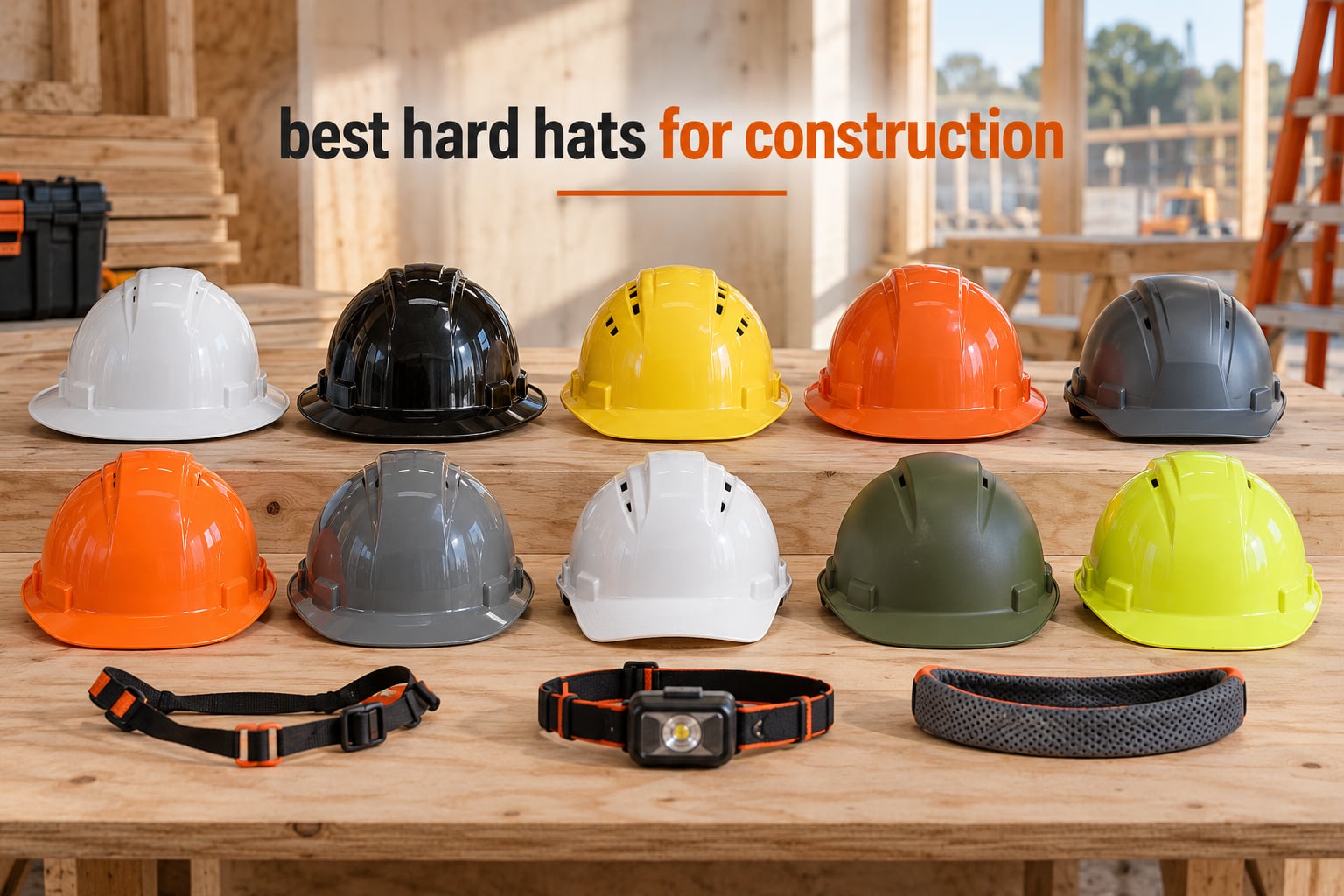
Most people buy a hard hat the way they buy a coffee: they pick one off the wall, put it on, and get on with the day. That works until the day somebody on the crew drops a bundle of conduit from a scaffold, or a backhoe frame clips the brim as you climb into the cab, or an old shell that has been in a truck bed for six years finally lets go.
This roundup covers the best hard hats for construction in 2026, ten models chosen for the jobs they actually suit rather than for how they look on a shelf. Every pick below carries a Type and Class rating stamped under the brim, and that rating matters more than the badge, the color and the logo. Type I protects the top of your head from a falling object. Type II adds lateral impact protection for a side hit off a steel beam, a scaffold pole or a cabinet door. Class C, G and E tell you what happens when electricity enters the picture.
We compared the ten most-reviewed hard hats on the market, read the technical data on every shell, and sorted them by the trade and the hazard they were built for. One model earned the top slot on the strength of the most reviews in the group and a spec sheet that covers three electrical classes at once. Two others won for radiant heat and for the built-in headlamp that crews keep asking for. Below the picks, a buying guide explains the ratings in plain language, because a hard hat you do not understand is a hard hat you will pick wrong.
If you need other site kit covered, our guides to builders levels for construction sites and mapping drones for construction sites cover the rest of a typical day.
Table of Contents
Top 3 Construction Hard Hats in 2026
These three lead the list for different reasons. The first is the safest general-purpose buy, the second handles the worst heat, and the third removes the guesswork from lighting up a dark site.

Pyramex Ridgeline Full Brim
- ABS polymer shell
- 4-point ratchet suspension
- ANSI Z89.1-2009 Type 1 Class C G E
- Full brim sun and rain coverage
MSA Skullgard Full Brim
- Phenolic shell rated to 350F radiant heat
- Fas-Trac III ratchet suspension
- ANSI Z89.1-2014 Type 1 Class G
- Made in the USA

Klein Tools 60347 KARBN
- Integrated rechargeable headlamp
- Adjustable vents
- ANSI Z89.1-2014 Type 1 Class C
- PC/ABS composite shell
Best Hard Hats for Construction (October 2026)
Here is the full lineup in one place, with the standard each shell is certified to. The award column tells you which trade each model was built for.
| Product | Specifications | Action |
|---|---|---|
| Pyramex Ridgeline Full Brim |
|
Check Latest Price |
| MSA Skullgard Full Brim |
|
Check Latest Price |
| Klein Tools 60347 KARBN |
|
Check Latest Price |
 ACERPAL Full Brim Carbon Style ACERPAL Full Brim Carbon Style |
|
Check Latest Price |
 Fibre-Metal SuperEight Fibre-Metal SuperEight |
|
Check Latest Price |
 3M SecureFit H-700 Series 3M SecureFit H-700 Series |
|
Check Latest Price |
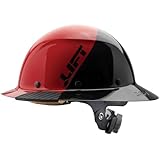 LIFT DAX Fiber Resin LIFT DAX Fiber Resin |
|
Check Latest Price |
 STUDSON SHK-1 Vented STUDSON SHK-1 Vented |
|
Check Latest Price |
 Malta Dynamics APEX Malta Dynamics APEX |
|
Check Latest Price |
 Klein Tools 60565 Type 2 Klein Tools 60565 Type 2 |
|
Check Latest Price |
Two entries in that table carry the only Type II rating in the group: the STUDSON SHK-1 and the Klein Tools 60565. If your crew has moved to Type II helmets, start there. Everyone else is deciding between Type I shells and the electrical class.
1. Pyramex Ridgeline Full Brim – Best Overall Hard Hat for Construction
Pyramex Ridgeline Full Brim Hard Hat 4 Point Ratchet Matte Black Graphite Pattern
- Near-weightless ABS shell
- 4-point ratchet adjusts smoothly with gloves on
- Full brim shades sun and rain
- Replaceable brow pad suspension and headband
- Carries three electrical classes on one shell
- Not vented so it runs hot in warm climates
- Shell sits tall even at lowest adjustment
- Rear rim catches longer hair when removing
The Ridgeline is the hat I put on new crew members first, and the reason is dull but decisive: it is the most widely reviewed hard hat in this group, at 18602 reviews averaging 4.7 out of 5, which means a lot of people have worn it through a lot of real work. The shell is listed at 1.6 ounces of ABS polymer, so after a full morning of framing, demo and cleanup the weight never becomes the reason you take it off.
What makes it interesting for a general construction site is the rating line. It is certified to ANSI Z89.1-2009 as a Type 1 hat in Class C, Class G and Class E simultaneously. That single line covers a carpenter framing walls, a groundskeeper working near a service drop and a maintenance tech opening a panel, which is why it works as a one-size-fits-the-crew buy.
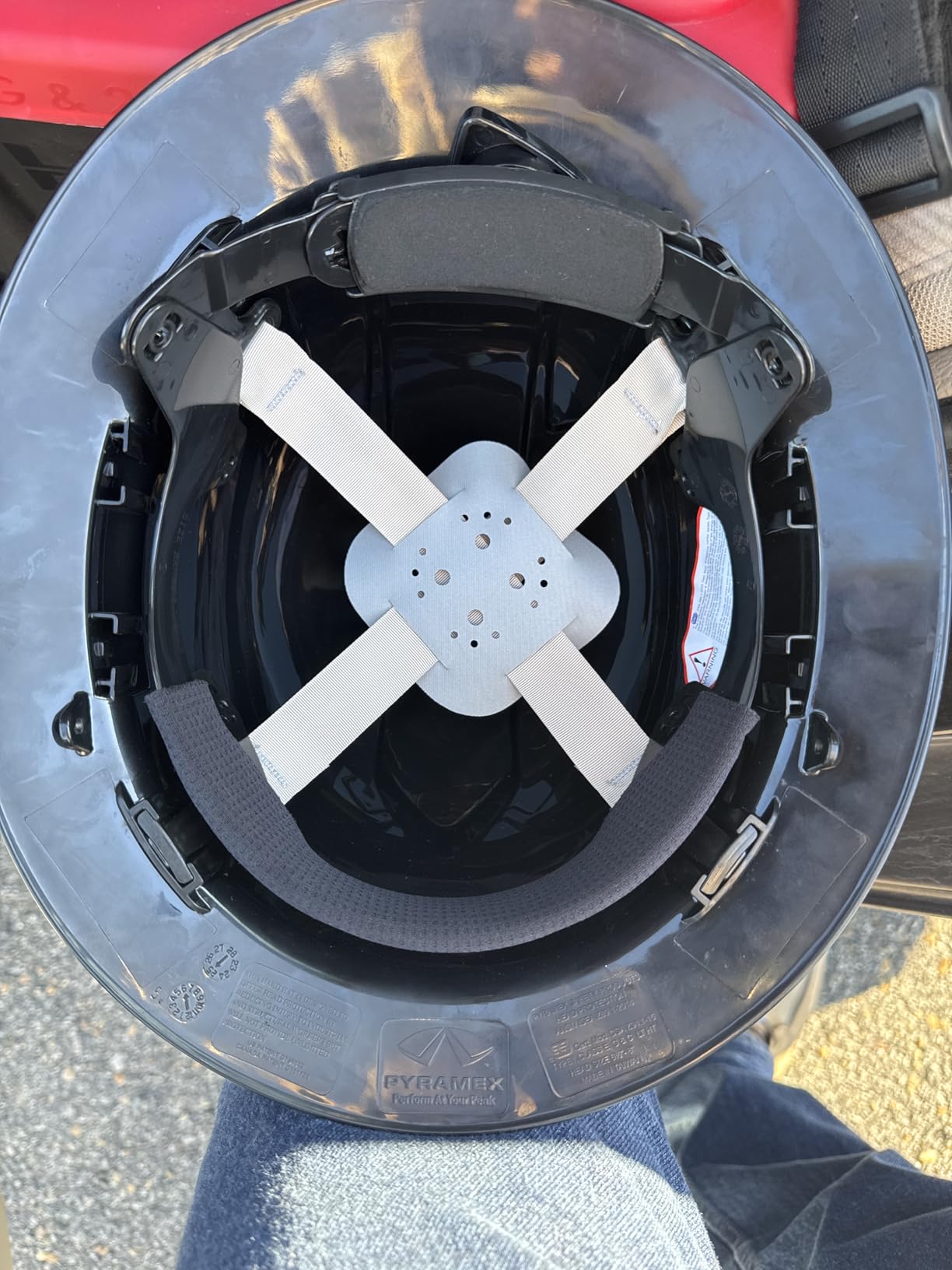
The 4-point ratchet is smooth enough to dial with work gloves on, and the shell runs from 0.07 to 0.16 inches thick, which is worth knowing if you are comparing it against a thinner plastic shell. The manufacturer also rates it for protection at -22F and 140F, so it holds up in a cold-weather pour and a summer steel deck. The full brim keeps sun off the neck and shoulders and turns drizzle off your collar.
The tradeoff is ventilation. There are no vents, so in July this hat gets warm, and crew members working steady hours in direct sun tend to move it forward and back to get air across the forehead. The shell also sits a little tall even at its lowest setting, and the rear rim catches longer hair when you pull the hat off. If you are in a hot climate all day, look at the vented models further down this list.
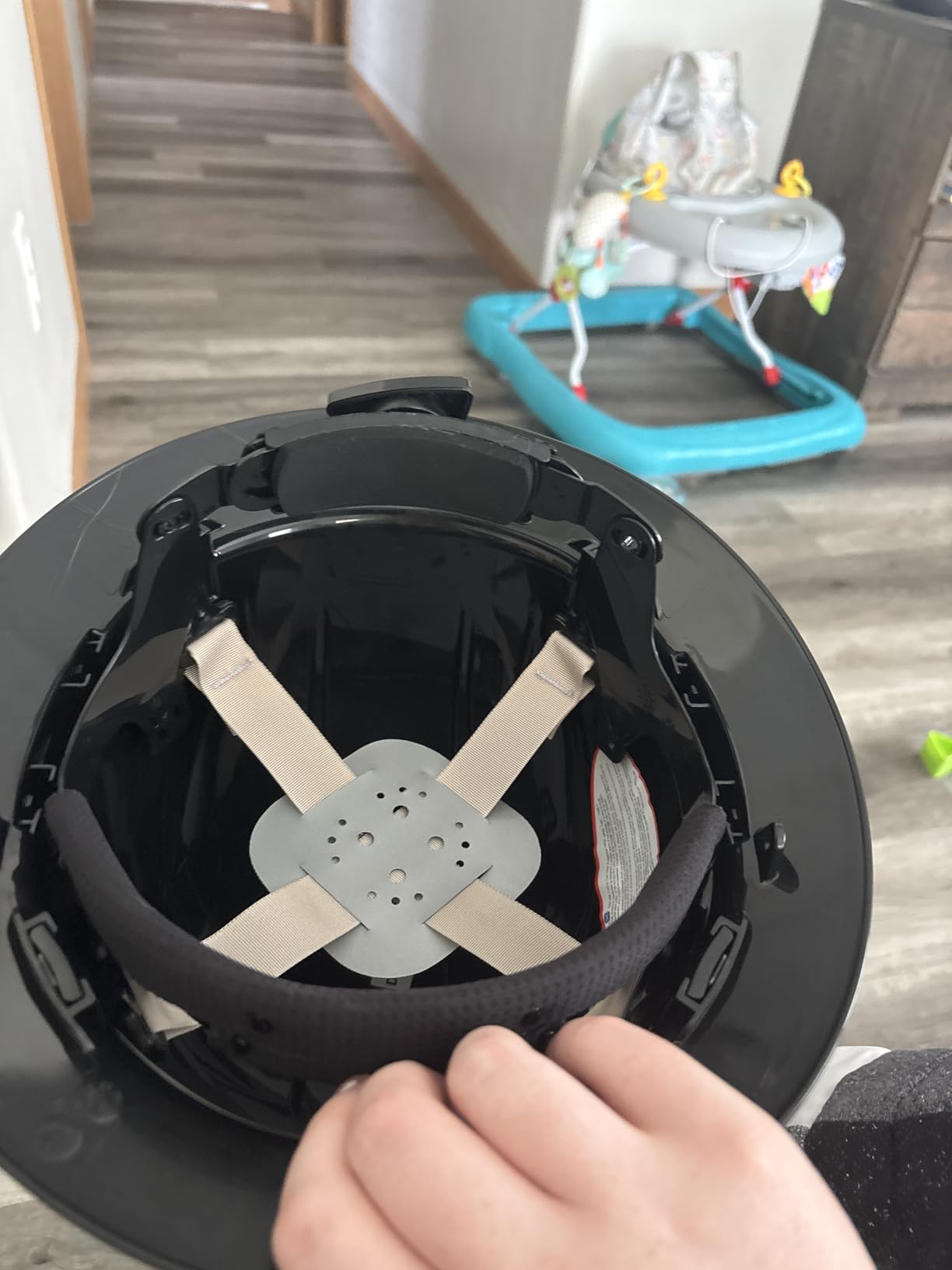
When the Ridgeline is the right call
Choose it for general construction, remodels, landscaping, HVAC and any site where one hat has to serve mixed trades. The triple Class rating means a supervisor can issue the same model to a framer and an apprentice without checking what the job actually demands. It is also a hat you can buy in a quantity without a second conversation, which matters when you are outfitting a crew.
Owners on r/Construction describe the Ridgeline as the hat they buy for themselves rather than the one their employer hands out, specifically because of the replaceable brow pad and suspension. Those parts wear before the shell does, and swapping them is the difference between a two-year hat and a ten-year hat.
When to pick something else
Skip it if heat is the dominant complaint on your site, because a non-vented shell plus a full brim in direct sun is a warm combination. It is also a Type 1 shell, so it does not protect against a side impact. If your site has adopted Type II helmets, or if a worker on your crew works directly under a wall of scaffolding where a lateral strike is possible, you need a Type 2 model instead.
The 4-point suspension can be converted to a 6-point configuration with a separate insert, which helps a little with stability but does not change the Type rating. Check the head size range before you order in bulk; this is a full brim plastic shell and it fits a narrower band of head shapes than the eight-point fiberglass style later in the list.
2. MSA Skullgard Full Brim – Best Premium Hard Hat for High Heat and Welding-Adjacent Work
- Phenolic shell handles radiant heat far better than plastic
- Flush rear lugs avoid pressure points
- Light for a full brim phenolic shell
- Made in the USA with a long steel and welding record
- Standard suspension can ride high on very large heads
- Limited color selection
- Occasional units arrive chipped
- Full brim alone shades little in very bright sun
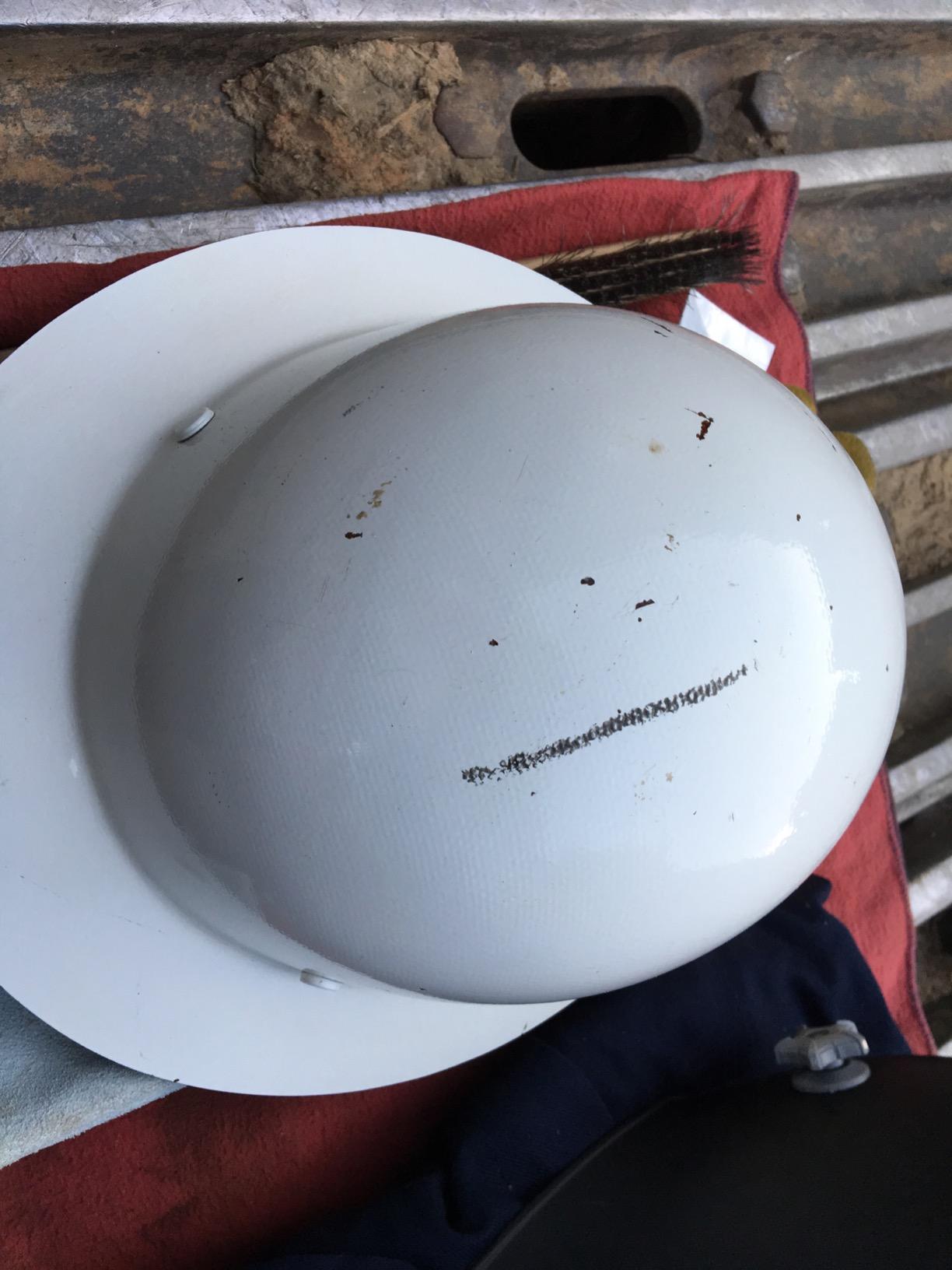
The Skullgard is the oldest name on this list and the one that shows up in the shop when somebody asks who has worn a hard hat the longest. It holds a 4.7 rating across 6947 reviews, and the shell is phenolic resin rather than injection-molded plastic. That single material choice is the reason this hat exists.
Phenolic is rated for radiant heat loads up to 350F, and that number is the whole pitch. A welder, a boilermaker, a foundry hand or anyone working next to a hot surface, a torch line or a summer steel deck can put an exposed phenolic shell in the radiant zone and keep working. Plastic shells soften, discolor and lose strength in that kind of heat. The Skullgard is also third-party SEI certified to ANSI/ISEA Z89.1-2014 as a Type 1, Class G hat, tested to 2200 volts.
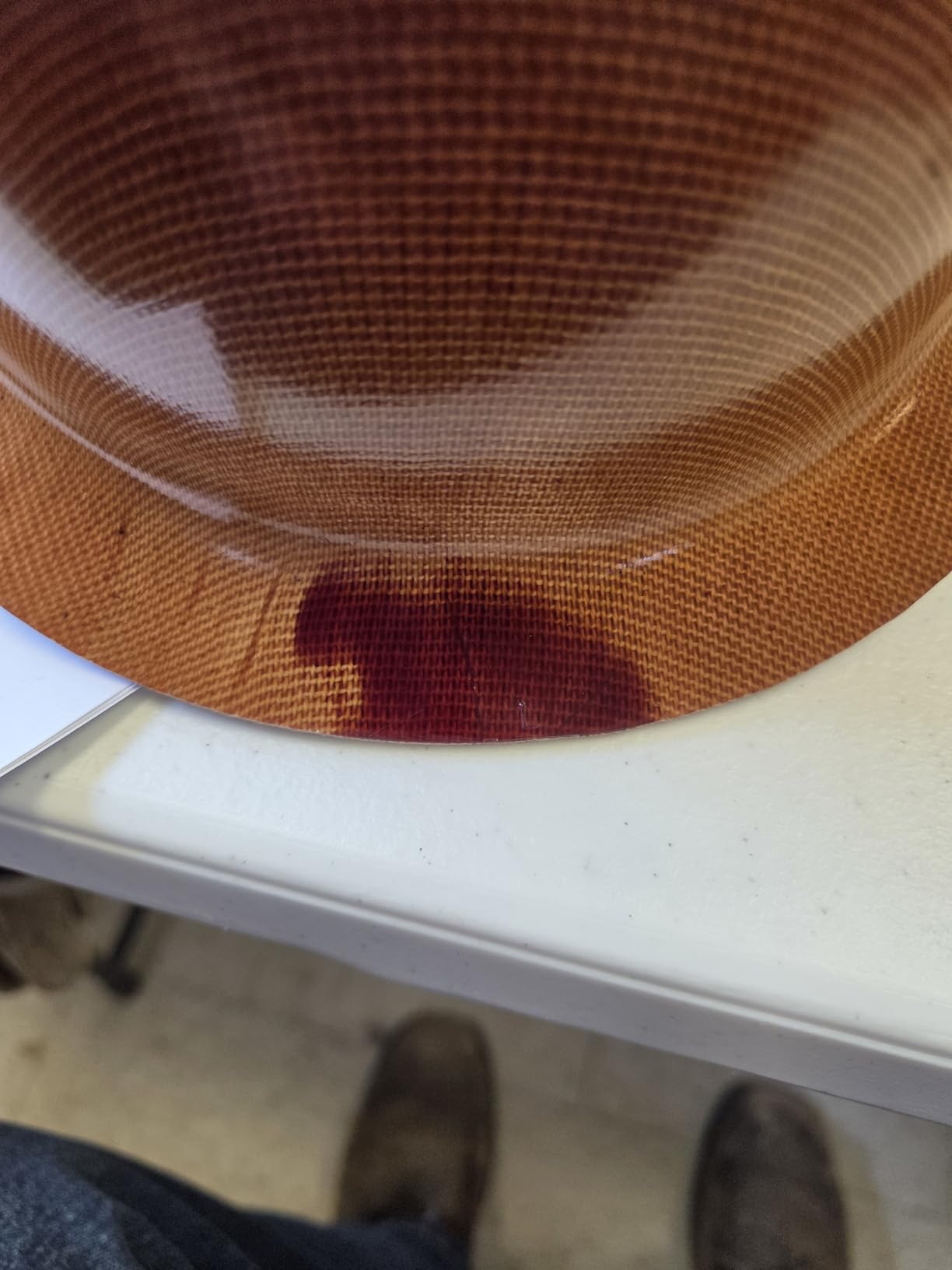
The Fas-Trac III ratchet suspension is the other half of the story. It has three levels of nape strap adjustment and a contoured comfort pad, and it carries the load across the back of the skull rather than pinching the crown. At 15.84 ounces it is genuinely light for a full brim phenolic shell, which surprises people who assume a premium shell means a heavy one. Date codes are molded into the underside of the brim, so you can check age at a glance.
What you give up is color choice and adjustability for very large heads. The standard suspension can sit high on a bigger head shape, and the extra inserts that bring it down cost more. Colors are limited compared with plastic shells, a few units arrive chipped, and the full brim on its own does not shade much in very bright sun. None of that matters much for a boilermaker. All of it matters if you are outfitting a mixed crew that expects the same hat to do everything.
When the Skullgard earns its price
It is the right buy for welding bays, steel erection, oil and gas, foundry-adjacent work and any crew working around radiant heat. Ironworkers across the trade treat it as the standard issue, and reviewers with two decades of hard hat experience call the Fas-Trac III suspension essentially invisible by the end of a shift. If your company buys PPE as a fleet purchase, the molded date codes and the Made in USA build make inventory tracking straightforward.
The Class G rating is the one to watch. It is tested to 2200 volts, which covers general industrial and most utility-adjacent environments, but it is not the 20,000 volt rating that electricians working live or close to energized gear need. If the job involves exposure to higher potentials, this is the wrong class.
Where it falls short
It is a Type 1 shell, so a side strike off a beam or a truck bed door is not covered. It is also a full brim, and full brims cause a specific problem in an equipment cab: the rear brim catches the cab frame as you climb in and out, and workers in r/heavyequipment threads describe that as the single most common reason they move to a cap-style or short-brim hat.
There is no ventilation either, and a phenolic shell is not a sealed one. If your site is defined by heat rather than radiant exposure, the STUDSON further down this list is a more interesting answer.
3. Klein Tools 60347 KARBN – Best Hard Hat with an Integrated Headlamp
Klein Tools 60347 Hard Hat, Vented Full Brim, Class C, Premium KARBN Pattern, Rechargeable Lamp, Padded Sweat-Wicking Sweatband, Top Pad
- Integrated rechargeable headlamp clips on with no straps
- Adjustable vents cut heat and stop glasses fogging
- Padded sweat-wicking sweatband and top pad
- Also tested to CSA Z94.1-15 and EN 397
- Heavier than a standard shell once the lamp is fitted
- Integrated battery is not user-replaceable
- Headlamp battery life is the top complaint
- Vents do not fully cool the shell in extreme heat
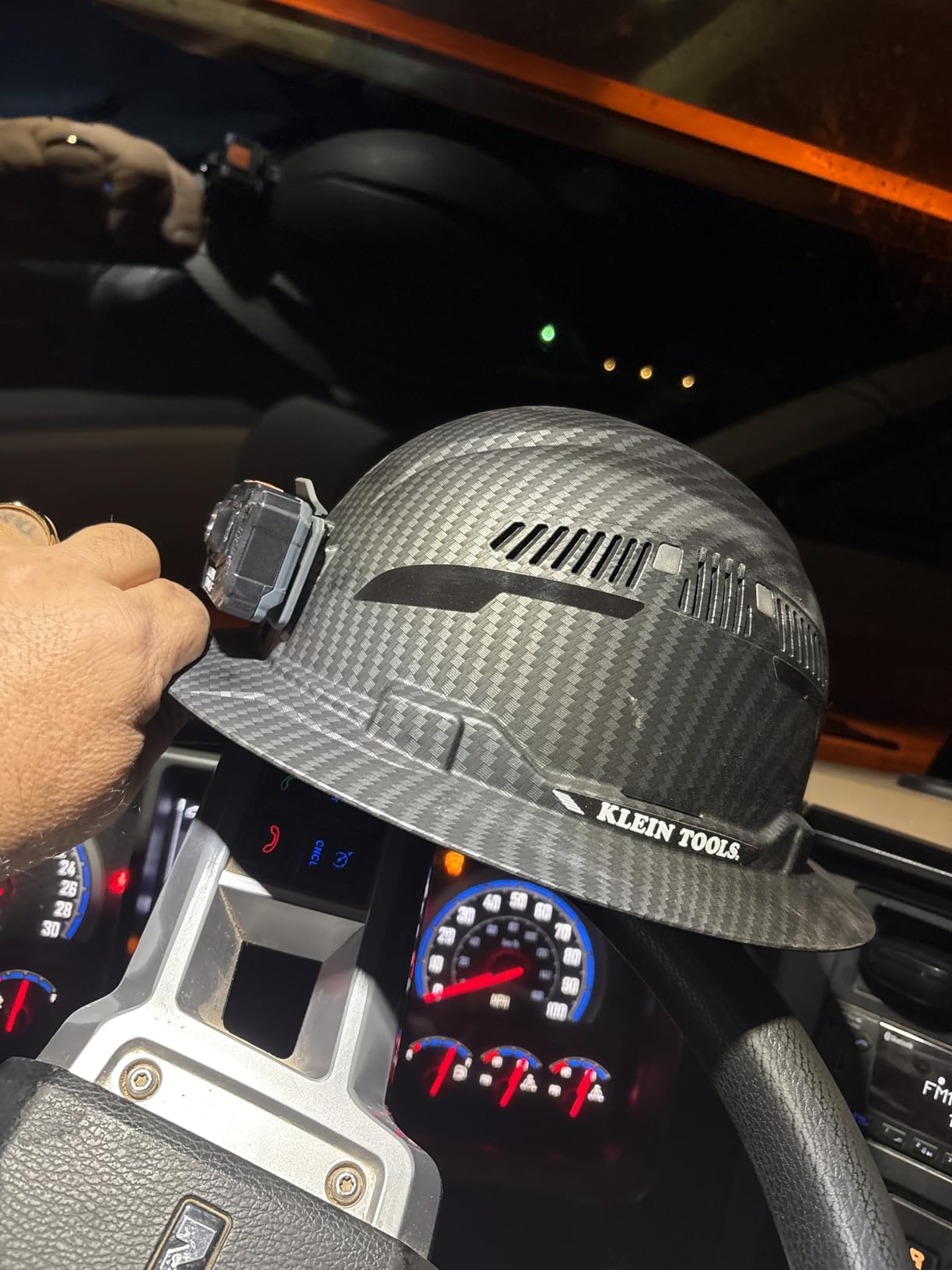
The Klein 60347 solves a problem that most hard hat accessories create: a headlamp strapped onto a hat with elastic bands moves, tilts and falls into your line of sight. This one has patented front and rear accessory mounts, so the lamp clicks into position and stays there. It is a Klein rechargeable headlamp, model 56048, with a USB-C battery in the box, and the whole thing carries a 4.7 rating across 3945 reviews.
The vents are the second headline. They are adjustable, and they open and close without the hat dropping out of compliance, which is a real problem with some vented designs where opening a vent changes the certification status. Users upgrading from generic issued hats point at the vents and the padded sweatband as the reasons the hat is worth the money, and several mention that the airflow also stops safety glasses fogging on a hot climb.
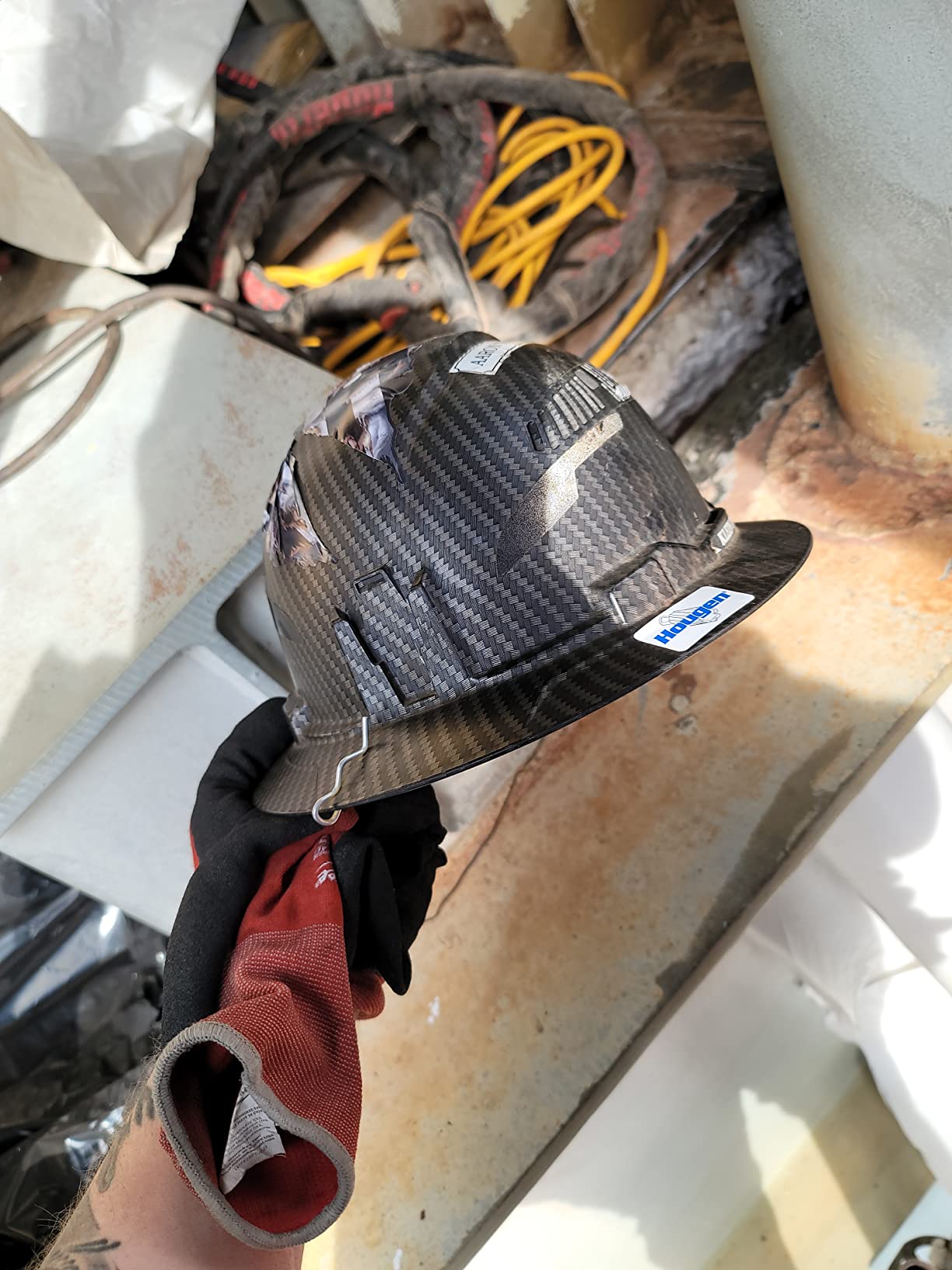
The shell is a PC/ABS composite with a hydro-dipped polymer film in the KARBN pattern, which is why it does not read as a plain plastic hat. Compliance is broad for a US site: ANSI Z89.1-2014 Type 1 Class C, CSA Z94.1-15 for Canada, EN 397 for lateral deformation and EN 12492 for front, back and side impact. That combination of US, Canadian and European testing matters on crews with mixed workforces or dual-border projects.
Two things temper it. At 1.2 pounds it is meaningfully heavier than a plastic shell, and you feel that by hour six. The battery is fixed in the lamp and not user-replaceable, so when the runtime degrades the answer is a new lamp rather than a coin cell. Battery life is the most common complaint in the reviews. Vents help, but they do not turn this into a cooling system in extreme heat.
When the integrated headlamp is worth it
It earns its place on early starts, tunnel and basement work, mechanical fit-outs, night road flagging and any task where you would otherwise be holding a light in your teeth or a flashlight in one hand. Climb crews and residential solar installers like it because there is no strap to snag on rebar or a ladder rail. The long-running r/Construction thread about which brand to buy repeatedly circles back to Klein’s integrated light as the deciding factor.
It is also a good general site hat for anyone who works a full day outdoors, because the vents plus the padded sweat-wicking sweatband and top pad manage sweat better than a plain shell with no padding. The KARBN finish also means a crew of ten looks like a crew of ten rather than ten different plastic shades.
When it is the wrong tool
It is a Class C hat, so it carries no electrical protection. If the wearer is a lineman or a panel electrician, a vented shell is disqualifying and you need a non-vented Class E model like the Fibre-Metal SuperEight later in this list. It is also a Type 1 shell, so no lateral impact coverage.
Weight matters more than most spec sheets suggest. If your crew runs long hot shifts on light work, the extra weight shows up as neck fatigue. If your crew works short bursts in the dark, it is a very fair trade.
4. ACERPAL Full Brim Carbon-Look Shell – Best Value Hard Hat for General Construction
- Padded 6-point ratchet and brow pad stay comfortable
- Non-vented shell suits electrical and welding work
- Passes LT and HT temperature testing
- Chin strap included in the box
- Many print designs to choose from
- Not vented so it traps heat
- HDPE shell feels less rigid than fiber or phenolic
- Prints can wear off with harsh cleaning chemicals
- Ratchet range favours mid-size heads
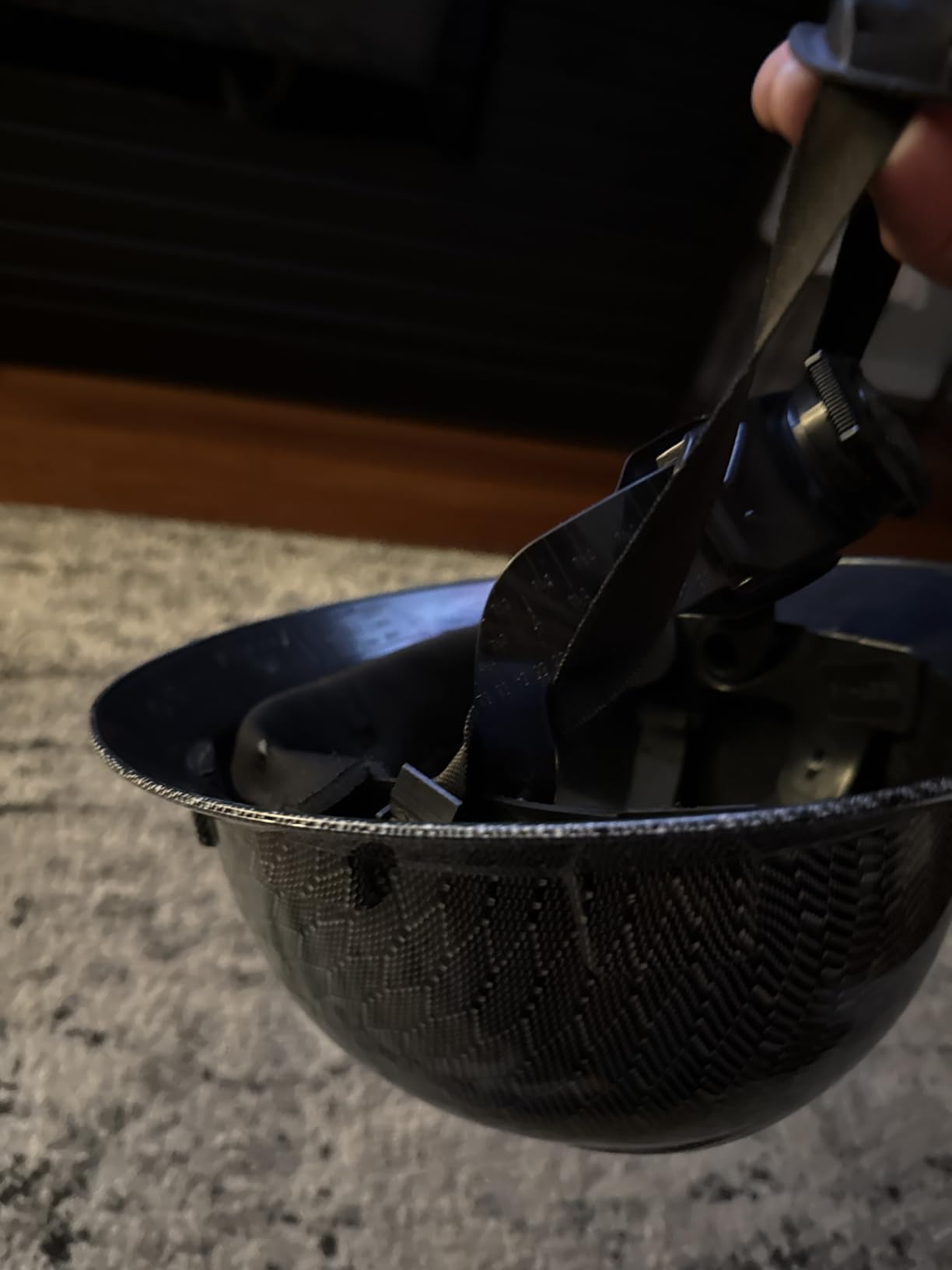
This is the pick when the brief is simply OSHA compliant, Type 1, three electrical classes, full brim and comfortable, and the budget will not stretch to a premium brand. It carries a 4.5 rating across 3571 reviews, and the spec sheet is more generous than the price suggests: ANSI Z89.1 Type 1 in Class E, Class G and Class C, with LT and HT temperature testing passed.
The suspension is the reason it feels more expensive than it is. A padded 6-point ratchet suspension with a soft brow pad and a top pad, sized for head circumferences from 6.5 to 8, and a chin strap in the box. Most shells at this level ship with bare webbing and no chin strap, so the extra padding does more for all-day comfort than the material does.
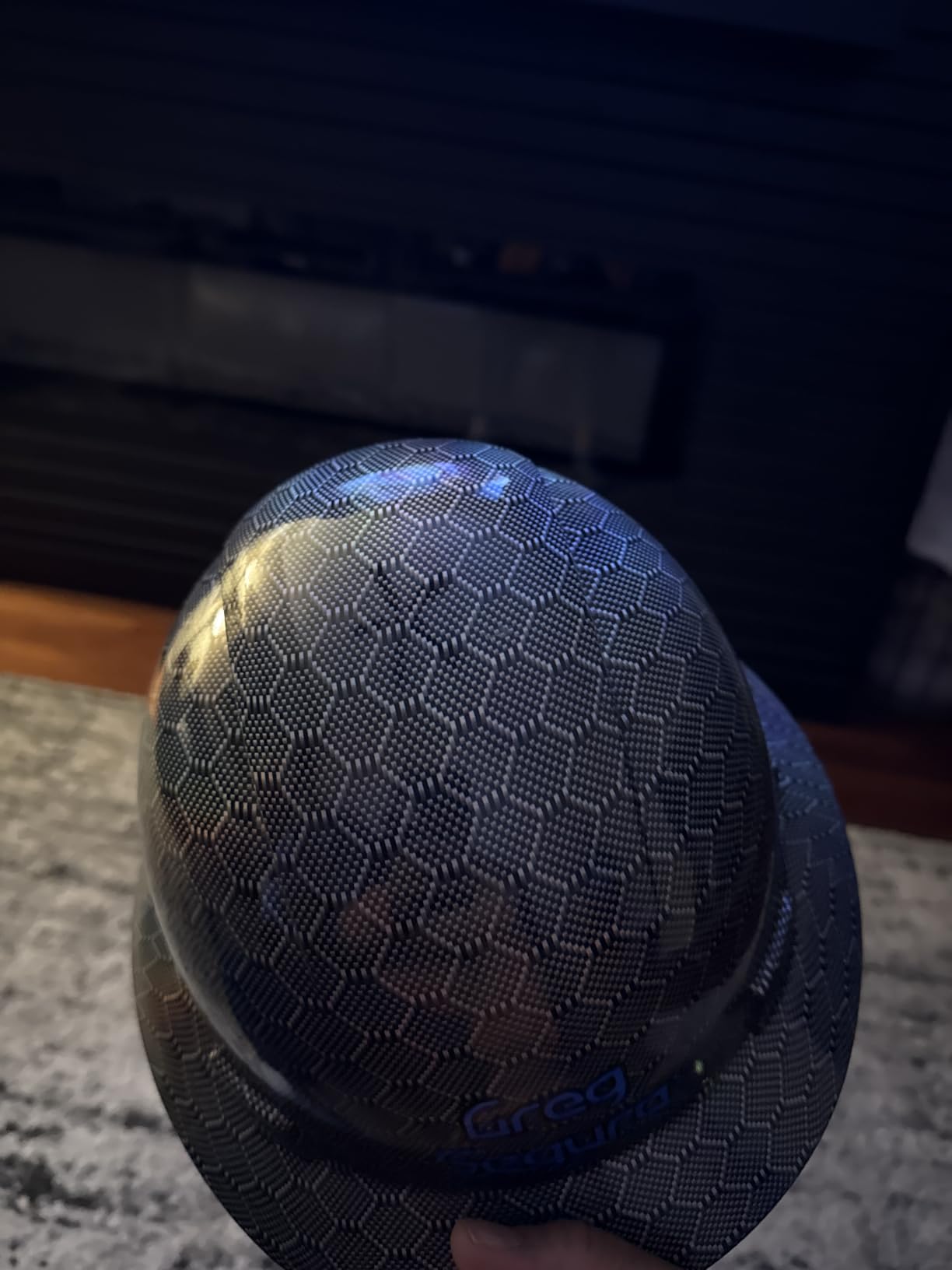
The hydro-dripped print process gives it a carbon-fiber style finish, and buyers treat that as a bonus rather than a spec: a patterned shell hides scuffs and site grime better than a plain white one, and it reads less like a generic issued hat. Reviewers consistently describe this as the value pick and point to the padded suspension and the compliant rating as the reasons it works.
The honest downsides are straightforward. There are no vents, so it traps heat in warm weather. The shell is HDPE, which is lighter and less rigid than fiber-reinforced or phenolic models, and reviewers describe it as feeling thinner under a hard knock. The prints wear off if you clean the shell with harsh chemicals. And the ratchet adjustment range suits mid-size heads better than very large ones.
When this is the smart buy
It fits crews doing general construction, HVAC, plumbing, facility maintenance and light commercial work where the hat needs to be non-vented for electrical reasons and nobody is going to pay for a premium shell. Buying these as a fleet issue for apprentices is a defensible decision: new workers get a compliant hat with a chin strap, and the padded suspension means it does not end up on the floor of a truck within a month.
The LT and HT markings are worth noting for crews working across seasons. A shell marked for low and high temperature performance is less likely to be quietly compromised in a January pour or a July deck pour than an unmarked plastic one.
When to step up instead
If your work includes radiant heat from torches, hot metal or kilns, HDPE is the wrong polymer and the phenolic Skullgard is the right answer. If your crew complains about heat, the non-vented shell is the cause. And if the job has adopted Type II helmets, this is a Type 1 only.
One practical note: because the print is a surface treatment rather than a molded feature, treat the finish gently. Degreaser and solvent wipes will take the pattern off and dull the shell, and cleaning it aggressively is the fastest way to make a serviceable hat look retired.
5. Fibre-Metal SuperEight – Best Hard Hat for Large Heads and Electrical Work
Fibre-Metal SuperEight Thermoplastic Full Brim Hard Hat with 8-Point Ratchet Suspension, White (E1RW01A000)
- 8-point ratchet fits larger heads better than most brands
- Very light at 6.9 oz with a low profile sit
- Sits low and stable through a shift
- SuperEight system spreads impact force wider
- Lifetime limited warranty on shell and headgear
- Shell is thin and flexible
- Full brim can arrive bent or warped
- Sunlight shows through thinner areas
- Some units report loose suspension when moving the head
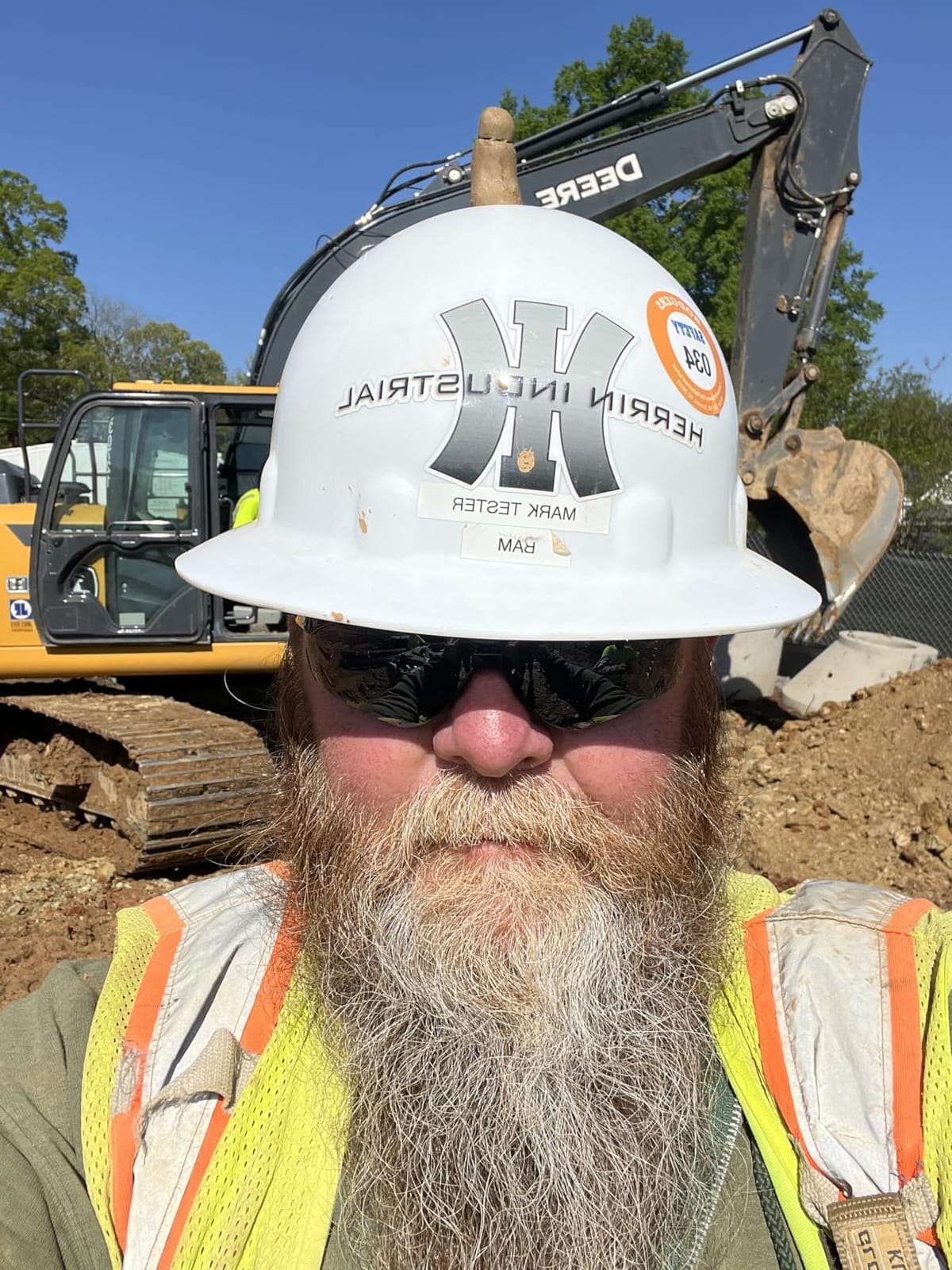
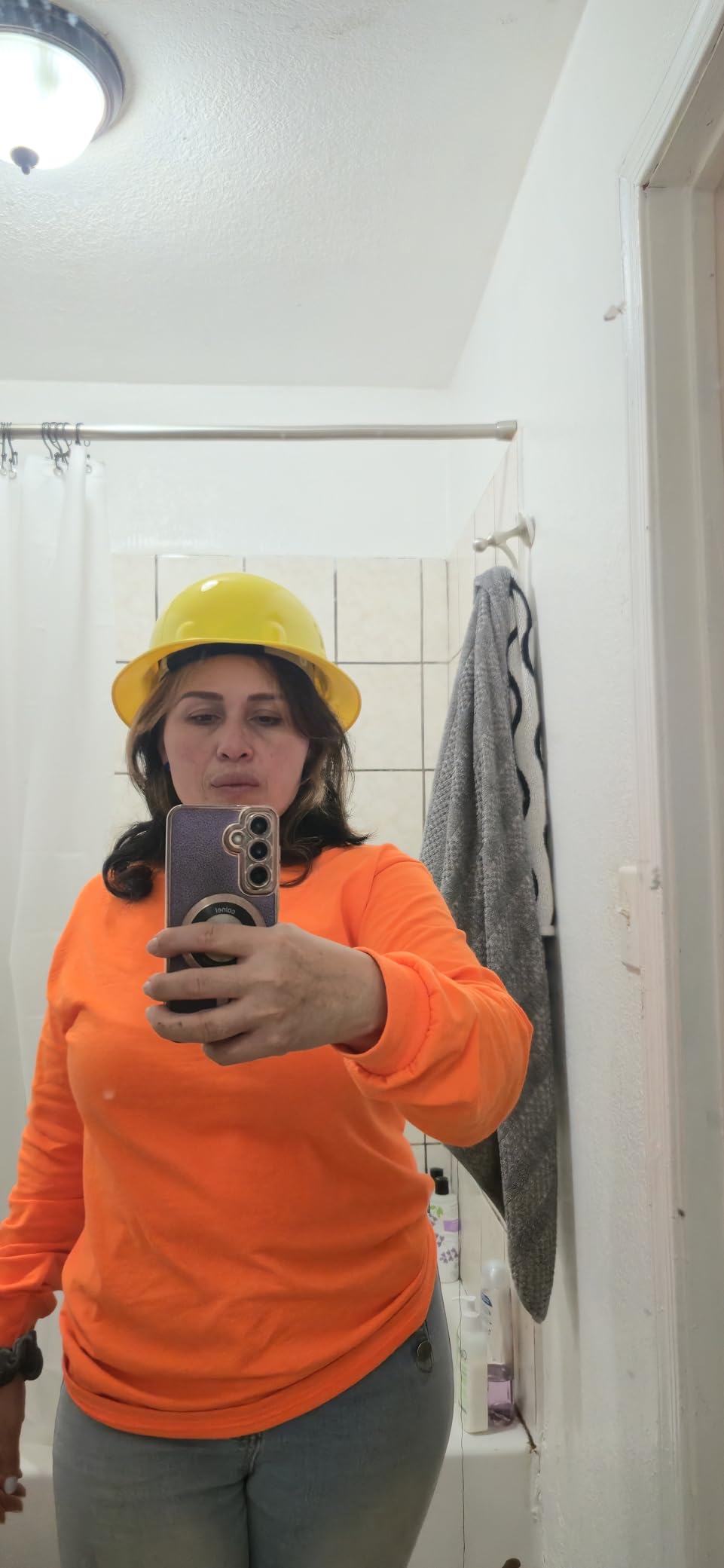
Most suspension systems hang from four or six points. The SuperEight hangs from eight, and that is the entire reason it exists. With more load-bearing points spread around the crown, the harness distributes weight evenly instead of concentrating it, which is why workers with larger head shapes single it out as the only hard hat that sits low and stays there. It holds a 4.6 rating across 2824 reviews.
At 6.9 ounces it is also one of the lightest shells here, and the low profile means it does not look bulbous under a hard hat suspension or a welding hood. The SuperEight Impact Energy Control System is the brand’s name for how the shell geometry spreads a blow over a wider area, and the quick-turn ratchet is described as non-slip and strip-resistant, so the adjustment does not chew itself up the way some plastic ratchets do.
Electrical rating is the other reason to buy it. It is certified to ANSI Z89.1-2009 as a Type 1, Class E hat, tested to 20,000 volts, and it is non-vented, so it stays compliant on live electrical work. If you are outfitting electricians, this is the pick from this roundup that belongs in their kit, and the lifetime limited warranty on shell and headgear is a real long-term argument for a company buying in volume.
The criticisms are consistent and worth stating. The shell is thin and flexible compared with a phenolic or fiber-reinforced model, and some reviews describe the brim arriving bent or warped. Others note that sunlight can show through the thinner areas of the shell. A smaller group report a loose suspension when they move their head quickly, and the plain white styling is a step behind the patterned shells on looks alone.
When the SuperEight fits the job
It is the strongest choice here for larger head sizes, full time electrical and utility-adjacent work where 20,000 volt clearance matters, and crews that wear a fall arrest harness or a welding hood over the hat. The eight-point cradle stays stable when you tilt your head, which matters in a cab, on a ladder or under a hood.
The lifetime limited warranty matters more for a company than for an individual. Ten or twenty of these cycling through a crew means fewer replacements over a decade, and the wear parts that do give out are the suspension and headband rather than the shell.
Where it is not the answer
It is a Type 1 shell, so a side strike is not covered, and there is no chin strap in the box, so lateral stability on a Type 2 site means buying one. The thin thermoplastic shell also means this is the wrong hat next to radiant heat. It is a small white shell with no ventilation, so it is a poor summer choice outside of shaded work.
If the driver for buying is comfort across a long day rather than electrical rating or head size, the eight-point cradle is genuinely the most comfortable suspension geometry in the group and you will feel the difference in the forehead by hour four.
6. 3M SecureFit H-700 Series – Best Hard Hat with UV Exposure Tracking
3M Hard Hat SecureFit, White, Vented Cap Style Safety Helmet, ANSI Z87.1
- Pressure diffusion suspension removes forehead hot spots
- Vented version makes a real difference in heat
- Premium washable moisture-wicking sweatband
- Uvicator sensor signals when UV has retired the shell
- Suspension is backward compatible with older 3M hats
- Assembly instructions confuse first-time buyers
- New units can arrive with a strong chemical smell
- Chin strap not included
- Instruction sheet mixes English French and Spanish
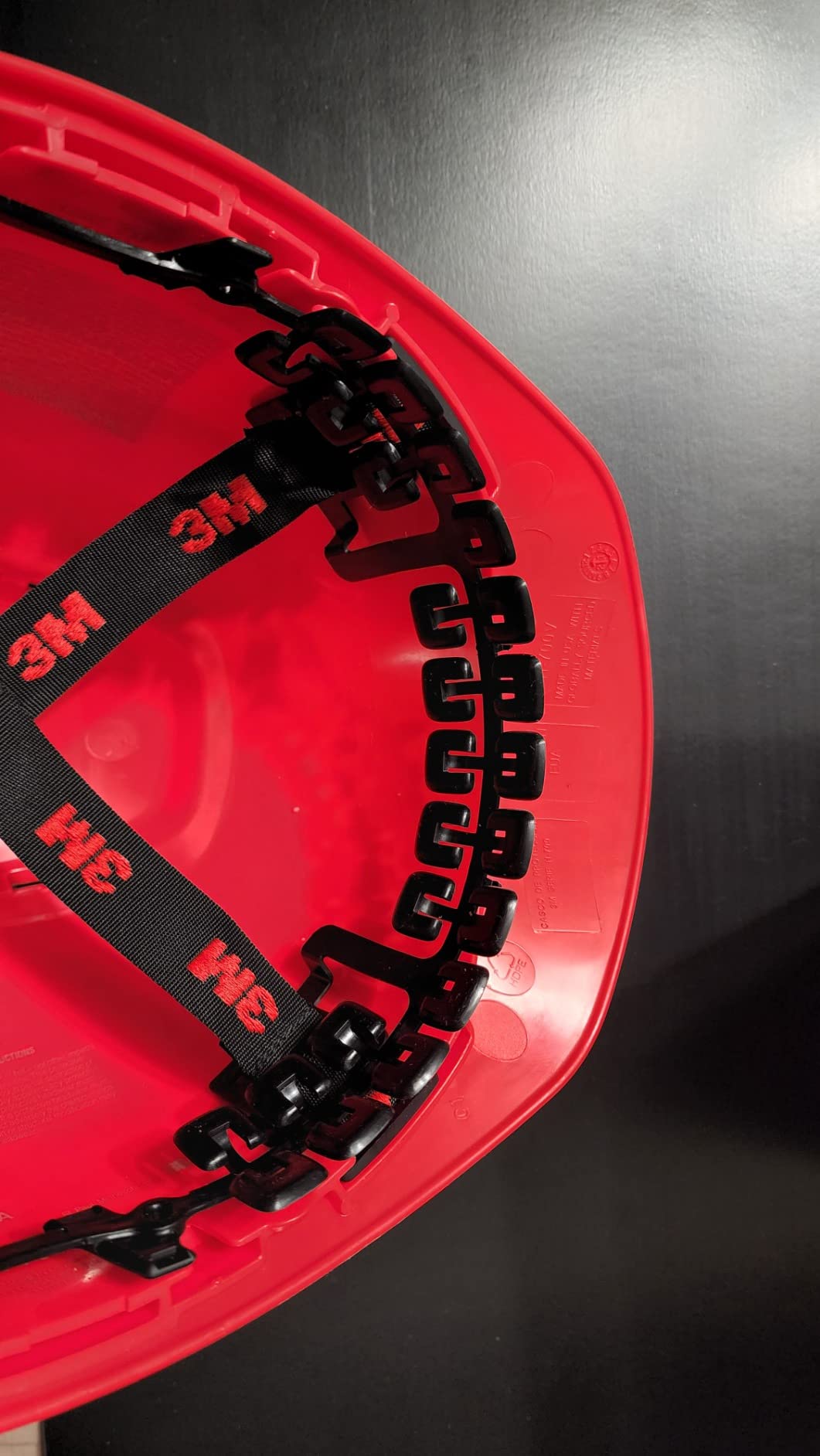
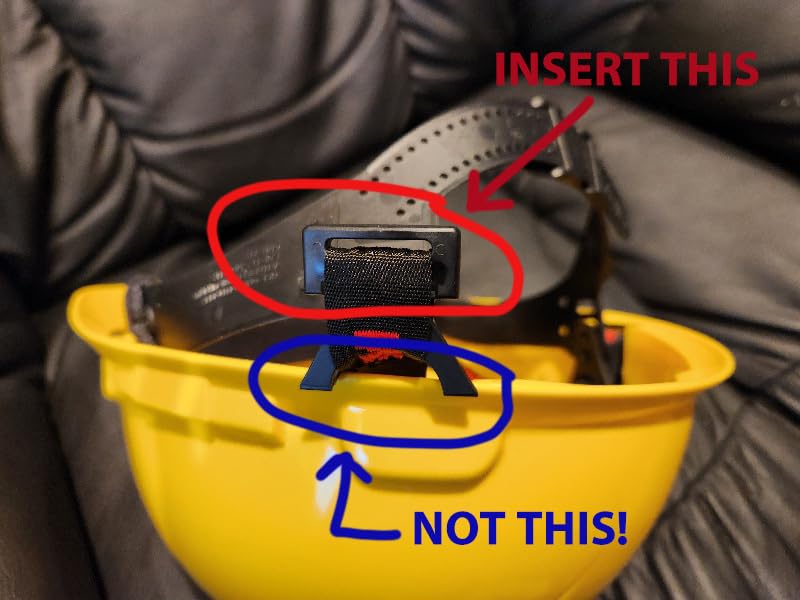
The SecureFit suspension is the reason 3M made this cap. Instead of webbing straps running over the crown, it uses a pressure-diffusion cradle that spreads the load across a wider contact area, and reviewers with long careers describe it as the most comfortable suspension they have worn. There are two levels of height adjustment, and the fit range runs from 6-1/4 to 8 inches, or 50 to 64 centimeters, which is one of the wider ranges in this group.
The Uvicator sensor is the more unusual feature. It is a small sensor in the shell that changes color as ultraviolet exposure accumulates, giving you a visual cue that the shell has taken enough sun and should come out of service. On a site where hats live in a truck bed and nobody tracks a date stamp, that is a genuinely useful safeguard against retiring a shell on memory rather than on evidence.
Electrical ratings depend on the variant. The non-vented shell is rated Type 1, Class G and E, and the vented version is Class C. It also has CSA Z94.1 equivalents, and it works with 3M cap-attached hearing protection, communication gear and face shields, so if your crew is standardized on 3M hearing protection that compatibility removes a layer of friction.
It is rated 4.3 across 727 reviews, the lowest score in the group, and the reason is almost entirely setup. Buyers report spending over an hour on assembly, some units arriving with a strong chemical smell, and an instruction sheet that mixes English, French and Spanish. A chin strap is not included. Budget twenty minutes to fit the suspension properly before you judge the comfort, because a badly fitted SecureFit does not feel anything like a well-fitted one.
When the Uvicator earns its place
It is built for crews working outdoors year round: rooftop installs, solar, utility line work, road construction, survey and land clearing. Any hat that spends its life in direct sun has a finite life, and a sensor that reports accumulated UV exposure turns a guess into a decision. Combine it with the washable moisture-wicking sweatband and you have a hat that tolerates sweat and dirt better than most.
The cap style is the other quiet advantage. With no front or rear brim, there is nothing to catch a ladder rail, a cab frame or a scaffold plank as you move. Operators on r/heavyequipment forums describe the rear brim collision as a top complaint about full brim hats, and a cap style simply removes the problem.
When to pick something with more protection
It is a Type 1 cap, so lateral impact is not covered, and if your site has adopted Type II helmets this is out. It is a molded HDPE shell, so it is the wrong polymer next to radiant heat. And because the cap has limited accessory coverage compared with a full brim, workers adding hearing protection, a face shield and a headlamp at once can find themselves short on room.
If the assembly friction bothers you, the honest answer is that it is a one-time cost. Fitted properly, the suspension is the best in this roundup for a long day in the sun.
7. LIFT DAX Fiber Resin – Best Premium Fiber-Resin Full Brim Helmet
Lift Dax Fiber Resin Full Brim Safety Helmet, 50/50 Gloss Red/Black
- Sits low and stays stable through a shift
- Clarino comfort dome with moisture-wicking EVA inserts
- Fiber-reinforced shell takes hits without cracking
- Full brim shades neck and shoulders
- Heavier than plastic and noticeable over a full day
- Brow pad picks up odor in heat and needs regular replacement
- Some reports of ratchet and suspension clips failing within months
- No manufacturer warranty offered
The DAX is the modern-looking answer to a problem that has usually been answered with an old-school shell. Instead of a molded plastic dome, it uses a carbon fiber reinforced resin shell that takes a hit without cracking, wrapped in a Clarino comfort dome with moisture-wicking EVA foam inserts. It holds a 4.4 rating across 966 reviews, which is a smaller base than the big sellers but a very engaged one.
What reviewers consistently praise is the seat. The 6-point ratchet suspension is sized so the helmet sits low on the head rather than perched on top of it, and once the EVA inserts have broken in, users describe the fit as stable enough that they stop thinking about the hat. For full-time site workers who wear the same shell for ten hours, that is the feature that matters more than material.
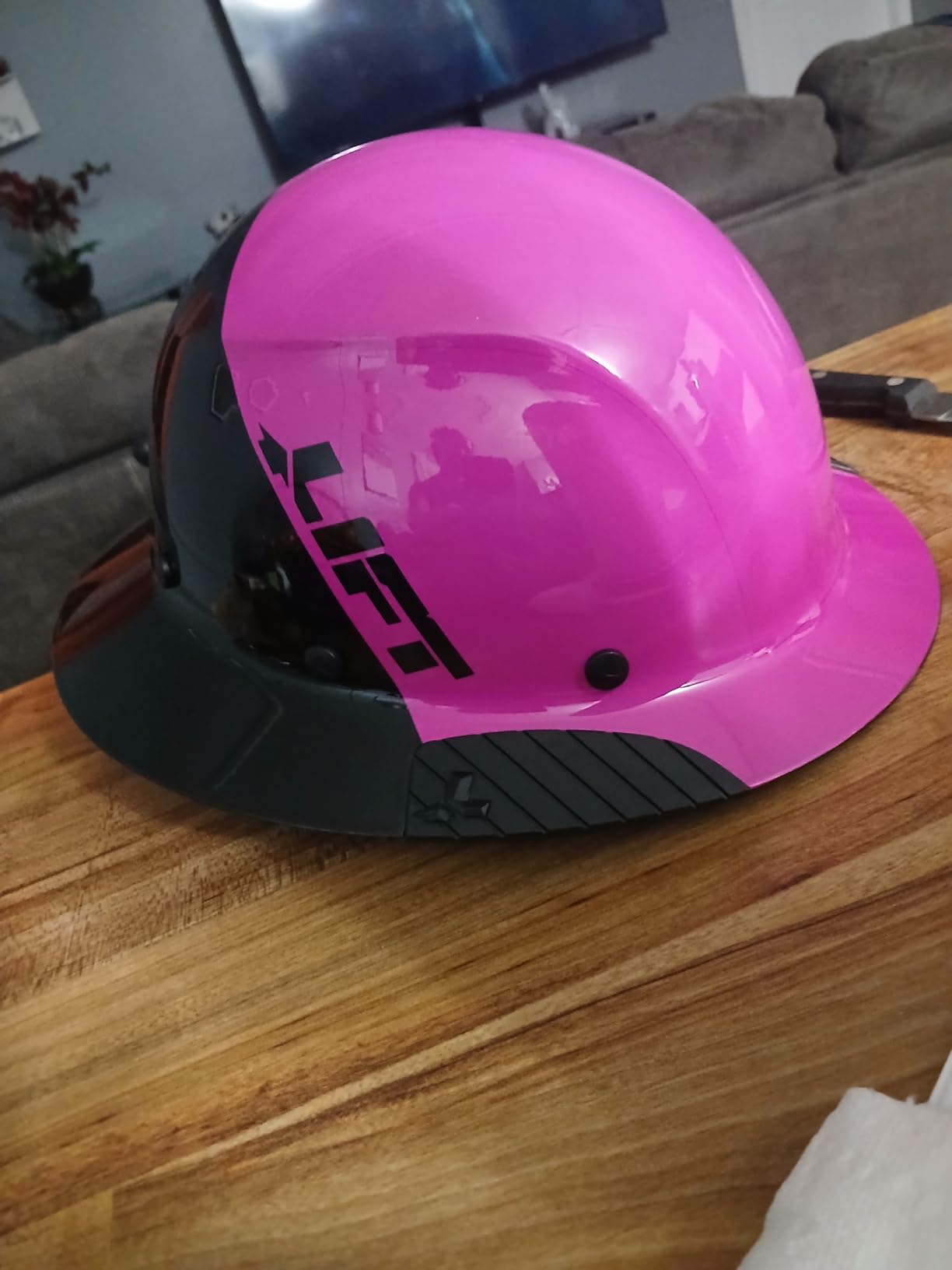
The 16-ounce weight is the real trade-off. It is noticeably heavier than any plastic shell in this roundup, and the reviews split on that: some call it substantial but fine, others say they feel it by the end of a long day, particularly on the neck. The brow pad also collects odor in heat, which means it needs replacing on a schedule rather than waiting for it to fail.
Durability reporting is mixed, and this is where the forum feedback matters. Workers on r/Construction name the DAX as one of the most recommended modern helmets, and also report repeated problems with the ratchet mechanism and suspension clips breaking within months of daily use. There is no manufacturer warranty on this model, so a broken ratchet means buying another helmet rather than a part. Check the hardware every few months and keep a spare suspension on the truck.
When the DAX is the right buy
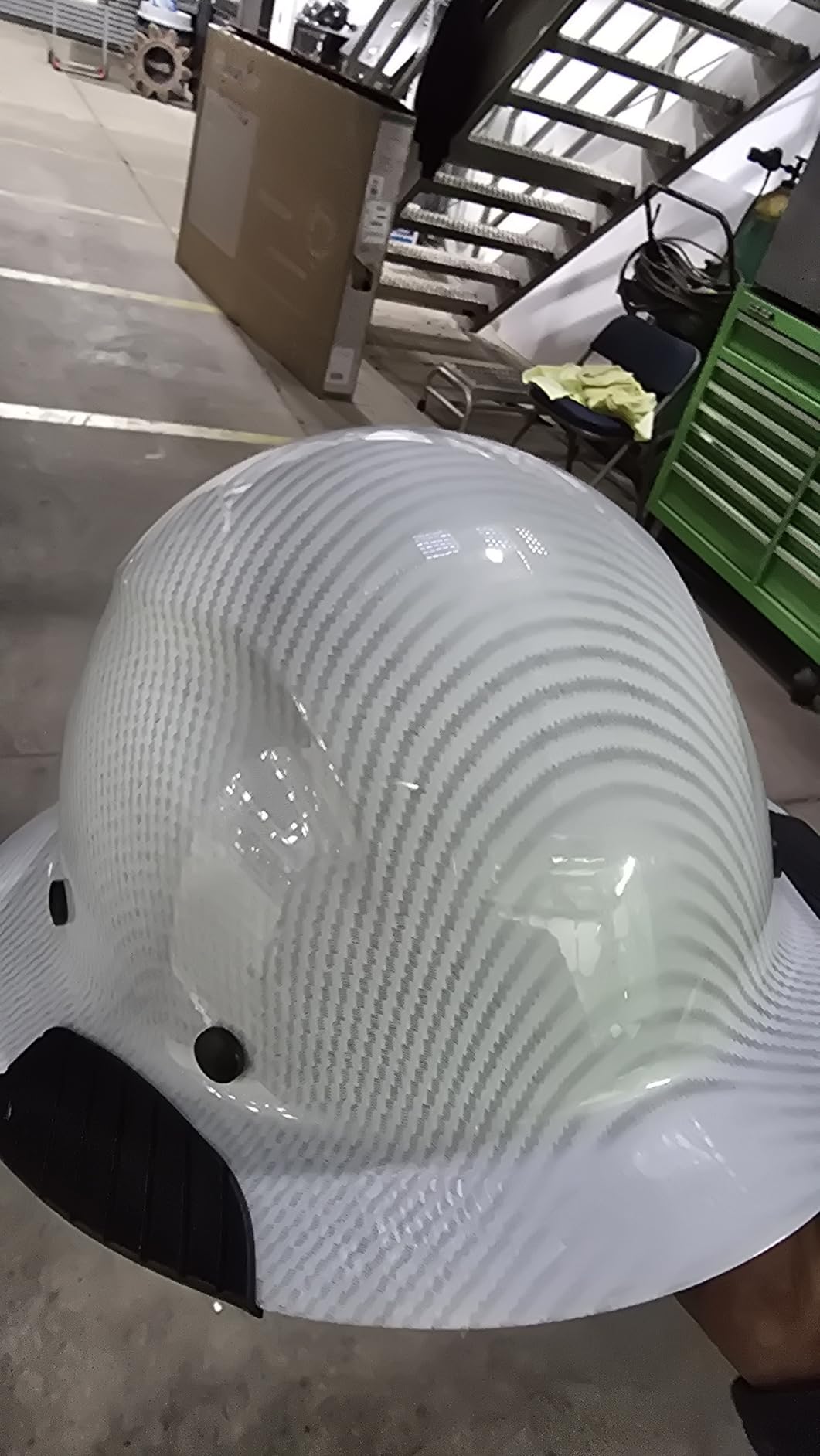
It suits outdoor crews who want a full brim for sun and rain without looking like they pulled a hat off a 1980s job board. The fiber-reinforced shell is a step up in impact confidence over thin thermoplastics, and the full brim does real work on a roof deck or a framing stage where debris falls from above. If comfort across a full shift is your top priority and you can carry the weight, this is one of the better all-day hats here.
It is also a sensible upgrade for a company replacing a mixed bag of old hats and wants a modern look that will still look presentable in two years.
When you should skip it
Skip it if weight is the deciding factor for your crew, or if you are outfitting heavy equipment operators who will be climbing in and out of a cab all day, where the full brim is a liability. It is a Type 1 shell, so no lateral impact rating. The lack of a warranty makes it a harder sell for fleet purchasing than the Fibre-Metal, which carries a lifetime limited warranty on shell and headgear.
If the absence of vents bothers you, that is not a defect so much as the price of the fiber shell and the padded liner. Plan for a do-rag or a sweatband and accept a warmer hat than a vented plastic shell.
8. STUDSON SHK-1 – Best Vented Type II Helmet for Hot Weather Construction
- Rear adjustment bracket lifts the helmet above the neck bone
- Vents move real air and keep the head cool
- Magnetic one-handed chin strap latch
- Adjustable dials give a genuinely custom fit
- NFC emergency contact chip and 10-year warranty
- Vents admit dust oil and water when the helmet lands inverted
- Molded plastic attracts steel dust and needs frequent cleaning
- NFC chip setup depends on workplace IT approval
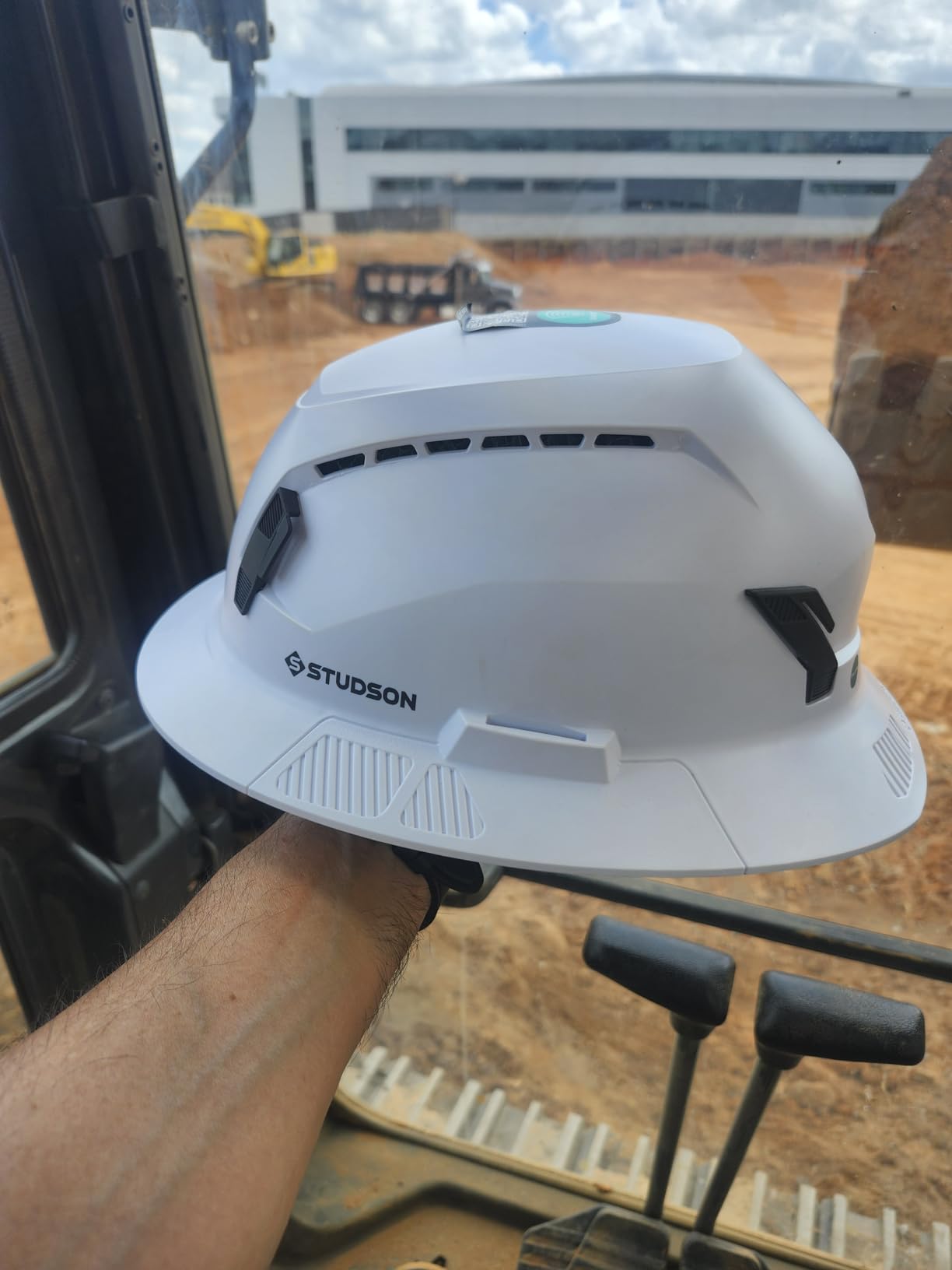
The SHK-1 is the only helmet in this roundup that solves the two problems crews complain about most: heat, and the fact that a traditional hard hat shell sits directly over the neck bone. The rear adjustment bracket raises the shell so it clears the top of your spine, and owners wearing it ten to fourteen hours a day call that the single biggest comfort change of any hat they have moved to. It holds a 4.6 rating across 333 reviews, a small base but a very enthusiastic one.
It is also a genuine Type II helmet, certified to ANSI/ISEA Z89.1-2019 (R2019) as a Type 2, Class C shell, using Koroyd and TwICEme energy absorption for 360 degree coverage. The vents move a substantial amount of air, which is the point on a July afternoon, and the Perfect Fit system with adjustable rear dials lets you dial the shell in rather than settling for whatever the factory shipped. The fit range is 53 to 63 centimeters.
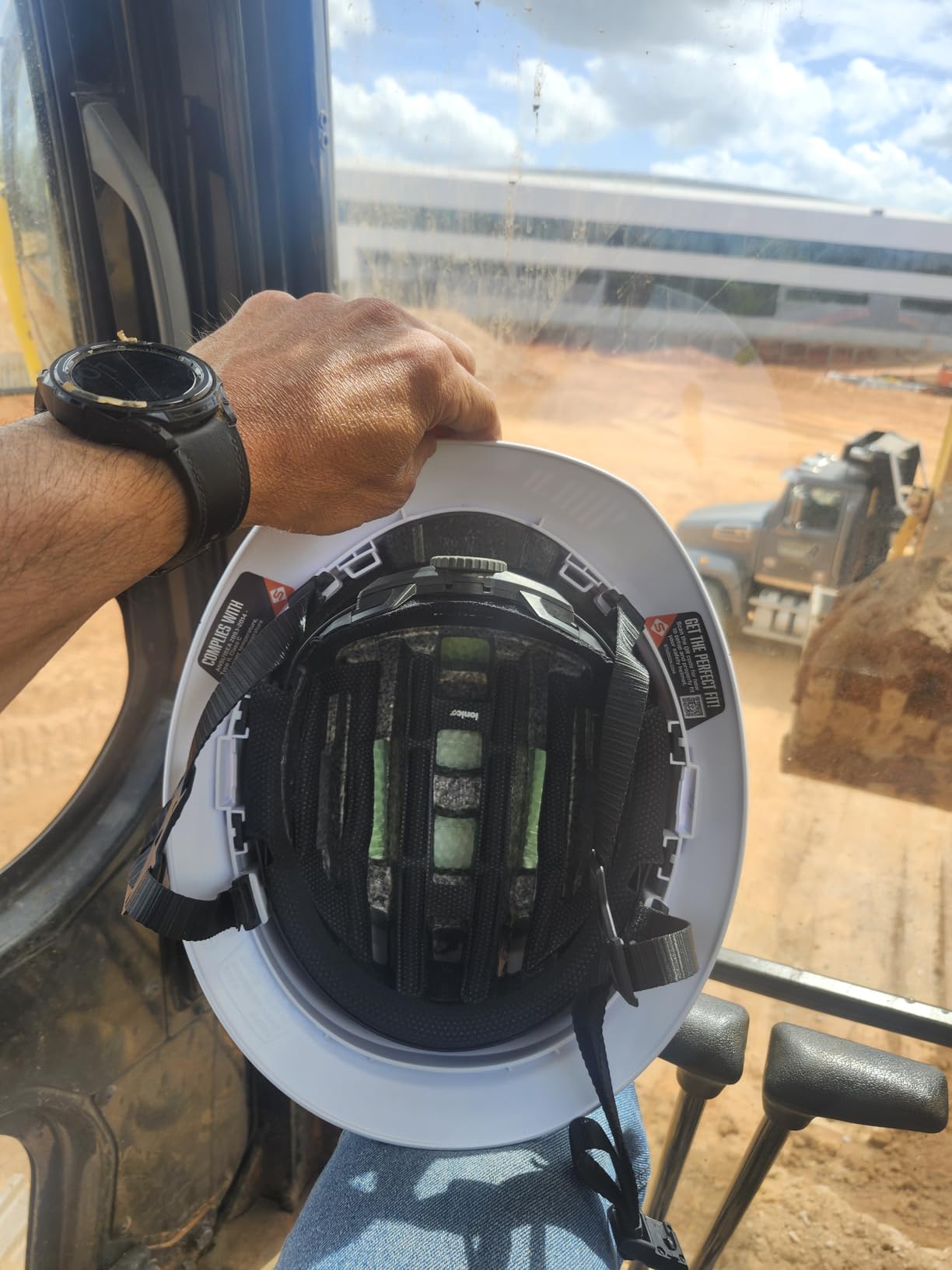
Two details stand out for day-to-day use. The chin strap uses a magnetic one-handed latch, so you can flick it open and closed with a glove on, which is exactly the kind of thing that decides whether a chin strap gets used at all. And there is an NFC emergency contact chip in the shell that any phone with NFC can read, so a supervisor or a paramedic can identify the wearer and reach the right person after an incident.
The trade-offs are real but narrow. Open vents mean that if the helmet takes a hard knock and lands inverted, dust, oil and water get straight inside, and a molded plastic shell in a dusty or greasy environment needs regular cleaning. The NFC feature is only as good as your employer allowing it, so check before you rely on it. The 10-year warranty is the longest in the group and argues strongly for the durability question.
When the SHK-1 is the right pick
It is the answer for hot-weather sites, and for any crew that has already moved to Type II helmets. Solar installers, roofers, framers, concrete crews and anyone in the southern heat will feel the rear bracket and the airflow more than any other single feature on a helmet. Workers on r/Construction name this model repeatedly as the most comfortable Type II option, specifically because the chin strap is comfortable and easy to adjust.
The 10-year warranty also changes the arithmetic for a company. If a crew of 15 wears these daily, the replacement cycle is effectively a non-issue, and the emergency contact chip adds a safety layer that no other hat in this roundup has.
When it is wrong
It is Class C. Vented shells are conductive and carry no electrical protection, so electricians cannot wear it, and crews on sites that require a Class E or Class G hat will not accept it. That single fact disqualifies it for a meaningful slice of the trades.
It is also not a good fit for grinding, cutting steel or foundry-adjacent work, where airborne dust and grit will find their way through the vents constantly. And the molded plastic shell needs cleaning far more often than a phenolic or fiber shell.
9. Malta Dynamics APEX – Best Budget Type 2 Safety Helmet
- Compact low profile that does not look bulbous
- Integrated vents for airflow and reduced heat
- Molded interior liner does not shift side to side
- Also tested to EN 12492 EN 397 OSHA 1910 and 1926
- Lifetime limited warranty
- Runs small and squeezes larger heads at max adjustment
- Sits shallower on the head than a Type 1 shell
- Full molded liner adds weight
- Shallow seat can feel loose on top
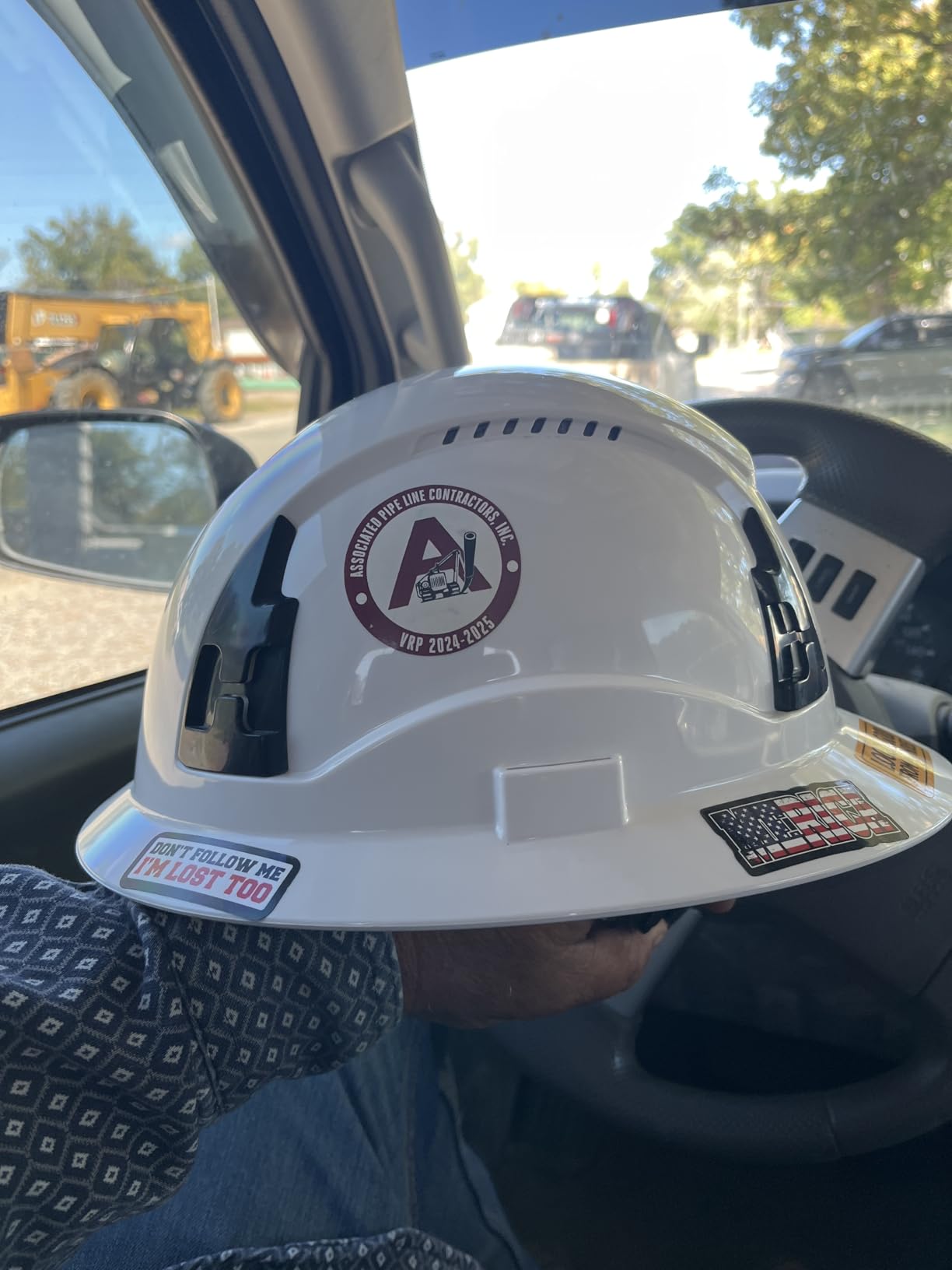
The APEX is the straightforward route to a Type 2 helmet without moving up to a premium brand. It is rated to ANSI Z89.1-2014 as a Type 2, Class C shell covering top, front, back and side impacts, and it is also tested to EN 12492, EN 397, OSHA 1910 and OSHA 1926. That list of standards is unusual at this price point and matters for crews that work under more than one rulebook.
Union workers buying it for jobsite compliance point at the low profile, the brim coverage and the molded interior liner. The liner is the differentiator: a webbing suspension can shift sideways across the crown as you move, and a molded liner does not, so the hat stays put through climbing and overhead work. The integrated vents handle airflow, and the 4-point chin strap is removable and adjustable rather than fixed. There is a lifetime limited warranty behind it.
The dominant complaint is fit. It runs small, and even at maximum adjustment it can squeeze larger heads. Because a Type 2 shell is shaped closer to the head than a traditional Type 1 dome, it also sits shallower, and some users find the top feels loose. The molded liner that gives the stability also adds weight at 1.2 pounds. The shallow seat is a Type 2 trade-off generally rather than a fault specific to this model, but it is worth trying on rather than ordering a case blind.
This is a case where sizing is the whole decision. If you are outfitting a crew with a wide spread of head shapes, get a sample and fit the largest head in the group first.
When the APEX makes sense
It fits crews that have adopted Type II helmets and need to supply them at volume, on a budget, without dropping to a bump cap or a non-certified hat. The multi-standard testing list makes it the easiest sell in this roundup to a multinational contractor covering US, Canadian and European sites. The removable chin strap lets you leave it off where lateral impacts are not a concern, which some crews prefer for comfort.
It is also a good entry point for a company moving from traditional hard hats to safety helmets, since the low profile looks and feels closer to what workers are used to wearing.
When to look elsewhere
Skip it for large head shapes unless you have fit-tested it. It is Class C and vented, so it is not an electrical hat. And with 219 reviews it has the smallest base in this roundup, which means long-term durability is less well documented than for the heavily reviewed models above it.
If comfort in heat is the priority, the vented Type 2 options with a padded, washable sweatband and top pad are a better answer than a bare molded liner, even if they are heavier.
10. Klein Tools 60565 Type 2 – Best Hard Hat for Confined Spaces and At-Height Work
- Low profile compact shell for at-height and confined space work
- Type 2 side impact rating plus front and back protection
- Quick click-in accessory mounts need no straps
- Machine washable sweatband and top pad
- 6-point suspension and chin strap keep it stable when the head tilts
- Heaviest shell in the group at 1.4 lb
- Bulk under a harness or hood
- Less sun coverage than a full brim
- Small review base so durability is less documented
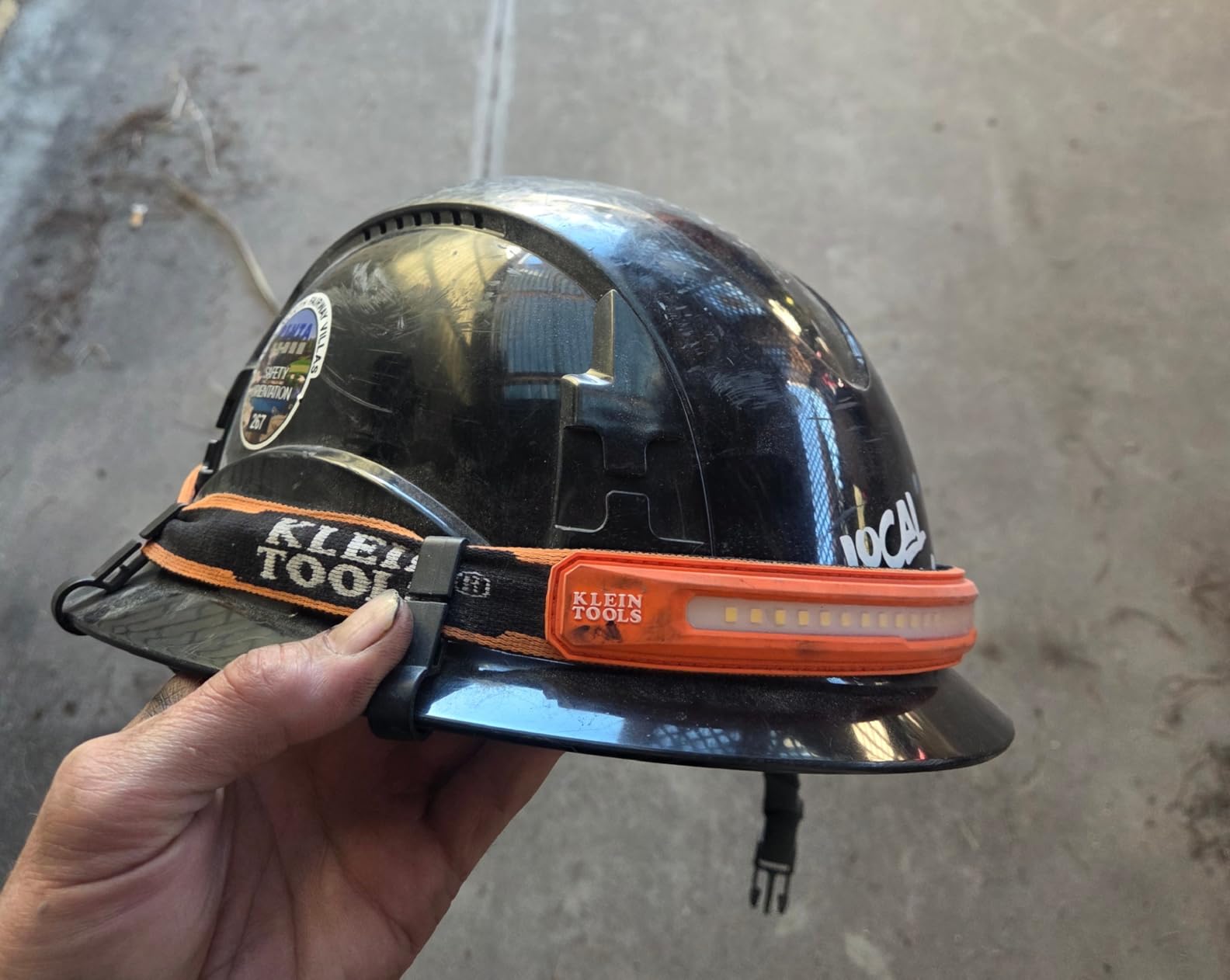
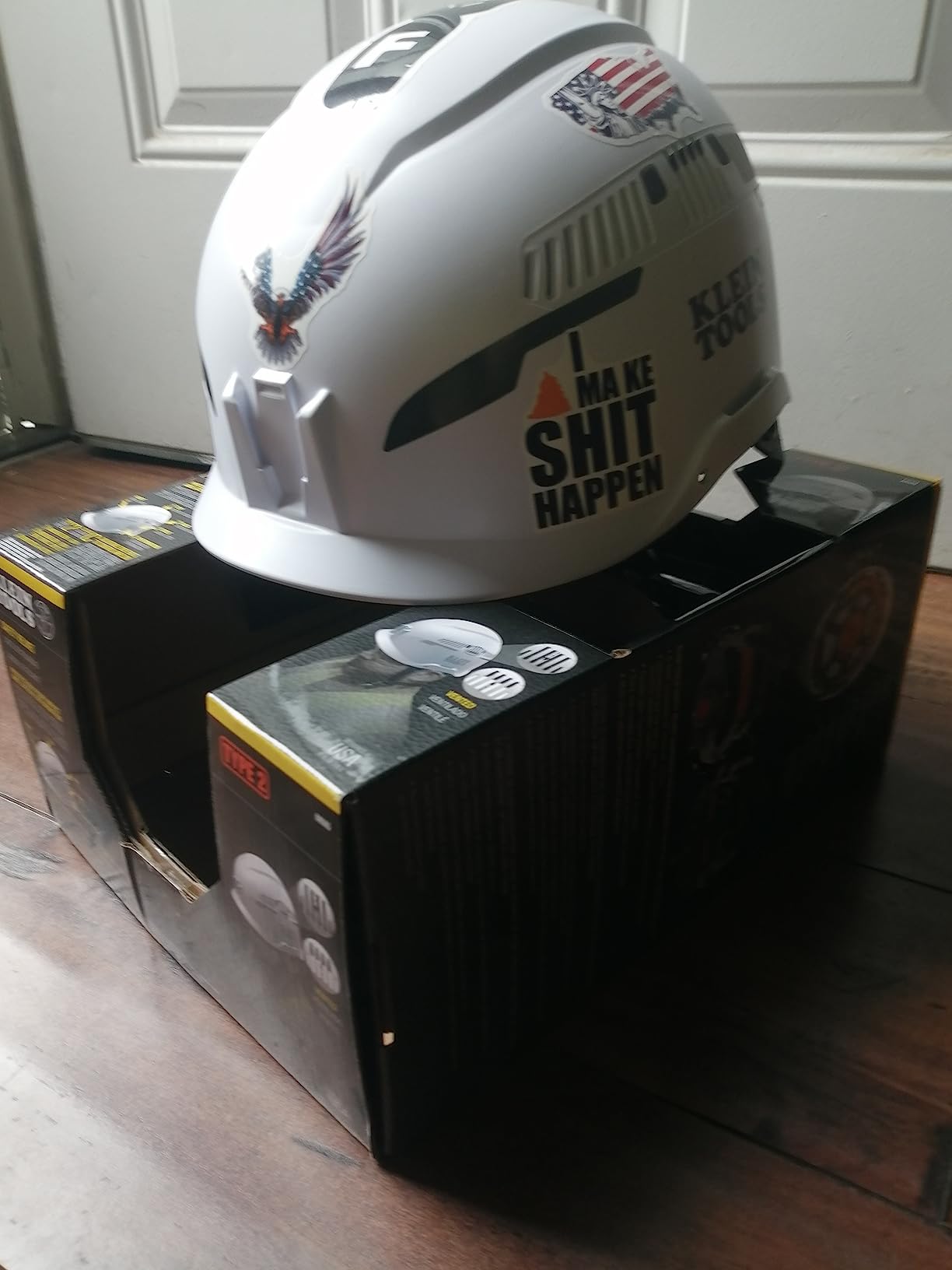
The 60565 is built for the places where a full brim is a liability: inside a manhole, in a tank, in a duct, on a ladder inside a shaft, under a fall arrest hood. The shell is deliberately compact and low profile, so it does not foul on a ladder rung or catch the edge of a confined space opening as you position your head. It carries a 4.6 rating across 117 reviews, the smallest base in the group, so treat the long-term picture with a little caution.
The certification is what makes it interesting. It is rated to ANSI Z89.1-2014 (R2019) as a Class C, Type 2 safety helmet protecting against top, front, back and side impacts, and the manufacturer states it is intended for at-height and confined space work. The 6-point suspension plus the chin strap is the combination that matters in those environments, because in a confined space your head is often tilted and a Type 1 shell with a loose retention system rotates off.
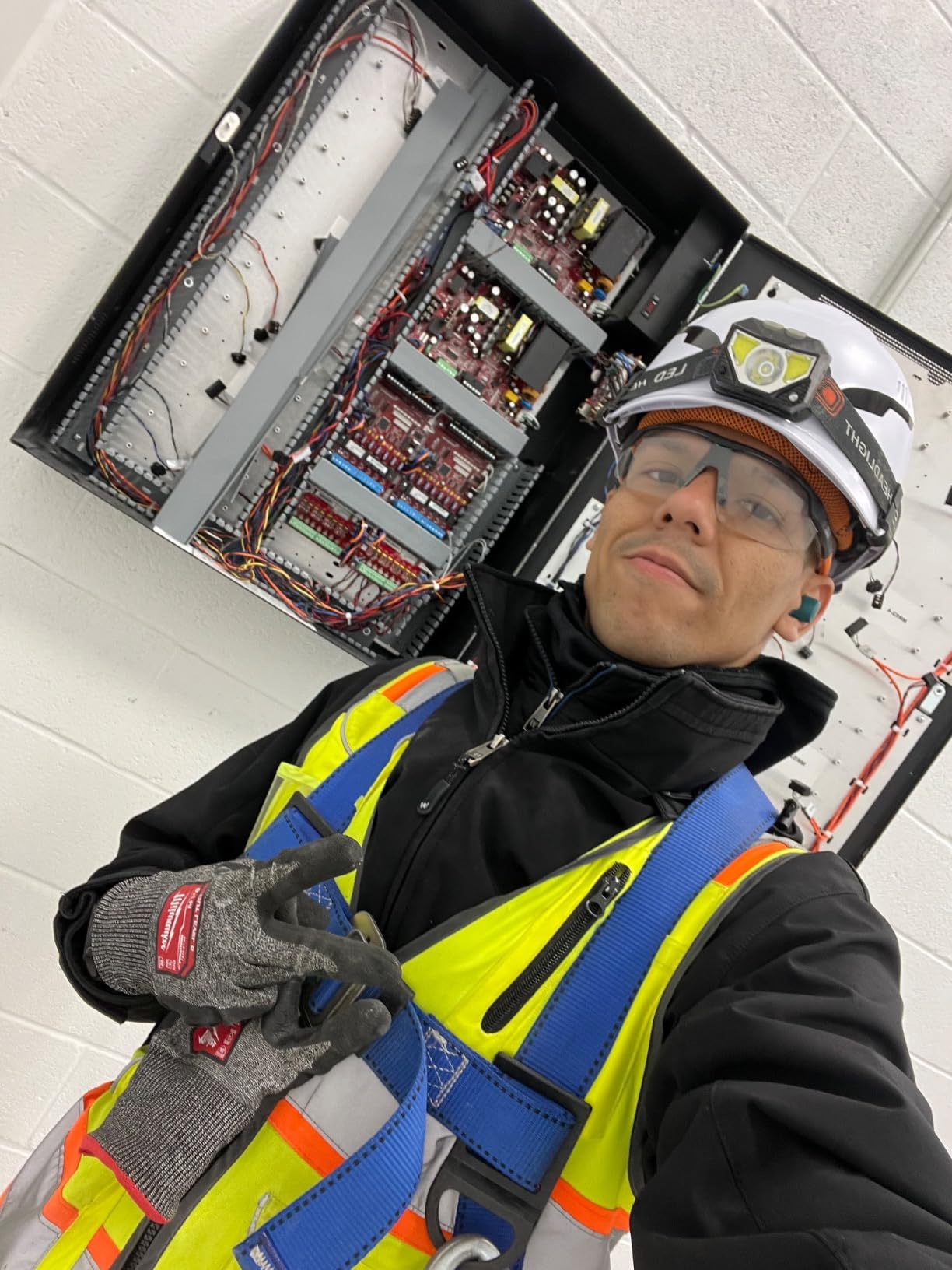
The accessory mounts are the other reason to like it. The patented quick click-in mounts take lamps, ear protection and face shields without straps, which in a tight space is the difference between a clean setup and a bundle of elastic bands catching on something. The sweatband and top pad are both machine washable, which matters enormously in a hot confined space where sweat runs straight into your eyes and you cannot take the hat off to dry it.
Weight is the cost of the packaging. At 1.4 pounds this is the heaviest shell in the roundup, and the 6-point suspension plus chin strap add bulk under a fall arrest harness or a welding hood. The low profile also means less sun coverage than a full brim, which does not matter underground and matters a great deal on a roof.
When the 60565 is the right tool
It is built for confined space entry teams, at-height iron and steel work, tower and mast climbing, wind turbine service and any crew working where a full brim hat is getting caught on something. Electricians, plumbers and HVAC technicians working into ceilings all benefit from the compact shell. If your site has adopted Type II helmets and your people work in tight spaces, this is the shape you want.
The click-in mounts also make it a good team standard: standardize one mount type across the crew and lamps, ear defenders and face shields all fit the same shell.
When to choose a different model
Do not put it on a roof in summer, where the lack of a brim costs you sun coverage and ventilation, and where 1.4 pounds plus a chin strap is a long day. It is Class C and vented, so it is not an electrical hat. And with 117 reviews, long-term durability is not well documented, so for a large fleet purchase pair it with a scheduled inspection rather than assuming it will outlast the crew.
If you want a Type 2 that is cooler and lighter but not as compact, the STUDSON SHK-1 is the other direction to go, and it comes with a 10-year warranty.
How to Choose a Hard Hat: The Ratings That Actually Matter
Every hard hat in this roundup carries two letters and a number stamped under the brim: a Type and a Class. The Type tells you where the shell protects you from an impact. The Class tells you what happens when electricity is involved. Everything else, including the price gap between shells, is comfort and convenience layered on top of those two facts.
Type I vs Type II: which impact coverage do you need
Type I protects the top of the head from a falling object, which is the classic brick-through-the-hard-hat scenario. Type II adds lateral impact protection for a strike to the side of the head, usually off a steel beam, a scaffold pole, a truck bed door or a cabinet in a tight space, and it nearly always comes with a chin strap to keep the shell on during the hit.
For most general construction, Type I remains the standard and is entirely adequate. Type II earns its place on sites where workers are under steel, at height near structure, in confined spaces, or working around heavy equipment with moving arms. If your company has moved to Type II helmets, start your search with the two models in this roundup that carry the rating, because most of the market has not followed yet.
Class C vs Class G vs Class E: the electrical ratings
Class C is conductive and offers impact protection only, with no electrical protection. Every vented shell is Class C, which means venting and electrical clearance are a direct trade: you cannot have both in one hat. Class G is general use, tested to 2,200 volts, and suits most industrial and commercial work. Class E is electrical, tested to 20,000 volts, and is what electricians and utility workers need.
The practical consequence is a job you cannot argue your way around. A lineman cannot wear a vented hat, full stop, and that is why the non-vented Class E shells in this roundup exist as a category. The answer to hot summers for electricians is a non-vented shell plus a sweatband, a do-rag and a cooling liner, not a vented shell that compromises the rating.
Note also that the Pyramex Ridgeline and the ACERPAL shell both carry Class C, G and E on the same non-vented shell, which is unusual and is a large part of why they work as one-hat-for-a-mixed-crew buys.
Shell materials: HDPE, ABS, thermoplastic, fiber resin, phenolic and aluminum
HDPE and ABS are the plastics. They are the lightest shells, the least expensive, and they take hits without shattering, but they soften and lose strength in radiant heat, and the thinner grades flex visibly when you knock them. Thermoplastic sits in the middle: thinner and more flexible than the premium shells, and the reason the Fibre-Metal SuperEight is so light.
Fiber-reinforced resin and phenolic are the premium polymers. Phenolic is the heat champion and is rated for radiant heat loads up to 350F, which is why the MSA Skullgard is the pick for welding-adjacent and foundry work. Fiber resin takes hits without cracking and looks modern, at the cost of weight. Carbon fiber and aluminum are the specialist answers, used in situations where sparks, radiant heat or extreme weight matter more than impact attenuation, which is why loggers wear aluminum hats around a chainsaw bar.
Suspension systems: 4-point, 6-point and 8-point cradles
The suspension is what most determines whether a hard hat is comfortable after hour four. A 4-point cradle hangs from four points and is the most common configuration, and it is fine for most work. A 6-point cradle adds two rear points, which spreads the load further back and keeps the shell from rotating when your head tilts, which is why Type II helmets use them. An 8-point cradle, as on the SuperEight, spreads the load widest and is the most forgiving option for larger head shapes.
On top of the cradle, the ratchet dial is what turns a generic fit into a real fit. A ratchet you can adjust with gloves on is worth far more than an extra feature, and it is the single most common reason workers upgrade. Fit the crown so there is roughly half an inch of clearance between the shell and your skull, tighten the ratchet until the hat is secure but the side pads are not compressing, then move your head around. If it shifts, it is not tight enough.
One rule matters more than any of the above: never mix a replacement suspension from one brand with a shell from another. Shells and suspensions are tested as a pair, and a mismatched cradle can change how the shell sits and how the impact energy is spread. Replace the suspension with the part designed for that shell, or buy the whole hat.
Making an existing hard hat more comfortable
Four adjustments fix most complaints. First, reset the suspension height so the shell sits about half an inch above your skull instead of resting on it, which removes the pressure point at the crown. Second, dial the ratchet until the side pads touch evenly rather than one side biting first. Third, add or replace the brow pad and sweatband, since the pads supplied with cheap shells are thin webbing that turns into a hotspot by midday. Fourth, use a sweat-wicking do-rag or a cooling liner under the shell, which is the only real answer to heat when you cannot have a vented shell.
If your hat still hurts after that, the problem is the shape, not the adjustment. Most hard hats in this roundup fit a specific range, and the common sizes run from 6.25 to 8 inches. Measure around your head just above the eyebrows, then check that the low end of the shell’s range still has slack on the tightest setting. A shell that runs small will never be comfortable, and the Malta Dynamics APEX is the clearest example in this roundup of a fit problem you cannot adjust away.
Inspection, replacement and the dates that matter
Inspect before every wear, not once a month. Check the shell for cracks, dents, gouges and UV fading, especially around the accessory slots and the brim edge where a dropped tool hits first. Check the suspension for frayed webbing, cracked ratchet teeth and cracked headband rivets. Check the date-of-manufacture stamp, which lives inside the shell or molded under the brim, and check the chin strap for cuts.
The replacement schedule most safety programs use is a suspension swap at about 12 months and a shell replacement at about 5 years, or closer to 2 years under heavy use, and immediately after any impact that leaves a mark. The squeeze test is worth knowing: press firmly on the shell sides and look for any sign of deformation, because a shell that flexes or dents is a shell to retire. Never drill a shell, never apply a sticker or decal over it, and never paint it, because all three compromise the tested protection even if the damage is invisible.
OSHA requires head protection where falling or swinging objects, electrical contact or head-height hazards exist, and it places the inspection responsibility on the employer. That is also the argument for a shell with a built-in exposure cue, like the Uvicator sensor on the 3M SecureFit, on crews whose hats live in a truck bed and never see a supervisor.
What a cheap shell and a premium shell actually buy
It is a fair question, and it comes up constantly on r/heavyequipment threads about survivability between entry-level and premium helmets. The honest answer is that both shells must pass the same ANSI Z89.1 impact and penetration tests, including a 4,450 newton limit on force transmission, an apex penetration test and, for Type II, an off-center penetration test. A cheap shell that carries a compliant Type and Class mark has passed those tests, and it will stop the same falling object.
What the premium shells buy is margin, comfort and consistency. A thicker fiber or phenolic shell survives repeated blows rather than one, a padded six-point cradle stays comfortable at hour eight, an energy-absorbing liner manages the peak force across a wider area, and a brand with a warranty will replace a failed shell. None of that changes whether a brick hurts. All of it changes whether you are still wearing the same hat in three years, and whether you take it off at hour four because your forehead hurts.
For most crews the practical split is simple: a compliant plastic shell for general construction issued from stock, and a properly fitted premium or Type II shell for anyone who wears one every day. For sun and heat planning, our picks on hats for sun protection and hats for hot weather cover the off-site side of the same problem.
Frequently Asked Questions
What are the two types of hard hats?
The two types are Type I, which protects the top of the head from falling objects only, and Type II, which adds lateral impact protection for a strike to the side of the head. Type II shells nearly always include a chin strap so the helmet stays on during a side impact. Most general construction sites still run on Type I, while steel, at-height and confined space work increasingly requires Type II.
What type of hard hat do construction workers wear?
Most construction workers wear a Type I cap style or full brim shell certified to ANSI Z89.1, with an electrical class matched to the site hazards: Class C for impact only, Class G tested to 2200 volts for general work, or Class E tested to 20000 volts for electrical and utility work. A full brim is common for outdoor jobs because it sheds sun, rain and falling debris, while cap style is preferred in equipment cabs where a rear brim catches the frame.
Is a Class C or Class E hard hat better?
Neither is better in general, because they protect against different hazards. Class C is impact only with no electrical protection, and every vented shell is Class C because vents break electrical continuity. Class E is rated to 20000 volts and is what electricians and utility workers need. If you work near energized equipment, Class E is the only correct answer, and you trade ventilation for that rating.
Which hard hat suspension is the most comfortable?
Comfort comes down to load distribution and adjustability. A four point cradle is standard, a six point cradle spreads load further back and keeps the shell from rotating when your head tilts, and an eight point cradle spreads it widest, which is why larger head shapes prefer it. A ratchet dial you can adjust with gloves on matters more than the point count, and the ideal fit leaves about half an inch of clearance between the shell and your skull.
How often should a hard hat be replaced?
Replace the suspension at roughly 12 months and the shell at roughly 5 years, or closer to 2 years under heavy use, and replace either immediately after any impact that leaves a mark. Inspect before every wear for cracks, dents, frayed webbing and a cracked date-of-manufacture stamp. Never drill, paint or sticker a shell, since all three compromise the tested protection even when the damage is invisible.
Final Verdict
The Pyramex Ridgeline is the best hard hat for construction in 2026 because it does the widest job: a full brim, a 4-point ratchet, replaceable padding and a shell certified to Class C, G and E all at once, with 18602 reviews behind it. Buy it for a mixed crew that needs one hat to cover general construction, remodels and maintenance.
Match the rest to the hazard rather than the brand. Phenolic shells such as the MSA Skullgard belong next to radiant heat and welding bays. Non-vented Class E shells such as the Fibre-Metal SuperEight belong on electricians and utility crews. Vented, heavily padded Type II helmets such as the STUDSON SHK-1 and Klein Tools 60565 belong to hot sites and crews that have adopted lateral impact protection.
Whatever you choose, read the Type and Class under the brim before you buy, fit the ratchet until the shell is secure and half an inch clear, and set an inspection schedule rather than relying on memory. That last habit is worth more than any upgrade on this list.