
Have you ever finished a long run only to have your legs feel heavy and sore for days afterward? That lingering fatigue can derail your training schedule and make every subsequent workout feel like a chore. I remember my first marathon training cycle when I could barely walk down stairs the day after my longest runs. My calves screamed with every step, and I started dreading what should have been enjoyable training sessions.
That experience led me to investigate every possible recovery tool, and compression socks kept appearing in conversations with experienced runners. The benefits of compression socks for runners have become widely discussed in the running community, but separating hype from science took some research. What I discovered changed how I approach both training and recovery. In 2026, compression socks are not just a trend. They represent a practical approach to supporting your legs through the demands of running.
This guide examines everything you need to know about compression socks. We will explore how they work, what science says about their effectiveness, when to wear them, and how to choose the right pair for your needs. Whether you are training for your first 5K or preparing for an Ironman triathlon, understanding these benefits can help you train smarter and recover faster.
Table of Contents
What Are Compression Socks for Running?
Compression socks are specialized elasticated garments designed to apply gentle pressure to your lower legs. Unlike regular athletic socks that primarily provide cushioning and moisture management, compression socks serve a physiological purpose. They use graduated compression technology, meaning the pressure is strongest at the ankle and gradually decreases as the sock moves up toward the calf and knee.
Most running-specific compression socks extend to just below the knee, covering the entire calf muscle. This design maximizes the benefits to the areas most stressed during running. The compression is measured in millimeters of mercury (mmHg), which represents the amount of pressure the fabric applies to your leg. Running compression socks typically fall into the 15-20 mmHg or 20-30 mmHg range, though medical-grade options can go higher.
It is worth distinguishing between full compression socks and calf sleeves. Full socks cover the foot and extend to the knee, providing compression throughout the entire lower leg and arch support. Calf sleeves stop at the ankle, leaving your feet free to wear your preferred running socks. Both options deliver compression benefits to the calf muscles, but full socks offer additional foot and ankle support that some runners prefer, especially those dealing with plantar fasciitis.
How Do Compression Socks Work?
The mechanism behind compression socks centers on improving your circulatory system’s efficiency. When you run, your leg muscles work as a secondary pump for your cardiovascular system. Each time your foot strikes the ground and your calf muscles contract, they help push blood back up toward your heart. This is called the skeletal muscle pump, and it is essential for maintaining good circulation during exercise.
Compression socks enhance this natural process by applying external pressure to your veins. This pressure narrows the diameter of superficial veins, increasing the velocity of blood flow back to the heart. The result is improved venous return, which means deoxygenated blood gets back to your heart and lungs more efficiently. From there, oxygen-rich blood can be pumped back to your working muscles, improving oxygen delivery during exercise and aiding recovery afterward.
Another mechanism involves muscle oscillation reduction. When your foot hits the ground, the impact causes your muscles to vibrate or oscillate. These micro-movements create small amounts of muscle damage and fatigue over the course of a run. Compression socks stabilize the muscle tissue, reducing this oscillation and potentially limiting muscle damage. Think of it like wrapping a fragile item before shipping. The compression keeps everything stable during the jostling of transport.
The graduated compression aspect is crucial. By being tighter at the ankle and looser at the calf, compression socks work with gravity rather than against it. Blood pooling in the lower extremities is minimized because the pressure gradient encourages upward flow. This is particularly beneficial during recovery periods when your legs are elevated and the skeletal muscle pump is not actively engaged.
Key Benefits of Compression Socks for Runners
Understanding the specific advantages helps you decide when and how to incorporate compression socks into your running routine. The benefits of compression socks for runners span multiple dimensions from performance support to recovery acceleration.
Improved Blood Circulation
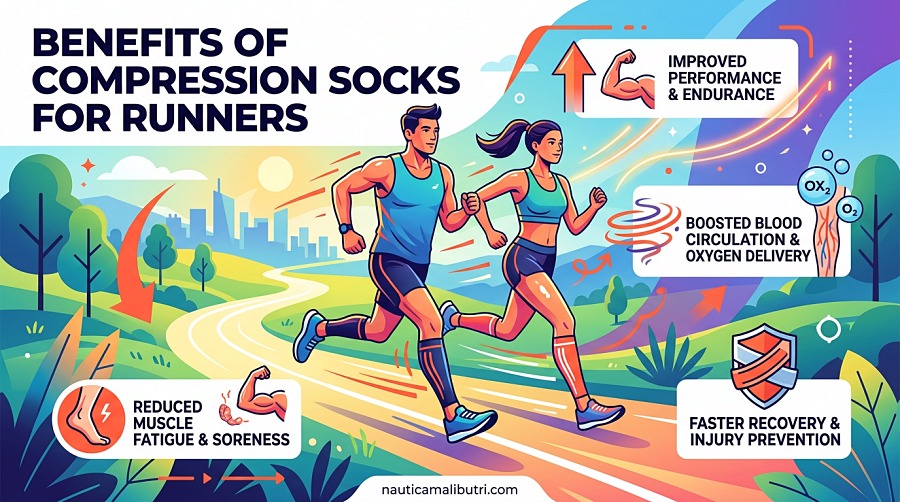
The primary benefit runners experience is enhanced blood circulation. By improving venous return, compression socks ensure your muscles receive a steady supply of oxygen-rich blood during activity. This improved peripheral blood flow can help maintain performance during long runs and may delay the onset of fatigue. Many runners report their legs feel lighter and more responsive when wearing compression socks during workouts.
Reduced Muscle Soreness (DOMS)
Delayed onset muscle soreness, commonly called DOMS, affects virtually every runner who increases their training load. That achy, heavy feeling in your legs 24 to 48 hours after a hard workout is largely caused by micro-damage to muscle fibers and inflammation. Compression socks help reduce DOMS by limiting muscle oscillation during runs and promoting faster clearance of metabolic byproducts afterward.
A 2021 study published in the International Journal of Exercise Science found that compression socks reduced recovery variables by 34.6% to 42.3% at the 24-hour mark and by 40.3% to 61.4% at 48 hours post-exercise. These numbers translate to noticeably less soreness the day after your long runs, which means you can resume training sooner and with less discomfort.
Faster Recovery Times
Beyond reducing soreness, compression socks accelerate the overall recovery process. By improving circulation and lymphatic drainage, they help remove waste products like lactate from your muscles more efficiently. This faster lactate clearance means your legs return to baseline performance capacity quicker. For runners following structured training plans with multiple workouts per week, this accelerated recovery can be the difference between hitting your paces or struggling through sessions.
Injury Prevention and Shin Splint Relief
Many runners turn to compression socks when dealing with shin splints, that nagging pain along the front of the lower leg. While compression socks do not treat the underlying causes of shin splints (usually overuse, poor form, or inadequate footwear), they can provide symptomatic relief. The compression stabilizes the muscles and connective tissues in the shin area, potentially reducing the micro-tearing that contributes to pain.
For calf cramp sufferers, compression socks offer similar stabilizing benefits. The consistent pressure can help prevent the sudden, painful contractions that sideline many runners during long efforts. Trail runners especially appreciate this benefit during technical descents when calf muscles are under repeated eccentric stress.
Enhanced Tissue Oxygenation
Improved oxygen delivery to working muscles is a benefit that extends beyond just feeling better. Better tissue oxygenation means your muscles can maintain aerobic metabolism longer before switching to less efficient anaerobic pathways. This translates to better endurance and potentially better performance in longer races. While compression socks will not turn a recreational runner into an elite, they can help you perform closer to your personal potential.
Temperature Regulation Benefits
An often overlooked benefit involves temperature management. Modern compression socks use moisture-wicking, breathable fabrics that help regulate leg temperature in varying conditions. In hot weather, they wick sweat away from your skin, aiding evaporative cooling. In cold conditions, they provide a thermal layer that keeps working muscles warm. This adaptability makes compression socks useful year-round rather than just during specific seasons.
Travel Protection for Runners
Runners traveling to destination races face a specific challenge. Long flights or car rides can cause leg swelling and increase the risk of deep vein thrombosis due to prolonged sitting. Compression socks are widely recommended by medical professionals for travel because they maintain circulation during periods of inactivity. For runners heading to marathons or triathlons, wearing compression socks during travel helps ensure your legs feel fresh on race day rather than swollen and heavy.
What Does the Science Say?
With any popular training aid, it is important to separate marketing claims from scientific evidence. Fortunately, compression socks have been studied extensively in peer-reviewed research, giving us solid data to evaluate their effectiveness.
The most comprehensive research comes from a 2021 study published in the International Journal of Exercise Science and available through PubMed Central. Researchers examined the effects of compression socks on maximal exercise performance and recovery in insufficiently active adults. While this population differs slightly from trained runners, the mechanisms apply broadly to anyone engaging in strenuous exercise.
The study used visual analog scales to measure recovery variables at 24 and 48 hours post-exercise. Results showed that compression socks provided statistically significant improvements in recovery metrics. At 24 hours, participants wearing compression socks reported values 34.6% to 42.3% lower than the control group. At 48 hours, the improvement was even more pronounced, with compression sock users showing 40.3% to 61.4% better recovery scores.
However, the study also found no significant difference in performance during exercise itself. Heart rate, blood lactate levels, and rating of perceived exertion remained similar between the compression and control groups during the workout. This suggests compression socks primarily aid recovery rather than enhancing acute performance.
A 2016 meta-analysis published in Sports Medicine by Engel and colleagues reviewed multiple studies on compression garments and running. Their analysis concluded that there is consistent evidence supporting reduced muscle pain and fatigue when compression socks are used during recovery periods. The effect on actual running performance remains less clear, with studies showing mixed results.
What does this mean for practical application? The science supports wearing compression socks for recovery benefits and post-exercise comfort. The evidence for performance enhancement during runs is weaker, though many runners report subjective improvements in how their legs feel. Even if part of the benefit is psychological, reduced perception of fatigue can lead to better training outcomes.
When to Wear Compression Socks
One of the most common questions runners ask is whether to wear compression socks during runs, after runs, or both. The answer depends on your goals and personal response to compression.
Wearing Compression Socks During Runs
Wearing compression socks during runs provides immediate benefits in terms of muscle stabilization and potentially improved circulation. Many marathon runners wear them during long training runs and races to reduce the cumulative muscle damage that occurs over hours of running. The muscle oscillation reduction is most relevant during the run itself, making this a valid use case.
However, some runners find compression socks uncomfortable during exercise. The tightness can feel restrictive, especially in hot weather when your legs naturally swell slightly. If you choose to wear compression socks while running, ensure they fit properly. Socks that are too tight can cause numbness or tingling, while loose socks will not provide benefits.
Post-Run Recovery Use
The strongest scientific evidence supports wearing compression socks after your runs for recovery. Putting them on immediately after a workout and wearing them for several hours can maximize the benefits to venous return and lactate clearance. Many runners wear compression socks for the remainder of the day after a morning run, or wear them to bed after an evening workout.
For optimal recovery benefits, aim to put on compression socks within 30 minutes of finishing your run. This timing aligns with the window when your circulatory system is still elevated from exercise and can maximize the sock’s effect on blood flow.
Travel Days
As mentioned earlier, compression socks shine during travel to races. The combination of prolonged sitting and dehydration from air travel creates perfect conditions for leg swelling and circulation problems. Wearing compression socks from departure to arrival helps maintain normal blood flow and ensures you arrive at your destination with fresh legs ready to race or train.
Triathlon Transitions
For triathletes, compression socks present unique strategic opportunities. During T1 (swim to bike transition), putting on compression socks adds time but provides calf support for the bike leg. Some triathletes wear compression socks under their wetsuits for the swim, though this requires practice to execute properly. During T2 (bike to run transition), having compression socks already on from the bike can provide immediate running support without the time penalty of putting them on during the transition.
Understanding Compression Levels (mmHg)
The mmHg rating on compression socks indicates the pressure level they apply. Understanding these levels helps you choose appropriate socks for your needs.
15-20 mmHg is considered mild compression and is suitable for most runners beginning to use compression gear. This level provides noticeable support without feeling restrictive. It is ideal for recovery use and light training days. Many runners find this pressure comfortable enough to wear for extended periods.
20-30 mmHg is moderate compression and represents the sweet spot for most athletic applications. This level provides significant circulatory benefits while remaining comfortable during exercise. Runners training for marathons or dealing with specific issues like shin splints often prefer this pressure level. It offers enough compression to feel supportive without causing discomfort during long efforts.
30-40 mmHg is firm compression typically used for medical purposes or serious athletic recovery. This level requires careful sizing and may feel too restrictive for wearing during runs. Some runners use this level strictly for post-workout recovery when they want maximum compression benefits. If you have specific medical conditions, consult a healthcare provider before using firm compression.
Above 40 mmHg is medical-grade compression prescribed by healthcare providers for conditions like deep vein thrombosis, severe edema, or lymphedema. These should only be used under medical supervision.
Choosing the Right Compression Socks
With countless options on the market, selecting compression socks can feel overwhelming. Focus on these key factors to find the right pair for your needs.
Material and Breathability
Modern compression socks use blends of synthetic materials like nylon, polyester, and spandex. Look for moisture-wicking properties that pull sweat away from your skin. Breathable fabrics with mesh panels improve airflow and reduce overheating. For hot weather running, prioritize lightweight, breathable options. For cold weather, slightly thicker materials provide warmth without sacrificing compression.
Proper Fit and Sizing
Proper fit is crucial for compression socks to work effectively. Most brands size by calf circumference and shoe size. Measure your calf at its widest point while standing. If you fall between sizes, choose based on your primary use. For recovery-focused socks, size up slightly for comfort. For performance during runs, a snugger fit may be preferable.
The socks should feel tight but not painful. You should not experience numbness, tingling, or severe discomfort. If you see indentation marks that persist long after removing the socks, they may be too tight. On the other hand, socks that slide down or bunch up are too loose to provide benefits.
Knee-High vs Calf Sleeves
Full knee-high compression socks provide complete lower leg coverage and arch support. They are ideal if you want foot compression or need arch support for plantar fasciitis. Calf sleeves offer calf compression while leaving your feet free to wear cushioned running socks. Many runners prefer calf sleeves for hot weather or when they need specific orthopedic features in their foot socks.
Temperature Considerations
Consider the climate where you primarily run. Hot weather runners should prioritize thin, breathable compression socks with ventilation zones. Cold weather runners can benefit from thermal compression socks that add warmth. Some brands offer graduated compression tights for full-leg coverage in cold conditions.
Compression Socks for Triathletes: Swim, Bike, Run
Triathletes face unique demands that make compression socks particularly valuable. The combination of three disciplines creates specific challenges that compression technology addresses.
During the swim, some triathletes wear compression socks under their wetsuits. This requires careful practice as the socks can shift during the swim exit. The benefit is having compression already in place for the bike leg without needing to put socks on during T1. However, many triathletes prefer swimming without compression and adding socks during the first transition.
The bike leg benefits significantly from compression socks. The repetitive pedaling motion creates different muscle demands than running, but the calf muscles still work hard, especially during hills. Compression provides stability during the ride and prepares the legs for the run to come. Many triathletes report their calves feel fresher starting the run when they have worn compression on the bike.
During the run portion of a triathlon, your legs are already fatigued from the previous disciplines. This is where compression socks can make the most noticeable difference. The added support helps compensate for accumulated fatigue and may help you maintain form when tired. For Ironman-distance events, compression socks are nearly ubiquitous among finishers.
Post-race recovery becomes critical for triathletes who train across three sports. The accumulated training load often exceeds what single-sport athletes experience. Compression socks help manage this higher recovery demand, allowing triathletes to train multiple disciplines on consecutive days without excessive fatigue.
Compression Socks vs Regular Running Socks
Understanding how compression socks differ from regular athletic socks helps you decide when the upgrade is worthwhile.
Regular running socks focus on cushioning, moisture management, and blister prevention. Quality running socks use technical fabrics to wick sweat and often include padding in high-impact areas. They provide no compression beyond the natural elasticity of the fabric.
Compression socks include all the moisture-wicking properties of good running socks while adding graduated compression. The trade-off is that compression socks cost significantly more and have a shorter lifespan due to the elastic fibers gradually losing compression over time. A good pair of compression socks costs three to five times more than quality regular running socks.
For easy runs under an hour, regular socks are perfectly adequate. The benefits of compression become more relevant as runs extend beyond 90 minutes or when you are doing hard workouts that require recovery support. Many runners use both, choosing regular socks for easy days and compression for long runs and recovery.
From a cost-benefit perspective, recreational runners running less than 20 miles per week may not see enough benefit to justify the expense. However, anyone training for half marathons, marathons, or beyond will likely find compression socks a worthwhile investment in comfort and recovery.
Safety Considerations and Contraindications
While compression socks are safe for most runners, certain medical conditions require caution or medical consultation before use.
Peripheral artery disease (PAD) is a primary contraindication for compression socks. PAD involves narrowed arteries reducing blood flow to the legs. The external pressure from compression socks could further restrict already compromised circulation. If you have been diagnosed with PAD or experience leg pain while walking that resolves with rest, consult your doctor before using compression gear.
Deep vein thrombosis requires careful management. While compression stockings are actually a treatment for DVT in medical settings, runners with a history of DVT should get medical clearance before using athletic compression socks. The pressure levels and duration of wear differ between medical and athletic applications.
Active skin infections or wounds on the lower legs may be aggravated by compression socks. The tight fabric can irritate broken skin and trap moisture against wounds. Wait for skin issues to resolve before wearing compression gear.
Significant peripheral neuropathy (nerve damage causing numbness) can be dangerous with compression socks. You need to feel if the socks are too tight or causing problems. If you cannot sense pressure or discomfort properly, compression socks may pose a risk.
For most healthy runners, the only safety concern is proper fit. Socks that are too tight can cause numbness, tingling, or even tissue damage with prolonged wear. Follow sizing guidelines carefully and remove socks immediately if you experience pain, severe numbness, or skin color changes.
Frequently Asked Questions
Do I really need compression socks for running?
Compression socks are not essential for running, but they offer significant benefits for recovery and comfort that many runners find worthwhile. If you run less than 20 miles per week and experience no recovery issues, you may not need them. However, if you train for half marathons, marathons, or longer distances, or if you frequently experience heavy, sore legs after runs, compression socks can meaningfully improve your training experience and recovery time.
Why do runners use compression socks?
Runners use compression socks for several key benefits: reduced muscle soreness and DOMS, faster recovery between workouts, improved circulation during and after runs, injury prevention support, and reduced calf cramping. The scientific evidence strongly supports their effectiveness for recovery, with studies showing 34-61% improvement in recovery metrics.
Do compression socks really work for runners?
Yes, scientific research supports that compression socks work for recovery benefits. A 2021 study published in the International Journal of Exercise Science found compression socks reduced recovery variables by 34.6% to 42.3% at 24 hours and 40.3% to 61.4% at 48 hours post-exercise. While evidence for performance enhancement during runs is mixed, the recovery benefits are well-documented.
Is there a downside to wearing compression socks?
The main downsides include cost (3-5 times more expensive than regular socks), proper sizing requirements (too tight can cause discomfort), and potential skin irritation for sensitive individuals. Some runners find them uncomfortably warm in hot weather. Additionally, people with peripheral artery disease, certain skin conditions, or significant nerve damage should avoid compression socks or consult a doctor first.
Is it okay to run while wearing compression socks?
Yes, it is absolutely okay to run while wearing compression socks. Many marathoners and ultrarunners wear them during long runs and races for muscle stabilization and circulation support. However, some runners find them too restrictive or warm during exercise. If you choose to wear them while running, ensure they fit properly and do not cause numbness or severe discomfort. The strongest evidence supports wearing them after runs for recovery.
Should I wear compression socks if I have DVT?
If you have deep vein thrombosis (DVT) or a history of DVT, you should consult a healthcare provider before using compression socks. While medical-grade compression stockings are actually a treatment for DVT, athletic compression socks differ in pressure levels and duration of use. A doctor can advise whether compression is appropriate for your specific situation and what pressure level would be safe.
Conclusion
The benefits of compression socks for runners are well-supported by scientific research and validated by countless athlete experiences. From the 34-61% improvement in recovery metrics documented in peer-reviewed studies to the practical relief runners feel the day after hard workouts, compression technology offers tangible advantages.
Whether you are a weekend warrior training for your first half marathon or an experienced triathlete preparing for an Ironman, compression socks deserve a place in your gear arsenal. Start with 15-20 mmHg compression for recovery use, and experiment with wearing them during longer runs if you find them comfortable. Focus on proper fit, prioritize breathable materials for your climate, and remember that they complement rather than replace smart training and adequate rest.
In 2026, with the science clearly supporting their recovery benefits and the practical advantages for travel and injury prevention, compression socks represent a worthwhile investment for serious runners. Your legs work hard with every mile. Giving them the support they need to recover and perform is not just smart training. It is respect for the effort you put in.