
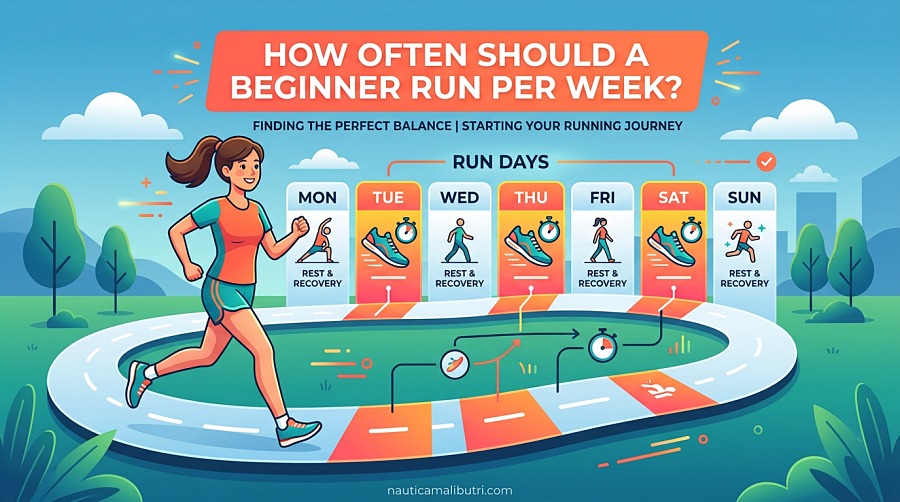
Most experts agree that beginners should run three days per week with at least one rest day between each run. This frequency strikes the perfect balance between building cardiovascular fitness and allowing your body to recover and adapt. If you are wondering how often should a beginner run per week, three days is the evidence-based sweet spot that minimizes injury risk while delivering real fitness gains.
Here is the reality that does not get talked about enough: approximately 50% of new runners quit within the first six months. The leading cause is not lack of motivation or willpower. It is doing too much, too soon, and ending up injured or burned out. Our team has guided hundreds of beginner runners through their first year, and the ones who stick with it almost always follow the 3-day-per-week approach in those critical first 12 weeks.
In this guide, I will walk you through exactly why three days works so well, what happens in your body on those rest days, and how to structure your week for maximum results. I will also cover when and how to safely add a fourth run, common mistakes that derail beginners, and special considerations if you are training for a triathlon here in Malibu.
Table of Contents
The Quick Answer: How Often Should a Beginner Run Per Week
Run 3 days per week, with at least one full rest day between each run. This gives you four recovery days weekly to let your body adapt to the new stress of running.
For your first 12 weeks, resist the urge to run more frequently. Your cardiovascular system improves faster than your muscles, tendons, and bones can strengthen. Those rest days are not lost training time. They are when your body actually builds the tissue tolerance and mitochondrial density that make you a stronger runner.
Here is how the common frequencies compare for beginners:
| Frequency | Best For | Pros | Cons |
|---|---|---|---|
| 2 days/week | Extremely sedentary starters, injury-prone individuals | Very low injury risk, easy to maintain | Slower fitness gains, longer path to first 5K |
| 3 days/week | Most beginners (recommended) | Optimal stress/recovery balance, sustainable habit formation | Requires patience to progress |
| 4 days/week | Younger beginners, those with athletic background | Faster aerobic development | Higher injury risk if added too soon |
If you are starting from zero fitness or returning after a long break, begin with 2 days for the first 2-3 weeks. Build the habit first. Then transition to 3 days once your body adjusts.
Why Rest Days Matter More Than You Think
Your muscles do not get stronger while you are running. They get stronger while you are recovering. This is the single most important concept for beginners to understand.
When you run, you create microscopic damage in your muscle fibers. You also place stress on your tendons, ligaments, and bones. This stress is good, it is the trigger for adaptation. But the actual repair and strengthening happens during the 24-48 hours after your run.
Here is what occurs in your body on a rest day:
- Muscle protein synthesis increases. Your body repairs damaged muscle tissue and builds new proteins, making those fibers stronger for next time.
- Mitochondrial density improves. Mitochondria are the powerhouses of your cells. Running stimulates their production, but rest allows them to fully develop and integrate into your muscle tissue.
- Glycogen stores replenish. Your muscles store carbohydrates as glycogen for fuel. Running depletes these stores. Rest days with proper nutrition refill them, giving you energy for your next run.
- Impact tolerance develops. Running delivers 2-3 times your body weight in impact force with each stride. Your bones, joints, and connective tissues need time to remodel and become denser. Without adequate rest, stress reactions and overuse injuries develop.
I learned this lesson the hard way when I started running in my twenties. I ran 5 days per week out of the gate because I wanted fast results. By week 4, I had shin splints so painful I could barely walk. I had to stop completely for three weeks. When I restarted with a proper 3-day schedule, I made steady progress without injury and completed my first 10K in 14 weeks.
Why 3 Days Per Week Is the Sweet Spot for Beginners
Three runs weekly hits the optimal balance between training stress and recovery time. With four rest days, your body has plenty of opportunity to adapt without becoming overwhelmed.
Research on beginner running programs consistently shows that 3 days per week produces the best adherence rates. Beginners who run 3 days weekly are significantly more likely to still be running 6 months later compared to those who attempt 4 or more days.
The first 12 weeks are about building your aerobic base and tissue tolerance, not about logging high mileage. Your cardiovascular fitness improves relatively quickly, you will notice you can breathe easier within a few weeks. But your bones, tendons, and ligaments adapt much more slowly. They need those full 48-hour recovery windows between runs.
Three days also creates a sustainable habit without overwhelming your schedule. You can run Monday, Wednesday, and Saturday, leaving the other days open for work, family, cross-training, or complete rest. This consistency beats intensity every time.
Running Frequency Comparison: 2 Days vs 3 Days vs 4 Days
Let me break down each frequency option so you can choose what fits your current fitness level and goals.
2 Days Per Week: The Gentle Start
This is ideal if you are starting from a completely sedentary lifestyle or have a history of lower-body injuries. You will make slower progress, but you will also have virtually zero injury risk.
After 2-3 weeks at this frequency, most beginners can comfortably add a third day. Think of this as your onboarding phase.
3 Days Per Week: The Recommended Standard
This is where most beginners should aim to be within their first month. It provides enough stimulus for steady fitness gains while maintaining a protective rest day between every run.
With this schedule, you can realistically train for a 5K race in 8-10 weeks or a 10K in 12-16 weeks. You will build real endurance without beating up your body.
4 Days Per Week: The Advanced Beginner Option
Only consider this if you are under 35, have a background in other sports, or have successfully completed 8-12 weeks of consistent 3-day running without any aches or pains.
Even then, add the fourth day cautiously. Make it an easy recovery run of just 15-20 minutes. Your body needs time to adjust to running on consecutive days.
A Sample Weekly Running Schedule for Beginners
Here is a proven week structure that works for most beginners. This assumes you are running 3 days per week using run-walk intervals.
| Day | Activity | Details |
|---|---|---|
| Monday | Run Day 1 | 20-30 minutes run-walk at conversational pace |
| Tuesday | Rest or Cross-Train | Walking, swimming, cycling, or yoga |
| Wednesday | Run Day 2 | 20-30 minutes run-walk, slightly longer intervals than Monday |
| Thursday | Complete Rest | Light walking okay, no structured exercise |
| Friday | Run Day 3 | 25-35 minutes run-walk, focus on form and breathing |
| Saturday | Active Recovery | Easy walk, hike, or recreational activity |
| Sunday | Complete Rest | Full recovery day, meal prep for the week ahead |
Your run-walk intervals should follow a pattern like this: start with 1 minute running, 2 minutes walking, repeated for your total time. As you get stronger, gradually increase the run portions and decrease the walk portions.
On rest days, you do not have to sit on the couch. Active recovery like walking, gentle cycling, or swimming promotes blood flow without adding impact stress. Just keep the intensity low enough that you can hold a conversation.
When and How to Add a Fourth Run
After 8-12 weeks of consistent 3-day running, you might start wondering about adding that fourth day. Here is how to know if you are ready and how to do it safely.
You are likely ready if: You have completed 12 weeks without any injuries, aches, or persistent soreness. You can comfortably run 30 minutes continuously. You feel antsy on rest days rather than grateful for them. Your runs feel easy enough that you finish energized, not exhausted.
The 10% Rule still applies to frequency. Think of weekly frequency as part of your total training load. Adding a fourth run increases your weekly sessions by 33%, which exceeds the classic 10% rule for safe progression.
Therefore, when you add that fourth run, you must reduce the duration of your other runs that week. If you normally run 30 minutes x 3 days (90 minutes total), your first 4-day week might be 20, 20, 20, and 20 minutes (80 minutes total). Keep the total weekly volume similar or even slightly lower initially.
Warning signs to back off: Persistent soreness that lasts more than 48 hours after a run, any sharp pain in joints or bones, fatigue that affects your daily energy levels, irritability or sleep disruption. If you notice any of these, return to 3 days immediately for 2-3 weeks.
Triathlon-Specific Running Frequency for Beginners
Since you are reading this on the Nautica Malibu Triathlon website, you are likely interested in multisport training. Balancing running with swimming and cycling changes the equation slightly.
The good news is that triathlon training actually reduces your running injury risk. Swimming is zero-impact active recovery for your legs. Cycling builds aerobic fitness without the pounding of running. You can maintain running fitness on slightly lower running frequency because the other sports support your cardiovascular development.
For beginner triathletes, I recommend the same 3-day running schedule, but structured strategically around your other workouts:
| Day | Workout 1 | Workout 2 |
|---|---|---|
| Monday | Swim (technique focus) | Rest |
| Tuesday | Run (easy pace) | Rest |
| Wednesday | Bike (endurance) | Rest or light swim |
| Thursday | Rest | Rest |
| Friday | Run (easy with strides) | Rest |
| Saturday | Bike (long ride) | Short transition run (10-15 min) |
| Sunday | Run (long run, building time) | Rest |
Notice the brick workout on Saturday: a short run immediately after your bike ride. This trains your legs to transition from cycling to running, a critical skill for triathlon.
If you are training for the Malibu triathlon specifically, factor in our terrain. Beach running on sand is excellent for building ankle stability and leg strength, but it is more fatiguing than road running. Start with just 10-15 minutes on the sand and build gradually. The hills around Malibu Canyon also add intensity, so adjust your effort level accordingly.
Common Beginner Mistakes to Avoid
After coaching hundreds of new runners, I see the same errors repeatedly. Here are the mistakes that most often lead to dropout or injury:
1. Running too many days per week too soon. The 75 Hard mentality and social media challenges convince people that more is always better. It is not. Your body needs rest to adapt.
2. Running too fast. Most beginners run way too fast on easy days. If you cannot hold a conversation while running, you are going too fast. Slow down.
3. Comparing yourself to others. Your friend might run 6 days a week. Good for them. They did not start there. Your 3-day schedule is exactly right for where you are right now.
4. Skipping the walk breaks. Run-walk intervals are not training wheels you should rush to abandon. They are a legitimate training method used by elite ultrarunners. Use them as long as you need them.
5. Ignoring early warning signs. A little muscle soreness is normal. Sharp pain in your shins, knees, or feet is not. Stop running and rest at the first sign of joint or bone pain.
6. Trying to make up missed runs. Life happens. If you miss a run, just skip it and resume your schedule. Do not double up runs to compensate. One missed run will not derail your progress.
7. Neglecting strength training. Two short strength sessions per week dramatically reduce injury risk. Focus on hips, glutes, and core.
8. Expecting linear progress. Some weeks will feel amazing. Others will feel terrible. This is normal. Trust the process and stay consistent.
Frequently Asked Questions
How often should I run if I am a beginner?
Most experts recommend running 3 days per week with at least one rest day between each run. This frequency provides enough stimulus for cardiovascular improvement while allowing your muscles, tendons, and bones adequate time to recover and adapt. Begin with 20-30 minute run-walk sessions and focus on building consistency before increasing frequency.
Is running 3 days a week enough to see progress?
Yes, running 3 days per week is absolutely enough for beginners to see significant progress. Research shows this frequency produces excellent adherence rates and fitness gains for new runners. You can realistically train for a 5K race in 8-10 weeks or a 10K in 12-16 weeks on a 3-day schedule. Consistency matters far more than frequency.
Can beginners run every day?
Beginners should not run every day. Running daily without adequate rest dramatically increases injury risk. Your cardiovascular fitness improves faster than your musculoskeletal system can strengthen. Tendons, ligaments, and bones need 48 hours to adapt to impact stress. Start with 2-3 days per week and only consider adding frequency after 8-12 weeks of consistent, injury-free running.
Should beginners run for time or distance?
Beginners should run for time, not distance. Time-based running keeps effort consistent regardless of terrain or how you feel that day. Start with 20-30 minute sessions using run-walk intervals. Focus on building the duration you can sustain comfortably. Only after you can run 30 minutes continuously should you consider tracking mileage.
What should I do on non-running days?
On non-running days, prioritize complete rest or active recovery. Light activities like walking, swimming, cycling, or yoga promote blood flow without adding impact stress. Avoid high-intensity workouts that fatigue your legs. Rest days are when your body repairs tissue and builds fitness, so treat them as seriously as your run days.
Conclusion: Start Smart, Finish Strong
How often should a beginner run per week? Three days. Not two, not four, and definitely not seven. Three runs with rest between each one is the proven formula for building a sustainable running habit that lasts.
Remember that rest days are not lazy days. They are when your body gets stronger. The runners who succeed long-term are not the ones who push hardest in week one. They are the ones who are still running comfortably in week twelve, week twenty-four, and beyond.
Start with our sample 3-day schedule. Be patient with run-walk intervals. Resist the comparison trap. And if you are training for your first triathlon here in Malibu 2026, know that this running foundation will serve you well when you add swimming and cycling to the mix.
The best running program is the one you can stick with. Three days per week is your path to becoming a runner for life.