
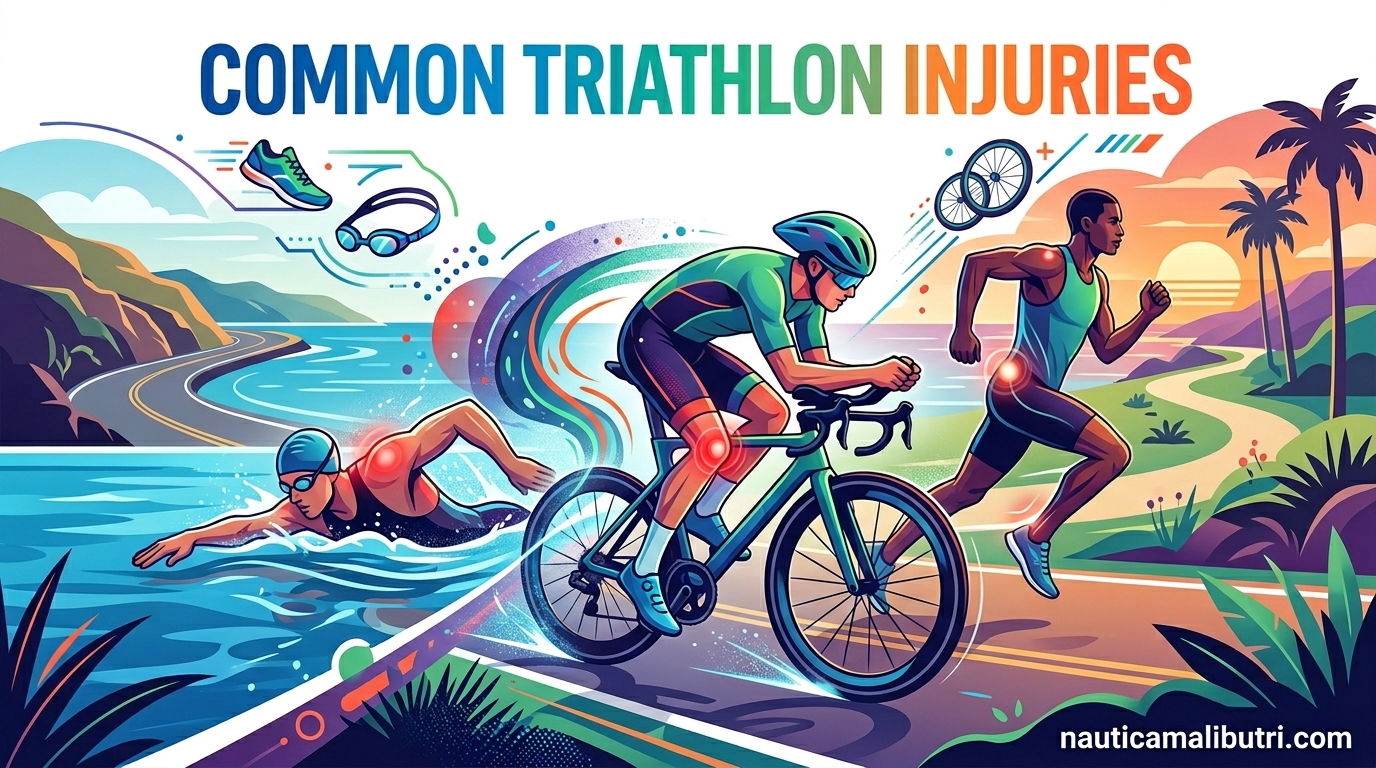
Knee injuries affect approximately 30% of triathletes at some point in their training journey. Lower leg pain and lower back issues follow closely behind, making these three areas the most common sites for triathlon injuries. Whether you are preparing for your first sprint triathlon or your tenth Ironman, understanding common triathlon injuries can help you stay healthy and reach the starting line ready to perform.
I have spent years coaching athletes through injury setbacks and have learned that prevention is always easier than recovery. This guide covers the injuries most likely to affect triathletes, organized by discipline. You will learn what causes each injury, how to recognize warning signs, and what steps to take for both prevention and treatment.
Triathlon training combines three distinct sports, each placing different stresses on your body. Swimming primarily challenges your shoulders and neck. Cycling loads your knees and lower back. Running impacts your shins, heels, and hips. When you train for all three simultaneously, overuse injuries become a real risk without proper management.
Table of Contents
What Are the Most Common Injuries in Triathletes?
The most common triathlon injuries are overuse injuries affecting the knee, lower leg, lower back, and shoulder. Patellofemoral pain syndrome tops the list, followed by shin splints, swimmer’s shoulder, IT band syndrome, plantar fasciitis, and lower back pain. These conditions typically develop gradually from repetitive stress, muscle imbalances, or training errors rather than from sudden trauma.
Swimming Injuries: Shoulder Pain and Beyond
Swimming is generally considered the lowest-impact discipline in triathlon, yet shoulder injuries are surprisingly common. The repetitive overhead motion of swimming thousands of strokes per week can lead to significant problems if technique flaws go uncorrected.
Swimmer’s Shoulder (Rotator Cuff Tendinitis)
Swimmer’s shoulder describes pain in the front or top of the shoulder caused by inflammation of the rotator cuff tendons. Poor technique, particularly crossing the midline during entry or pulling with a dropped elbow, creates impingement in the subacromial space. I see this most often in athletes who ramp up their swimming volume too quickly before their shoulders have adapted.
Symptoms include a dull ache in the front of the shoulder during or after swimming, pain when lifting the arm overhead, and weakness when reaching behind your back. The pain typically worsens with increased swimming volume or intensity.
Prevention starts with technique correction. Focus on early vertical forearm catch, maintaining high elbow position throughout the pull, and avoiding thumb-first entry. Shoulder strengthening exercises targeting the rotator cuff and scapular stabilizers should be part of every triathlete’s routine.
Shoulder Impingement Syndrome
Shoulder impingement occurs when the rotator cuff tendons get compressed between the humeral head and the acromion during overhead movements. While related to swimmer’s shoulder, impingement specifically involves the mechanical compression of structures in the shoulder joint.
Warning signs include sharp pain with overhead reaching, pain when lying on the affected shoulder at night, and a painful arc when lifting the arm between 60 and 120 degrees. Unlike swimmer’s shoulder which often improves with technique changes, impingement may require more specific intervention.
Treatment involves reducing inflammation through ice and anti-inflammatory measures, followed by physical therapy focusing on posture correction and scapular control. Tight chest muscles and weak upper back muscles often contribute to the problem.
Neck Strain from Swimming
Neck pain in swimmers typically stems from improper breathing technique. Lifting the head too high or rotating it excessively to breathe strains the sternocleidomastoid and upper trapezius muscles. Many triathletes who come from running backgrounds struggle with this because they are not used to bilateral breathing patterns.
Symptoms include muscle tightness on one side of the neck, headaches after swimming, and difficulty turning the head. The pain is usually muscular rather than joint-related.
Prevention requires learning proper breathing technique. Rotate your entire body to breathe rather than just turning your head. One goggle should remain in the water during the breath. Bilateral breathing helps balance the muscular load on your neck.
Cycling Injuries: Knees, Back, and Hands
Cycling injuries in triathletes often relate to bike fit issues. Unlike swimming where technique is the primary culprit, cycling injuries frequently stem from equipment setup problems combined with long hours in the saddle.
Knee Pain and Patellofemoral Pain Syndrome
Patellofemoral pain syndrome causes aching around or behind the kneecap, particularly noticeable when cycling for extended periods. The repetitive pedaling motion combined with improper bike fit creates excessive stress on the patellofemoral joint.
Saddle height is the most common culprit. A saddle positioned too low forces the knee into excessive flexion, increasing patellofemoral compression. A saddle too high can cause rocking in the hips and knee hyperextension. Cleat position also matters significantly. Cleats positioned too far forward place additional load on the knee.
Symptoms include vague pain around the kneecap that worsens with prolonged cycling or climbing, stiffness after sitting with bent knees, and discomfort when walking downstairs. The pain may start as a mild ache but can progress to sharp pain that forces you to stop riding.
A professional bike fit is the best investment for preventing knee pain. Expect to pay between $150 and $400 for a comprehensive fitting session. The fitter will adjust saddle height, fore-aft position, cleat alignment, and handlebar reach to optimize your position.
IT Band Syndrome from Cycling
The iliotibial band is a thick band of fascia running from the hip to the knee. IT band syndrome causes sharp or burning pain on the outside of the knee, often flaring up during longer rides. While commonly associated with running, cycling can also trigger IT band issues.
In cycling, IT band syndrome often results from poor cleat alignment, leg length discrepancies, or weakness in the hip abductors and gluteal muscles. When these muscles fatigue, the IT band takes on more load during the pedal stroke.
Symptoms include pain on the outer knee that typically appears 15 to 30 minutes into a ride, pain when pedaling hard or climbing, and tenderness when pressing on the outside of the knee.
Treatment involves foam rolling the IT band and surrounding musculature, strengthening the hip abductors and gluteus medius, and checking cleat position. Some athletes benefit from a slight toe-out cleat position to reduce IT band strain.
Lower Back Pain and Neck Strain
Triathlon bikes place riders in an aerodynamic forward position that significantly loads the lower back and neck. Long hours in this position can cause muscular fatigue and pain, particularly in athletes with weak core muscles or poor flexibility.
Symptoms include aching in the lower back during or after rides, stiffness when transitioning from bike to run, and neck pain from looking up while in the aero position. The pain is typically muscular and improves with movement.
Prevention requires building tolerance gradually to time in the aero position. Start with 10 to 15 minute intervals and slowly increase duration. Core strengthening exercises, particularly planks and dead bugs, help maintain spinal stability during long rides. Regular hip flexor stretching also reduces lower back strain.
Handlebar Palsy (Carpal Tunnel Syndrome)
Handlebar palsy, also known as cyclist’s palsy, causes numbness and tingling in the hands and fingers from compression of the ulnar or median nerves. Long rides with pressure on the handlebars can trigger this condition.
Symptoms include numbness in the pinky and ring fingers (ulnar nerve) or thumb, index, and middle fingers (median nerve), hand weakness, and tingling that improves when you shake your hands out.
Prevention involves changing hand positions frequently during rides, using padded gloves, and ensuring proper weight distribution between saddle and handlebars. Handlebar height and reach adjustments can also reduce pressure on the hands.
Running Injuries: Lower Leg and Foot Problems
Running produces the highest impact forces of the three triathlon disciplines. The repetitive pounding can lead to overuse injuries, particularly in the lower legs and feet. These injuries often develop insidiously and can become chronic if not addressed early.
Shin Splints (Medial Tibial Stress Syndrome)
Shin splints cause pain along the inner edge of the shinbone and represent one of the most common running injuries triathletes face. The condition results from inflammation of the muscles, tendons, and bone tissue around the tibia.
Risk factors include sudden increases in training volume, running on hard surfaces, worn-out shoes, and flat feet or high arches. Triathletes transitioning from cycling-heavy training to run focus are particularly vulnerable.
Symptoms include tenderness along the inner shin, pain at the start of running that may improve during the run but returns afterward, and mild swelling in the lower leg. The key distinguishing feature is that shin splint pain spreads along several inches of the bone.
Treatment requires relative rest from impact activities. Pool running and cycling typically remain possible. Ice massage along the shin for 15 minutes after activity helps reduce inflammation. Calf stretching and strengthening should be part of your rehabilitation.
Important warning: shin splints can progress to stress fractures if not managed properly. If pain becomes localized to a specific spot rather than spread along the bone, or if pain persists at rest, seek medical evaluation.
IT Band Syndrome
IT band syndrome in runners causes sharp pain on the outside of the knee that typically strikes after a consistent distance, often around mile two or three. Unlike cycling-related IT band issues, running IT band syndrome stems from biomechanical factors during foot strike and hip stability.
Weakness in the hip abductors and gluteus medius allows the knee to collapse inward during foot strike, increasing tension on the IT band. Downhill running and running on cambered roads often aggravate the condition.
Symptoms include sharp or burning pain on the outside of the knee that appears at a predictable point in your run, pain when walking downstairs, and tenderness over the lateral femoral epicondyle.
Treatment focuses on hip strengthening exercises targeting the gluteus medius, clamshells, lateral band walks, and single-leg squats. Foam rolling the IT band and tensor fascia latae helps temporarily relieve symptoms. Running on flat surfaces and avoiding downhills during recovery is essential.
Plantar Fasciitis
Plantar fasciitis causes stabbing pain in the heel, typically worst with the first steps in the morning. The condition affects the thick band of tissue connecting your heel bone to your toes and represents one of the most frustrating injuries for triathletes.
Tight calf muscles and Achilles tendons pull on the heel bone and stress the plantar fascia. Weak foot muscles and improper footwear also contribute. Triathletes who suddenly increase run volume or intensity often develop this condition.
Symptoms include intense heel pain with first steps in the morning, pain after sitting for extended periods, and aching that worsens throughout the day with activity. The pain localizes to the bottom of the heel near the arch.
Treatment requires patience as recovery often takes months. Calf stretching performed consistently throughout the day helps relieve tension. Rolling your foot on a frozen water bottle or lacrosse ball provides relief. Night splints can prevent the fascia from tightening overnight. In persistent cases, physical therapy or custom orthotics may be necessary.
Achilles Tendinitis
The Achilles tendon connects your calf muscles to your heel bone and withstands significant stress during running. Achilles tendinitis causes pain and stiffness in the back of the heel, particularly in the morning or at the start of activity.
Rapid training increases, tight calf muscles, and training errors like excessive hill running or speed work trigger this injury. The tendon becomes inflamed and may thicken as the body attempts to repair micro-damage.
Symptoms include stiffness and pain in the morning that improves with movement, tenderness when squeezing the tendon, and pain that worsens with hills or speed work. You may notice thickening of the tendon.
Treatment requires reducing or eliminating running temporarily. Eccentric calf strengthening exercises have strong evidence for treating Achilles tendinopathy. Heel drops on a step performed slowly and controlled form the cornerstone of rehabilitation.
Warning signs requiring immediate attention include sudden sharp pain in the Achilles, a popping sensation, or inability to push off the foot. These symptoms suggest a possible tendon rupture requiring emergency medical care.
Stress Fractures
Stress fractures are small cracks in the bone caused by repetitive stress without adequate recovery time. They represent the most serious overuse injury and require complete rest from impact activities.
Common locations include the metatarsals of the foot, the tibia, and the femoral neck. Female athletes, those with low bone density, and athletes with menstrual irregularities face higher risk.
Symptoms include localized pain at a specific bony point that worsens with weight-bearing, pain at rest or at night, and swelling over the affected area. Unlike shin splints where pain spreads, stress fracture pain pinpoints to one spot.
Stress fractures require immediate medical attention and complete rest from running. Healing typically takes six to eight weeks. Attempting to train through a stress fracture risks progression to a complete fracture requiring surgery.
Injury Prevention Strategies for Triathletes
Prevention beats treatment every time. The most successful triathletes I have coached prioritize injury prevention as seriously as they prioritize training. These strategies will help you stay healthy through your build and race season.
The 80/20 Rule and Smart Training
The 80/20 rule in triathlon states that approximately 80% of your training should be at low intensity, with only 20% performed at moderate to high intensity. This distribution allows your body to adapt to training stress while minimizing overuse injury risk.
Many triathletes violate this principle, spending too much time in the moderate intensity gray zone. This approach creates excessive fatigue without delivering training benefits and significantly increases injury risk.
Follow the 10% rule for volume increases. Never increase your weekly training volume by more than 10% from week to week. This applies to each discipline individually and to total training time. Rapid volume spikes are the leading cause of overuse injuries.
Strength Training for Injury Prevention
Strength training two to three times per week provides the greatest return on investment for injury prevention. Focus on movements that address muscle imbalances and build resilience in tissues subjected to repetitive stress.
Key exercises include single-leg squats and lunges for running durability, deadlifts and hip thrusts for posterior chain strength, planks and Pallof presses for core stability, and rotator cuff exercises for shoulder health.
Strength training should complement your sport training, not compete with it. Perform your key run and bike sessions first when fresh, then complete strength work afterward. During heavy training blocks, reduce strength volume to maintenance levels.
Recovery Protocols
Recovery is when your body actually adapts to training and grows stronger. Without adequate recovery, you simply accumulate fatigue and break down tissues faster than they can repair.
Sleep ranks as the most important recovery tool. Aim for seven to nine hours nightly. During deep sleep, your body releases growth hormone and repairs damaged tissues. Sleep deprivation significantly impairs recovery and increases injury risk.
Foam rolling and soft tissue work help maintain tissue quality. Spend five to ten minutes after workouts rolling major muscle groups. Focus on calves, quadriceps, IT bands, and thoracic spine.
Schedule complete rest days into your training week. One full rest day weekly allows your nervous system to recover and tissues to repair. Active recovery like easy swimming or walking is acceptable, but avoid structured training.
Equipment and Bike Fit
Proper equipment setup prevents many common injuries. Running shoes should be replaced every 300 to 500 miles or when the midsole compression becomes noticeable. Rotate between two pairs to allow cushioning to recover between runs.
A professional bike fit is non-negotiable for serious triathletes. Expect to invest $150 to $400 for a comprehensive fit session. The fitter will optimize your position for power production while minimizing injury risk. Revisit your fit annually or after significant fitness changes.
Consider gait analysis for running shoes. Specialty running stores can analyze your foot strike and recommend appropriate footwear. The right shoe for your biomechanics reduces injury risk significantly.
Treatment Approaches and Recovery Timelines
Despite best prevention efforts, injuries sometimes occur. Knowing how to respond can shorten your recovery time and prevent minor issues from becoming chronic problems.
RICE Method and Initial Response
The RICE protocol remains the standard first response for acute injuries. Rest prevents further damage. Ice reduces inflammation and numbs pain. Compression limits swelling. Elevation promotes fluid drainage.
Apply ice for 15 to 20 minutes several times daily during the acute phase. Use a thin towel between ice and skin to prevent frostbite. Compression should be snug but not restrict circulation.
For overuse injuries without acute trauma, relative rest works better than complete rest. Reduce or modify activities that aggravate symptoms while maintaining fitness through non-painful alternatives.
Physical Therapy and Professional Care
Physical therapy provides targeted treatment for persistent injuries. A sports physical therapist can identify movement dysfunctions, prescribe appropriate exercises, and use manual therapy techniques to accelerate healing.
Common treatment modalities include soft tissue mobilization, joint mobilization, dry needling, and therapeutic exercise prescription. Treatment typically spans four to eight weeks depending on injury severity.
Seek professional evaluation when pain persists beyond two weeks of self-treatment, when pain significantly limits activity, or when you suspect a serious injury like a stress fracture.
Cross-Training During Recovery
Maintaining fitness during injury requires creative cross-training. The goal is preserving cardiovascular fitness while allowing the injured area to heal.
Pool running provides running-specific training without impact. Use a flotation belt to maintain proper form and perform intervals matching your run training structure. Many elite runners use pool running during injury rehabilitation.
Cycling and swimming can substitute for running during lower leg injuries. The bike offers excellent cardiovascular training while eliminating impact stress. Swimming works well for maintaining fitness during cycling or running injuries.
Upper body injuries may allow continued running and cycling with modifications. Lower body injuries typically permit swimming with pull buoys. Work with your coach or physical therapist to design an appropriate cross-training plan.
Mental Health During Injury
Injury recovery takes a mental toll. Many triathletes experience frustration, anxiety, and even depression during forced time off. These feelings are normal and deserve attention.
Maintain social connections with your training community even when you cannot participate fully. Attend group sessions to support teammates and maintain motivation. Consider this period an opportunity to focus on weaknesses like technique or strength.
Set process goals rather than outcome goals during recovery. Focus on completing your rehabilitation exercises rather than worrying about lost fitness. Trust that consistent effort will restore your fitness when you return.
If you find yourself struggling significantly with mood or motivation during injury, consider speaking with a sports psychologist. Mental health support is as important as physical rehabilitation.
When to Seek Professional Help
Knowing when to consult a medical professional versus self-treating can be challenging. These warning signs indicate that professional evaluation is necessary.
Seek immediate medical attention for sudden severe pain accompanied by a popping sound, inability to bear weight, visible deformity, or numbness and tingling that does not resolve. These symptoms suggest serious injuries requiring urgent care.
Schedule a doctor’s appointment for pain persisting beyond two weeks despite rest and self-treatment, pain that worsens with activity, swelling that does not respond to ice and elevation, or pain that wakes you at night.
Consult a physical therapist for movement-related pain that limits training, recurring injuries that never fully resolve, or when you need guidance on rehabilitation exercises and return-to-sport protocols.
Specialists who commonly treat triathlon injuries include sports medicine physicians, physical therapists with endurance athlete experience, orthopedic surgeons for serious injuries, and certified bike fitters for cycling-related issues.
Frequently Asked Questions
What are the most common injuries in triathletes?
The most common triathlon injuries are overuse injuries affecting the knee, lower leg, lower back, and shoulder. Knee injuries including patellofemoral pain syndrome and IT band syndrome top the list, followed by shin splints, swimmer’s shoulder, plantar fasciitis, lower back pain, and Achilles tendinitis. These injuries typically develop gradually from repetitive stress, muscle imbalances, or training errors rather than sudden trauma.
What is the 80/20 rule in triathlon?
The 80/20 rule states that approximately 80% of training should be performed at low intensity while only 20% is done at moderate to high intensity. This distribution allows the body to adapt to training stress while minimizing overuse injury risk. Many athletes spend too much time in the moderate intensity zone, which creates excessive fatigue without delivering training benefits and increases injury risk significantly.
How long does triathlon injury recovery take?
Recovery timelines vary by injury type and severity. Minor muscle strains may resolve in one to two weeks with rest. Shin splints typically require two to six weeks of modified training. IT band syndrome often takes four to eight weeks with proper rehabilitation. Plantar fasciitis can persist for several months. Stress fractures require six to eight weeks minimum of complete rest from impact activities. Working with a physical therapist can often accelerate recovery.
Can I still train with a triathlon injury?
Whether you can train depends on the injury type and severity. For most overuse injuries, cross-training using non-painful activities is possible and recommended. Pool running substitutes for running during lower leg injuries. Swimming often remains possible during cycling or running injuries. However, complete rest from impact activities is necessary for stress fractures and severe acute injuries. Always consult a medical professional for guidance specific to your situation.
How to prevent triathlon injuries?
Prevent triathlon injuries by following the 80/20 training intensity rule and increasing volume by no more than 10% weekly. Incorporate strength training two to three times per week focusing on muscle imbalances. Prioritize sleep with seven to nine hours nightly. Schedule regular rest days. Invest in a professional bike fit. Replace running shoes every 300 to 500 miles. Address technique flaws early with coaching. Include foam rolling and stretching in your routine. Listen to early warning signs and modify training at the first hint of pain.
Staying Healthy for Race Day
Common triathlon injuries can derail months of training if ignored, but they are largely preventable with smart training practices. Understanding what causes swimmer’s shoulder, knee pain, shin splints, and other common issues empowers you to make informed decisions about your training.
Remember the fundamentals: follow the 80/20 rule for training intensity, increase volume gradually using the 10% rule, prioritize strength training twice weekly, get adequate sleep, and address pain early before it becomes a chronic problem. When injuries do occur, respond appropriately with rest, cross-training, and professional guidance when needed.
Your goal is reaching the starting line healthy and prepared. The triathletes who consistently perform well are not necessarily those who train the hardest, but those who train the smartest while keeping their bodies intact. Make injury prevention a cornerstone of your training philosophy, and you will enjoy many years of healthy racing ahead.