
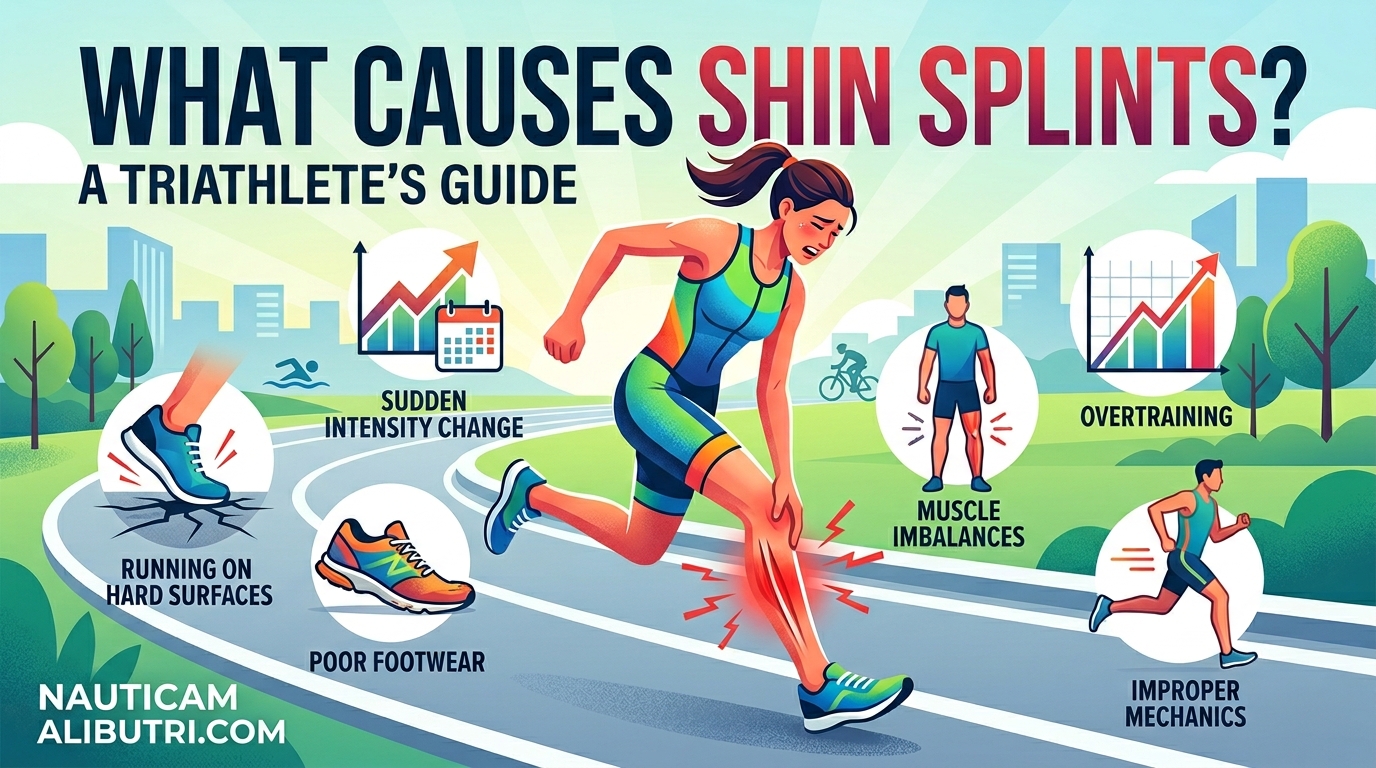
Shin splints are an overuse injury caused by repeated stress on the muscles, tendons, and bone tissue of your lower leg. This stress creates inflammation where these tissues attach to your shin bone (tibia), resulting in pain along the inner edge of your leg during and after activity. Understanding what causes shin splints is essential for any athlete, especially triathletes and runners who rely on consistent training to reach their goals.
I have seen too many training cycles derailed by this frustrating condition. After coaching dozens of athletes through triathlon preparation and experiencing shin splints myself during a half-Ironman build, I know how disruptive this injury can be. The good news is that shin splints are both preventable and treatable when you understand the root causes.
This guide explains exactly what causes shin splints, from the biomechanical factors to the training errors that trigger them. We will cover the specific risks triathletes face during brick workouts and bike-to-run transitions. You will learn how to recognize symptoms early, differentiate shin splints from stress fractures, and implement proven prevention strategies that keep you training consistently.
Table of Contents
What Are Shin Splints?
Shin splints, medically known as medial tibial stress syndrome, refer to pain along the inner edge of your tibia, the large bone in the front of your lower leg. The condition occurs when the muscles, tendons, and connective tissues that attach to your shin bone become inflamed and irritated from repetitive stress.
The term “shin splints” describes a symptom rather than a specific diagnosis. Think of it as a warning signal from your body that the tissues surrounding your tibia are struggling to handle the demands being placed on them. Without intervention, this irritation can progress to more serious conditions like stress fractures.
Doctors distinguish between two main types of shin splints based on location and affected structures. Anterior shin splints involve the front outer portion of your leg and typically affect the tibialis anterior muscle, which controls foot lifting. Posterior shin splints affect the inner back portion of your leg and involve the posterior tibialis muscle, which supports your arch and controls foot pronation. Most runners and triathletes experience posterior shin splints, which manifest as pain along the inner border of the tibia.
The underlying mechanism involves traction forces. When you run or perform high-impact activities, your calf muscles and connective tissues repeatedly pull on the periosteum, the thin membrane covering your shin bone. This constant tugging creates microtrauma that accumulates faster than your body can repair it, leading to inflammation and pain.
What Causes Shin Splints
Shin splints develop when repetitive stress outpaces your body’s ability to adapt and recover. The primary cause is overuse, specifically activities that involve repeated impact loading on your lower legs without adequate rest periods for tissue repair.
Running generates forces up to three times your body weight with each foot strike. Your lower leg muscles and bones absorb and distribute these forces with every step. When training volume or intensity increases too quickly, the cumulative load exceeds your tissues’ capacity to strengthen and recover, creating the perfect environment for shin splints to develop.
Overuse and Repetitive Stress
The fundamental mechanism behind shin splints is repetitive microtrauma to the soft tissues attaching to your tibia. Each foot strike during running creates a small amount of tissue stress. Under normal conditions, your body repairs this microtrauma during rest periods, emerging stronger through the adaptation process.
Problems arise when training frequency or duration creates stress faster than recovery can repair it. The periosteum becomes inflamed, muscles develop microtears, and the connective tissue surrounding your tibia sustains cumulative damage. This explains why shin splints often appear several weeks into a new training program rather than immediately.
The soleus and gastrocnemius muscles in your calf play a major role. When these muscles become overtight or fatigued, they transfer excess pulling force to their attachment points on the tibia. Forum discussions consistently highlight this mechanism, with physical therapists explaining that tension in these muscles from overextension or poor conditioning creates the traction that irritates the shin bone.
Training Errors That Trigger Shin Splints
The most common training mistake is doing too much, too soon. Many athletes, eager to build fitness quickly, increase their running mileage or intensity faster than their musculoskeletal system can adapt. Research and coaching experience consistently support the 10% rule: never increase weekly training volume by more than 10% from one week to the next.
Skipping rest days represents another major error. Your tissues need recovery time to repair and strengthen. Training seven days per week without adequate rest removes the adaptation window entirely, forcing your body to accumulate stress without rebuilding capacity.
Sudden changes in workout type also trigger shin splints. Transitioning from flat routes to hilly terrain, adding speed work without preparation, or switching from treadmill to outdoor running all alter the stress patterns on your lower legs. Your body needs gradual exposure to new demands.
Running form changes can be problematic too. Extending stride length to run faster increases braking forces with each foot strike. Overstriding places additional stress on your shins as your leg decelerates your body mass.
Surface and Environmental Factors
The surfaces you run on significantly impact shin stress. Concrete and asphalt provide minimal shock absorption, transmitting nearly all impact force directly to your legs. Hard surfaces force your muscles and bones to absorb more energy with each step, accelerating tissue fatigue.
Cambered roads create uneven loading patterns. When you run on sloped shoulders, one leg lands higher than the other, causing one shin to absorb more stress. Repeatedly running the same direction on cambered roads can create imbalances that predispose you to injury.
Treadmill running presents unique considerations. The consistent, uniform surface reduces some variables but can increase repetitive stress through identical foot placement with every stride. Many athletes report that transitioning abruptly from winter treadmill training to outdoor spring running triggers shin splints as their legs adapt to varied terrain.
Risk Factors for Shin Splints
Certain physical characteristics and conditions increase your susceptibility to developing shin splints. Understanding these risk factors helps you identify whether you need extra preventive measures or modified training approaches.
Foot Structure and Biomechanics
Your foot structure significantly influences shin stress. Flat feet, or fallen arches, cause overpronation, where your foot rolls excessively inward after landing. This inward rotation transfers torsional stress up your kinetic chain, forcing your shin muscles to work harder to stabilize your leg.
High arches create the opposite problem. Rigid, high-arched feet underpronate, failing to absorb impact forces effectively through normal foot motion. The lack of natural shock absorption transmits more force directly to your shins with each step.
Overpronation specifically strains the posterior tibialis muscle, which attaches along your inner shin. When this muscle works overtime to control excessive arch collapse, it pulls harder on its tibial attachment point, creating the inflammation characteristic of medial tibial stress syndrome.
Gait analysis can identify these patterns. Many specialty running stores offer basic assessments, while physical therapists provide comprehensive evaluations. Understanding your biomechanics allows targeted intervention through appropriate footwear or orthotics.
Muscle Imbalances and Weakness
Weakness in supporting muscles forces your shins to compensate. Hip abductor and external rotator weakness allows your knee to collapse inward during running, increasing rotational stress on your lower leg. This kinetic chain breakdown often manifests as shin pain despite the weakness originating higher up.
Tight calf muscles directly contribute to shin splints. When your gastrocnemius or soleus lacks flexibility, they cannot absorb impact forces effectively, transferring excess stress to their attachment points on the tibia. Many runners neglect calf stretching until problems develop.
Core instability also plays a role. A weak core allows excessive trunk movement, creating asymmetrical loading patterns that stress one leg more than the other. Single-leg stability work addresses these imbalances before they manifest as shin pain.
Nutritional and Health Factors
Vitamin D deficiency correlates with increased stress injury risk, including shin splints. This vitamin plays a crucial role in bone remodeling and calcium absorption. Athletes training primarily indoors or living in northern climates during winter months may have insufficient levels despite feeling healthy.
Female athletes face additional risk factors through the female athlete triad: low energy availability, menstrual dysfunction, and low bone mineral density. This combination significantly increases stress fracture and overuse injury susceptibility. Any female athlete experiencing recurrent shin splints should evaluate overall nutritional status.
Previous injury history predicts future problems. Once you have experienced shin splints, the tissues remain somewhat vulnerable without targeted strengthening and prevention work. The body lays down scar tissue that lacks the elasticity and strength of original tissue, creating potential weak points.
Shin Splint Causes Specific to Triathletes
Triathletes face unique shin splint risks that pure runners rarely encounter. The multisport nature of triathlon creates specific stress patterns during transitions and from the combined training load of three disciplines.
The Brick Workout Challenge
Brick workouts, training sessions involving bike-to-run transitions, are fundamental to triathlon preparation but pose distinct shin risks. After cycling, your legs feel heavy and your running mechanics change. Fatigued muscles provide less shock absorption, transferring more impact force to your shins during the run portion.
One triathlete described their first Half Ironman brick experience as disastrous: their shins hurt severely during the first four miles of the run after the bike leg. This pattern appears consistently in forum discussions, with athletes reporting shin pain specifically during or after brick workouts while experiencing no issues during standalone runs.
Running off the bike alters your stride. Your hip flexors are tight from cycling, limiting knee drive and shortening your stride. Many athletes unconsciously increase stride rate while decreasing stride length, changing foot strike patterns and loading rates. This mechanical alteration stresses tissues differently than normal running.
Bike Fit and Shin Stress
Your cycling position influences shin health more than most athletes realize. Cleat position that forces excessive toe pointing keeps your calves engaged throughout the pedal stroke, creating pre-fatigued muscles that then struggle during the subsequent run.
Saddle height affects shin stress indirectly. A saddle set too high causes pelvic rocking and leg extension that engages the calves more intensely. This increased calf workload during long rides leaves muscles tighter and more prone to pulling on tibial attachments during running.
Many triathletes adopt aggressive aerodynamic positions with forward cleat placement and steep seat angles. While these positions improve cycling performance, they also alter muscle recruitment patterns. The gastrocnemius works harder in these positions, potentially contributing to the tightness that predisposes runners to shin splints.
Training Load Management
Triathlon training accumulates stress across three sports simultaneously. While swimming provides minimal shin impact, it adds training volume that contributes to overall fatigue. The real challenge lies in managing running and cycling loads that both stress the lower legs.
Many triathletes follow periodized training plans with distinct preparation phases. The build phase, where volume increases toward race-specific levels, presents peak shin splint risk. Sudden ramp-ups in any discipline can trigger problems, but the interaction between cycling and running creates compound risk.
Intensity distribution matters. High-intensity running sessions combined with high-intensity cycling within the same week may overload recovery capacity. The 10% rule applies to total training stress, not just running mileage. Tracking training load through time or perceived exertion helps prevent overreaching.
Symptoms to Watch For
Early recognition of shin splint symptoms allows prompt intervention before the condition worsens. Understanding normal training soreness versus warning signs helps you respond appropriately.
The Five Key Symptoms
Shin splints typically present with a dull ache along the inner border of your tibia. This pain usually begins as mild discomfort that you might dismiss as normal post-workout soreness. Unlike muscle soreness that improves with movement, shin splint pain often worsens as you continue running.
Tenderness to touch over a broad area of your inner shin characterizes the condition. Pressing along the tibia reveals sore spots, particularly in the lower third of the bone where tissue attachment sites concentrate. This tenderness differentiates shin splints from other conditions.
Mild swelling may develop along the painful area. The inflammation associated with tissue irritation can cause visible puffiness, though this swelling remains relatively subtle compared to acute injuries. Your shin may feel slightly puffy or full compared to the unaffected leg.
Pain typically occurs at the start of activity, may improve slightly as you warm up, then returns more intensely after exercise. Some athletes report that pain disappears during the middle of a run only to return with greater severity afterward or the next morning.
In more advanced cases, sharp pain replaces the dull ache. This progression signals that the condition is worsening and requires immediate training modification. Sharp pain, especially pain that persists at rest, warrants professional evaluation.
Shin Splints vs Stress Fracture
Differentiating shin splints from stress fractures is crucial for appropriate treatment. While shin splints represent soft tissue inflammation, stress fractures involve actual bone damage requiring different management and longer recovery.
Shin splint pain typically spreads across several inches of the inner tibia. Stress fracture pain localizes to a specific point, often no larger than a fingertip. Pressing along the bone helps distinguish these patterns.
Stress fracture pain usually intensifies with weight-bearing activity and may persist at rest. Shin splint pain generally subsides with rest, even if it returns with activity. Night pain that wakes you suggests bone injury rather than soft tissue inflammation.
The hop test provides a simple screening tool. Standing on the affected leg and hopping gently usually produces manageable discomfort with shin splints but sharp, significant pain with stress fractures. This test is not definitive but helps gauge severity.
When in doubt, seek medical evaluation. Imaging studies can confirm stress fractures when clinical signs suggest bone involvement. Early diagnosis prevents progression to complete fractures that require extended time away from training.
How to Prevent Shin Splints
Prevention strategies focus on managing training stress, optimizing biomechanics, and building tissue resilience. The most effective approach combines multiple protective measures rather than relying on any single intervention.
Training Progression Guidelines
Following the 10% rule provides the foundation for shin splint prevention. Limit weekly mileage increases to no more than 10% over the previous week. This conservative approach allows bone density and soft tissue strength to adapt alongside cardiovascular fitness.
Include regular rest days in your training schedule. At least one complete rest day per week allows systemic recovery and tissue repair. Active recovery through swimming, cycling, or easy walking maintains fitness while reducing impact stress.
Periodize your training intentionally. Avoid maintaining peak volume year-round. Build phases should gradually increase load toward race preparation, followed by recovery periods with reduced volume. This cycling prevents the cumulative fatigue that contributes to overuse injuries.
Monitor your training on hard surfaces. Limit concrete running to necessary sessions, choosing softer trails or tracks for easy runs. If your training requires significant road running, consider rotating between multiple routes to vary camber exposure and surface consistency.
Footwear and Equipment
Replace running shoes before they become worn out. Most shoes provide adequate cushioning and support for 300-500 miles. Beyond this range, midsole compression and outsole wear alter impact dynamics, increasing shin stress. Track your shoe mileage and rotate between multiple pairs to extend usable life.
Select shoes appropriate for your foot type. Overpronators benefit from stability or motion-control shoes with medial posting. Neutral runners perform well in cushioned neutral shoes. Underpronators with high arches need flexible, well-cushioned options that accommodate their rigid foot structure.
Consider orthotics if you have persistent biomechanical issues. Over-the-counter arch supports help mild overpronation, while custom orthotics address significant structural abnormalities. A pedorthist or sports medicine specialist can evaluate whether orthotics would benefit your specific situation.
For triathletes specifically, ensure cycling shoes fit properly with appropriate cleat positioning. Toe-box width, arch support in cycling shoes, and cleat fore-aft position all influence calf engagement and subsequent running mechanics.
Strength and Flexibility Work
Strengthen your calves through targeted exercises. Heel raises, both straight-knee and bent-knee variations, build gastrocnemius and soleus strength respectively. Stronger calf muscles handle impact forces more effectively, reducing stress on bony attachments.
Hip strengthening protects your shins by improving overall leg alignment. Exercises targeting hip abductors and external rotators prevent knee valgus collapse during running. Clamshells, lateral band walks, and single-leg glute bridges address these weaknesses.
Daily calf stretching maintains tissue length and elasticity. Gentle static stretching after runs and dynamic stretching before workouts keeps muscles pliable. Foam rolling provides additional myofascial release for tight tissues.
Incorporate foot and ankle strengthening. Simple exercises like towel scrunches, marble pickups, and single-leg balance work develop intrinsic foot muscles that support your arch. Strong feet provide natural stability that reduces demand on shin muscles.
Treatment and Recovery
When shin splints develop, prompt treatment prevents progression and speeds return to training. The RICE protocol provides the foundation for initial management.
Immediate Treatment Steps
Rest forms the cornerstone of shin splint treatment. Stop the activity causing pain immediately. Continuing to run through shin splints risks progression to stress fractures and significantly extends recovery time.
Apply ice to reduce inflammation. Ice packs or cold therapy applied for 15-20 minutes several times daily decrease tissue inflammation and provide pain relief. Some athletes find ice massage particularly effective, freezing water in paper cups and rubbing the ice directly along the painful area.
Compression sleeves or wraps may help reduce swelling and provide proprioceptive feedback. These garments should fit snugly without restricting circulation. Many runners find compression comfortable during daily activities while recovering.
Elevate your legs when possible to reduce fluid accumulation. Propping your legs above heart level while resting promotes venous return and reduces inflammatory swelling. This simple measure supports the body’s natural healing processes.
Nonsteroidal anti-inflammatory drugs (NSAIDs) like ibuprofen or naproxen can help manage pain and inflammation during acute phases. Use these medications as directed and recognize that they mask symptoms without addressing underlying causes. Do not use NSAIDs to enable continued training.
Recovery Timeline Expectations
Most shin splint cases resolve within two to four weeks with appropriate rest and treatment. Mild cases caught early may improve within days, while advanced cases or those involving significant training volume reduction may require six weeks or longer.
Maintain fitness during recovery through non-impact activities. Swimming provides excellent cardiovascular conditioning without stressing shins. Cycling may be tolerable if it does not provoke pain, though some athletes find even biking irritates their condition initially.
Return to running gradually. Begin with walk-run intervals on soft surfaces. Increase running duration slowly while monitoring symptoms. Any return of shin pain signals that you are progressing too quickly and need additional rest.
Physical therapy accelerates recovery for persistent cases. Therapists provide targeted treatments including manual therapy, therapeutic exercises, and gait retraining. They also identify and address biomechanical contributors that might otherwise cause recurrence.
When to See a Doctor
Certain symptoms indicate that professional medical evaluation is necessary. Recognizing these red flags prevents complications and ensures appropriate treatment.
Seek medical attention if pain persists despite two weeks of rest and conservative treatment. Pain that does not improve with appropriate measures suggests either a more serious condition or incomplete rest. A sports medicine physician can evaluate for stress fractures or compartment syndrome.
Localized bony tenderness, especially if it concentrates to a single point rather than spreading along the shin, warrants imaging. Stress fractures typically present with specific, sharp pain at one location. X-rays may not detect early stress fractures, so your doctor might order MRI or bone scan studies.
Night pain that wakes you from sleep indicates bone involvement. Soft tissue inflammation generally subsides with rest, including overnight rest. Pain that persists or intensifies at rest suggests more significant injury requiring medical intervention.
Numbness, tingling, or weakness in your foot indicates potential nerve or vascular involvement. These neurological symptoms are not typical of simple shin splints and require prompt evaluation to rule out compartment syndrome or other serious conditions.
Visible deformity, severe swelling, or inability to bear weight are emergency signs. While rare with simple overuse injuries, these symptoms indicate significant trauma requiring immediate care.
Frequently Asked Questions
What is the root cause of shin splints?
The root cause of shin splints is overuse that creates repeated stress on the muscles, tendons, and bone tissue of your lower leg faster than your body can recover. This cumulative microtrauma inflames the connective tissues attaching to your tibia, causing pain along your shin bone. While risk factors like flat feet or worn shoes contribute, the fundamental cause is always training load exceeding tissue capacity.
What are 5 symptoms of shin splints?
The five key symptoms are: 1) Dull ache along the inner edge of your shin bone, 2) Tenderness to touch over a broad area of the tibia, 3) Mild swelling along the painful area, 4) Pain that typically worsens during activity and improves with rest, and 5) Pain at the beginning of exercise that may briefly improve before returning more intensely afterward. Sharp pain instead of dull ache indicates worsening condition.
What helps shin splints go away?
Shin splints heal with rest and proper care. Apply the RICE protocol: Rest from impact activities, Ice for 15-20 minutes several times daily, Compression sleeves to reduce swelling, and Elevation above heart level when possible. NSAIDs like ibuprofen can help manage pain and inflammation. Most cases resolve within 2-4 weeks with appropriate rest and treatment.
What could be mistaken for shin splints?
Stress fractures are the condition most commonly mistaken for shin splints, but they require different treatment and longer recovery. Compartment syndrome, which involves increased pressure in muscle compartments, can also mimic shin splint symptoms. Tendonitis, nerve entrapment, and vascular issues may present similar lower leg pain. Persistent or worsening symptoms warrant medical evaluation to rule out these conditions.
What vitamin deficiency causes shin splints?
Vitamin D deficiency correlates with increased shin splint risk. This vitamin is essential for bone remodeling and calcium absorption, both critical for maintaining bone strength under repetitive stress. Athletes training primarily indoors or living in northern climates during winter may have insufficient levels. Female athletes should also monitor for low energy availability and associated nutritional deficiencies that increase overuse injury risk.
Is it good to rub shin splints?
Gentle massage can help shin splints by improving circulation and reducing muscle tension in the calves, which often contribute to shin stress. Use your thumbs to apply light pressure along the inner shin, or massage the calf muscles to reduce pulling on tibial attachments. Avoid aggressive deep tissue work directly on inflamed areas. Massage should not replace rest as the primary treatment.
Conclusion
Understanding what causes shin splints empowers you to train smarter and avoid this common setback. The primary cause is always overuse: training stress that exceeds your body’s capacity to adapt and recover. Risk factors like flat feet, worn shoes, or muscle imbalances may increase your susceptibility, but the fundamental trigger is consistently loading your lower legs faster than they can strengthen.
For triathletes, the challenge intensifies with brick workouts and accumulated training volume across three disciplines. Managing the bike-to-run transition carefully, monitoring your cycling position, and respecting the 10% rule across all sports becomes essential. The athletes who avoid shin splints are not necessarily those with perfect biomechanics, but those who progress gradually and prioritize recovery.
If you develop shin pain, respond promptly with rest and proper treatment. Most cases resolve within weeks when addressed early. Continuing to train through shin splints risks progression to stress fractures that could sideline you for months. Remember that fitness builds through consistency over time, and short rest periods protect long-term progress.
Prevention remains your best strategy. Follow progressive training guidelines, replace worn shoes regularly, address biomechanical issues through appropriate footwear or orthotics, and maintain strength and flexibility in your calves and hips. By respecting what causes shin splints and implementing these protective measures, you can enjoy consistent training and reach your triathlon goals without interruption.