
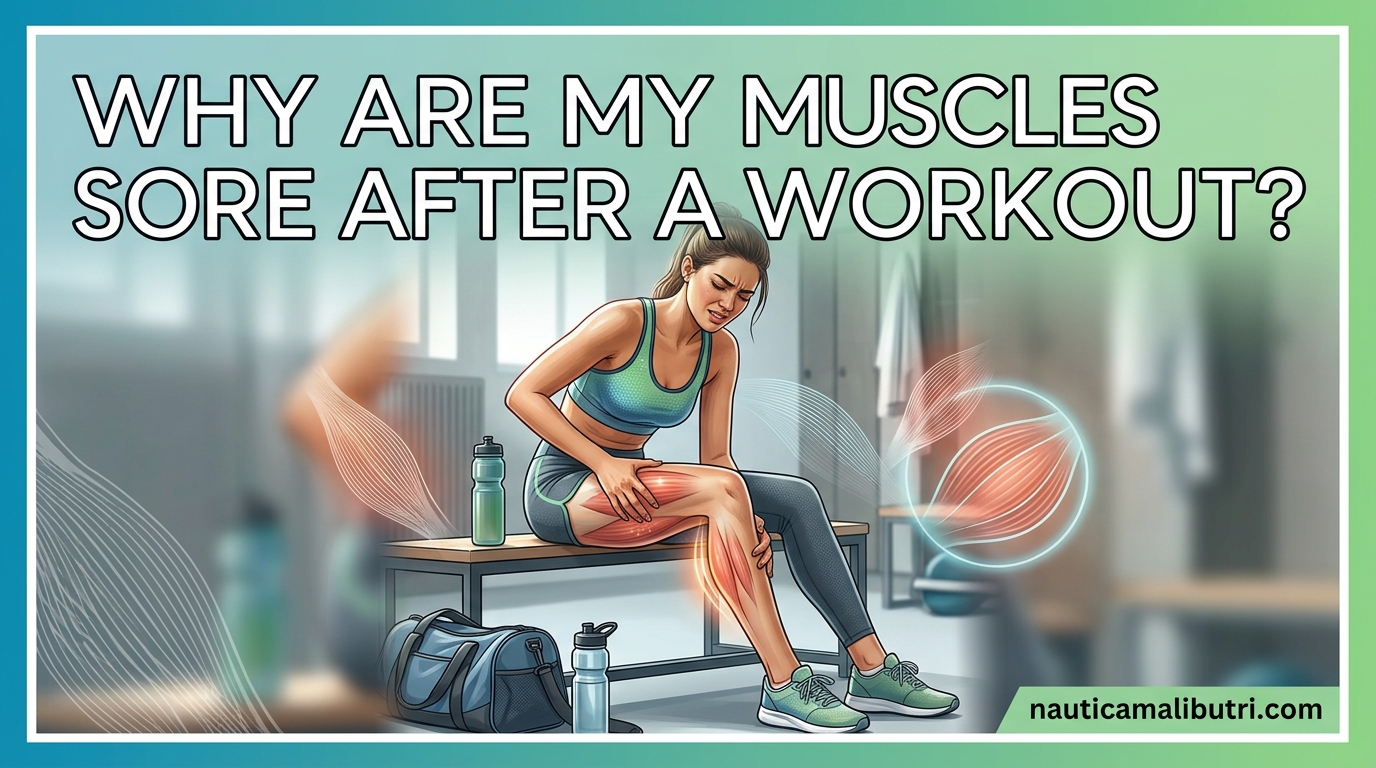
Your muscles are sore after a workout because of delayed onset muscle soreness (DOMS), a natural response that occurs when tiny tears form in your muscle fibers during unfamiliar or intense exercise. This microscopic damage triggers an inflammatory repair process that peaks 24 to 72 hours after your session, causing the stiffness and tenderness you feel. Understanding why this happens can help you train smarter, recover faster, and distinguish between normal post-workout discomfort and potential injury.
We have all been there. You crush a tough workout, feel great immediately after, then wake up the next morning barely able to walk down the stairs. As triathletes, we face this challenge across three disciplines, often wondering if that lingering leg burn is from yesterday’s hill repeats or Tuesday’s pool session. Let me break down exactly what is happening in your body and how to manage it effectively.
Table of Contents
What Is DOMS? Understanding Delayed Onset Muscle Soreness
DOMS stands for delayed onset muscle soreness, a condition that affects nearly everyone who exercises, from complete beginners to elite athletes. It is not the same as the burning sensation you feel during a workout or the acute pain of an injury. Instead, DOMS is a specific type of muscle discomfort that develops hours after exercise ends.
Definition of DOMS
Delayed onset muscle soreness is muscle pain and stiffness that develops gradually after performing exercise that is new, more intense, or longer in duration than what your body is accustomed to. The soreness typically begins 12 to 24 hours after exercise, peaks between 24 and 72 hours, and gradually subsides over the next few days. This timeline is the key distinguishing feature that separates DOMS from other types of muscle discomfort.
The condition was first scientifically described in the early 1900s, but research over the past two decades has significantly improved our understanding of the mechanisms involved. Studies have shown that DOMS is actually a sign that your body is adapting and growing stronger, though the process can certainly feel uncomfortable.
DOMS vs Acute Muscle Soreness
Many people confuse DOMS with acute muscle soreness, but understanding the difference is crucial for proper training decisions. Acute soreness happens during or immediately after exercise, often feeling like a burning sensation in the working muscles. This type of soreness is typically caused by the temporary buildup of metabolic byproducts and usually fades within minutes to hours of stopping exercise.
| Feature | Acute Soreness | DOMS (Delayed Onset) |
|---|---|---|
| When it occurs | During or immediately after exercise | 12-72 hours after exercise |
| How long it lasts | Minutes to a few hours | 3-7 days typically |
| Main cause | Metabolic byproduct buildup | Microscopic muscle fiber damage |
| Sensation | Burning feeling in muscles | Stiffness, tenderness, reduced range of motion |
| Relief method | Resting briefly | Active recovery, time, proper nutrition |
Recognizing which type of soreness you are experiencing helps determine your next training move. Acute burning during a workout is usually harmless and fades quickly, while DOMS requires a different recovery approach.
Why Are My Muscles Sore After a Workout? The Science Behind DOMS
To understand why your muscles hurt after exercise, we need to look at what is happening at the microscopic level inside your muscle fibers. The pain you feel is not from waste products or toxins as once believed, but from a complex biological repair process that ultimately makes you stronger.
Microscopic Muscle Tears: The Real Cause
When you challenge your muscles with resistance or unfamiliar movements, the individual muscle fibers experience microscopic tears. These tiny disruptions in the muscle tissue are not injuries to worry about, but rather controlled damage that signals your body to begin repair and rebuilding. Research using electron microscopy has visually confirmed these micro-tears in muscle tissue following intense eccentric exercise.
The damaged muscle fibers release chemical markers including creatine kinase and myoglobin into your bloodstream. Elevated levels of these enzymes are actually used by sports scientists and physicians to measure the extent of exercise-induced muscle damage. This is why blood tests sometimes show elevated creatine kinase levels in athletes after hard training blocks.
Eccentric vs Concentric Movements
Not all exercises create equal amounts of muscle soreness. The type of muscle contraction matters enormously, with eccentric movements causing significantly more DOMS than concentric ones.
Eccentric contractions occur when your muscle lengthens while under tension. Think about the lowering phase of a bicep curl, running downhill, or the downward pedal stroke when cycling. During these movements, your muscle is working hard while simultaneously stretching, which creates substantial mechanical stress on the muscle fibers. Studies consistently show that eccentric exercise produces the highest levels of DOMS.
Concentric contractions, where the muscle shortens while generating force, cause less muscle damage. The lifting phase of a curl, cycling uphill, or pushing off the wall during swimming are concentric movements. While these still create some micro-trauma, the damage is considerably less than with eccentric loading.
Triathletes take note: running downhill is particularly notorious for causing severe DOMS because of the sustained eccentric loading on your quadriceps. Those post-race sore thighs after a hilly course are a perfect example of eccentric-induced DOMS.
The Inflammatory Repair Process
Once muscle fibers sustain microscopic damage, your body initiates an inflammatory response that is essential for repair and adaptation. Specialized cells called macrophages migrate to the damaged tissue to clear away cellular debris and release signaling molecules that trigger the rebuilding process.
This inflammation brings increased blood flow, fluid, and nutrients to the affected muscles. The swelling and pressure on nerve endings is what creates the characteristic tenderness and stiffness of DOMS. While anti-inflammatory medications might reduce discomfort, they can potentially interfere with the adaptive processes that ultimately make your muscles stronger.
The repair process typically takes 48 to 72 hours for significant adaptation to occur. During this window, satellite cells activated by the damage multiply and fuse with existing muscle fibers, effectively rebuilding them thicker and stronger than before. This is the fundamental mechanism behind muscle growth and strength gains.
The Lactic Acid Myth Debunked
For decades, fitness magazines and well-meaning coaches blamed lactic acid buildup for post-workout muscle soreness. I remember being told this explanation as a young athlete, and I repeated it myself before learning the actual science. The truth is that lactic acid has been almost completely absolved as a cause of DOMS.
Lactate, which is the proper term for what accumulates in muscles during intense exercise, is cleared from your system within 30 to 60 minutes after you finish working out. The correlation between lactate and DOMS was based on outdated research that has since been thoroughly disproven by modern exercise physiology studies.
While lactate does contribute to the burning sensation you feel during intense exercise, it is not responsible for the soreness you feel the next day. That distinction belongs to the microscopic muscle damage and inflammatory response we discussed earlier. Knowing this helps you focus on the right recovery strategies rather than worrying about “flushing out lactic acid.”
Symptoms and Timeline: When Soreness Strikes
Understanding the typical pattern of DOMS helps you anticipate recovery needs and plan your training schedule accordingly. The predictable timeline is one of the most useful characteristics for distinguishing DOMS from injury.
The 24-72 Hour Delay Pattern
The hallmark of delayed onset muscle soreness is right there in the name: the delayed nature of the symptoms. Unlike acute soreness that fades quickly, DOMS follows a specific timeline that begins after a noticeable delay.
You might feel completely fine immediately after a challenging workout, perhaps even experiencing that satisfying post-exercise endorphin high. The first signs of DOMS typically appear 12 to 24 hours after you finish exercising. For many people, this means waking up the morning after a tough session with stiffness and discomfort that was not present the night before.
The soreness generally peaks between 24 and 72 hours post-exercise. This peak period is when movement is most difficult and discomfort is at its highest. After the peak, symptoms gradually subside over the next two to three days, with most cases resolving completely within five to seven days.
Common DOMS Symptoms
The experience of DOMS varies from person to person and workout to workout, but certain symptoms are consistently reported. Muscle tenderness to touch is nearly universal, with even light pressure on affected muscles causing discomfort. This tenderness reflects the inflammation and fluid accumulation in the damaged tissue.
Stiffness and reduced range of motion are equally common, making everyday movements surprisingly challenging. Walking after leg DOMS, especially from downhill running or heavy squats, can produce that distinctive stiff-legged gait that experienced athletes recognize immediately. Reaching overhead or lifting objects can become difficult when upper body muscles are affected.
Many people also report a sensation of muscle weakness during the peak DOMS period. Your muscles may feel less capable than usual, and peak force production is often temporarily reduced. This is one reason why attempting personal records or racing while experiencing significant DOMS is not recommended.
How Long Does DOMS Last?
For most people, DOMS lasts between three and five days, with significant improvement typically noticeable by day three or four. The duration depends on several factors including the severity of the muscle damage, your training experience, recovery practices, and individual genetics.
Beginners often experience DOMS that lasts longer than seasoned athletes. When you are new to exercise or returning after a break, the muscle damage from seemingly moderate workouts can be substantial, leading to soreness that persists for a week or more. Your first week of a new training program might leave you sore for five to six days, but this duration typically decreases as your body adapts.
Experienced athletes generally recover faster, with DOMS lasting two to three days even after intense sessions. The repeated bout effect is a phenomenon where muscles that have experienced DOMS before adapt and show less damage and faster recovery from subsequent similar workouts. This is why that first hill workout of the season destroys your legs, but the fifth one feels much more manageable.
DOMS and Triathlon Training: Special Considerations
Triathletes face unique challenges when it comes to managing muscle soreness. Unlike single-sport athletes, we must balance training across three disciplines while dealing with compound fatigue and soreness that can affect performance across all three.
Multi-Sport Impact on Recovery
Training for swim, bike, and run simultaneously creates a complex recovery equation. A hard run on Tuesday might leave your legs sore for Wednesday’s bike session, which then produces its own muscle damage before Friday’s swim works your upper body differently. This cumulative effect means triathletes often operate with some level of residual soreness more frequently than single-sport athletes.
Research on multi-sport athletes suggests that the transition between disciplines can be particularly demanding on your musculoskeletal system. Running off the bike, for instance, engages muscles in a fatigued state, potentially increasing eccentric loading and subsequent soreness. Understanding these interactions helps you structure training weeks more intelligently.
Age also plays a significant role in recovery capacity. Masters athletes (typically defined as over 40) often report longer-lasting DOMS compared to younger competitors. If you are an older triathlete, building in additional recovery time and being more conservative with intensity increases becomes increasingly important for sustained performance.
Managing DOMS During Brick Workouts
Brick workouts, where you train two disciplines back-to-back, are a staple of triathlon preparation but can be particularly challenging for muscle recovery. The classic bike-to-run brick leaves your legs feeling heavy and strange as you transition from the circular pedal motion to the linear impact of running.
The run portion of a brick workout is essentially performed on pre-fatigued legs. Your muscles are already depleted from cycling, which can alter your running form and increase the eccentric stress on your quadriceps as they work to control your descent during each foot strike. This combination often produces significant DOMS that peaks 24 to 48 hours later.
To manage this, I recommend scheduling your hardest brick workouts earlier in the week when you have more training days ahead for recovery. Follow intense bricks with easier swim sessions that promote blood flow without adding additional impact stress. Proper nutrition immediately after bricks, particularly protein and carbohydrate intake, becomes even more critical for managing the compounded muscle damage.
Periodization and Soreness Planning
Smart training periodization incorporates planned management of muscle soreness throughout your season. Understanding when to expect significant DOMS and planning easier sessions accordingly prevents the downward spiral of overreaching and under-recovering.
During base building phases, you might intentionally accept higher levels of DOMS as you develop strength and durability. The early season hill work and gym sessions that leave you sore are investments in resilience that pay off during race season. However, as you approach key races, your training should transition to minimize unexpected DOMS that could interfere with performance.
The taper period before important races requires particular attention to muscle soreness. Many triathletes experience phantom aches and concerns about soreness during taper, worrying that any discomfort signals inadequate preparation. Learning to distinguish between normal pre-race jitters and genuine DOMS helps you arrive at the start line confident and ready.
How to Relieve Muscle Soreness: Proven Recovery Strategies
While you cannot completely eliminate DOMS once it begins, several evidence-based strategies can reduce its severity and duration. The key is understanding which methods actually work versus which are simply fitness industry marketing.
Active Recovery Techniques
One of the most effective ways to reduce DOMS is through light movement, a concept known as active recovery. While resting completely might seem intuitive, gentle activity actually promotes blood flow that delivers nutrients to damaged muscles and removes metabolic waste products.
Research consistently shows that low-intensity exercise performed during the peak DOMS period can reduce stiffness and accelerate recovery. For triathletes, this might mean an easy 30-minute spin on the bike, a relaxed swim focusing on technique, or a gentle walk the day after a hard run. The key is keeping the effort truly easy, your heart rate should stay in zone 1 or low zone 2.
Many experienced athletes report that DOMS seems to disappear once they warm up and begin moving, only to return with full force when they stop again. This temporary relief during activity is a reliable indicator that what you are experiencing is indeed DOMS rather than a more serious injury.
Foam Rolling and Massage
Self-myofascial release through foam rolling has gained popularity as a DOMS management tool, and research supports its effectiveness for reducing muscle soreness. The pressure and movement of foam rolling appears to improve blood flow and reduce tension in the fascial tissue surrounding muscles.
Studies on foam rolling after exercise show modest but meaningful reductions in DOMS severity when performed regularly. For best results, aim to foam roll major muscle groups for 10 to 15 minutes both immediately after exercise and again the following day. Focus on the muscle bellies rather than joints, and use your body weight to apply comfortable pressure.
Professional massage offers similar benefits with the added advantage of targeting specific problem areas more precisely. Many triathletes schedule regular massage during heavy training blocks, timing sessions for the day after hard workouts when DOMS typically peaks. Sports massage therapists familiar with endurance athletes can address the specific muscle groups most affected by your discipline focus.
Cold and Heat Therapy
The debate between ice baths and heat therapy for DOMS continues, with research supporting different approaches depending on timing and goals. Cold water immersion immediately after exercise may reduce inflammation and delay the onset of DOMS, though it might also blunt some of the adaptive responses you want from training.
Ice baths or cold showers within the first few hours after intense exercise appear most effective for reducing subsequent soreness. If you have a key race or event coming up soon and need to minimize DOMS for performance, cold therapy can be a useful tool. However, for routine training where adaptation is the goal, the benefits are less clear.
Heat therapy, including warm baths, heating pads, and sauna sessions, becomes more appropriate once DOMS has fully developed. Heat increases blood flow to sore muscles and can provide temporary relief from stiffness and discomfort. Some research suggests that heat applied 24 hours after exercise may be more beneficial than cold for established DOMS.
Nutrition for DOMS Recovery
What you eat significantly impacts how quickly you recover from muscle soreness. Proper nutrition provides the building blocks your body needs to repair damaged muscle tissue and reduce inflammation.
Protein intake is crucial for muscle repair, with research suggesting a target of 20 to 30 grams of high-quality protein consumed soon after exercise. This provides the amino acids necessary for rebuilding muscle fibers stronger than before. Many triathletes find that adding a protein shake or recovery drink immediately after workouts significantly reduces next-day soreness.
Certain supplements show promise for DOMS reduction. Tart cherry juice has demonstrated anti-inflammatory properties and has been shown to reduce muscle soreness in several studies. Omega-3 fatty acids from fish oil may also help modulate the inflammatory response. Creatine monohydrate, widely used for performance enhancement, has been associated with reduced muscle damage markers and faster recovery in some research.
Hydration status affects recovery as well. Dehydrated muscles are more prone to damage and recover more slowly. Ensuring adequate fluid intake before, during, and after exercise supports optimal recovery processes.
Sleep and Hydration
Sleep is when the majority of muscle repair and adaptation occurs, making quality sleep arguably the most important recovery tool available. Growth hormone release peaks during deep sleep stages, directly supporting tissue repair and rebuilding.
Most adults need seven to nine hours of sleep per night, but athletes in heavy training may benefit from even more. Prioritizing consistent sleep schedules, creating a cool dark sleeping environment, and avoiding screens before bed can all improve sleep quality and subsequent recovery from DOMS.
Maintaining proper hydration supports every aspect of recovery. Dehydration slows the transport of nutrients to damaged tissues and impairs the removal of waste products. Drinking water consistently throughout the day, not just during workouts, creates the internal environment where muscles can repair efficiently.
How to Prevent Muscle Soreness After Exercise
While you cannot completely prevent DOMS, especially when introducing new challenges, smart training practices can significantly reduce its severity and frequency.
Progressive Overload Principle
The single most effective way to minimize problematic DOMS is following the principle of progressive overload. This means gradually increasing training stress rather than making sudden dramatic jumps in volume or intensity.
The classic 10 percent rule, suggesting you increase weekly training volume by no more than 10 percent at a time, exists specifically to manage recovery demands including DOMS. While this rule can be overly conservative for some experienced athletes, the underlying principle of gradual progression remains sound.
When adding new exercises or movement patterns, expect some DOMS as your body adapts. The repeated bout effect means that subsequent similar workouts will produce less soreness. Plan these introductions during lower-priority training periods when you can afford to be slightly compromised.
Warm-Up and Cool-Down Strategies
Proper warm-up before exercise prepares your muscles for the demands ahead and may reduce subsequent soreness. A good warm-up gradually increases body temperature, improves blood flow to working muscles, and activates the nervous system for coordinated movement.
For triathletes, discipline-specific warm-ups are particularly important. Before running, include dynamic movements that activate the hips, glutes, and calves. Before swimming, shoulder activation and stroke-specific movements help prepare those vulnerable joints. A proper bike warm-up might include easy spinning followed by a few short efforts to activate all muscle groups.
Cooling down after exercise, rather than stopping abruptly, allows your body to transition gradually. Easy spinning after a hard bike session or walking after a run promotes continued blood flow that begins the recovery process immediately. This is also an ideal time to begin hydration and nutrition protocols.
Training Frequency Guidelines
How often you train affects DOMS accumulation and recovery. Training a muscle group while it is still significantly sore from a previous session can impair performance and potentially increase injury risk.
For most triathletes, allowing 48 hours between high-intensity sessions targeting the same muscle groups works well. This does not mean you must rest completely, you can swim hard while your legs recover from yesterday’s run, or do an easy recovery ride while your upper body rests from swimming.
The key is balancing frequency with intensity. You can train more often if the sessions are easier, or train less often with higher intensity. Problems arise when you try to do both high frequency and high intensity without adequate recovery capacity.
When to See a Doctor: Warning Signs Beyond Normal DOMS
While DOMS is a normal part of training, certain symptoms indicate problems that require medical attention. Knowing when soreness crosses the line from inconvenient to dangerous is essential for every athlete.
Severe swelling that makes limbs tight or shiny suggests compartment syndrome, a serious condition where pressure builds within muscle compartments. Numbness, tingling, or loss of pulse are emergency signs requiring immediate medical care.
Dark or cola-colored urine after intense exercise, especially when accompanied by severe muscle pain and weakness, can indicate rhabdomyolysis. This serious condition involves rapid breakdown of muscle tissue that can damage kidneys and become life-threatening. While rare, it requires immediate emergency treatment.
Pain that is sharp, localized to a specific point, or significantly asymmetrical suggests injury rather than DOMS. DOMS tends to be diffuse and affect both sides of the body relatively equally. One-sided pain, joint pain, or pain that worsens rather than improves after three days warrants professional evaluation.
Frequently Asked Questions About Muscle Soreness
Are sore muscles after exercise a good thing?
Mild to moderate muscle soreness can indicate that you have challenged your muscles appropriately and triggered the adaptive response that leads to strength and endurance gains. However, severe soreness that impairs movement or lasts more than a week is not beneficial and may indicate excessive training stress. The key is finding the right balance where you stimulate adaptation without compromising your ability to train consistently.
Is it okay to exercise a muscle that is sore?
Light to moderate exercise on sore muscles is generally safe and can actually help reduce DOMS through increased blood flow. However, intense training of significantly sore muscles is not recommended as force production is reduced and injury risk increases. For triathletes, easy cross-training activities work well during DOMS, such as swimming when your legs are sore from running, or easy cycling when your upper body is tired from swimming.
Why am I still sore 3 days after working out?
Soreness lasting 72 hours or more is completely normal for DOMS, especially if the workout was particularly challenging, involved significant eccentric loading like downhill running, or was a new type of exercise for you. The inflammatory repair process typically peaks around 48 hours and can take 5 to 7 days to fully resolve. Beginners and athletes returning from breaks often experience longer-lasting soreness than well-trained individuals.
Does being sore after a workout mean you’re getting stronger?
Soreness indicates that you have created muscle damage that will lead to adaptation, but you do not need to be sore to get stronger. The repeated bout effect means your muscles adapt to specific stressors and experience less soreness over time while still gaining strength and endurance. Consistent training produces gains even when DOMS becomes less frequent or intense as your body adapts to your regular routine.
Conclusion
Understanding why your muscles are sore after a workout helps you train more effectively and recover more efficiently. Delayed onset muscle soreness is a natural response to challenging exercise, caused by microscopic muscle fiber damage that triggers an inflammatory repair process. While uncomfortable, this process ultimately rebuilds your muscles stronger than before.
For triathletes managing multi-sport training, smart periodization and recovery practices become even more important. By applying the strategies outlined in this guide, you can minimize the impact of DOMS on your training while still gaining all the fitness benefits that challenging workouts provide. Listen to your body, respect the recovery process, and remember that some soreness is simply part of the journey toward your goals in 2026.