
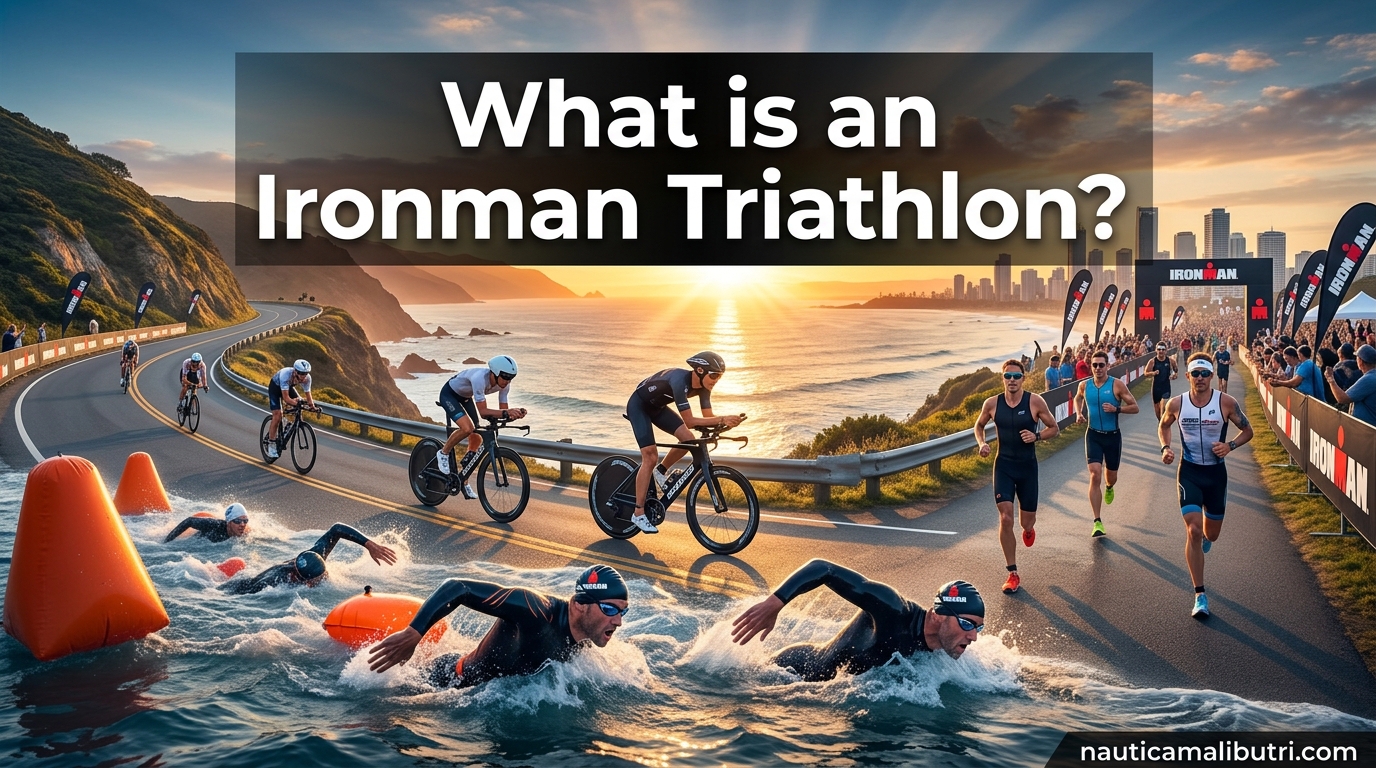
The Ironman triathlon represents one of the most demanding tests of human endurance in the sporting world. Spanning 140.6 miles across three disciplines, it challenges athletes to push beyond their perceived limits in a single-day event that has captured the imagination of millions since its humble beginnings in 1978. Whether you are researching out of curiosity or contemplating your first race, this guide will walk you through everything you need to understand about what makes an Ironman triathlon one of the ultimate athletic achievements.
Table of Contents
What is an Ironman Triathlon?
An Ironman triathlon is a long-distance endurance race consisting of a 2.4-mile swim, 112-mile bicycle ride, and 26.2-mile marathon run, completed consecutively without breaks between disciplines. Athletes have a maximum of 17 hours to cross the finish line, with specific cutoffs for each leg of the race.
The total distance of 140.6 miles (226.3 kilometers) has become synonymous with extreme endurance. Unlike shorter triathlon formats, the Ironman demands not just physical fitness but mental resilience, strategic pacing, and careful nutrition management over what can be a full day of continuous effort.
The Famous Origins
The Ironman began as a challenge among friends in Hawaii. In 1978, Navy Commander John Collins and his wife Judy combined three existing Hawaii endurance events: the Waikiki Roughwater Swim (2.4 miles), the Around-Oahu Bike Race (115 miles, later shortened to 112), and the Honolulu Marathon (26.2 miles).
John Collins famously issued the challenge: “Whoever finishes first, we’ll call him the Ironman.” Fifteen competitors toed the line on February 18, 1978. Gordon Haller won that first race in 11 hours, 46 minutes. A legend was born.
The Three Disciplines of Ironman
Every Ironman triathlon follows the same sequence: swim first, bike second, run third. This order exists for safety reasons. Swimming while fatigued from cycling or running would be dangerous, particularly in open water conditions.
The Swim: 2.4 Miles of Open Water
The Ironman swim takes place in open water, typically the ocean, a lake, or a protected bay. The 2.4-mile distance equals 3.8 kilometers or approximately 3,800 meters. Most athletes complete this leg in 60 to 90 minutes.
Wetsuits are typically allowed and provide buoyancy and warmth. The swim cutoff is usually 2 hours and 20 minutes from the start. Mass starts with hundreds of athletes entering the water simultaneously create a chaotic, competitive environment often called the “washing machine.”
Open water swimming presents unique challenges absent from pool training. Currents, waves, visibility, and the press of other athletes require mental focus and adaptability. Navigation skills matter too; swimming off course adds unwanted distance to an already long day.
The Bike: 112 Miles of Cycling
The bike leg covers 112 miles (180.2 kilometers) of varied terrain. This segment typically consumes 5 to 7 hours for most finishers. Courses range from flat and fast to hilly and technical, with the cumulative elevation gain often exceeding several thousand feet.
Athletes must master pacing during this longest discipline. Going too hard on the bike destroys the run that follows. Nutrition becomes critical here; most athletes consume 200-300 calories per hour through gels, drinks, and solid foods.
The bike leg also features aid stations every 10-15 miles offering water, sports drink, and sometimes food. Drafting is illegal in most Ironman races, meaning athletes must maintain a specific distance from the bike ahead of them or risk time penalties.
The Run: 26.2 Miles to the Finish
The marathon run of 26.2 miles (42.2 kilometers) comes after the accumulated fatigue of swimming and cycling. This final discipline separates those who paced wisely from those who emptied their reserves too early.
Most athletes complete the run leg in 4 to 6 hours, though times vary dramatically based on remaining energy reserves. The course typically consists of multiple loops through spectator-friendly areas, with aid stations every mile offering water, electrolytes, cola, and snacks.
As one experienced competitor from online forums noted, “the second loop of the run is a major drag.” The accumulated miles create a physical and mental challenge unlike standalone marathon racing. Walking becomes a necessity for many, and the ability to keep moving forward despite pain defines the Ironman finish line experience.
Transitions
Between each discipline, athletes enter transition areas to change gear. Transition 1 (T1) follows the swim as athletes remove wetsuits, don cycling shoes and helmets, and collect their bikes. Transition 2 (T2) follows the bike as athletes rack their bikes, change into running shoes, and head out for the marathon.
While transitions might seem like rest periods, efficient athletes minimize their time here. Most competitors spend 5-10 minutes total in both transitions combined. Every minute saved counts toward that 17-hour cutoff.
History and Origins of Ironman
The Ironman triathlon has evolved from a small Hawaiian challenge into a global phenomenon with races on six continents and tens of thousands of annual finishers. Understanding this history illuminates why the event carries such cultural weight.
The 1978 Beginning
The first Ironman took place on Oahu, Hawaii, with just 15 starters and 12 finishers. Gordon Haller, a taxi driver and former Navy communications specialist, claimed victory. The event was casual by modern standards; no sponsors, minimal support, and a simple premise of testing human limits.
Judy Collins and her husband John organized that first race with a handwritten rules sheet and volunteer support from family and friends. Their goal was settling an argument: who was the fittest athlete—swimmers, cyclists, or runners?
The Julie Moss Moment
In 1982, college student Julie Moss transformed Ironman from an obscure endurance test into mainstream consciousness. Leading the women’s race with just meters to the finish, Moss collapsed from exhaustion, dehydration, and glycogen depletion.
Unable to stand, she crawled the final yards to the finish line while Kathleen McCartney passed her to win. Moss finished second, but her image crawling across the finish line on national television defined the Ironman ethos. That moment demonstrated that finishing mattered more than winning, and that human determination could transcend physical collapse.
ABC’s Wide World of Sports broadcast that finish repeatedly, introducing millions to the Ironman concept. Julie Moss never won an Ironman, but she became one of the most important figures in the sport’s history.
Growth and Organization
Valerie Silk took over the Ironman in 1981 and moved it from Oahu to Kailua-Kona on the Big Island of Hawaii in 1981. Kona’s harsh conditions—heat, humidity, and wind—created the perfect crucible for testing endurance athletes.
The World Triathlon Corporation (WTC) eventually acquired the event, standardizing rules, expanding globally, and establishing the Ironman brand. Today, Ironman races take place across the world, from European cities to remote locations like New Zealand and South Africa.
Training for an Ironman
Completing an Ironman requires months of dedicated preparation. Most first-time finishers spend 6 to 12 months building the fitness, skills, and mental toughness necessary to survive race day.
The Time Commitment
Training typically demands 14 to 20 hours per week during peak preparation. This breaks down to multiple sessions across all three disciplines: early morning swims, weekend long rides, and evening runs. Balancing this commitment with work, family, and social life becomes a significant challenge.
Online forum discussions from experienced athletes consistently emphasize that “the training is 99% and the race is 1%.” Making it to the start line healthy represents half the battle. Overtraining, injuries, and burnout claim many aspiring Ironman athletes before they ever reach race day.
Training Structure
A typical Ironman training plan builds base fitness before adding intensity and volume. Early weeks might total 8-10 hours of training, gradually increasing to peak weeks of 18-22 hours. Long workouts become weekend fixtures: century rides (100+ miles) and increasingly long runs that peak around 18-20 miles.
Brick workouts—combining two disciplines in one session—prepare athletes for transitions. The bike-to-run brick is particularly important because running immediately after cycling creates a distinctive “dead legs” sensation that requires adaptation.
Swim training often receives less emphasis than bike and run preparation because the swim leg represents the shortest portion of the race. However, weak swimmers risk not making the cutoff time, so consistent pool or open water sessions remain essential.
Recovery and Rest
As veteran athletes advise in community forums, “the most important workout is your next one.” Rest and recovery are not rewards but essential components of training adaptation. Sleep, nutrition, and active recovery sessions often determine training consistency more than raw motivation.
Beginners frequently neglect recovery, leading to overtraining symptoms like persistent fatigue, declining performance, and increased illness susceptibility. Structured training plans incorporate rest weeks where volume decreases by 30-50% to allow physical and mental restoration.
Ironman vs Olympic Triathlon
Understanding how Ironman compares to shorter triathlon formats helps contextualize its difficulty. The Olympic triathlon—also called the standard distance—represents the international race format used in the Olympics.
| Discipline | Ironman | Olympic |
|---|---|---|
| Swim | 2.4 miles (3.8 km) | 0.93 miles (1.5 km) |
| Bike | 112 miles (180 km) | 24.8 miles (40 km) |
| Run | 26.2 miles (42.2 km) | 6.2 miles (10 km) |
| Total | 140.6 miles | 31.9 miles |
| Time Limit | 17 hours | No limit (typically 2.5-3 hours) |
The Ironman is more than four times longer than the Olympic distance. Where Olympic triathlons reward speed and explosive power, Ironman rewards endurance, patience, and fuel management. Many athletes find the transition from Olympic to Ironman distance requires not just more training volume but a completely different approach to pacing and race strategy.
The Half Distance Option
Ironman also offers a half-distance format called IRONMAN 70.3, representing the total mileage (70.3 miles or 113 kilometers). This consists of a 1.2-mile swim, 56-mile bike, and 13.1-mile half marathon run. The 70.3 distance serves as an excellent stepping stone for athletes considering the full Ironman but wanting to test their capabilities over a challenging but more manageable distance first.
Qualifying and Race Day
Getting to an Ironman start line requires more than just fitness. Entry processes, qualification systems, and race day logistics create their own challenges.
How to Enter
Ironman races fill through several methods. General entry opens months before race day and typically sells out within hours for popular events. Many races also offer a lottery system for athletes who miss general registration.
Age group athletes can qualify for the Ironman World Championship in Kona by placing highly in their age group at qualifying Ironman races. The top performers in each age category receive slots, with roll-down opportunities if qualified athletes decline their spots.
Kona: The World Championship
The Ironman World Championship takes place annually in Kailua-Kona, Hawaii. First held in 1981, this race represents the pinnacle of amateur and professional triathlon. The course features challenging conditions: ocean swells, crosswinds on the bike, and heat on the run.
Qualifying for Kona becomes a goal for many age group athletes. The qualification process requires not just finishing an Ironman but finishing fast enough to rank among the top competitors in your age group. Competition for these slots is fierce, with some age groups requiring sub-10-hour finishes to qualify.
Race Day Logistics
Race day begins long before dawn. Athletes arrive at transition areas to prepare bikes, organize nutrition, and complete final preparations. The swim start might use a rolling start (time-trial format) or a mass start depending on the specific race.
During the race, athletes carry or access nutrition at aid stations. Special needs bags allow competitors to access personal items at designated points on the bike and run courses. Support crews are typically not allowed on the course, making self-sufficiency essential.
The finish line experience defines the Ironman for most athletes. Hearing an announcer call your name with the words “You are an Ironman” as you cross the timing mat creates an emotional moment that justifies months of sacrifice.
Frequently Asked Questions
How long does it take to do an Ironman?
Most amateur athletes complete an Ironman in 12 to 14 hours. Professional triathletes finish in 8 hours or less, with the world record standing at approximately 7 hours and 30 minutes. The 17-hour cutoff means even back-of-the-pack finishers have a defined time limit. Your finish time depends heavily on training consistency, race day conditions, and smart pacing.
What distance is an Ironman triathlon?
An Ironman triathlon covers 140.6 miles total, consisting of a 2.4-mile swim, 112-mile bike ride, and 26.2-mile marathon run. In metric measurements, this equals 226.3 kilometers total: 3.8 km swim, 180 km bike, and 42.2 km run.
What is the difference between an Ironman and a regular triathlon?
The main difference is distance. A standard Olympic triathlon covers about 32 miles total, while an Ironman spans 140.6 miles. Ironman requires significantly more training time—typically 6 to 12 months of preparation versus a few weeks for a sprint triathlon. The Ironman also has strict cutoff times, with athletes required to finish within 17 hours.
Can beginners do an Ironman?
Beginners can complete an Ironman with proper preparation, but most experienced athletes recommend starting with shorter triathlons first. Build a foundation through sprint and Olympic distance races before committing to Ironman training. The 14-20 hour weekly training commitment and injury risks make jumping straight to Ironman challenging for complete beginners. Give yourself at least a year of consistent training before attempting your first Ironman.
What is the Ironman 70.3?
The Ironman 70.3, also called the half Ironman, covers exactly half the full Ironman distance: 1.2-mile swim, 56-mile bike, and 13.1-mile run for 70.3 miles total. It offers a challenging middle ground between Olympic distance and full Ironman racing. Many athletes use 70.3 races as stepping stones toward the full distance.
Conclusion
What is an Ironman triathlon? It is more than just a race covering 140.6 miles. It represents a test of physical endurance and mental determination that transforms ordinary people into extraordinary achievers. From its origins as a Hawaiian challenge among friends to its current status as a global phenomenon, the Ironman continues to inspire athletes to discover their limits and exceed them.
The journey to an Ironman finish line requires months of preparation, thousands of training hours, and unwavering commitment. But for those who hear the words “You are an Ironman” at the finish, the sacrifice becomes worthwhile. Whether you spectate, volunteer, or dare to dream of competing yourself, understanding what an Ironman triathlon entails opens a window into one of humanity’s most impressive athletic achievements.