
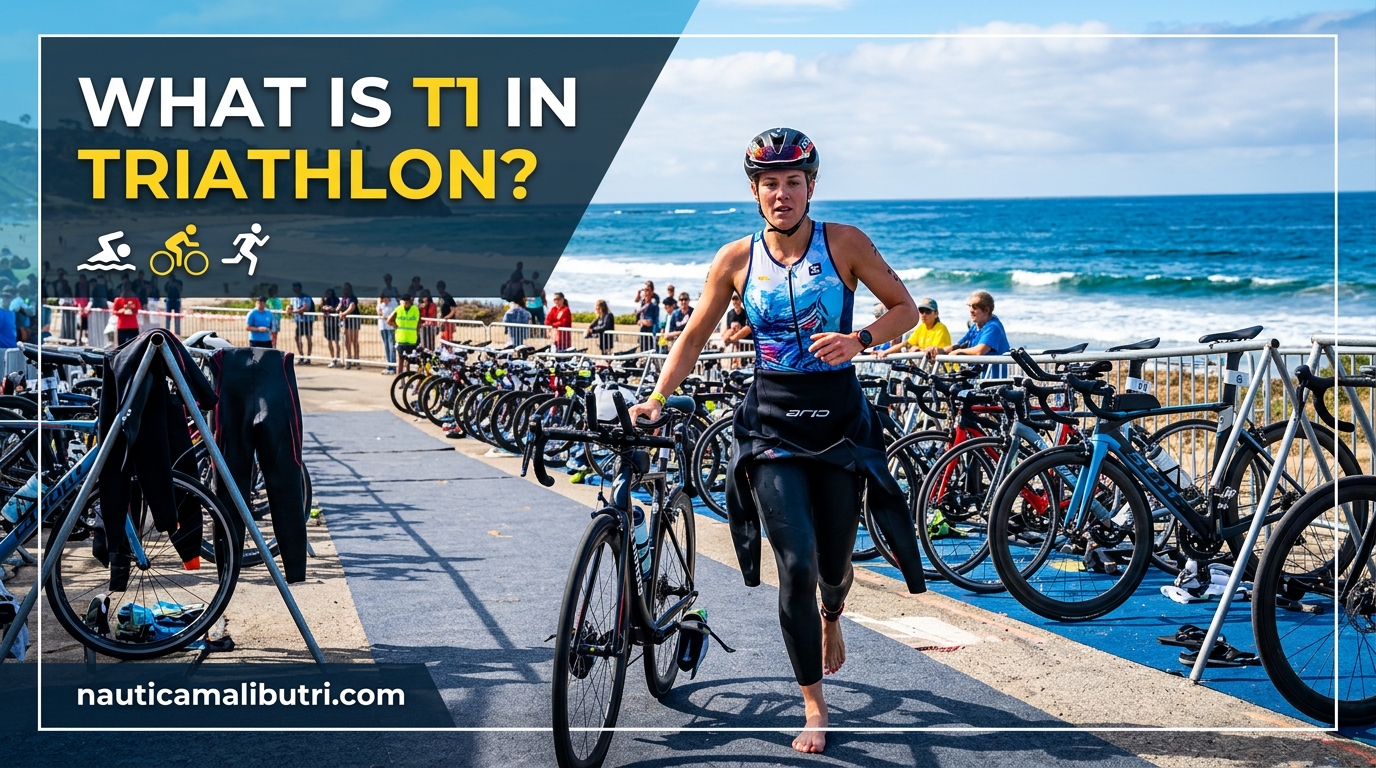
T1 in triathlon is the first transition, where you change from swimming to cycling. It stands for “Transition 1” and represents one of the most overlooked areas where beginners can gain or lose valuable race time without logging extra training hours. Whether you are preparing for your first sprint triathlon or tackling your first IRONMAN 70.3, understanding how to execute T1 smoothly can shave minutes off your total race time.
In this guide, I will walk you through exactly what T1 involves, the step-by-step process, what gear you need, and proven tips from experienced triathletes to help you transition like a pro. After coaching dozens of first-time triathletes through their races, I have seen how a well-practiced T1 can transform race day anxiety into confidence.
Table of Contents
What is T1 in Triathlon
T1 stands for Transition 1, the first of two transitions in a standard triathlon. During T1, you move from the swim leg to the bike leg. This transition includes everything from the moment you exit the water until you mount your bike and cross the timing mat at the mount line.
Every second spent in T1 counts toward your total race time. In a sprint triathlon, a slow T1 can cost you 2 to 4 minutes. In longer races, inefficient transitions add unnecessary fatigue. The good news is that T1 is a skill you can improve through practice without additional physical conditioning.
Triathlons have two transitions: T1 (swim to bike) and T2 (bike to run). T1 typically takes longer than T2 because it involves removing a wetsuit and putting on more gear. Understanding this distinction helps you allocate your mental preparation appropriately.
The Step-by-Step T1 Process
T1 begins before you ever touch dry land. The transition from horizontal swimming to vertical running creates disorientation for many athletes. Your approach to the swim exit matters as much as what happens in the transition area.
Here is the exact sequence to execute a smooth T1:
Step 1: Exit the Water and Remove Cap and Goggles
As you approach the swim exit, reach up and remove your swim cap and goggles with one hand. Many triathletes hold these in their hand while running to transition. Some races provide bins for discarded swim gear, but holding them ensures nothing gets lost.
If you wear a wetsuit, start pulling it down to your waist as soon as you stand up. The water helps the wetsuit slide off your shoulders. Grab the zipper cord and pull while running.
Step 2: Run to Your Bike Rack While Removing the Wetsuit
Run from the water exit to your transition spot with the wetsuit pulled down to your waist. This technique saves time compared to stopping to remove the entire suit at the water’s edge. Keep your momentum moving forward.
Once you reach your bike, sit down or bend over and pull the wetsuit completely off. Experienced athletes can do this in 15 to 30 seconds. Practice this motion at home until it becomes automatic.
Step 3: Put On Your Helmet First
Always put on your helmet before touching your bike. USAT and most race organizations require helmets to be buckled before you unrack your bike. Failure to follow this rule results in disqualification or time penalties.
Secure the buckle firmly but comfortably. A loose helmet creates drag and safety risks. Make sure the straps sit flat against your face without twists.
Step 4: Put On Bike Shoes or Prepare for Flying Mount
Most beginners put on their bike shoes in the transition area. This approach feels more stable and reduces the risk of fumbling at the mount line. Sit down or use a stable stance while putting on shoes.
Advanced athletes often use a “flying mount,” leaving bike shoes already clipped into the pedals. They run barefoot to the mount line, jump onto the bike, and slip into the shoes while pedaling. This technique saves 20 to 40 seconds but requires significant practice.
Step 5: Grab Your Bike and Run to the Mount Line
With your helmet secured and shoes on, unracked your bike by the seat or handlebars. Run alongside your bike toward the mount line. Keep your eyes forward and maintain a steady pace.
Many beginners make the mistake of trying to mount their bike too early. Wait until you cross the designated mount line. Volunteers or signage will indicate where mounting becomes allowed.
Step 6: Cross the Mount Line and Start Pedaling
After crossing the mount line, swing your leg over and settle onto your saddle. Start pedaling smoothly before trying to slip into shoes if doing a flying mount. Build momentum before adjusting anything.
The timing mat at the mount line records your T1 split. Once you cross, your T1 officially ends and the bike leg begins. Focus on settling into your rhythm and hydrating.
Essential T1 Gear and Setup
Your T1 setup should be minimalist. Every item you add creates potential for confusion and delay. After working with triathletes at the Nautica Malibu Triathlon, I have found that the simplest setups produce the fastest transitions.
Helmet
Your helmet is the only mandatory item for T1. Choose a helmet with comfortable straps that you can buckle quickly. Practice putting it on and taking it off until it becomes second nature. Place your helmet on your handlebars or bike seat with the straps already adjusted and buckles open.
Bike Shoes
Leave your bike shoes unbuckled or with elastic laces installed. Elastic laces allow you to slide your feet in quickly without fumbling with traditional closures. Some athletes apply talcum powder inside shoes to help wet feet slide in smoothly.
Race Belt
Your race number belt should be laid out where you can grab it easily. Some athletes put on the race belt in T1, while others wait until T2. Check your race rules, as some events require the number to be visible during the bike leg.
Sunglasses
Leave your sunglasses inside your helmet or hooked on your handlebars. Put them on after mounting your bike if you prefer not to handle them during T1. Many triathletes skip sunglasses in T1 to save seconds, putting them on during the first miles of the bike course instead.
Transition Organization
Lay out your gear in the order you will need it. Helmet first, then shoes, then race belt. Keep your area compact. Most races allow only a small space on the bike rack, so efficiency matters. Practice your layout at home until you can execute it blindfolded.
What is a Good T1 Time
T1 times vary significantly based on race distance, wetsuit use, and experience level. Understanding realistic benchmarks helps you set appropriate goals and measure your improvement.
For beginners with wetsuits, T1 times typically range from 2 to 4 minutes. A time of 2:15 to 2:35 places you in the bottom 25% at most races, according to forum discussions with real triathletes. Do not be discouraged by slower initial times. Focus on consistency and gradual improvement.
Intermediate athletes usually complete T1 in 1 to 2 minutes. This range indicates practiced wetsuit removal and organized gear setup. You are not rushing, but you are not hesitating either.
Advanced and professional triathletes often execute T1 in under 60 seconds. These athletes have streamlined their setup, practice transitions weekly, and may use flying mounts to eliminate shoe time in transition. Sub-60 T1 times require hundreds of repetitions to achieve reliably.
Race distance affects T1 expectations. Sprint triathlons demand faster transitions because every second represents a larger percentage of total race time. IRONMAN events allow slightly more relaxed transitions since the overall race spans hours, though efficient T1 still matters for competitive age-groupers.
T1 Tips for Beginners
First-time triathletes often feel overwhelmed by T1. The combination of post-swim disorientation, adrenaline, and the pressure of transition creates a challenging environment. These tips come from years of coaching beginners through their first races.
Practice Transitions Before Race Day
Set up a mock transition area in your driveway or yard. Run through your T1 sequence 10 to 15 times before your race. Time yourself and look for bottlenecks. Practicing wetsuit removal is especially critical, as this step consumes the most time for beginners.
One triathlete I coached reduced their T1 time from 4 minutes to 1:45 simply by practicing wetsuit removal 20 times in the week before their race. Muscle memory eliminates hesitation.
Simplify Your Setup
Bring only what you absolutely need. The more items you add to your transition area, the more opportunities exist for confusion. I recommend helmet, bike shoes, race belt, and sunglasses only. Skip the towel unless weather conditions demand it.
Handle Post-Swim Disorientation
The transition from horizontal swimming to vertical running creates dizziness for many athletes. This disorientation is normal and temporary. As you approach the swim exit, kick harder to increase blood flow to your legs. When you stand up, pause for two to three seconds if needed before running.
Focus on a fixed point in the distance rather than looking down at your feet. This technique helps your vestibular system stabilize faster.
Use Landmarks to Find Your Bike
Transition areas can hold hundreds of bikes, making it easy to get lost. Before the race, walk through transition and identify unique landmarks near your rack. Count the number of racks from the swim entrance or bike exit. Look for distinctive signs, banners, or equipment near your spot.
Some athletes tie a bright balloon or ribbon to their rack, but check race rules first. Some events prohibit marking systems.
Visualize Your T1
Mental rehearsal improves performance without physical exertion. In the days before your race, close your eyes and walk through your entire T1 sequence. Picture yourself exiting the water smoothly, removing your wetsuit efficiently, and mounting your bike with confidence.
Visualization creates neural pathways that make the actual execution feel familiar. Many elite triathletes use this technique before major races.
Do a Pre-Race Walkthrough
Arrive early on race morning and walk the transition route. Start at the swim exit and follow the path to your bike. Then walk from your bike to the mount line. Note any uneven pavement, turns, or obstacles. Knowing the route eliminates surprises during the actual transition.
Common T1 Mistakes to Avoid
Certain errors cost triathletes significant time in T1. Learning from others’ mistakes helps you avoid the same pitfalls.
Wetsuit removal taking too long is the most common time sink. Beginners often struggle with stuck zippers or tight ankle cuffs. Apply body glide or trislide to your ankles and wrists before putting on your wetsuit. Practice pulling the suit inside-out as you remove it. Consider cutting an inch off the bottom of your wetsuit legs to create a larger opening for faster removal.
Forgetting to put on your helmet before touching your bike results in penalties or disqualification. Make this your absolute first action after removing your wetsuit. Create a mental checklist: helmet, then shoes, then bike.
Not being able to find your bike wastes precious seconds and increases stress. Choose a landmark system and verify it multiple times before the race starts.
Drying your feet before putting on bike shoes is unnecessary. Modern bike shoes accommodate wet feet. The time spent toweling off costs more than any benefit from dry feet. Slip your wet feet directly into your shoes and pedal.
Trying advanced techniques like flying mounts without adequate practice creates disasters. Master the basics before attempting time-saving shortcuts. A slow, clean T1 beats a fast, fumbled one.
What does T1 and T2 mean in a triathlon?
T1 stands for Transition 1, the change from swim to bike. T2 stands for Transition 2, the change from bike to run. Both transitions count toward your total race time, making efficiency important.
What is a good T1 time for age groupers?
A good T1 time for age groupers is between 1 and 2 minutes with a wetsuit. Beginners typically take 2 to 4 minutes, while advanced athletes complete T1 in under 60 seconds.
Do I need to dry my feet before putting on bike shoes in T1?
No, you do not need to dry your feet. Modern bike shoes work fine with wet feet, and the time spent toweling off costs more than any benefit. Simply slip your wet feet directly into your shoes.
Should I wear socks during T1?
Most triathletes skip socks in T1 to save time. If you prefer socks for comfort, choose quick-drying triathlon-specific socks and practice putting them on with wet feet before race day.
How can I practice triathlon transitions at home?
Set up a mock transition area in your yard with your bike on a rack. Practice your entire T1 sequence including wetsuit removal, helmet buckling, and mounting. Time yourself and repeat 10 to 15 times to build muscle memory.
Conclusion
T1 in triathlon represents an opportunity to improve your race time without adding training volume. By understanding what T1 is and following a systematic approach, you can transform this transition from a source of anxiety into a competitive advantage.
The key to mastering T1 lies in practice and simplicity. Practice your wetsuit removal, memorize your transition layout, and keep your gear minimal. Whether you are preparing for the Nautica Malibu Triathlon or your local sprint race, the principles remain the same.
Start practicing your transitions today. Set up your bike in the yard, time your T1 sequence, and aim to improve by just 10 seconds each practice session. Those seconds add up to minutes on race day, and minutes determine podium positions. Understanding what is T1 in triathlon is your first step toward smoother, faster races in 2026.