
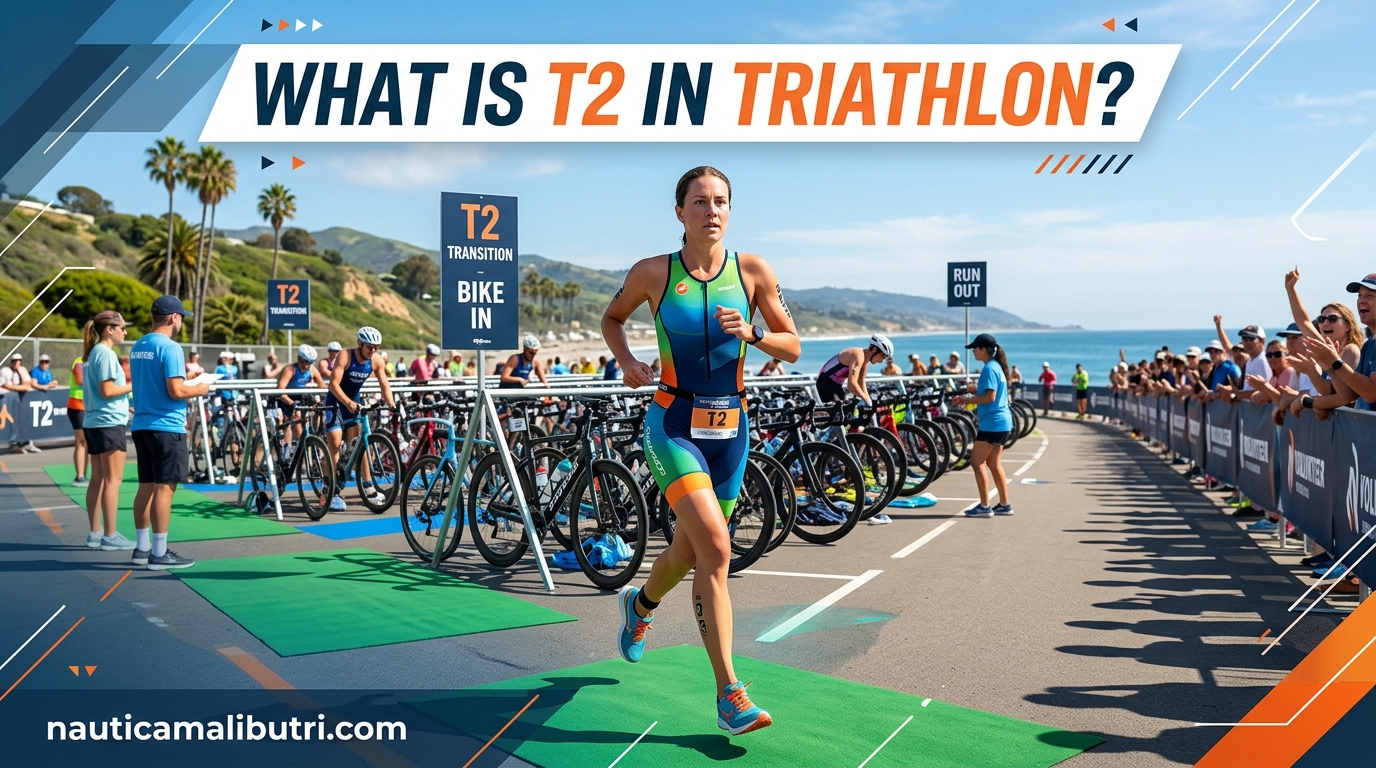
T2 in triathlon is the second transition zone where you switch from the bike leg to the running leg of the race. You rack your bike, change into running shoes, grab your race belt, and head out onto the run course.
Mastering T2 can save you precious minutes on your overall race time. Our team has coached hundreds of first-time triathletes through their transitions, and we have seen how a smooth T2 can transform race day from stressful to successful. In this guide, you will learn exactly what T2 is, how to set up your transition area, and practical tips to make your bike-to-run changeover seamless.
Table of Contents
What is T2 in Triathlon
T2 stands for “Transition 2” and represents the second of two transition periods in a standard triathlon. This is where you complete the cycling portion of the race and prepare for the final running leg.
During T2, athletes must rack their bikes at their designated spots, change from cycling shoes into running shoes, and gather any remaining gear before heading to the run course. The clock never stops during this process, so every second spent in transition counts toward your final race time.
T1 vs T2: Understanding Both Transitions
Every triathlon has two transitions. T1 is the swim-to-bike transition that happens after you exit the water. T2 is the bike-to-run transition that occurs after you complete the cycling portion.
T1 typically involves removing your wetsuit, putting on your helmet and cycling shoes, and grabbing your bike from the rack. T2 is generally simpler because you are not dealing with a wetsuit, but it comes with its own challenges, especially the physical adjustment from cycling to running.
The Triathlon Transition Flow
Understanding where T2 fits into the bigger race picture helps you prepare mentally and physically. Here is the complete flow of a standard triathlon:
Swim to T1: You finish the swim, exit the water, and run to the transition area. Here you change into your cycling gear and head to the bike mount line.
Bike Leg: You complete the cycling portion of the race, which can range from 12 miles in a sprint triathlon to 112 miles in an Ironman.
T2 Transition: You approach the dismount line, get off your bike, and run it to your rack. You change shoes, grab your race belt and any nutrition, then head to the run course.
Run to Finish: You complete the final leg of the race, crossing the finish line to complete your triathlon journey.
Setting Up Your T2 Transition Area
A well-organized transition area is the foundation of a fast T2. We recommend arriving early on race morning to set up your gear properly and conduct a walk-through of your route.
Your T2 Gear Checklist
These are the essentials you need at your transition spot for T2:
- Running shoes (pre-tied with elastic laces if possible)
- Race belt with your number attached
- Hat or visor
- Sunglasses
- Nutrition (gels, chews, or electrolyte drink)
- Baby powder (helps with dry feet)
Finding Your Bike Rack
One of the biggest challenges for beginners is locating their bike among hundreds of others. We always tell our athletes to pick a landmark near their rack, such as a specific banner, tree, or the end of a row.
Count the number of bikes from a fixed point so you can find your spot quickly even when the transition area is crowded. Some athletes place a bright towel or small marker by their bike, but check race rules first as some events restrict what you can use.
Positioning Your Gear
Lay out your running shoes with the tongues pulled out and heels popped up so you can slide your feet in quickly. Place your race belt, hat, and sunglasses within easy reach. Keep everything compact, as transition areas can be tight and you do not want your gear spreading into your neighbor’s space.
The T2 Process Step by Step
Here is exactly what happens during a successful T2 transition, broken down step by step.
Step 1: Approaching the Dismount Line
As you near the end of the bike leg, slow down gradually and prepare to dismount. Unclip one foot and pedal with it on top of your shoe for the final stretch. This saves time because you can run directly to your rack without stopping to unclip.
Step 2: The Flying Dismount
At the dismount line, swing your leg over the saddle and hop off while the bike is still moving slowly. This technique, called a flying dismount, takes practice but can save significant seconds. If you are not comfortable with this, a standard dismount where you stop completely is perfectly fine for beginners.
Step 3: Running to Your Rack
Run with your bike to your designated rack spot. Use your landmark to locate it quickly. Rack your bike by the saddle or handlebars as required by the race, then immediately move to your gear.
Step 4: Changing Shoes
Sit on your transition mat or towel and put on your running shoes. If you have elastic laces, this should take just a few seconds. If using standard laces, tie them quickly but securely. Apply baby powder beforehand if your feet are wet or sweaty.
Step 5: Final Gear and Exit
Put on your race belt, hat or visor, and sunglasses. Grab any nutrition you need for the run. Take a breath to compose yourself, then run toward the run course exit. Remember, you cannot mount your bike or start running until you cross the designated exit line.
Practicing T2 Transitions
Like any skill, T2 transitions improve with practice. We recommend incorporating transition practice into your regular training routine.
Brick Workouts
Brick workouts are training sessions where you combine two disciplines back-to-back, like biking immediately followed by running. These sessions help your body adapt to the feeling of running after cycling, which many beginners find challenging.
Start with short bike sessions of 20-30 minutes followed by a 10-15 minute run. As you progress, increase the duration to match your race distance.
Transition Drills
Set up a mock transition area in your driveway or a park. Practice the full sequence: ride in, dismount, rack your bike, change shoes, and run out. Time yourself and look for areas to improve. Even 30 minutes of practice can make a huge difference on race day.
Mental Preparation
During the final miles of your bike leg, start mentally preparing for T2. Visualize each step of your transition. Remind yourself where your rack is located. A clear mental plan prevents the foggy-headed mistakes that often happen in the heat of the moment.
Common T2 Mistakes to Avoid
We have seen the same errors trip up beginners at T2 time and again. Here are the most common mistakes and how to avoid them.
Mistake 1: Forgetting Your Rack Location. Many first-timers spend precious minutes searching for their bike. Use the landmark technique mentioned earlier and do a walk-through before the race starts.
Mistake 2: Over-Packing Your Transition Area. Bring only what you need. Extra gear creates clutter and confusion when you are trying to move quickly.
Mistake 3: Slow Dismounts. Practice your dismount technique before race day. Hesitating at the dismount line backs up other athletes and adds unnecessary time.
Mistake 4: Cramps When Running. Many beginners experience calf or hamstring cramps when starting the run. This happens because cycling uses different muscles than running. Brick workouts are the best prevention.
Mistake 5: Rushing and Dropping Gear. Smooth is fast. A calm, practiced transition beats a frantic scramble every time. Move with purpose but do not panic.
How Long Should T2 Take
Transition times vary based on experience level and race distance. Professional triathletes complete T2 in about 60-90 seconds. Experienced age-group athletes typically take 2-3 minutes. Beginners often spend 4-6 minutes in T2, which is perfectly normal when you are learning.
Your goal as a beginner should be a clean, stress-free transition rather than a rushed one. As you gain experience, your speed will naturally improve. One forum member shared that shaving just 1-2 minutes off their T2 was easier than swimming 2 minutes faster, which shows how valuable transition practice can be.
T2 in Different Race Distances
T2 works the same way across all triathlon distances, but the context changes based on how long you have been on the bike.
In a sprint triathlon with a 12-mile bike leg, your legs might feel fresh entering T2. In an Ironman 70.3 after 56 miles of cycling, your legs will feel heavy and the transition to running will be more challenging. In a full Ironman with 112 miles on the bike, T2 becomes a critical moment where you refuel mentally and physically for the marathon ahead.
Regardless of distance, the mechanics of T2 remain the same: rack the bike, change shoes, grab your gear, and run.
What does T1 and T2 mean in a triathlon?
T1 and T2 refer to the two transition periods in a triathlon. T1 (Transition 1) is the swim-to-bike transition where you change from your wetsuit into cycling gear. T2 (Transition 2) is the bike-to-run transition where you rack your bike and change into running shoes. Both transitions count toward your overall race time.
How long does T2 take in triathlon?
T2 times vary by experience level. Professional triathletes complete T2 in 60-90 seconds. Experienced age-group athletes typically take 2-3 minutes. Beginners usually spend 4-6 minutes in T2. With practice, most athletes can reduce their T2 time significantly.
What do I need for T2 transition?
For T2, you need running shoes, a race belt with your number, hat or visor, sunglasses, and any nutrition for the run. Baby powder is helpful for dry feet. Keep your gear compact and organized at your transition spot for quick access.
How do I practice T2 transition?
Practice T2 by setting up a mock transition area and running through the full sequence: dismount, rack bike, change shoes, and exit. Incorporate brick workouts (bike followed immediately by run) into your training. Even 30 minutes of transition practice can make a significant difference on race day.
Final Thoughts on T2 in Triathlon
T2 in triathlon is where you transition from cyclist to runner, racking your bike and preparing for the final leg of your race. A smooth T2 can save you valuable minutes and set you up for a strong finish.
The key to mastering T2 is preparation. Organize your gear, memorize your rack location, practice your dismount, and train with brick workouts. Remember that every second in transition counts toward your final time, so efficiency matters.
Whether you are preparing for your first sprint triathlon or your tenth Ironman, investing time in your T2 skills will pay dividends on race day. Start practicing your transitions now, and you will cross that finish line with confidence.