
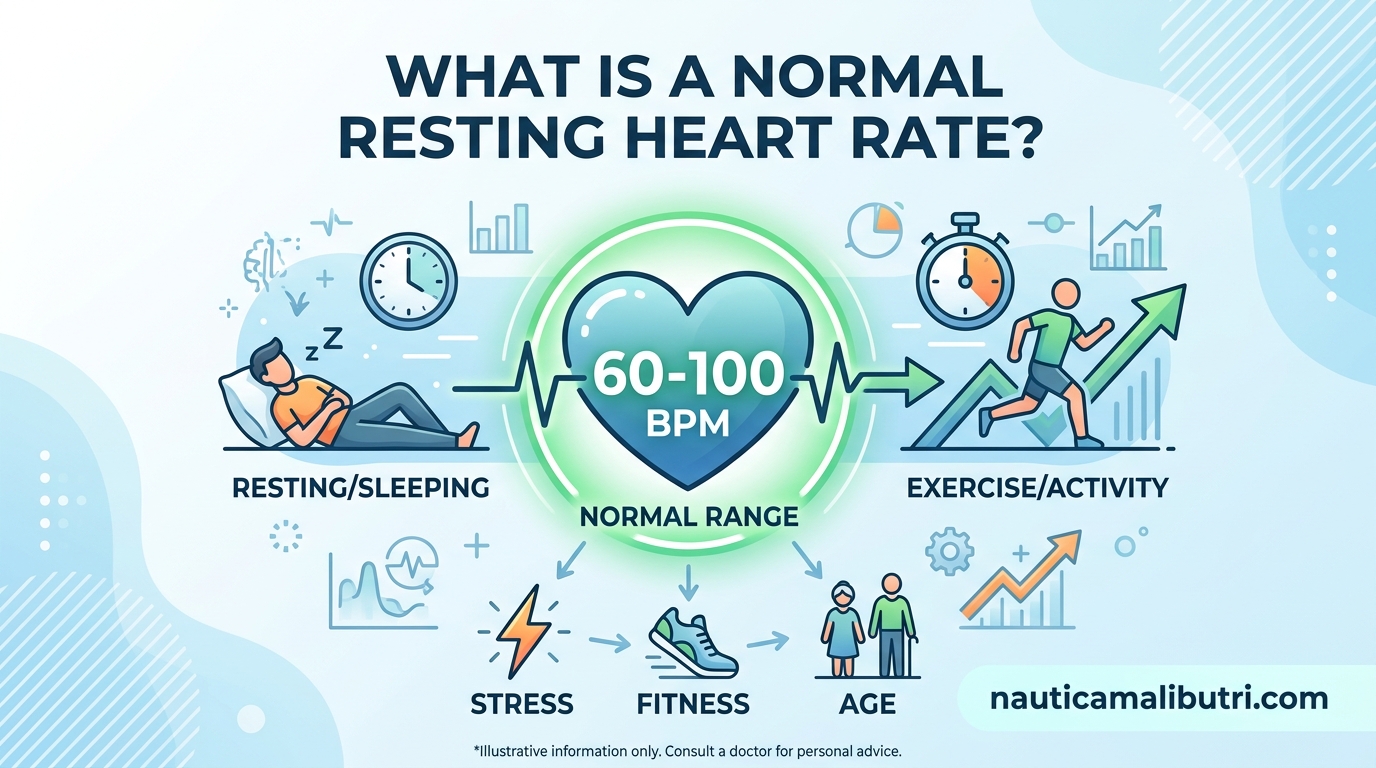
A normal resting heart rate for adults ranges from 60 to 100 beats per minute according to the American Heart Association. For well-trained endurance athletes including triathletes, a resting heart rate between 40 and 60 bpm is also considered normal and often indicates excellent cardiovascular fitness. Understanding your resting heart rate is one of the simplest yet most powerful ways to monitor your heart health and training status.
I’ve been tracking my own resting heart rate throughout 15 years of triathlon training. My numbers have ranged from the high 50s during off-season to the low 40s at peak fitness before my last Ironman. This metric has become my daily barometer for recovery and overtraining risk.
In this guide, you’ll learn what constitutes a normal resting heart rate for different age groups and fitness levels. We’ll cover how to measure it accurately, what factors influence your numbers, and specifically how triathletes can use this data to optimize training and catch overtraining early.
Table of Contents
How to Measure Your Resting Heart Rate
Getting an accurate resting heart rate reading requires proper technique and timing. Your resting heart rate should be measured when you’re completely at rest, ideally first thing in the morning before you get out of bed. This ensures you capture your true baseline without the influence of activity, caffeine, or stress.
There are two primary methods for manually checking your pulse. Each takes practice but becomes second nature after a few attempts.
The Wrist Method (Radial Artery)
Turn your palm facing upward. Place your index and middle fingers on the thumb side of your wrist, just below the base of your thumb. You’ll feel the radial artery pulsing here. Do not use your thumb since it has its own pulse that can confuse the count.
Press lightly until you feel a steady beat. Count the number of beats for 30 seconds, then multiply by 2. Alternatively, count for a full 60 seconds for the most accurate reading.
The Neck Method (Carotid Artery)
Place your index and middle fingers on one side of your neck, just below your jawbone and beside your windpipe. You should feel the carotid artery pulse here. Press gently to avoid restricting blood flow.
Count the beats for 30 or 60 seconds just as you would with the wrist method. Never press both sides of your neck simultaneously as this can affect blood flow to your brain.
Tips for Accurate Measurement
Take multiple measurements over several days and calculate the average. Single readings can be affected by poor sleep, lingering illness, or stress. Consistency in measurement time and method matters more than any single number.
Wearable devices like fitness trackers and smartwatches can provide continuous resting heart rate data. However, many athletes report discrepancies between manual measurements and device readings. Use wearables for trend tracking but verify with manual checks when accuracy matters.
Normal Resting Heart Rate by Age
Resting heart rate varies significantly by age, with children typically having faster heart rates than adults. The following table shows normal ranges across different age groups based on medical consensus.
| Age Group | Normal Resting Heart Rate (bpm) |
|---|---|
| Newborn (0-1 month) | 70-190 |
| Infant (1-11 months) | 80-160 |
| Toddler (1-2 years) | 80-130 |
| Preschool (3-4 years) | 80-120 |
| School Age (5-12 years) | 70-110 |
| Teen (13-17 years) | 60-100 |
| Adult (18+ years) | 60-100 |
| Well-trained Athlete | 40-60 |
Harvard Health suggests that for most healthy adults, the typical range is actually tighter, falling between 55 and 85 beats per minute. Your individual baseline within the normal range depends on genetics, fitness level, and overall health status.
Women typically have slightly higher resting heart rates than men by about 3-5 bpm on average. This difference is largely due to heart size and hormonal factors.
What Affects Your Resting Heart Rate
Multiple factors influence your resting heart rate on any given day. Understanding these variables helps you interpret your numbers correctly and avoid unnecessary worry about temporary fluctuations.
Fitness Level and Aerobic Capacity
The most significant factor for athletes is cardiovascular fitness. Regular endurance training strengthens the heart muscle, enabling it to pump more blood with each beat. A stronger heart beats less frequently while delivering the same oxygen throughout your body.
This is why trained triathletes often see resting heart rates in the 40s and 50s. Your resting heart rate can decrease by approximately 1 bpm for every week of consistent aerobic training during the first several months of a new program.
Age and Gender
Resting heart rate naturally increases slightly with age as cardiovascular efficiency declines. However, maintaining fitness can offset much of this age-related change. Gender also plays a role, with women typically averaging 3-5 bpm higher than men.
Stress and Emotional State
Your autonomic nervous system directly controls heart rate. Stress activates the sympathetic nervous system, raising resting heart rate even when you’re physically still. Chronic stress can elevate your baseline by 5-10 bpm.
Anxiety and emotional arousal trigger the same physiological response. Many people discover their true resting heart rate is significantly lower when they measure during relaxed vacation periods compared to work weeks.
Sleep Quality and Duration
Poor sleep substantially affects resting heart rate. Sleep deprivation elevates sympathetic nervous system activity and stress hormones. Studies show that getting fewer than 6 hours of sleep can increase resting heart rate by 5-10 bpm compared to normal sleep duration.
Medications and Substances
Beta-blockers and calcium channel blockers, commonly prescribed for blood pressure and heart conditions, lower resting heart rate. Stimulants including caffeine, certain decongestants, and some asthma medications increase heart rate.
Alcohol initially may lower heart rate but often causes elevated resting heart rate during sleep and the following morning. Dehydration also raises resting heart rate as your cardiovascular system works harder to maintain blood pressure.
Body Position and Environment
Your resting heart rate varies by body position. Standing typically adds 10-15 bpm compared to lying down. Room temperature affects heart rate, with heat increasing it and cold decreasing it. Altitude also impacts readings, with higher elevations generally increasing resting heart rate during acclimatization.
Resting Heart Rate for Triathletes and Endurance Athletes
Endurance athletes operate under different physiological norms than the general population. This section addresses the specific questions and concerns that triathletes have about their resting heart rates that general medical articles never adequately cover.
What is Normal for Trained Athletes?
A resting heart rate between 40 and 60 beats per minute is completely normal for well-trained endurance athletes. Many competitive triathletes and marathoners see numbers in the mid-40s or even high-30s at peak fitness. Tour de France cyclists have been documented with resting heart rates as low as 27-28 bpm.
Data from triathlon forums and training communities shows typical ranges: amateur triathletes usually fall between 52-60 bpm, while Ironman finishers with years of training often see 35-42 bpm. These numbers reflect cardiovascular efficiency, not pathology.
One major pain point for athletes is that general practitioners sometimes flag these low numbers as concerning without understanding the athletic context. It’s helpful to establish your personal baseline during a period of known good health and share this history with your doctor.
Why Athletes Have Lower Resting Heart Rates
Endurance training produces several adaptations that lower resting heart rate. The heart muscle itself strengthens and enlarges, particularly the left ventricle. Stroke volume, the amount of blood pumped per beat, increases substantially. Blood plasma volume expands.
These changes mean your heart delivers more oxygen with each contraction, requiring fewer beats per minute to meet baseline metabolic demands. This efficiency is a marker of good aerobic capacity and cardiovascular fitness.
The autonomic nervous system also adapts, with increased parasympathetic tone that promotes slower resting heart rate. These adaptations develop over months and years of consistent training, not weeks.
Using Resting Heart Rate for Overtraining Detection
One of the most practical applications for triathletes is overtraining detection. Your morning resting heart rate serves as an early warning system when properly tracked.
Monitor your resting heart rate immediately upon waking each day. Record the number in your training log. After establishing a baseline over several weeks of normal training, you can detect problems.
An elevation of 5-10 bpm above your personal baseline suggests incomplete recovery or accumulating fatigue. Some athletes notice this spike before they feel subjective fatigue. When you see this pattern, consider taking a rest day or reducing intensity.
Consistently elevated morning heart rate over multiple days despite adequate sleep often indicates overreaching or the early stages of overtraining syndrome. This warning sign allows you to adjust training before performance crashes or injury occurs.
RHR Trends Through Training Cycles
Your resting heart rate typically follows predictable patterns through different training phases. During base building, as you accumulate aerobic volume, resting heart rate gradually declines. In build phases with added intensity, it may stabilize or slightly increase due to sympathetic nervous system activation.
During peak training weeks, some athletes see slightly elevated resting heart rates due to accumulated fatigue even while fitness is at its highest. The taper phase before a key race should show decreasing resting heart rate as recovery improves.
I track these trends in a simple spreadsheet. My Ironman taper typically shows my resting heart rate dropping from the high 40s to the low 40s over three weeks, confirming that I’m absorbing the training and ready to race.
When Low Resting Heart Rate is Concerning
While low resting heart rate is normal for athletes, certain accompanying symptoms warrant medical evaluation. Dizziness, fainting, chest pain, shortness of breath, or unusual fatigue combined with low resting heart rate require professional assessment.
Bradycardia in athletes is only concerning when symptoms are present. Isolated low resting heart rate without symptoms in a trained endurance athlete is typically a sign of fitness, not pathology. However, new-onset bradycardia in a previously normal-reading athlete, especially with symptoms, should be evaluated.
When to See a Doctor About Your Resting Heart Rate
While resting heart rate varies naturally, certain patterns and symptoms indicate the need for medical evaluation. Understanding these thresholds helps you distinguish between normal variation and potential health concerns.
Bradycardia: When Resting Heart Rate is Too Low
Bradycardia is defined as a resting heart rate below 60 beats per minute in adults. For non-athletes, persistent readings below 60 may indicate an underlying issue with the heart’s electrical system. Athletes are the exception to this rule.
For endurance athletes, concern typically begins at readings below 40 bpm, especially if accompanied by symptoms. However, many healthy triathletes function perfectly well in the high 30s without any problems. Context and symptoms matter more than any single number.
Tachycardia: When Resting Heart Rate is Too High
Tachycardia is defined as a resting heart rate above 100 beats per minute. Persistent resting tachycardia requires medical evaluation regardless of fitness level. Potential causes include thyroid disorders, anemia, infection, dehydration, heart arrhythmias, or other cardiovascular conditions.
A resting heart rate consistently above 100 bpm increases cardiac workload and over time can strain the heart. Even during periods of high training stress, well-trained athletes should rarely see resting heart rates above 70-80 bpm unless ill or significantly overreached.
Warning Symptoms to Watch For
Seek medical attention if you experience any of these symptoms along with abnormal resting heart rate: dizziness or lightheadedness, fainting or near-fainting, chest pain or pressure, shortness of breath at rest, unusual fatigue, or heart palpitations.
Also consult a doctor if you experience a sudden change in your resting heart rate without an obvious cause like illness, medication change, or training volume increase. Significant changes in heart rhythm pattern, even at normal rates, warrant evaluation.
Medical Disclaimer
This article provides general information about resting heart rate and is not medical advice. Always consult with a qualified healthcare provider for personal medical guidance, especially if you have cardiovascular conditions, take heart-affecting medications, or experience symptoms along with abnormal heart rate readings.
Frequently Asked Questions About Resting Heart Rate
What is a good resting heart rate by age?
A good resting heart rate varies by age: newborns range from 70-190 bpm, infants 80-160 bpm, toddlers 80-130 bpm, preschoolers 80-120 bpm, school-age children 70-110 bpm, teens 60-100 bpm, and adults 60-100 bpm. Well-trained athletes may have resting heart rates of 40-60 bpm regardless of adult age.
What is the danger zone for resting heart rate?
The danger zone for resting heart rate is below 40 bpm or above 100 bpm for adults, especially when accompanied by symptoms like dizziness, fainting, chest pain, or shortness of breath. Non-athletes with sustained readings below 60 bpm or above 100 bpm should consult a doctor. Athletes may have lower normal ranges.
Is a 90 resting heart rate normal?
Yes, a resting heart rate of 90 bpm is within the normal range of 60-100 bpm for adults. However, it falls on the higher end of normal. If 90 bpm is consistently higher than your personal baseline, consider factors like stress, dehydration, poor sleep, caffeine intake, or fitness level. Harvard Health suggests most healthy adults fall between 55-85 bpm.
Is a 52 resting heart rate good?
Yes, a resting heart rate of 52 bpm is excellent for most adults and indicates good cardiovascular fitness. For endurance athletes and triathletes, 52 bpm is a perfectly normal and healthy reading. The general adult range is 60-100 bpm, but trained athletes commonly see 40-60 bpm. As long as you have no symptoms like dizziness or fatigue, 52 bpm suggests your heart is working efficiently.
Why do athletes have lower resting heart rates?
Athletes have lower resting heart rates because endurance training strengthens the heart muscle and increases stroke volume, the amount of blood pumped per beat. A stronger, more efficient heart doesn’t need to beat as frequently to deliver oxygen throughout the body. Additionally, training increases parasympathetic nervous system activity, which naturally slows heart rate. These adaptations develop over months and years of consistent training.
Conclusion
A normal resting heart rate for adults falls between 60 and 100 beats per minute, though most healthy individuals see numbers between 55 and 85 bpm. For triathletes and endurance athletes, readings between 40 and 60 bpm indicate excellent cardiovascular fitness and are completely normal.
Your resting heart rate serves as a valuable daily health and training metric. Track it consistently upon waking to establish your personal baseline. Use it to detect overtraining early, monitor fitness improvements, and catch potential health issues before they become serious.
Start measuring your resting heart rate tomorrow morning. Record the number and track it through your next training cycle. In 2026, this simple habit remains one of the most effective free tools for optimizing your triathlon performance and safeguarding your cardiovascular health.