
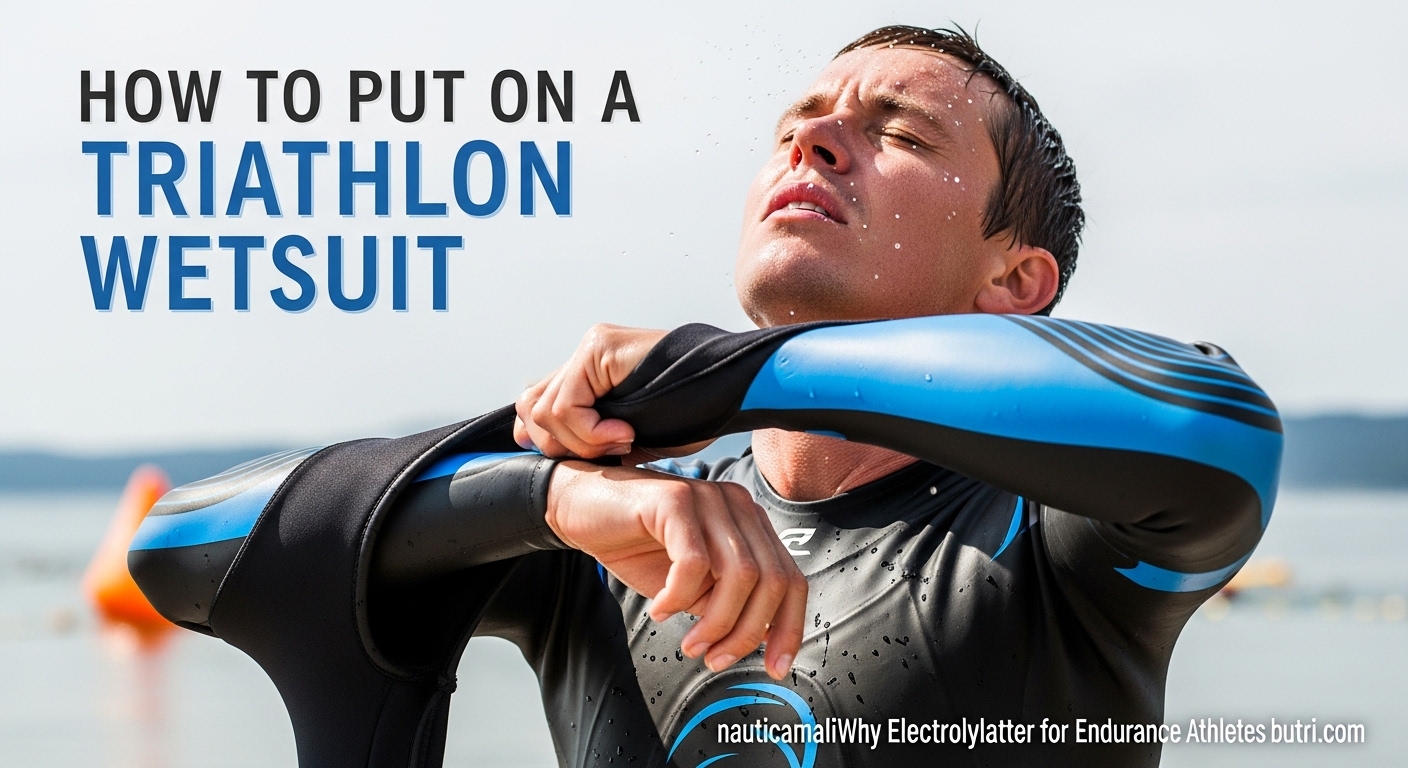
Learning how to put on a triathlon wetsuit correctly can make the difference between a smooth race day and a stressful transition experience. I remember my first open water swim – I spent 15 minutes wrestling with my neoprene wetsuit, only to realize halfway through the swim that I had never pulled it high enough in the crotch.
This guide will walk you through the exact steps I wish I had known before my first triathlon. Whether you are preparing for your debut race or looking to refine your technique, these step-by-step instructions will help you slide into your wetsuit smoothly, avoid tears, and achieve that second-skin fit that maximizes buoyancy and range of motion.
Table of Contents
How to Put On a Triathlon Wetsuit: What You Will Learn
In this guide, we cover everything from preparation steps that prevent damage to your neoprene, to the exact sequence for donning your suit, to fit adjustments that ensure comfort during your open water swim. You will also discover the plastic bag trick that experienced triathletes swear by.
Preparation Steps Before Donning Your Wetsuit
Proper preparation saves time and protects your investment. A triathlon wetsuit costs hundreds of dollars, and one careless moment can leave permanent fingernail tears in the delicate neoprene material.
Trim Your Nails
I learned this lesson the hard way. Even short nails can catch and tear neoprene when you are pulling the fabric. Trim your fingernails short and smooth any rough edges with a file before race day.
Stay Dry
Do I get my wetsuit wet before putting it on? The answer is no. Dry skin slides much more easily against neoprene than wet skin. Make sure your body is completely dry before starting. If you have been in the water for a practice swim, towel off thoroughly.
Apply Lubrication Strategically
BodyGlide or a similar wetsuit lubricant is your best friend. Apply it to your ankles, wrists, neck, and anywhere you tend to chafe. I also put a light coating on my lower legs up to the knees. This reduces friction and makes the fabric slide on smoothly.
For men, I strongly recommend applying lubricant around the collar and shoulders where the wetsuit neoprene can rub during the swim. For women, focus on the neck and underarms.
Use the Plastic Bag Trick
Here is the insider technique that changed everything for me. Slip a plastic grocery bag over each foot before putting on the wetsuit legs. The plastic reduces friction dramatically, allowing the neoprene to slide right over your heels.
Once the leg is up past your ankle, simply pull the bag out from the top. Some triathletes also use this trick on their hands when putting on the arms.
Timing Matters on Race Day
Based on forum discussions with experienced triathletes, timing your wetsuit donning is crucial. Put on your lower body 20 to 45 minutes before your wave starts, but wait until closer to your start time to put on the upper body.
This approach keeps you cooler and prevents overheating while ensuring you are ready to go when your wave is called.
How to Put On a Triathlon Wetsuit: Step-by-Step Process
Follow these nine steps in order. Take your time – rushing increases the risk of tears and poor fit.
Step 1: Unzip Completely
Lay your wetsuit flat on a clean surface or hold it in front of you. Unzip the back zipper all the way down to the base of the spine. Check that the zipper is fully open and the suit is ready to receive you.
Step 2: Put On the First Leg
If using the plastic bag trick, bag your foot now. Slide your foot into the leg opening. Point your toes and ease your foot through gently. Once your foot is through, remove the plastic bag if you used one.
Work the fabric up your calf using your fingertips on the inside of the suit. Do not grab the outside with your nails.
Step 3: Put On the Second Leg
Repeat the process for your other leg. Take care to keep the fabric from bunching at the ankles. The goal is smooth, even coverage up both legs.
Step 4: Pull High in the Crotch
Here is the most important step that beginners miss. Pull the wetsuit up as high as possible in the crotch. The fabric should sit snugly against your body, not sagging or drooping.
Experienced triathletes say you cannot pull too high. If you think it is high enough, pull it another inch. This prevents the suit from restricting your leg movement during the swim.
Step 5: Work the Torso Up
Continue pulling the suit up over your hips and torso. Use the pads of your fingers on the inside surface to inch the fabric upward. Work in small sections, pulling up from the bottom rather than yanking from the top.
Step 6: Insert Your Arms
Put one arm into the sleeve, again pointing your fingers to create a narrow profile. Slide your hand through the wrist opening. Once your hand emerges, adjust the sleeve so it sits comfortably on your shoulder.
Repeat with your other arm. Make sure the suit is pulled up evenly on both sides.
Step 7: Pull High in the Armpits
Just like with the crotch, you need to pull the fabric high into your armpits. This creates freedom of movement for your swimming stroke. The neoprene should sit right in the crease of your armpit, not halfway down your upper arm.
Step 8: Zip Up the Back
Reach behind you to grab the zipper pull. If you cannot reach, most wetsuits have a long cord attached to the zipper for this purpose. Pull the zipper up smoothly until it reaches the neckline.
Some suits have a Velcro tab at the top to secure the zipper pull. Fasten this to prevent the zipper from sliding down during your swim.
Step 9: Final Adjustments
Walk through your body systematically and make small adjustments. Tug the shoulders up slightly, ensure the crotch is still high, check that the neck feels snug but not choking, and verify that your arms have full range of motion.
Fit Adjustments and Checks After Donning
Once your wetsuit is on, proper fit is essential for performance and comfort. A poorly fitted wetsuit creates drag, restricts your stroke, and can cause painful chafing.
Should a Triathlon Wetsuit Let Water In?
A small amount of water entry is normal and expected. Your body will heat this thin layer of water, creating thermal protection. However, if water is flooding in continuously, your suit is too loose.
When you first enter the water, some seepage around the neck and wrists is typical. This should stabilize within the first few minutes of swimming.
The Crotch Check
Stand straight and lift one knee toward your chest. If you feel resistance or tightness across your lower back, the suit needs to come up higher in the crotch. The fabric should allow full leg extension without pulling.
The Arm Freedom Test
Extend both arms overhead in a swimming position. Rotate them through a freestyle stroke motion. You should feel no binding or restriction across your chest or shoulders. If you do, pull the fabric higher into your armpits.
Neckline Comfort
The neck should feel snug but not uncomfortable. You should be able to turn your head side to side and breathe normally. If the neckline chokes you or feels abrasive, you may need more lubricant or a different suit size.
Pro Tips and Common Mistakes to Avoid
After helping dozens of first-time triathletes with their wetsuit technique, I have seen the same errors repeatedly. Here is what to avoid.
Do Not Rush
Grabbing the outside of the suit and yanking creates fingernail tears. Always use the pads of your fingers on the inside surface. Work the fabric up gradually rather than trying to pull large sections at once.
Practice Before Race Day
Never put on a wetsuit for the first time on race day. Practice at home or at a local swim session. You need to know how your specific suit feels and moves.
The Inside-Out Method
Some experienced triathletes use an alternative technique: fold the wetsuit inside out down to the hips before starting. This exposes the smoother interior surface, making it easier to slide your legs in without catching on the exterior neoprene texture.
Once your legs are through, you pull the suit right-side out and continue as normal. This method also reduces the risk of fingernail tears.
Chafing Prevention
Apply lubricant generously to any area that might rub. Common chafe points include the neck, underarms, and for men, the nipples. I have seen triathletes finish races with raw, bleeding abrasions from skipping this step.
Zipper Placement
Remember that triathlon wetsuit zippers go in the back. I have witnessed embarrassed athletes trying to zip their suits up the front. The long pull cord is there to help you reach the zipper without assistance.
Frequently Asked Questions
Is there a trick to putting on a wetsuit?
Yes, several tricks make donning easier. The plastic bag trick – slipping a grocery bag over your foot before inserting it – dramatically reduces friction. Using BodyGlide or similar lubricant on ankles, wrists, and neck helps the neoprene slide on smoothly. Pulling the fabric as high as possible in the crotch and armpits before zipping creates better range of motion.
Do I get my wetsuit wet before putting it on?
No, keep both your skin and the wetsuit dry during the donning process. Wet skin creates friction against neoprene, making it much harder to slide the suit on. Once the wetsuit is properly fitted, you will enter the water and a thin layer will naturally flow between your skin and the suit.
Should a triathlon wetsuit let water in?
A small amount of water entry is normal and expected. Triathlon wetsuits are designed to trap a thin layer of water between your skin and the neoprene, which your body then heats for thermal protection. However, continuous flooding indicates a poor fit or damaged seals. Some initial seepage around the neck and wrists should stabilize after a few minutes of swimming.
Can you wear a wetsuit when pregnant?
Many pregnant triathletes continue swimming in wetsuits, but fit and comfort become important considerations. As pregnancy progresses, you may need a larger size or a specifically designed maternity wetsuit. Consult your doctor before racing, ensure the suit does not constrict your abdomen, and prioritize thermal comfort. Some women find putting on and taking off the wetsuit more challenging during pregnancy.
Conclusion: Mastering How to Put On a Triathlon Wetsuit
Learning how to put on a triathlon wetsuit is a skill that improves with practice. The combination of preparation – trimming nails, staying dry, and applying lubricant – plus the step-by-step technique of pulling high in the crotch and armpits, will have you transitioning smoothly on race day.
Remember the plastic bag trick for your feet, take your time to avoid tears, and always practice before your first race. With these techniques, your wetsuit will feel like a second skin that enhances your buoyancy and swimming efficiency rather than a restrictive barrier.
Ready to hit the water? Grab your wetsuit and practice these steps before your next open water swim.