
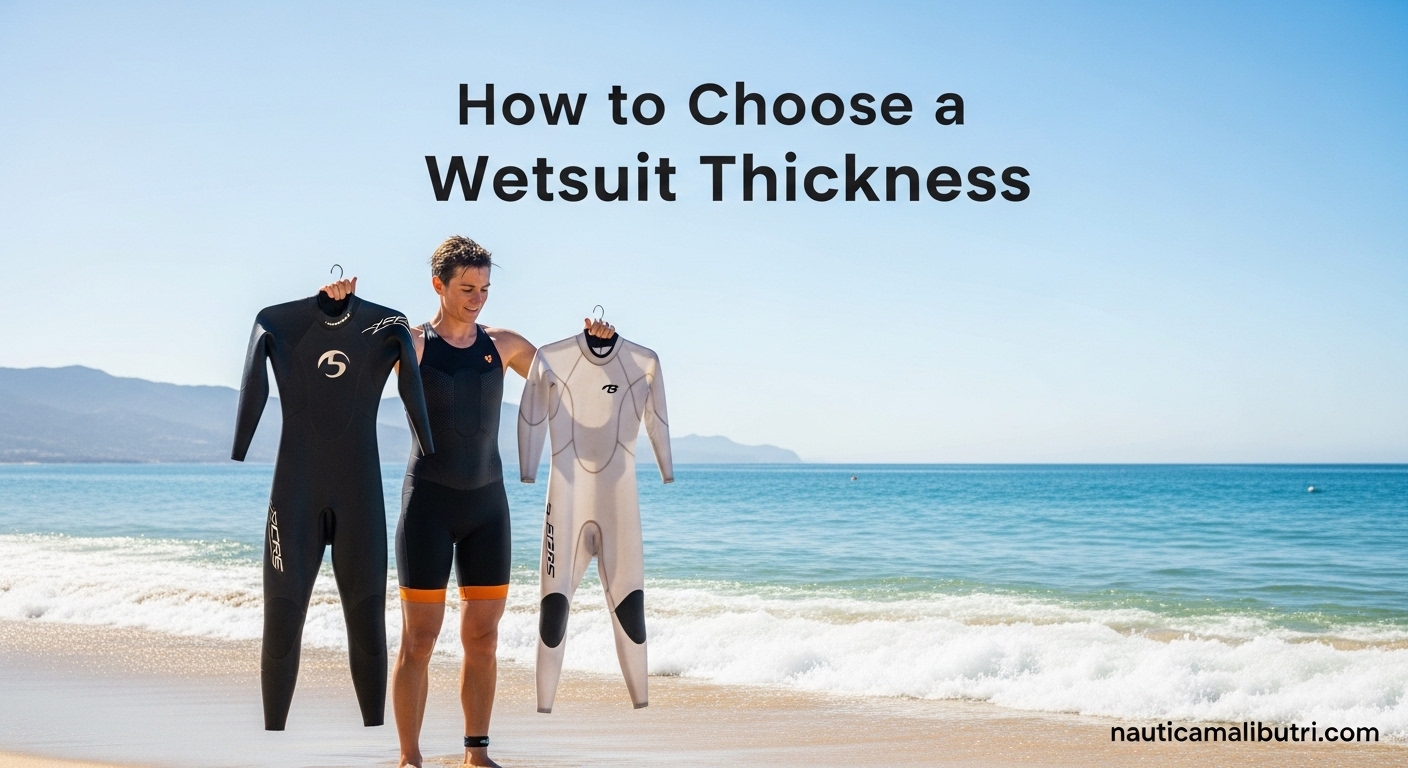
Standing at the edge of Zuma Beach, staring at the Pacific before your first open-water swim, the question hits you: is your wetsuit thick enough? I have made that same mistake. After three years of competing in the Nautica Malibu Triathlon and coaching dozens of athletes through their first ocean swims, I have learned that wetsuit thickness can make or break your race day experience.
Choose too thin, and you will spend the entire bike leg trying to warm up. Choose too thick, and you will feel like you are swimming through molasses. This guide walks you through exactly how to choose a wetsuit thickness for any water temperature, with specific attention to triathlon requirements and Malibu’s unique coastal conditions.
By the end, you will know the exact millimeter rating you need, understand why the numbers on wetsuit labels matter, and feel confident selecting gear that keeps you fast and comfortable.
Table of Contents
Quick Reference: Wetsuit Thickness Temperature Chart
Before diving into the details, here is the temperature-to-thickness mapping you will reference again and again. This chart covers the full range of water temperatures you will encounter in triathlon training and racing:
| Water Temperature | Wetsuit Thickness | Wetsuit Style | Recommended Accessories |
|---|---|---|---|
| 72F+ (22C+) | 1-2mm | Springsuit or top | None |
| 65-72F (18-22C) | 2-3mm | Fullsuit or springsuit | Optional booties |
| 58-65F (14-18C) | 3/2mm | Fullsuit | Booties recommended |
| 52-58F (11-14C) | 4/3mm | Fullsuit | Booties, gloves |
| 45-52F (7-11C) | 5/4/3mm or 5/4mm | Fullsuit | Booties, gloves, hood |
| Below 45F (7C) | 6/5mm or thicker | Fullsuit | Full accessories required |
For the Nautica Malibu Triathlon specifically, water temperatures typically range from 55-65F depending on the time of year. Most participants find that a 3/2mm or 4/3mm fullsuit provides the ideal balance of warmth and mobility for these conditions.
The Rule of 120 offers another quick calculation method: add the water temperature to the air temperature. If the sum is less than 120, you need a wetsuit. If it is below 100, opt for a thicker suit or additional accessories.
Understanding Wetsuit Thickness: What Those Numbers Mean
When you see “3/2mm” on a wetsuit tag, those numbers represent millimeters of neoprene thickness. The first number indicates the thickness around your torso where you need maximum warmth. The second number shows the thickness on your arms and legs where you need greater flexibility for the swim stroke.
Some wetsuits display three numbers like 5/4/3mm. In this case, the torso uses 5mm neoprene, the legs use 4mm, and the arms use 3mm. This graduated thickness design prioritizes core warmth while preserving freedom of movement where you need it most.
Thicker neoprene contains more tiny air bubbles trapped within the foam structure. More air bubbles equal better insulation but less flexibility. That is why manufacturers use thinner panels on extremities: to prevent the dreaded “T-Rex arms” feeling that slows your stroke rate and fatigues your shoulders.
How Wetsuits Work: The Science of Staying Warm
Wetsuits do not keep you dry. Instead, they trap a thin layer of water between the neoprene and your skin. Your body heat warms this water, and the neoprene’s insulation prevents that warmth from escaping into the surrounding ocean.
Neoprene itself consists of closed-cell foam made from synthetic rubber. These closed cells contain nitrogen gas bubbles that provide the insulating properties. Higher quality neoprene uses more nitrogen and creates smaller, more uniform bubbles for better thermal efficiency.
The Rule of 120 helps triathletes make quick decisions without overthinking. I use it before every race morning. Here is how it works:
The Rule of 120: Add the water temperature (in Fahrenheit) to the air temperature. If the total is under 120, wear a wetsuit. If it drops below 100, consider a thicker suit or add booties and gloves.
Example: Water is 60F and air is 55F. 60 + 55 = 115. Since 115 is below 120, you definitely need a wetsuit. Since it is close to 100, a 4/3mm with booties would be my recommendation.
Triathlon-Specific Wetsuit Considerations
Not all wetsuits work for triathlon. USAT and IRONMAN rules specify that wetsuits cannot exceed 5mm thickness anywhere on the suit. This rule exists to prevent unfair buoyancy advantages. Before buying any wetsuit for racing, verify that it meets this 5mm maximum requirement.
Triathlon wetsuits differ from surfing wetsuits in several key ways. Tri suits use different panel thicknesses specifically designed to optimize your swim position. Thicker panels on the torso and hips provide buoyancy that lifts your legs toward the surface, reducing drag. Thinner shoulder panels allow unrestricted reach and recovery during each stroke.
Surfing wetsuits prioritize durability and warmth over hydrodynamics. They typically use uniform thickness throughout, which works fine for hanging on a board but creates unnecessary drag during a 1.5km swim. The smooth surface coating on triathlon wetsuits, called SCS (Super Composite Skin), reduces water friction compared to the rougher exterior of surf wetsuits.
Swim-run wetsuits add another category. These feature zippers on both front and back for quick transitions, but they rarely meet the 5mm triathlon rule. Only use swim-run specific suits for training, not for USAT-sanctioned events.
Malibu Water Temperatures: Local Context
The Nautica Malibu Triathlon typically runs in September or October when Pacific Ocean temperatures off Zuma Beach hover between 60-66F. This places most athletes in the 3/2mm to 4/3mm range depending on personal cold tolerance.
Local water temperatures follow seasonal patterns that affect your training schedule. January through March sees the coldest readings, often dropping to 55-58F. This is when you might consider a 4/3mm or even 5/4mm for long training sessions. July through September brings the warmest conditions, sometimes reaching 68-72F, when a 2-3mm suit or even a sleeveless option works.
Morning race starts add another variable. Even in September, early morning water temperatures can run 3-5 degrees cooler than afternoon readings. I always check the buoy data from NOAA station 46025, located just offshore from Malibu, the morning of any race.
Upwellings occur frequently along the Malibu coast, especially after wind events. These push cold water from the depths to the surface, dropping temperatures 10-15 degrees in localized areas within minutes. If you feel a sudden cold patch during your swim, you have hit an upwelling. Your wetsuit thickness choice should account for these unpredictable cold spots.
Step-by-Step: How to Choose Your Wetsuit Thickness
Follow this decision framework every time you select wetsuit gear:
Step 1: Check the water temperature. Use NOAA buoy data, local surf reports, or ask recent swimmers. For Malibu, MagicSeaweed and Surfline provide accurate readings updated hourly.
Step 2: Check the air temperature and wind. Cold air and wind chill make water feel colder. Use the Rule of 120 as a quick calculation.
Step 3: Assess your cold tolerance. If you run cold, choose one thickness level warmer than the chart suggests. If you overheat easily, go one level thinner.
Step 4: Consider your activity intensity. High-intensity sprint triathletes generate more body heat than long-course swimmers. For shorter races, you can often go slightly thinner than the chart recommends.
Step 5: Verify triathlon legality. Confirm the wetsuit is 5mm or less throughout for USAT compliance.
Step 6: Test before race day. Never wear a new wetsuit for the first time during a race. Do at least two training swims to verify the thickness works for your physiology and stroke style.
Factors Beyond Temperature
Water temperature provides the starting point, but several other factors affect your ideal wetsuit thickness:
Cold tolerance varies dramatically. Some athletes shiver in 70F water while others feel comfortable at 60F. Your body composition, circulation, and previous cold-water exposure all play roles. Leaner athletes with less body fat generally need thicker wetsuits.
Activity level changes everything. A casual swimmer moving slowly generates minimal body heat. A competitive triathlete swimming at threshold pace produces significant warmth. I have worn a 3/2mm in 58F water during hard training sessions and stayed comfortable, but needed a 4/3mm for the same temperature during easy recovery swims.
Wind chill affects surface sports. Surfers deal with evaporative cooling from wind across wet neoprene. Triathletes mostly submerge, but pre-race waiting in windy conditions can chill you before the start. Consider a slightly thicker option if you expect prolonged exposure before swimming.
Session duration matters. A 20-minute sprint triathlon swim tolerates thinner suits than a 2.4-mile Ironman swim. Longer exposure requires more insulation regardless of how hard you work.
Depth and pressure affect neoprene performance. Scuba divers need thicker suits than surface swimmers because neoprene compresses at depth, reducing insulation. This does not affect triathletes swimming at the surface, but explains why diving thickness charts differ from swimming recommendations.
Wetsuit Accessories: When You Need More Protection
Sometimes your wetsuit alone cannot provide enough warmth. Accessories extend your comfortable temperature range without restricting your stroke:
Booties protect your feet. Even with a fullsuit, your feet remain exposed and lose heat rapidly. Neoprene booties range from 2mm for mild conditions to 7mm for cold water. For Malibu triathlon conditions (55-65F), 3-5mm booties provide adequate insulation without excessive bulk. Some triathletes avoid booties because they add transition time, but numb feet affect your run off the bike.
Gloves keep your hands functional. Cold hands cannot grip water bottles or operate bike shifters effectively. Triathlon wetsuit gloves typically use 2-3mm neoprene. They are less common than booties but invaluable for sub-60F water temperatures.
Hoods retain critical heat. You lose significant body heat through your head. A 2-3mm neoprene hood becomes necessary when water temperatures drop below 55F. For triathlon, hoods are rarely needed at Malibu events but become essential for cold-water training in winter months.
Neoprene vests add core warmth. A thin 1-2mm vest worn under your wetsuit provides extra torso insulation without limiting arm movement. Some athletes use these for early-season training when they have not yet adapted to cold water.
Common Mistakes to Avoid
After years of coaching, I see the same errors repeated. Learn from these mistakes:
Buying too thick out of fear. New swimmers often buy 5/4mm suits for 65F water because they worry about getting cold. The result is overheating, restricted movement, and slower swim times. Start with the chart recommendation and adjust based on experience.
Ignoring fit in favor of thickness. A properly fitted 3/2mm keeps you warmer than a loose 4/3mm. Gaps allow water flushing that destroys insulation. Prioritize fit over extra millimeters.
Using surf wetsuits for triathlon. That surf suit might look fine, but the wrong panel placement and rough exterior create drag that adds minutes to your swim time. Triathlon-specific suits also feature quick-release cuffs for faster transitions.
Wrong season preparation. Athletes training through winter sometimes show up to September races with their 5/4mm winter suit. Check the forecast and bring appropriate thickness for current conditions, not what you trained in three months ago.
Neglecting pre-race acclimation. Even with the perfect thickness, jumping straight into cold water shocks your system. Spend 5-10 minutes in the water before your wave starts to let your wetsuit fill with water and begin warming.
Frequently Asked Questions
What thickness wetsuit do I need at which water temperature?
For water temperatures 72F+ use 1-2mm, 65-72F use 2-3mm, 58-65F use 3/2mm, 52-58F use 4/3mm, 45-52F use 5/4/3mm or 5/4mm, and below 45F use 6/5mm or thicker. For triathlon specifically, maximum legal thickness is 5mm anywhere on the suit. Use the Rule of 120 (air temp + water temp) for quick decisions: under 120 means wetsuit needed.
How does wetsuit thickness work?
Wetsuit thickness refers to the millimeter measurement of the neoprene foam core. Thicker neoprene contains more trapped air bubbles that provide insulation by slowing heat transfer from your body to the water. Thickness is often graduated, with thicker panels on the torso for warmth and thinner panels on arms and legs for swimming flexibility.
What is the Rule of 120 for wetsuits?
The Rule of 120 states that you should add the water temperature (in Fahrenheit) to the air temperature. If the sum is less than 120, wear a wetsuit. If the sum drops below 100, consider a thicker wetsuit or add accessories like booties and gloves. For example, 60F water plus 55F air equals 115, indicating a wetsuit is necessary.
How is wetsuit thickness measured?
Wetsuit thickness is measured in millimeters using a caliper on the neoprene foam core. Manufacturers display thickness as X/Ymm or X/Y/Zmm, where the first number represents torso thickness and subsequent numbers represent leg and arm thickness. A 3/2mm suit has 3mm neoprene on the torso and 2mm on the extremities.
What factors affect wetsuit thickness selection besides temperature?
Personal cold tolerance, activity level, air temperature, wind chill, session duration, and body composition all affect thickness selection. Leaner athletes need thicker suits. Higher intensity activities allow thinner suits. Windy conditions and longer sessions require more insulation. Your previous cold-water exposure also affects comfort levels.
What is the difference between triathlon and surfing wetsuit thickness?
Triathlon wetsuits use graduated panel thickness (thicker on torso, thinner on shoulders) to optimize buoyancy and stroke mechanics, with maximum 5mm thickness per USAT rules. Surfing wetsuits typically use uniform thickness throughout and prioritize durability over hydrodynamics. Tri suits feature smooth SCS coating to reduce drag, while surf suits have rougher exteriors.
When should I wear a 3/2mm vs 4/3mm wetsuit?
Wear a 3/2mm wetsuit for water temperatures between 58-65F (14-18C). Wear a 4/3mm wetsuit for water temperatures between 52-58F (11-14C). The 3/2mm provides better flexibility for the swim stroke, while the 4/3mm offers more warmth for colder conditions. For the Nautica Malibu Triathlon with typical 60-65F water, most athletes choose 3/2mm.
Do I need booties, gloves, or hood with my wetsuit?
For water temperatures 65-72F, booties are optional. At 58-65F, booties are recommended. At 52-58F, use booties and gloves. Below 52F, add a hood along with full accessories. For Malibu triathlon conditions (55-65F), 3-5mm booties are recommended to maintain foot function for the bike and run legs. Gloves become necessary below 60F for long swims.
Conclusion
Choosing the right wetsuit thickness transforms your triathlon swim from a shivering struggle into a confident, comfortable start to your race. Remember the fundamentals: use the temperature chart as your baseline, apply the Rule of 120 for quick decisions, and consider triathlon-specific requirements like the 5mm maximum thickness rule.
For the Nautica Malibu Triathlon, pack a 3/2mm fullsuit for typical September conditions, but keep a 4/3mm option ready for unexpectedly cold upwellings. Test your chosen thickness in training before race day. Prioritize fit over extra millimeters.
The ocean awaits. With the right wetsuit thickness, you will enter the water prepared to focus on your performance rather than your temperature. See you at Zuma Beach.