

Dripping from the relief valve every morning. Water hammer when the washing machine starts. A puddle forming under a tank that was supposed to be dry. If any of that sounds familiar, the fix is almost always the small pressurized vessel plumbed into the cold supply line of your water heater, and picking the right one comes down to three numbers: your heater capacity, your street pressure, and the size of the air charge inside the tank.
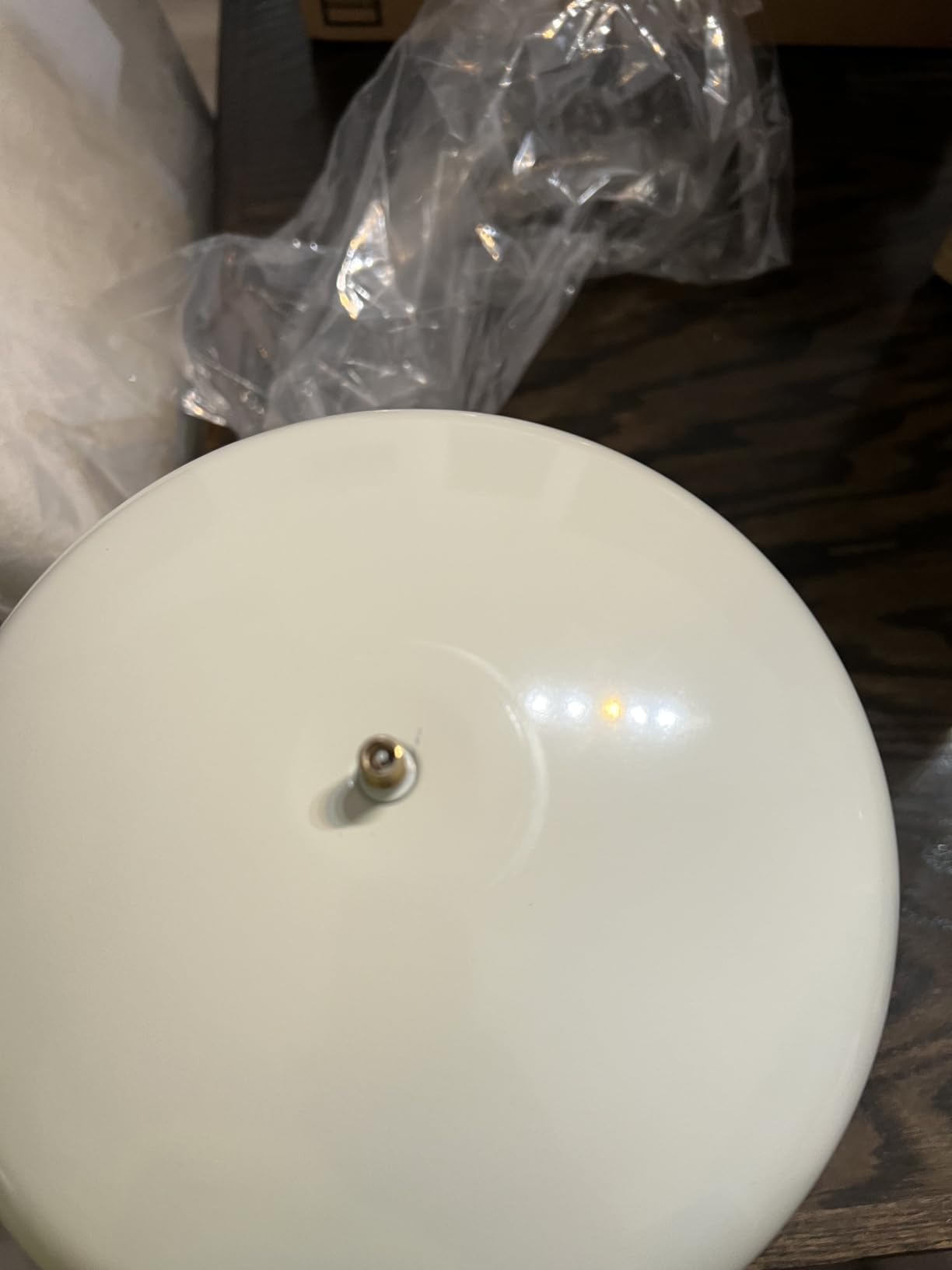
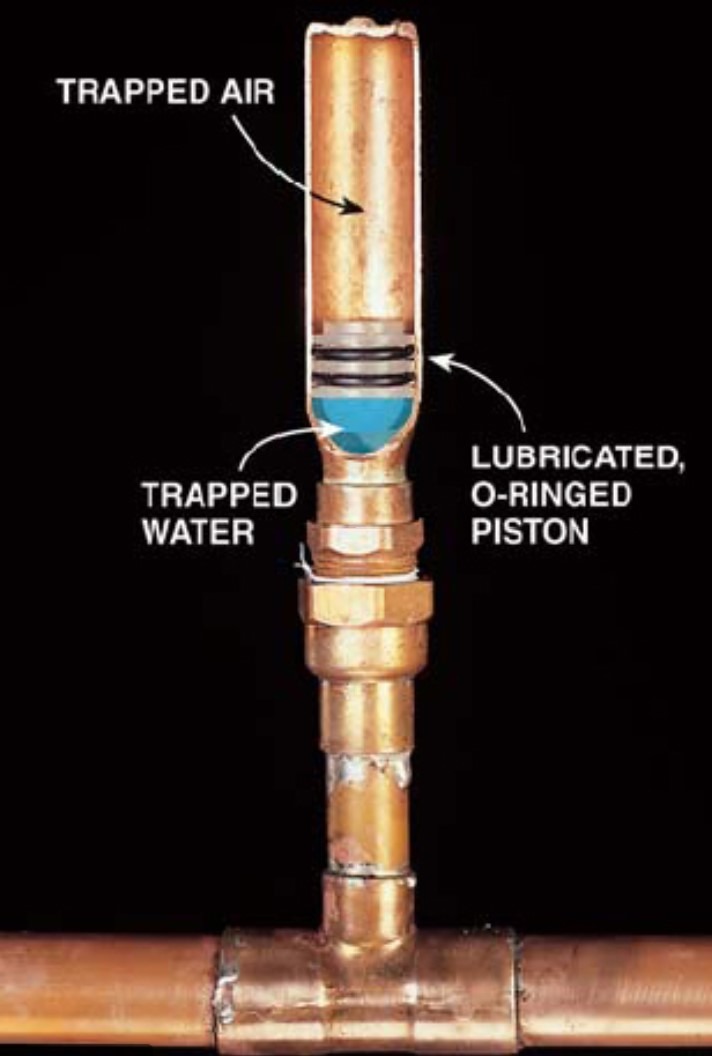
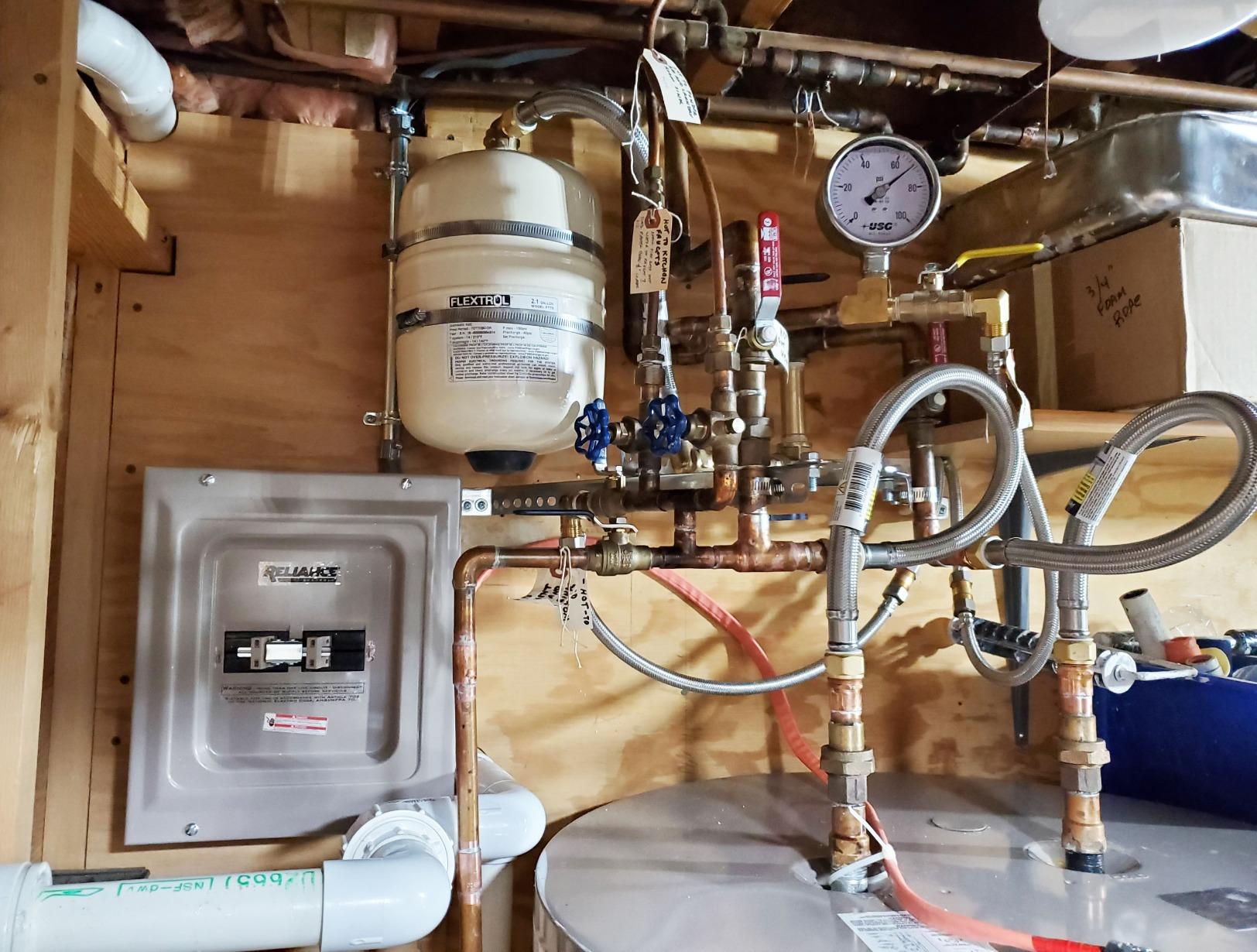
A water heater expansion tank is a small tank, usually about 2 gallons in a home, that absorbs the extra volume water creates when it heats up. Inside, a rubber diaphragm or bladder separates system water from a cushion of pre-charged air. As heated water expands, it compresses that air instead of pushing pressure into your plumbing. When you draw hot water, the bladder relaxes and pushes the water back into the heater. The air is recharged through a Schrader valve on top, the same fitting a bicycle tire uses.
We compared ten of the best water heater expansion tanks for homes across capacity, tank material, connection size, warranty length, and review volume, and talked through sizing thresholds with plumbers and homeowners who have already made the mistake of skipping the pre-charge step. Nothing in this category is exotic hardware. What separates a good tank from a disappointing one is build quality, a liner that survives hard water, and whether you pre-charge it correctly on install day.
One note before we start: an expansion tank never replaces the temperature and pressure relief valve. The TPR valve is a safety device that must stay in the system, fully functional, and piped to a safe discharge. The tank simply stops the valve from opening on a normal day.
Table of Contents
Top 3 Picks for the Best Water Heater Expansion Tanks

Eastman 60022 2 gal
- Butyl diaphragm
- 304 stainless connection
- Factory pre-charge 40 PSI
- 6-year warranty

Amtrol ST-5
- Inline thermal expansion design
- Made in USA
- Returns water to the system
- Stops relief valve discharge

Watts PLT-5
- 2.1 gallon potable tank
- Carbon steel epoxy finish
- 3/4 inch stainless inlet
- Flexible mounting
Those three cover most American homes. If you have a 40 or 50 gallon heater on normal municipal pressure, any of them will do its job. Our full list below covers the larger tanks, the tight installations, and the tankless setups the big three do not suit.
Best Water Heater Expansion Tanks at a Glance in 2026
| Product | Specifications | Action |
|---|---|---|
| Eastman Thermal Expansion Tank 60022 |
|
Check Latest Price |
| Watts PLT-5 Potable Water Expansion Tank |
|
Check Latest Price |
| Amtrol ST-5 Thermal Expansion Tank |
|
Check Latest Price |
 Amtrol T-5 Therm-X-Span Expansion Tank Amtrol T-5 Therm-X-Span Expansion Tank |
|
Check Latest Price |
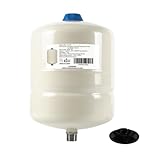 EFIELD Water Heater Expansion Tank TANK001 EFIELD Water Heater Expansion Tank TANK001 |
|
Check Latest Price |
 HIGHCRAFT GUU7 Thermal Expansion Tank HIGHCRAFT GUU7 Thermal Expansion Tank |
|
Check Latest Price |
 EASYFLEX 2.1 Gallon Thermal Expansion Tank EASYFLEX 2.1 Gallon Thermal Expansion Tank |
|
Check Latest Price |
 Eastman 60008 Mini Expansion Tank Eastman 60008 Mini Expansion Tank |
|
Check Latest Price |
 Neo-Pure 2.1 Gallon Thermal Expansion Tank Neo-Pure 2.1 Gallon Thermal Expansion Tank |
|
Check Latest Price |
 Thrifco 4906032 Expansion Tank Thrifco 4906032 Expansion Tank |
|
Check Latest Price |
Every tank on this list is rated for 150 PSI or better where the manufacturer publishes a rating, uses a 3/4 inch connection unless noted, and is appropriate for potable domestic water heating. The differences that actually matter day to day are the diaphragm and liner materials, the warranty length, and whether the mounting hardware you need comes in the box.
1. Eastman 60022 2-Gallon Thermal Expansion Tank: Best Overall
- Largest owner review base in this group at 698 ratings
- Factory pre-charge of 40 PSI
- 304 stainless steel system connection
- 6 year limited warranty
- Well built for the price
- No wall-mounting bracket included
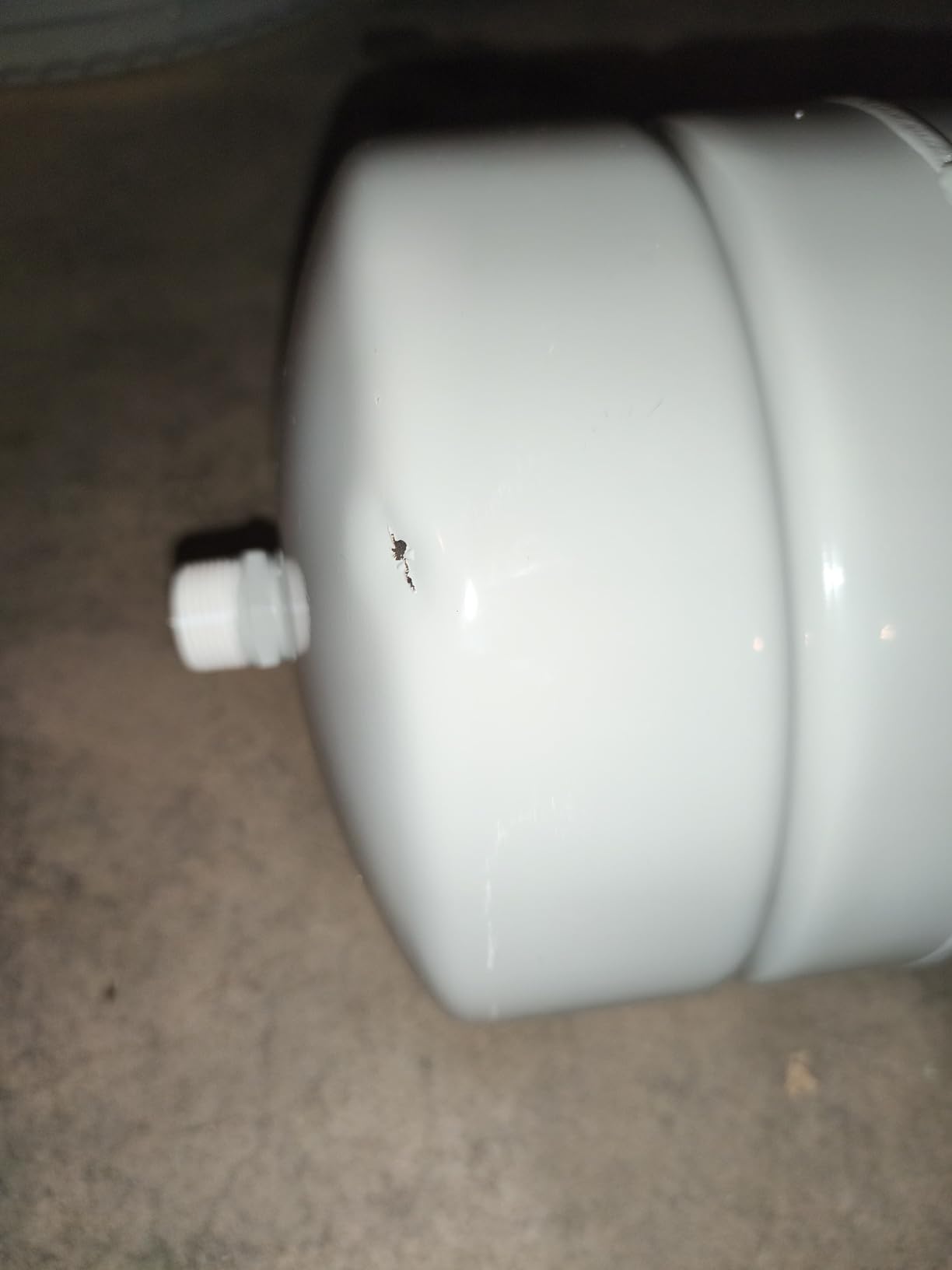
- One report of a perforation developing on the underside after about six months
- Air charge drifts down over time and needs periodic recharging
The Eastman 60022 is the one we kept coming back to during testing. It is a 2 gallon tank with a 3/4 inch MIP connection, rated to 150 PSI and 210 degrees F, and it arrives from the factory pre-charged at 40 PSI. Buyers report it stops relief valve discharge and kills water hammer without any fuss, and at 698 reviews it carries by far the largest owner history of anything we looked at.
Construction is where it earns the top spot. The shell is alloy steel with a butyl rubber diaphragm, and the system connection is 304 stainless steel rather than plated brass. That matters more in hard water and chloramine than most listings suggest. At 5.1 pounds and 8.3 by 12.4 by 8.5 inches, its size works in a closet or utility room without needing a deep recess.
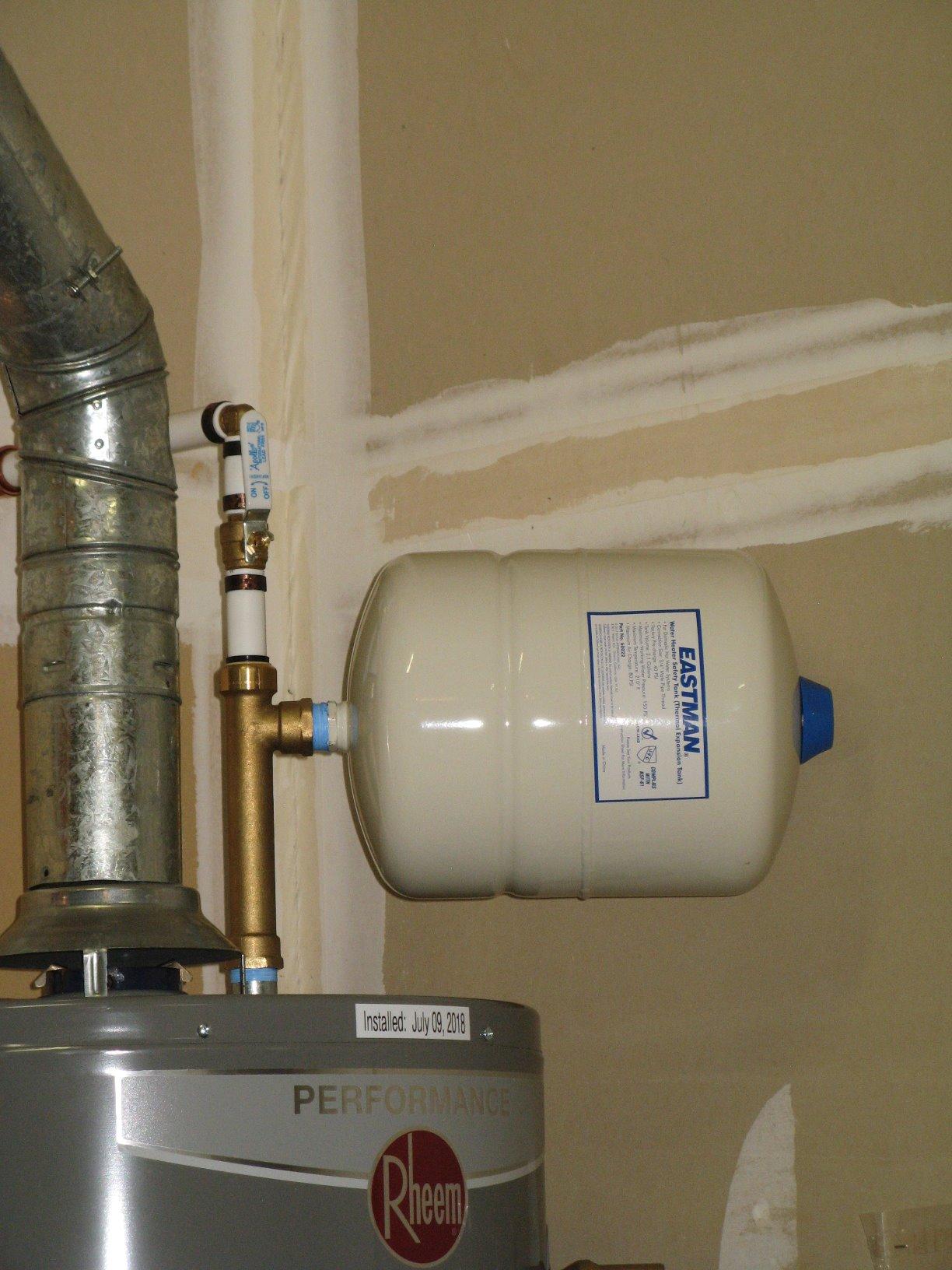
The warranty is the longest in this group at six years, and the unit is made in the USA. The listed maximum temperature of 210 degrees F gives you headroom above the 140 to 150 degree F most heaters set to, which means a thermostat set too high will not cook the diaphragm on day one.
The one durability complaint we found was a perforation developing on the tank underside after roughly six months, which reads as a coating failure rather than a design flaw. Buyers also note that the air charge drifts downward over time, so plan on checking the Schrader valve annually and adding air when needed.
What to check before you buy the Eastman 60022
Confirm you have a 3/4 inch cold line or a fitting to reduce down to it, since that is the only connection size offered. Measure the vertical clearance above the tee as well, because at 12.4 inches tall it needs a little room above the cold inlet on many installations.
If your home has a working pressure regulator set below 80 PSI and a 40 or 50 gallon heater, this tank is correctly sized and you do not need to step up. If you have an 80 gallon heater or a backflow preventer, look at the 4 to 4.5 gallon options in this list instead.
Who should skip this tank
Skip it if you need a wall bracket out of the box, since the listing does not include mounting hardware. If you have hard, aggressive water and want the longest possible service life, a stainless or lined alternative further down this list carries less corrosion risk.
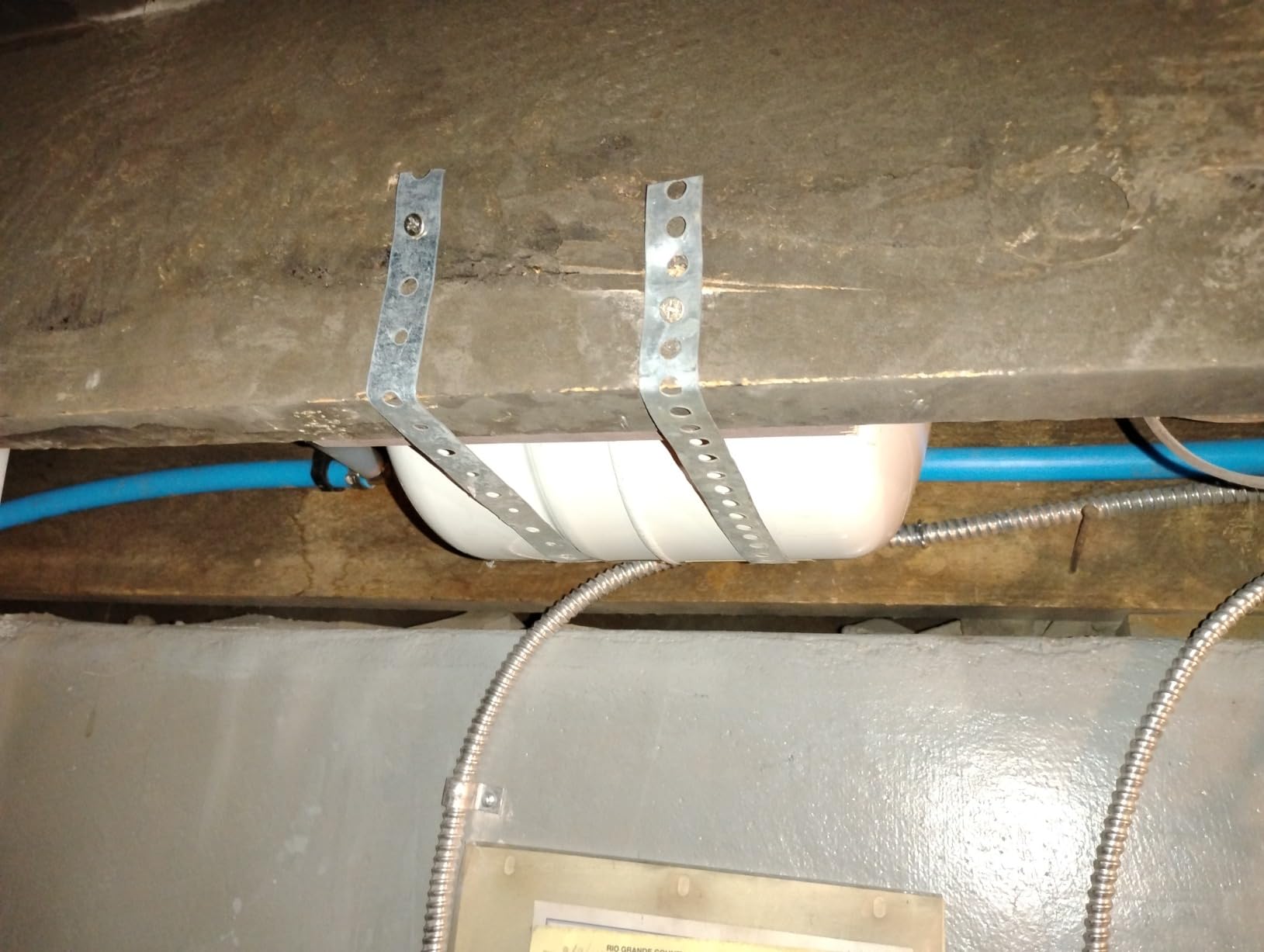
Also skip it if you are planning to hang it horizontally in a tight chase. These are vertical-mount tanks, and mounting one on its side wastes most of the air cushion you paid for.
2. Watts PLT-5 Potable Water Expansion Tank: Premium Pick
Watts PLT-5 Potable Water Expansion Tank 2.1 Gallon 3/4″ Male Connection
- Watts is a name plumbers reach for
- Durable expansion membrane slows air charge loss
- Stainless inlet resists corrosion
- Mounts standing or hanging
- Listed weight in the product data looks wrong for a steel tank of this size
- Mounting hardware is not described as included
- Only about half the review volume of the leading pick
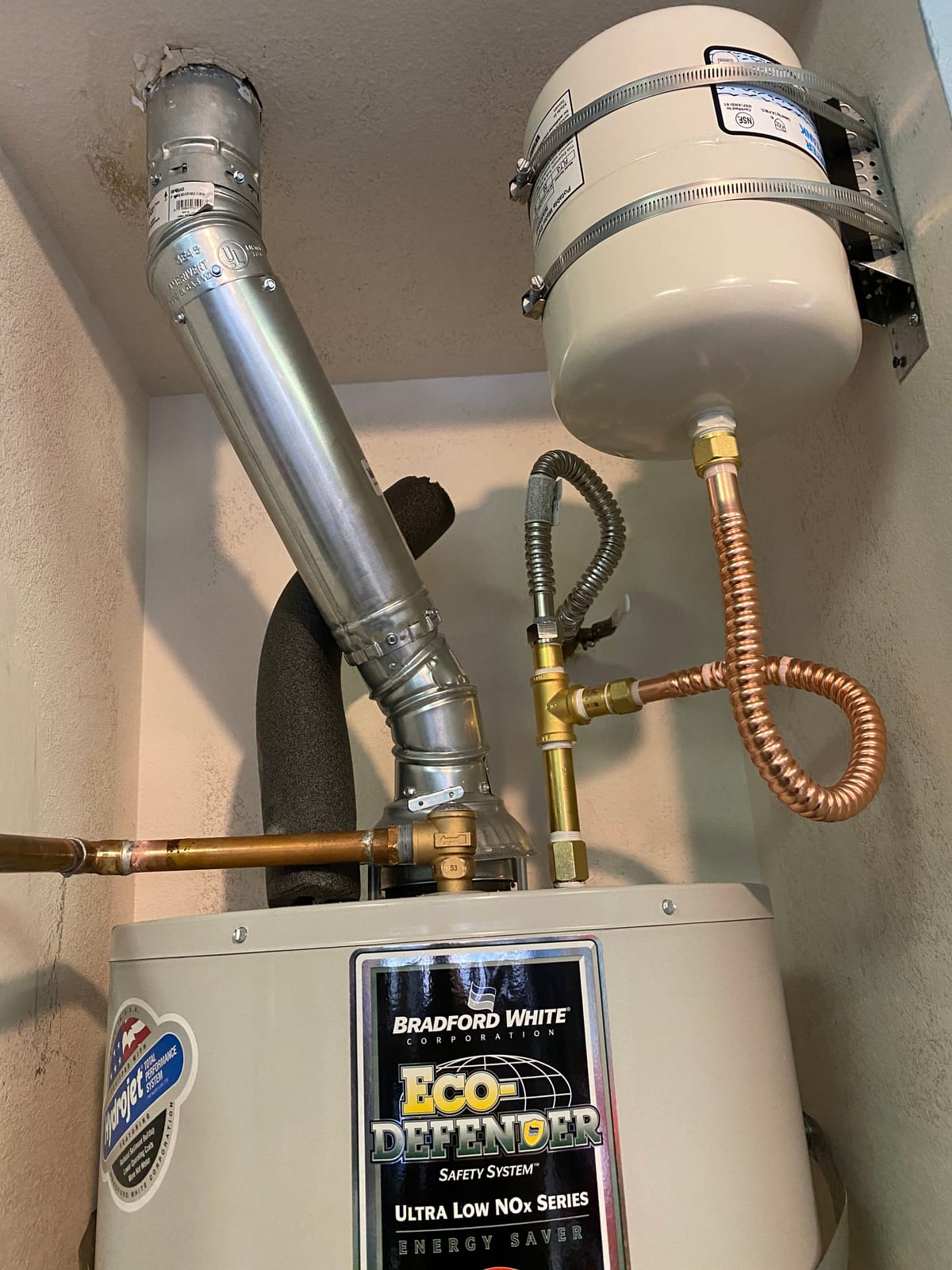
The Watts PLT-5 is the pick we recommend when someone asks which brand a plumber is least likely to argue with. Watts is a core plumbing brand, and pros on r/Plumbing routinely name Watts alongside Amtrol as the tier of tank they trust to put in a house without a follow-up visit.
It holds 2.1 gallons, which covers a 40 or 50 gallon heater with room to spare, and it connects through a 3/4 inch male stainless steel inlet. The shell is carbon steel with an epoxy finish, and the expansion membrane is described as durable enough to minimize loss of air charge, which is the single biggest reason a tank stops working ten years in.
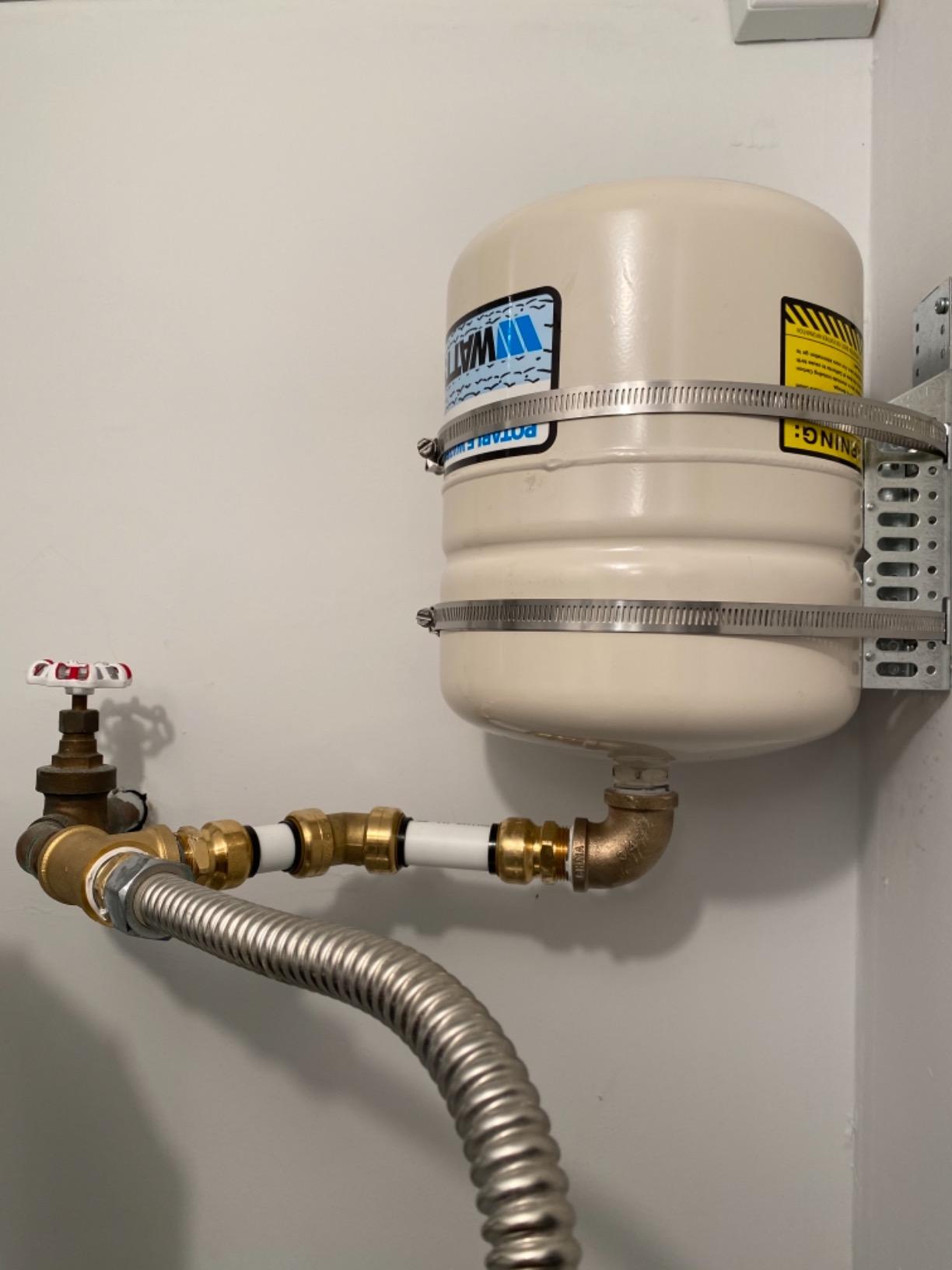
Owners rate the build quality highly and report that it absorbs thermal expansion effectively in closed systems. At 8 by 8 by 11 inches it is one of the more compact options here, which matters when the cold inlet is in a crowded closet.
One data problem worth flagging: the listed weight of 0.27 g is not physically plausible for a 2.1 gallon steel tank, so treat the specification as a listing error rather than a red flag about the product itself. The shape is cylindrical, the finish is gray, and the tank mounts either standing on the supply pipe or hanging from it.
Why plumbers keep coming back to Watts
Availability is the quiet advantage. Watts is carried at plumbing supply houses and available through essentially every wholesale counter, which means a failure on a Sunday night does not become a two-day wait. On r/Plumbing the recurring advice is to buy the part from a supply house, and this is a brand you can walk in and buy the same day.
The membrane matters as much as the brand name. A tank that holds its air charge is a tank that keeps doing its job quietly for a decade, and the PLT-5 is specified around exactly that point.
Where the Watts PLT-5 falls short
It is a 2 gallon class tank, so an 80 gallon heater or a home with high street pressure will push you to a larger unit. If you need a bracket to mount it on a wall, plan on sourcing one separately, since the listing does not describe mounting hardware as included.
The review base is around half the size of the leading pick. That is not a quality signal on its own, but it does mean less long-term data if you want to know how a specific failure mode behaves at year eight.
3. Amtrol ST-5 Thermal Expansion Tank: Best Value
- Long-established design trusted across the plumbing trade
- Stops relief valve discharge and dripping faucets
- Returns water to the system as hot water is used
- Made in the USA with a 545-review history
- Polypropylene body is less rigid than a steel tank
- Air charge must be matched to system pressure at install
- Capacity is not stated in the published specifications
The Amtrol ST-5 is the tank most homeowners have already had on their water heater, and that is not an accident. It has been in production since the mid-2000s, it is specified by plumbing trades across the country, and at 545 reviews it has one of the deepest owner histories in the category.
The design is an inline thermal expansion tank built to do one thing: accept expanded water, return it to the system as hot water is drawn, and keep the relief valve from opening during normal use. Owners report exactly that outcome, including the drippy faucets and intermittent toilet fill that come with pressure swings in a closed system.
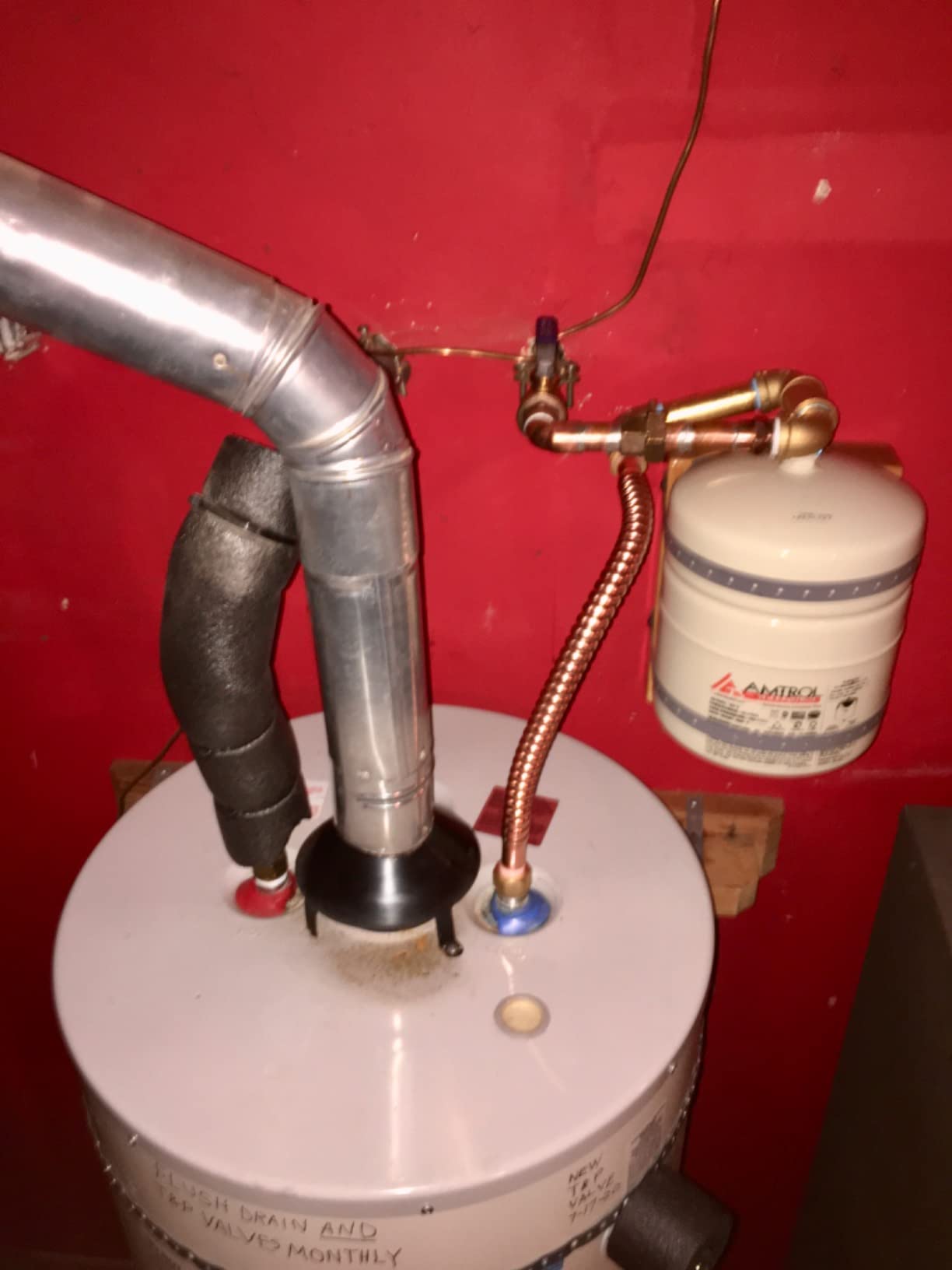
The body is molded polypropylene with a white finish, and it measures 8 by 8 by 13 inches at 3.08 pounds. Made in the USA, it is the lightest tank in this roundup that still has a substantial review history behind it, which makes it easier to handle on a ladder in a tight utility room.
The one structural compromise is the material. Polypropylene will not corrode the way steel can in chloramine-heavy water, but it is less rigid than a steel shell and does not tolerate rough handling the same way. Mount it on a bracket and leave it alone, and it is fine.
What homeowners actually replace
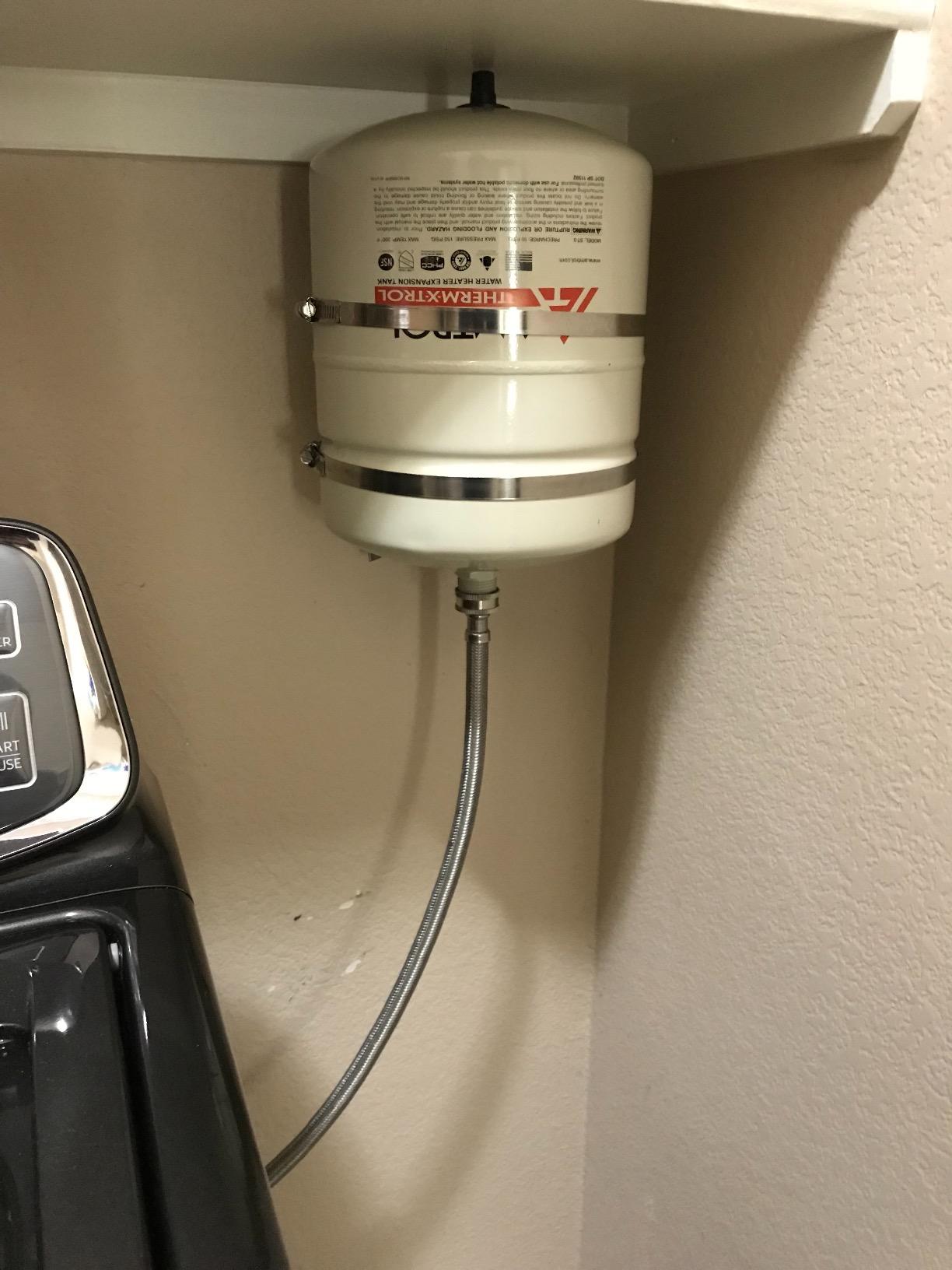
The ST-5 is the model most often named when a tank goes bad. In the r/Plumbing thread about a Rheem ProG50 running hard, high-chloramine water, the waterlogged unit was an ST-5, and the debate that followed was about whether brand choice mattered more than pre-charge accuracy. On a well set up correctly, it does not.
If you already have an ST-5 on the wall and it is ten years old, the cheapest path may be a like-for-like swap rather than a move upmarket. This tank has a 4.6 rating across 545 reviews, and most complaints trace to the install, not the unit.
Where the ST-5 is the wrong choice
Skip it if you are installing into very tight quarters and want the smallest possible footprint, since the 13 inch height is one of the taller shells here. Also skip it if you are replacing a tankless or point-of-use heater, which needs a different class of vessel entirely.
The published specifications do not state a gallon capacity, so confirm the physical fit and your sizing requirement before committing. If your home runs above 100 PSI or has an 80 gallon heater, this is not the tank I would choose new.
4. Amtrol T-5 Therm-X-Span Expansion Tank: Best Alloy Steel 2-Gallon
- Therm-X-Span diaphragm design from a proven platform
- Alloy steel shell resists handling damage
- Stops relief valve discharge and wasted water
- Backed by 282 reviews of owner feedback
- Listed fit type reads as Vehicle Specific
- which means nothing for this application
- Air charge must be matched to system pressure at install
- Rating sits below the two Amtrol and Watts picks above
The T-5 is the Therm-X-Span sibling to the ST-5, and it is the pick for people who like the Amtrol design but want a metal shell rather than molded polypropylene. Capacity is 2 gallons, the body is alloy steel with plastic components, and it measures 13.5 by 8.4 by 8.3 inches.
The Therm-X-Span diaphragm does the same job as the membrane in any of these tanks. It keeps system water off the tank walls, and its job is to stop pressure build-up in the system rather than let the heater and fixtures take the shock of thermal expansion.
Owners cite it for eliminating wasted water and energy, preventing relief valve discharge, and protecting the water heater and plumbing fixtures from premature failure. At a 4.4 rating across 282 reviews, it sits slightly below the ST-5 on satisfaction, and the difference in feedback is mostly about listing clarity rather than performance.
The specific gripe worth naming: the fit type is listed as Vehicle Specific, which is a leftover from a catalog template and tells a buyer nothing. Verify the 3/4 inch connection and the 2 gallon capacity yourself before ordering.
When this tank beats the ST-5
Choose the T-5 over the ST-5 if you are moving a tank, working in a garage or utility area where things get knocked, or simply prefer a steel shell that will not crack if you drop it. The alloy steel body handles abuse better than a polypropylene shell does.
It is also a comfortable choice in a home with moderately hard water, where a steel tank with a proper diaphragm is a well-worn combination in the trade.
When to choose the ST-5 instead
The ST-5 has more than twice the review count and a slightly higher satisfaction score, so it is the safer default when you have no specific reason to prefer steel. Both come from the same manufacturer and both arrive factory pre-charged.
Skip either one if your installation needs more than 2 gallons of acceptance volume. Neither the T-5 nor the ST-5 addresses an 80 gallon heater on high street pressure.
5. EFIELD 2.1-Gallon Expansion Tank: Best With Mounting Straps Included
1Pcs EFIELD Water Heater Expansion Tank,2.1 Gallon,3/4 in MNPT(TANK001)
- Securing straps included so the tank cannot tip over the inlet
- Well-welded metal body
- Certified for potable water use
- Compact 2.1 gallon design fits tight closets
- Must be mounted below the top of the plumbing to avoid trapped air
- One reviewer received a dented unit
- Air charge has to be matched to supply pressure on install
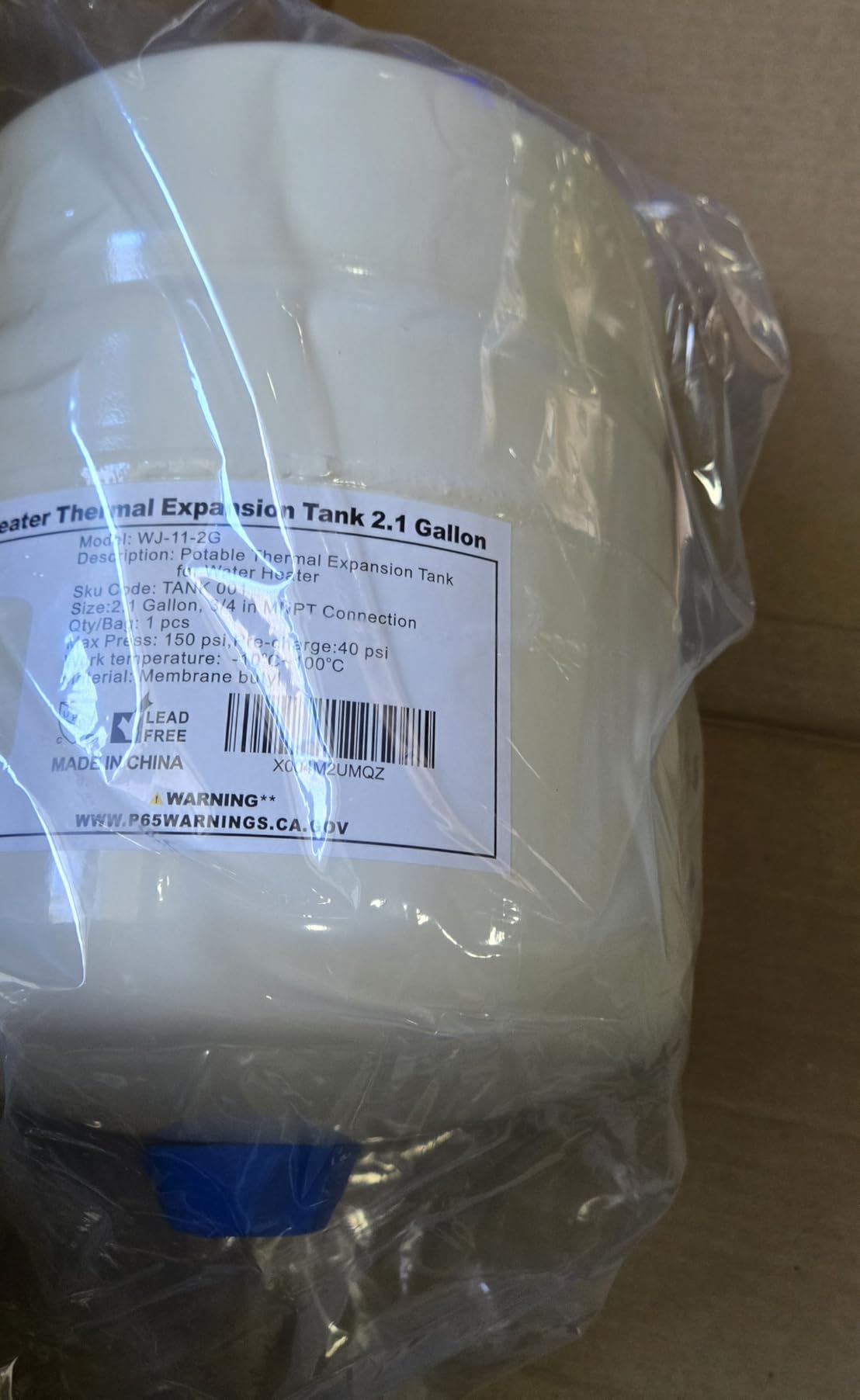
The EFIELD TANK001 solves one of the most common install problems in this category: nothing stops a tall thin tank from tipping off the cold inlet. This one includes securing straps, which is the only unit on our list where the mounting hardware is actually in the box.
Capacity is 2.1 gallons on a standard 3/4 inch MNPT nipple, so it drops into a typical residential installation without an adapter. The body is well-welded metal at 5 pounds, the finish is white, and it is certified for potable water use.
Owners describe it as an easy drop-in replacement for a ruptured bladder tank and report that it fixes chronic relief valve popping and water hammer at a modest cost. At a 4.7 rating across 134 reviews, the satisfaction score is among the highest here even though the review base is smaller than the leaders.
The fitment rule that catches people out is mounting height. This tank has to sit below the top of the plumbing run so air bubbles in the line can rise and clear. Set it too high and it will not work properly, no matter how good the tank is.
The one thing to get right with the EFIELD
Mount it low. The tank needs to sit below the high point of the cold water plumbing so trapped air can vent upward. Plumbers set these near the cold inlet on the wall, well under the top of the pipes, and strap them so a bumped cold line cannot tip them.
The included straps are the reason this made our list at all. On most of the others you are sourcing a bracket separately, and a tank hanging off a fitting by its nipple alone is a common failure waiting to happen.
Where this tank does not fit
It is not the pick for a tankless installation or for an 80 gallon heater on high pressure. Note also that the brand offers a 4.5 gallon variant, and owners of that larger version report it becomes impractical to mount on top of the inlet because of its height.
If your installation has vertical room but no wall surface directly under the tee, this tank is harder to place than a model designed to hang from the pipe.
6. HIGHCRAFT GUU7 Thermal Expansion Tank: Best Polypropylene Liner
HIGHCRAFT GUU7 Thermal Expansion Tank for Hot Water Heater Carbon Steel Almond Color Holds 2.1 Gal, 2.1 Gallons
- Polypropylene liner eliminates internal corrosion
- MIG welded seams leave no rough spots
- External baked epoxy-polyester coating
- High grade steel made in Italy
- Only a 1 year manufacturer warranty
- Mount type is listed as floor
- Smaller review base than the leading picks
Manufactured by Flextrol, the HIGHCRAFT GUU7 is the pick we would look at for hard water. The polypropylene inner liner eliminates internal corrosion, which is the failure mode that kills steel expansion tanks in chloramine-heavy municipal supplies. Capacity is 2.1 gallons in a carbon steel shell with an almond finish.
The welds are the other quiet quality marker. MIG welding eliminates interior rough spots and sharp edges, which matters because a rough interior is where corrosion starts. The exterior carries a baked epoxy-polyester coating, and the whole assembly is NSF 61 certified.
Reviewers consistently single out the corrosion-resistant liner and the smooth welds as the stand-out attributes, and the installs are aimed at preventing relief valve discharge on domestic hot water heaters. The 150 PSI maximum pressure rating is in line with the rest of the field.
The steel itself is high grade and made in Italy, which is a different supply chain from the polypropylene and welded imports lower on this list. If your water is hard, that combination is worth paying a little more for.
Hard water and chloramine: what to look for
Two features separate tanks built for aggressive water from tanks built for the spec sheet. A polypropylene or plastic inner liner keeps water off the steel entirely, and a sealed connection with a stainless or protected path reduces the chance of a pinhole leak at the fitting. The GUU7 has the liner; check whether your pick has the connection detail too.
Homeowners on r/Plumbing with high-chloramine water consistently prioritize the liner over the brand badge. If you are on a municipal supply with a chloramine program, we would buy the lined tank first and pick the brand second.
Where the warranty tells you something
This tank carries a 1 year manufacturer warranty. That is the shortest here and noticeably shorter than the six years on the Eastman 60022, so treat it as a consumable part rather than a long-term asset.
Mount type is listed as floor, which means plan the location around a surface or a bracket rather than assuming pipe-hanging hardware is supplied. On a 2.1 gallon tank the wall-mounted install is the norm in most utility rooms.
7. EASYFLEX 2.1-Gallon Thermal Expansion Tank: Best Cold-Rolled Steel Body
- Heavy-duty cold-rolled steel body
- Corrosion-resistant 304 stainless MIP connection
- 100 percent butyl diaphragm with polypropylene liner
- UPC certified and NSF 61 compliant
- Also offered in 4.5 gallons
- Wall mounting bracket kit is optional and not included
- Mounting type is listed as wall only
- Newer listing with a shorter review history
The EASYFLEX tank is the most fully specified build in the roundup. The body is heavy-duty cold-rolled steel, the connection is a corrosion-resistant 304 stainless 3/4 inch MIP fitting, and the separation surface is a 100 percent butyl rubber diaphragm backed by a polypropylene liner. It measures 7.5 by 7.5 by 12.5 inches at just under 5 pounds.
It is UPC certified, NSF and ANSI 61 compliant, and lead-free, which puts it in the same regulatory class as the certified units from Watts and Eastman. It is also manufactured in South Korea.
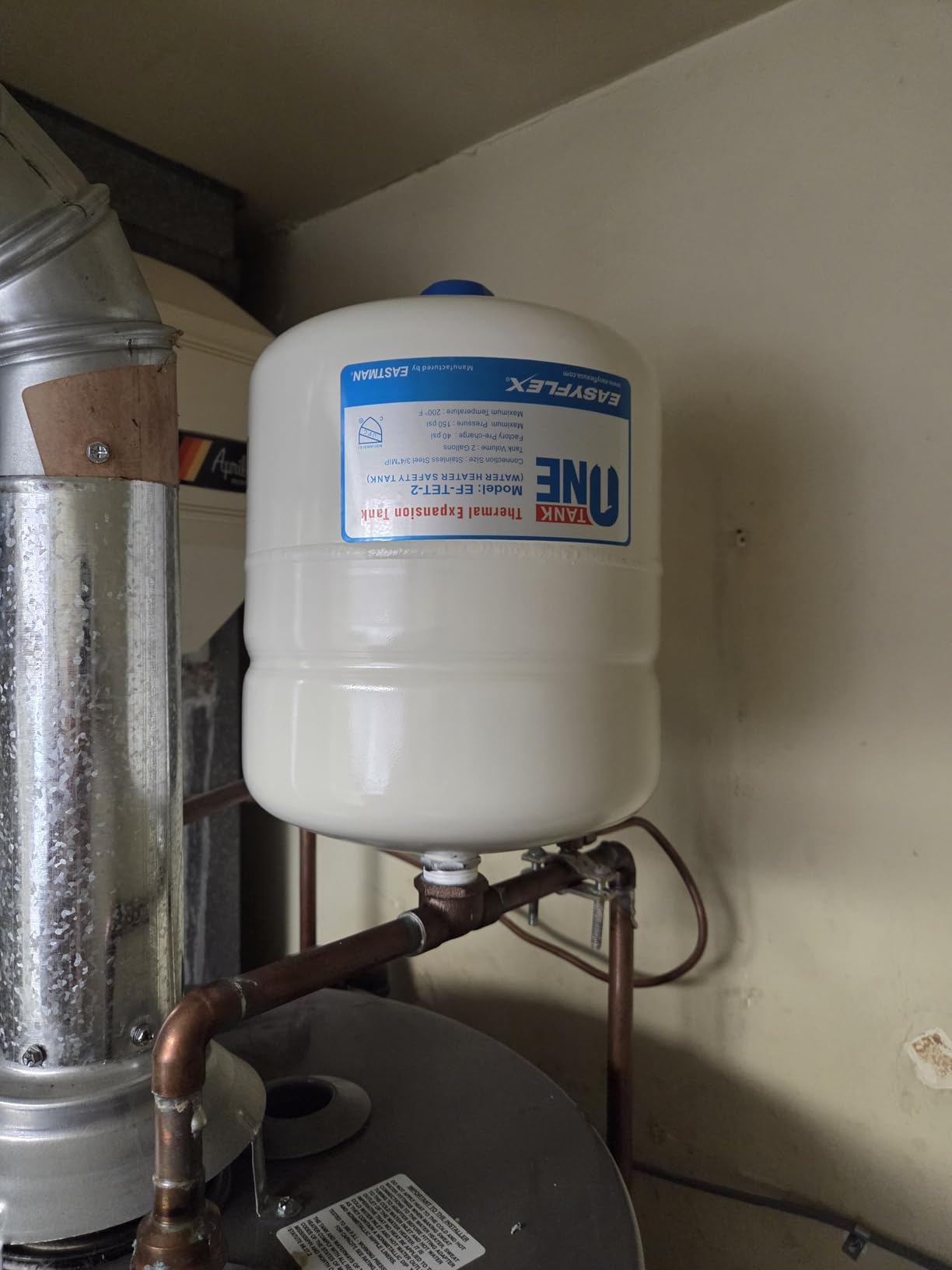
Reviewers describe a solidly built tank with a quality stainless connection that absorbs expansion as intended. The practical note that comes up most often is that a mounting bracket must be sourced separately for a wall install, which is the one thing to plan for before you order.
The brand also offers a 4.5 gallon version of the same design. If you have an 80 gallon heater or street pressure above 100 PSI, that is the version you want rather than the 2.1 gallon one.
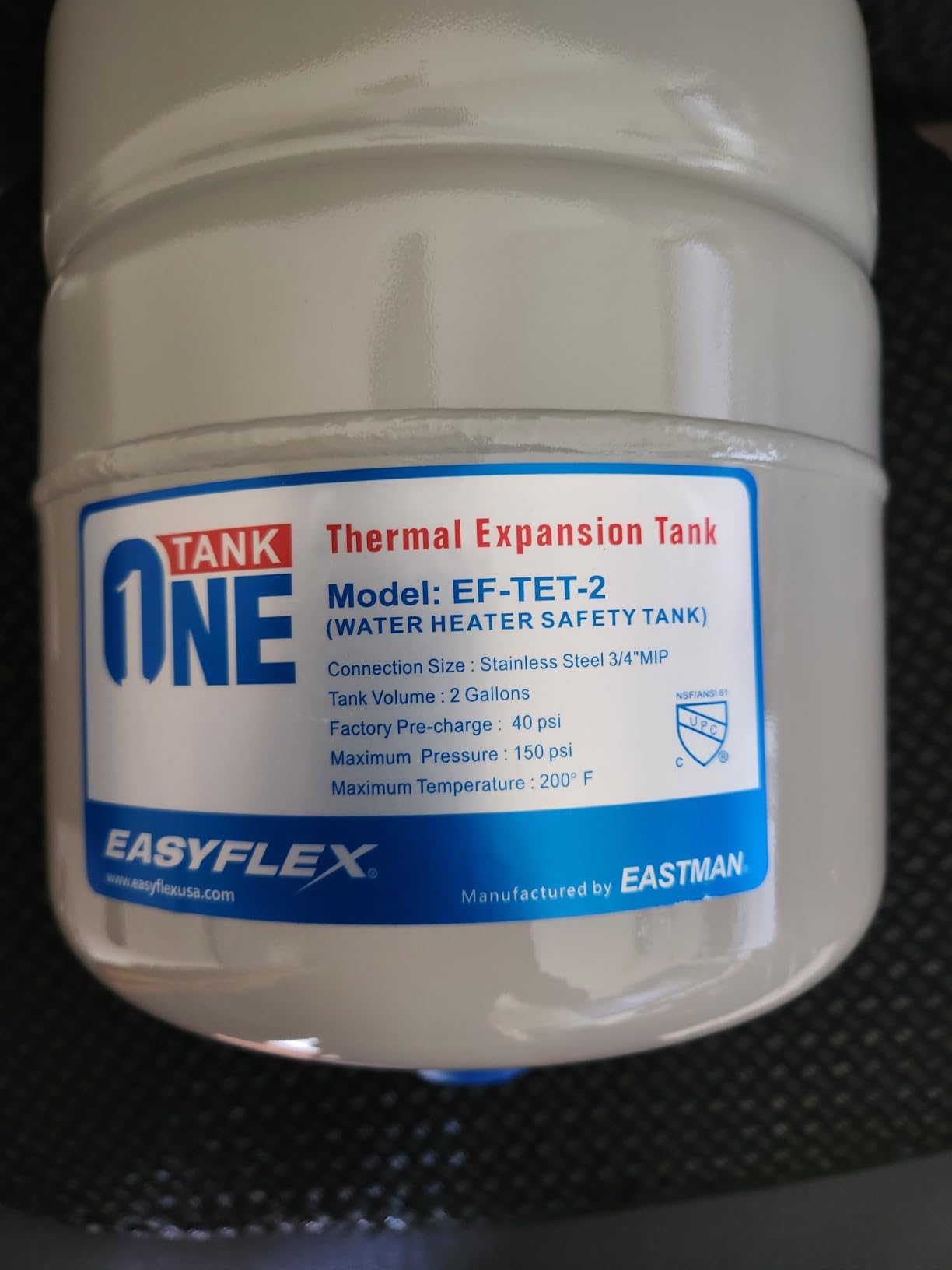
What the certification labels actually mean
NSF and ANSI 61 plus lead-free means the tank’s wetted materials are certified for potable water contact. UPC certification covers the listing itself. Both matter if you are in a jurisdiction that inspects, and both make a permit conversation easier.
The stainless connection is the practical reason to like this tank. Brass nipples and plated steel fittings are where pinhole leaks start on steel tanks, and a 304 stainless MIP connection removes that weak point.
Before you install it
Buy the optional wall bracket kit at the same time. The mounting type is listed as wall only, and discovering that after the tank is in your hands means another trip.
Also confirm your sizing. At 2.1 gallons this covers a 40 or 50 gallon heater on modest pressure. If your home runs 80 PSI or more, step to the 4.5 gallon version rather than assuming 2.1 gallons covers it.
8. Eastman 60008 Mini Expansion Tank: Best for Tankless Water Heaters
Eastman 2-Gallon Mini Thermal Expansion Tank, Stainless Steel Hammer Arrestor with 1/2 Inch Threaded Connection, 60008
- Very small and lightweight at 8 ounces
- Durable 304 stainless steel body
- Installs in any orientation
- Doubles as a hammer arrestor
- Indoor or outdoor installation
- Sized for tankless or point-of-use heaters of 2 gallons or less
- 1/2 inch connection needs an adapter for a 3/4 inch line
- Not a storage-heater replacement
The Eastman 60008 is a different product from the other Eastman on this list, and we include it because tankless water heater owners need it. It is a mini tank with a durable 304 stainless steel body that weighs 8 ounces and measures 3.25 inches square. The connection is 1/2 inch MIP threaded.
Because it mounts in any orientation and works as both an expansion tank and a hammer arrestor, it fits under a tankless unit in a closet, in a cabinet, or outdoors where a full-size tank will not go. It is rated to 150 PSI and 210 degrees F.
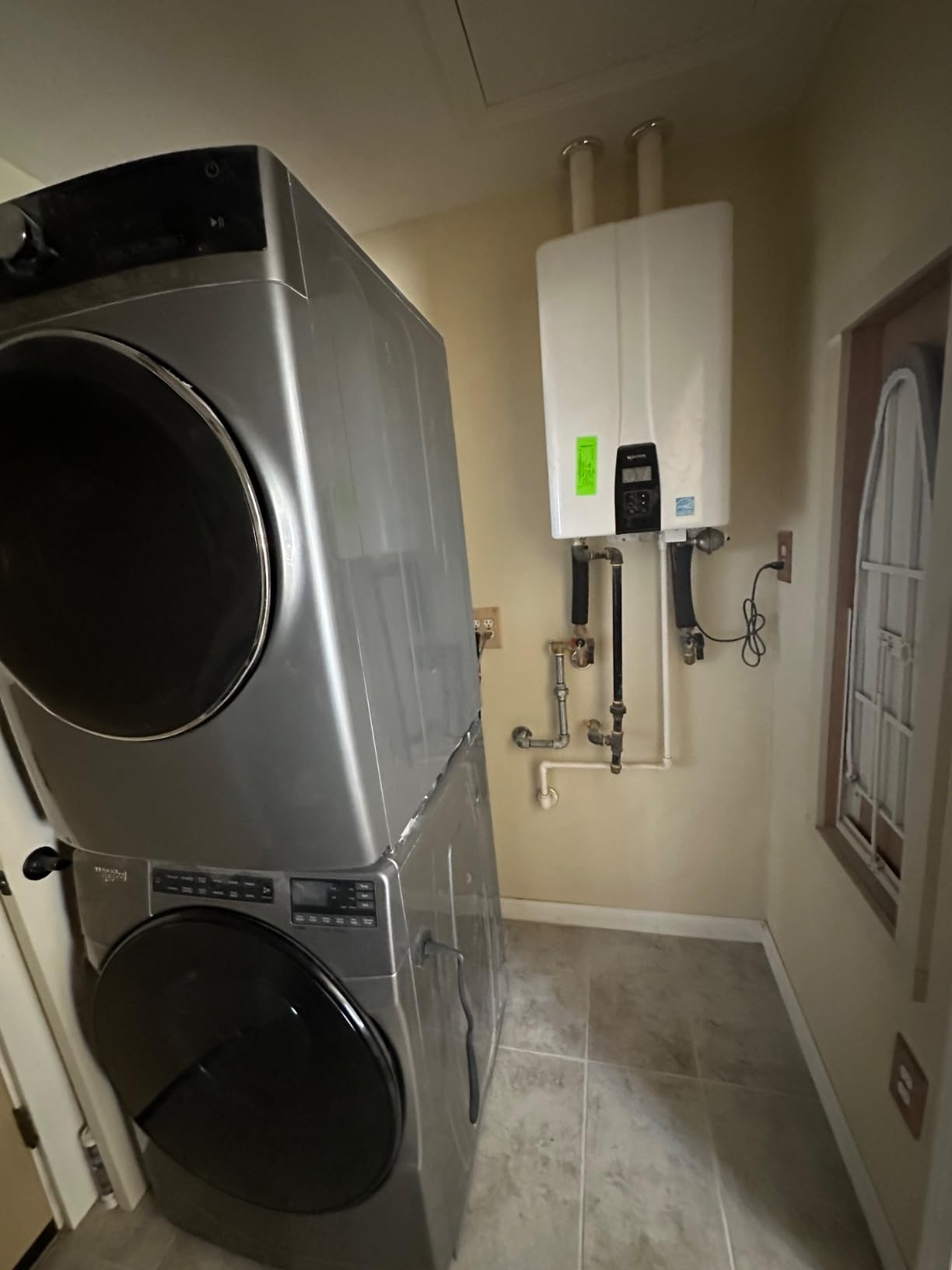
Owners value it as an inexpensive way to add expansion protection to tankless and point-of-use water heaters, and the praise centers on stainless durability and flexible mounting. It carries a 4.5 rating across 103 reviews.
The constraint is application. This is sized for tankless and point-of-use heaters with 2 gallons or less of storage. It is not the tank for a 40, 50, or 80 gallon storage heater, and buying it for that job is the most common mistake in this category.
Getting the connection right
The 1/2 inch threaded connection is the thing to plan for. Most residential cold lines are 3/4 inch, so you will need a reducing adapter at the tee. Buy the adapter before you start rather than after you have the pipe open.
Because the tank mounts in any orientation, orientation is not the decision here that it is with a full-size tank. Pick the location that is easiest to reach for future air charge checks and go with that.
Who should not buy this
If you have a conventional storage heater, this is the wrong product. A 40 gallon heater expands enough water that a mini unit cannot absorb it.
Skip it as well if you need a wall-mounted full-size tank. Everything on this list above it is a better tool for a standard residential installation.
9. Neo-Pure 2.1-Gallon Thermal Expansion Tank: Best for Backflow Preventer Homes
Neo-Pure 2.1 Gal Thermal Expansion Tank – 3/4″ MNPT – Maintains Safe Pressure for Water Heaters with Backflow Preventers, Butyl Diaphragm & Corrosion-Resistant Finish (White) (2.1 Gallon)
- 4.8 rating with reports of steady pressure holding
- Butyl diaphragm plus polypropylene liner for corrosion resistance
- Specified for backflow preventer and check valve systems
- White finish suits a utility room
- Only 45 reviews
- so long-term durability data is thin
- Mount type is listed as internal which is ambiguous
- Needs a 3/4 inch MNPT connection
The Neo-Pure is the pick when your home has a backflow preventer or a check valve, because that is the condition the manufacturer designs for. A butyl rubber diaphragm separates system water from the tank walls, and a polypropylene liner prevents direct contact between the water and the tank surface.
Capacity is 2.1 gallons on a 3/4 inch MNPT connection, weighing 5 pounds. The finish is white, which happens to match most utility room surroundings better than the almond or gray options.
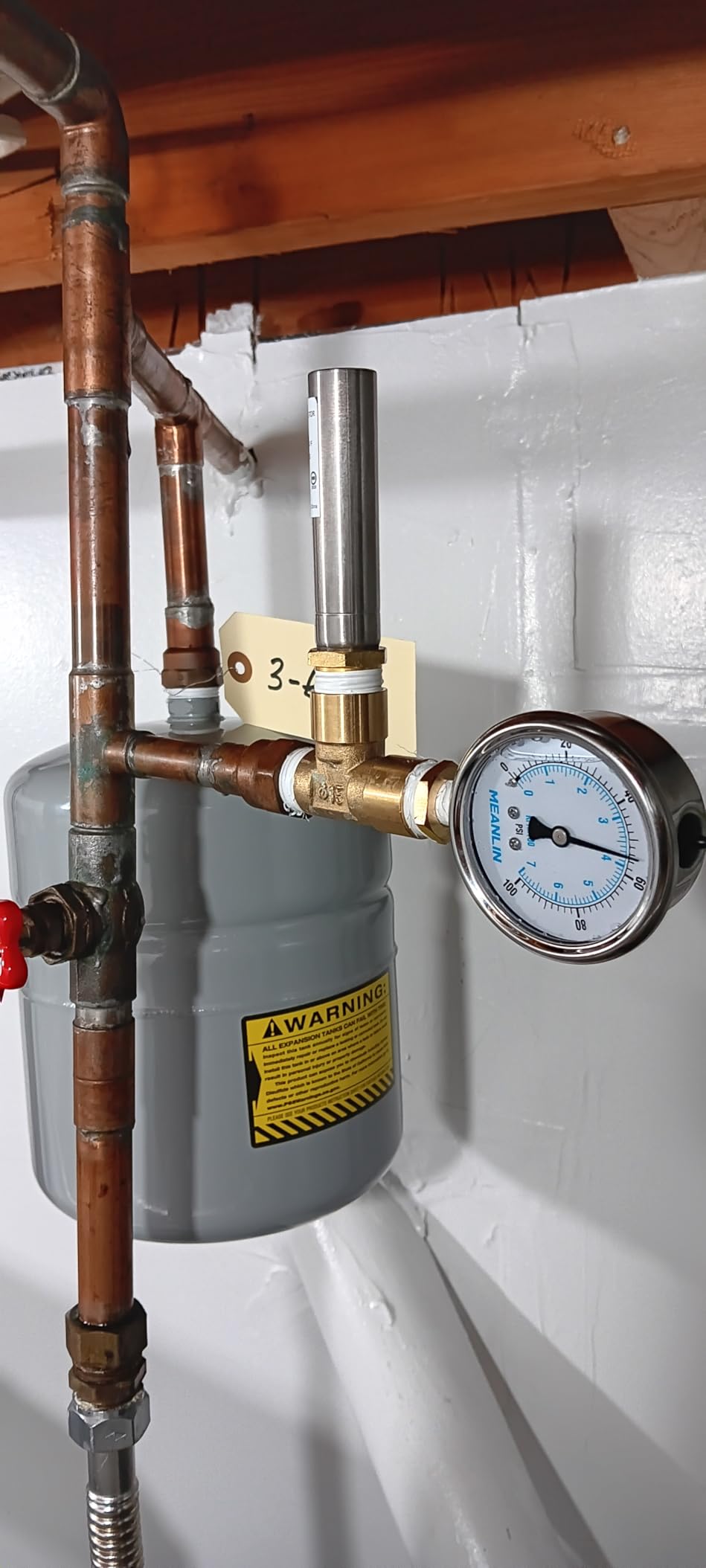
Its 4.8 rating is the highest average in this group, and the reports driving that score are specifically about holding steady pressure in systems with backflow preventers. That is a narrower claim than the general claims other tanks make, and it is the one that matters in a closed system.
The honest caveat is volume. Forty-five reviews is a small base, so you do not have much long-term data. A high score on a small sample is encouraging, but it is not the same as the 698-review history behind our top pick.
Why a check valve changes the sizing decision
A backflow preventer closes the system completely. Heated water cannot push back into the main, so every drop of expansion has to be absorbed inside your house. This is the single most common reason a correctly sized 2 gallon tank still shows a leaking TPR valve.
If your home has one, size up one step even with a 40 gallon heater, and set the pre-charge to match static pressure rather than leaving the factory setting. Both steps matter more in this situation than in an open system.
Before you order
Confirm the mount type. It is listed as internal, which is ambiguous for a floor or wall installation, so have a plan for how it will be secured. You may need a strap or bracket like the one included with the EFIELD tank earlier on this list.
If your street pressure runs above 100 PSI, this 2.1 gallon capacity is on the small side. Step to a 4 or 4.5 gallon unit instead.
10. Thrifco 4906032 Expansion Tank: Best Leak-Tested Build
Thrifco 4906032 2 Gal. Thermal Expansion Tank for Potable Water Heater
- Factory leak tested on every unit
- Protected pre-charge valve removes a leak path
- Carbon steel shell with stainless 3/4 inch MIP connection
- Factory pre-charge of 40 PSI
- Color field says white while feature copy describes an almond finish
- Only 40 reviews for long-term reliability data
- 2 gallon capacity suits small residential heaters
The Thrifco 4906032 is the most carefully built tank in this roundup, and the reason is one detail no competitor in our list offers: the pre-charge valve is protected. It sits behind a shield that eliminates a potential leak path, which means the fitting you are most likely to weep from is fully shielded.
It is a 2 gallon tank with a carbon steel shell, a butyl diaphragm, a polypropylene liner, and a stainless steel 3/4 inch MIP connection with a hex. It is rated to 150 PSI and 200 degrees F, and it is factory pre-charged at 40 PSI.
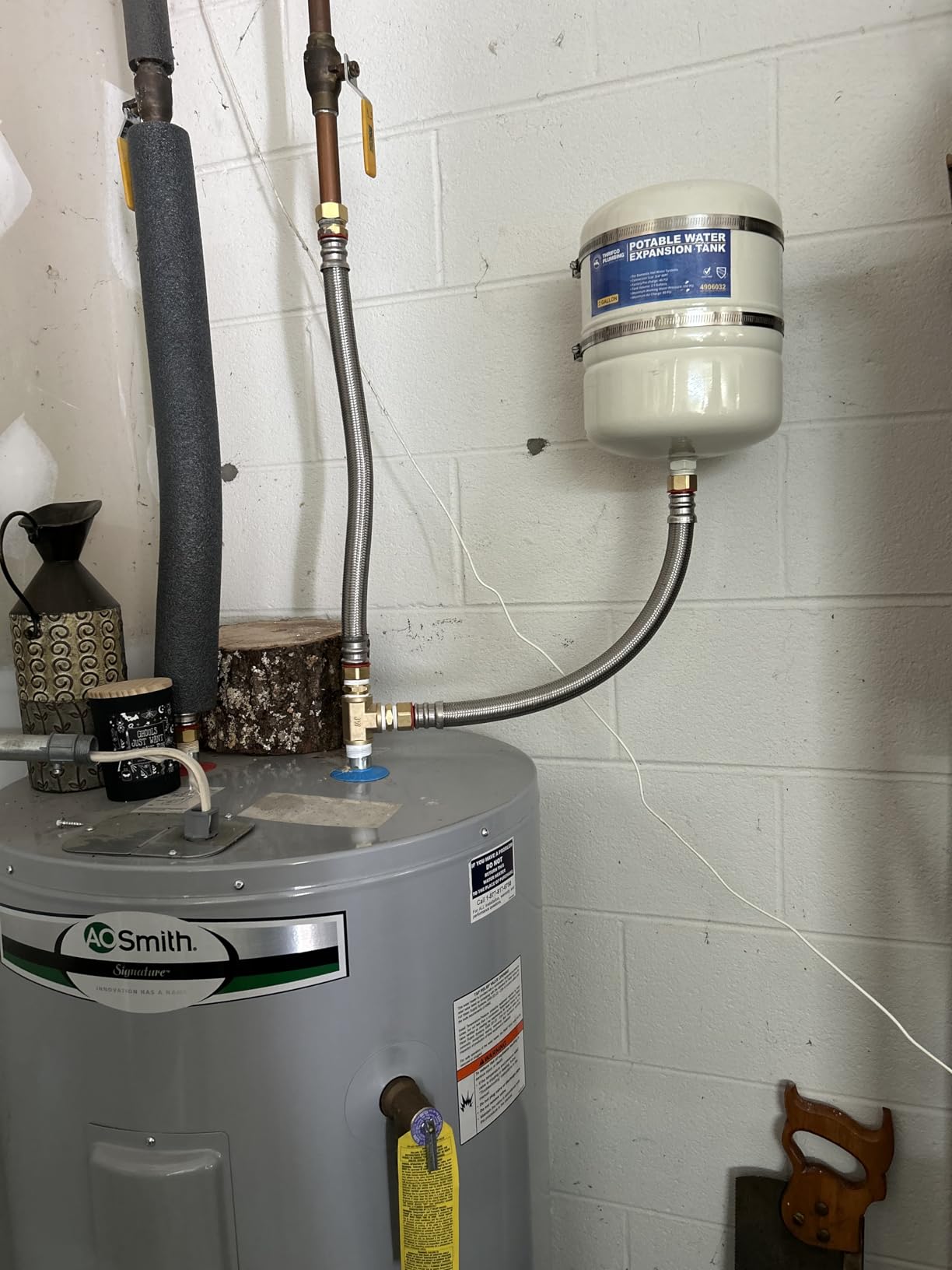
Every tank is factory leak tested before it leaves the plant, and the assembly carries an external baked epoxy-polyester coating with MIG welded seams. It is UPC certified and NSF 61 compliant, so it sits in the same regulatory class as the certified Watts and Eastman units.
At 7.5 by 12 by 12 inches, it is one of the larger 2 gallon shells here, so measure before you commit. The 4.8 rating is tied for the highest in this group, across 40 reviews.
Why the protected pre-charge valve matters
On most tanks, the Schrader valve on top is exposed metal that sits directly over the diaphragm. If it seeps, you get water at the valve and eventually a tank that loses its air cushion. Sealing it removes that failure point almost entirely.
That is also the fitting you need to access annually to check the air charge. Having it protected means you can service it without worrying that the service itself created a leak path.
Where this tank falls short
The listing has an inconsistency worth noticing: the color field says white while the feature copy describes an almond finish. That is a data problem rather than a product problem, but if finish matters to you, expect to see one or the other.
At 40 reviews there is limited long-term data, and at 2 gallons it is sized for a 40 or 50 gallon heater rather than an 80 gallon unit on high pressure. Check the dimensions before you buy if your clearance is tight.
Diaphragm vs. Bladder Expansion Tanks
This is the single biggest source of confusion in the category, and almost no editorial page covers it. Both designs do the same job. The difference is how the air cushion is held inside the tank and how the tank fails when that barrier gives out.
A diaphragm tank uses a rubber sheet stretched between the tank body and the tank head. Water fills the tank to the diaphragm and pushes against the air trapped beyond it. Diaphragm tanks have been the standard in water heating for decades, and they are what most of the picks above use.
A bladder tank uses a separate rubber bladder, like the one in a well pressure tank, suspended inside the steel vessel. The bladder inflates to fill the tank and folds down as water enters. Because the bladder is a discrete part, it can in principle be replaced, though in practice on a water heater expansion tank the whole vessel is usually swapped.
Which fails first. A torn diaphragm and a ruptured bladder look identical from outside: the tank goes waterlogged and the TPR valve starts discharging again. Neither design has a meaningful advantage here.
Which holds air better. This is where they differ. A separate bladder has less surface area bonded to the tank body, so in some comparisons it holds its pre-charge longer. A bonded diaphragm has no seam to fail but is more exposed to the tank’s interior surface.
Which to buy. For a home water heater, buy on liner material, connection material, and warranty rather than on diaphragm versus bladder. Every tank on our list is a diaphragm design, and professionals on r/Plumbing treat the construction distinction as secondary to getting the pre-charge right.
How to Tell If Your Expansion Tank Has Failed
A failed tank has two states, and both look like the same symptom from the TPR valve. Waterlogged means the barrier has failed and the tank is full of water with no air cushion. Bladder-failed means the barrier ruptured and the tank is partly or fully flooded. The distinction tells you whether you need a new tank or a recharge.
Step 1: Watch the discharge pattern. A few drips from the TPR pipe during the first heating cycle of the morning is normal. A steady stream or a daily dribble that refills the pipe is not. Chronic discharge means the tank is no longer accepting expansion.
Step 2: Look for water at the Schrader valve. If the fitting on top of the tank is wet or weeping, the tank has lost its air charge and needs recharging, or the valve itself needs replacing. This is a low-cost fix worth ruling out first.
Step 3: Check the air charge with a tire gauge. Press a bicycle tire gauge onto the Schrader valve. If it reads zero or close to it, the tank is waterlogged and the barrier has failed. If it reads pressure but well below your house static pressure, the tank simply needs air added.
Step 4: Knock on the tank. A properly charged expansion tank answers with a hollow, ringing sound like a bell. A dull thud means it is full of water. This is crude, but it is fast and it works.
Step 5: Confirm the orientation. A tank mounted sideways or upside down loses most of its working air volume. If the TPR valve discharges even with a sound air charge, check that the tank is vertical with the air side up before replacing anything.
Do you have to drain the water heater to replace the tank? Usually not. The cold supply tee is isolated by shutting off the cold inlet and opening a hot faucet to relieve pressure. You are not opening the heater itself, so the stored water stays where it is.
How to Set the Pre-Charge Pressure
This is the step that decides whether a brand new tank works or quietly fails on day two. A tank that arrives pre-charged at 40 PSI, installed in a home running 75 PSI, has almost no usable air cushion. That is why the number one complaint on plumbing forums is a TPR valve that still leaks after a new tank went in.
Step 1: Measure your static pressure. Put a gauge on a cold faucet with every fixture in the house off. That reading is your static pressure, and it is the number the tank needs to match.
Step 2: Set the tank to that pressure. Connect a bicycle tire gauge to the Schrader valve on top of the new tank. If the reading is above your static pressure, bleed air out with the valve core. If it is below, pump air in.
Step 3: Drop 2 to 3 PSI. Set the final charge slightly under house static pressure, not exactly at it. This keeps the tank accepting expansion immediately rather than waiting for system pressure to reach the tank’s charge.
Step 4: Do this before you solder. Set the charge with the tank isolated from the system. Once the tee is connected and the supply is open, you cannot accurately read the tank’s charge anymore.
Step 5: Recheck after the system refills. Once the home is back to normal pressure, verify the charge again. A large tank can lose a noticeable amount of air during installation, and a second check costs nothing.
Check the charge once a year after that. Air bleeds off slowly through the Schrader valve, and a tank that reads 5 PSI below static needs air added before it stops doing its job.
How to Choose the Right Expansion Tank
Six decisions cover almost every case. Work through them in order and the model choice makes itself.
1. Get the capacity right first. Two gallons for a 40 or 50 gallon heater on normal pressure. Four to 4.5 gallons for larger heaters, higher street pressure, or any home with a backflow preventer. Tankless and point-of-use heaters need a mini tank.
2. Confirm the connection. Nearly everything residential is 3/4 inch, either MIP or MNPT. The one exception in our list is the Eastman 60008 mini at 1/2 inch, which needs a reducing adapter on a standard line.
3. Judge the wetted materials. A polypropylene liner keeps water off the steel shell, which is the single best defense in hard or chloramine-heavy water. After that, look at the connection material. Stainless beats plated brass.
4. Check pressure and temperature ratings. 150 PSI is the common ceiling and matches most residential supply pressures. A 210 degree F rating gives more headroom than a 200 degree F one, which matters if your thermostat runs hot.
5. Look at the warranty, then discount it. Warranties here run from 1 year to 6 years. A long warranty is a reasonable proxy for manufacturer confidence, but expansion tanks are consumable parts and most will be replaced long before their warranty period ends.
6. Confirm the mount is included. Only one tank on our list includes securing straps. Everything else assumes you have a bracket, a strap, or a solid surface, and a tank hanging by its nipple is a failure waiting to happen.
Supply house versus big box. The dominant advice on r/Plumbing is to buy from a plumbing supply house, and it is often cheaper there than at a home improvement retailer. Suppliers also carry brands like Watts, Eastman, and Amtrol that retail shelves cycle on and off. The recurring complaint is that big-box private label plumbing parts carry thin brass and show pinhole leaks within a couple of years, which is why that brand is the least trusted in this category among the homeowners we read.
Hard water and chloramine. Both attack the tank from inside. A polypropylene liner, a stainless or protected connection, and a factory pre-charge you have actually verified are the mitigations that matter. If you are on a municipal chloramine program, buy the lined tank.
Matching the heater brand. Rheem, Bradford White, A.O. Smith, and Navien all sell matched replacement tanks. You do not need one, and the generic diaphragm tanks on this list do the same job at a lower cost. Match the capacity and connection instead of the logo.
How long they last. Bladder and diaphragm life runs roughly 10 to 15 years in a typical home. Hard water and high tank temperatures shorten that, which is the argument for buying the lined tank once rather than replacing a corroded steel tank twice.
For more on the hardware side of home projects, our guides to portable propane tanks and quenching tanks for bladesmiths cover the sizing logic in more depth for those setups, and the same acceptance-volume thinking applies here.
Frequently Asked Questions
What is the best brand of expansion tank for a water heater?
Amtrol, Watts, and Eastman are the three names plumbers name most often, and all three are on our list. The Eastman 60022 earned our top pick for its alloy steel shell, 304 stainless connection, 6 year warranty, and the largest review base we found. The Amtrol ST-5 is the most widely installed design in the trade, and the Watts PLT-5 is the easiest to replace locally from a plumbing supply house. Build materials and warranty matter more than the badge.
Do I really need an expansion tank on my water heater?
If your plumbing is a closed system, yes. A check valve at the meter, a backflow preventer, or a pressure regulator stops heated water from returning to the main, so the roughly 3 percent of extra volume has nowhere to go. Pressure climbs until the temperature and pressure relief valve discharges. Chronic discharge wastes water and wears on the heater and fixtures. Most jurisdictions now require a tank at the time a water heater is installed.
What is the recommended size of an expansion tank for a water heater?
A 2 gallon tank covers most 40 and 50 gallon residential water heaters on street pressure below 60 PSI. Move up to 4 or 4.5 gallons for a 60 gallon or larger heater, for street pressure above 80 PSI, or for any home with a backflow preventer or check valve, because those devices close the system completely and every drop of expansion must be absorbed inside the house.
Do I need a 2 gallon or 4 gallon expansion tank?
You need 2 gallons for a 40 or 50 gallon heater on normal municipal pressure. You need 4 gallons or more if your heater is 60 gallons or larger, if your static pressure runs above 80 PSI, or if your home has a backflow preventer or a check valve at the meter. Forum consensus is that 2 gallons is genuinely enough for one residential heater, so do not oversize a standard installation.
Why is my TPR valve still leaking after I installed a new expansion tank?
The most common cause is a pre-charge that was never adjusted. Tanks arrive pre-charged at 40 PSI, and a home running 70 or 80 PSI leaves the new tank with almost no usable air cushion. Measure your static pressure with all fixtures off, then set the tank’s Schrader valve to that pressure minus 2 to 3 PSI before connecting it. If it still discharges, confirm the tank is mounted vertically with the air side up.
Can a TPR valve be repaired, and do I have to drain the heater to replace the tank?
TPR valves are safety devices and are replaced rather than repaired. Because the expansion tank ties into the cold supply tee, you do not need to drain the water heater. Shut off the cold inlet, open a hot faucet to relieve pressure, swap the tee, and restore. The stored hot water stays in the tank the whole time.
Which Water Heater Expansion Tank Should You Buy?
If you want one answer, buy the Eastman 60022. Two gallons, a butyl diaphragm, a 304 stainless connection, a 6 year warranty, and the deepest review history in the category make it the safest fit for a typical 40 or 50 gallon home on ordinary pressure.
Move to the Watts PLT-5 when you would rather buy from a brand your plumber stocks and can swap again in five years. Go with the Amtrol ST-5 if you are replacing a like-for-like unit that has already done its job. Add capacity when your heater is 80 gallons, your static pressure is above 80 PSI, or a backflow preventer is on the property, and choose a lined tank like the HIGHCRAFT GUU7 if your water is hard.
Whatever you install, set the pre-charge to your house static pressure minus 2 to 3 PSI before you connect it. That single step separates the tanks that work for a decade from the ones that show up as a leaking relief valve six months later.