
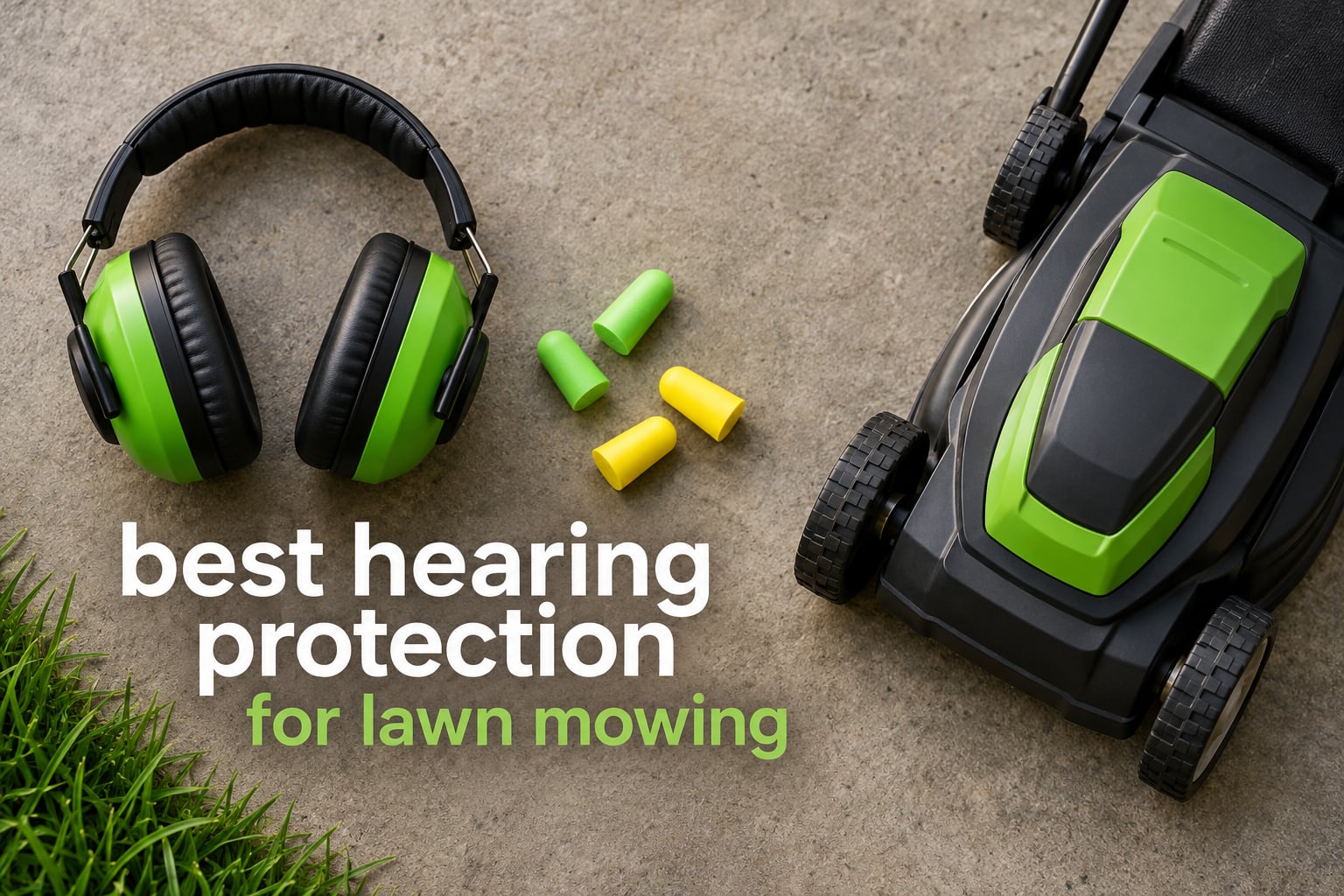
Yes, you should wear hearing protection when mowing. A conventional gas lawn mower runs in the neighborhood of 90 to 100 decibels, and sustained exposure above 85 dB causes permanent hearing damage. The problem is not a single Saturday with the mower. It is the same 90 dB repeated every week through a whole growing season, which is how most people end up with tinnitus.
That is the entire reason this guide exists. We compared 12 of the highest-rated ear defenders and earplugs for mowing, looking at noise reduction rating, how they hold up over a long hot session, whether they fit under a sun hat, and whether they let you hear the lawn at all. If you only read one thing, scroll to the quick overview table and pick a style that matches your mower.
One quick note before we start: battery and reel mowers are dramatically quieter than gas, and a lot of owners who switched stopped wearing protection altogether. A commenter on r/lawncare described exactly that, keeping the muffs on out of habit after going back to a gas machine. If your equipment is electric, you are probably fine with something light. If it has an engine, treat protection as non-negotiable.
For those who have started noticing ringing after yard work, our guide to hearing amplifiers for TV watching covers the other half of the equation, but protection is always the better first move.
Table of Contents
Top 3 Picks for Lawn Mowing in 2026

Walker’s Razor Slim Electronic Muff
- Two hi-gain microphones
- Low-profile cups fit under a cap
- Audio input jack

The Walker’s Razor Slim Electronic is our top pick because it solves the two things that annoy people most about mowing hearing protection: it disappears on your head, and it lets you hear a person talking to you from ten feet away. The two hi-gain microphones amplify quiet environmental sound while attenuating the engine surge, which is a completely different experience from a sealed muff.
For anyone who just wants maximum attenuation with nothing between them and the sound, the Mack’s Ultra Soft foam plugs deliver 33 dB of lab-rated reduction in a package soft enough to forget. And the Flents Protechs are the value pick: the same class of NRR, a contoured shape that seats more naturally than a straight cylinder, and a bright green color that tells the guy on the zero-turn you cannot hear him.
Best Hearing Protection for Lawn Mowing (October 2026)
| Product | Specifications | Action |
|---|---|---|
| Walker’s Razor Slim Electronic Muff |
|
Check Latest Price |
 Mack’s Ultra Soft Foam Earplugs Mack’s Ultra Soft Foam Earplugs |
|
Check Latest Price |
| Flents Protechs Quiet Contour Earplugs |
|
Check Latest Price |
 Pro For Sho 34dB NRR Earmuffs Pro For Sho 34dB NRR Earmuffs |
|
Check Latest Price |
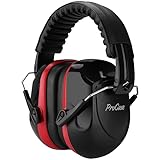 ProCase Hearing Protection Earmuffs ProCase Hearing Protection Earmuffs |
|
Check Latest Price |
 Howard Leight Laser Lite Foam Earplugs Howard Leight Laser Lite Foam Earplugs |
|
Check Latest Price |
 DECIBEL DEFENSE 37 dB Earmuffs DECIBEL DEFENSE 37 dB Earmuffs |
|
Check Latest Price |
 Walker’s Razor Slim Passive Earmuff Walker’s Razor Slim Passive Earmuff |
|
Check Latest Price |
 ZOHAN AM/FM Radio Earmuffs ZOHAN AM/FM Radio Earmuffs |
|
Check Latest Price |
 PROHEAR 037 Bluetooth Earmuffs PROHEAR 037 Bluetooth Earmuffs |
|
Check Latest Price |
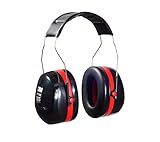 3M PELTOR Optime 105 Earmuffs 3M PELTOR Optime 105 Earmuffs |
|
Check Latest Price |
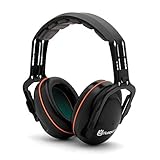 Husqvarna Professional Headband Protector Husqvarna Professional Headband Protector |
|
Check Latest Price |
Two products on this list are not NRR-rated in the US sense, and that matters. The ProCase uses an EU SNR 33 dB figure with a US ANSI equivalent of NRR 28 dB, and the Husqvarna quotes 25 dB(A). The PROHEAR quotes SNR 30 dB rather than an ANSI NRR. Read those numbers as a rough ranking within each standard, not as interchangeable decibel values.
1. Walker’s Razor Slim Electronic Muff – Best Overall for Lawn Mowing
- Amplifies quiet sounds while killing engine noise
- Fits under a cap for low-profile wear
- Recessed volume control works with gloves
- Aux jack doubles them as headphones
- Padded metal headband feels durable
- Passthrough adds noticeable latency
- Faint digital noise in amplified audio
- Batteries need periodic replacement
Our team has been putting these on the mower for weeks, and the electronic approach is the part that changes behavior. Instead of hearing a wall of nothing, you hear birds, the click of the trimmer line and someone calling your name, while the engine transient gets shut down. That combination is why this is the one we recommend first.
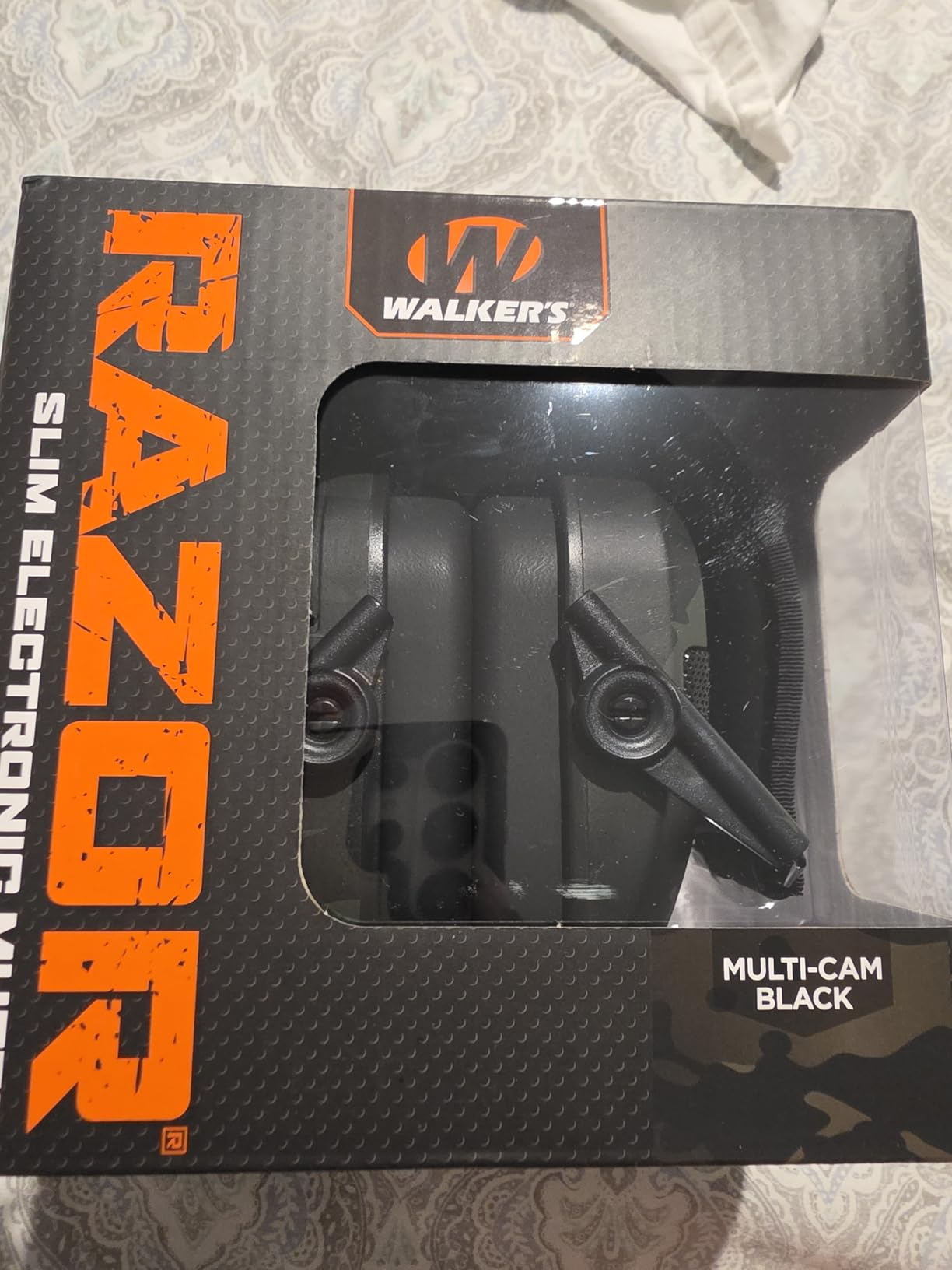
At 12.63 ounces and 5.47 x 4.92 x 4.37 inches, the cups are genuinely slim. They slide under a baseball cap without the headband fighting the brim, which is a small thing that decides whether you actually put protection on. The two hi-gain microphones with enhanced low-end response are what make footsteps and a running compressor sound like they belong in the room rather than inside a tin can.
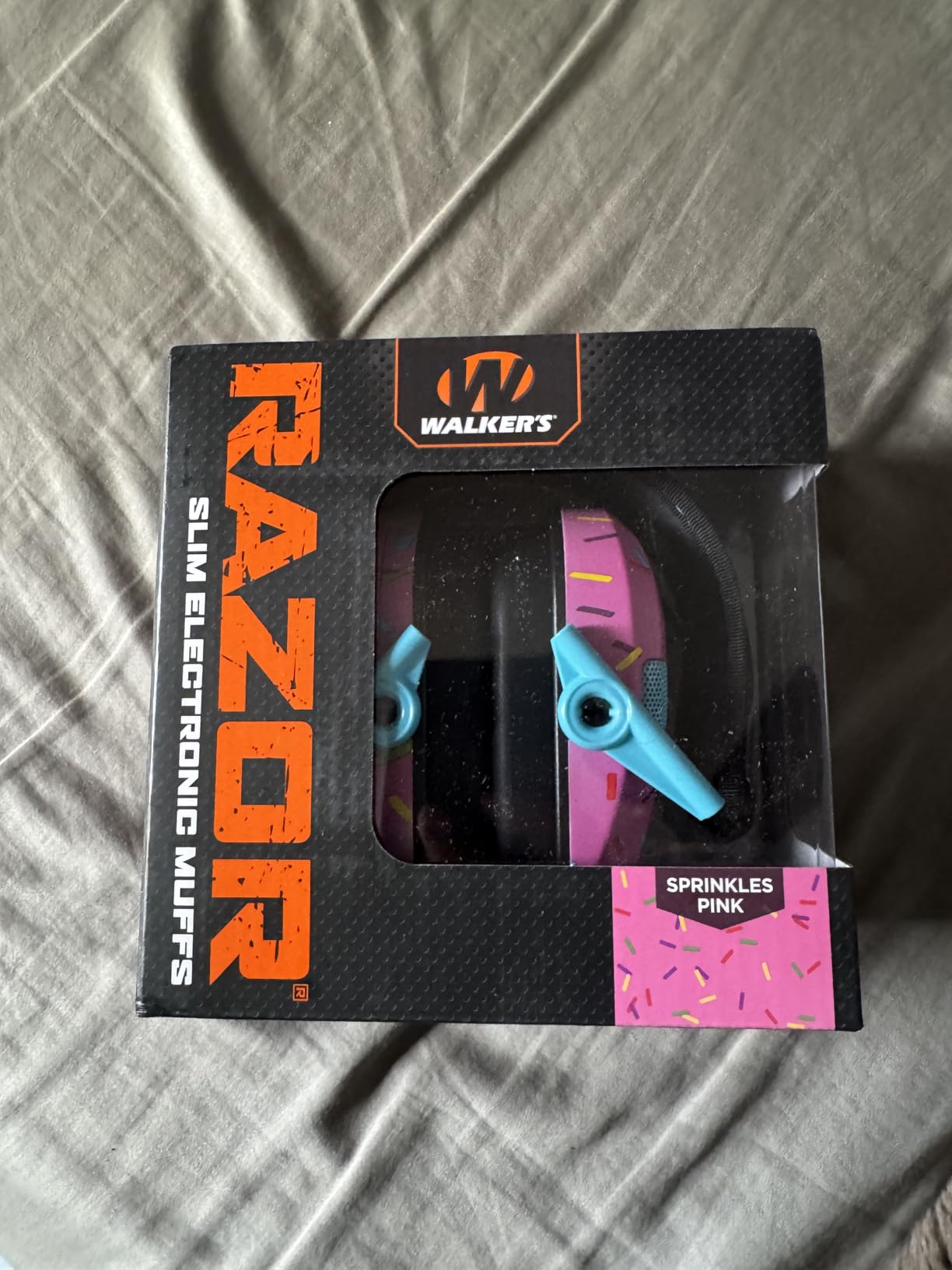
The build is a rugged rubberized coating over a sound-dampening composite housing, with a padded metal wire frame headband that keeps its tension season after season. The recessed external volume control is a genuinely thoughtful piece of design because you can find it with a gloved thumb while the machine is running. The exterior battery door means you swap cells instead of hunting for a coin screw.
Where it is not perfect: the passthrough mode has a latency that makes sound localization feel slightly off, and there is a faint digital texture in the amplified audio that some listeners notice on music through the aux jack. New wearers also need roughly half an hour before amplified sound stops sounding strange. The electronic path also means batteries, and a dead battery means no protection at all.
How it handles a long hot mowing session
Because the cups are low-profile and the frame is wire rather than thick plastic, this is the muff we would pick for a July afternoon on an open lawn with no shade. There is less trapped air around the ear than a full-size double-shell design, and the wire band spreads force across the top of the head rather than pressing on the temples.
It also doubles as ordinary headphones through the audio input jack, which is the practical answer for anyone who wants a podcast on the ride home without carrying a second device.
Who should skip it
If you are running a string trimmer or a chipper rather than a mower, the electronic passthrough is not the feature you need, and you would be better served by a higher-NRR passive muff. Same if you are someone who has had no battery failures in a decade and does not want to think about spares.
If you do buy it, keep a spare pack with the mower. A dead battery in a bag on the back of a mower is the fastest way to end up unprotected on your next pass.
2. Mack’s Ultra Soft Foam Earplugs – Softest Disposable Protection
- Softest disposable foam in this group
- Slow-release expansion is easy to wear for hours
- Highest disposable foam NRR at 33 dB
- Fits a wide range of ear sizes
- Small diameter is easy to remove
- Soft foam is harder to grip when damp
- Flared end leaves more material in the outer ear
- Single-use so no reuse
If heat is what stops you from wearing muffs in summer, disposable foam is the answer, and these are the softest version of it. The Comfy Cush slow-release formula expands gradually rather than snapping outward, so there is no pressure spike in the first few seconds. Reviewers consistently describe them as wearable for hours without thinking about them.
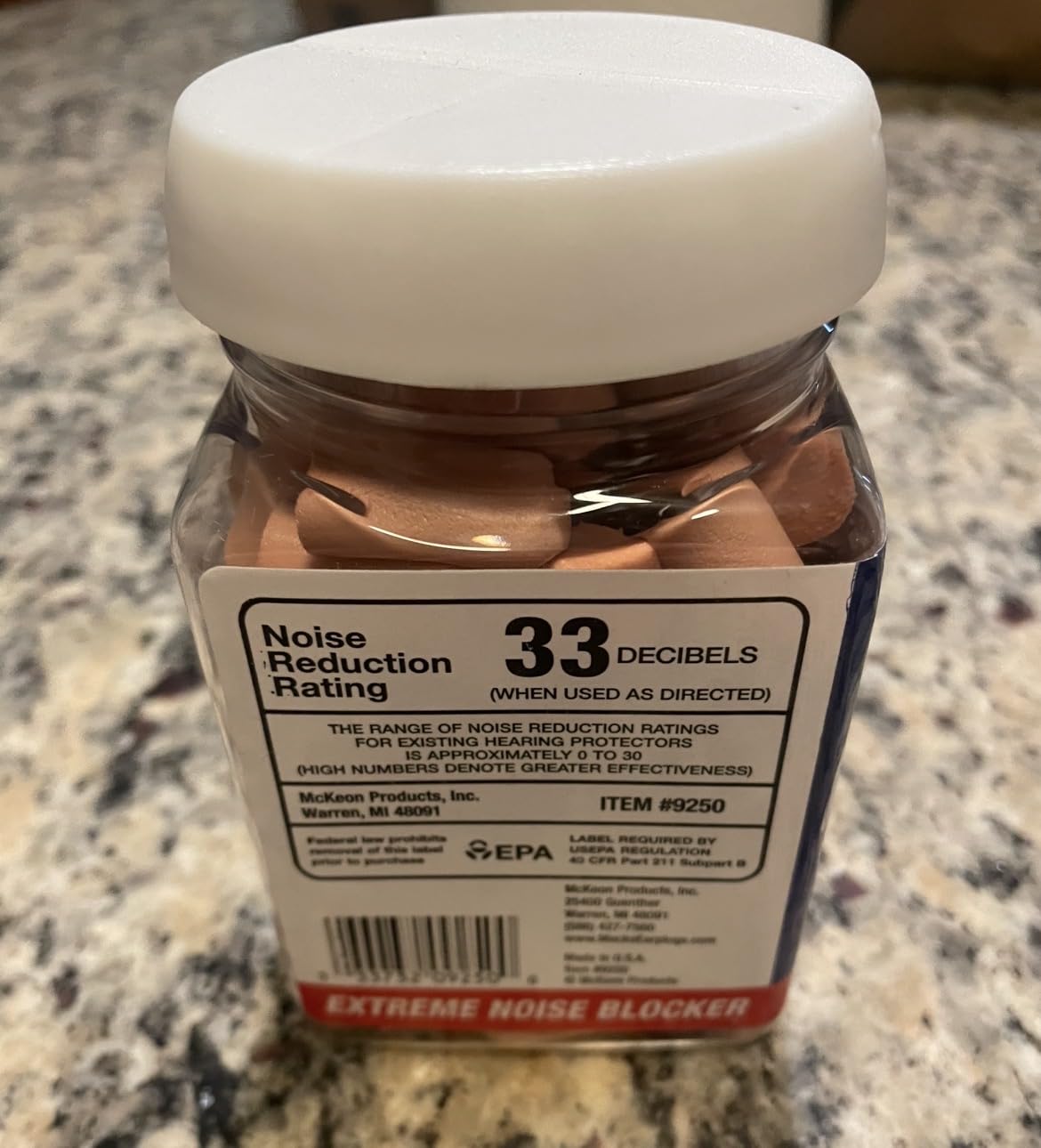
The lab figure is 33 dB NRR, which is the top of the disposable foam class and more attenuation than any of the passive muffs here except the 37 dB Decibel Defense. Each jar holds 50 pairs in a safety-sealed container with a flip-open dispensing top, so a jar in the glove box covers an entire season of weekend mowing.
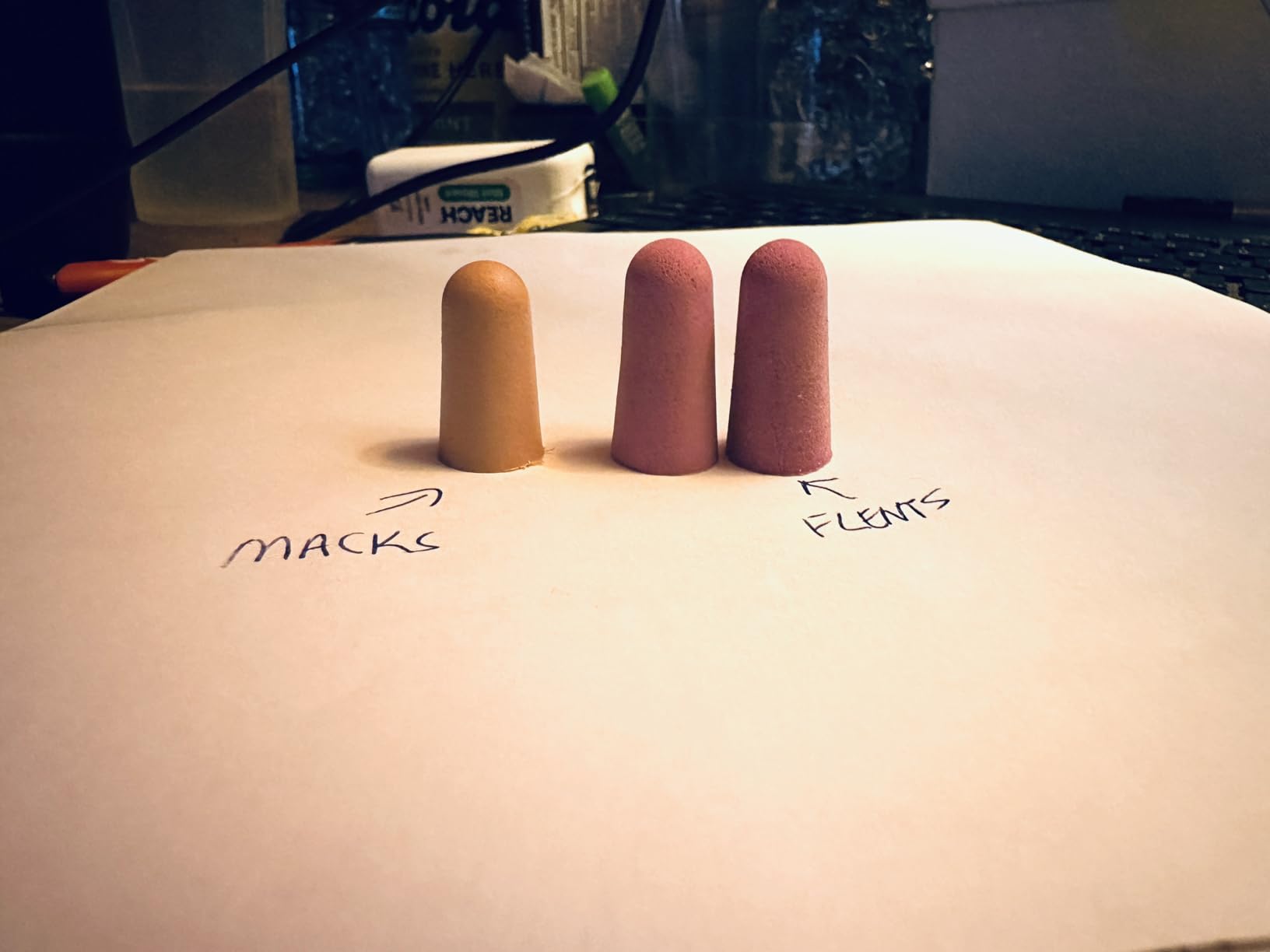
They are made in the USA by McKeon Products under model 9250, and they are the brand clinicians hand out, which tells you something about the fit consistency. The 4.25 x 2.52 x 2.52 inch jar is small enough to live in a work bag. Small diameter also means the plugs are easy to fish out of your ear, which matters more than it sounds after a sweaty hour.
The honest trade-offs: very soft foam is harder to grip when your hands are wet or dusty, which is exactly the condition you will be in. The wide flared end leaves more material resting in the outer ear than a slim cylinder does, and a small number of users report looseness over very long single sessions. They are single-use, so a season of mowing means a season of replacements.
Getting a real seal without fuss
Roll the plug between your thumb and forefinger into a thin cylinder, pull the ear up and back with the other hand, and hold it in place for about twenty seconds while the foam expands. Skipping the hold is the single most common reason people rate a 33 dB plug as a 20 dB plug.
A useful trick for lawn work: cup your free hand behind the ear after insertion. If you cannot hear the engine when you do, the plug is not seated. Doing that check for the first few sessions is what turns foam plugs from a bad experience into a habit.
What to watch out for
They do nothing for situational awareness. With a 33 dB plug in, a person walking up behind you on a riding mower is invisible to your ears, which is exactly the situation the visible green and yellow plugs on this list are designed to flag. Brighter plugs are a genuine safety feature outdoors.
If you share earplugs with a family member, keep one jar per person. Foam plugs are a poor fit for a shared jar once one person has a larger canal than the other.
3. Flents Protechs Quiet Contour Earplugs – Budget Pick Foam Option
- Contoured taper seats more naturally than a cylinder
- Extra soft foam with no irritation on long wear
- Stays put instead of working loose
- Bright green is easy to spot outdoors
- Strong blocking for yard work
- Soft foam takes practice to seal fully
- Bell-shaped end sits heavily in the outer ear
- Some looseness reported after many hours
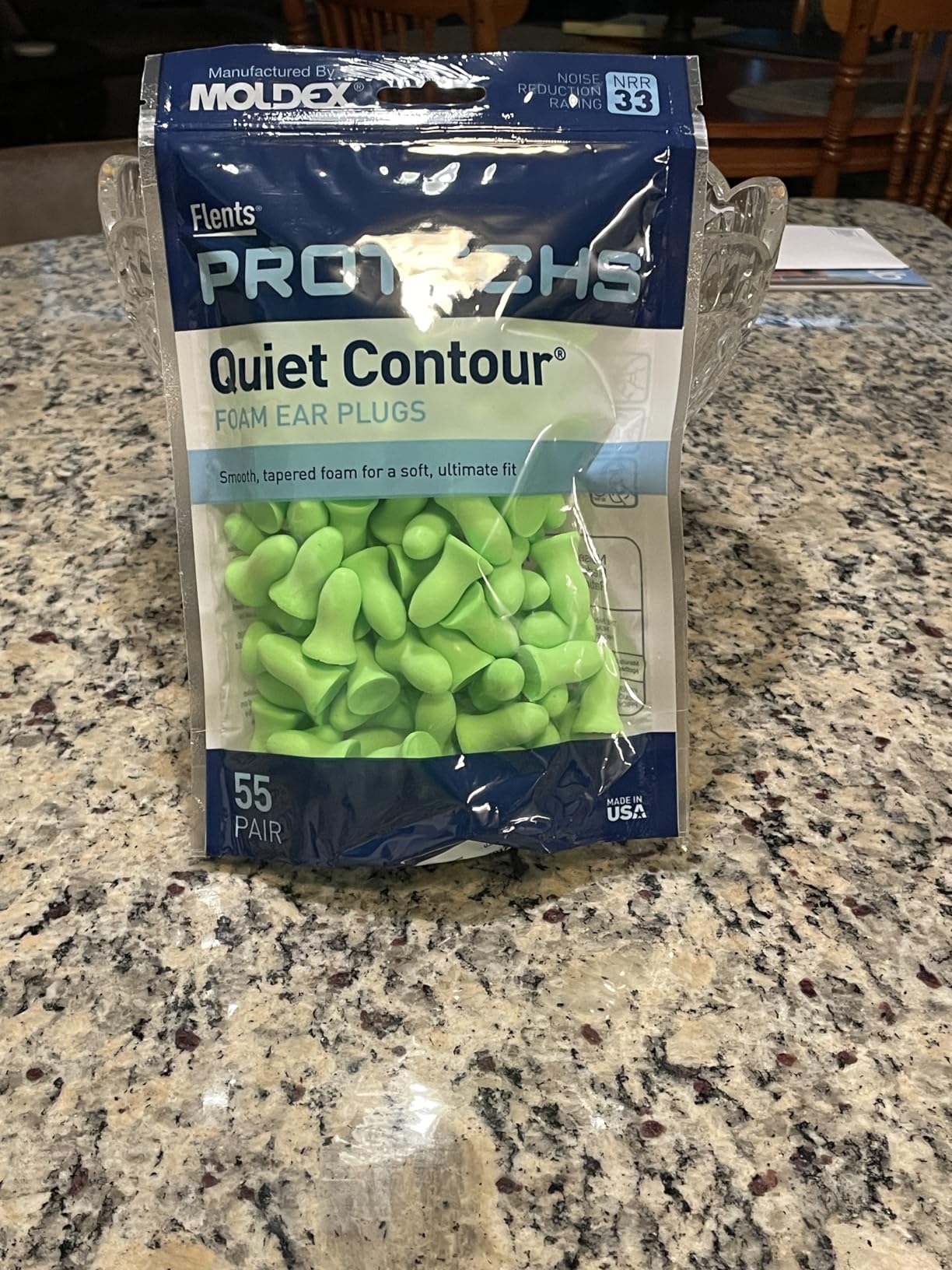
The difference between these and a straight foam cylinder is the taper. The contoured bell shape is narrower at the tip and wider at the base, so it guides itself into the canal instead of bouncing off the entrance. In practice that means a better seal with less fuss, and fewer people give up on foam plugs entirely.
The rating is 33 dB NRR, matching the top of the disposable class, and the foam is extra soft, smooth and latex-free. Reviewers note that the material does not irritate even for all-night wear, which is more than can be said for a lot of high-NRR plugs. Ten pairs per pack, made in the USA by Apothecary Products.
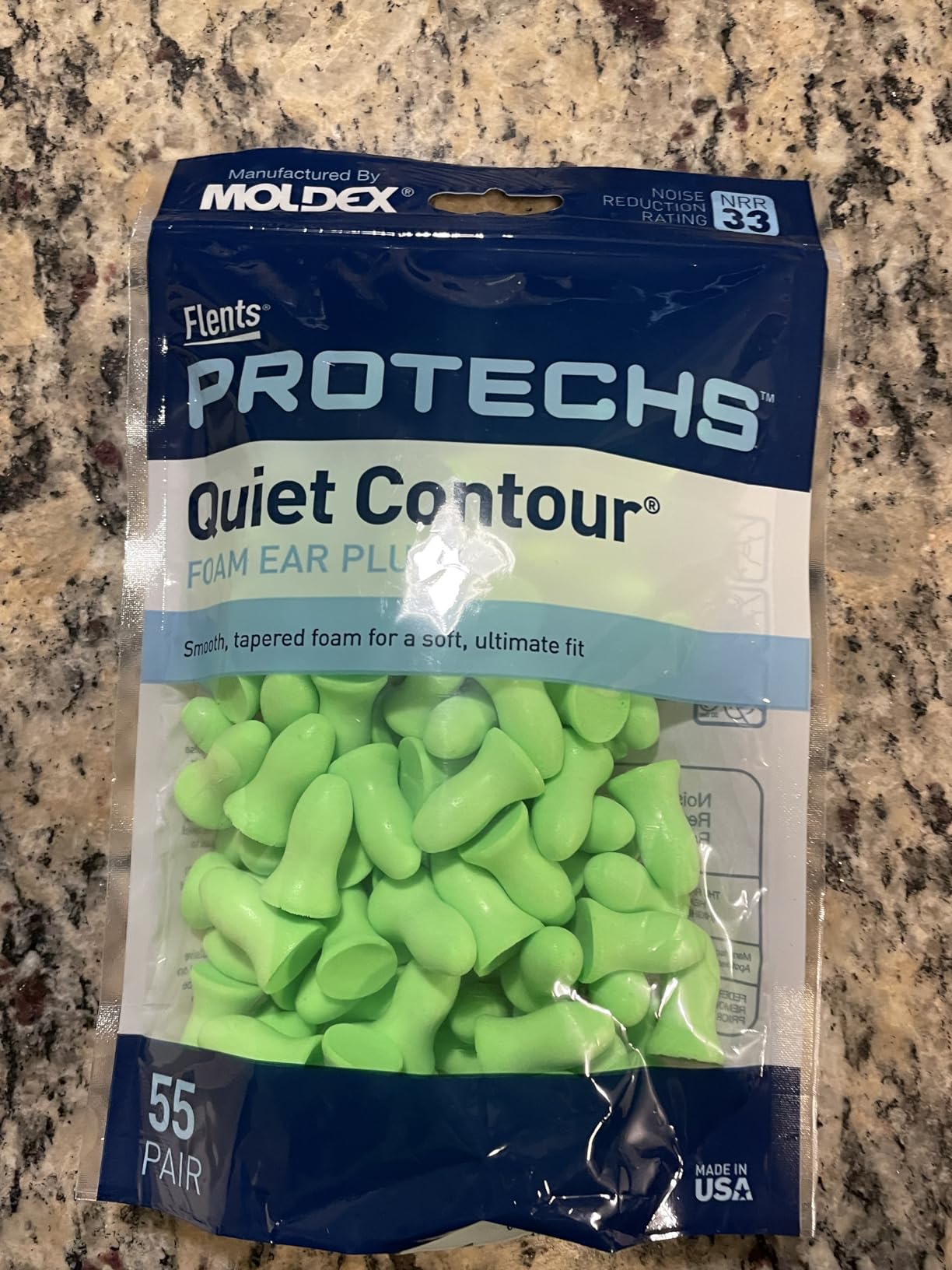
The high-visibility green is not a gimmick in a yard context. If your kid is riding on the tractor while you mow, they need to see that you cannot hear them before they shout. Reviewers in lawn contexts call out the color constantly for exactly that reason, and it is the main reason these edge out cheaper foam plugs at the same NRR.
On the downside, the foam is on the softer side, which means it takes real practice to roll tight enough for a full seal the first few times. The wide bell end leaves more material in the outer ear, some users report mild irritation or looseness over many hours, and side sleepers tend to find the shape presses uncomfortably.
When this beats the Mack’s plugs
Reach for these instead of straight cylinders if you have struggled to keep a foam plug seated, or if your ear canals are on the small side. The shape does more of the work for you, and the green color solves a problem no other foam in this list solves as cleanly.
They are also the easier of the two for a first-time earplug user, which matters if the person mowing your lawn has never worn protection before and needs it to be a one-strap, no-instruction job.
What to watch out for
They are still disposable foam, so they cannot be washed and reused the way a silicone plug can. And the softness that makes them comfortable also makes them the least forgiving when your hands are dirty, which is the moment you are most likely to drop one on the grass.
Buy a two-pack rather than a one-pack if you can. Losing two plugs on a single mow is not unusual for first-time foam users.
4. Pro For Sho 34dB NRR Earmuffs – Best High-NRR Folding Muff
Pro For Sho 34dB NRR Ear Protection, Noise Reduction Ear Muffs – Grey
- Genuine 34 dB NRR in a slim folding body
- Folds flat so it lives in a mower bag
- Adjustable padded band fits kids through adults
- No batteries or electronics to fail
- Feels tight before it is broken in
- Passive so it reduces high frequencies more
- Standard size can run small on large heads
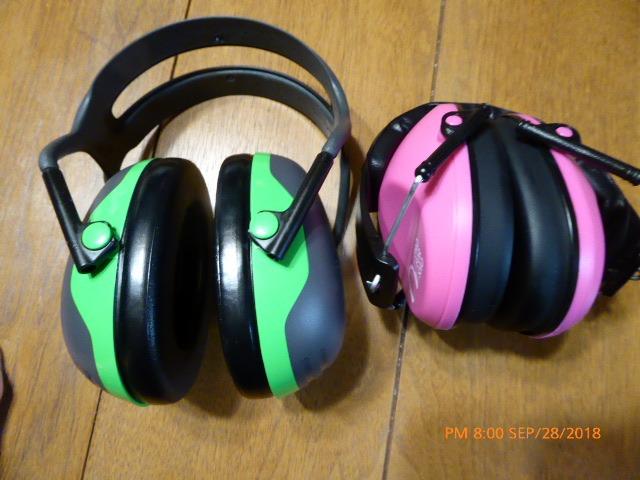
This is the muff to buy if your objection to over-ear protection is bulk. It carries a real 34 dB NRR, OSHA-adjusted to 31 dB, and is certified to both ANSI S3.19 and CE EN 352-1, yet the whole thing folds down to pocket size at 7.2 ounces. Most 30-plus dB muffs cannot claim that combination.
The build is passive, which means no batteries, no charging and nothing to fail in the middle of a season. A fully adjustable padded headband covers a genuinely wide range of head sizes, and reviewers specifically call out that it works for both children and adults, which is a rare note in a high-NRR muff.

Material is ABS with foam cushions, grey, listed under model PAS-GY by ProForSho. The folding behavior is the quiet hero: reviewers describe clipping it to a belt or dropping it in a toolbox and not thinking about it until the next mow, which is a much better system than earmuffs permanently living on a hook by the back door.
Break-in is the thing to plan for. The fit is snug by design and several reviewers recommend clamping the muff against a flat surface for a few hours before the first use to relax the band. As passive protection it also attenuates high frequencies harder than low ones, so engine rumble comes through more than you might expect. The standard size can run small on a very large head.
Why the fold matters more than the number
Protection you own but do not carry is protection you do not have. A muff that collapses to the size of a paperback survives the transition from the garage to the yard, and that is the difference between wearing it every cut and wearing it the first week of the season.
For anyone who moves between a mower, a trimmer and a shooting range in the same week, the same three attributes cover all three jobs without swapping gear.
Who should look elsewhere
If you want to hear your surroundings at moderate volume while you mow, passive attenuation is the wrong architecture. You will want an electronic or connected model further down this list, accepting a lower NRR for the trade.
If heat is your problem, note that the snug fit that gives this muff its rating also traps more heat than a loose low-profile design. Plugs are the better summer answer.
5. ProCase Hearing Protection Earmuffs – Best Budget Over-Ear Pick
ProCase Hearing Protection Ear Muffs SNR 33dB, Noise Cancelling Headphones
- Lab-certified SNR 33 dB with a real test body
- Soft breathable cushions hold up all day
- Folds into a compact ball for storage
- Adjustable metal band avoids pinching
- Solid build that survives repeated folding
- Runs small on large heads
- Initial ear pressure fades with use
- Bulkier than slim muffs
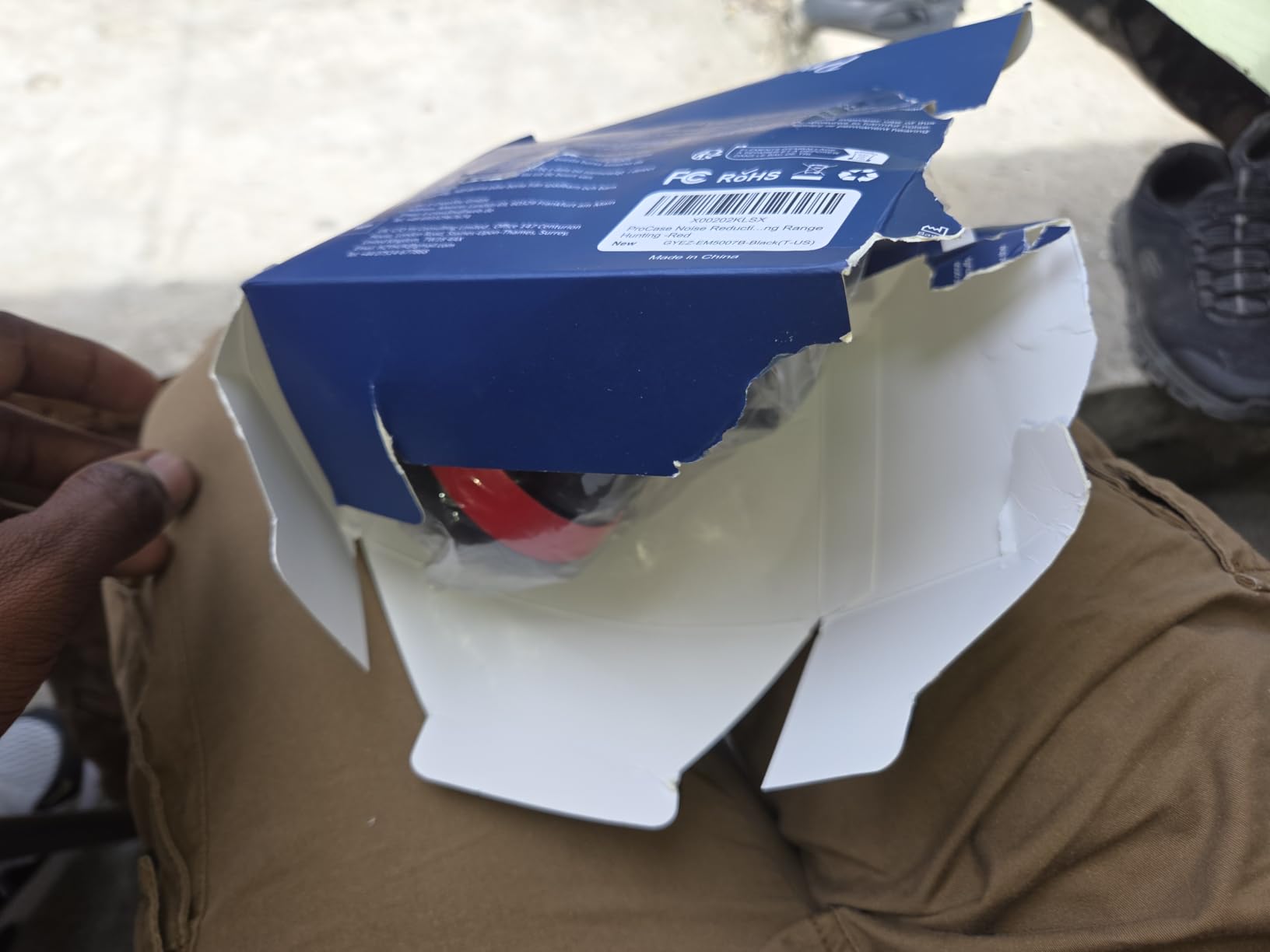
The ProCase is the sleeper value in over-ear protection because its rating comes from an NVLAP-accredited lab in Europe, where it is certified at SNR 33 dB, with a US ANSI S3.19 equivalent of NRR 28 dB. That certification is the differentiator. Plenty of cheap muffs print a number nobody tested.
Everything else is ordinary and good: an adjustable metal frame with a padded headband, a solid ABS shell, thick soft breathable ear pads, and a foldable design that packs into a compact ball for a toolbox or a mower bag. Reviewers consistently report that the cushions stay comfortable through a full day of power tools or a full afternoon of mowing.
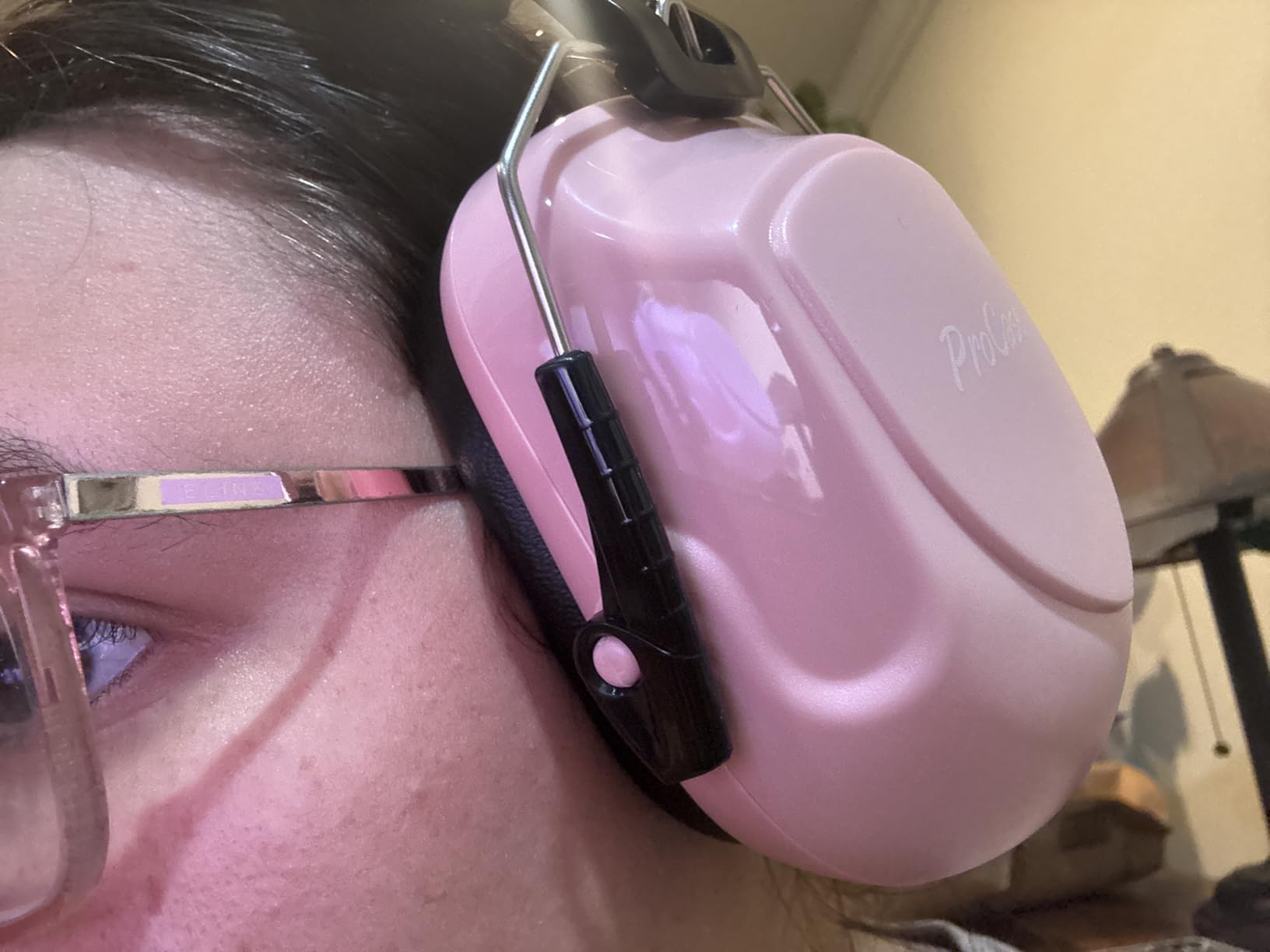
The universal complaint is sizing. Users with larger heads report the strap has little margin and often end up recommending the extra-large version of the same model, so if you know you are above average in head size, size up before you order. A smaller secondary issue is an ear pressure sensation in the first few days that fades once the cushions settle.
It is also bulkier than the low-profile slim designs and does not lay flat, and it is purely passive, so there is no audio input, no radio and no Bluetooth. That is a feature if you want nothing to charge, and a limitation if you planned to listen to a podcast.
What the two rating numbers mean here
SNR and NRR are measured differently and are not interchangeable. If you want one number to compare against other muffs on this list, use the US ANSI NRR figure of 28 dB. If you are comparing to a European-market product that only quotes SNR, compare the SNR figures instead.
Mixed comparison is where shoppers get misled. A 33 dB SNR product and a 33 dB NRR product are not the same amount of protection, and this is worth ten minutes of reading before you buy.
Glasses and hat fit
This muff is listed as compatible with most eyeglasses, and the cushioned seal is deep enough to survive a temple arm better than a shallow cup. The wider cup still fights a wide-brimmed sun hat, so if sun protection is a requirement, budget for a clip-on brim or a hat that sits under the band.
For most people, the deciding factor is simply that this is a well-made certified muff in the value bracket, and the fit complaints are solvable by choosing the larger size.
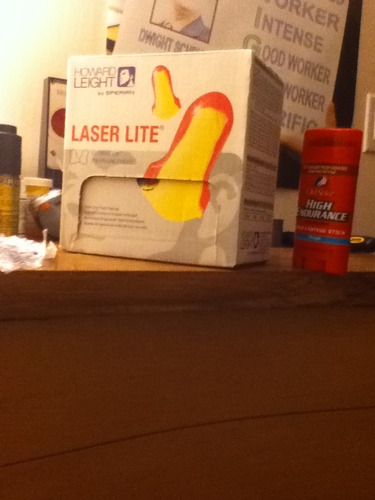
6. Howard Leight Laser Lite Earplugs – Best High-Visibility Foam Plugs
Howard Leight by Honeywell – R-01204 Laser Lite High Visibility Disposable Foam Earplugs, Pack of 1 (50 Pairs),Yellow
- High-visibility yellow and magenta nobody can miss
- T-shape is easy to insert and remove
- Self-adjusting foam fits small and large canals
- Closed-cell skin resists dirt
- Large 50-pair pack
- Foam is single-use
- Needs practice to roll for a full seal
- May not fill very large canals
The Laser Lite is the one we would hand to a commercial lawn crew where multiple people share equipment. The high-visibility yellow and magenta coloring is visible from a distance, which is a real operational benefit when a zero-turn is running nearby and a crew member cannot hear an approaching machine.
At 32 dB NRR, the protection is a single decibel under the top of the disposable class and, in practice, indistinguishable from a 33 dB plug once fit is accounted for. The contoured T-shape handles well between fingers even with dirty or gloved hands, which is the other thing a work crew cares about.
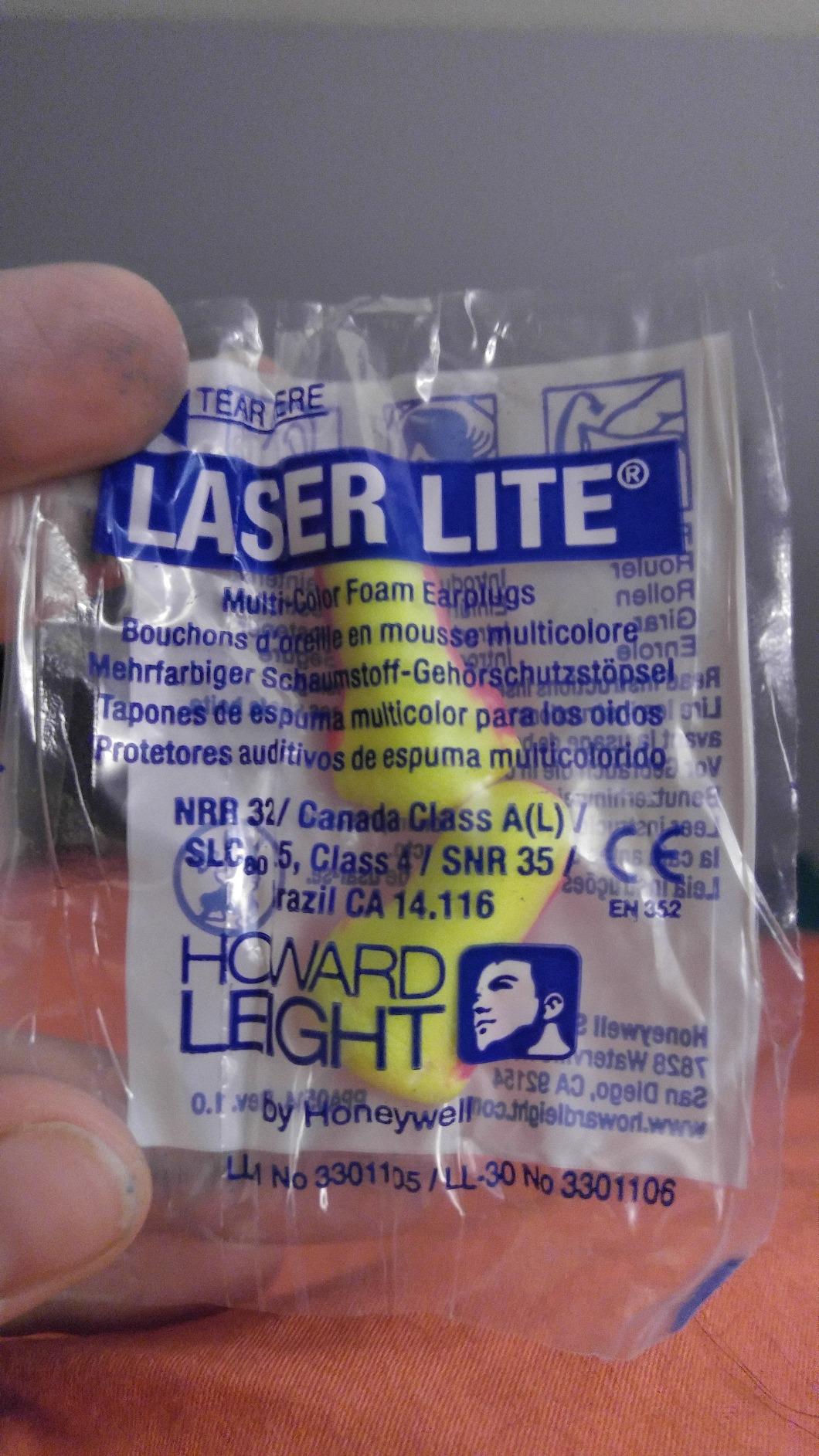
The foam itself is a low-pressure polyurethane that self-adjusts as it expands, working across a range of canal sizes without you having to guess a size. The closed-cell skin is smooth and soil-resistant, so a plug that picks up grass clippings wipes clean instead of harboring grit against the canal. Fifty pairs per pack from Howard Leight under model R-01204.
Complaints are minor and mostly about disposal waste, since these are strictly single-use. Some users need a few attempts before the roll-and-hold technique produces a proper seal, and a small number note the plugs do not completely fill very large canals. Reviewers otherwise treat them as a dependable industrial disposable.
Why visibility is a safety feature
Most hearing protection failures in a yard come from communication, not from exposure. Someone says something important from a direction you cannot hear because you are sealed, and a high-visibility plug gives the other person a visual cue that you missed it. On a single mower it matters less; on a property with family or a crew it matters a lot.
This is the single best reason to pick this pair over an otherwise identical cheaper foam plug. The NRR is close enough that comfort and fit should decide the rest.
Where it falls short
There is no reuse here, and a 50-pair pack is consumed quickly if more than one person on the property uses them. If you are the only person mowing, a reusable silicone or band-style option has a lower lifetime footprint and less to remember.
The T-shape also sits slightly proud in the outer ear compared with a slim cylinder, so it is a poor match for anyone who wears an over-ear muff over the top, since it will not sit flat under a cup.
7. DECIBEL DEFENSE 37 dB Earmuffs – Highest Rated NRR in the Lineup
- 37 dB NRR is the strongest rating in this group
- Comfortable across multi-hour sessions
- Easy to adjust even with arthritic hands
- High-visibility orange that matches the photos
- No batteries or electronics
- Bulky compared with slim muffs
- Regular size tight on larger heads
- No printed instructions in the box
The 37 dB NRR is the reason this muff exists, and it is the highest lab rating in the entire lineup. If you run a gas zero-turn, a string trimmer or a chipper and you want the maximum passive attenuation available without stacking plugs under a muff, this is the ceiling.
It is certified to both ANSI S3.19 and CE EN 352-1, and the design is entirely passive, so there is no battery, no charging and nothing to fail mid-season. The shell is ABS with dBTech foam cushions on a padded headband, and adjustable metal sliders let you set the tension precisely rather than relying on a fixed clamp.
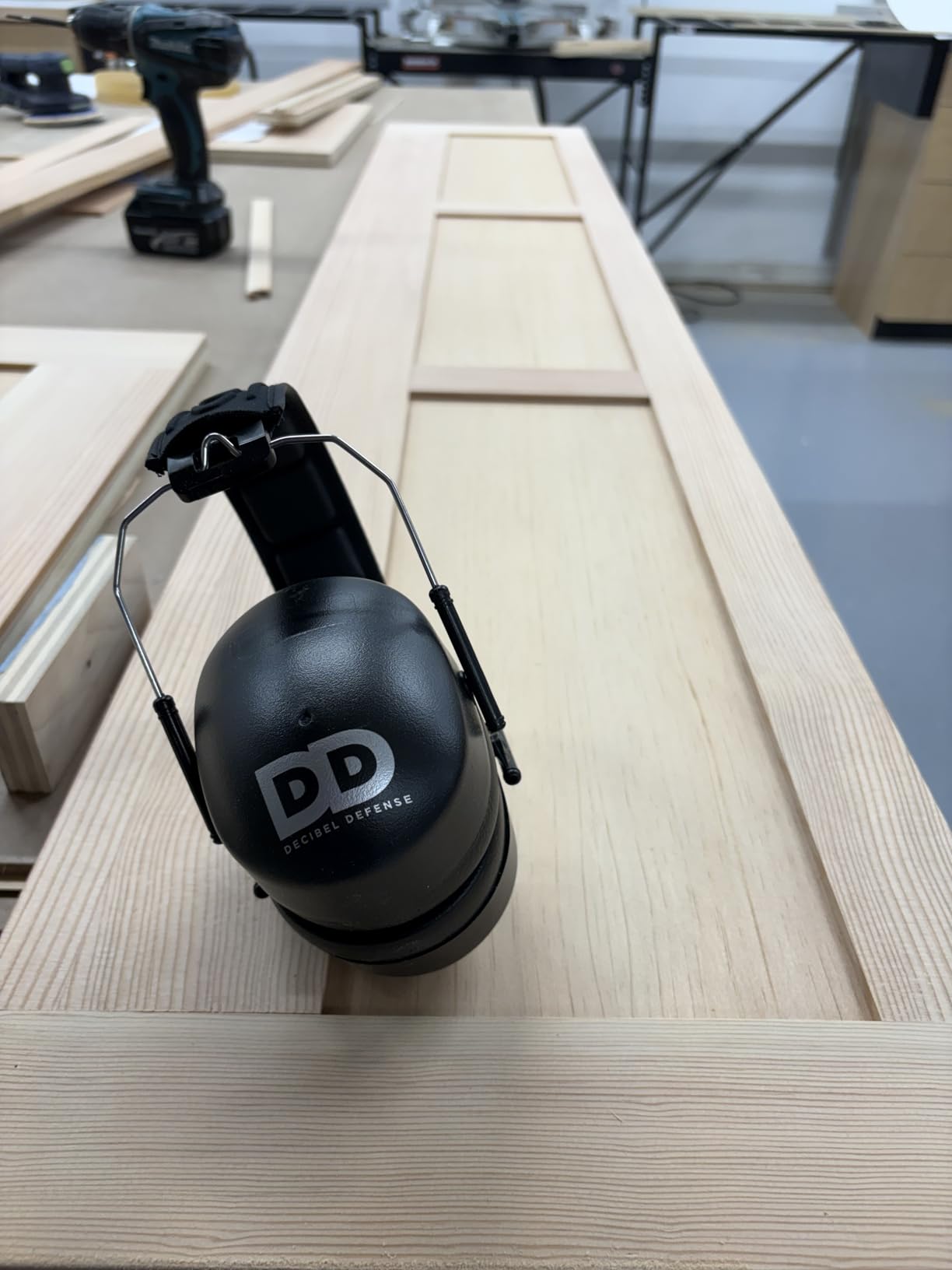
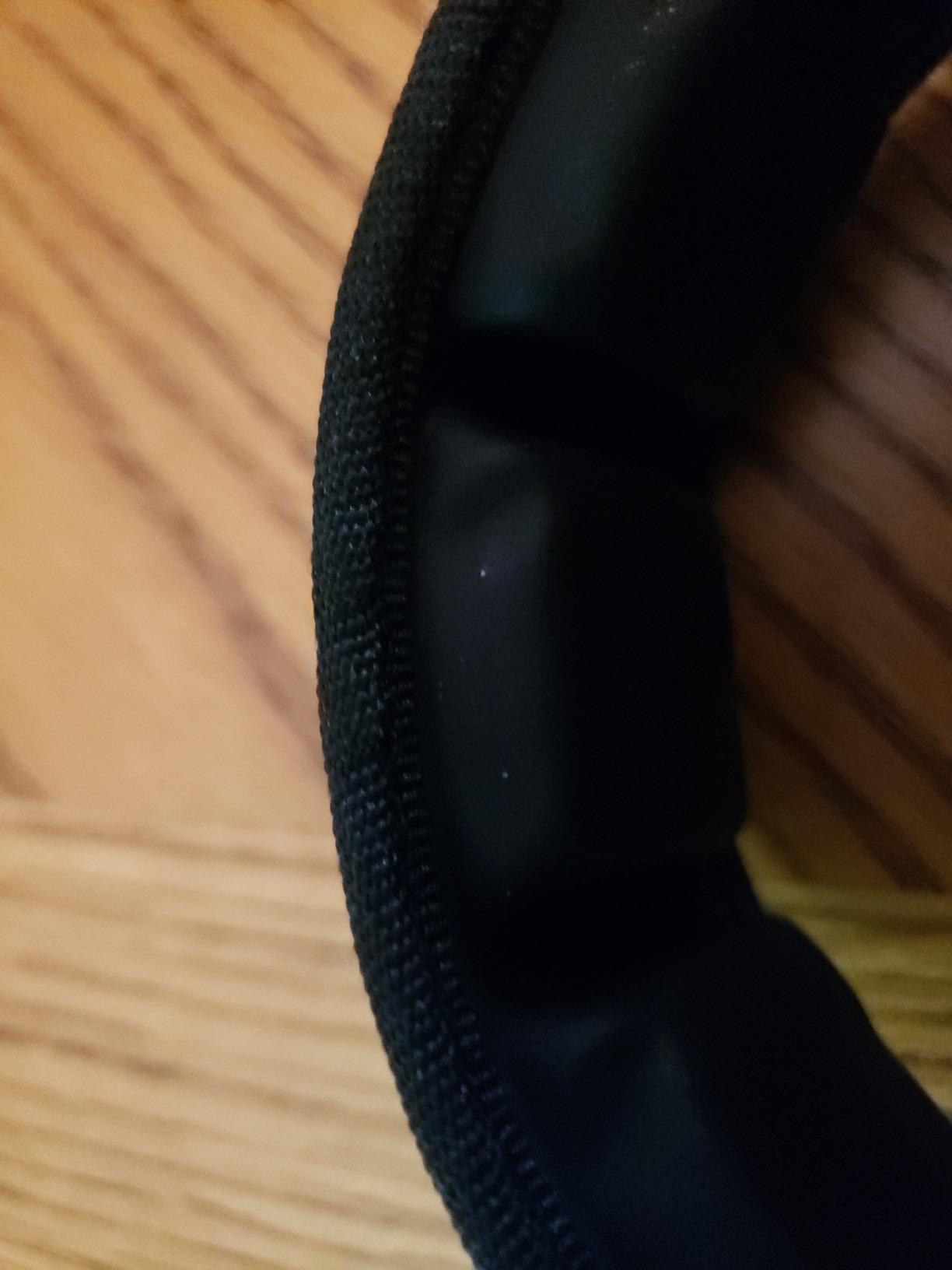
Comfort over long sessions comes up repeatedly in reviews, including from people using them for sleep and sensory overload, which is a demanding test. Reviewers also report that several owners of competing slim muffs switched to this one after their cheaper pair lost attenuation. The high-visibility orange is a plain, uncluttered color that looks the same in person as it does in the listing photos.
The trade-offs are real. It is bulky next to the slim designs, and the regular size can feel tight on larger heads, with the XL available only in black. There are no printed instructions in the box, so first-time adjustment takes a quick video. And at this attenuation level alarms and sirens stay faintly audible, which some people read as a flaw and others as a safety feature.
When 37 dB is worth the extra bulk
Extra attenuation only pays off when the source is loud. Against a 95 dB gas push mower, moving from 28 dB to 37 dB of protection is a meaningful drop in what reaches your ear across a full season. Against a 70 dB electric mower, it is money spent on a problem you do not have.
So the honest use case is the loud end of the yard: trimmers, hedge trimmers, backpack blowers, chippers and older gas equipment. If your machine is the loudest thing on the property and you run it weekly, this is the pick.
How to make the bulk work
The weight is 11.7 ounces, which is noticeable for the first hour. The way to make that manageable is to loosen the sliders one notch from maximum and accept a slightly lower seal, then tighten back up for the loudest pass rather than wearing maximum tension for the whole job.
If you share equipment with a smaller head, buy the regular and the XL rather than making one person tolerate the other’s fit. The adjustment range on a single model rarely covers two very different head sizes.
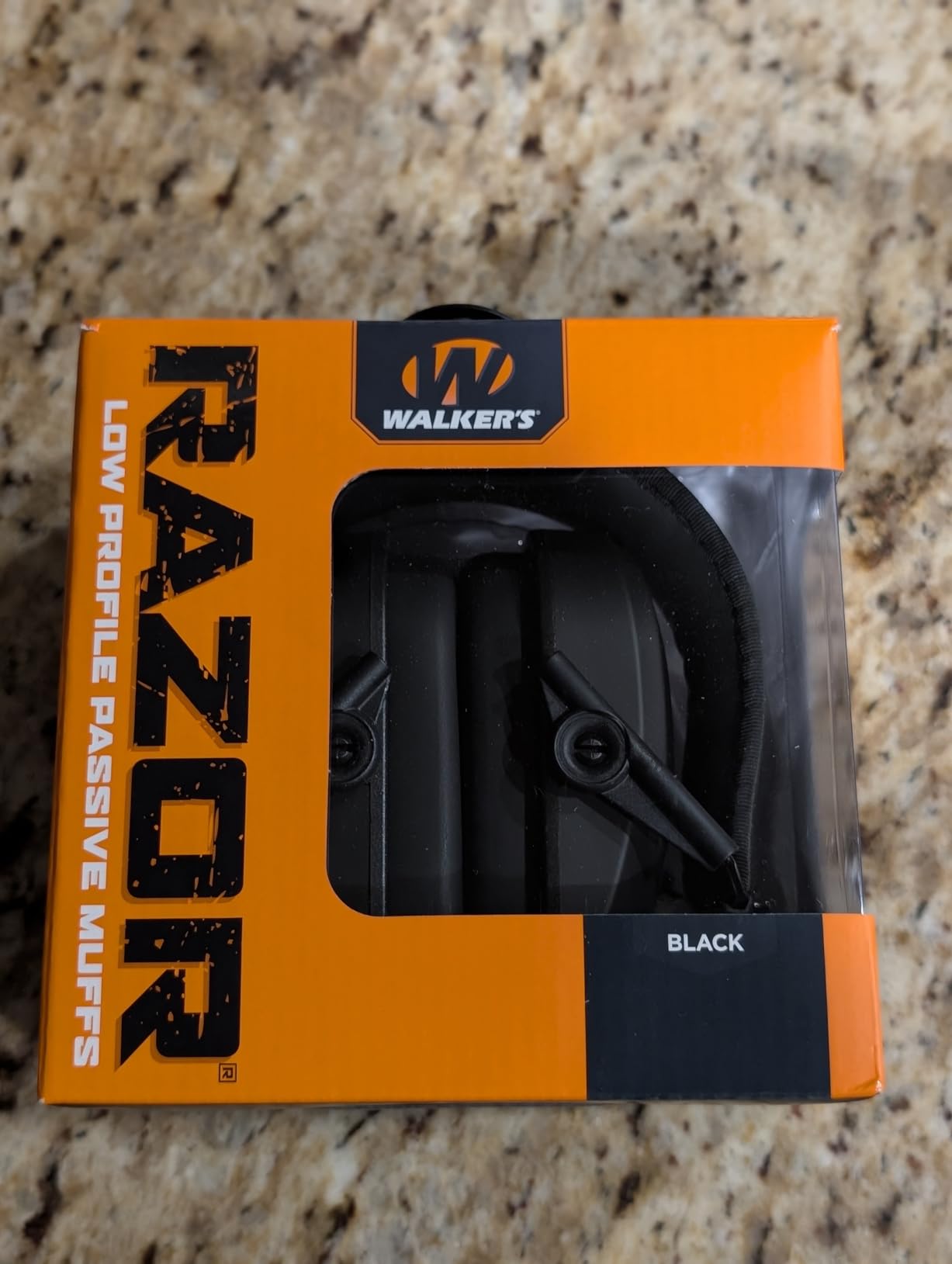
8. Walker’s Razor Slim Passive Earmuff – Best Low-Profile Fit Under a Cap
Walker’s Razor Slim Passive Earmuff for Range Shooting Hunting Hearing Protection, Unisex
- Compact profile slides under a cap without conflict
- Lightweight and collapsible for transport
- Metal wire band holds its shape
- Rubberized coating handles rough use
- Works passively with the unit switched off
- 27 dB NRR is low for gas equipment
- Cups can feel cramped on larger heads
- No amplification or audio input
The passive sibling of our top pick shares the low-profile silhouette that makes it disappear under a cap, and drops the electronics to get there. At 27 dB NRR it is the least protective muff here, and the honest reason to buy it is fit and comfort rather than attenuation.
For a 70 dB electric mower, a reel mower, or a gas mower you only run for short sessions, 27 dB is more than enough. For a gas zero-turn running for three hours, pair it with plugs underneath or choose a higher-NRR model instead.
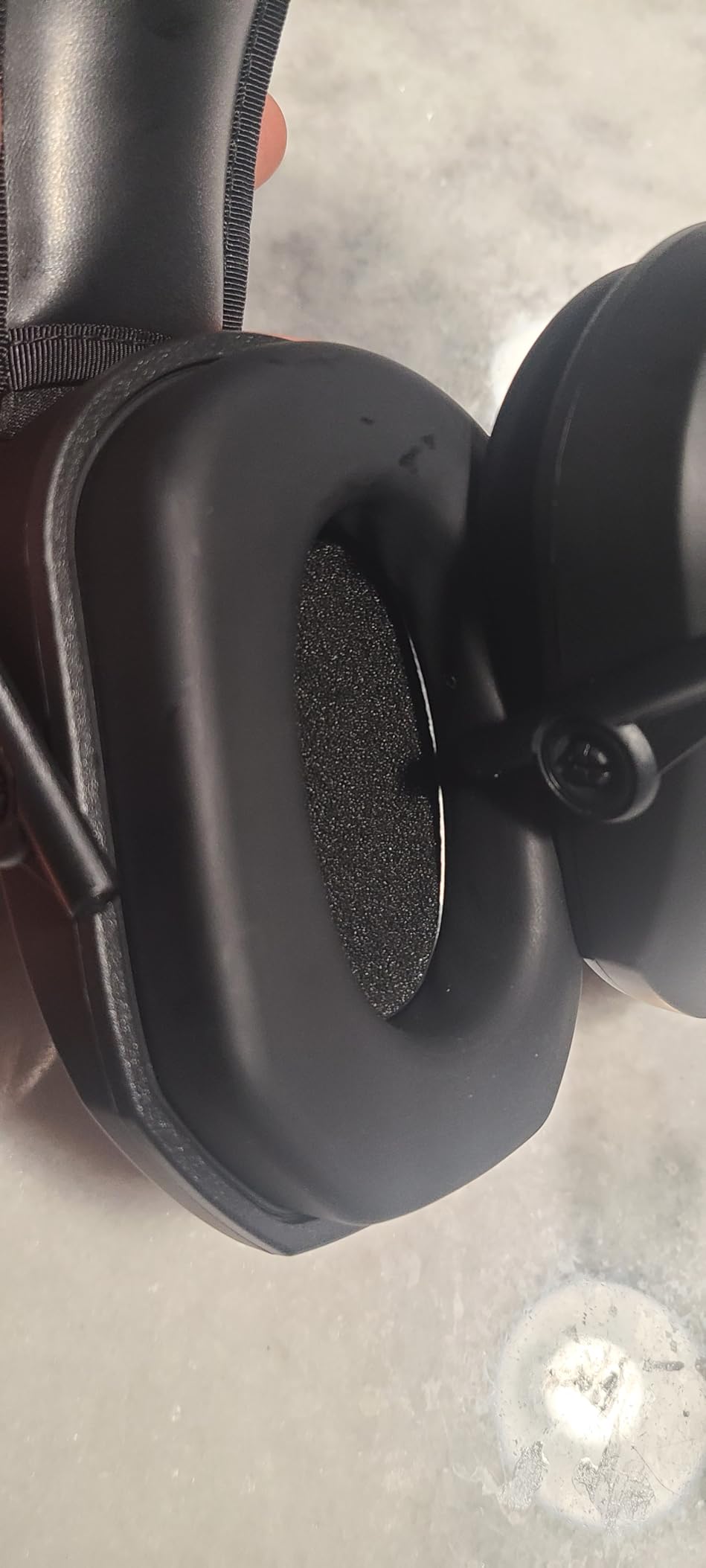
The build is straightforward and durable: ultra low-profile cups with a rubberized coating over a sound-dampening housing, on a metal wire frame headband that holds its shape after a season of being folded into a truck bed. Reviewers rate it highly for all-day comfort, particularly shooters and hunters, and it remains effective passive protection even if the unit is switched off.
The two limitations are consistent. Twenty-seven decibels is below most modern mowing earmuffs, and the compact cups can feel cramped on a larger adult head. There is no amplification, no radio and no audio input, so it is a pure attenuator with no situational awareness at all.
The cap test in real life
Most muffs on this list fight a baseball cap. The headband sits at the base of the skull where the cap sits, and forcing one on top of the other either crushes the seal or forces the cap brim up. This is the muff that has been designed around that problem, with cups shallow enough to clear a cap brim.
A cap does not equal a wide-brimmed sun hat, though. If the real goal is shade on the neck and ears, this muff will not solve it, and you will want a clip-on brim or a different strategy entirely.
Who it suits and who it does not
It suits smaller head sizes, anyone who already wears a cap while mowing, and anyone who wants a muff light enough to forget about. Its 4.7-star rating across more than nine thousand reviews reflects that fit-first design working well for its intended users.
It does not suit anyone running loud gas equipment for long sessions, or anyone with a larger head who finds deep cups more comfortable. In both cases, moving up a size or a NRR tier is worth the step.
9. ZOHAN AM/FM Radio Earmuffs – Best for Radio While Mowing
- Clear AM/FM reception with a readable LCD
- Unusually wide and soft headband
- Reinforced buttons resist failure
- Replaceable snap-in ear cushions
- Long battery life on AA cells
- 25 dB NRR is modest for loud equipment
- Needs 2 AA batteries not included
- Radio only with no Bluetooth
Radio is a genuinely different experience from phone audio in the yard. There is no phone in your pocket, no notification chime, no dropped connection when you walk behind the shed, and the sound is far less fatiguing over a two-hour cut. If you have never tried it while mowing, this is the one to test.
The AM/FM receiver has an LCD display with ten station presets per band and push-button tuning, and reception is described as stable and sensitive. The headband is wider, thicker and softer than typical, which is the most-quoted positive in reviews and directly addresses the pressure points that make muffs miserable in summer.
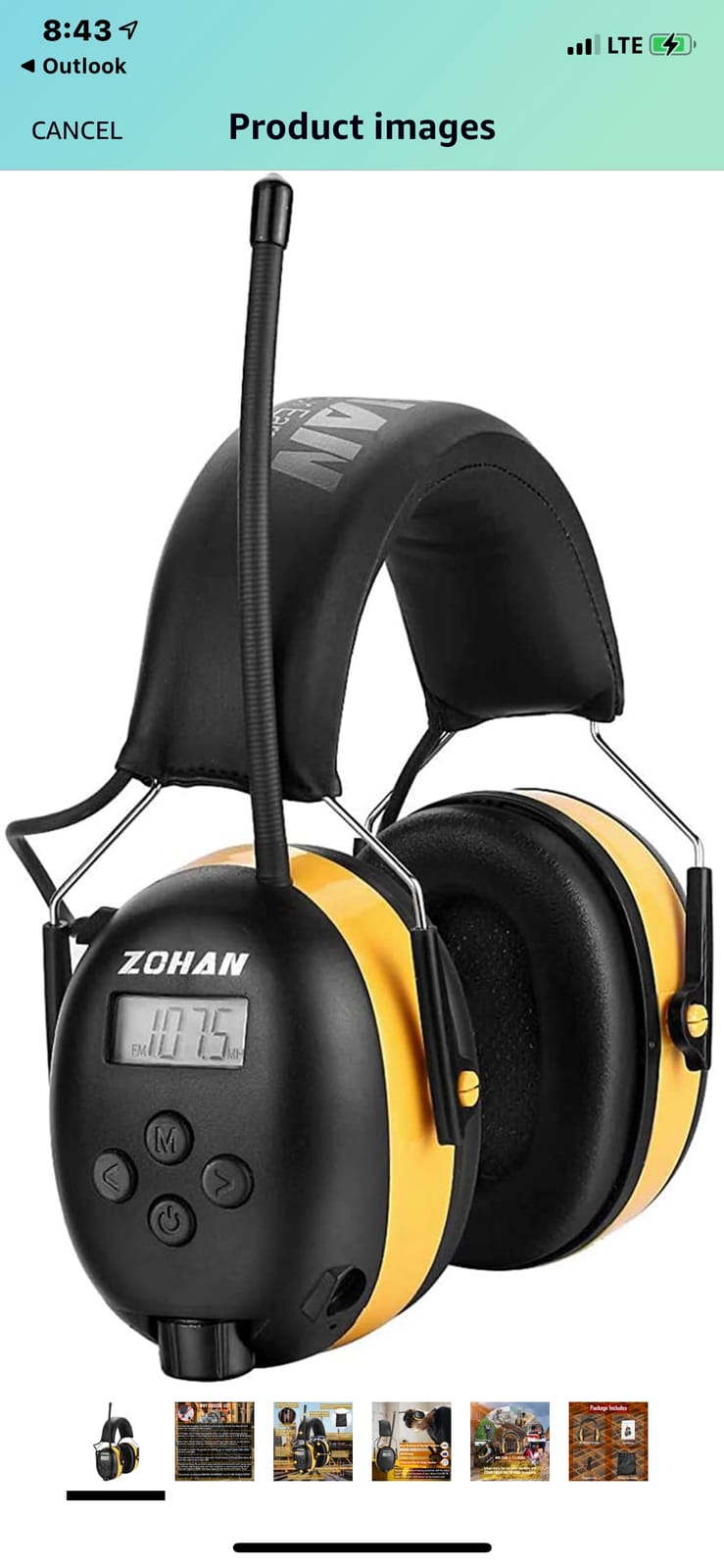
Snap-in replaceable ear cushions are a maintenance feature rather than a comfort feature, and they matter more than they sound. Foam cushions crack, sweat and degrade; being able to pop a new set in extends the life of the muff for years. The volume and tuning controls are reinforced against the kind of button failure that kills electronics in a dusty environment.
Twenty-five decibels of NRR is the weakest protection rating in this roundup, and it shows when the engine is a gas mower rather than a battery one. The unit runs on two AA batteries which are not included, and this variant is radio only, with Bluetooth on a separate model. It also carries a clear premium over a plain passive muff.
Radio versus Bluetooth for outdoor audio
The tradeoff is direct. Radio gives you reliable reception with zero latency and no device, which is what you want when you are climbing a slope away from the house. Bluetooth gives you your own library, podcasts and calls, which is what you want if your mowing is your only quiet hour in the day.
Audio-enabled muffs also tend to carry lower protection ratings than pure passive ones, because the electronics and the thinner shells they need cost decibels. Budget for that tradeoff rather than expecting the same attenuation with added entertainment.
How to use it safely
Keep the volume low enough that you could still hear a shout from a person behind you. Listening at a level that masks the engine reintroduces exactly the exposure you are trying to avoid, and it is the most common mistake people make with any audio-equipped protector.
Also check whether the model you are buying includes the batteries. This one does not, and finding that out in the driveway on the first mowing morning is a bad start. For readers who also want to protect their hearing indoors, our hearing amplifier guide covers that side.
10. PROHEAR 037 Bluetooth Earmuffs – Best Bluetooth Hearing Protection
- Stable Bluetooth 6.0 with an 80 ft range
- Rechargeable battery lasts many mowing seasons
- Soft breathable pads for long sessions
- Raised buttons work with work gloves
- Carrying bag and 3.5 mm cable included
- Bluetooth performance varies by phone
- 30 dB SNR is below dedicated passive muffs
- Electronics add weight and complexity
- Battery degrades with heavy daily charging
This is the model we recommend for anyone whose main objection to earmuffs is that they want to listen to something while they cut. Thirty decibels of SNR protection is real protection, not a token figure, and the Bluetooth 6.0 connection is stable with an 80 foot range, which comfortably covers a mower that drifts away from a pocketed phone.
The 1100 mAh rechargeable lithium battery is rated at up to 120 hours of playtime. Even if you only use it for a few hours a week, charging is a once-a-season event rather than a weekly habit, and reviewers report the battery lasting through many mowing sessions.

Comfort details are unusually well considered for a connected muff: soft breathable ear pads, a padded adjustable headband, and raised control buttons that you can operate with work gloves on. That last detail is small until you try to skip a track with muddy hands while the engine is running. The package includes a 3.5 mm cable, a charging cable, a manual and a black leather bag.
The honest weaknesses: 30 dB SNR is below the dedicated passive muffs here, so you trade a few decibels for audio. Bluetooth 6.0 performance varies somewhat by phone, with some reviewers reporting connectivity complaints on specific devices. Electronics and a battery add weight and complexity compared with a sealed passive design, and a battery that is charged daily on a riding mower will age faster than one that is not.
Getting sound quality and protection at once
The trade is straightforward: any audio-equipped muff gives up some passive attenuation in exchange for speakers and a microphone. Thirty decibels SNR still leaves a gas mower uncomfortably loud at full volume, which is the correct behavior, because a protection device that lets you crank past the noise defeats itself.
Set the volume so a podcast is clearly audible but the engine is still louder than the voice. That balance keeps you in contact with the yard while preserving real attenuation, and it is the habit worth building from the first cut.
Phone compatibility is the real risk
Connected muffs are only as good as their pairing, and the most common review complaint across this category is a specific phone that will not hold a stable connection. Check that your current device is one people report working before you commit.
Keep the 3.5 mm cable in the bag. If the connection fails mid-mow, wired listening is a better fallback than removing the muff, and the cable is already in the box.
11. 3M PELTOR Optime 105 Earmuffs – Best for Workshops and Power Tools
3M H10A Peltor Optime 105 Over the Head Earmuff, Ear Protectors, Hearing Protection, NRR 30 dB
- Highest NRR available in over-head style muffs
- Double-shell design blocks more noise in testing
- Stainless steel band resists bending
- Pressure-distributing pivoting earcups
- A standard choice in professional settings
- Bulkier and heavier than compact folding muffs
- Older-style bulk against newer slim designs
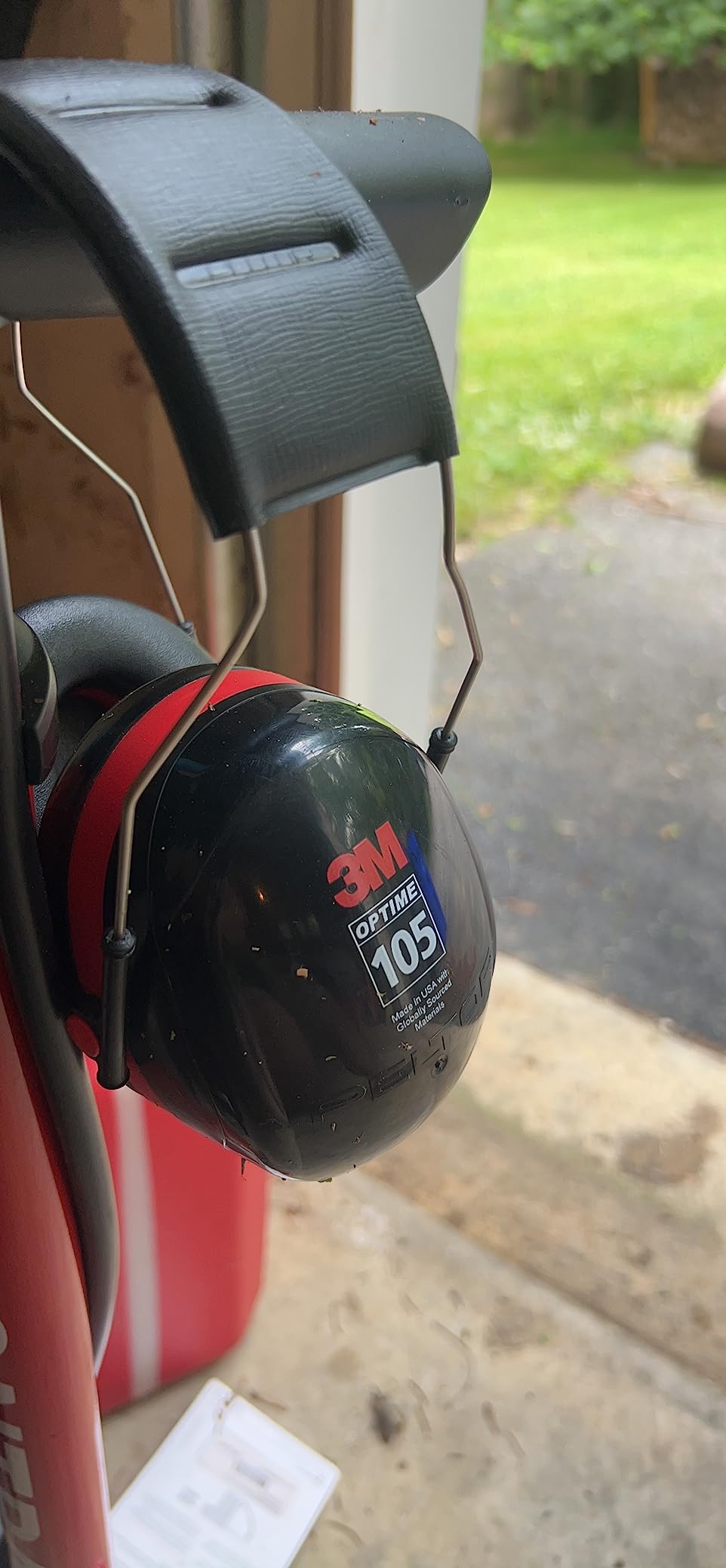
The Optime 105 is the muff that shows up in professional workshops for good reason, and mowing with a gas mower is not a demanding job by comparison. It is rated for effective protection against noise exposures up to 105 dBA, which is the number that matters for someone who also runs sanders, grinders or a table saw.
The double-shell technology is the core of the design, layering two shells to block more than a single-shell cup of the same size. The 30 dB NRR is the highest available in over-the-head style muffs, and the pivoting earcups distribute pressure well enough to stay comfortable through a long session.
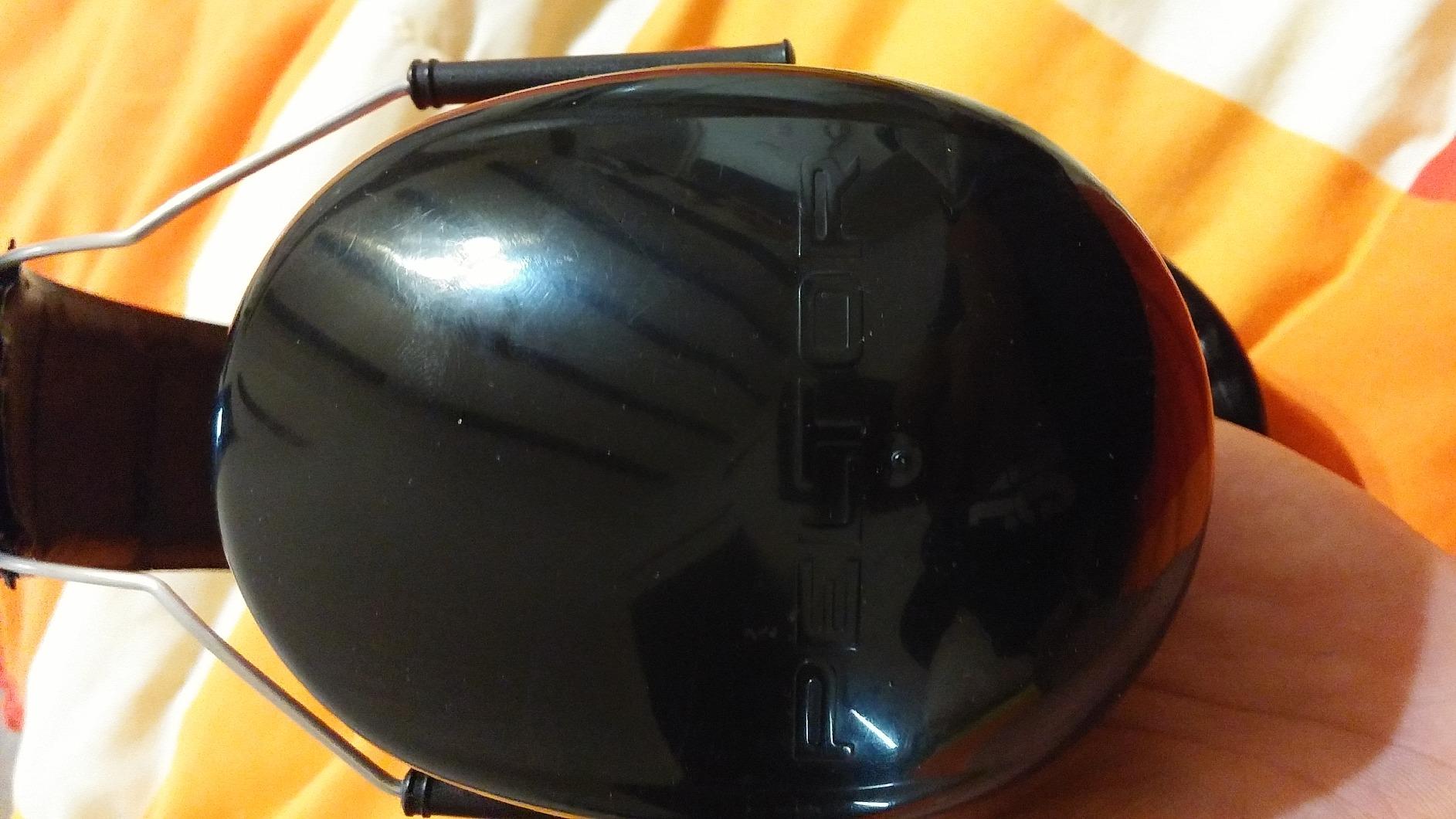
The stainless steel headband is the durability story. Reviewers highlight its resistance to bending and warping as the main strength, and that is exactly the part that fails on cheaper plastic frames after a season in a truck bed. The muff is also E-A-Rfit compatible, so it can be paired with 3M earplugs in a dual-protection setup for the loudest jobs.
The trade-off is consistent and it is size. It is bulkier and heavier than modern compact folding muffs, and reviewers frame that purely as a portability concession rather than a comfort one, with no complaints about protection levels. If your protection lives on a hook in a workshop rather than in a bag you carry to the lawn, that is a trade most people will happily make.
How dual protection changes the math
Wearing an earplug under an earmuff is the standard approach for genuinely loud environments, and this muff is designed to accommodate it through E-A-Rfit compatibility. The combined protection is not simply additive; the muff reduces the level reaching the plug, and the plug attenuates what is left, so the practical gain over the muff alone is meaningful but smaller than the raw numbers suggest.
For mowing, dual protection is overkill unless you are running very loud gas equipment. For a workshop where you are switching between a sander and a grinder, it is the right default and worth the extra step.
When a newer slim muff is the better buy
Choose this one if protection is a fixed installation in your garage, you are sharing protection with power tools, or you want the durability of a steel frame. Choose something slimmer if you need to carry it to the yard every week and store it in a small space.
It is also the choice for anyone who already knows they will still be wearing hearing protection in twenty years, which is the real argument for buying the heavier frame once instead of replacing a light one.
12. Husqvarna Professional Headband Protector – Best for Long-Wear Comfort
Husqvarna Professional Headband Hearing Protectors 25dB(A) NRR, Lightweight Ear Protectors with Padded Headband and Clamshell Design for Hearing Protection, Black
- Supple padding that does not pinch on long sessions
- Strong attenuation for mowers
- trimmers and blowers
- Thumb sliders give a wide fit range
- Plastic shell shrugs off sweat and rain
- Works with in-ear earbuds for music
- Cups can feel tight on larger heads over extended sessions
- 25 dB(A) NRR is lower than high-protection alternatives
- Instructions are not very clear on fine adjustment
Comfort is the entire argument here, and owners who switched from big-box muffs single it out as the decisive difference, reporting no head pain after months of mowing, trimming and blowing. If you have ever taken earmuffs off halfway through a job because of a pressure point, this is the model that solves it.
The headband is lightweight and flexible with supple padding, and the clamshell ear cups provide full coverage without a hard rim pressing on the temple. The side plus-and-minus thumb sliders let you change tension quickly, which is a much finer adjustment than the pin-and-flip mechanisms on cheaper muffs.
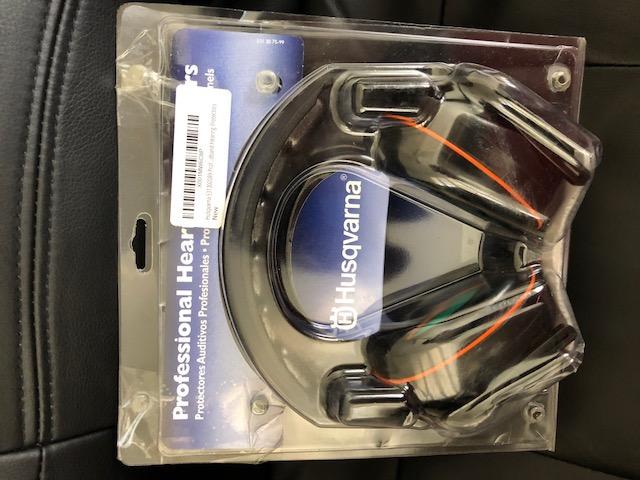
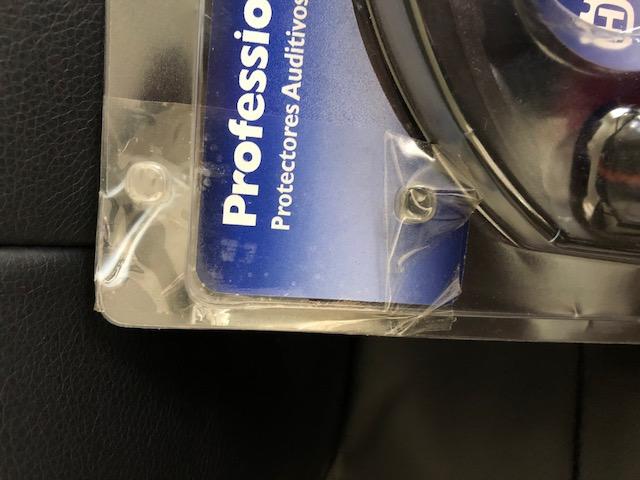
The tough, smooth plastic shell is worth noting for outdoor use: it does not corrode, and it shrugs off sweat and light rain in a way that fabric-covered headbands do not. Reviewers also confirm that the cups have enough clearance to wear ordinary in-ear earbuds underneath for music, which is a low-cost way to add audio without moving to an electronic muff.
At 25 dB(A) NRR the attenuation is at the low end of this list, so it is a companion to a mower rather than a solution for trimmers and chippers. The cups can still feel tight on larger heads over extended sessions, the instructions are vague on fine adjustment, and the design can trap moisture and feel warm in hot weather. One size fits most, with listed sizing for ages across the range.
Comfort over a full afternoon
Head pain from muffs almost always comes from pressure concentration, not from weight. The thumb sliders on this model spread force more evenly and let you back off the tension as you get hot, which is a small adjustment that makes a large difference over three or four hours.
Padding that stays supple rather than hardening is the other half. Hardened headband foam is what makes last year’s muffs unbearable, and it is the component most likely to fail before the shells do.
When to pick a different level of protection
If your yard work includes a string trimmer, hedge trimmer or chipper, step up. Twenty-five decibels will not carry you through a season of trimmer work, and the comfort advantage is not worth an under-protected ear.
For mower-only work on a gas machine, this is a defensible middle ground, especially paired with plugs on the loudest passes. For a battery mower, it is more than sufficient, and you could wear it for years without thinking about it.
What to Look For When Choosing Hearing Protection for Lawn Mowing
Most buying mistakes come down to two things: picking a number instead of a product, and choosing a muff that fights a hat. Here is what actually decides the fit for your lawn.
How noise reduction rating actually works
NRR is a laboratory figure measured with a fit test, not a promise about your lawn. Environmental factors, the shape of your ear canal, how well the seal holds through sweat, and the frequency weighting of the measurement all reduce what you experience. A common rule of thumb is that real protection lands at roughly half the label number once those factors are accounted for.
That rule is why a 33 dB foam plug is more than sufficient for a 95 dB mower, and why a 27 dB slim muff feels under-protected. Work from the difference between your machine and the 85 dB exposure line, then apply the derating rule and add margin. If the math is close, add plugs under the muff rather than shopping for a marginally higher rating.
Also check which standard is being quoted. NRR is the US figure, SNR is the European equivalent and is measured differently, and some products print a dB(A) figure. Compare like with like, or you will be reading a 33 dB SNR product as stronger than a 28 dB NRR product when it is not. If the numbers themselves are hard to interpret, our hearing amplifier guide for the elderly walks through the same standards from the other side of the problem.
In-ear versus over-ear
In-ear plugs win on heat, on staying put under a hat, and on being invisible. They also block all situational awareness and take technique to fit correctly. Over-ear muffs win on consistent seal without practice, on not handling dirty objects, and on not caring that everyone can see you are wearing them.
The seasonal pattern is common enough to plan around: muffs in spring and fall, plugs in the heat of summer. Buying one of each is the most practical answer, and a 10-pack of disposable plugs plus one good muff covers every condition of the year.
Gas push or riding mower, weekly: an over-ear muff at 30 dB NRR or higher, because the seal is consistent without fit technique and it handles sweat better than plugs.
Full sun with no shade in summer: reusable or disposable foam plugs, since there is no heat build-up around the ear and they work under any hat.
Trimmers, blowers and chippers: 33 dB plugs, or plugs worn under a muff, because these tools are louder than most mowers and need more attenuation.
You want music or podcasts: a Bluetooth or radio earmuff, accepting some loss of passive attenuation in exchange for audio.
Family or a crew on the property: high-visibility foam plugs, so other people can see that you cannot hear them coming.
Fitting under a sun hat and sunglasses
This is the single most repeated complaint in lawn forums and almost no competitor addresses it systematically, so here is the practical answer. A baseball cap usually works with a low-profile muff because the cups sit behind the brim. A wide-brimmed sun hat generally does not, because the brim is wider than any cup and the headband has to sit on top of it, opening the seal.
Three workable solutions. First, buy a muff with a genuinely low profile and wear the hat first, then the muff over the crown only. Second, use a clip-on or convertible sun hat that folds back so the brim sits inside the muff. Third, accept plugs for the sunniest hours and use a neck gaiter or a wide-brim hat for shade, which is why the plug-plus-hat combination is the summer default for many people.
Sunglasses need their own check. Temple arms that run past the ear can break the seal of a shallow cup. Press the muff on with your glasses in and speak at normal volume: if you can hear yourself clearly, the seal is compromised and you need a deeper cup or a band-style protector that sits below the ear.
Passive versus active noise cancellation, and why AirPods are not protection
Passive protection physically blocks sound with dense material. Active and electronic protection amplify safe low-level sounds, or generate an opposing waveform, so you can still hear a person while the engine is shut down. The Walker’s Razor Slim Electronic on this list uses the first style of electronic approach, and it is the reason it feels less isolating than a sealed muff.
Consumer noise-cancelling earbuds such as AirPods or Beats are not hearing protection. They are not NRR-rated or tested to any occupational standard, they are not fitted to seal the canal, and their noise cancellation is tuned for steady low-frequency rumble like aircraft cabins rather than the broadband, high-frequency character of a mower engine. They will not stop a mower from damaging your hearing, and treating them as protection is the most dangerous misconception in this topic.
What they are genuinely good for is audio. Wearing ordinary earbuds under a rated muff gives you music without giving up protection, provided the volume stays low enough that the engine is still louder than the audio.
Protection for trimmers, blowers and chippers
A mower is rarely the loudest thing in your yard. A gas string trimmer, a backpack leaf blower, a hedge trimmer and a wood chipper all produce more, and a blower running at your hip is easy to underestimate until you are using it for twenty minutes.
Set your targets by tool rather than by habit. Twenty-five dB or higher covers electric and reel mowers. Thirty dB or higher covers gas push and riding mowers. Thirty-three dB or higher covers trimmers, hedge trimmers, blowers and chippers. If your property has any of the second group, buy for the second group, not the first.
For a seasonal view of the same idea, a longer piece on OTC hearing aids and hearing loss is worth reading if you are already noticing symptoms rather than trying to prevent them.
Frequently Asked Questions
Should you wear ear protection when lawn mowing?
Yes, if you run any gas-powered equipment. A gas push or riding mower produces roughly 90 to 100 dB, and exposure above 85 dB causes permanent damage over time. Electric and reel mowers are much quieter, often around 70 dB, so protection is optional for them.
What are the best headphones to wear while cutting grass?
Rated Bluetooth hearing protectors are the best option, because they combine an NRR or SNR figure with speakers and a microphone. Our top Bluetooth pick is the PROHEAR 037 with 30 dB SNR and an 80 ft range. Keep the volume low enough that the mower is still louder than the audio.
Will noise cancelling headphones block a lawn mower?
No. Consumer noise-cancelling earbuds are not NRR-rated and are not fitted to seal the ear canal, and their cancellation targets low-frequency rumble rather than the broadband sound of an engine. They will not prevent hearing damage from a mower. Use certified hearing protection instead.
What is the best way to listen to music while cutting grass?
Use certified hearing protection with audio built in, and keep the volume low. A good sequence is to choose rated protection, set the volume so the engine remains louder than the audio, take breaks to check your hearing, and remove the protection completely once the machine is off.
What is the highest NRR for ear muffs?
The highest rating in our lineup is the DECIBEL DEFENSE at 37 dB NRR, certified to ANSI S3.19 and CE EN 352-1. It is fully passive, so there are no batteries, and the trade-off is bulk. For a mower alone, 30 dB is usually sufficient.
Which is better, earmuffs or earplugs for lawn mowing?
Muffs give a consistent seal without practice and are better for gas equipment. Plugs are cooler in summer, fit under any hat and cost less, but require correct insertion for a full seal. Many people use both, switching to plugs in the hottest months.
How long does it take for a lawn mower to damage your ears?
A gas mower sits around 90 to 100 dB, above the 85 dB line for prolonged exposure, and the sound is repetitive with almost no quiet breaks. A single session is unlikely to cause noticeable harm, but the same exposure repeated weekly across a season is how most mowing-related hearing damage develops.
Do electric lawn mowers require hearing protection?
Generally no. Electric and reel mowers run around 70 dB, which is below the 85 dB threshold for prolonged exposure. Protection becomes necessary again if you also run a gas trimmer, blower or chainsaw on the same property, since those tools are louder than the mower.
The Best Hearing Protection for Lawn Mowing in 2026
The best hearing protection for lawn mowing is not a single product, it is a match between your machine and your tolerance for heat and isolation. For most people running a gas mower, the Walker’s Razor Slim Electronic is the pick we would start with, because it protects without isolating you from the people and the property around you.
For maximum attenuation with nothing in the way, the Mack’s Ultra Soft foam plugs at 33 dB are the simplest, cheapest and most consistently recommended option in the entire roundup. If you want audio while you cut, the PROHEAR 037 covers the Bluetooth case, and the ZOHAN radio muff is the answer if you would rather leave the phone at home.
Whichever you choose, buy it before you need it and wear it on every cut. Hearing damage from mowing is cumulative and silent, and the only reliable fix is prevention. Once ringing starts, it rarely stops on its own.