
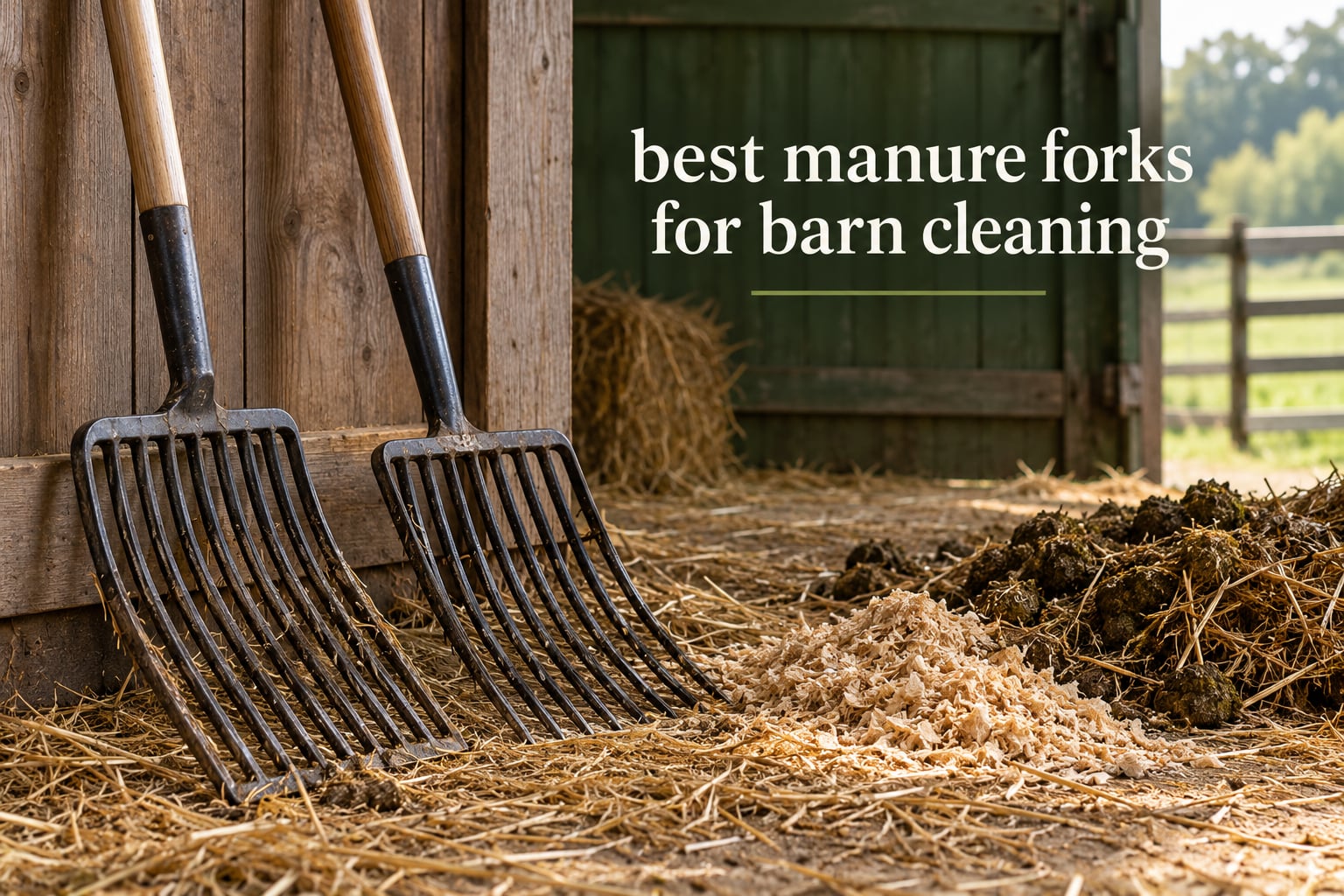
A manure fork is the tool that decides whether barn cleaning takes five minutes or turns into an afternoon of bending, spilling clean bedding into the muck pile, and stacking snapped tines in the corner. If you muck out one or two stalls, run a small backyard operation, or work through a full rotation at a boarding facility, the difference between a good fork and a bad one shows up in your back by the end of the first week.
We compared ten forks built for this job, weighing the three variables that decide whether a manure fork works: head material, tine geometry, and how the handle connects to the head. Along the way we flagged the thing that trips up most buyers, which is whether the listing actually includes a handle or is a head-only replacement.
This guide is written for anyone doing daily mucking out, from a two-horse backyard barn to a multi-worker boarding facility. It covers wood shavings, straw, pellets, sawdust, and compost work, and it explains poly versus metal so you can stop guessing.
Table of Contents
Manure Fork vs Pitchfork: What Is the Difference?
A pitchfork has many thin, closely spaced tines meant to lift and scatter loose material like hay, leaves, or garden soil. A manure fork has fewer, thicker, wider-spaced or angled tines built to lift wet, heavy waste out of a stall while letting clean bedding sift back through the gaps. That single difference in tine thickness and angle is what lets one tool handle a soaked bed of shavings and the other sift dry hay.
Tine thickness: manure fork tines are noticeably thicker and stiffer, because they carry wet weight rather than dry volume.
Tine angle: manure fork tines are usually angled or bent so material is directed toward the center of the head as you lift, cutting down on spillage.
Tine spacing: pitchfork gaps are tight for maximum lift. Manure fork gaps sit around three-quarter inch to one inch so clean bedding can drop back into the stall.
Intended load: a pitchfork moves air. A manure fork moves a wet, compacted load that would double the weight if you picked it up by hand.
A broadfork is a third thing again. It is a heavy tool for breaking up compacted soil, and it is not a substitute for a stall fork. Several of the general-purpose forks below are technically sold as pitchforks, but their tine geometry puts them squarely in manure fork territory.
Quick Picks for the Best Manure Forks for Barn Cleaning
Best overall: the Nohovu 5 Tine Pitchfork. A carbon steel head and 58 inch fiberglass handle hit the sweet spot between capacity and a 3.88 pound weight that will not wreck your shoulders.
Best value: the Truper TruTough Ensilage Fork. Ten closely spaced tines with a wood handle and a D-grip.
Best for straw and heavy bedding: the Truper Tru Tough 10-Tine Fork. A forged steel head on a 54 inch ash handle with a reinforced ferrule and a 10 year replacement warranty.
Best for back comfort: the Little Giant DuraFork. At 2.1 pounds with a pre-bent ergonomic handle and flexible angled polycarbonate tines, it is the lightest complete fork here.
Best for shared barns: the KOLEIYA 5-Tine Fork. The high-visibility orange handle is easy to spot in tall grass and grass-stained shavings.
Once you have settled on a fork, hauling the muck pile out is the next job. Our guide to the best manure spreaders for small farms covers the equipment that finishes the cleanup.
Top 3 Manure Forks Compared in 2026

Nohovu 5 Tine Pitchfork
- Carbon steel head
- Fiberglass handle
- 58 inch overall
- 3.88 pound weight

Little Giant DuraFork
- Polycarbonate head
- Angled tines
- 13.125 by 15.125 inch head
- 2.1 pounds

Best Manure Forks for Barn Cleaning (October 2026)
| Product | Specifications | Action |
|---|---|---|
| Nohovu 5 Tine Pitchfork |
|
Check Latest Price |
| Truper TruTough Ensilage Fork |
|
Check Latest Price |
 Truper TruPro Garden Manure Fork Truper TruPro Garden Manure Fork |
|
Check Latest Price |
 KOLEIYA 5-Tine Pitchfork KOLEIYA 5-Tine Pitchfork |
|
Check Latest Price |
 Truper Tru Tough 10-Tine Fork Truper Tru Tough 10-Tine Fork |
|
Check Latest Price |
| Little Giant DuraFork |
|
Check Latest Price |
 True Temper 6-Tine Fork True Temper 6-Tine Fork |
|
Check Latest Price |
 Tough 1 Pro Pick Rounded Stall Fork Tough 1 Pro Pick Rounded Stall Fork |
|
Check Latest Price |
 COSITA 10-Tine Pitch Fork COSITA 10-Tine Pitch Fork |
|
Check Latest Price |
 Bully Tools Stall Fork Bully Tools Stall Fork |
|
Check Latest Price |
1. Nohovu 5 Tine Pitchfork: Best Overall Manure Fork for Barn Cleaning
Nohovu 5 Tine Pitchfork for Gardening, Heavy Duty Pitchfork with Fiberglass Handle, Garden Fork for Mulching, 58 Inches
- Sturdy carbon steel head with rust-resistant coating
- Lightweight yet durable fiberglass handle
- 58 inch length reduces bending angle and back stress
- Wide 8.26 inch head moves more hay per pass
- Non-slip grips stay secure with sweaty palms
- Tines are broad and not tempered
- making the fork heavy for fine material
- Tines can catch grass and light debris rather than lifting cleanly
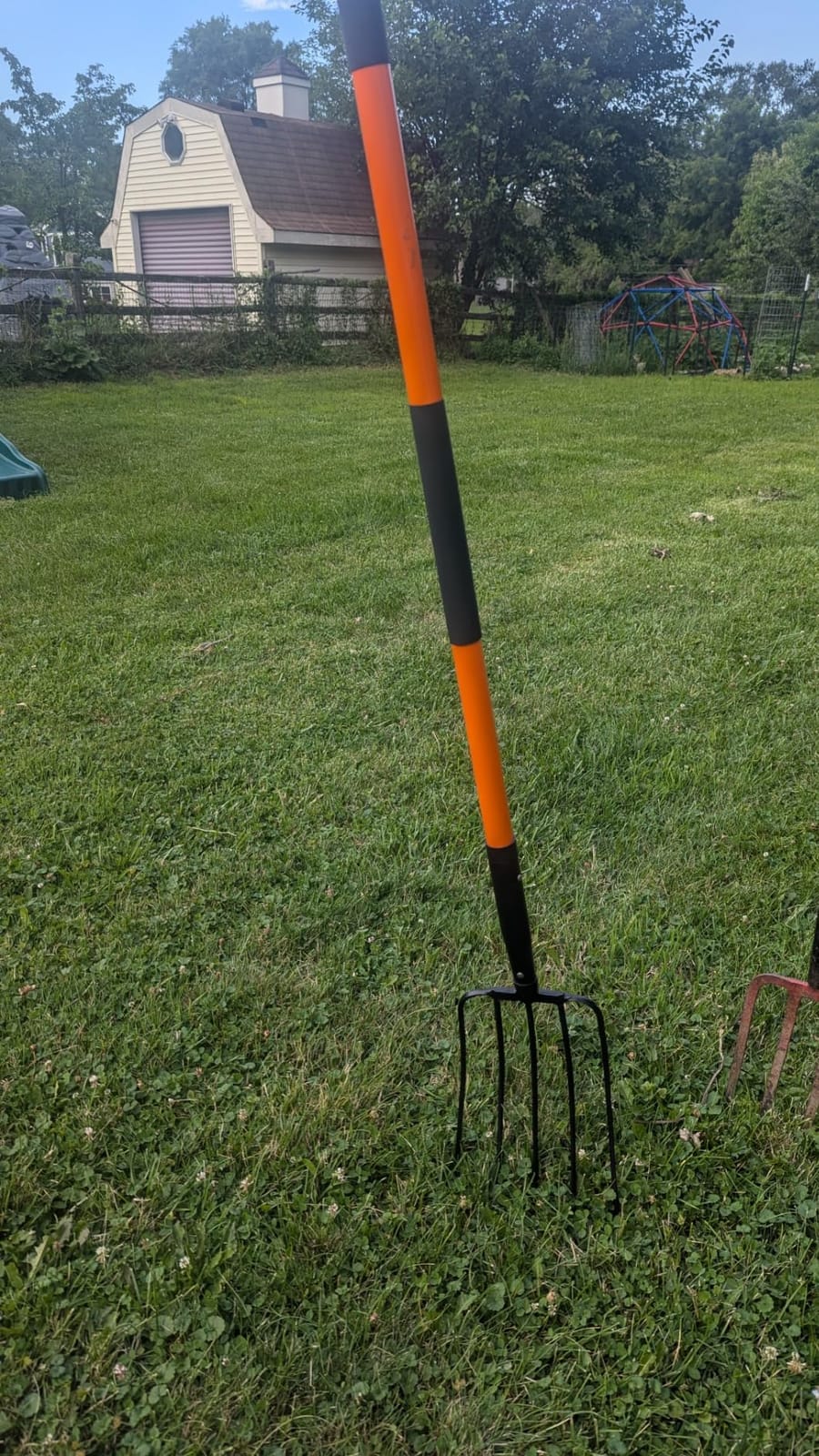
This is a complete fork, not a replacement head, so it works the day it arrives. The carbon steel head carries a rust-resistant coating and the thickened fiberglass handle measures 58 inches end to end, which puts the working end of the tines at roughly hip height for a person of average stature.
Over a full stall rotation that length is the difference between a shallow stoop and a proper lift. Reviewers consistently call out the build quality and value, describing it as sturdy and well made, and the 4.7 rating across 314 reviews reflects that.
The 8.26 inch head width is wider than most five-tine forks, so each pass carries a meaningful scoop of hay and half-clean bedding. Two non-slip grips at the ends help when your hands are wet, which in a real barn they always are.
The tradeoff is that these tines are broad and untempered. That means the fork feels heavier than the listed 3.88 pounds when it is loaded with damp material, and it catches grass and light debris instead of lifting it cleanly.
What it handles well
It moves hay, mulch, and half-dry bedding efficiently across paddocks and outdoor runs. The 58 inch length also means fewer trips to the wheelbarrow, since you can lift higher before your lower back takes over.
If your barn is shavings-based and you also turn compost or spread mulch, this one tool covers both jobs. Reviewers note it works far better than a shovel on those tasks.
Where it falls short
It is not the right pick for fine, damp, heavy material like a soaked straw bed, where broad untempered tines struggle to penetrate packed waste. If your stalls are packed every morning, a narrower forged head with more tines will serve you better.
The 58 inch length also suits taller users more than shorter ones. If you are under five foot six, you will be working at a crouch no matter how good the fork is.
2. Truper TruTough Ensilage Fork: Best Value Bedding Fork
- 10 closely spaced tines capture manure and bedding efficiently
- Wood handle with D-grip gives secure hold and control
- TruTough construction built for routine farm and outdoor work
- 30 inch handle is shorter than most barn and stable forks
- Wide 47 inch listed dimensions make it bulkier to store and maneuver
Ten closely spaced tines is the number that makes this fork worth a look for daily stall cleaning. That spacing traps manure chunks and road apples instead of letting them fall through, so you spend less time going back for the pieces you dropped.
The TruTough construction is aimed squarely at routine farm and outdoor work, and 81 percent of its 320 ratings are five stars. It is the kind of fork a barn hand picks up without thinking about it.
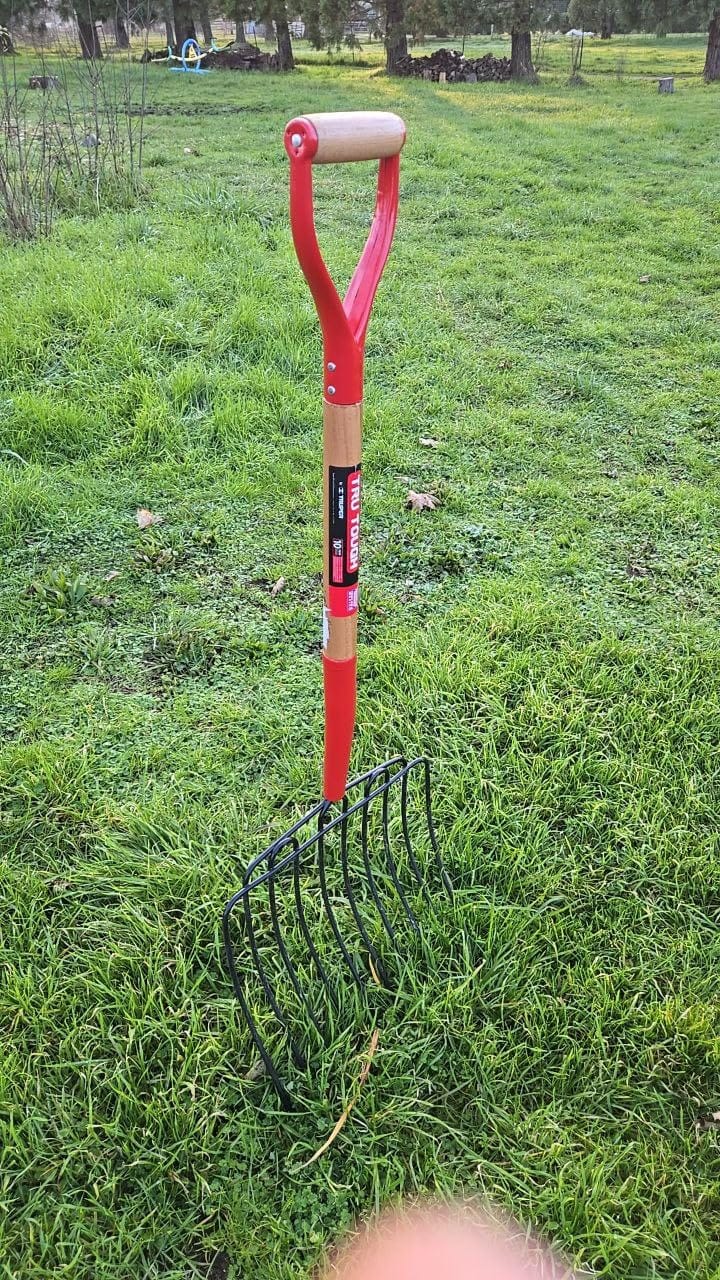
The wood handle with a poly D-grip gives you a secure two-handed hold, and wood damps vibration better than a bare steel shaft over a long session. That matters when you are on your fourth stall of the morning.
Be aware of the 30 inch handle. That is short for stall work, and it will put you at a steeper bend than the 54 and 58 inch forks here. It is genuinely a bedding and ensilage fork that has been adapted for barns.
What it handles well
Straw bedding, hay, and general material handling are its home ground. If you are moving large volumes of loose material rather than digging into packed waste, ten tines at this weight get the job done fast.
At 5.5 pounds it is one of the heavier forks in this roundup, so it is a better fit for users who have height and want capacity over all-day lightness.
Where it falls short
The short handle is the main drawback for anyone mucking deep stalls. You will be bending at the waist, and over a full rotation that adds up to real lower back fatigue.
The listed 47 inch overall dimensions also make it bulkier to store and maneuver than the narrow forks, which can be awkward in a tight stall corner.
3. Truper TruPro Garden Manure Fork: Best for Compost and Mulch
Truper TruPro Garden Manure Fork, 5 Tines, 50-Inch Fiberglass Handle with 9-Inch Grip, 9-Inch Tine Width – Pitchfork for Compost – Broadfork for Gardening (Model 30323)
- Beefy fiberglass handle shows no flex under heavy loads
- Forged tines larger than needed for strength
- Works far better than a shovel on mulch and compost piles
- Close tine spacing lifts material with less waste
- Tine spacing can catch larger sticks and debris
- Some buyers report quality inconsistency on newer production runs
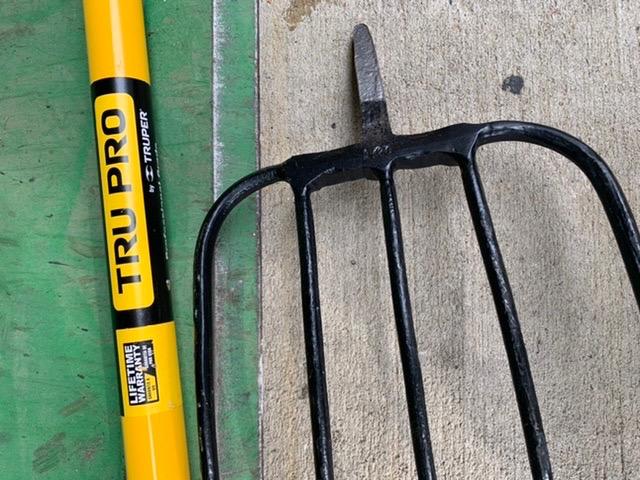
This is the compost and mulch specialist of the group, and it earns the label. The 9 inch tine width picks up more loose material per pass than a narrow garden fork, and reviewers with long-term ownership describe it moving mulch, wood chips, and wet barn material with no flex in handle or tines.
The 50 inch fiberglass handle with a 9 inch cushion grip is a well-balanced combination. It is long enough to keep your back reasonably straight without becoming unwieldy in a compost pile.
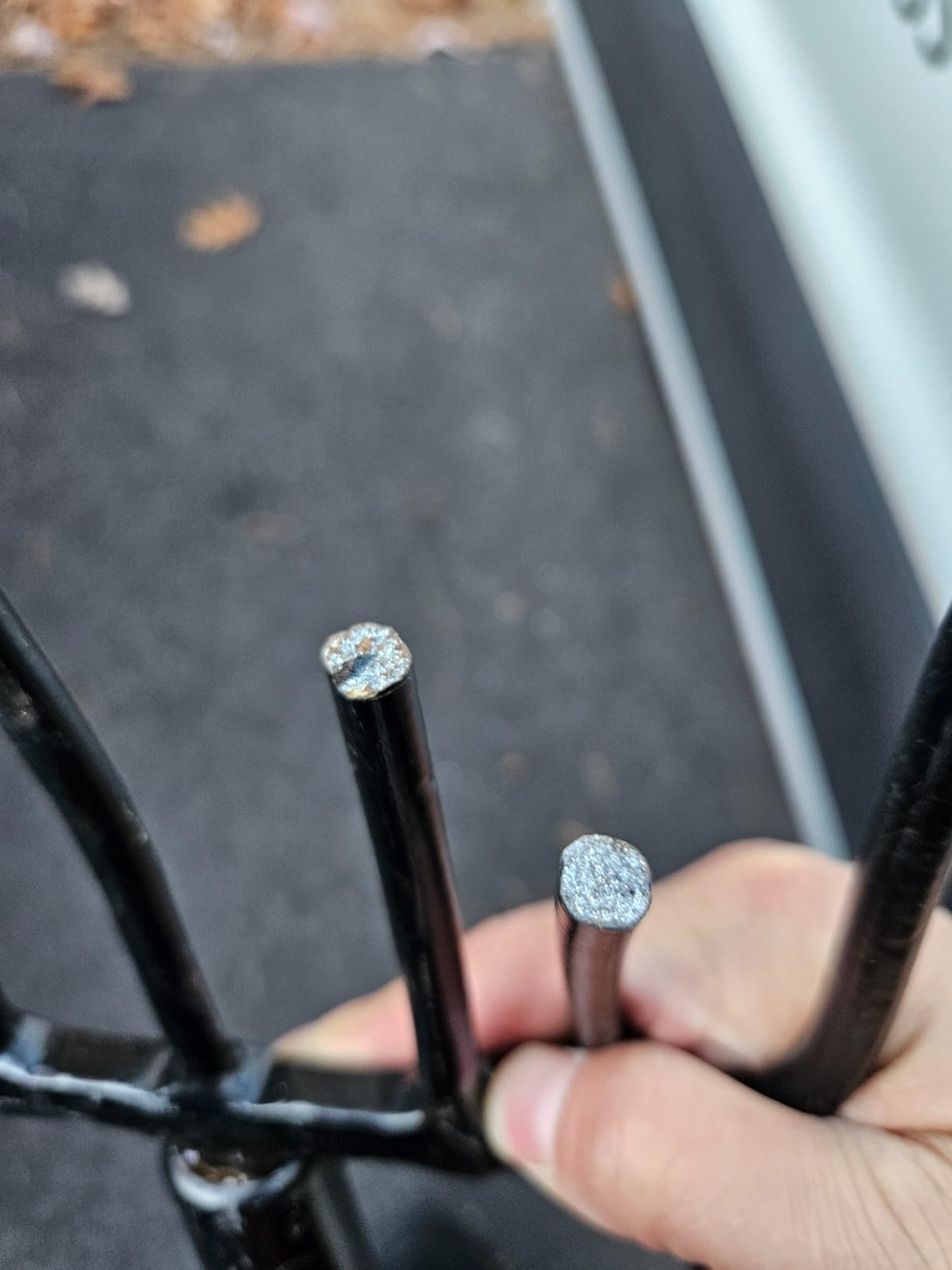
The alloy steel head with forged tines gives you strength well beyond what a compost turn requires. Several owners note the tines are larger than they strictly need to be, which is a good problem to have in a barn.
Two things to know before you buy. The tine spacing can catch larger sticks and debris, so expect to pick those out of a mulch pile. And a small number of buyers report quality inconsistency on newer production runs.
What it handles well
Turning a compost pile is where this fork is at its best. It also moves wet bedding out of a stall with enough efficiency that most barns would use it as a daily driver rather than a dedicated compost tool.
If you already handle bark, mulch, and wood chips, this covers compost and stalls with one tool. That dual use is where the value shows up.
Where it falls short
It is not the pick for straw-bedded stalls full of long fibrous stems. The tight spacing that helps with compost will trap sticks and slow you down when the material is coarse.
The 4.4 rating across 359 reviews reflects solid long-term satisfaction with a small tail of complaints. Check the tines and handle joint carefully when it arrives, since quality control is not perfectly even.
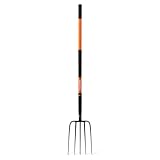
4. KOLEIYA 5-Tine Pitchfork: Best for Shared Barns and Visibility
KOLEIYA 5-Tine Pitchfork for Gardening, 57-Inch Heavy Duty Garden Fork with Orange Fiberglass Handle for Compost, Mulch and Manure
- Forged manganese steel tines resist bending under full load
- Double-riveted head-to-handle joint does not loosen
- High-visibility orange handle is easy to find in grass
- 3.5-pound weight reduces fatigue over long sessions
- Five tines hold less per pass than wide 10-tine forks
- Fiberglass handle can flex under very heavy loads
In a barn where several people share tools, visibility matters more than most buyers expect. This one has an orange fiberglass handle that is genuinely easy to spot in tall grass, in a shavings bay, or lying against a fence line, which keeps it from going missing between workers.
The double-riveted joint between head and handle is the detail that matters most here. Head loosening at the connection is one of the top failure complaints across owner reports, and a riveted joint resists that in a way a simple socket does not.
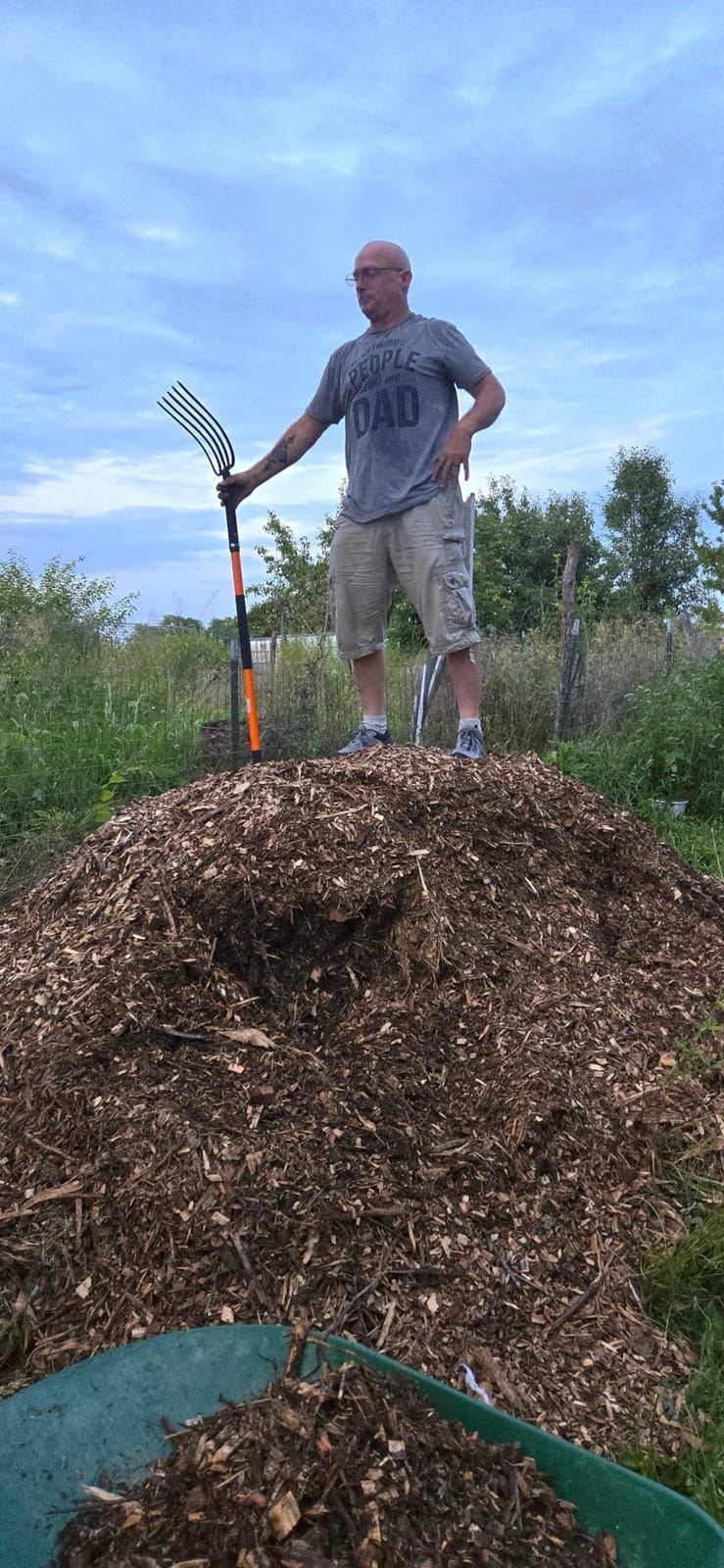
At 3.5 pounds it is one of the lighter complete forks in this roundup, and the weight is well distributed. Reviewers highlight the balanced handling alongside the durability of the forged head, with 80 percent five-star ratings across 272 reviews.
The conical solid tines are forged manganese steel, which resists bending under full load. That is a real advantage if you hit frozen ground or packed bedding.
What it handles well
Compost turning, mulch, soil turning, and general debris are all within its comfort zone. It also does a solid job in a garden bed or around the yard where you want something light.
For multi-worker barns, the color plus the riveted joint make this the lowest-friction pick on the list. Tools that get found and tools that stay tight are worth a lot in a shared space.
Where it falls short
Five tines means less per pass than the wide 10-tine forks. If you are moving large volumes of loose hay or mulch, you will need more passes.
The fiberglass handle can flex under very heavy loads. That is fine for normal mucking and mulch work, but if you routinely lever frozen or packed material, expect some give.
5. Truper Tru Tough 10-Tine Fork: Best for Straw and Heavy Bedding
Truper Tru Tough 10-Tine Manure and Bedding Fork, 54-Inch Premium Ash Wood Handle, Forged Steel Head, Heavy-Duty Agricultural & Stable Tool (Model BPJ-10L / 30331)
- Closely spaced tines keep road apples and manure chunks in the fork
- Forged steel head survives daily stable and barn work
- Long ash handle gives good leverage and balance
- Owners with 4+ stalls report it never bends and speeds up mucking
- Heavier than plastic-tined forks
- which some users find tiring
- Some tine gaps still let small bedding particles fall through
- 54 inch handle is too long for shorter users
- One reviewer reported a much shorter handle than the advertised length
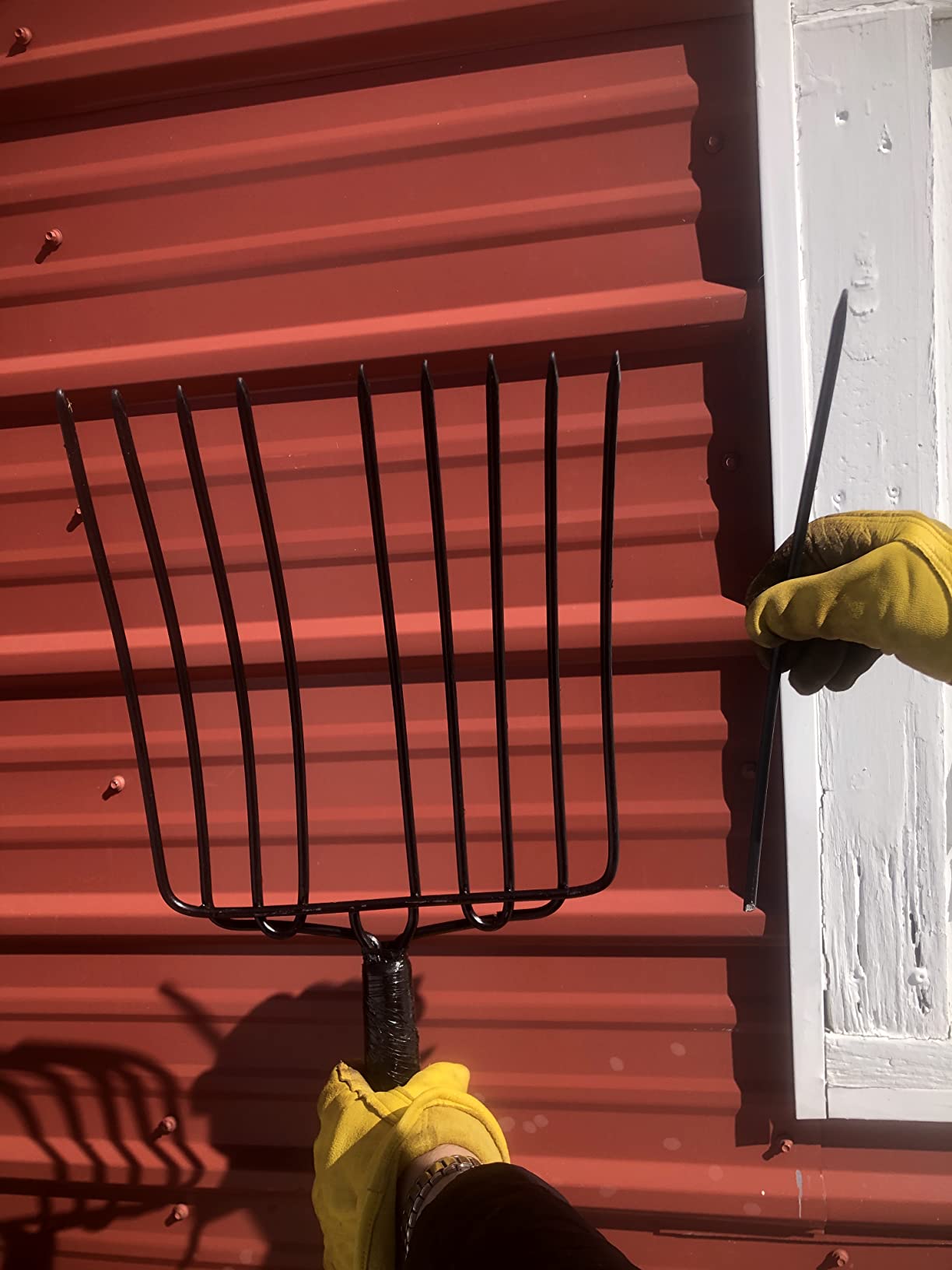
This is the one we would call the barn workhorse. The forged steel head on a 54 inch premium North American ash handle, joined by a reinforced steel ferrule, is a combination that equestrian owners consistently describe as a daily-use barn tool rather than a garden prop.
Owners running four or more stalls report it never bends and that it visibly speeds up mucking. The 10 year replacement warranty backs up a build that is meant for years, not seasons.
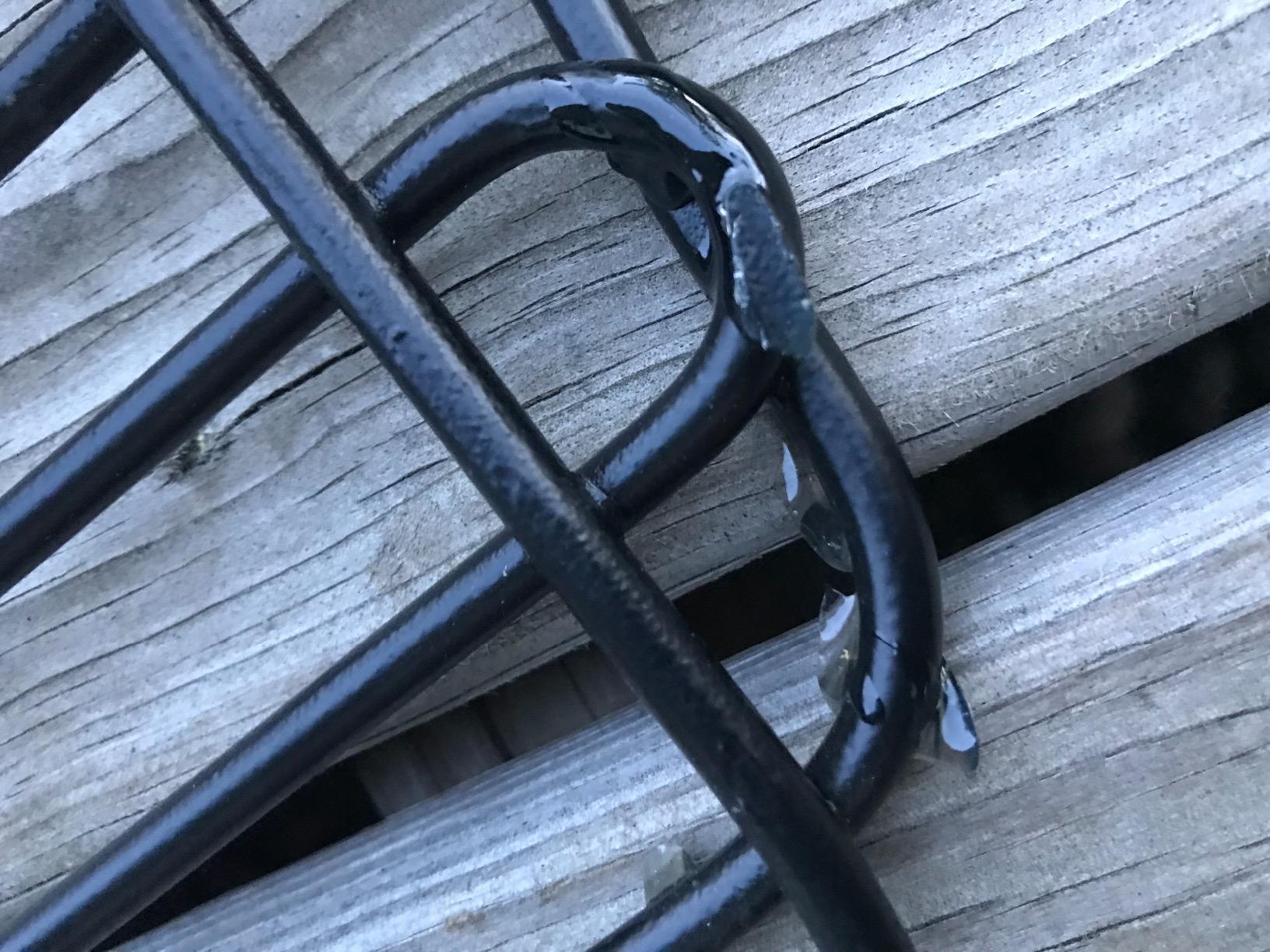
The closely spaced forged tines are the reason it performs on straw. Fine particles are held rather than sifting into the muck pile, so you keep the bedding you paid for.
Ash is worth a note on its own. It is a hardwood that absorbs vibration better than a solid steel shaft, which takes the sting out of a full morning of loading.
What it handles well
Straw bedding, heavy packed waste, and multi-stall rotation are all its strength. It is also the fork we would pick for a facility with several workers, since the finish is noticeably better than a big-box store fork.
If your barn is unheated and your winters are hard, a rigid steel fork holds up in freezing conditions where cheaper plastic heads crack.
Where it falls short
It is heavier than plastic-tined forks, and some users find that tiring over a long rotation. If you are smaller or shorter, the 54 inch handle forces you into a stoop.
Some tine gaps still let small bedding particles fall through, and one reviewer reported receiving a handle shorter than advertised. Check the length on arrival if you are ordering specifically for height.
6. Little Giant DuraFork: Best for Back Comfort on Daily Mucking
Little Giant DuraFork Pitch Fork (Red) Durable Polycarbonate Stable Fork with Angled Tines w/Ergonomic Handle (Item No. PDFERED)
- Very light at 2.1 pounds
- easy on the back
- Angled tines reduce spilling and mess
- Polycarbonate flexes rather than snapping on frozen or packed material
- Ergonomic pre-bent handle reduces strain
- Polycarbonate tines are not as stiff as forged steel
- Tines lose some bite once wet material dries onto them
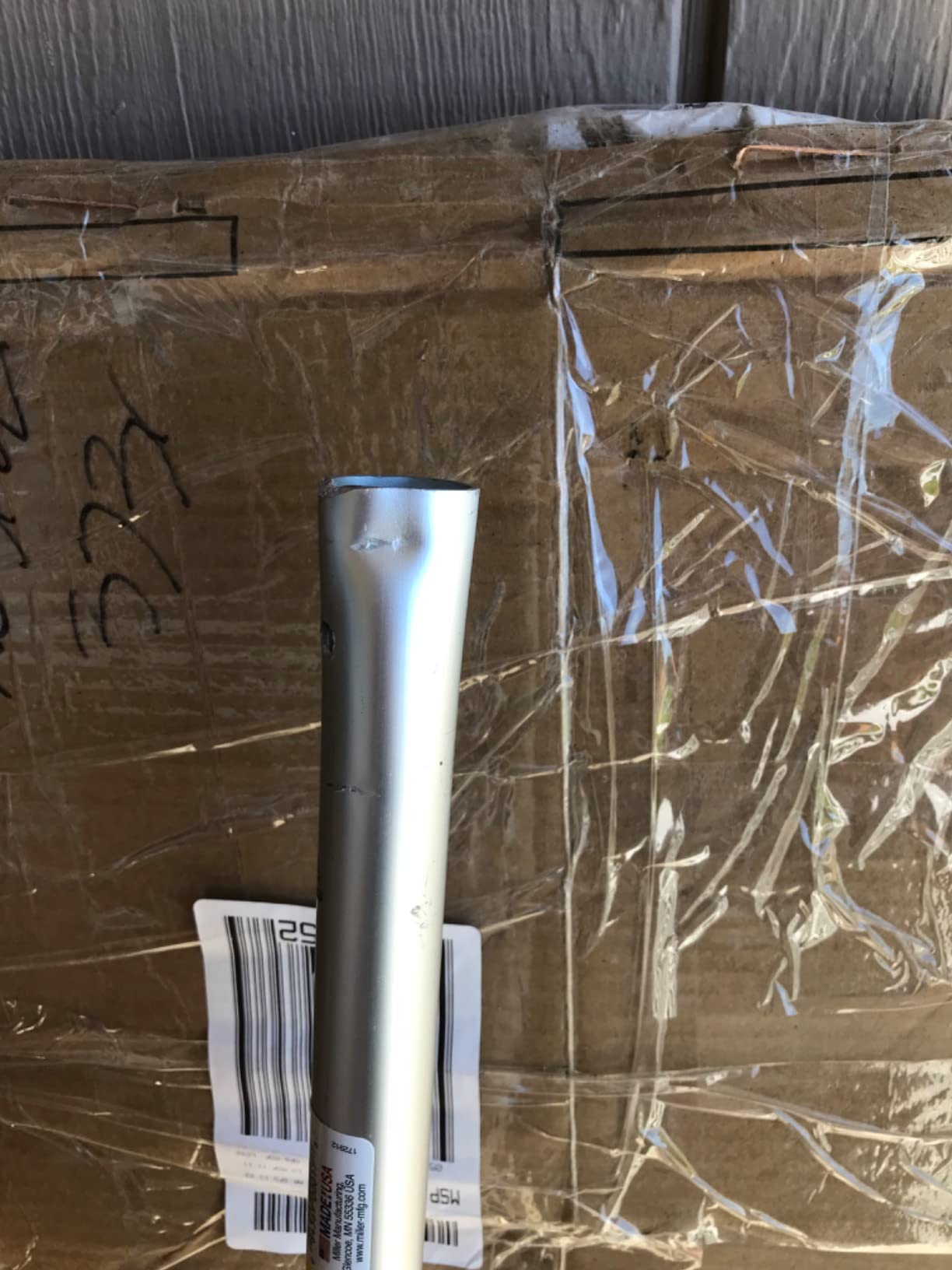
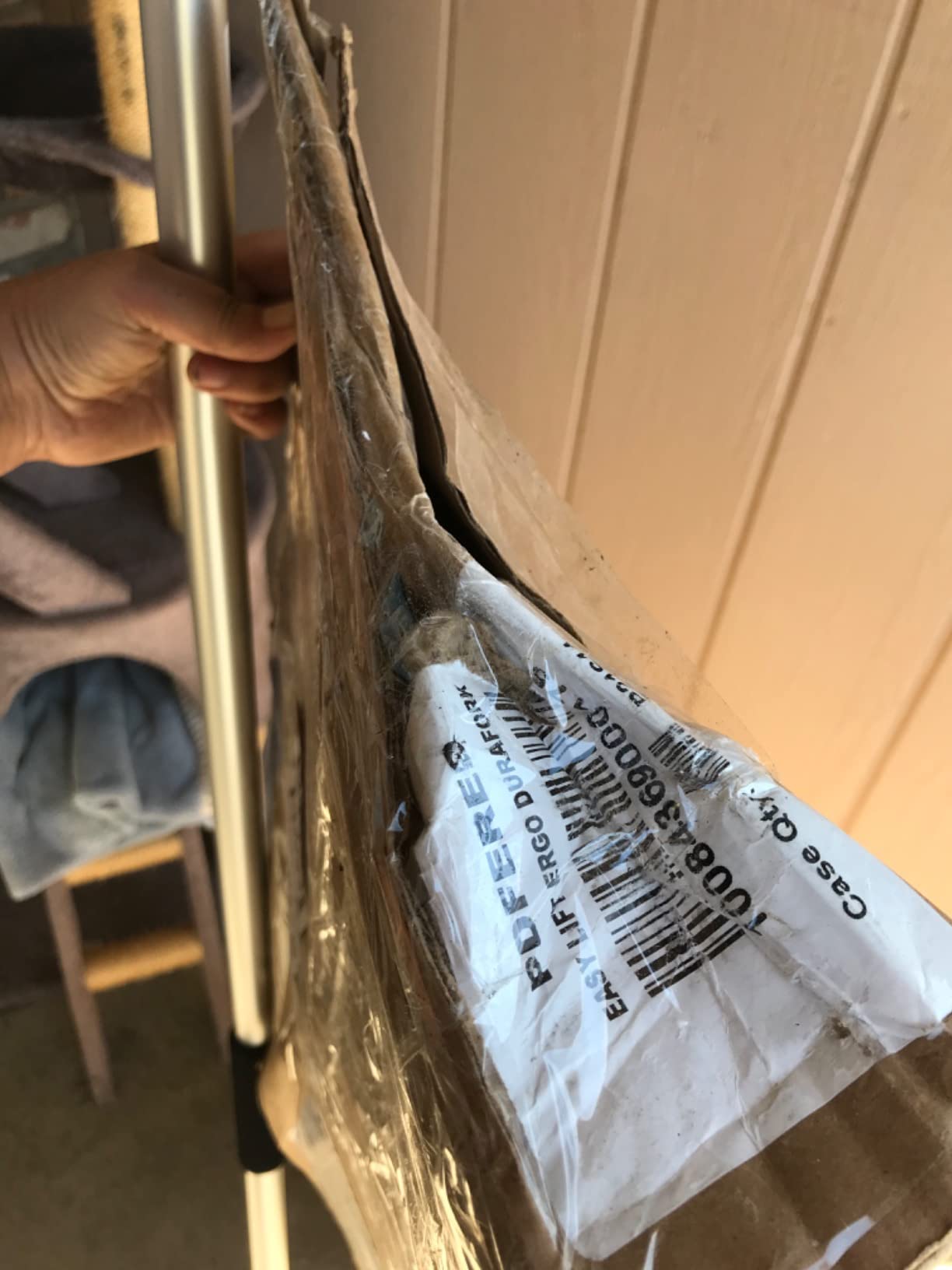
At 2.1 pounds it is one of the lightest complete forks here, and for daily mucking that lightness is the whole argument. Roughly a full pound less than the mid-weight steel forks means less arm fatigue across ten stalls, and that is the difference between finishing a rotation upright and finishing it bent over a wheelbarrow.
The pre-bent ergonomic handle is designed to reduce back strain rather than simply hold the head. Combined with the angled tines that keep material in the fork, it changes how the tool feels over a full morning.
The angled tines act as containment walls, directing material toward the center of the head as you lift. Buyers consistently point to less spilling and less mess, which in a stall means less bedding going into the pile.
Polycarbonate is the reason it survives contact with frozen or packed material. It flexes under load instead of snapping, so hitting a frozen clump bends the tine and springs back rather than ending the fork.
What it handles well
Stable cleanup with poly bedding, and any barn where the person doing the work has a back that complains. It is also a good choice for a younger worker or anyone who does not want a heavy steel tool in their hands.
Its large 13.125 by 15.125 inch head gives it real capacity for a plastic fork. 86 percent of its 198 ratings are five stars.
Where it falls short
Polycarbonate tines are not as stiff as forged steel. Under sustained heavy load, or in frozen concrete-hard bedding, a steel fork simply out-muscles it.
The angled tines also flex slightly as they flex back, so a very deep scoop in wet packed material feels softer than a rigid steel grab. That softness is the point for a daily user, but it is a compromise if you routinely dig into hard waste.
7. True Temper 6-Tine Fork: Best for Mulch, Pine Straw and Soil
True Temper 6-Tine Steel Manure Fork Pitchfork with Hardwood Handle, 48 in., for Transferring Manure, Mulch with Cushion Grip
- Sharp oval tines cut through mulch
- pine straw and clay soil
- Forged steel tines rated as better quality than typical imports
- Cushion end grip improves comfort
- Good balance of size and weight for all-around yard work
- Only 6 tines
- so fewer scoops per pass than 10-tine forks
- Tines can be too widely spaced for small clumping material
This one carries a 4.7 rating across 189 reviews, tied for the highest in the roundup, with 85 percent five-star ratings. Reviewers single out the forged steel tine quality as better than typical imports, and the sharp oval profile is what makes it cut rather than scoop.
The bent tine pattern is set up for picking bulky material. If you are turning mulch, working pine straw, or breaking into heavy clay soil, the geometry is doing real work here.
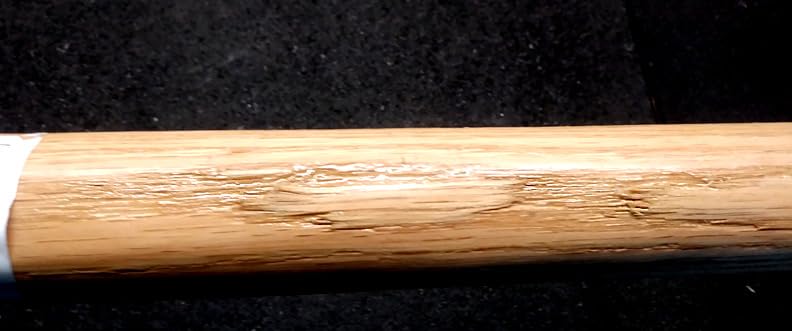
The 48 inch hardwood handle with a cushion end grip splits the difference on length. It is long enough to keep the load off your lower back without becoming a lever you cannot control.
At 4.17 pounds it is light for a forged steel fork. Reviewers note the weight is easy to handle all afternoon, which is unusual for a tine profile this aggressive.
What it handles well
Garden work, mulch, pine straw, and clay soil are the core strengths. It is also a fine bedding fork for a yard barn that deals in lighter material than packed stall waste.
If you split your time between barn chores and landscaping, this is the fork that does both without a compromise that shows up as a broken tine.
Where it falls short
Only six tines means fewer scoops per pass than the 10-tine forks. If your volume is high, you will be making more trips.
The tines are spaced too widely for small clumping material. Fine, damp bedding is exactly what you will lose back into the muck pile, which makes it a poor fit for a wet shavings stall.
8. Tough 1 Pro Pick Rounded Stall Fork: Best for Small Stalls
- Very light at 2 pounds for long stall-picking sessions
- Tine spacing captures waste with less loss
- Two-piece handle rod for easier transport and storage
- Rounded tines are gentler on bedding material
- Lowest rating in this set at 4.2 with a notable 3-star cluster
- Aluminum rod joint can be a weak point under heavy side load
- Plastic handle is less durable than wood or fiberglass alternatives
The defining feature here is the three-quarter inch tine spacing, which is tight enough to capture waste with less loss than most forks in this roundup. The maker claims 20 percent more holding capacity than a standard fork, and the geometry supports that claim.
At 2 pounds with a two-piece aluminum handle rod, it is the easiest fork to carry between stalls, load into a truck, or store on a wall bracket. For a small operation where you muck two or three stalls, that portability is worth more than tine rigidity.
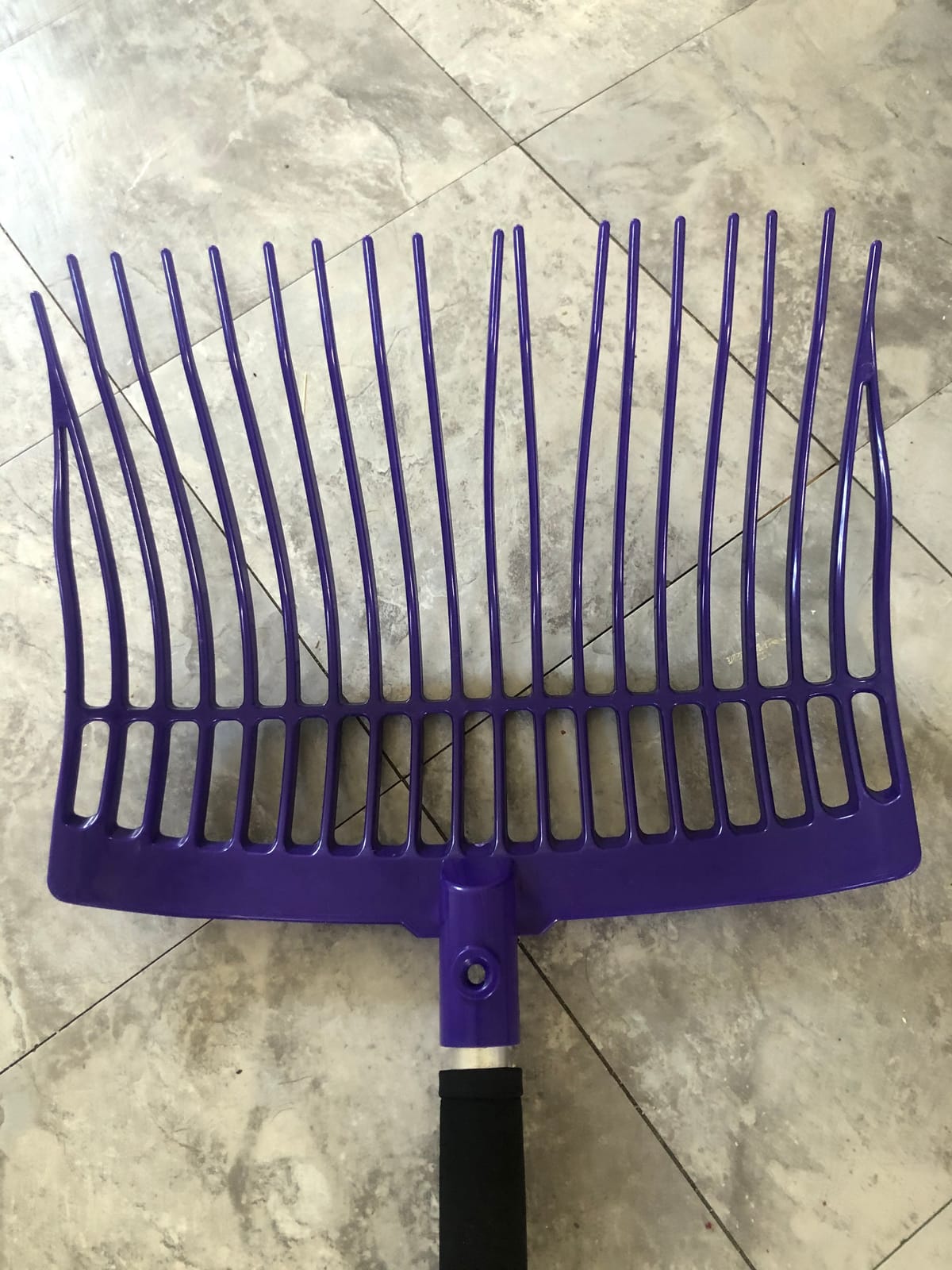
Rounded tines are the quiet advantage. They are gentler on bedding material, so when you do catch bedding to reuse, you are less likely to shred it into pieces too small to bed with.
It comes in Royal Blue, Black, and Purple, which gives you color coding options if you run a shared barn.
What it handles well
Small stall cleanups, a backyard barn, and any situation where you want to capture more waste per scoop. The tight spacing means less clean bedding lost to the muck pile.
It is also the fork to grab when you are cleaning on the fly and do not want to wrestle a full-length tool through a gate or a trailer.
Where it falls short
It carries the lowest average rating in this roundup at 4.2, with a notable three-star cluster. Satisfaction is real but moderate, at 65 percent five-star and 10 percent three-star.
The two-piece aluminum rod joint is the weak point under heavy side load, and some buyers report looseness or wear at that connection. The plastic handle is also less durable than wood or fiberglass alternatives.
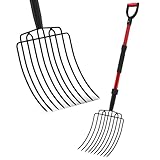
9. COSITA 10-Tine Pitch Fork: Best for Chicken Coops and Hay
- Wide 10-tine head carries more hay
- feed or mulch per scoop
- Quick three-piece screw assembly
- no tools needed
- Weather-resistant fiberglass shaft will not splinter or warp
- Removable middle handle section allows a shorter configuration
- 44 inch total length is short for horse manure work
- causing back strain
- Some buyers report tines bending under heavy loads
- Mostly plastic construction apart from the tines
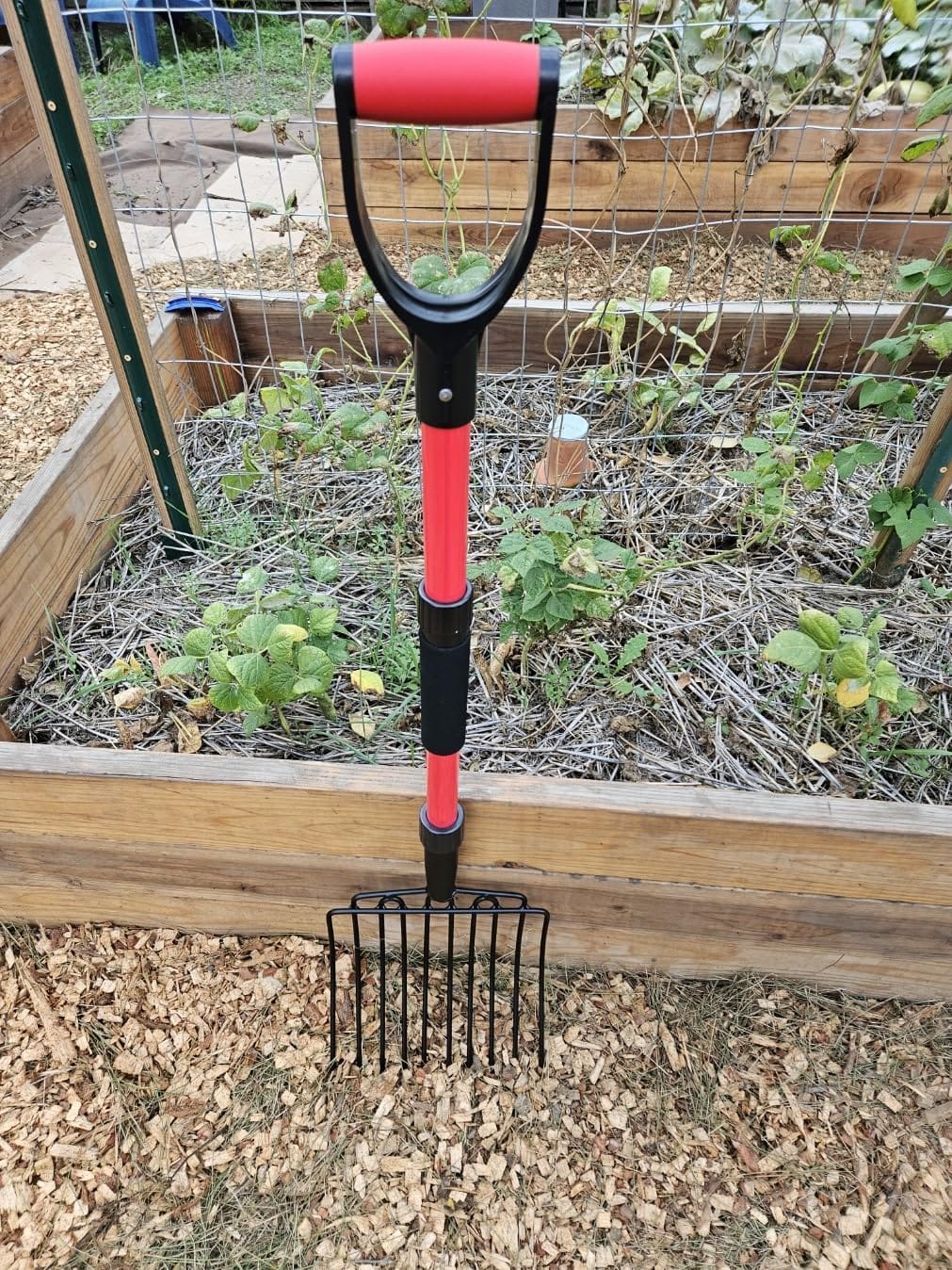
The wide 10-tine carbon steel head gives this fork real capacity per scoop, which is what makes it popular for chicken coops, hay handling, and leaves. It is a material-moving tool first and a stall tool second.
The no-tool screw-together assembly is genuinely convenient. It assembles in seconds with no hardware, and the removable middle section lets you shorten the configuration when you are working somewhere low and tight.
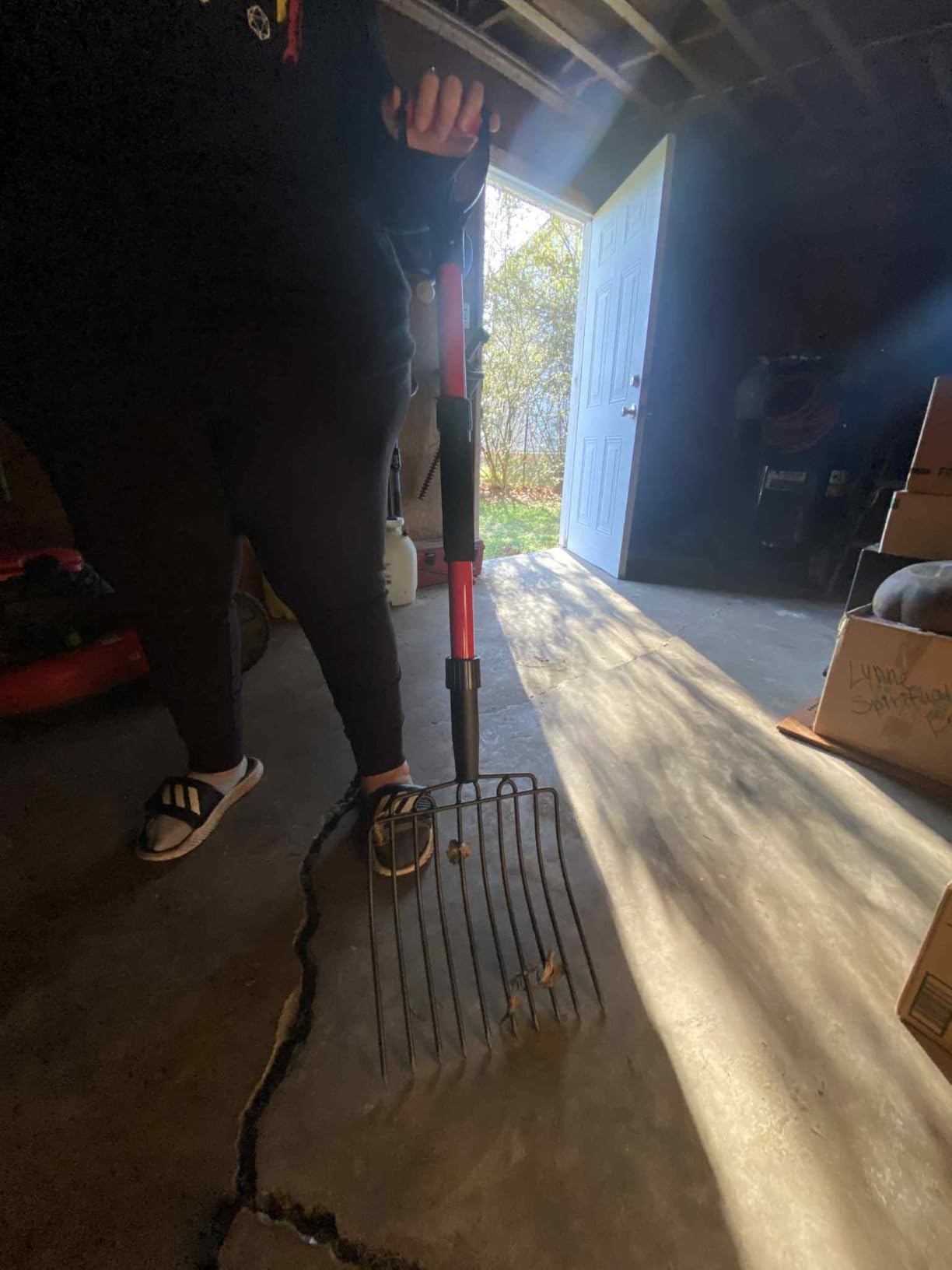
Reviewers like the capacity and the quick assembly for coop and mulch work. Buyers run it through straw, leaves, mulch, and compost without complaint.
The fiberglass shaft will not splinter or warp the way a wood handle can when it sits in wet shavings for a week, which matters more in a coop than in a garden.
What it handles well
Chicken coops, hay, straw, leaves, mulch, and compost. If you keep a few birds alongside a horse, this is a good second fork to keep by the coop door.
It is also the easiest fork here to carry in a vehicle and the fastest to reassemble. That combination suits a mobile setup where tools live in the truck.
Where it falls short
The 44 inch total length is short for horse manure work, and that is the dominant complaint in the reviews. Multiple owners say the length causes back strain precisely when it matters most.
Some buyers also report tines bending under heavy loads. Outside of the tines themselves, the construction is mostly plastic, so it is not the tool for frozen or packed material.
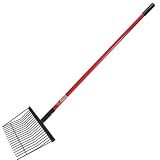
10. Bully Tools Stall Fork: Best for Maximum Pickup Capacity
- 18 spring steel tines make it the widest pickup capacity here
- Long 59-inch tool length reduces bending during stall mucking
- Fiberglass handle will not crack or splinter
- Made in the USA with a limited lifetime warranty
- Lowest average rating in the set at 4.1 with 9% one-star reviews
- Wide head is heavy to maneuver in tight stalls
- 18 tines reduce it to light material only; not suited to packed bedding
Eighteen spring steel tines on a 14.5 by 11 inch head is the widest pickup surface of any fork here. If your bedding is fine and loose, that much tine area means fewer passes to clear a stall.
The 49 inch handle measured from the head gives 59 inches overall, the longest tool in this roundup, and that length does reduce the bending angle during stall mucking. It is made in the USA and carries a limited lifetime warranty.
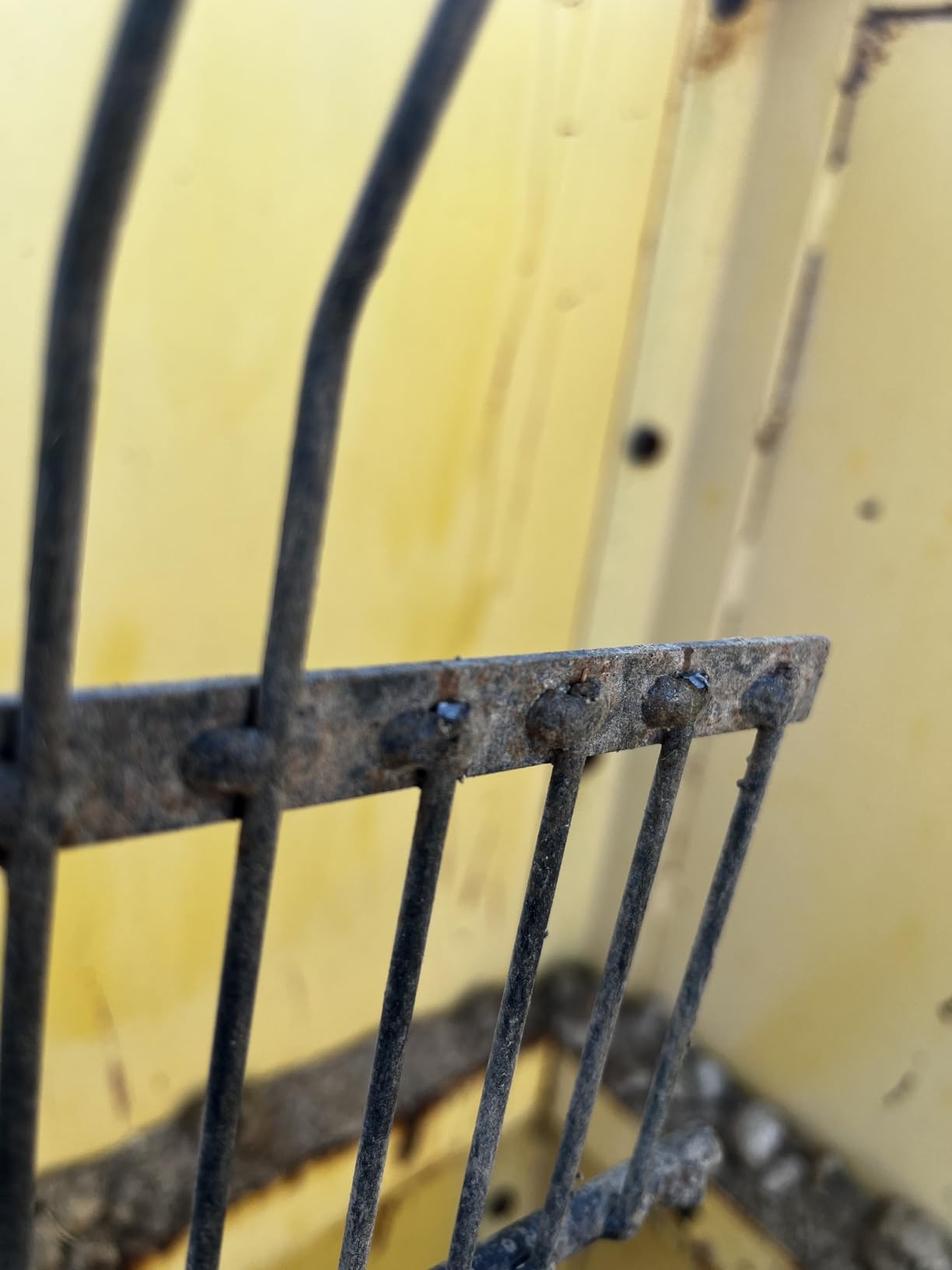
The fiberglass handle will not crack or splinter, which is the right call for a tool that gets leaned on, dropped, and left in a damp aisle.
Buyer sentiment is the most polarized here, with a 9 percent one-star share. Most of that goes to handling weight and tine stiffness rather than a fundamental flaw.
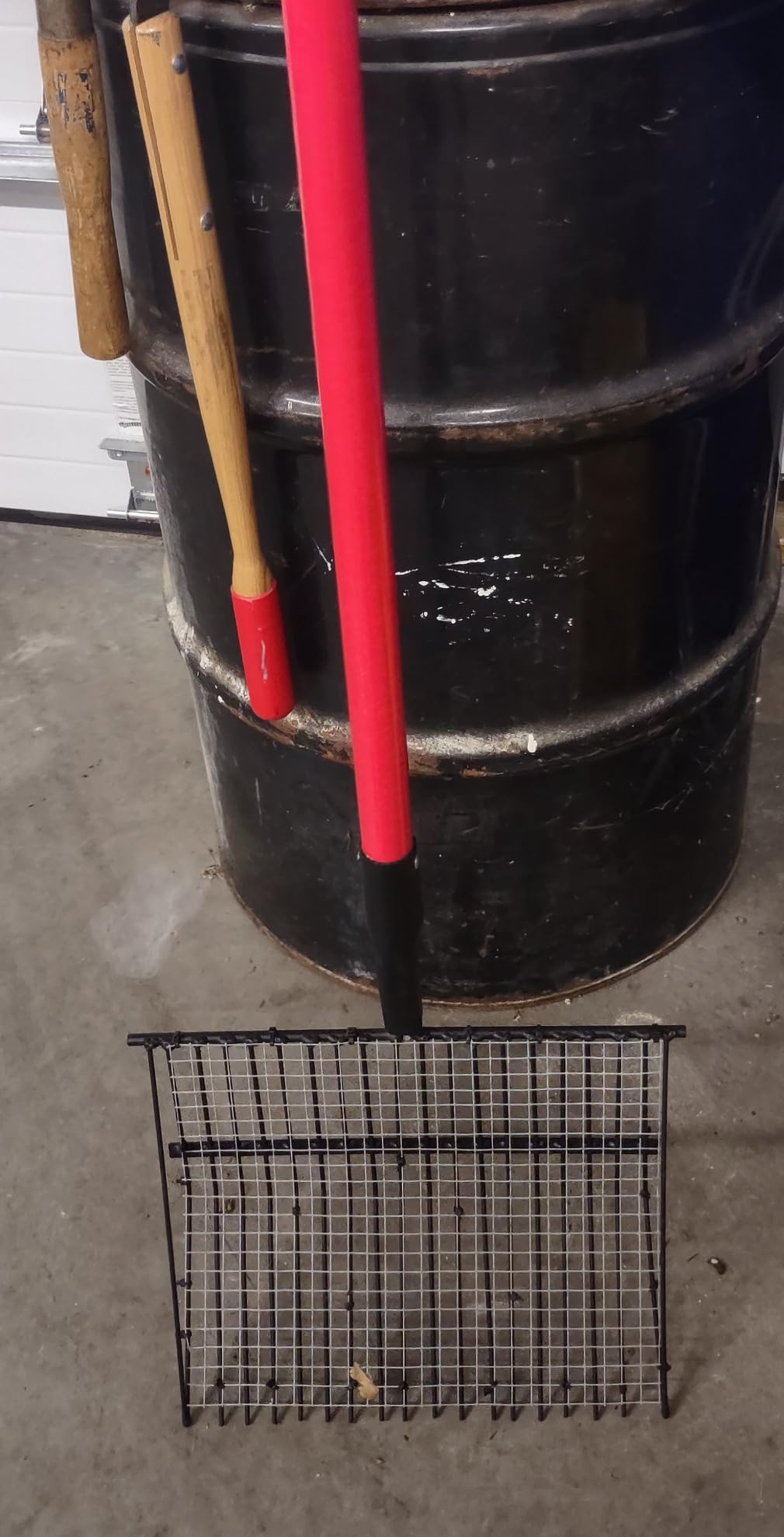
What it handles well
Open stalls with light, loose bedding, chicken coops, and yard cleanup. The long reach is genuinely helpful in a wide stall where you are reaching to the back corner.
If your barn is straw-bedded but not packed down, eighteen tines clear it quickly. Buyers value the American-made construction and the warranty.
Where it falls short
Eighteen closely spaced tines mean light material only. This is not a fork for packed bedding, and forcing it into a frozen mat is how tines get bent.
The wide head is also heavy to maneuver in a tight stall, and it carries the lowest average rating in the set at 4.1. Buy it for capacity and long reach, not for finesse.
How to Choose a Manure Fork: Head Material and Tine Geometry
Polycarbonate versus metal is the first decision, and it comes down to whether you bend or break the fork. Polycarbonate tines flex under load and spring back, which means a frozen clump dents the tine rather than ending the tool. Forged, manganese, and alloy steel tines do not flex, which means they cut through packed waste but will take a permanent bend if you lever against something solid.
Weight follows directly from that choice. The polycarbonate forks here weigh 2.1 pounds, while the steel options run from 3.5 to 5.5 pounds. Over a ten stall rotation, that difference is the difference between a comfortable morning and a sore one.
Rust is the other side of the trade. Steel forks with a rust-resistant coating need a rinse and a dry-off; left wet, they will spot. Polycarbonate will not rust at all, which is why barns divide sharply into poly and metal camps.
Tine count and tine spacing are separate variables, and buyers routinely confuse them. Tine count is how many tines there are. Tine spacing is the gap between them. Spacing decides how much clean bedding falls back into the stall.
3 to 5 tines: best for straw and long coarse stems, where tight gaps would trap the stems you want to lift out.
6 to 8 tines: the middle ground for mixed bedding and compost piles.
10 tines: a good all-rounder for shavings beds and general material handling.
16 to 18 tines: for fine, loose material only. More tines means less capacity per tine and more weight to lift.
Angled tines matter as much as count. Angled tines set between roughly 15 and 30 degrees act as containment walls that direct material toward the center of the head as you lift, which cuts spillage noticeably.
Head width and tine length set capacity. Heads generally run 8 to 16 inches wide and tines 12 to 13.5 inches long. A wider head moves more per pass; a longer tine reaches deeper into a packed bed but is heavier when loaded.
Matching Fork to Bedding, Handle Length and Attachment
Bedding type is the strongest predictor of tine spacing, and getting it wrong is how clean bedding ends up in the muck pile. Wood shavings are fine and damp, so they want close spacing around three-quarter inch. Straw is long and fibrous, so it wants wider gaps that let the stems fall back while manure comes up.
Pelleted bedding is the hardest case because it breaks down into fine material, which is why a close-spaced fork is the right call. Sawdust sits between shavings and straw, and compost pile work wants whatever gives you the biggest bite.
Handle length is the second big variable, and it is purely about your height. Bending at the waist for forty minutes is what causes the back strain people associate with mucking, and the fix is length rather than fitness.
Under five foot six: look at the 44 and 45 inch options, or use a fork with a removable middle section.
Five foot six to six foot: the 48 to 50 inch range keeps you at a shallow bend without the tool feeling unwieldy.
Over six foot: the 54 to 59 inch forks put the load at hip height with almost no stoop.
Every fork in this roundup is a complete fork with a handle included, and that is worth flagging because replacement heads dominate the market. A replacement head gives you a fresh set of tines while keeping a handle you already own, which is cheaper and better for the environment than replacing the whole tool.
Standard replacement heads use a one inch diameter mounting aperture with a nylon locknut, so a one inch shaft handle will fit most heads regardless of brand. Check the listing before you order a head-only item and expect a full fork.
Full-size stall forks and mini trailer forks serve different jobs. A full-size fork with a 54 inch handle is for reaching into deep stalls; a mini trailer fork is for loading a wheelbarrow or a trailer from a muck pile, where a long handle is a liability in a confined space.
Workload sizing is the question nobody in the rankings answers directly, so here is a simple framework. One or two horses means one complete fork and a spare head. A small facility up to ten stalls means a steel fork for straw barns and a poly fork for shavings barns.
A 20 to 40 stall boarding facility needs a different approach: buy in multiples so no one is waiting on a shared tool, standardize on one head and handle combination for easy replacement, and keep a metal fork on hand for frozen conditions. Handling bulk materials beyond that calls for loader attachments, and our coverage of pallet forks for tractor loaders covers that end of the job.
Durability: Why Tines Snap and How to Prevent It
Snapped tines are the single most reported failure across owner forums, and people have lost the heads of six or eight forks in a season. The cause is usually not the material but how the tool is used. Levering a tine sideways to get under a compacted mat puts the full force of your body through one tine instead of the whole head.
Plastic heads add a second failure mode. Polycarbonate and polypropylene can become brittle in cold, unheated barn aisles, and cheap poly heads crack at the neck where the head meets the handle. That is why cold-weather brittleness is a recurring warning.
Heat and humidity break tines too, in a way that surprises people. In hot, humid barns, workers report more breakage, and the culprit is load rather than temperature alone. A fork overloaded in summer weather fails sooner than one used within its capacity.
Five steps make a real difference over a season:
Load the head evenly instead of heaping one side, which puts side load on individual tines.
Loosen packed material with a fork or pitchfork from the edges before you drive the tines straight in.
Rinse and dry steel heads after washing rather than leaving them wet overnight.
Check the head-to-handle connection weekly, because a loosening joint concentrates stress on the plastic neck.
Store plastic heads out of direct sun, since UV exposure degrades the surface over time.
For off-season storage, hang the fork by its handle rather than resting the tines on concrete, and keep steel forks in an unheated dry space if you can. A head-only replacement restores a tired fork for a fraction of the cost of a new one, provided your handle uses the standard one inch aperture.
Once the pile is out of the stall, moving it across the yard is the next bottleneck. We cover that equipment in the best skid steer pallet forks for farms guide.
Frequently Asked Questions
What’s the difference between a pitchfork and a manure fork?
A pitchfork has many thin, closely spaced tines for lifting and scattering dry hay, leaves, or loose soil. A manure fork has fewer, thicker tines, often angled or bent, built to lift wet heavy waste while clean bedding sifts back through gaps of roughly three-quarter inch to one inch. The thicker tine carries weight; the wider spacing lets good bedding fall back into the stall.
What is the best horse manure fork?
For daily mucking in most barns we point to the Nohovu 5 Tine Pitchfork. The carbon steel head and 58 inch fiberglass handle give good capacity at 3.88 pounds, so it stays light over a full rotation. If your barn is straw-bedded and heavy, the Truper Tru Tough 10-Tine with a forged steel head on a 54 inch ash handle is the tougher choice.
How long does a manure fork last?
A well-built steel manure fork used within its capacity can last many years, and warranty-backed models are built for that span. Plastic heads fail sooner, often at the neck where the head meets the handle, especially in cold unheated aisles or under overloading. Rinse and dry steel heads, avoid sun storage for plastic, and replace the head alone when tines go rather than buying a new tool.
How many tines should a manure fork have?
Match the count to your bedding. Three to five tines suit straw and long coarse stems. Six to eight work for mixed bedding and compost. Ten tines are a good all-rounder for shavings beds. Sixteen to eighteen capture fine loose material but add weight and are not suited to packed bedding. Spacing matters as much as count, since it controls how much clean bedding falls back.
Is polycarbonate or steel better for a manure fork?
Steel is stiffer and cuts through packed or frozen waste, but it is heavier and can bend permanently if levered sideways. Polycarbonate is light, will not rust, and flexes instead of snapping, which makes it gentler on a bad back and safer in freezing barns. Poly suits daily shavings cleanup, steel suits straw barns, hard waste, and frozen conditions.
Which manure fork is best for someone with a bad back?
Length is the lever you control. Under five foot six, choose a 44 or 45 inch fork or one with a removable middle section. Between five foot six and six foot, look at 48 to 50 inch handles. Over six foot, the 54 to 59 inch forks put the load at hip height. Lightweight polycarbonate forks such as the Little Giant DuraFork also reduce arm fatigue at any height.
The Verdict on the Best Manure Forks for Barn Cleaning
The Nohovu 5 Tine Pitchfork is our pick for the best manure forks for barn cleaning in 2026, because it balances the three things that matter: a carbon steel head that will not bend, a 58 inch length that keeps your back out of the job, and a 3.88 pound weight you can swing all morning.
If your barn is straw-bedded and heavy, step up to the Truper Tru Tough 10-Tine. If your back is the limiting factor, drop to the Little Giant DuraFork and its 2.1 pound polycarbonate head.
Whichever you pick, match the tine spacing to your bedding before you buy. That single decision does more for the quality of your mucking out than any other spec on the list.