
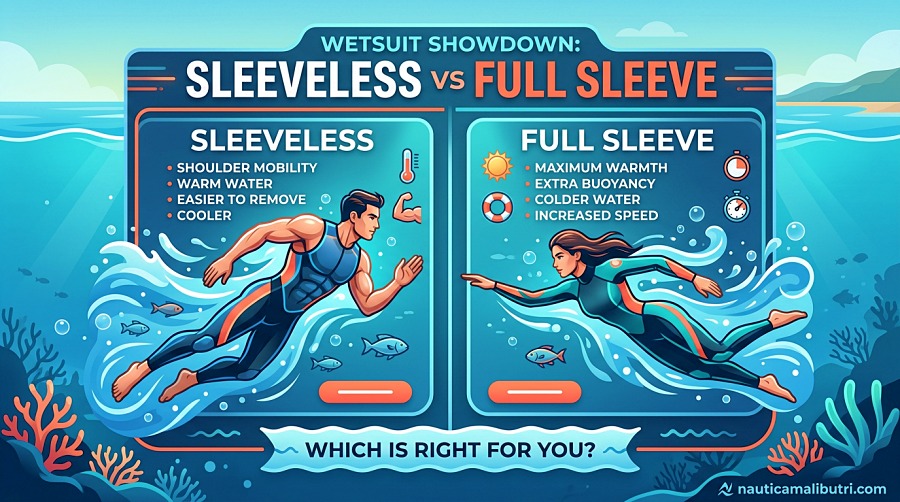
Choosing between sleeveless vs full sleeve wetsuits can make or break your triathlon swim leg. I have tested both styles across dozens of races, from sprint distance to full Ironman events. This guide breaks down exactly what you need to know to pick the right wetsuit for your body type, race distance, and water conditions.
A full-sleeve triathlon wetsuit has neoprene sleeves extending all the way to your wrists, providing complete arm coverage. A sleeveless wetsuit stops at the shoulders like a tank top, leaving your arms fully exposed. Both use premium neoprene material to deliver buoyancy and thermal insulation, but the coverage difference dramatically affects warmth, mobility, and speed in the water.
Your choice impacts swimming efficiency, body temperature regulation, comfort during the swim leg, and transition speed. Getting it wrong means either freezing in cold water or overheating and fighting restrictive neoprene when you need freedom most.
Table of Contents
Quick Comparison: Sleeveless vs Full Sleeve Wetsuits
Before diving into details, here is a side-by-side comparison of how these two wetsuit types stack up across the factors that matter most for triathletes.
| Factor | Full-Sleeve Wetsuit | Sleeveless Wetsuit |
|---|---|---|
| Warmth | Excellent – full arm coverage | Moderate – arms exposed |
| Shoulder Mobility | Good (varies by quality) | Excellent – unrestricted |
| Swim Speed | Faster – better hydrodynamics | Slightly slower – more drag |
| Transition Speed | Slower – harder to remove | Faster – easier removal |
| Ideal Water Temp | Below 68F / 20C | 65F-78F / 18C-25.5C |
| Body Type Fit | Can be tight on broad shoulders | Better for muscular upper body |
| Sun Protection | Full arm coverage | None on arms |
| Price Range | Typically higher | Usually less expensive |
Benefits of Full-Sleeve Wetsuits
Full-sleeve wetsuits dominate cold water racing for good reason. The extended neoprene coverage delivers advantages that can significantly improve your swim performance when conditions demand it.
Superior Warmth and Thermal Protection
The primary advantage of full sleeves is thermal insulation. Your arms contain blood vessels close to the surface that lose heat rapidly in cold water. Full-sleeve neoprene traps a thin layer of water against your skin and warms it, maintaining your core temperature throughout the swim leg.
This matters most in water below 65F (18C). In those conditions, sleeveless wetsuits leave your arms vulnerable to cold shock and numbness. I have seen athletes bail from races because they underestimated how quickly exposed arms can become non-functional in cold Pacific water.
Better Hydrodynamics and Swim Speed
Full-sleeve wetsuits reduce drag through the water. The smooth neoprene surface eliminates the skin texture resistance that creates micro-turbulence on your arms. Quality full-sleeve suits use 1.5mm neoprene in the arms to balance flexibility with streamlining.
Independent testing and forum discussions from experienced triathletes consistently show full-sleeve suits are 1 to 2 seconds faster per 100 meters compared to sleeveless alternatives. Over a 1.9km half-Ironman swim, that adds up to roughly 20 to 40 seconds saved.
Increased Buoyancy and Body Position
The additional neoprene around your arms adds flotation that helps keep your body horizontal in the water. Full-sleeve suits typically use 4.5mm neoprene in the chest and 3mm in the legs to maximize buoyancy where you need it.
This extra floatation particularly benefits swimmers who struggle with sinking legs or poor body position. If you are relatively new to open water swimming or come from a non-swimming background, the full-sleeve buoyancy boost builds confidence and conserves energy.
Protection from Elements
Beyond warmth, full sleeves protect against sunburn, jellyfish stings, and choppy water abrasion. Long-course races often start early morning when sun exposure accumulates over hours in the water. The neoprene barrier eliminates the need for sunscreen on your arms that can wash off and sting your eyes.
Benefits of Sleeveless Wetsuits
Sleeveless wetsuits sacrifice some speed and warmth for freedom of movement. For many triathletes, especially those with strong swimming backgrounds or who race in warmer conditions, the trade-off makes sense.
Unrestricted Shoulder Mobility
Without neoprene constricting your arms, sleeveless wetsuits deliver maximum range of motion through the shoulders. This translates directly to higher stroke rates and more natural swimming mechanics.
Many competitive swimmers and former collegiate athletes prefer sleeveless despite the marginal speed loss because it feels closer to pool swimming. You avoid the slight resistance that even the best full-sleeve neoprene creates at the catch phase of your stroke.
Better Temperature Regulation
In water above 68F (20C), full-sleeve suits can cause overheating during hard efforts. Sleeveless wetsuits allow heat to escape through your arms while still providing core warmth and buoyancy where you need it.
Athletes who run hot or sweat heavily benefit from this ventilation. You can swim at race effort without the claustrophobic feeling of trapped heat that some describe wearing full sleeves in warm conditions.
Faster Transitions
T1 transitions are significantly faster with sleeveless wetsuits. Without sleeves to peel off, you can strip the suit in seconds rather than wrestling with neoprene stuck to your arms. In sprint and Olympic distance racing where every second counts, this matters.
Forum discussions consistently mention transition speed as a deciding factor for age-groupers. A well-practiced sleeveless removal saves 30 to 60 seconds compared to full-sleeve extraction, especially when hands are wet and cold.
Better Fit for Muscular Builds
Full-sleeve wetsuits often challenge athletes with broad shoulders, muscular arms, or larger upper bodies. The neoprene sleeves can feel constricting and cause shoulder fatigue over longer swims. Sleeveless designs eliminate this fit issue entirely.
If you lift weights regularly or have a swimmer’s build with wide lats, sleeveless likely fits more comfortably. Poorly fitting full-sleeve suits restrict breathing and create panic-inducing tightness that ruins races.
Water Temperature Guide for Wetsuit Selection
Water temperature is the single most important factor in choosing between sleeveless vs full sleeve wetsuits. Use this framework to make the right call for your race conditions.
Below 65F (18C): Full-Sleeve Recommended
Cold water demands full coverage. At these temperatures, exposed arms risk cold shock response, numbness, and reduced stroke effectiveness. Your body diverts blood from extremities to protect core organs, leaving your arms weak and uncoordinated.
If you run extremely hot or have substantial body fat, you might manage a sleeveless suit down to 62F. For most triathletes, full-sleeve is the safe and smart choice in cold water.
65F to 78F (18C to 25.5C): Either Works
This is the decision zone where personal preference matters. Strong swimmers with good body position might choose sleeveless for the mobility advantage. Athletes who chill easily or prioritize speed should stick with full-sleeve.
Consider your race distance here. Longer swims favor full-sleeve for warmth retention. Shorter sprint races might favor sleeveless for transition speed.
Above 78F (25.5C): Sleeveless or No Wetsuit
USA Triathlon rules prohibit wetsuits above 78F for age-group competition. In this range, sleeveless provides minimal restriction while keeping you legal if temperatures fluctuate. Many athletes skip wetsuits entirely above 75F unless they desperately need the buoyancy.
Malibu Pacific Ocean Conditions
The Nautica Malibu Triathlon presents unique conditions that should inform your wetsuit choice. Understanding local Pacific Ocean patterns gives you an advantage over generic advice.
Malibu water temperatures typically range from 62F to 68F during race season. Morning swims often start at the cooler end as fog and offshore currents dominate. By late morning, sun exposure and tidal movement can push temperatures toward the upper 60s.
Local athletes report that Malibu conditions change rapidly. What feels comfortable at the start can feel cold mid-race when wind picks up or you stop generating heat during a patch of rough water. The Pacific Ocean off Zuma Beach also delivers occasional jellyfish, favoring full-sleeve protection.
For most racers at the Nautica Malibu Triathlon, a full-sleeve wetsuit provides the best balance of warmth and speed. Unless you know you overheat easily or have an extremely muscular build that fights full-sleeve fit, the added coverage serves you well in typical Malibu conditions.
Distance-Specific Recommendations
Your race distance should influence wetsuit selection. Different events prioritize different attributes from your gear.
Sprint and Olympic Distance
Shorter races emphasize transition speed. Sleeveless wetsuits shine here because T1 time represents a larger percentage of your total race. A 30-second transition advantage matters more when the entire event lasts 60 to 120 minutes.
Warm water sprint races almost always favor sleeveless. You are not in the water long enough to benefit from full-sleeve warmth, and the mobility advantage helps maintain form during high-intensity efforts.
Half-Ironman (70.3) and Full Ironman
Longer swims demand different priorities. Over 1.9km or 3.8km, warmth retention becomes critical. Muscles perform poorly when cold, and a shivering athlete loses form that costs far more time than transition seconds.
Full-sleeve wetsuits dominate long-course racing for good reason. The hydrodynamic advantage compounds over distance, and the buoyancy support preserves running and cycling muscles for later legs. Even in relatively warm conditions, many Ironman athletes choose full-sleeve for the comfort and protection over hours in the water.
Exceptions and Edge Cases
Warm water Ironman events like Kona or Panama City sometimes see athletes in sleeveless suits. If water temperatures approach 76F to 78F and you handle heat well, sleeveless remains viable even for 140.6 racing. Always check race day temperature predictions before finalizing your choice.
Body Type and Swimming Style Considerations
Your individual physiology and technique matter when choosing between sleeveless vs full sleeve wetsuits.
Build and Fit
Athletes with broad shoulders, large biceps, or muscular upper bodies often find full-sleeve suits uncomfortably tight. The neoprene restricts movement and can cause shoulder fatigue. Sleeveless designs accommodate larger frames without compression.
Conversely, lean swimmers with narrow shoulders might find sleeveless suits too loose around the armholes, creating drag and chafing. Full-sleeve suits stay snug and streamlined on smaller frames.
Swimming Background
Strong pool swimmers with established technique often prefer sleeveless suits. The unrestricted shoulder movement allows natural stroke mechanics without adapting to neoprene resistance. Former competitive swimmers specifically mention missing their natural feel for the water when wearing full sleeves.
Beginners and self-taught swimmers frequently benefit from full-sleeve buoyancy. The extra flotation corrects body position automatically, reducing the skill requirement for maintaining horizontal alignment.
Stroke Rate and Technique
High stroke rate swimmers who turn arms over quickly may feel restricted by full-sleeve neoprene. The material inevitably creates some resistance at high cadence. Sleeveless suits accommodate faster turnover without interference.
Slower, more deliberate swimmers with longer glide phases often appreciate the streamlined profile of full-sleeve suits. The hydrodynamic advantage matters more when you spend more time at maximum extension.
Common Pain Points and How to Address Them
Real athletes from forums and race reports consistently mention specific issues with each wetsuit type. Here is how to handle them.
Full-Sleeve Concerns
Claustrophobia and panic affect some athletes in full-sleeve suits. The tightness around arms and chest triggers anxiety, especially in open water with limited visibility. Practice in your suit before race day, and consider slightly larger sizing if you know you are prone to this.
Difficult removal slows transitions. Apply body glide or petroleum jelly to forearms before swimming to help sleeves slide off. Practice the quick-release technique of pulling the suit inside-out over itself rather than fighting each arm individually.
Sleeveless Concerns
Armhole chafing plagues some sleeveless wetsuit users. The neoprene edge rubs against skin during high-arm recovery strokes. Apply anti-chafe balm to upper arms and armpits before racing, or look for suits with rolled edges rather than cut seams.
Cold arms in unexpected temperature drops can end races. Even if you expect warm water, pack full-sleeve backup gear for races with variable conditions. Morning fog and wind can drop effective temperatures dramatically.
Sleeveless vs Full Sleeve Wetsuits: FAQ
Is a sleeveless wetsuit better than a sleeved wetsuit?
Neither is universally better. Full-sleeve wetsuits excel in cold water, provide better hydrodynamics, and offer more buoyancy. Sleeveless wetsuits offer superior shoulder mobility, faster transitions, and better temperature regulation in warm conditions. Your body type, race distance, and water temperature determine which suits you better.
Does a sleeveless wetsuit keep you warm?
A sleeveless wetsuit provides warmth to your core and legs through neoprene insulation, but your arms remain exposed to the water. In water above 65F (18C), most athletes find sleeveless adequate. Below that temperature, exposed arms can become uncomfortably cold and affect swim performance. Full-sleeve suits are recommended for cold water swimming.
Are sleeveless wetsuits slower?
Sleeveless wetsuits create slightly more drag than full-sleeve alternatives because your bare arms generate more water resistance than smooth neoprene. Testing shows full-sleeve suits are approximately 1 to 2 seconds faster per 100 meters. However, some competitive swimmers prefer sleeveless because unrestricted shoulder mobility allows higher stroke rates that can offset the drag disadvantage.
Should I get a sleeve or sleeveless trisuit?
Your trisuit choice depends on race conditions and personal preference. Sleeve trisuits offer more sun protection and coverage for modesty during the bike and run. Sleeveless trisuits provide better cooling and less constriction around the shoulders. Many athletes wear sleeveless trisuits under full-sleeve wetsuits for versatility, allowing them to strip the wetsuit while maintaining race-ready coverage underneath.
Can I wear a sleeveless wetsuit for Ironman?
Yes, you can wear a sleeveless wetsuit for Ironman distance races. Many athletes successfully complete 140.6 events in sleeveless suits, particularly in warm water conditions. However, most Ironman racers choose full-sleeve wetsuits because the longer swim time makes warmth retention and buoyancy support more valuable than the transition speed advantage of sleeveless designs.
Are sleeveless wetsuits worth it?
Sleeveless wetsuits are worth it for athletes who prioritize shoulder mobility, compete primarily in warm water races, have muscular builds that conflict with full-sleeve fit, or value fast transitions. They typically cost less than full-sleeve alternatives. If you race in cold water or need maximum speed, invest in full-sleeve instead. Many serious triathletes eventually own both types for different conditions.
Final Thoughts on Sleeveless vs Full Sleeve Wetsuits
The debate between sleeveless vs full sleeve wetsuits does not have a universal answer. Your ideal choice depends on water temperature, race distance, body type, and swimming style.
Choose full-sleeve if you race in cold water, prioritize swim speed, need extra buoyancy, or want protection from sun and marine life. Choose sleeveless if you value shoulder mobility, race in warm conditions, have a muscular build, or need faster transitions.
Many experienced triathletes eventually own both types. A full-sleeve suit for cold water races and early season training, plus a sleeveless option for warm events and pool swimming. If you can only buy one, consider your local conditions and race calendar.
For the Nautica Malibu Triathlon specifically, the typical Pacific Ocean temperatures favor full-sleeve for most athletes. Test both styles before committing, and remember that fit matters more than features. A well-fitting mid-range suit beats an ill-fitting premium model every time.