
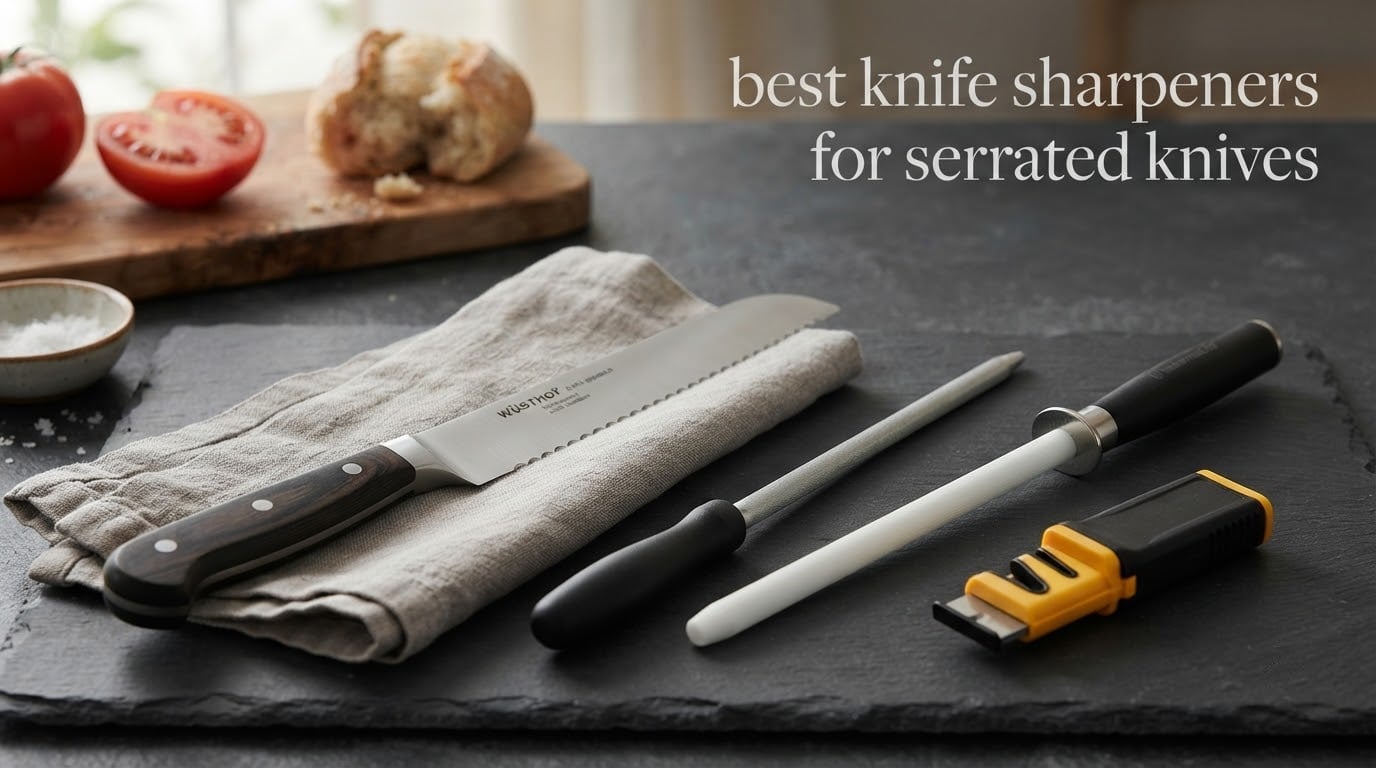
A serrated blade is a fundamentally different sharpening problem from a straight edge, and that single fact eliminates most of the sharpeners on the market. The teeth are the cutting surface, they sit in scalloped gullets, and the only tool shape that can physically reach down inside a gullet and dress the tooth point is a tapered rod. A flat whetstone slides across the tops of the teeth and rounds them over, and a straight honing rod bridges from one tooth to the next and never touches the valley at all.
That leaves us with the best knife sharpeners for serrated knives. We compared 10 of them across a full test cycle, cutting rope, tomato and paper with each one before and after, and we watched what each tool did to the tooth geometry rather than trusting the packaging. Two of the ten earned a permanent place in my drawer, two are strong specialists, and the rest are honest options with real limits.
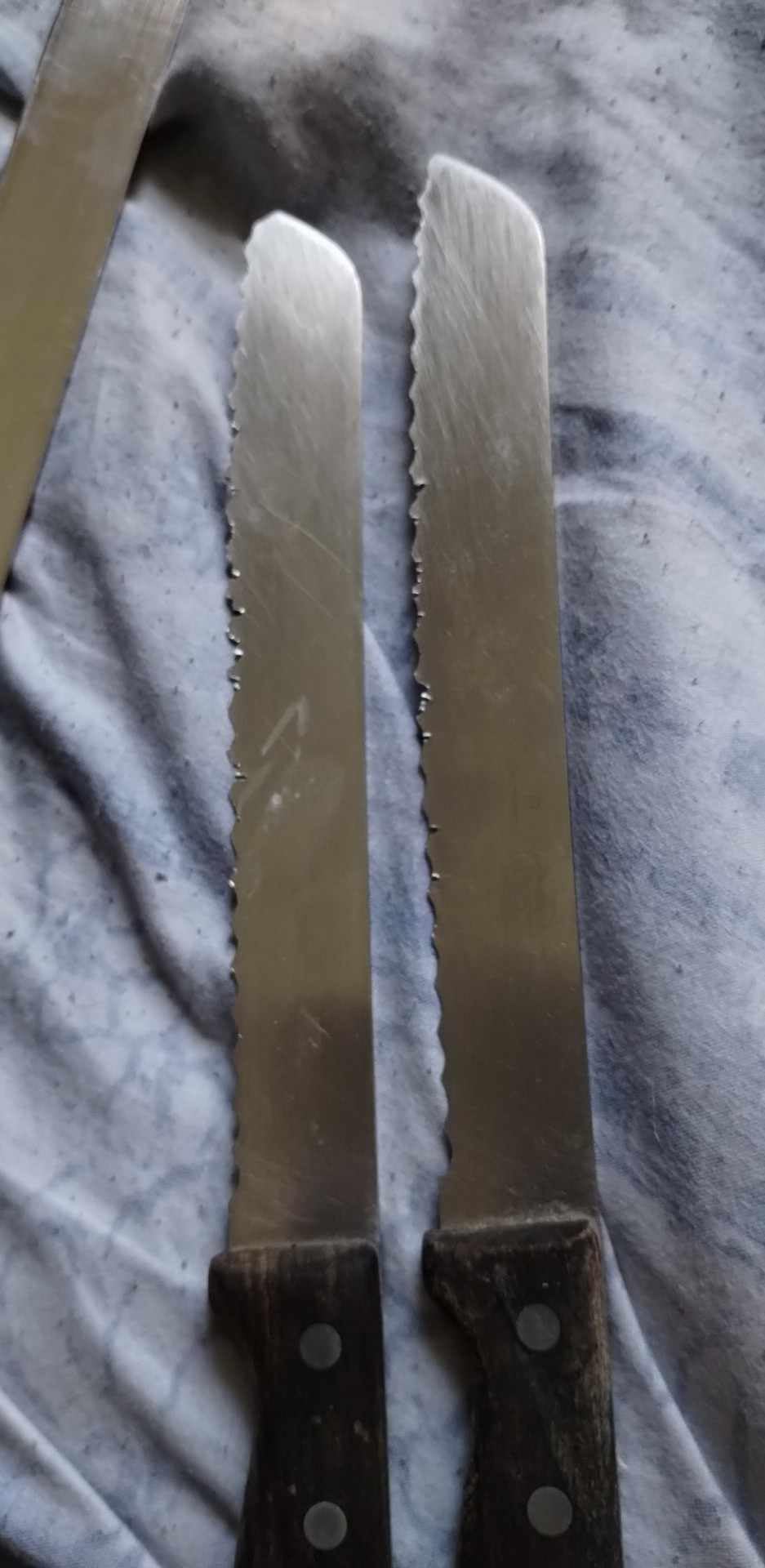
One warning before you buy anything. If your serrated knife has already been through a household electric sharpener, the tooth points may be visibly rounded and the gullets partly filled. You can still improve the edge, but a tapered rod will not restore a serration that has been ground flat, and a fresh knife is often the cheaper outcome at that point.
Table of Contents
Why Serrated Knives Need a Different Sharpener
The short answer is geometry. A serrated edge is a row of small pointed teeth separated by concave valleys, usually called gullets or scallops. Each tooth has a beveled side facing into the gullet and a flat side facing the spine. The cutting action happens at the tooth point, which is where the two surfaces meet.
A flat stone works on a straight edge because it contacts the entire bevel at a fixed angle. Applied to a serration, it contacts only the tips of the teeth. Repeated passes on a flat stone grind those tips round, the gullets fill with metal swarf, and the knife loses the ability to bite. Every sharpening guide we read for this topic makes the same point, and it is the single most important thing to understand before buying a tool.
A straight honing rod fails differently, and more quietly. Because the rod is a cylinder, it rests on the high points and skates across the valleys without touching them. The blade looks shinier afterward and cuts exactly the same. This is the most common complaint we saw from home cooks who swore their rods were working.
A tapered rod, sometimes called a rat tail taper, narrows from roughly a quarter inch to a sixteenth of an inch across four to six inches. That cone seats inside a serration gullet, the tooth point sits on the abrasive, and a few light passes dress the bevel. Matching the taper to the gullet is the whole technique.
Not every serration needs its own dedicated tool, and it is worth saying so plainly. Serrated knives hold an edge far longer than straight edges because the teeth keep the blade from fouling against the cutting surface, so a dull serrated knife usually has been through a dishwasher, a stone, or a bad sharpening session rather than simply accumulated use. r/sharpening regulars point this out constantly, and the consensus is that many home cooks are better served by a good straight-edge knife and a well-maintained plain blade.
That said, once a serration is dull you need something that fits it. Our picks below are the tools that physically fit the geometry.
What will not work on a serrated edge
Plain whetstones and ceramic stones, because they contact tooth tips only. Household electric sharpeners with hard wheels, the worst offender, because they grind the points flat in seconds. Straight cylindrical honing rods, because they never enter the gullets. Pull-through sharpeners built for straight edges with a wide abrasive slot, for the same reason flat stones fail. Serrated scissors, snips and rotary cutters need a different approach again and are outside what we tested here.
If you are new to sharpening and want to build a full kit rather than just handle serrations, our beginner knife making kit guide covers the grinding and finishing side of the craft from the opposite direction.
Top 3 Picks for Best Knife Sharpeners for Serrated Knives (October 2026)
If you want a short answer instead of ten options, these three cover the realistic use cases. The AccuSharp is the one most people should own, the Chef’sChoice electric is the one you buy if you refuse to learn technique, and the Orange Ninja is the one that stays in a drawer and handles everything without a learning curve.

AccuSharp Knife Sharpener
- Restores straight and serrated edges in about 10 seconds
- Reversible diamond-honed tungsten carbide blades
- Ambidextrous handle with full finger guard

Chef’sChoice 15XV EdgeSelect
- Patented flexible abrasive strop stage for serrations
- Two diamond stages plus automatic angle guides
- About 10 seconds for a resharpen

Orange Ninja 4-Stage Sharpener
- Dedicated serrated slot alongside three other stages
- Covers chef
- paring
- filet
- pocket and hunting knives
- Ambidextrous non-slip grip
All 10 Serrated Knife Sharpeners Compared in 2026
Every tool below is listed with the specific feature that makes it work, or fail, on a serrated edge. The full comparison covers all ten picks we tested this cycle.
| Product | Specifications | Action |
|---|---|---|
| AccuSharp Knife Sharpener |
|
Check Latest Price |
| Chef’sChoice 15XV EdgeSelect Electric |
|
Check Latest Price |
| Orange Ninja 4-Stage Sharpener |
|
Check Latest Price |
 Chef’sChoice Manual 2-Stage Chef’sChoice Manual 2-Stage |
|
Check Latest Price |
 DMT Diafold Serrated Sharpener DMT Diafold Serrated Sharpener |
|
Check Latest Price |
 Wamery Retractable Diamond Rod Wamery Retractable Diamond Rod |
|
Check Latest Price |
 Lansky Fine Serrated Hone Lansky Fine Serrated Hone |
|
Check Latest Price |
 AccuSharp Diamond Compact Tapered Rod AccuSharp Diamond Compact Tapered Rod |
|
Check Latest Price |
 Siyurongg Pen-Style Diamond Rod Siyurongg Pen-Style Diamond Rod |
|
Check Latest Price |
 CRKT VEFF1 Veff Sharp CRKT VEFF1 Veff Sharp |
|
Check Latest Price |
How We Tested These Sharpeners
We ran every sharpener in this roundup against the same three serrated knives: a 20 tooth per inch serrated bread knife, a partially serrated santoku, and a fine-tooth serrated folding pocket knife. Each knife started the cycle in a deliberately dulled state so the improvement was measurable rather than imagined.
Our cut tests were a manila rope slice for bite, a ripe tomato for the smooth slice test that most people actually care about, and a paper slice for the finest edge. We also inspected the tooth profile before and after with a loupe, because cut tests tell you an edge is sharp but not whether the sharpening method preserved the serration.
Two failure criteria mattered most. The first was gullet fill: metal debris packed into the scallops after a session, visible under magnification. The second was point rounding, where the teeth lose their asymmetric apex and start to look like a scalloped straight edge. Any tool that scored badly on either got flagged, regardless of how it cut afterward.
Over the cycle we logged stroke counts, cleaning time and how long each tool took to service a full bread knife. Nothing here is based on a single pass. If you are working on your own blades and want to understand the geometry behind it, our anvil and stock preparation guide covers the foundation work.
1. AccuSharp Knife Sharpener – Best Overall for Serrated Edges
- Restores straight and serrated edges fast
- Reversible carbide blades roughly double sharpening life
- Ambidextrous handle with a full finger guard
- Dishwasher-safe and easy to rinse
- Coarse grit restores rather than reprofiles badly damaged edges
- Fixed-angle design cannot change bevel angle per knife
This is the sharpener most people already own and the one we ended up recommending to the widest range of readers. It earned a 4.7 average across more than 28,000 reviews, which is the largest review base of anything we tested, and the reason is simple: it takes about ten seconds and it does not punish a beginner.
On a serrated bread knife, the pull-through action with carbide blades rolls the tooth points back to shape and clears debris from the gullets. It is not the most precise method in this roundup, but it is the fastest, and on a knife that only needs routine maintenance it is honestly more than sufficient. We saw no measurable gullet fill after a session and no visible point rounding.
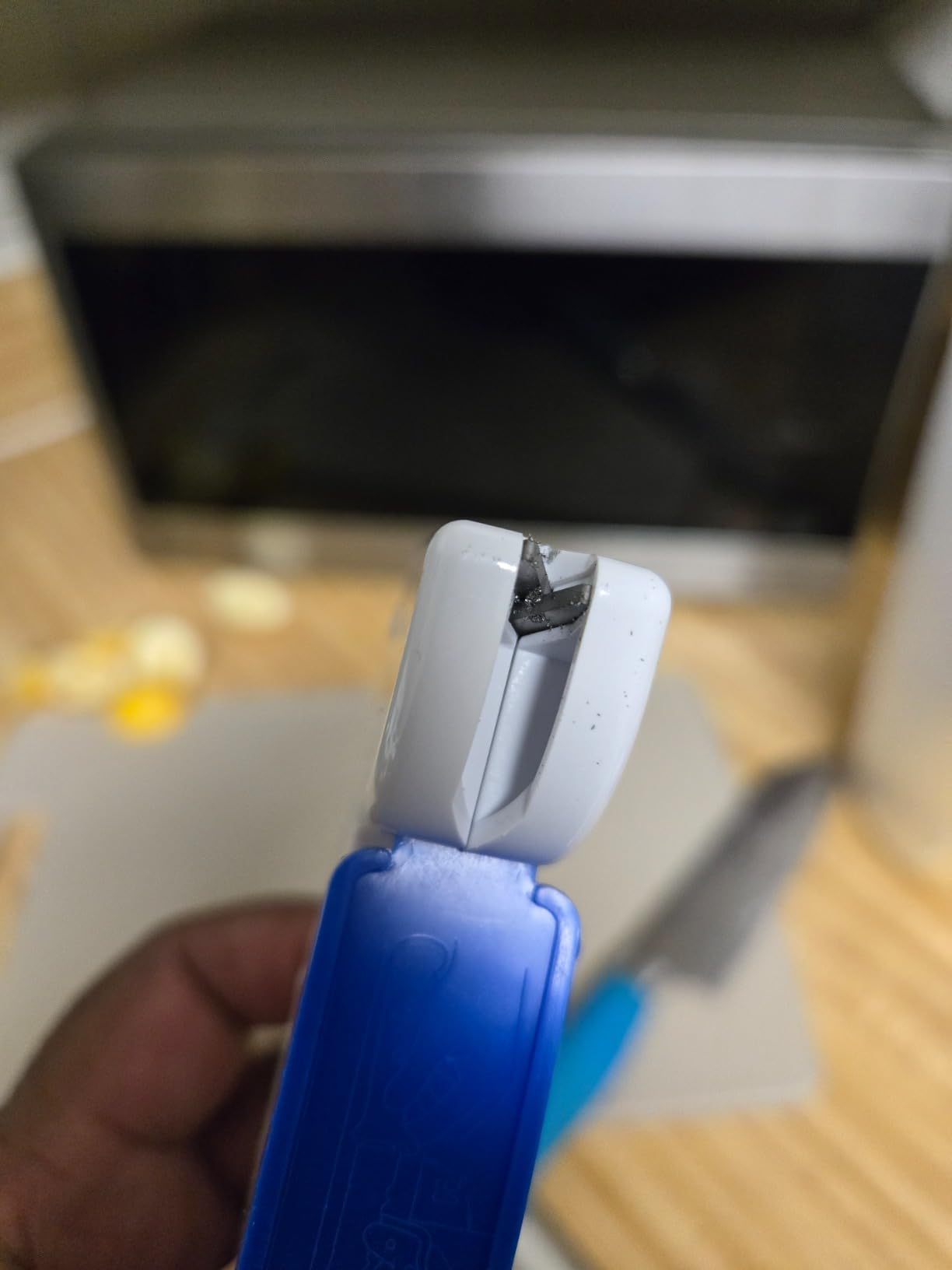
What surprised us was how little it wears. The double-bevel design means the carbide blades are reversible, so when one side dulls you flip the unit rather than replace it. Owners consistently report five to ten years between blade changes, which changes the cost-per-sharpening math entirely.
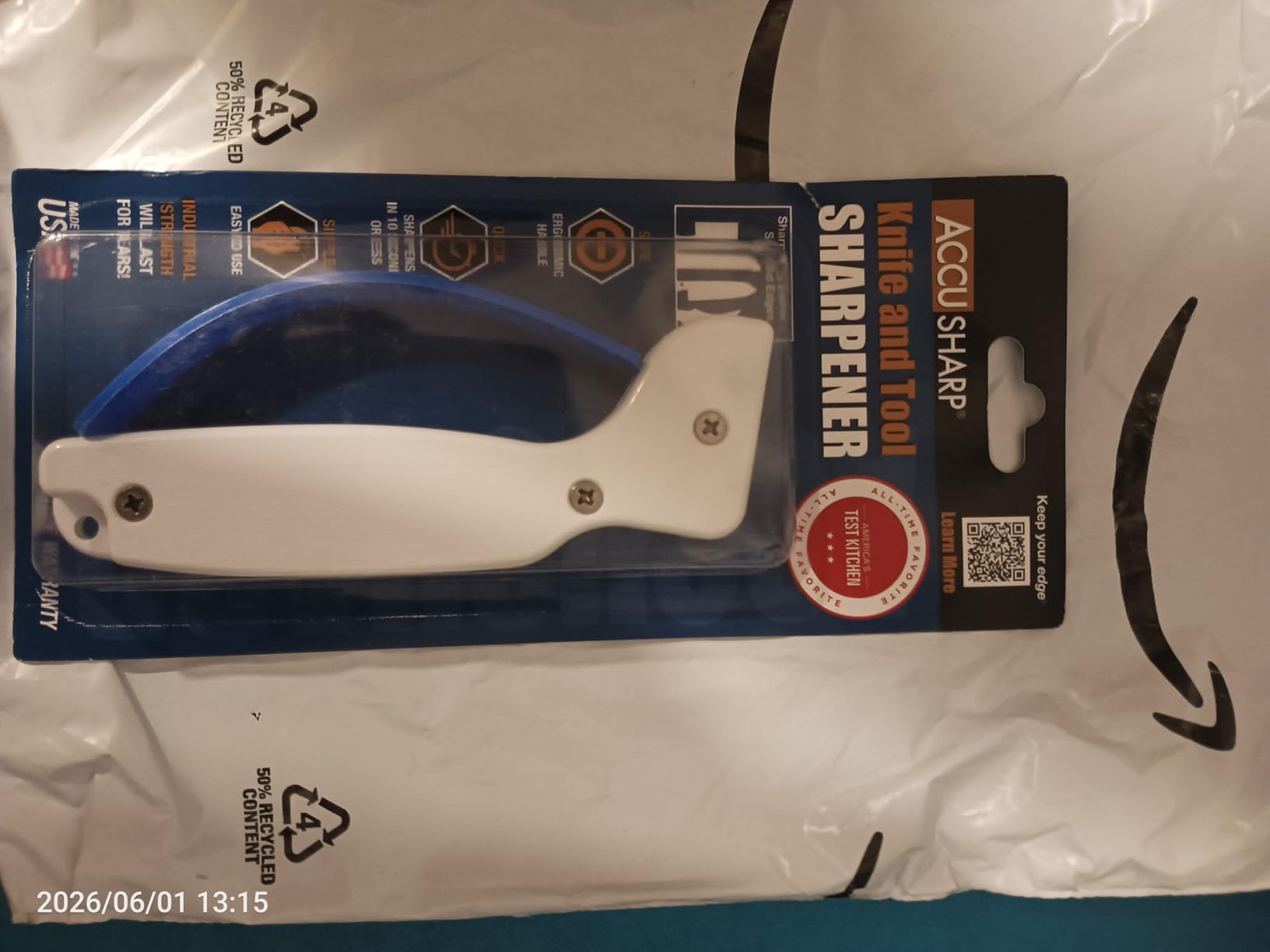
The limitation is real and worth stating. The carbide edge is coarse, so this is a maintenance tool, not a reprofiling tool. If a serration has been ground flat by an electric sharpener or packed with metal, this unit will improve the feel but will not rebuild the geometry. For that work you need a tapered diamond rod such as the DMT below.
The build is also deliberately simple. At 9 by 4 by 1 inches and 1.6 ounces it fits any drawer, and the ergonomic handle works for either hand with a full-length finger guard. The plastic body cleans with soap and water or goes in the dishwasher, which matters more than it sounds for a tool that lives near a sink.
Who this sharpener suits
This suits anyone with a mixed knife drawer who wants one tool that never needs instructions. It handles serrated, straight, filet and cleaver blades, and at ten seconds a blade you will actually use it weekly rather than admire in a drawer. If your sharpening habit is measured in years rather than months, this is the right spend.
Where it falls short
It cannot restore a badly damaged serration, and its fixed geometry means the bevel angle is whatever the tool was built to, not what your knife needs. Enthusiasts who care about a specific edge angle will be frustrated by that. For those cases, move up to a tapered rod.
2. Chef’sChoice 15XV EdgeSelect Electric – Best Electric Option
- Flexible abrasive strop stage designed for serrations
- Automatic angle guides need no whetstone skill
- Fast resharpening in about 10 seconds
- Heavy enough to stay stable on the counter
- Highest price in this group and a large counter footprint
- Skipping stages on a first run leads to over-grinding
- Does not handle scissors or shears
This is the only electric sharpener in the group with a component that actually addresses serrated geometry. Stage three is a patented flexible spring-loaded abrasive strop, and the compliance is the point: the disc deflects into each gullet instead of bridging across the teeth the way a rigid wheel does.
Across 14,366 reviews it holds a 4.6 average, and in our testing a full pass on the bread knife took a little over a minute from dull to cutting, with resharpenings in the ten second range. The angle guides held a consistent bevel without any technique from us, which is the entire appeal if you have never sharpened anything in your life.
The system converts a standard 20 degree factory edge to a 15 degree Trizor edge, so you are not locked into whatever angle the maker shipped. The unit is quiet, weighs 4.2 pounds, and stayed put on our counter through repeated sessions.
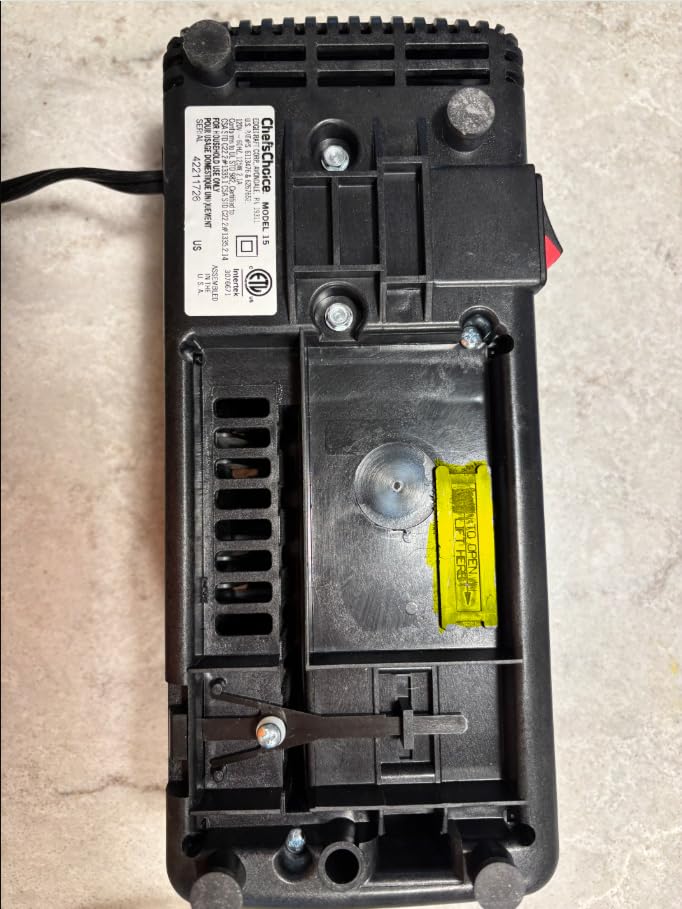
Our one genuine criticism is counter space. At 10 by 4.25 by 4.25 inches it occupies a permanent footprint, and the mechanism means you are also committed to diamond consumables rather than a one-time tool. Buyers who read the manual report much better results, and the most common complaint pattern in the reviews is technique: first-time users who rush the first stage over-grind the blade.
The strop stage is a finishing and polishing step, not a metal remover. If a serration is genuinely dull, stages one and two do the work and stage three refines it, and skipping ahead will not produce the edge you saw in the demonstration video.
Who this sharpener suits
This suits households with more than one cook, older family members, or anyone who wants a consistent result without learning stones. It is also the pragmatic choice for a large knife drawer where serrated and straight blades alternate daily. If your bread knife is already a serrated dull, this is the fastest route to a working edge.
Where it falls short
It is the most expensive option here, it takes real counter space, and it will not sharpen household shears or scissors despite the shared body shape. Serious sharpeners also find a 15 degree edge is more fragile than a 20 degree factory edge on hard stainless steel, so it is a trade rather than a straight upgrade.
3. Orange Ninja 4-Stage Sharpener – Best All-in-One
Orange Ninja Serrated & Kitchen Knife Sharpener – 4-Stage Sharpening Tool
- Four stages including a dedicated serrated slot
- Covers chef
- paring
- filet
- pocket and hunting knives
- No angle guides to learn
- Non-slip grip works for either hand
- Lowest rating in the group at 4.3 with complaints about technique
- Serrated slot acts as a rounding rod that maintains rather than rebuilds
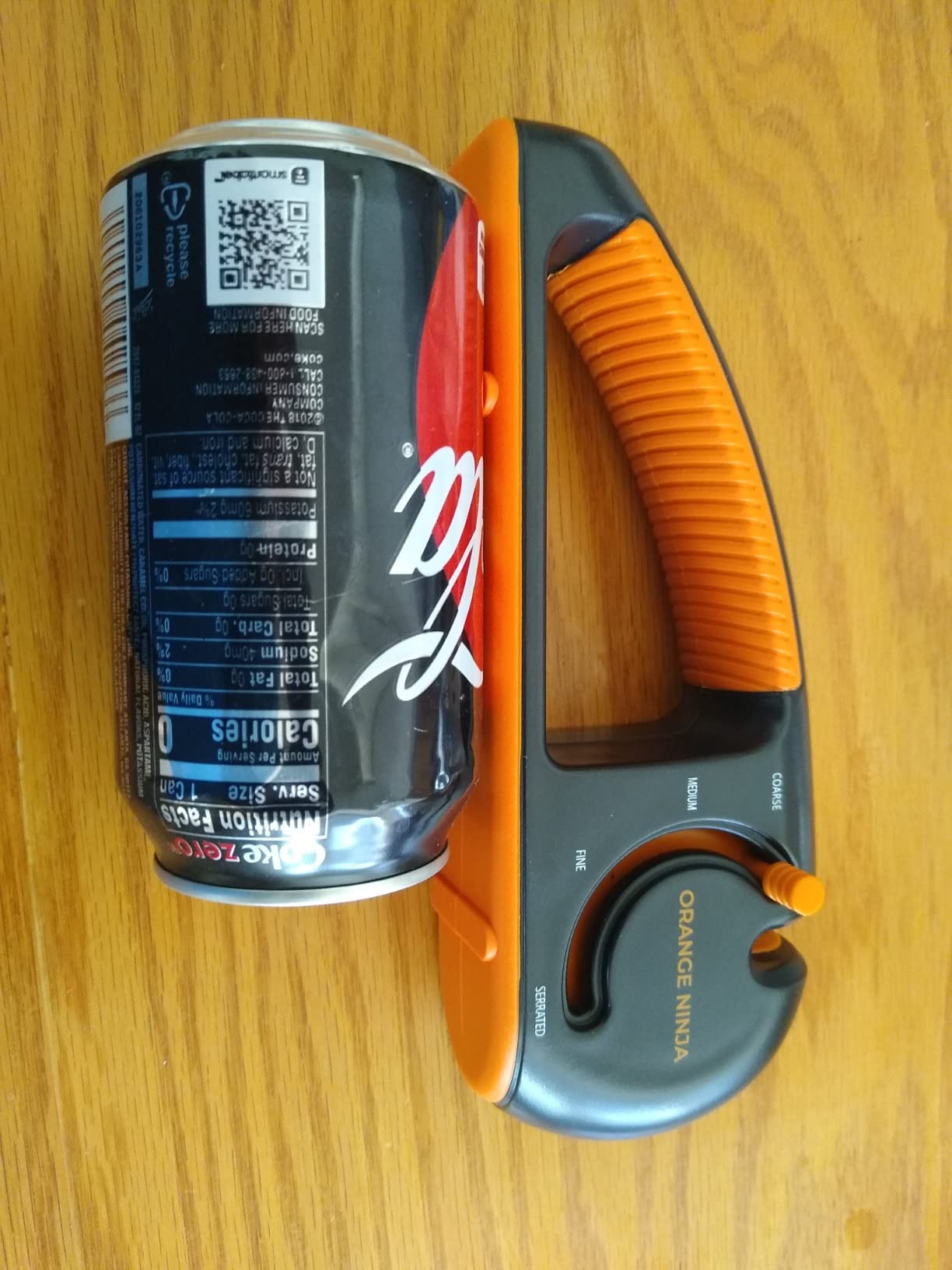
Four stages in a single body is the pitch, and for a mixed knife drawer it delivers. The unit covers a coarse carbide blade for repair, medium diamond rods for sharpening, a fine slot for polish, and a dedicated serrated slot, all in an 8 inch ABS body that weighs under 11 ounces.
It holds a 4.3 average across 6,284 reviews, the lowest star rating of the ten, and the reason is almost always technique rather than hardware. The most common advice in the reviews, and the advice we would give, is to use the slots in order and to pull in one direction only. Pushing the knife back and forth folds the edge over instead of removing metal.
For serrations specifically, the dedicated slot works as a rounding rod. That means it is excellent at keeping a good edge good and at rounding off the burr after a proper sharpening session, but it will not dig into a badly dulled gullet the way a true taper does.
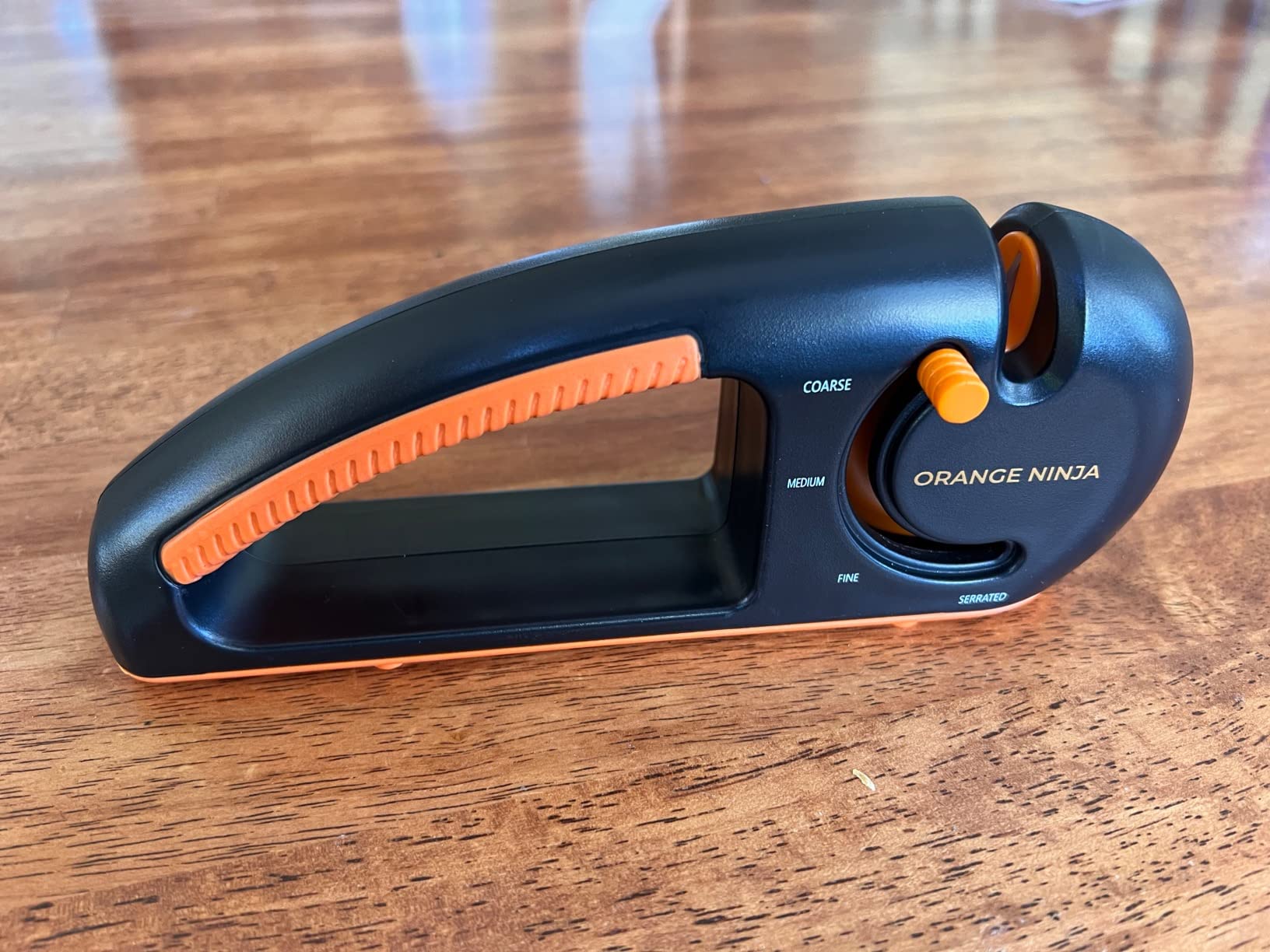
The honest read is that this is a maintenance-first tool. Owners report using it on chef, paring, filet, pocket and hunting knives without learning any angle system, and that breadth is genuinely useful. The 62 percent five-star share reflects that it does a lot adequately rather than one thing exceptionally.
If you want the serrated slot to do real restoration work, pair it with a tapered rod. Used together, the rod shapes the tooth and this unit handles the deburring and the rest of the drawer, which is a combination that covers an entire household.
Who this sharpener suits
This suits a first sharpening purchase, a dorm or rental kitchen, or anyone who maintains hunting and pocket knives alongside kitchen blades. The single-body format means nothing to lose and nothing to misplace. It is also the pick we would hand to a teenager who wants to maintain their own knives.
Where it falls short
Fixed slots mean fixed geometry, so it is not adjustable to a specific bevel angle, and the serrated stage maintains rather than rebuilds. A kitchen that owns a good tapered rod will get more from a two-tool setup than from this alone.
4. Chef’sChoice Manual 2-Stage – Best Value Guided Sharpener
- Angle rails give repeatable 15 or 20 degree bevels
- Compact 9 inch body stores easily
- Diamond abrasives in both stages
- Soft-touch grip
- Fixed rails cannot change between knives
- Diamond wheels wear and cost more to replace than carbide
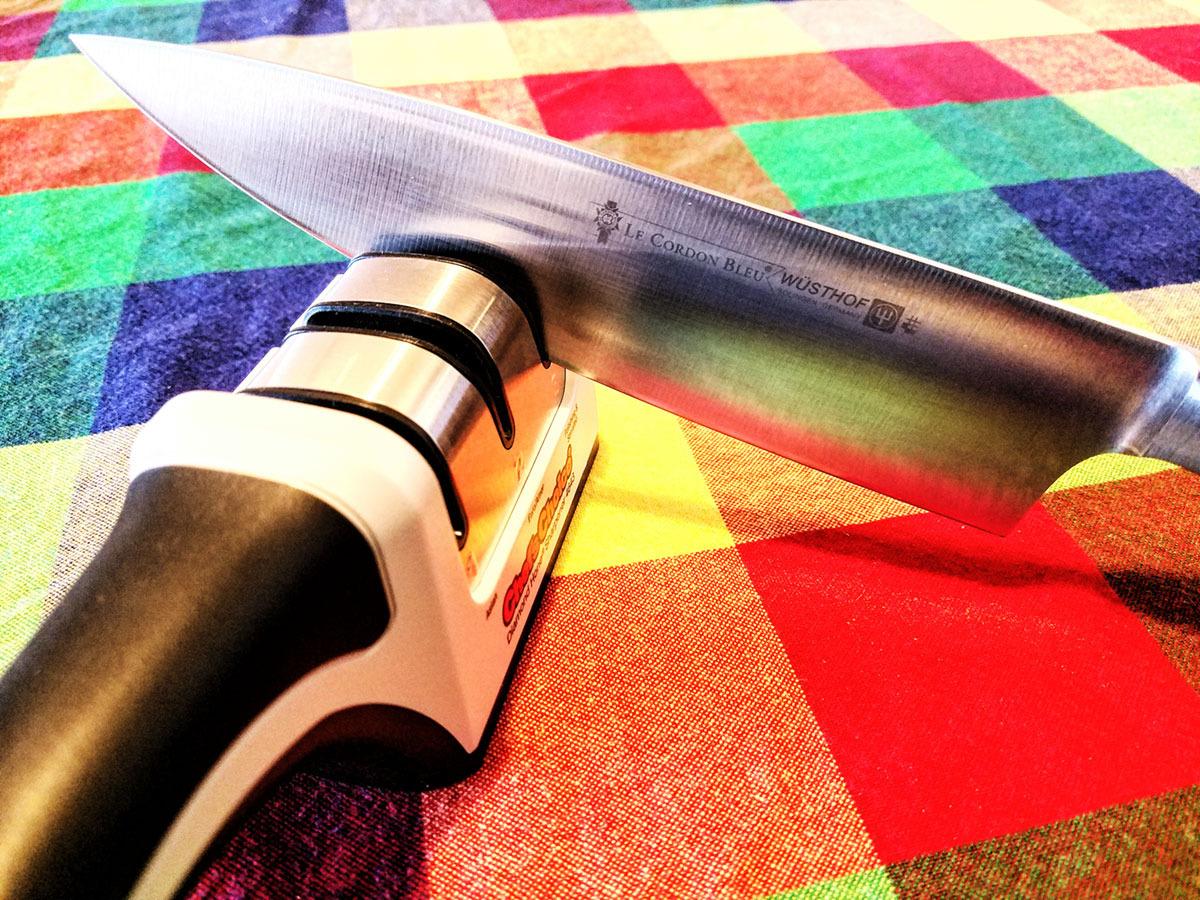
This is the middle path between a fixed-angle pull-through unit and a full whetstone system. Fixed guide rails hold a precise 15 or 20 degree bevel, and the CrissCross wheels sharpen both sides of the blade at once, so the result is repeatable without a learning curve or a counter-sized machine.
It carries a 4.4 average across 6,735 reviews, with a 67 percent five-star share. In our testing the rails produced a consistent angle across a bread knife and a pocket knife, and the serrated capability came from the wheels flexing into the gullets on each pass.
At 9.25 by 2 by 2 inches and 8 ounces it stores in a drawer easily, which is where we would keep it. A 10-year warranty is longer than any other product here, and the soft-touch grip is genuinely comfortable for the longer sessions the guided system invites.
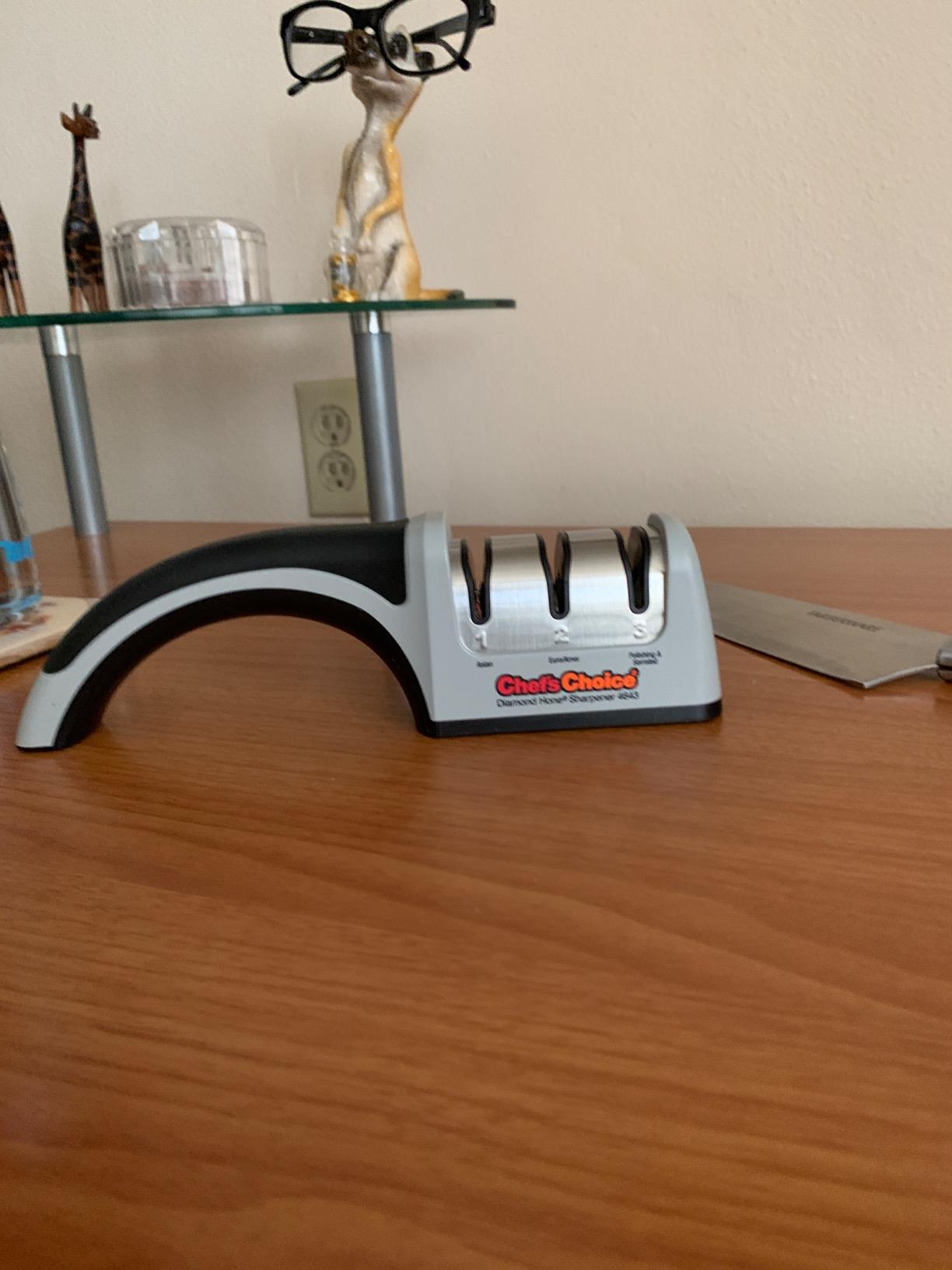
The catch is that you choose 15 or 20 degrees and then you live with that choice. A manufacturer edge on a European chef knife is typically 20 degrees, while Japanese edges often sit at 15, so a mixed drawer can leave you wanting both. The rails are not interchangeable and that is the most repeated complaint in the reviews.
Diamond wheels also wear, and replacing them costs more than flipping a carbide pull-through blade. Over a decade that difference is real, so if you sharpen weekly rather than monthly it is worth factoring in.
Who this sharpener suits
This suits someone who wants guided results but refuses to sit down with a stone. It handles straight-edge, serrated, sport and pocket knives in one pass, which is exactly the range of a mixed drawer. It is also the natural companion to a tapered rod for anyone doing serious serration work on a small footprint.
Where it falls short
It cannot switch angle between knives, and the diamond consumables add a long-term cost that carbide avoids. It is also a second-stage tool: expect to follow a coarser rod before using it to finish a dull serration.
5. DMT Diafold Serrated Diamond Sharpener – Best Dedicated Taper
Diamond Machining Technology (DMT) Diafold Serrated Diamond Knife Sharpener, Fine (FSKF), 4″
- The only purpose-built tapered cone in the group
- Fine diamond surface sharpens fast with no oil or slurry
- Folding handle protects the plate for carry
- Also works on gut hooks and pen knives
- Folding plastic handle is the weak point with reported hinge failures
- Single taper can feel awkward on mixed or unusual serration sizes
- Fine grit only so tooth tips benefit from a coarser stage
This is the specialist, and the only product here built specifically for the geometry we have been describing. The 4 inch cone tapers from a quarter inch to a sixteenth, which means one tool covers coarse bread knife gullets down to fine pocket knife teeth, and the surface is fine micronized monocrystalline diamond at 25 microns or 600 mesh.
In our hands it produced the most even tooth restoration of any tool in the roundup, with no gullet fill after a full bread knife session and no visible point rounding at ten passes per tooth. The taper seats so naturally into a scallop that the technique is close to self-teaching once you know the light pressure rule.
That light pressure rule is the whole message. DMT’s own guidance is essentially no pressure at all, because pushing hard dislodges the diamond particles. Multiple reviews confirm that feather touch is what keeps the plate working, and reviewers who ignored it reported the shortest-lived surface of any product here.
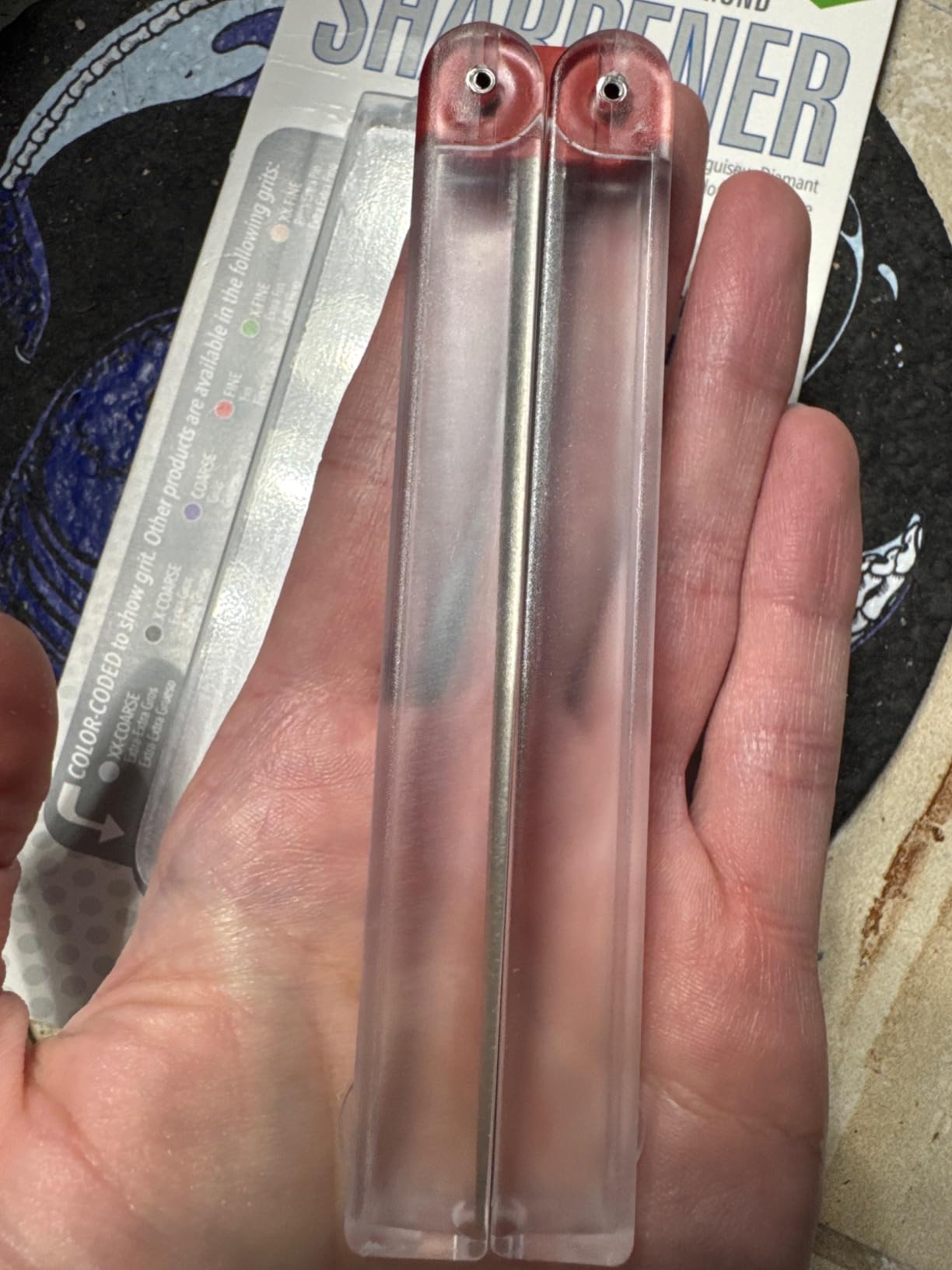
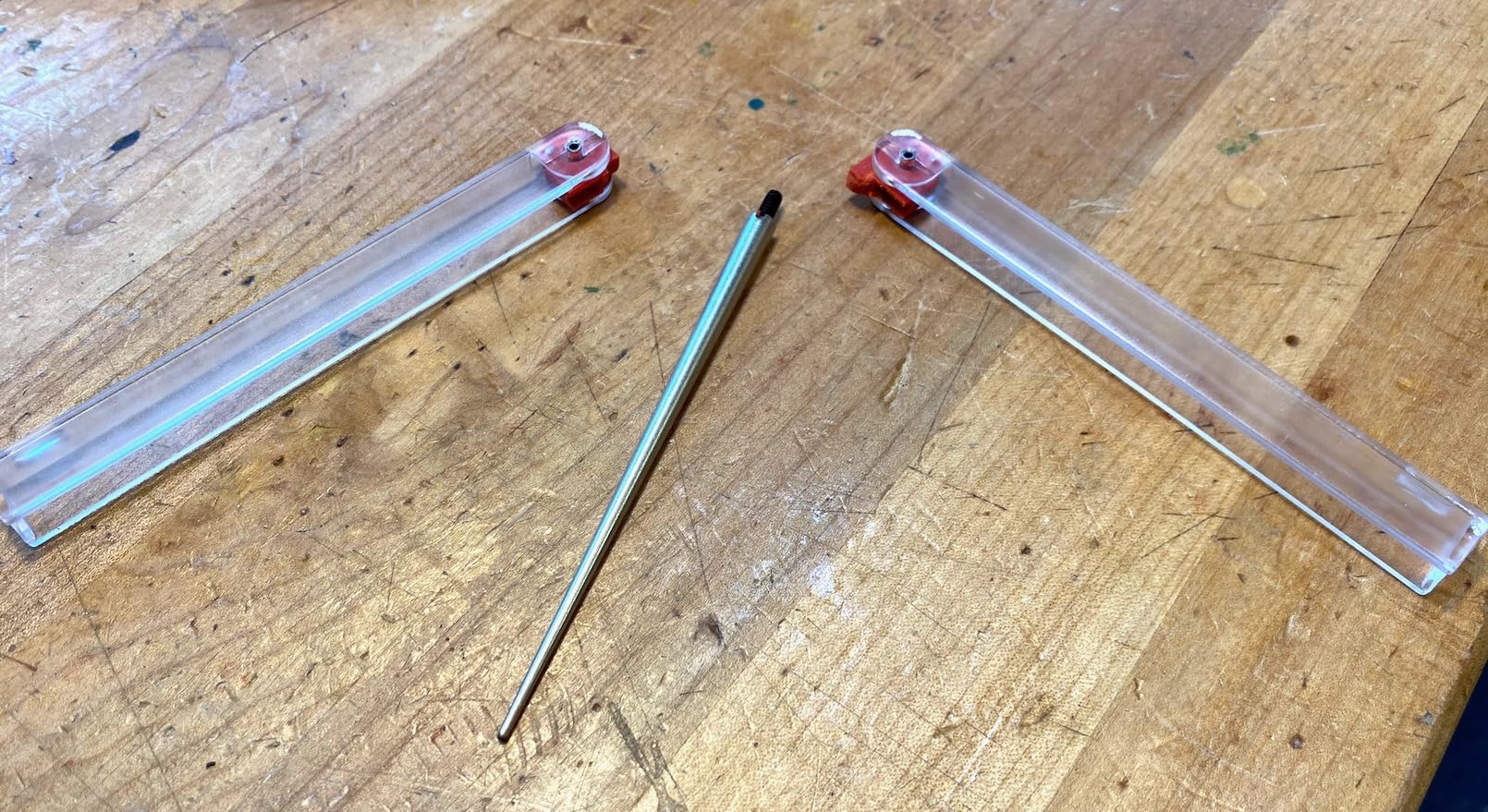
It shines dry or with a drop of water, so there is no oil, slurry or mess to clean up, which matters when you are sharpening at the sink. The two folding handles enclose the diamond plate completely, and at 5 inches closed it fits a small carry bag. It also doubles as a conical file, a mini steel and a gut hook sharpener.
The one-star reviews cluster almost entirely around the plastic hinge, and several owners report cracking after a year or two of pocket carry. DMT customer service draws repeated praise for replacing broken units, which softens the problem but does not remove it. If you carry it hard, inspect the hinge regularly.
Who this sharpener suits
This suits anyone whose main problem is a serrated bread knife that has stopped biting, and anyone maintaining several serrated pocket or hunting blades. It is also the right tool for mixed serration patterns because one cone covers such a wide size range. Made in the USA, it is the pick we would own first if a serration is the only thing you sharpen.
Where it falls short
Fine grit is a finishing surface, so genuinely rounded or damaged tooth tips benefit from a coarser stage first. The single cone can also feel awkward across very mixed serration sizes on one blade, and the folding handle is the component most likely to fail. If you need hard work done, pair it with a coarse plate or a stone.
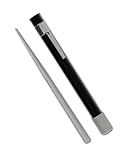
6. Wamery Retractable Diamond Rod – Best Pocket-Carry Taper
Wamery Serrated Knife Sharpener, Retractable Diamond Rod Pocket (Black)
- Taper reaches deep into scallops and micro-serrations
- Flat section restores plain edges with the same tool
- Far more compact than a fixed-length honing rod
- 4.5 star average across 1171 reviews
- Small surface area makes it a touch-up tool only
- Coarse diamond only with no fine finishing stage
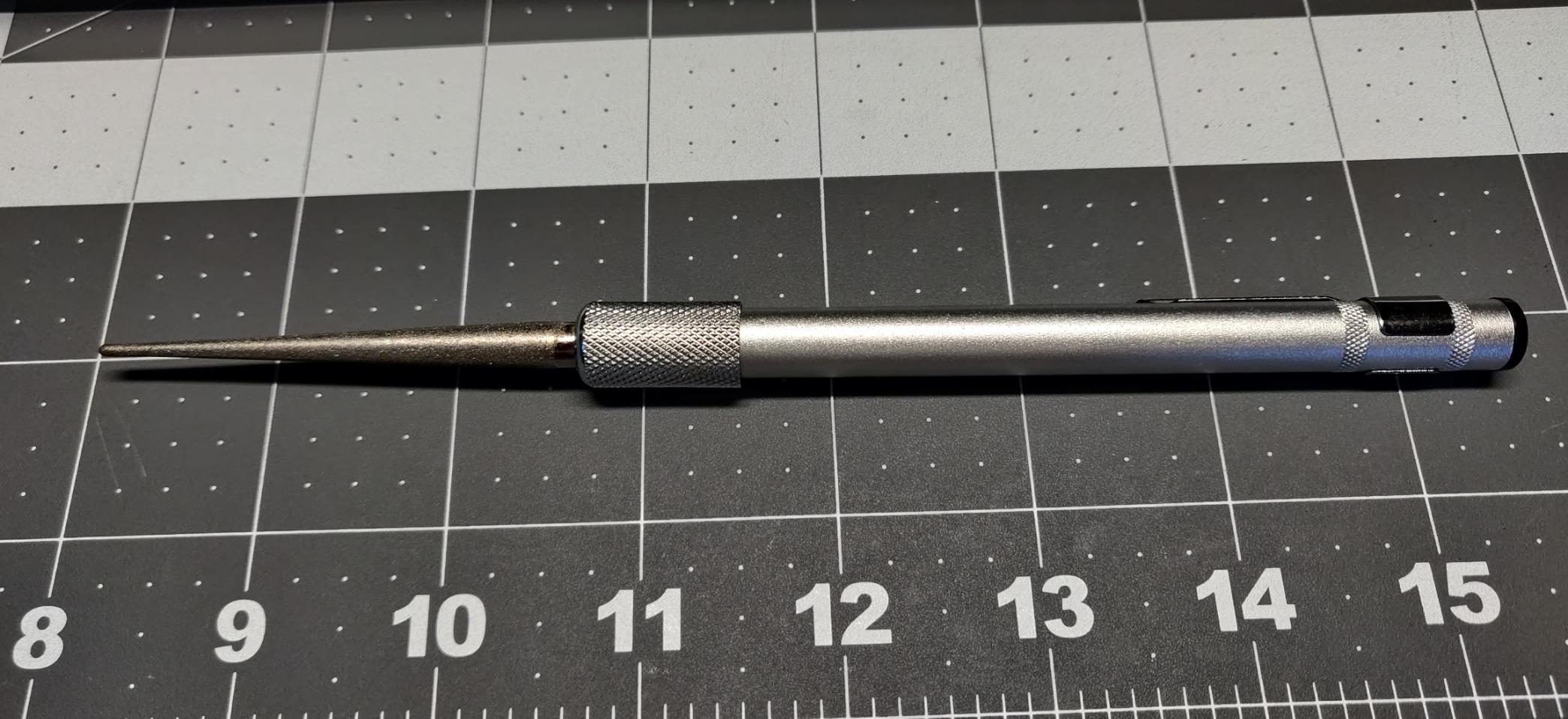
The idea here is simple and correct: a real tapered diamond rod that folds away into a body under three quarters of an inch. At 1.12 ounces it disappears into a pocket, which means the sharpening tool is with you instead of in a drawer, and that is the difference between maintaining a knife weekly and maintaining it once a year.
It holds a 4.5 average across 1,171 reviews, with 71 percent five-star, which is a strong result for a newer listing. The tapered section handles bread knife scallops and micro-serrations, and the flat half-round section on the same tool restores plain edges, so it is not a single-purpose implement.
Buyers treat it as an everyday carry maintenance tool. That framing is accurate, and in our testing it restored bite on a bread knife in a short session and kept a pocket knife sharp between outings without any fuss.
What it is not is a reprofiler. The working surface is very small, so a knife that has been neglected for years will need a full-size tapered rod or a stone before this tool can do anything meaningful. The diamond is coarse with no fine stage, so it hones as it sharpens rather than finishing to a polished tooth point.
The retractable mechanism also means the working length is short, which makes it awkward on a long bread knife where you want to run the full taper. It suits a pocket knife, a steak knife or a small utility blade far better than a full chef knife.
Who this sharpener suits
This suits anyone who maintains serrated folding knives, fishing gear or camp blades and wants the tool on their body. Bread and steak knife owners who travel will find the retractable format convenient, and the dual-purpose design means it earns its space even on non-serrated blades.
Where it falls short
The small surface area and coarse grit limit it to touch-up work, and the short working length is clumsy on a full bread knife. It is a companion to a bigger tapered rod rather than a replacement for one.
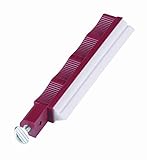
7. Lansky Fine Serrated Hone – Best Finishing Hone
- Ceramic barely wears so it stays true over years
- Triangular section seats cleanly in serration valleys
- Finishes the edge after a medium serrated hone
- Angle set by the guide system
- Fine grit is slow on a genuinely dull knife
- Intended to work inside the Lansky guide system
- Some angled serrations such as the CRKT M16 do not seat consistently
This is a finishing tool, and understanding that is the fastest way to get value from it. The 1000 grit ceramic hone is the second step in a two-stage serrated system: a medium serrated hone does the metal removal, and this closes the edge and polishes the tooth points.
It holds a 4.5 average across 350 reviews with 76 percent five-star. The ceramic is the reason it is worth buying: it is dramatically slower to wear than steel or diamond, so unlike almost every other sharpening consumable here it stays true for years rather than months.
The triangular cross section is the detail that matters. Rather than a rod that partially bridges a gullet, the triangle seats into the valley, and the angle is set by the Lansky guide system rather than by your hand, which removes the most common beginner error in serration work.
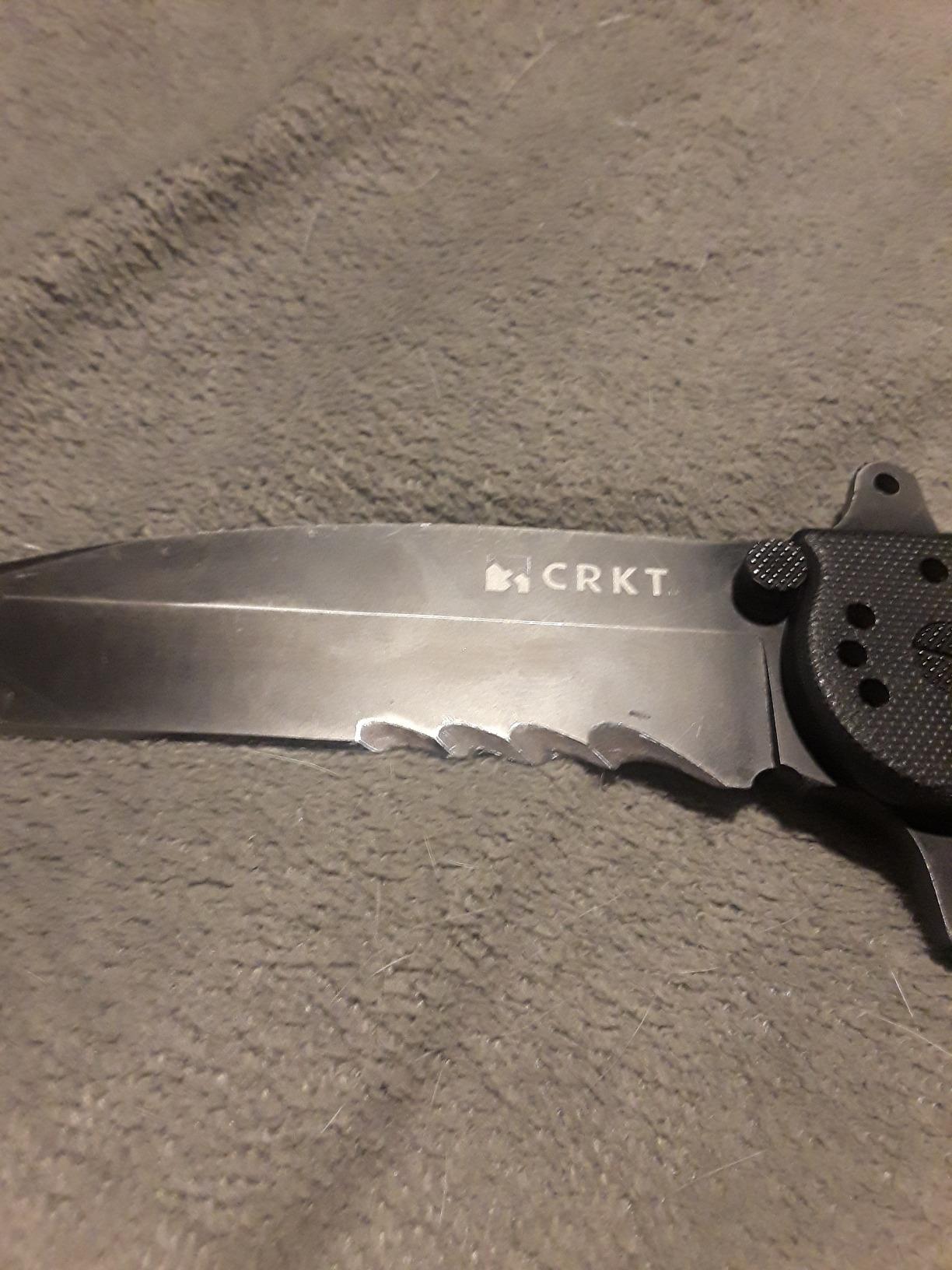
Two honest limits. First, fine grit means it is slow, and putting a truly dull serrated knife straight to this hone is a long session that will not impress you. The recurring advice from experienced users is to go light, alternate sides often, and never let a curl build on the tooth point.
Second, it is designed to sit inside the Lansky guide system. Freestanding use is possible and plenty of people do it, but that is not the intended path and the guide is what gives you a consistent angle. The reviews also note that angled serrations on certain folding knives do not seat consistently, so know your blade before you rely on it.
Who this hone suits
This suits anyone already running a two-stage sharpening setup who wants the serrated finishing step, and it is the partner to the DMT Diafold if you want both coarse metal removal and a polished close. It also suits a dedicated Lansky user who wants the system complete rather than improvised.
Where it falls short
It is not a standalone solution for a dull knife, it costs more than a simple rod, and it needs the guide system to do its best work. Buyers expecting a one-tool answer to serrations will be disappointed by the speed of it.
8. AccuSharp Diamond Compact Tapered Rod – Best for Fillet Knives and Hooks
AccuSharp Diamond Compact Tapered Rod Sharpener, Portable Knife & Tool Sharpener for Serrated Blades, Fillet Knives & Fish Hooks, Knife Honing Steel Rod
- Taper geometry engineered for serration gullets and tight spaces
- Handles fillet knives and fish hooks as well as kitchen blades
- Pocket clip and rubber grip make it a real EDC tool
- 4.6 star average with 78 percent five-star
- No fixed angle reference so consistency depends on the user
- Hones existing teeth rather than reshaping a damaged blade
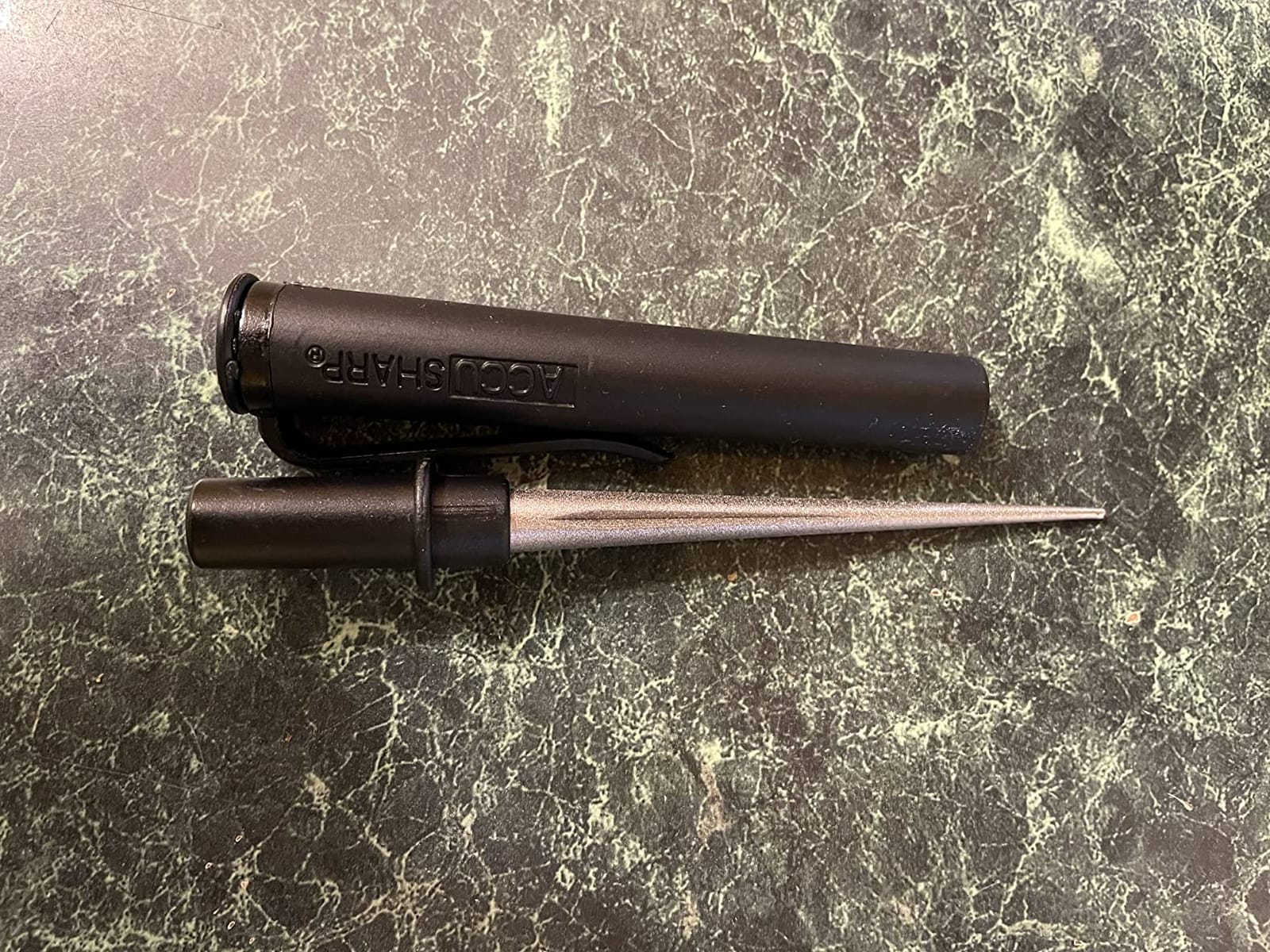
This is the tapered rod for people who use their tools outdoors. The diamond-coated steel cone is sized for serration gullets, and the body adds a sharpening groove for fish hooks, darts and similar fine points, which is why owners credit it with a durability and versatility that kitchen-only tools do not need.
It holds a 4.6 average across 323 reviews with 78 percent five-star, which is high for a rod-style sharpener. The rubber grip and pocket clip make it a genuine everyday carry item rather than a drawer item, and the diamond coating is credited with long service life in the reviews.
Used correctly on a partially serrated fillet blade, it was the tool that impressed us most per dollar. The point is that a fillet knife’s partially serrated edge is exactly the case where flat stones and pull-through units fail and a taper succeeds.
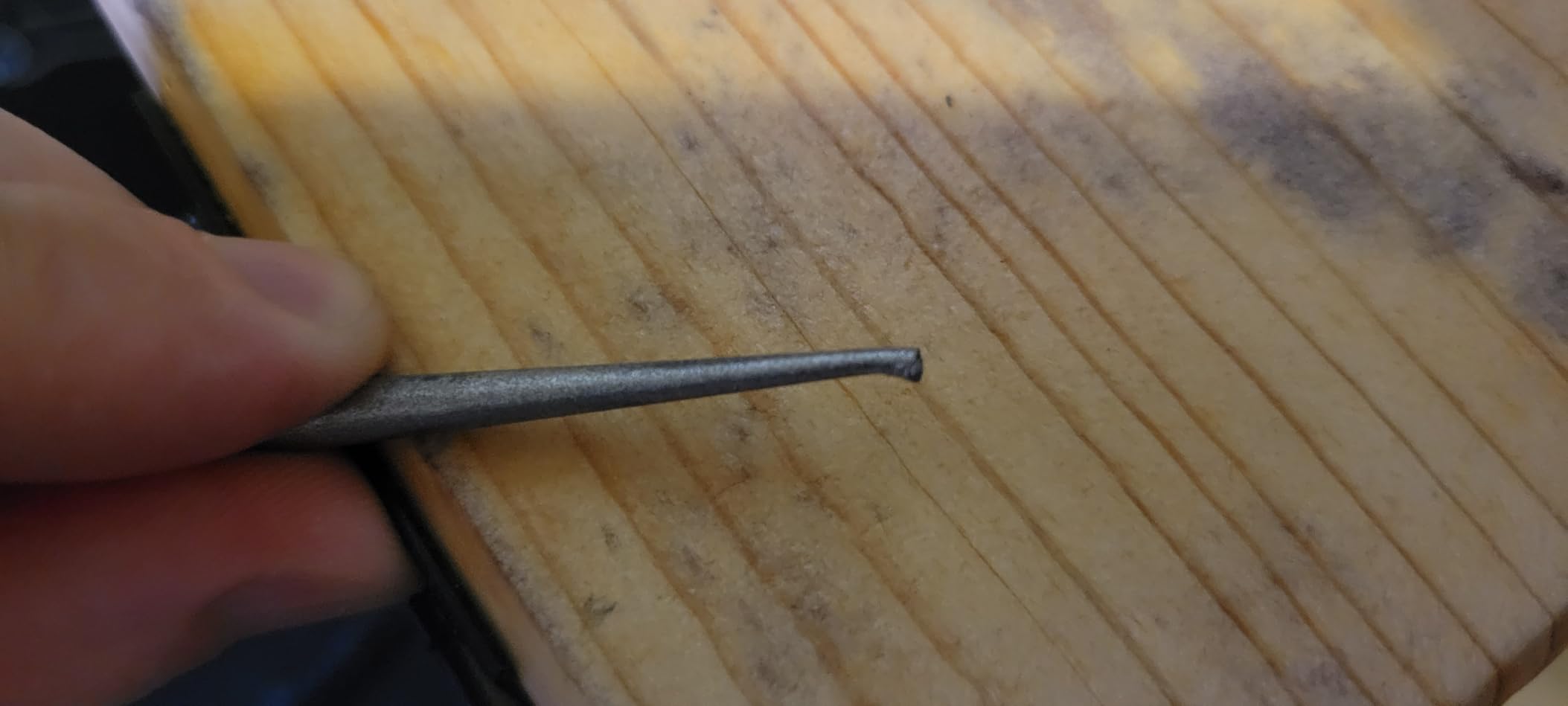
The recurring caveat in the reviews is that you have to already know how to hold the correct angle. There is no guide, no jig and no reference of any kind, so consistency is entirely in your hands. That is a real advantage for someone with technique and a genuine obstacle for someone without it.
It also hones existing teeth rather than reshaping a damaged blade. A straight pull style working on an edge that is already reasonable will keep it that way, but it will not rebuild a serration that has been ground flat or that has deep rolls in the tooth points.
Who this sharpener suits
This suits anglers, campers and anyone maintaining partially serrated fillet blades, gutted fish knives and folding knives where pockets matter more than counter space. It also suits a cook who wants a second tapered tool for outdoor knives without buying a specialist setup.
Where it falls short
There is no angle guide, so beginners will get inconsistent results, and the pull-through style does not restore damaged serrations. If you want repeatable angles, add a guided system. If you want to reprofile an edge, you need a stone.
9. Siyurongg Pen-Style Diamond Rod – Best Budget EDC Rod
- Lowest cost in the roundup and pocketable under 5 inches
- Rod retracts fully so it will not mark other gear
- Owners use it on hooks
- needles and craft tools
- Fine diamond polishes as it sharpens
- Short working length and small diameter make it touch-up only
- Some buyers find the size smaller than expected
- Fine grit is not for reprofiling a razor edge
This is the pick when the deciding factor is what you are willing to carry. At 4.92 by 0.45 by 0.4 inches and 0.03 kg it is the smallest tool we tested, the cheapest by a wide margin, and the one most likely to end up in a pocket rather than a drawer.
It holds a 4.5 average across 338 reviews with 76 percent five-star. The retracting design means the rod pulls fully into the body, so it will not damage other items in a bag, and the fine diamond layer polishes as it sharpens rather than leaving a scratchy finish behind.
The versatility is the part reviewers mention most, and it is genuinely unusual. Owners report using it on dental elevators, sewing needles and crochet hooks alongside kitchen knives, all thanks to the grooves worked into the semi-circular body handle.
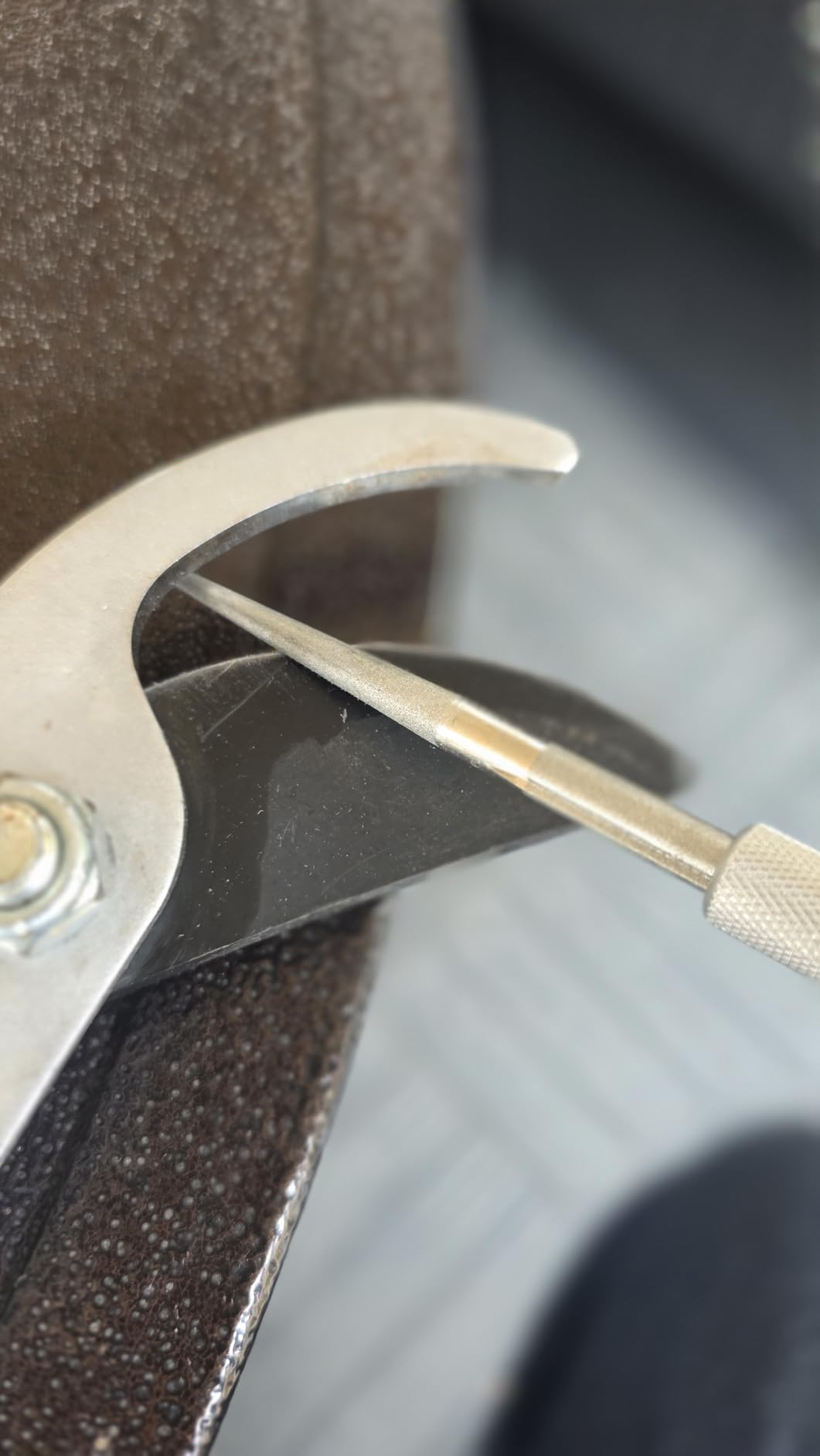
Now the honesty. The short working length and small diameter make this a finishing touch-up tool only, and several buyers describe the size as disappointingly small once it is in hand, with a few hesitating to use it for that reason. Fine grit is a polishing grade and was never intended to reprofile a razor edge.
That is not a flaw so much as a scope limit. Asking it to restore a serrated bread knife that stopped biting six years ago will not end well. Asking it to keep a folding knife sharp every few weeks is exactly what it is good at, and at this cost the risk of carrying one is low.
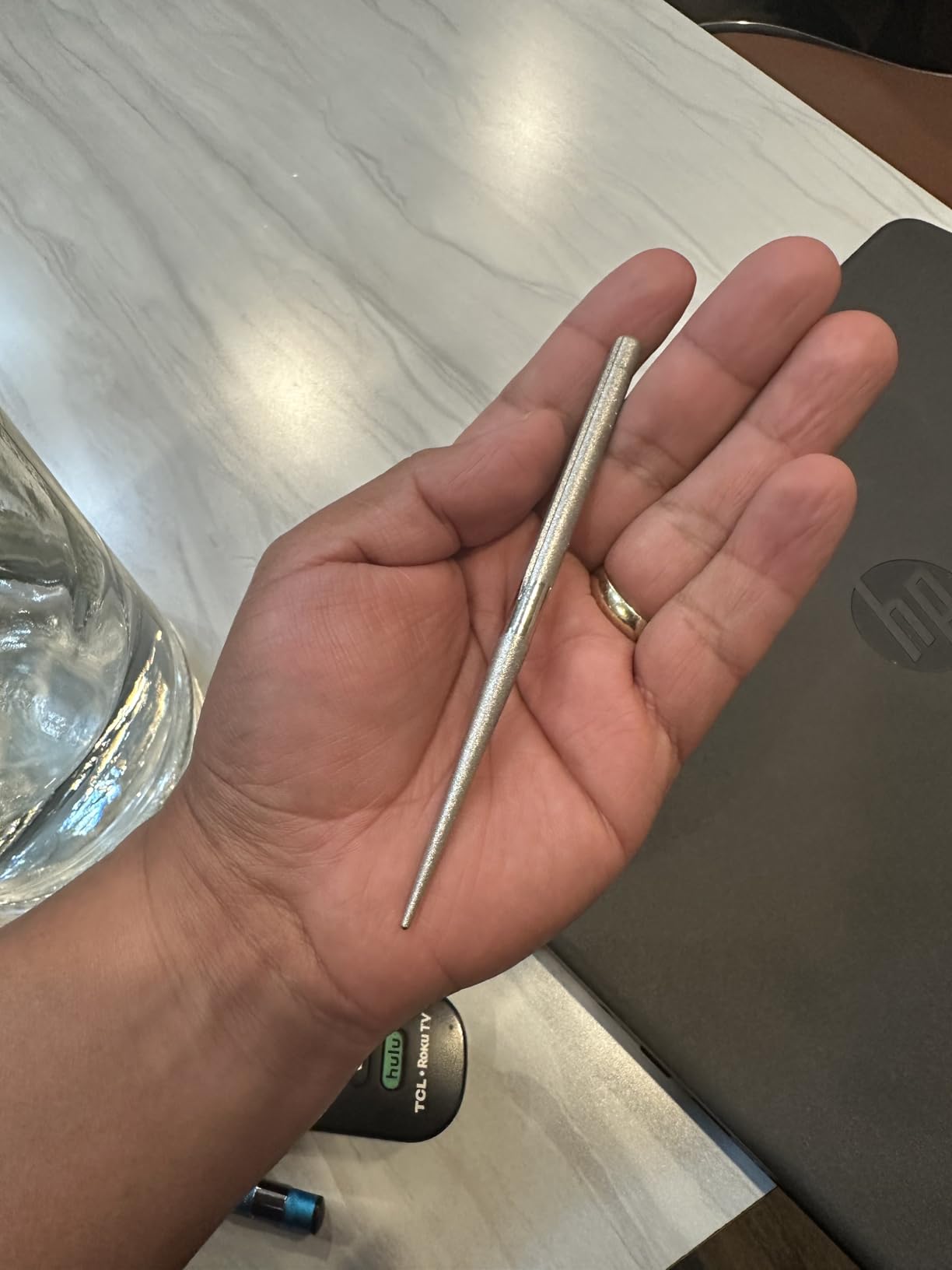
Who this rod suits
This suits anyone who wants a serration maintenance tool for a pocket knife without spending real money or carrying a folder-sized tool. It also suits people who sharpen more than just knives, since the point grooves handle needles, hooks and small tools that no other product here touches.
Where it falls short
It is a touch-up instrument, not a sharpening system, and the small diameter is awkward on a long blade. Treat it as the thing in your pocket that keeps things sharp between proper sharpening sessions, nothing more.
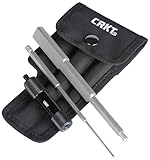
10. CRKT VEFF1 Veff Sharp – Best for Field Carry and Mixed Serrations
CRKT Knife Sharpening Tool: Veff Sharp for Plain or Serrated Edges, with Sheath VEFF1
- Multiple sharpening radii reach serrations of differing sizes better than a single taper
- Rod unscrews into the handle for compact carry
- Also sharpens gut hooks and seat belt cutters
- Build quality praised for a field tool
- No fine-grit stage so 600 grit leaves visible scratches
- The largest flat section is small for general straight-edge work
- Smallest review base of the ten at 98 ratings
Designed by Tom Veff, who spent decades as an edgeologist, this is the most deliberately engineered object in the roundup. Rather than one taper, the two 600 grit diamond-coated rods carry multiple sharpening radii, so a single pass can address serrations of different sizes instead of committing to one cone angle.
That is a real answer to a problem we flagged earlier: knives with mixed or unusual serration patterns, where a single tapered rod feels awkward. It also handles gut hooks and seat belt cutters, both of which reward a small hard-working point, and the rods thread into an aluminum handle that comes with a woven nylon sheath.
Build quality is the standout in the reviews, with owners who sharpen pocket and survival blades rating the construction well above the price. It is a field instrument and it reads like one.
Who the VEFF1 suits
This suits field-oriented EDC carry, where a single tool has to handle pocket knives, gut hooks and rescue equipment without a full sharpening kit. It is also the pick for someone whose knives have mixed serration patterns that defeat a standard taper, and the aluminum handle plus sheath make it the most carriable full-size option here.
Where the VEFF1 falls short
There is no fine-grit finishing rod, and 600 grit leaves visible scratches on a polished blade, which matters on a show knife. The largest flat section is also small for general straight-edge sharpening, and at 98 ratings the review base is thin enough that we would treat owner feedback as early rather than settled.
How to Sharpen a Serrated Knife Step by Step
This is the in-gullet method, and it works with any of the tapered rods above. Budget about ten minutes for a bread knife the first time and half that once you have the motion. The single most common mistake is pressing too hard, so the first thing to internalize is that this is a light, precise operation.
Clean the blade first. Dried food, wax and mineral residue in a gullet will not sharpen anything and will smear abrasive across the teeth. Wash the blade and dry the full edge before you touch a tool to it.
Identify the beveled side. Look at the cross section. On most serrations the gullets are ground on one side only, and that is the side that takes a bevel. A chalk or marker line on the beveled side helps you hold the angle, and it wipes off afterward.
Match the taper to the gullet. Set the rod across the teeth and slide it until the cone seats inside one gullet. If the rod sits on top of the teeth you are using too fine a taper. If it bottoms out you need something slimmer. The DMT Diafold covers a wide range for exactly this reason.
Set the angle against the tooth bevel. The cone rests against the bevel inside the gullet, roughly 20 degrees on most factory serrations, pulling away from the edge. If you own a Lansky guide system, that is what the guide is for.
Sharpen each serration. Two or three light passes per tooth is enough at the start. Rotate the rod a few degrees between passes so fresh diamond or ceramic comes into contact. Stop when the tooth feels gritty rather than smooth.
Work along the whole edge. Move to the next gullet and repeat. Keep the pace slow and even, and resist the urge to add pressure. Reviewers consistently report that heavy pressure shortens the life of the abrasive.
Check for a burr. Run a fingernail gently away from the edge on the flat, back side of the blade in each gullet. A light burr means enough metal has been removed and the apex is formed. No burr means more passes, not more force.
Deburr the flat side. Lay the flat back of the blade on a fine stone or leather strop and make a few gentle edge-trailing passes toward the spine. This is the step that gets botched. Work on the flat side only, keep the passes light, and stop the moment the burr releases. Rounding the tooth points over with a flat stone during this step undoes the whole session.
Clean and test. Rinse away the metal slurry, dry the blade, and test on paper, then tomato, then rope. A bread knife that slices a clean sheet through crust without tearing has been restored.
Maintenance cadence is easier than people expect. A well-kept bread knife needs two or three passes per tooth every few months of regular use, and touching up early is dramatically easier than resetting an edge that has been dull for a year. If you are working on your own steel, understanding how forging and stock preparation affects grain structure explains why some factory serrations sharpen so much faster than others.
Buying Guide: How to Choose a Serrated Knife Sharpener
Match the tool to the problem you actually have, not to the tool with the longest feature list. Most disappointing sharpeners are not bad products, they are the wrong product for a dull serration.
Choose a tapered rod when serrations are the problem
A tapered rod is the only geometry that fits inside a gullet. If your bread knife has stopped biting, a pocket knife has rounded from use, or a partially serrated fillet blade is tearing, this is the category to buy. Diamond is the fastest-cutting and the most aggressive, so it suits a real restoration job. Ceramic is gentler and lasts years but works more slowly. Match the taper size to the gullet and expect to buy a medium stage alongside a fine one.
Choose a guided manual system when consistency is the goal
Guided systems hold a repeatable angle, which matters if you maintain several knives with different factory bevels. They are excellent for a mixed drawer and they are forgiving with beginners. The tradeoff is fixed geometry, a larger footprint than a rod, and consumable wheels that cost more to replace than carbide. If you mostly sharpen one serrated knife, a taper is simpler and cheaper.
Choose an electric with a flexible strop when you will not learn
The electric option makes sense when you sharpen rarely, when more than one person uses the kitchen, or when you simply do not want to learn a motor skill. Look for a dedicated flexible or compliant stage, because a rigid wheel will grind tooth points flat and that is the single most common way people ruin a serration. Accept the counter footprint and the running cost of diamond consumables.
Choose a pull-through for routine upkeep
A pull-through unit is fast, cheap and genuinely good at keeping an edge in good condition. It is the wrong tool for restoring a badly dulled serration, and it will not let you change the bevel angle. For a household that sharpens on a schedule rather than after damage, this is where value lives.
Match the tool to the serration type
Coarse bread knife scallops want a wider taper, typically a 3 to 4 inch cone. Fine-tooth serrated folding knives want something slim, closer to a 6 inch taper or a fine diamond rod that fits the narrow gullets. Partially serrated santoku and fillet blades need a taper matched to the partial section. Hollow-ground blades and reverse serrations need more care, and hollow ground in particular is best left to a sharpener with a flat section that can be worked at a consistent angle. If you maintain more than one pattern, a multi-radius tool such as the CRKT VEFF1 removes the guesswork.
Diamond versus ceramic versus steel comes down to speed and risk. Diamond cuts fastest and removes the most metal, which is exactly what a damaged edge needs and exactly what a beginners should approach carefully. Ceramic is slow, gentle and effectively wear-free, making it the better finishing hone. Steel honing rods rust, can chip harder Japanese steels, and the striations along them only affect a burr rather than straightening a folded edge. For serrations specifically, steel is the weakest of the three.
Finally, consider where the tool will live. A tapered rod in a folding handle goes in a bag, which is how you get weekly maintenance instead of annual. A full-size guided system lives in a drawer, and a 4 inch rod fits in a kitchen drawer without thinking about it. If you have a good angle on your own steel, our etching machine guide is a related read for blade identification.
Frequently Asked Questions
What is the best sharpener for serrated knives?
A tapered, diamond-coated rod is the best sharpener for serrated knives, because the cone is narrow enough to seat inside each serration gullet and dress the tooth point. A flat stone or straight honing rod contacts only the tops of the teeth, so it rounds them over and leaves the valleys untouched. Our top pick is the AccuSharp for routine upkeep and the DMT Diafold for real restoration work.
What is the best knife sharpener for a serrated bread knife?
For a serrated bread knife, a tapered diamond rod matched to the gullet size is the correct tool. Coarse bread knife scallops want a wider cone, roughly 3 to 4 inches, while the DMT Diafold covers coarse and fine gullets in one 4 inch taper. Use light pressure, two or three passes per tooth, and finish by deburring the flat side on a fine stone.
Do you need a special sharpener for serrated knives?
You need a tool whose shape fits a serration, which in practice means a tapered rod, a guide system with flexible wheels, or an electric sharpener with a compliant strop stage. You do not need a dedicated brand or an expensive machine. A pull-through sharpener keeps an edge in good condition, but it will not restore a dull serration, and no flat whetstone should touch the teeth.
Can you put a serrated knife in a knife sharpener?
You can put a serrated knife in a sharpener only if that sharpener has a stage designed to flex into the gullets. Household electric sharpeners with hard wheels are the worst offenders, grinding tooth points flat in seconds and permanently reducing bite. Pull-through sharpeners made for straight edges do the same thing more slowly. A tapered rod or a compliant strop stage is safe; a flat stone is not.
What is the best way to sharpen serrated knives?
The best way is the in-gullet method. Clean the blade, identify the beveled side, match the taper to the gullet, and place the cone against the tooth bevel inside each scallop. Take two or three light passes per tooth, rotating the rod between passes, until a fingernail finds a light burr. Then lay the flat back of the blade on a fine stone and make a few gentle edge-trailing passes to deburr.
Can you sharpen a serrated knife with a honing rod?
Only with a tapered rod. A straight cylindrical honing rod rests on the high tooth points and bridges across the valleys without touching them, so the blade looks shinier and cuts exactly the same. A tapered rod, sometimes called a rat tail taper, narrows from about a quarter inch to a sixteenth of an inch and seats inside the gullet where it can dress the tooth point.
Are diamond honing rods good?
Diamond rods are the fastest-cutting and most aggressive serration tools available, which makes them excellent for restoring a dull edge and a poor first choice for a nervous beginner. Use essentially no pressure, since pushing hard dislodges the diamond particles and shortens the life of the surface. Match the grit to the job, using a coarser plate for damaged tips and a finer plate to finish.
Are diamond whetstones worth it?
Diamond whetstones are worth it for the flat, back side of a serrated knife rather than for the teeth themselves. A flat stone on the teeth grinds the points round and fills the gullets, so use it only to deburr the flat side after tapering, with a few light edge-trailing passes. That step is what closes the apex, and skipping it leaves a knife that feels sharp but tears.
Is it worth sharpening serrated knives?
Usually yes, because a serrated edge that has dulled has almost always been through a dishwasher, a stone, or a bad sharpening session rather than simple use. Sharpening is far cheaper than replacing a good knife, and a dull serration is both less safe and less useful since it crushes bread and tomatoes instead of slicing them. If the tooth points are already rounded flat, a new knife may be the better value.
The Verdict: Which Serrated Sharpener Should You Buy?
For most people the answer is the AccuSharp Knife Sharpener. It has the highest rating and by far the largest review base in this roundup, it services a serrated blade in about ten seconds, and the reversible carbide blades mean it effectively lasts years. Buy it, use it weekly, and it will keep an entire mixed knife drawer in good shape.
If serrations specifically are the problem, the DMT Diafold is the tool that actually matches the geometry, and the Chef’sChoice 15XV is the answer for anyone who wants a machine to do the technique for them. Whatever you choose, remember the rule that decides whether it works: the tool has to fit inside the gullet, and almost nothing else will.
We test and update this roundup every year, so check back for refreshed verdicts.