
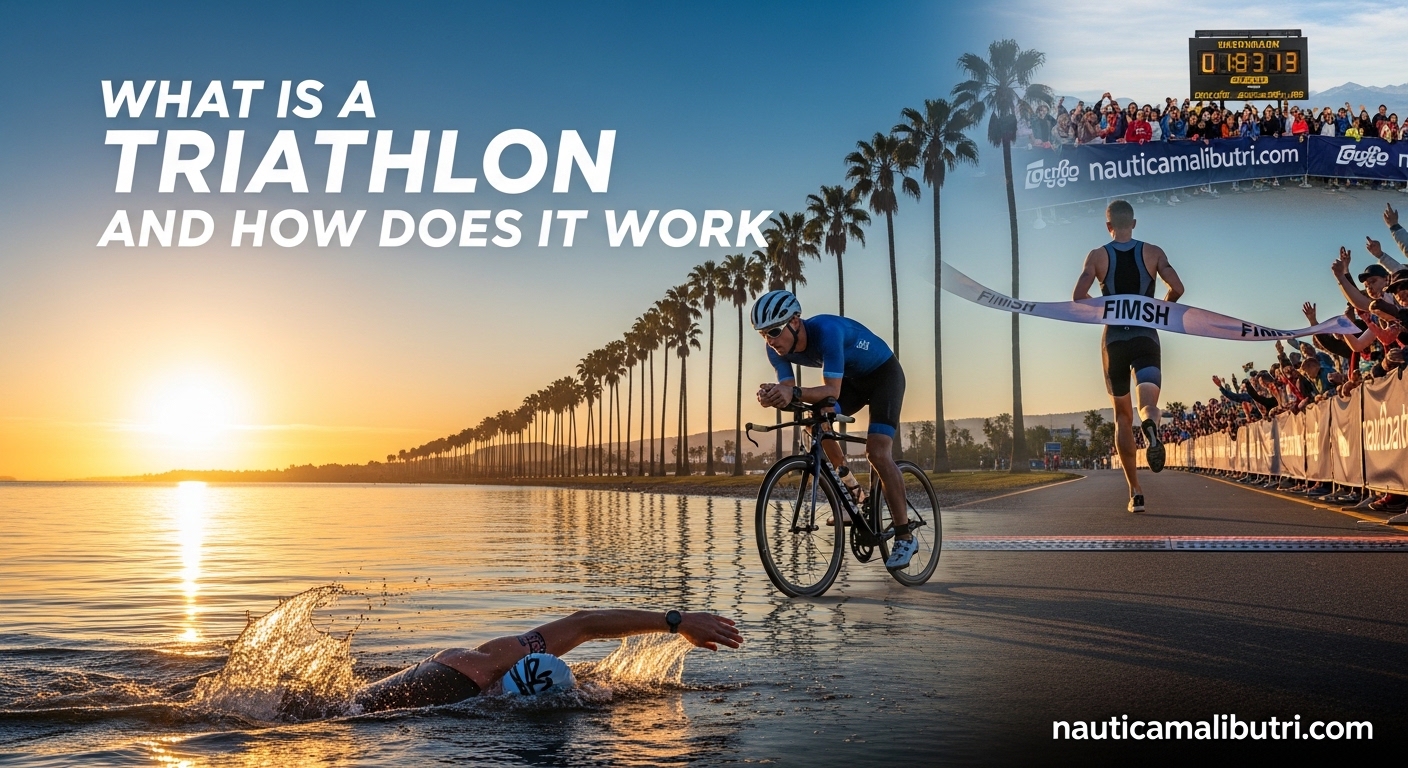
Have you ever watched athletes emerge from the ocean, hop on bikes, and finish with a run along the coast, wondering what drives people to tackle all three sports in a single race? A triathlon is a multisport endurance event, consisting of a swim followed by a bike ride and finished off with a run. This unique combination tests your versatility, endurance, and mental toughness in ways that single-sport events simply cannot match.
If you have ever been curious about triathlons but felt intimidated by the jargon, the gear, or the distances, you are in the right place. This guide breaks down everything you need to know about what a triathlon is and how it works, written specifically for complete beginners. By the end, you will understand exactly what to expect and feel confident about taking your first steps into this welcoming community.
The beauty of triathlon lies in its accessibility. People of all ages, fitness levels, and backgrounds participate in these events. Whether you are a swimmer looking to add variety, a cyclist curious about running, or a complete novice seeking a new challenge, there is a triathlon distance and format perfect for you.
Table of Contents
What Is a Triathlon? The Complete Definition
A triathlon is a continuous multisport race that combines three distinct endurance disciplines performed back-to-back without stopping. The sequence always follows the same order: swimming first, then cycling, and finally running. This order is intentional and designed with athlete safety in mind.
Swimming comes first because it requires the most energy when you are fresh, and performing it while fatigued from cycling or running would be dangerous. Cycling follows the swim, and running comes last because it is the safest discipline to complete when your body is most tired. This sequential structure creates a unique challenge where cumulative fatigue becomes a real factor.
The sport originated in San Diego in 1974 when a group of friends debated which athletes were fittest: swimmers, cyclists, or runners. They decided to settle the question by combining all three sports into one event. That first race had 46 participants and started what would become a global phenomenon.
The modern Ironman triathlon was born in Hawaii in 1978 when U.S. Navy Commander John Collins and his wife Judy issued a challenge combining the Waikiki Roughwater Swim, the Around-Oahu Bike Race, and the Honolulu Marathon. Whoever finished first would be called the Ironman. That first race had 15 starters and 12 finishers, with Gordon Haller becoming the inaugural Ironman champion.
Today, triathlon is governed internationally by World Triathlon and attracts millions of participants worldwide. Ranges vary from super sprint events that take under an hour to complete, to full Ironman races that can take 17 hours or more. The sport has evolved to include various formats, but the core swim-bike-run sequence remains unchanged.
What makes triathlon special is that you compete against the clock and yourself as much as against other athletes. Most participants are age-groupers, meaning they compete within their age and gender categories rather than as professionals. This structure creates a supportive environment where personal achievement is celebrated as much as winning.
How Does a Triathlon Work? From Start to Finish
Understanding the flow of a triathlon race day helps eliminate the anxiety that many beginners feel. A triathlon works as a continuous sequence where you move from one discipline to the next with minimal stopping. The clock starts when you begin the swim and stops when you cross the finish line after the run.
The Swim Leg: Starting Strong
Every triathlon begins with the swim, which can take place in a pool, a lake, a river, or the ocean. Pool swims are most common for beginner-friendly events, while open water swims become standard as distances increase. The Nautica Malibu Triathlon features an ocean swim, making it a classic coastal race experience.
Swim starts come in three main formats. A mass start has all athletes beginning simultaneously, which creates an exciting but potentially chaotic environment as hundreds of swimmers enter the water together. A wave start groups athletes by age, gender, or predicted speed, sending smaller groups into the water at timed intervals. This reduces congestion and is common in larger races. A rolling start sends athletes into the water one at a time at regular intervals, usually based on predicted swim times, creating the most orderly entry.
For ocean swim triathlon events like the Malibu triathlon, you will encounter waves, currents, and salt water. These factors add challenge but also create memorable experiences. Wetsuits are often allowed or required depending on water temperature, providing buoyancy and warmth.
Transition 1 (T1): The Swim-to-Bike Change
After completing the swim, you enter the transition area where your bike is racked. T1 is where you change from swim gear to bike gear. You will exit the water, find your bike rack location, remove your wetsuit if wearing one, put on your helmet, and move your bike to the mount line.
The mount line is a designated point where you can get on your bike. You must walk or run with your bike from the rack to this line before cycling begins. Experienced triathletes practice T1 transitions to minimize time, but beginners should focus on being methodical rather than fast.
The Bike Leg: Covering the Most Distance
The cycling portion covers the greatest distance of the three disciplines. Courses can be looped, out-and-back, or point-to-point, and may take place on closed roads or open roads with traffic control. Road bikes are most common, though time trial bikes appear at longer distances.
Most triathlons follow non-drafting rules, meaning you must maintain a specific distance behind other cyclists unless actively passing. This prevents riders from conserving energy by slipstreaming behind others. The draft zone is typically three bike lengths, and you have 15 seconds to complete a pass once entering this zone.
Some races, particularly draft-legal events following World Triathlon rules, allow cyclists to ride in packs similar to professional cycling. These events require different skills and strategies, but most beginner races are non-drafting.
Aid stations along the bike course offer water, electrolyte drinks, and sometimes nutrition. You should carry your own supplies, but these stations provide backup and opportunities to refuel without stopping your forward progress.
Transition 2 (T2): The Bike-to-Run Change
After completing the bike leg, you approach the dismount line where you must get off your bike and run with it back to your rack. T2 involves racking your bike, removing your helmet, and changing into running shoes. Some athletes wear the same shoes for bike and run if using specific triathlon shoes, but most change footwear.
T2 is generally faster than T1 because there is no wetsuit to remove. However, your legs will feel heavy and strange after cycling, a sensation known as jelly legs. Walking briefly through transition can help your legs adjust to the change in movement pattern.
The Run Leg: The Final Push
The run is where many triathlons are won or lost, particularly because of cumulative fatigue. Your legs have already worked through the swim and bike, so running requires mental toughness and smart pacing. The run course is typically the easiest to follow, with frequent aid stations offering water, sports drinks, and sometimes gels or fruit.
Most beginners walk portions of the run leg, and this is completely acceptable. Many experienced triathletes use a run-walk strategy even in competitive races. The goal is continuous forward motion toward the finish line.
Crossing the finish line brings an incredible sense of accomplishment. You will hear your name announced, receive a medal, and join the community of finishers who have shared this challenging experience. The post-race atmosphere is celebratory and supportive, regardless of finishing time.
Triathlon Distances Explained: Finding Your Perfect Race
Triathlon distances range from beginner-friendly sprints to epic endurance challenges. Understanding these options helps you choose the right starting point for your fitness level and goals.
| Distance | Swim | Bike | Run | Total | Beginner Time |
|---|---|---|---|---|---|
| Super Sprint | 400m (0.25 mi) | 10km (6.2 mi) | 2.5km (1.6 mi) | 12.5km | 45-75 min |
| Sprint | 750m (0.47 mi) | 20km (12.4 mi) | 5km (3.1 mi) | 25.75km | 1.5-2.5 hours |
| Olympic/Standard | 1.5km (0.93 mi) | 40km (24.9 mi) | 10km (6.2 mi) | 51.5km | 2.5-4 hours |
| Half-Ironman (70.3) | 1.9km (1.2 mi) | 90km (56 mi) | 21.1km (13.1 mi) | 113km | 5.5-8 hours |
| Full Ironman (140.6) | 3.8km (2.4 mi) | 180km (112 mi) | 42.2km (26.2 mi) | 226km | 10-17 hours |
The super sprint distance is perfect for first-timers and youth athletes. These events often take place in pools and use short bike and run segments. Many athletes complete their first super sprint in under an hour, making it less intimidating than longer distances.
Sprint triathlons are the most popular distance for beginners transitioning from super sprints or starting with some fitness background. The 750-meter swim, 20-kilometer bike, and 5-kilometer run challenge you without overwhelming your schedule or body. A 2-hour triathlon is a respectable time for beginners at this distance.
The Olympic or standard distance doubles the sprint across all three disciplines and serves as the format for Olympic Games competition. This 51.5-kilometer total requires more serious training commitment but remains achievable for dedicated age-groupers.
Half-Ironman events, also called 70.3 races because of the total miles covered, represent a significant step up in endurance requirements. These require dedicated training of 8-12 hours per week for several months. The 70.3 distance has become extremely popular among triathletes seeking challenge without the massive time commitment of full Ironman training.
Full Ironman races are the ultimate test in mainstream triathlon, covering 140.6 miles total. These events have strict cutoff times: 2 hours 20 minutes for the swim, 8 hours 10 minutes cumulative for swim and bike, and 17 hours total for all three disciplines. Finishers earn the title Ironman and receive iconic finisher medals.
Beyond Ironman, ultra-endurance events exist including double and triple Ironman distances, but these represent niche pursuits for extreme endurance athletes. Most triathletes find their sweet spot somewhere between sprint and 70.3 distances.
Getting Started: Your First Triathlon Journey
Starting triathlon is simpler than you might think. You do not need fancy gear, elite fitness, or years of training. What you need is curiosity, commitment to consistent training, and willingness to step outside your comfort zone.
Who Can Do a Triathlon?
Anyone can become a triathlete. Age-group racing spans from teenagers to athletes in their 80s and beyond. Fitness levels vary widely at every race, from competitive athletes seeking podiums to back-of-the-pack finishers celebrating their personal achievement.
Adaptive triathlon categories accommodate athletes with physical disabilities, including handcycles for the bike leg and racing wheelchairs for the run. Para-triathlon is now a Paralympic sport, demonstrating the inclusive nature of this community.
Health conditions do not automatically disqualify you. Many diabetics successfully complete triathlons with proper blood sugar management and medical guidance. Athletes with asthma, heart conditions, and various other health challenges participate with appropriate precautions and doctor approval.
Essential Gear for Beginners
Your first triathlon requires minimal equipment. For the swim, you need goggles and a swimsuit or trisuit. A wetsuit helps in colder water but is not mandatory for most beginner races. For the bike, any functional bicycle works: road bike, mountain bike, hybrid, or even a borrowed bike from a friend.
A CPSC-approved helmet is mandatory and non-negotiable at every triathlon. No helmet means no racing. Running shoes that fit well and have some mileage on them complete the basic gear list. That is truly all you need for your first event.
As you progress, you might invest in a trisuit that works for all three disciplines, triathlon-specific cycling shoes, or aero wheels. But these upgrades come after you have committed to the sport, not before your first race.
Finding Your First Race
Local triathlons appear on websites like Active.com, TriFind, and USA Triathlon’s event calendar. Look for races labeled beginner-friendly, first-timer friendly, or sprint distance. Pool swim events offer the most controlled environment for nervous swimmers.
The Nautica Malibu Triathlon offers an iconic California triathlon experience with its ocean swim along one of the most beautiful coastlines in the world. This event welcomes athletes of all levels and provides a supportive atmosphere for first-timers seeking a memorable debut.
Consider location, timing, and course profile when selecting. A hilly bike course adds difficulty that might overwhelm beginners. Early season races give you summer training weather but require winter preparation. Local races reduce travel stress and let you practice on the actual course beforehand.
Overcoming Common First-Timer Fears
Every beginner faces similar anxieties. The swim intimidates many people, especially those concerned about open water or ocean conditions. Practicing in similar environments before race day builds confidence. Most races have lifeguards and kayakers watching swimmers, and you can rest by holding onto support craft without penalty.
Transitions create worry about forgetting essential steps or taking too long. Lay out your gear methodically the night before and create a checklist. Arrive early on race day to set up your transition area calmly. Walk through both transitions before the race starts to familiarize yourself with the flow.
The fear of not finishing haunts many first-timers. Remember that walking during the run is allowed, stopping at aid stations is encouraged, and your only true goal is crossing the finish line. Cutoff times exist but are generous enough for beginners moving at comfortable paces.
What It Costs to Start
Triathlon costs vary dramatically based on how much you already own and how fancy you want to get. At the minimal end, you can complete a sprint triathlon with gear costing under $200 total if you already have a bike. Entry fees range from $75 for small local sprints to $800 for branded Ironman events.
Beyond gear and entry, consider costs like pool memberships for training, transportation to the race, and possibly a hotel if traveling. These add up but can be minimized by choosing local events and using free training resources like outdoor swimming in lakes or running on trails.
Many athletes complete their first season for under $500 total. You can always upgrade gear later as your commitment to the sport grows. The most important investment is your time and consistent training effort.
Essential Rules and Race Etiquette
Understanding basic rules keeps you safe, prevents penalties, and shows respect for fellow athletes. Triathlon rules exist to ensure fair competition and athlete welfare.
Helmet Rules
Your helmet must be CPSC, Snell, or EN 1078 certified and properly fastened before you touch your bike. Chin straps must be buckled at all times while on the bike. Remove your helmet only after racking your bike in T2. Violating helmet rules results in immediate disqualification.
Drafting and Position Rules
Non-drafting races require maintaining three bike lengths behind the cyclist ahead except when actively passing. Once you enter the draft zone to pass, you have 15 seconds to complete the maneuver. Block passing or failing to exit the draft zone results in time penalties.
Ride on the right side of the road unless passing. Some courses have dedicated bike lanes; stay within marked boundaries. Overtaken cyclists must immediately drop back to re-establish the three-length gap.
Wetsuit Rules
Wetsuits become illegal when water temperature exceeds specific thresholds, typically 24.5 degrees Celsius for age-groupers. Below certain temperatures, wetsuits become mandatory for safety. Race directors announce wetsuit status at the pre-race briefing based on morning water temperature readings.
Wetsuits must not exceed 5mm thickness anywhere. Thicker neoprene provides excessive buoyancy advantage. Sleeveless wetsuits are permitted and sometimes preferred for mobility, though they offer less warmth.
Headphone and Equipment Rules
Headphones, earbuds, and audio devices are banned in most triathlons. You must be able to hear instructions from course marshals, other athletes, and emergency vehicles. Some races allow bone-conduction headphones that do not block ambient sound, but check specific event rules.
Your bike must have functional brakes on both wheels. Aero bars are permitted in most non-drafting races but banned in draft-legal events for safety. Disc wheels have restrictions at some events depending on wind conditions.
Course Conduct
Cutoff times exist for safety and logistical reasons. Missing a cutoff means stopping your race, though you often can continue unofficially without receiving an official finish time or medal. Support from friends or family on the course is limited to designated aid stations; outside assistance elsewhere results in penalties.
Follow the marked course exactly. Shortcuts constitute cheating and may result in disqualification. If you go off course, return to where you left the marked route before continuing. Report any course marking problems to officials immediately.
Sportsmanship and Community
Triathlon culture emphasizes supporting fellow athletes. Encourage others on the course, especially struggling beginners. Thank volunteers at aid stations. Congratulate competitors after finishing regardless of your own result.
Clean up after yourself in transition, taking empty bottles and discarded gear with you. Respect the race venue, private property near courses, and the environment that hosts these events. Your behavior reflects on the entire triathlon community.
Frequently Asked Questions About Triathlons
Can a diabetic do a triathlon?
Yes, people with diabetes can absolutely complete triathlons. Many diabetic athletes successfully race all distances from sprint to Ironman. Success requires careful blood sugar management, consultation with your doctor, and testing your fueling strategy during training. Carry fast-acting glucose, monitor levels frequently, and wear medical identification. With proper planning, diabetes does not prevent triathlon participation.
Do you wear undies under a trisuit?
No, you do not wear underwear under a trisuit. Trisuits are designed with built-in padding and quick-drying fabric that functions as both outerwear and undergarments. Adding underwear creates chafing, retains moisture, and defeats the purpose of the specialized fabric. Wear the trisuit directly against your skin for comfort and performance.
What qualifies as a triathlon?
A triathlon qualifies as any multisport endurance event combining swimming, cycling, and running in that specific order. The distances can vary from super sprint to Ironman, but all must include all three disciplines performed consecutively with transitions between each. Events missing any discipline, changing the order, or eliminating transitions are not triathlons but related multisport events like duathlons or aquathlons.
Is a 2 hour triathlon good?
Yes, a 2-hour triathlon is a good time for beginners at the sprint distance. Most first-time sprint triathletes finish between 1.5 and 2.5 hours depending on fitness level, course difficulty, and conditions. Breaking 2 hours represents solid pacing and preparation for new triathletes. Focus on finishing strong and enjoying the experience rather than comparing your time to others.
What is the 80/20 rule in triathlon?
The 80/20 rule in triathlon training means performing approximately 80 percent of your training at low intensity and 20 percent at moderate to high intensity. This approach maximizes fitness gains while minimizing injury risk and burnout. The method, backed by exercise science research, helps athletes build aerobic endurance efficiently without constant fatigue from going too hard too often.
What is the 90 second rule in triathlon?
The 90-second rule refers to transition timing goals for experienced triathletes, suggesting T1 and T2 should each take under 90 seconds. For beginners, transitions often take 3-5 minutes as you methodically change gear. Do not rush transitions at your first race; focus on completing each step correctly rather than achieving speed. Transition times improve naturally with experience.
Is 30 too old to start triathlon?
No, 30 is not too old to start triathlon. Many successful triathletes begin in their 30s, 40s, 50s, and beyond. The 30-39 age group is one of the most competitive and popular categories. Your body remains highly adaptable to endurance training through your 30s, and the mental maturity often leads to smarter training decisions than younger athletes make.
What is the average time for a beginner triathlon?
The average time for a beginner sprint triathlon ranges from 1 hour 45 minutes to 2 hours 30 minutes. Super sprint beginners typically finish in 45-75 minutes, while Olympic distance beginners average 3-4 hours. These times vary significantly based on course difficulty, weather conditions, and individual fitness backgrounds. Your first triathlon goal should be finishing successfully, not achieving a specific time.
Your Triathlon Adventure Starts Now
A triathlon is more than just a race; it is a journey of self-discovery, physical challenge, and community connection. You have learned what a triathlon is, how the swim-bike-run sequence works, the various distances available, and what to expect as a beginner. The only remaining question is when you will start your own triathlon story.
Remember that every triathlete standing at a start line once stood exactly where you are now: curious, perhaps nervous, but ready for something new. The community welcomes you regardless of your speed, experience, or background. Your first triathlon finish line will change how you see yourself and your capabilities.
If you are ready to experience triathlon in one of the most beautiful settings imaginable, consider the Nautica Malibu Triathlon. This iconic California triathlon combines the challenge of an ocean swim with stunning coastal scenery and a supportive atmosphere perfect for beginners and experienced athletes alike.
Start small, train consistently, and trust the process. Whether your goal is finishing a super sprint in 2026 or eventually conquering an Ironman, the triathlon journey rewards those who take the first step. Your only competition is the voice that says you cannot do it. Prove that voice wrong, one swim stroke, pedal revolution, and running step at a time.