
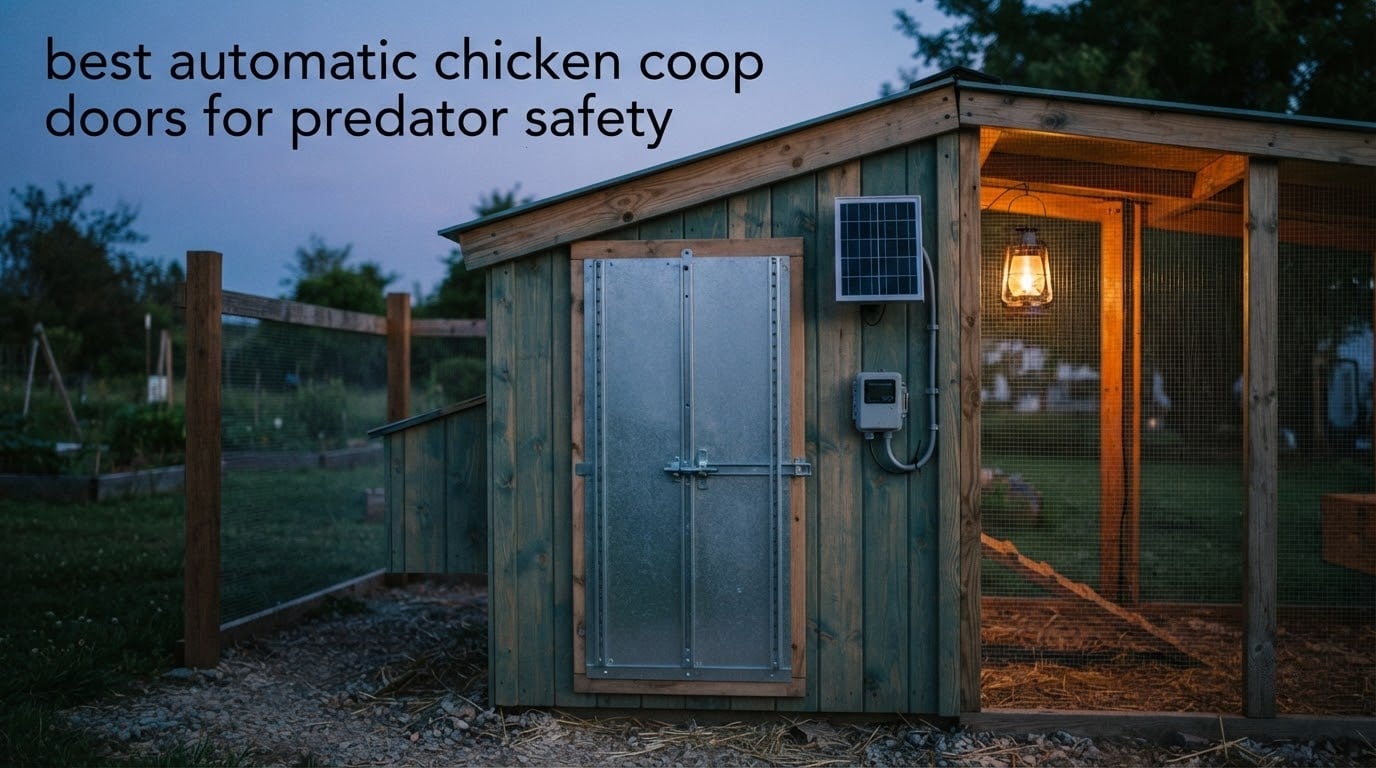
The worst automatic chicken coop door story I have heard came from a keeper who came home from a three-day trip and found the door standing wide open with the batteries dead. Their flock was gone. That single failure mode, a door that quietly stopped closing because nobody noticed the power had run out, is why I stopped ranking these units on convenience and started ranking them on how they behave when the power dies, when a bird is standing in the doorway, and when something with claws leans on the panel from outside.
Automatic chicken coop doors do work, and they are the single highest-leverage predator upgrade you can make to a backyard flock. Chickens cannot flee a raccoon at night because they are roosting and asleep, so a door that reliably locks itself after dark does more for your birds than any amount of deterrent spray. But the ten doors in this roundup are not equal, and the differences that matter are rarely the ones printed on the front of the box.
We compared ten automatic chicken coop doors for predator safety, ranking them on door strength, lock behaviour, anti-pinch integrity, clearance demands, and how they fail rather than on how many features the control panel carries. We also scored each one species by species, because a weasel and a raccoon exploit completely different weaknesses. The picks below cover budget solar, mains-powered, extra-large steel, low-profile sliding, and camera-equipped doors, so there is a defensible answer whatever your coop looks like.
Table of Contents
Top 3 Automatic Chicken Coop Doors for Predator Safety in 2026

FarmLite Auto Coop Door
- Infrared sensor waits for birds
- Weatherproof 100% construction
- Timer or light sensor
- US-based support

JVR Aluminum Coop Door
- Deadbolt screw-rod actuator
- 0.5 second anti-pinch
- Power outage memory
- 11 x 12 inch opening

NyPots Solar Coop Door
- Solar with internal lithium battery
- 20 meter remote
- Alarm on incomplete close
- 8.3 x 9.4 inch opening
The FarmLite is our overall pick because its infrared motion sensor delays closing until the birds are actually inside, which is the one feature that directly prevents the most common complaint about automatic doors, the flock getting shut out. The JVR earns the premium slot because its anodized aluminum door is driven by a screw-rod actuator that locks like a deadbolt and reverses within half a second if a bird is in the way. The NyPots solar unit is the value pick, carrying more review volume than anything else in the group and an audible alarm that fires when the door fails to close fully.
Best Automatic Chicken Coop Doors for Predator Safety (October 2026)
| Product | Specifications | Action |
|---|---|---|
| FarmLite Automatic Coop Door |
|
Check Latest Price |
| JVR Aluminum Coop Door |
|
Check Latest Price |
| NyPots Solar Powered Coop Door |
|
Check Latest Price |
 AdorStore ADOR1 Steel Door AdorStore ADOR1 Steel Door |
|
Check Latest Price |
 RUN-CHICKEN T50 Door Opener RUN-CHICKEN T50 Door Opener |
|
Check Latest Price |
 CHAMUTY Solar Camera Door CHAMUTY Solar Camera Door |
|
Check Latest Price |
 INNOLAND Large Gear Drive Door INNOLAND Large Gear Drive Door |
|
Check Latest Price |
 INNOLAND Horizontal Solar Door INNOLAND Horizontal Solar Door |
|
Check Latest Price |
 AsFrost Solar Powered Door AsFrost Solar Powered Door |
|
Check Latest Price |
 OKKÖBI Solar LCD Coop Door OKKÖBI Solar LCD Coop Door |
|
Check Latest Price |
What Predators Actually Attack, and How We Scored Each Door
There is no predator-proof coop. Every serious homesteader eventually learns this the hard way, and one commenter in a backyard chicken forum put it plainly, a coop can only ever be predator resistant, never fully predator proof, unless the run is wrapped in real mesh. What a door can do is close the single largest opening in the structure and make itself hard to defeat once closed.
Raccoons are the most common problem, and they are patient, strong, and curious. They will rattle a handle for twenty minutes, then push up under a poorly seated panel. Weasels and minks are the opposite threat, they are small enough to slip through a gap most keepers do not realize exists, and they reach through mesh to drag a roosting bird off the perch. Skunks dig, so an opening low to the ground matters more for them than for anything that climbs.
Owls take birds from above at dusk, which is a light level problem rather than a door problem. Foxes and opossums are opportunists who try existing gaps. Bears, where they are a factor at all, are not trying to enter a coop at all and no door on this list is built for them.
We scored each door on five things: whether it stays locked when closed, whether the closing mechanism can be defeated from outside, whether the anti-pinch system protects birds without leaving the door stuck open, what happens when the power fails, and whether the opening and mechanism suit the coop it will actually be mounted on. Warranty length and whether replacement parts exist rounded out the ranking, because a door whose parts are unavailable is a door that eventually ends up open.
1. FarmLite Automatic Coop Door, the Best Overall Pick for Predator Safety
- Infrared sensor holds the door open until the flock is inside
- US-based brand with support before and after the sale
- Weatherproof housing rated for year-round use
- Works on battery or with an optional 12V solar setup
- 12V solar panel is a separate purchase and not part of the box
- Rough opening of about 8.5 x 10.5 inches is smaller than the extra-large options
The feature that makes this door different is the infrared motion sensor. Every other automatic chicken door on this list decides to close on a timer or on light levels, which means the flock can still be milling around on the ramp when the motor starts. This one holds the panel up while it detects movement in the doorway and only begins the close once the birds have settled. For a flock that has lost birds to a night visit, that delay is worth more than any amount of extra sensor menu options.
We like the build too. The housing is described as 100 percent weatherproof, and the unit weighs three pounds, which suggests metal rather than thin plastic in the housing. The rough opening of roughly 10.5 inches tall by 8.5 inches wide suits a standard hen and most bantams. It is a smaller cut than several doors here, so measure before you commit, and it will not pass a Jersey Giant without widening the opening.
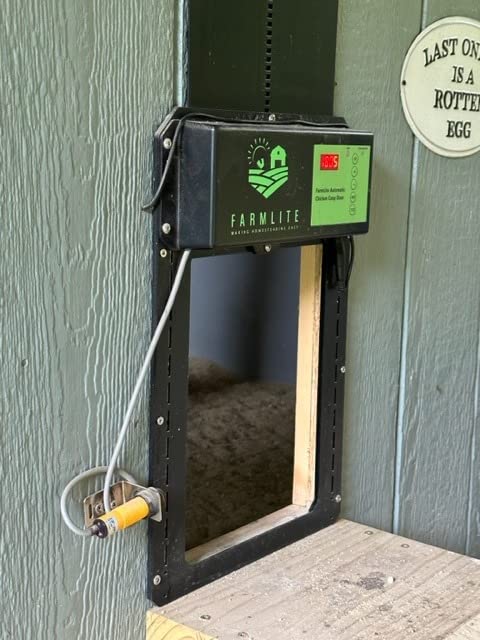
The control side is refreshingly simple. You choose between timer mode and light sensor mode, and that is genuinely it. No app, no camera, no account to create. For a keeper who wants the door to do one job correctly, that restraint is a feature. For a keeper who travels often and wants to check the flock from a hotel room, it is a limitation you will feel within a week.
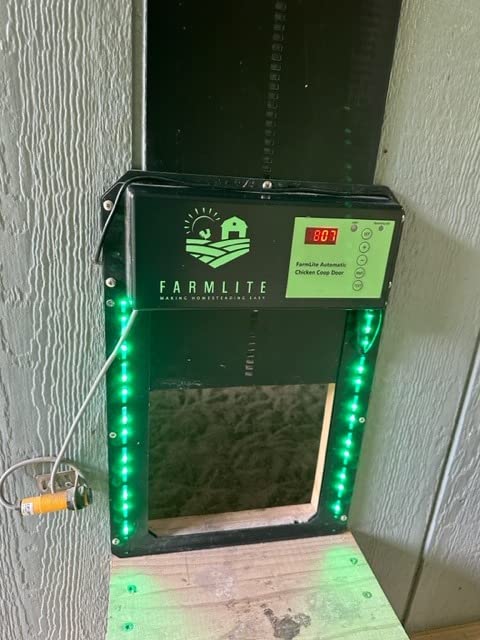
Who the FarmLite door suits
This is the door for a standard backyard flock in a fixed coop where the biggest risk is a night-time raccoon or weasel and you want the closing decision tied to the birds rather than the clock. Buyers single out the wait-for-the-birds behaviour and the responsive support as the reasons they keep it. If your roost is inside the coop, this is a low-stress fit.
Who the FarmLite door does not suit
It is not the right pick if you run large breeds, if you want to close the door from your phone while you are away for a week, or if you are off-grid and counting on solar power without buying a second piece of hardware. The 12V solar setup is a separate purchase, which means a plug-in-free installation needs one more order.
2. JVR Aluminum Coop Door, the Toughest Lock in the Group
JVR Automatic Chicken Coop Door, Timer, Anti-Pinch, Aluminum Predator Proof
- Deadbolt-style actuator locks the door so raccoons cannot lift it
- Pressure sensor reverses within 0.5 seconds
- Memory chip restores settings and door position after an outage
- Fast human technical support that troubleshoots by email
- No rechargeable battery backup
- so it depends on constant mains power
- Controller cable is only about 3 feet
- Replacement parts come from overseas suppliers
This is the door we would put on a coop in heavy predation country. The mechanism is the reason: rather than a cable, a track or a pulley, the anodized aluminum panel is driven by a screw-rod actuator that locks like a deadbolt. Owners running heavy predation pressure report that the metal door has kept predators out, and that is the single most direct predator-resistance claim any of these doors makes.
The safety system is the fastest in the group. The pressure sensor detects a bird in the doorway and auto-reverses within half a second, which is short enough that it resolves the problem without leaving the panel propped open. There is a real caveat here, and it is a setup one, owners note the sensor is fiddly to configure and can be set too high, which lets a caught animal be closed on. Set it deliberately on the first afternoon rather than trusting the default.
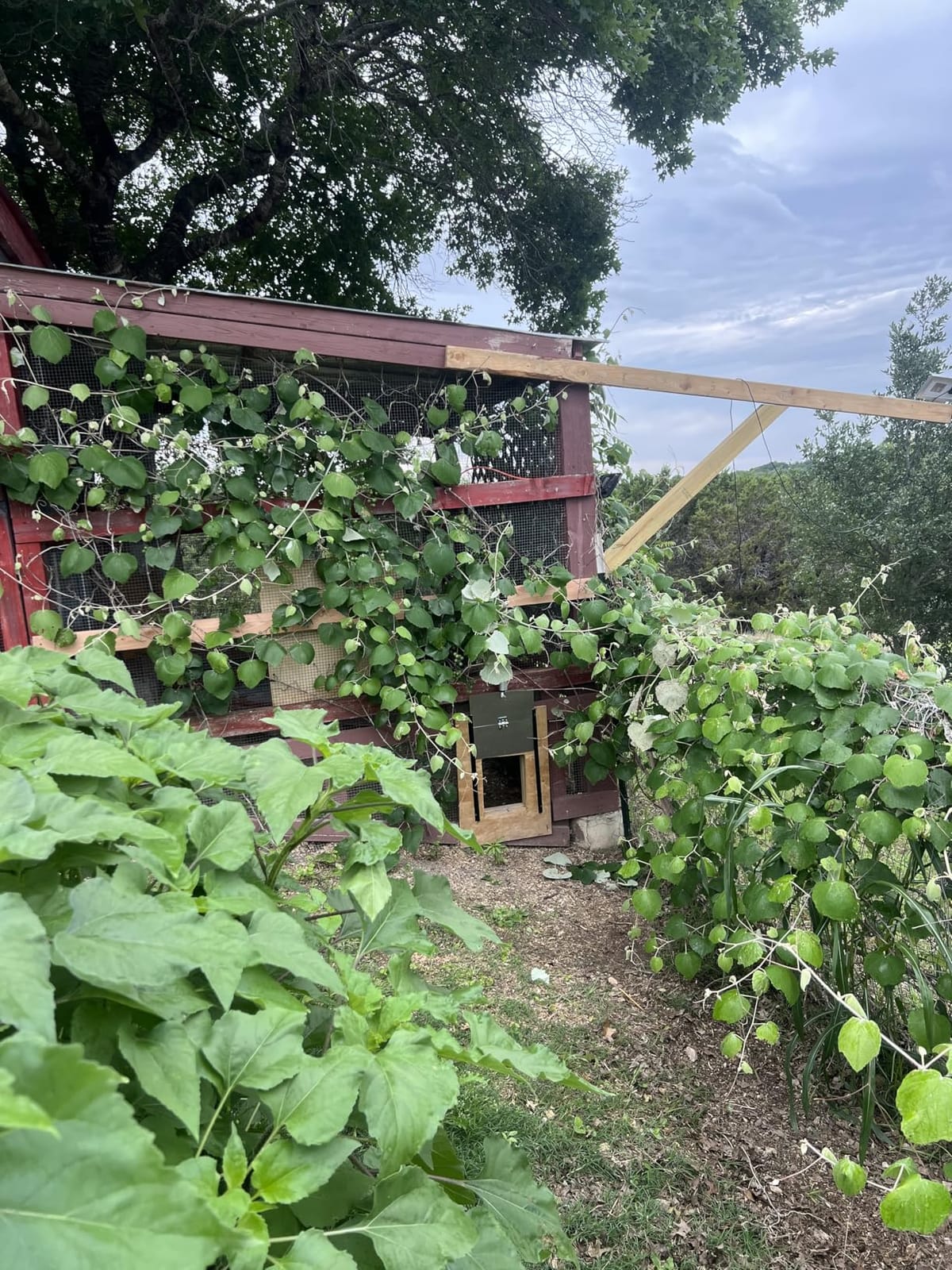
Two design decisions matter if you are installing this yourself. The memory chip restores both the timer settings and the door position after a power outage, so a short blackout does not mean your birds are locked out until you get home. The sealed control box is rated from 13F to 140F and the whole unit works on wood, metal or plastic coops. Installation is described as pre-wired plug and play in about an hour with a mounting template.
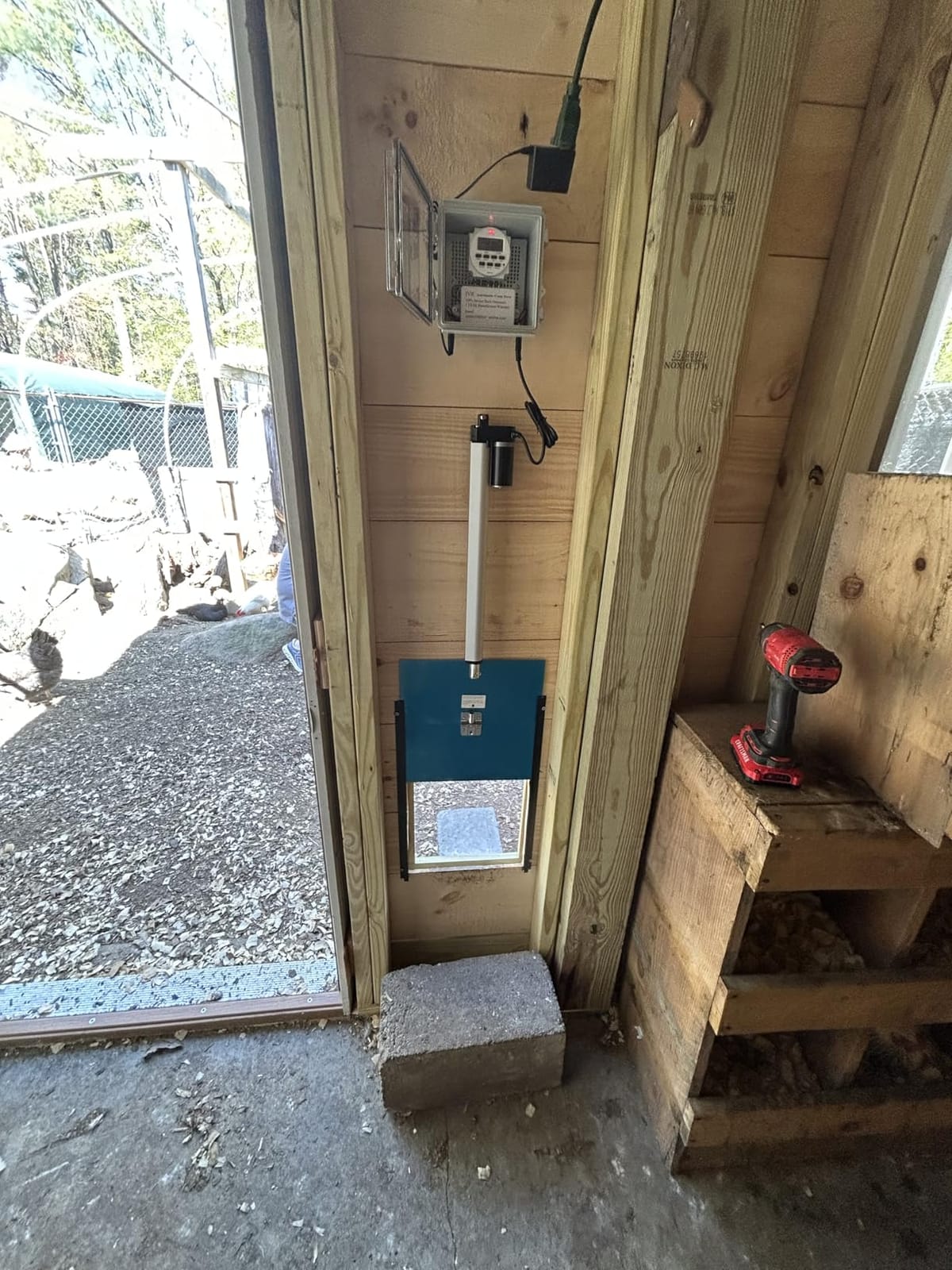
Why this door handles raccoons better than the others
A raccoon’s technique is to hook fingers under a panel and lift or pry, testing the latch until it finds play. A screw-rod actuator resists that because pulling on the door loads the screw rather than the latch, and there is almost no give to work with. Combined with an 11 by 12 inch opening that is large enough that you will not be tempted to prop the panel with a block of wood to let a big rooster out, it is the most physically secure door in this roundup.
What to know before you buy it
It is mains powered with no rechargeable battery backup, which is a problem if you have ever had a GFCI trip or if the coop is a long walk from an outlet. The controller cable is only about three feet, which limits where the control box can sit relative to the panel. And if a part fails, replacements come from overseas suppliers and can take weeks, which matters more for this door than for a sealed unit nobody can repair.
3. NyPots Solar Powered Coop Door, the Best Value Pick
NyPots Automatic Chicken Coop Door Solar Powered with Timer & Light Sensor
- Solar power removes battery swaps and wiring runs
- Highest review volume of any door in this roundup
- Alarm beep if the door does not close completely
- Large tilted LCD stays readable in direct sun
- Opening is not sized for turkeys
- Several color variants share the same listing which can confuse ordering
The NyPots unit is the door most keepers in this price class end up with, and it has more owner reviews than anything else we tested. The headline feature is the audible alarm. When the panel fails to reach fully closed, the unit beeps instead of quietly giving up. In a niche where the most damaging failure is a door that silently stays open all night, an alarm that tells you the close failed is a genuinely under-rated feature.
Power comes from a solar panel feeding an internal lithium battery, with a charging cable included as backup. That means no annual battery change, which is the ritual that wears people down the most. A 20 meter remote lets you trigger the door from outside the fence, and manual mode bypasses the automation entirely, which is useful the first week while you learn how the timing behaves.
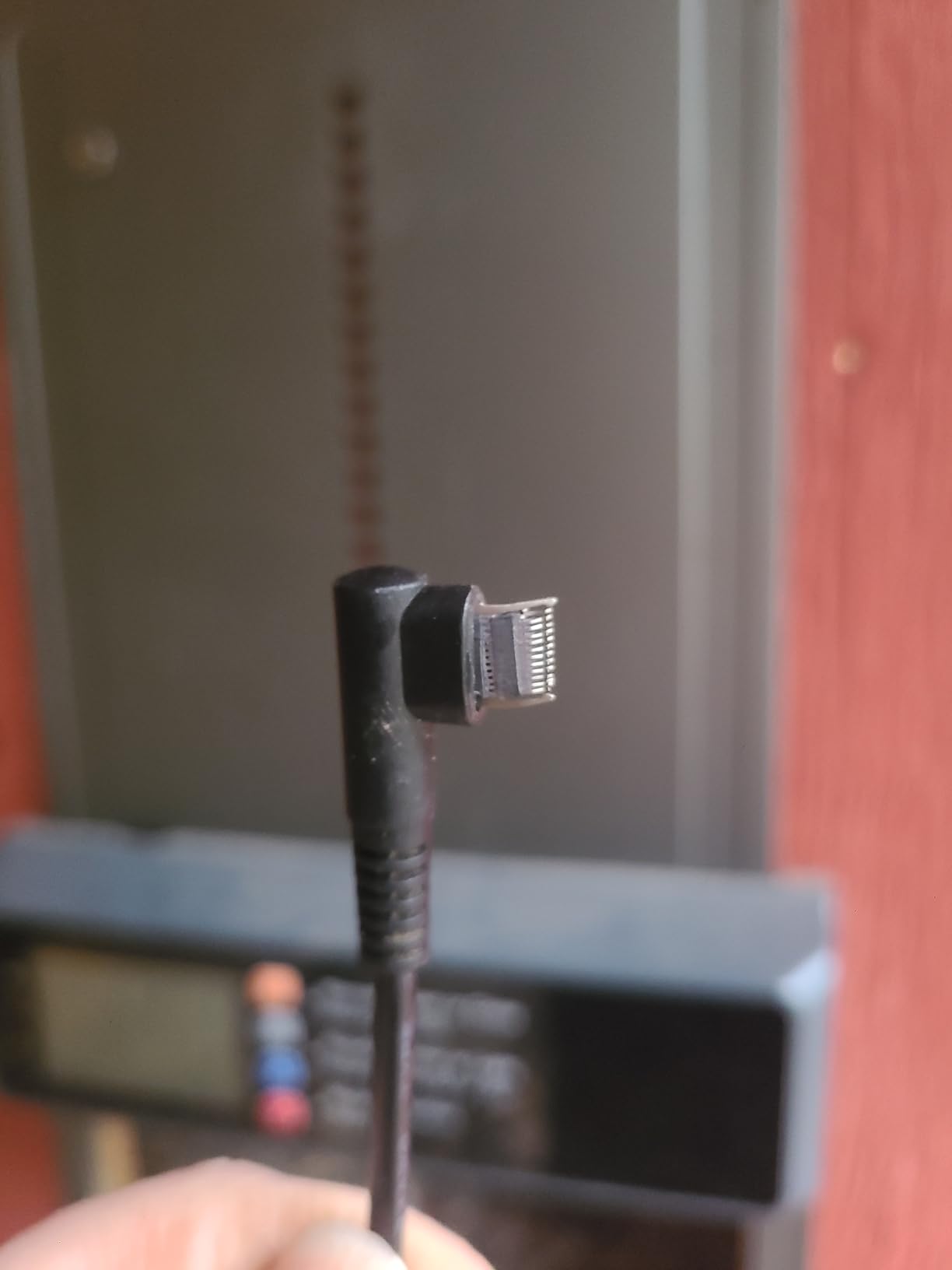
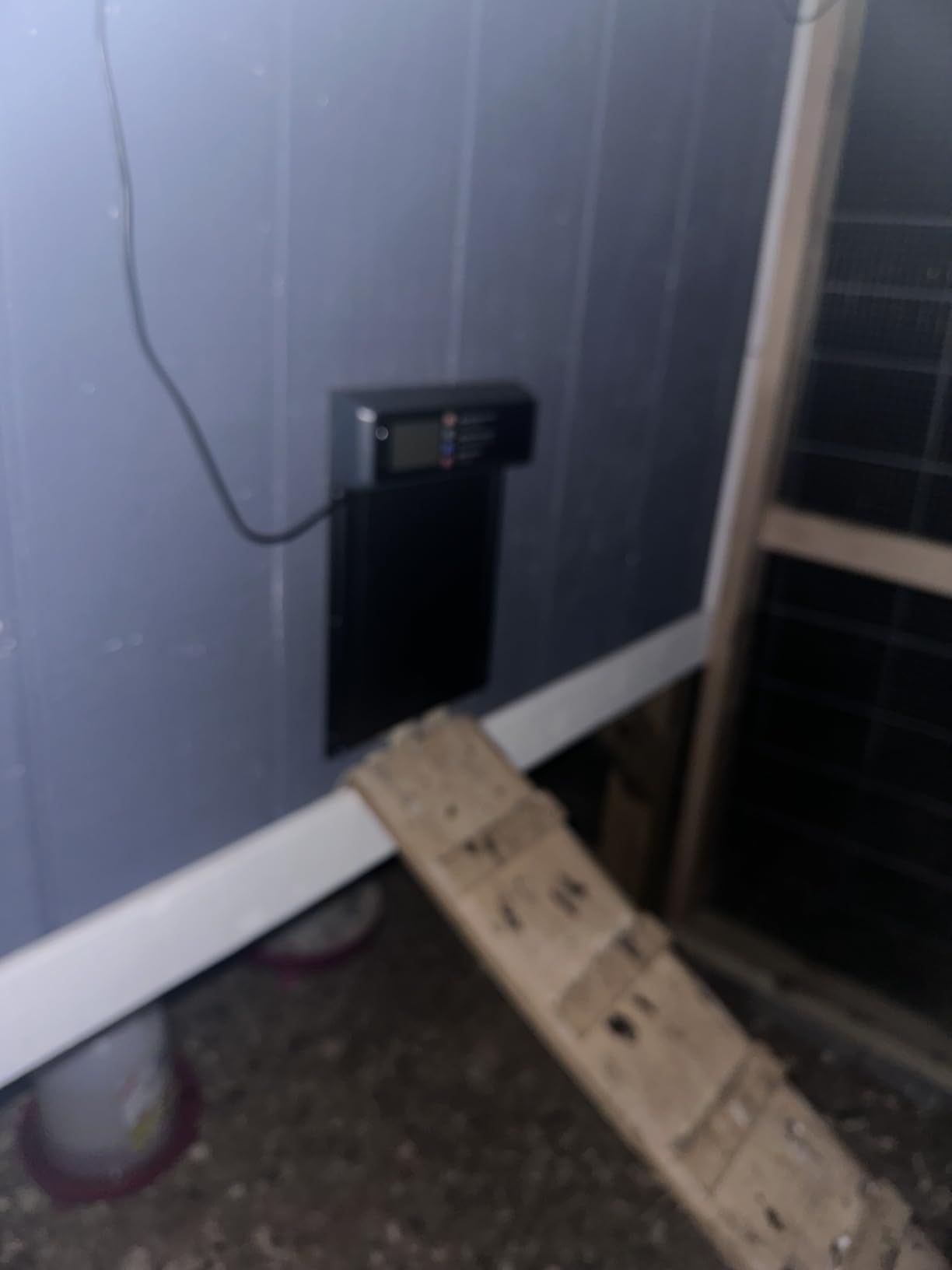
The build is aluminum alloy and ABS, the control panel has a tilted LCD that stays readable in direct sunlight, and the solar cord ends in a right-angle plug so a curious chicken cannot walk into the cable and pull the panel loose. That last detail sounds trivial. It is the kind of thinking that separates a door that survives year three from one that does not.
What works well about this door
The anti-pinch behaviour and the alarm together are what we like most. A sensor stops the motor if a bird is caught, and if the panel still has not shut properly by the end of the sequence you hear about it. Buyers consistently point to easy setup and the remote as the reasons they recommend it, and the panel position means you can check the state of the door without walking into the run.
Where the limits are
The 8.3 by 9.4 inch opening is the smallest on the list and is explicitly not sized for turkeys. It will handle standard hens, most bantams, and young birds without trouble, but if you keep anything heavier than about ten pounds you should be looking at the extra-large units instead. Also note that several colour variants share one listing, so check the variant you have selected before ordering.
4. AdorStore ADOR1, Best for Raccoon and Bear Country
Automatic Chicken Coop Door Extra Large 13 x 10.5 Inch Opening, Heavy Duty Galvanized Steel, Predator Resistant, ADOR1 Made in USA
- Highest rated door in this roundup at 4.7 stars
- Galvanized steel and a direct drive sprocket that physically locks the panel
- Extra large opening fits Jersey Giants and Cochins
- Timing self-adjusts to seasonal sunrise and sunset changes
- Weighs 9 pounds
- heavier than typical aluminum or plastic doors
- The premium tier of the category
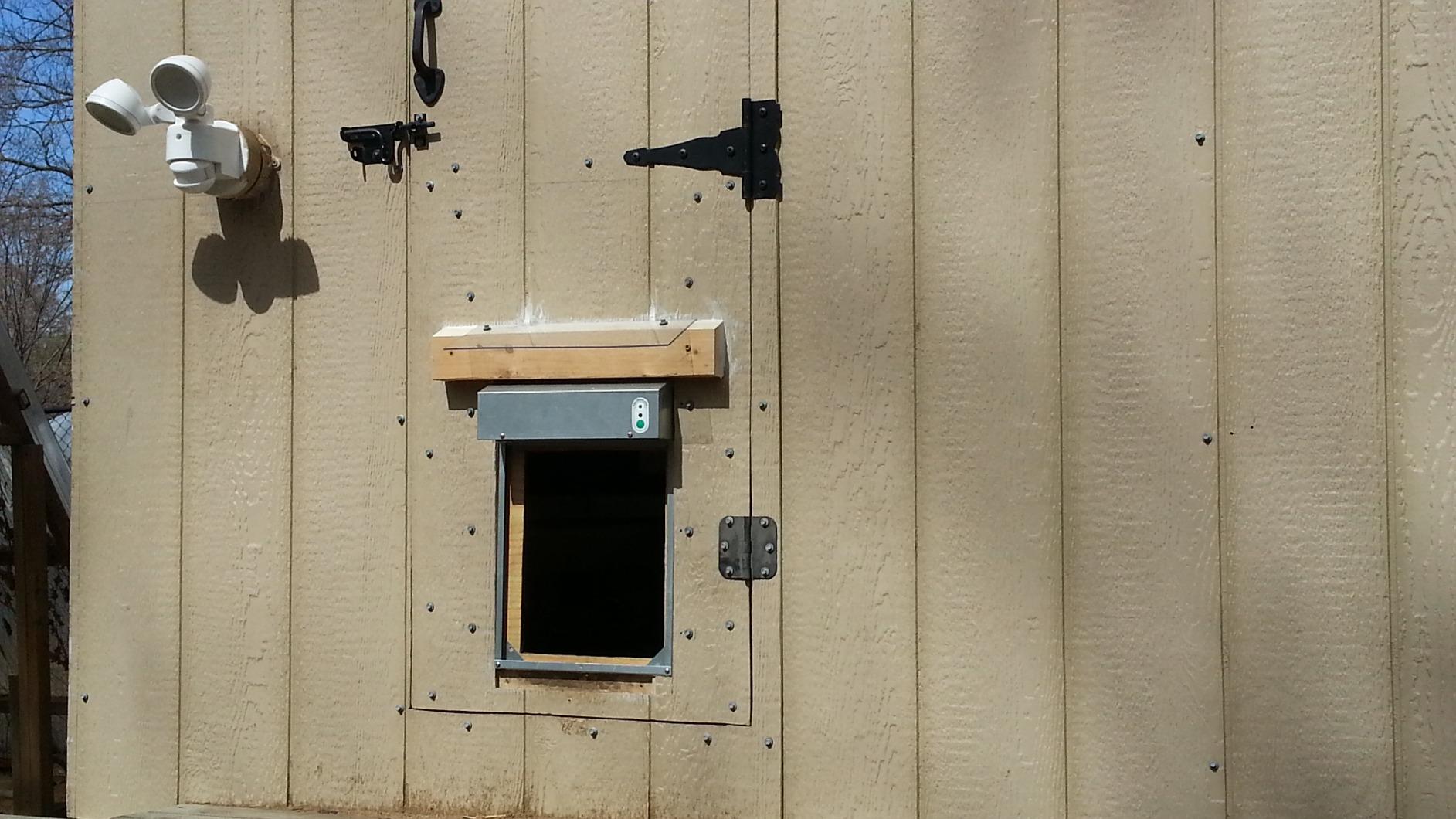
This is the door with the highest star rating in the group and the one built with the least regard for weight. The body is lifetime galvanized steel, and the panel is held closed by a direct drive sprocket, meaning there is no latch, no spring and no slack for a raccoon to work at. When this door is shut, it is mechanically shut rather than magnetically or friction held, which is why we place it at number four for predator resistance and number one for anyone in country where a determined raccoon is already coming for your birds.
The timing is the other thing owners mention. Rather than a fixed clock schedule, the open and close times are adjustable relative to sunrise and sunset events, so the unit self-adapts as the year turns without you reprogramming it each season. If you have ever had a door close early in September and leave a hen outside on a cold night, that behaviour matters more than it sounds.
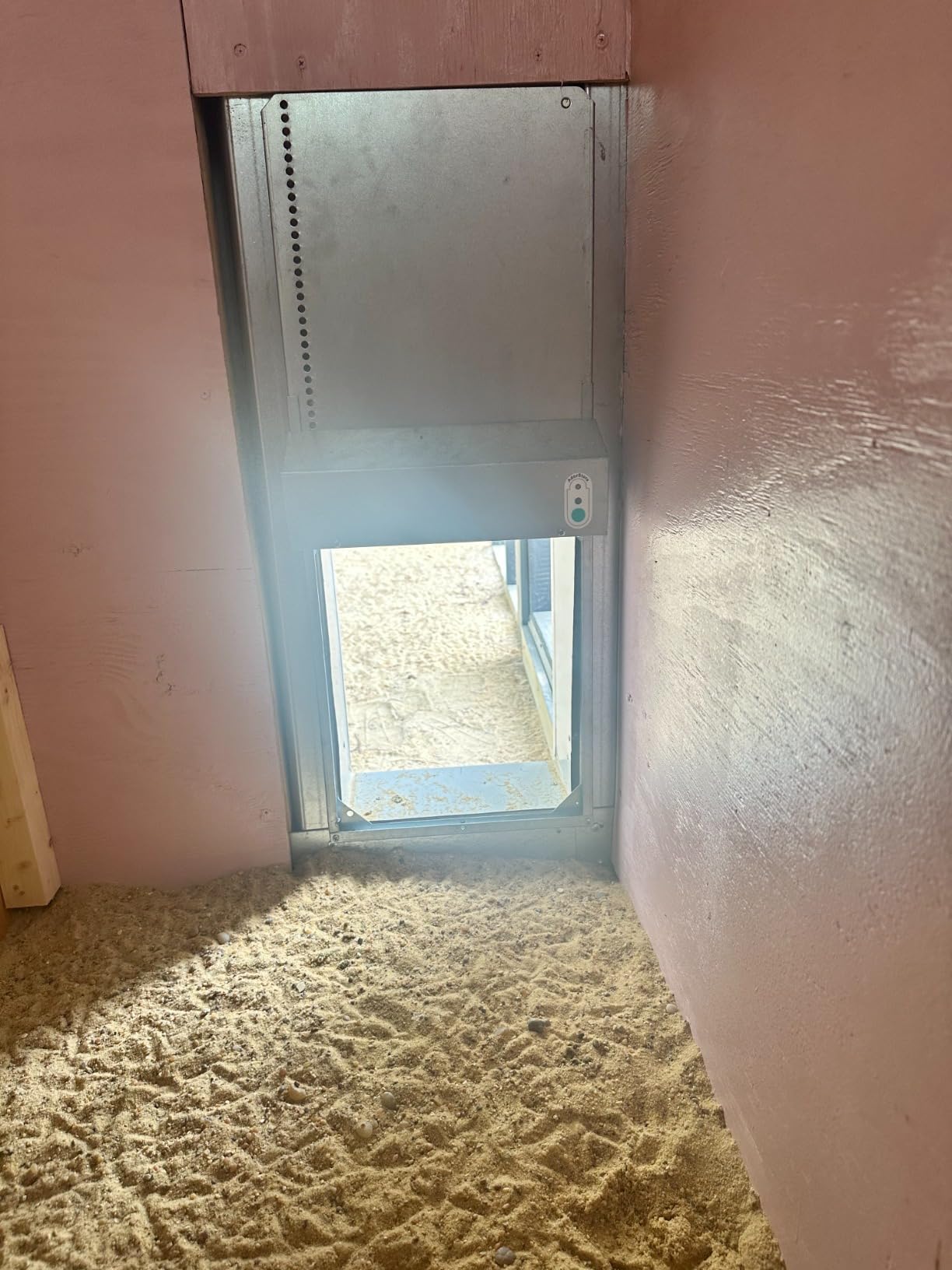
The opening is 13 by 10.5 inches, the largest here, and it will pass breeds that will not fit through most of the others on this list. It runs on four C batteries with a 6V lantern battery included, and other electric options are available if you would rather not deal with batteries at all. Made in the USA with a one-year warranty.
Why we ranked it fourth rather than first
It has the best rating we saw, but the review volume is the smallest of the ten, and the thread on this is a good one to be honest about. When a die-cast steel door fails there is no electronics to reset and no panel to reseat, so the failure mode is rarer but harder to work around. For most keepers that is the right trade. If you are in a region with heavy bear and raccoon pressure, this is the door to buy.
Who should pass on it
Anyone with a lightweight plastic or pop-up coop, and anyone who moves the coop regularly. At nine pounds the unit is genuinely heavy to carry, and the direct drive needs a solid mounting frame rather than a thin plywood wall. If your coop is portable and your predator pressure is moderate, a lighter door with an anti-pinch sensor will serve you better.
5. RUN-CHICKEN T50, Best for App-Controlled Flocks
- Three control modes including full app scheduling
- Weatherproof aluminum body
- Rechargeable battery rated up to a year in cold weather and two years in warm climates
- Anti-pinch sensor stops and reverses on obstruction
- Battery needs periodic recharging in cold weather
- Highest share of one-star reviews among the high-volume doors here
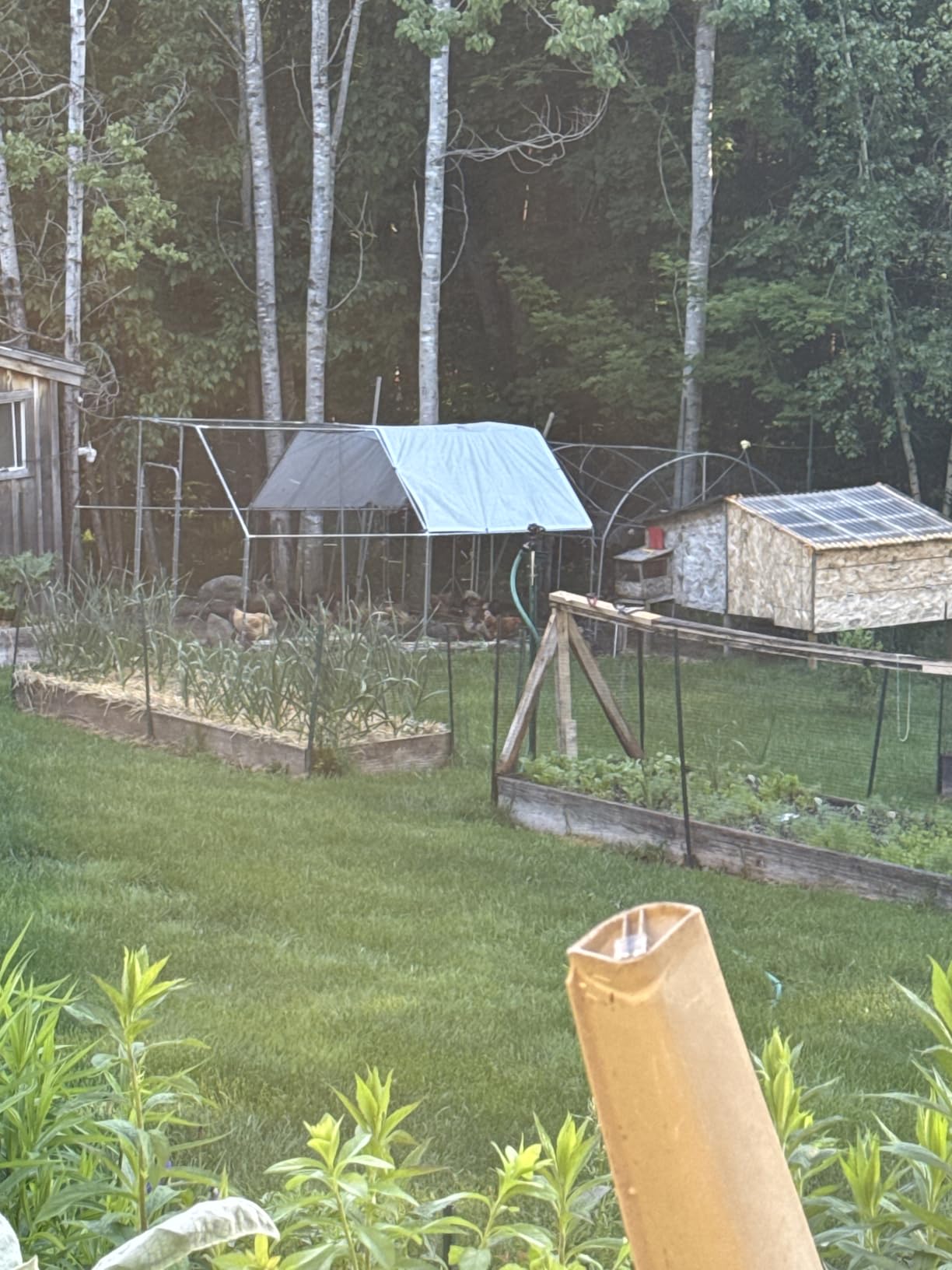
The T50 is the most flexible of the doors in this roundup because it gives you app control, timer mode and light sensor mode in one unit. For a keeper who wants the freedom to open the door early on a mild morning or check the schedule from work, that flexibility is the reason to choose it. A r/chickens commenter running one on an elevated coop reports no predator problems at all and calls the door great, which is the kind of unprompted endorsement that matters more than any spec sheet.
Construction is weatherproof aluminum, and the rechargeable battery is claimed to run up to one year in cold weather and up to two years in warm climates on a charge. In practice treat the one-year cold figure as the ceiling rather than the expectation, because cold weather is exactly when you can least afford to be recharging in the dark. The unit is rated from -15F to 140F, which covers most of North America in winter.
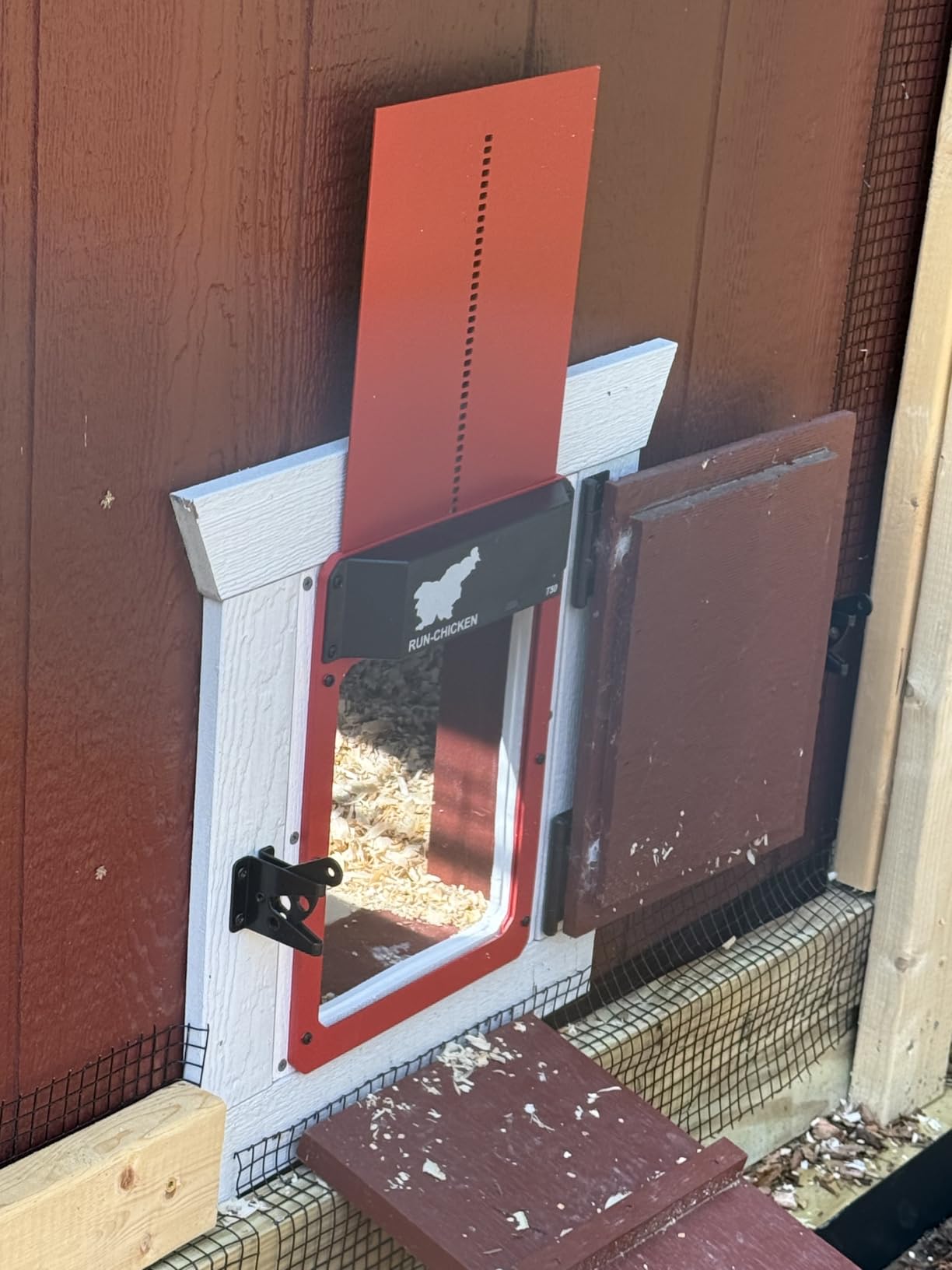
Installation is six screws and no wiring, which makes it the easiest swap if you are replacing an existing opener rather than cutting a new opening. The anti-pinch sensor detects an obstruction and reverses. One point worth knowing: this is the highest-volume door here and also carries the highest proportion of one-star reviews among the well-reviewed units, with complaints clustering around battery and app reliability over time rather than around the door failing outright.
When the app is worth it
If you travel regularly, the app is the difference between checking on the flock and assuming. You get push-level control over schedules and can open or close the door without walking out at dusk. Pair it with a solar panel of your own if you are far from an outlet, and the battery complaint largely disappears.
When it is not
If you are on a remote coop with poor phone coverage, an app-only workflow becomes a liability exactly when you need a manual override. And if you do not want to manage a rechargeable battery through winter, the next two picks do it for you with no battery handling at all.
6. CHAMUTY Solar Camera Door, Best for Night-Time Camera Checks
Automatic Chicken Coop Door with Camera, WiFi App, 5000mAh Solar Powered
- Camera and night vision let you inspect the run without leaving the house
- 5000mAh battery with a 7W panel gives strong backup in cloudy weather
- PIR alerts and an alarm make intruder activity visible
- Shared app access lets several family members check the flock
- Light sensor can react inaccurately in rain or snow so timer mode is often better
- Sits at the premium end of the category
This is the only door here with a camera built in, and that changes the predator conversation more than any other single feature on the list. A 1080P camera with night vision streaming through the app lets you look at the run at two in the morning, see whether the flock is roosting, and confirm the panel is actually seated, without putting on boots in the dark. For anyone who has opened a coop app at midnight hoping the door is closed, that is worth paying up for.
The PIR motion sensor sends app push notifications and can trigger an alarm, so you learn about an intruder at the perimeter before you learn about damage. Power comes from a 7W solar panel feeding a 5000mAh rechargeable battery, with USB charging as backup. That is the largest battery in the roundup and it is the main reason cloudy stretches do not leave you exposed.
The door itself is a roll-up panel that needs no swing clearance, which matters on a low-roof or mobile setup. The anti-pinch sensor stops and reverses on resistance. Aluminum construction is described as robust and weather resistant by owners, and reviewers consistently call the install easy.
How this door helps you catch a predator in the act
Alert notifications tell you something is moving near the coop at an unusual hour. The night vision tells you whether it is a raccoon, a skunk, a possum or an owl. That information lets you fix the actual hole rather than buying a heavier door that the animal would have walked around anyway. If you have already lost birds, this is the single most useful feature in the group.
The trade-off to think about
The light sensor reacts inaccurately in rain or snow, so most owners end up on timer mode, which means the door is no longer adapting to real light levels. You also lose some anonymity, since a camera pointed at your run is a camera you should think about before installing one next to a house. This door also sits at the top of the price range for the category.
7. INNOLAND Large Gear Drive Door, Best for Cold-Winter Battery Runs
INNOLAND Large Size Automatic Chicken Coop Door – Reinforced Gear Drive
- Reinforced gear drive has run two years for one owner without problems
- External gear track keeps straw and mud out of the mechanism
- Large 11 x 9.5 inch opening fits chickens
- ducks and geese
- Worked through a full northern Michigan winter on power
- Solar panel mount is flimsy and held by a single small screw
- AA batteries are not part of the package
- Some chickens were initially hesitant around the moving panel
The engineering story on this door is the gear track. Where most doors run a panel on a rail that catches bedding, mud and snow, this one exposes the gear run outside the chamber so debris falls clear instead of packing into the mechanism. That directly answers the single most common jam complaint in this category, the mud-and-bedding jam that leaves a door stuck open, which is far more dangerous than a jam that simply refuses to close.
The reinforced gear drive and motor are described by owners as running for two years without problems. The obstacle sensor lifts the door three centimetres, pauses ten seconds, then retries three times before parking midway, which is a sensible sequence because it resolves the obstruction rather than driving harder into it. Run time is up to six months on three AA batteries, with a level indicator and a twist-lock compartment for one-minute changes.
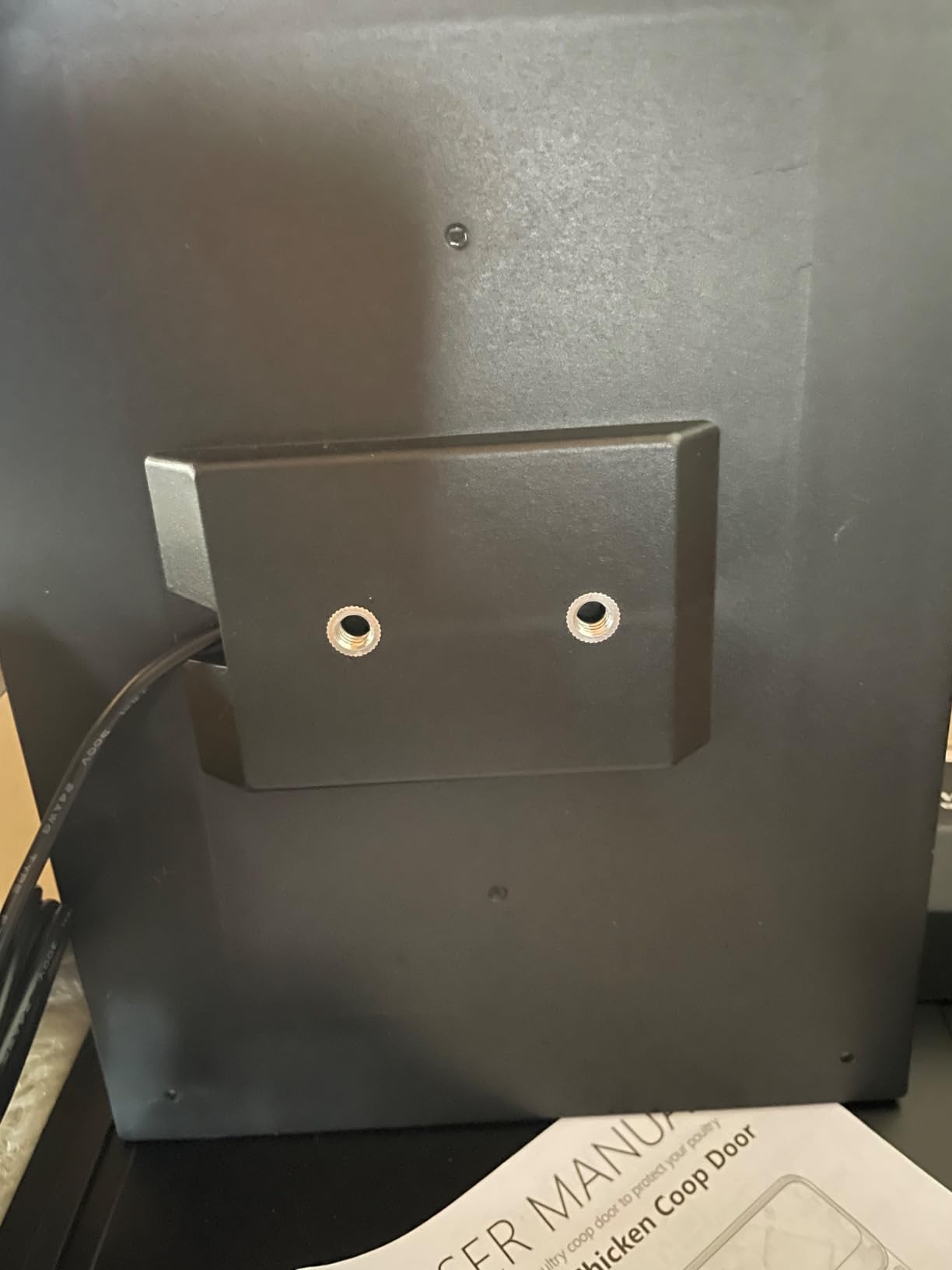
The opening is 11 by 9.5 inches, which is comfortably larger than several solar units here and will pass ducks and geese, not just hens. Setup is a simple trace cut with pre-drilled points, and programming is done on a high-contrast display without needing to read the manual first. One owner ran it through a full northern Michigan winter, which is a better cold-weather data point than most cold claims we see.
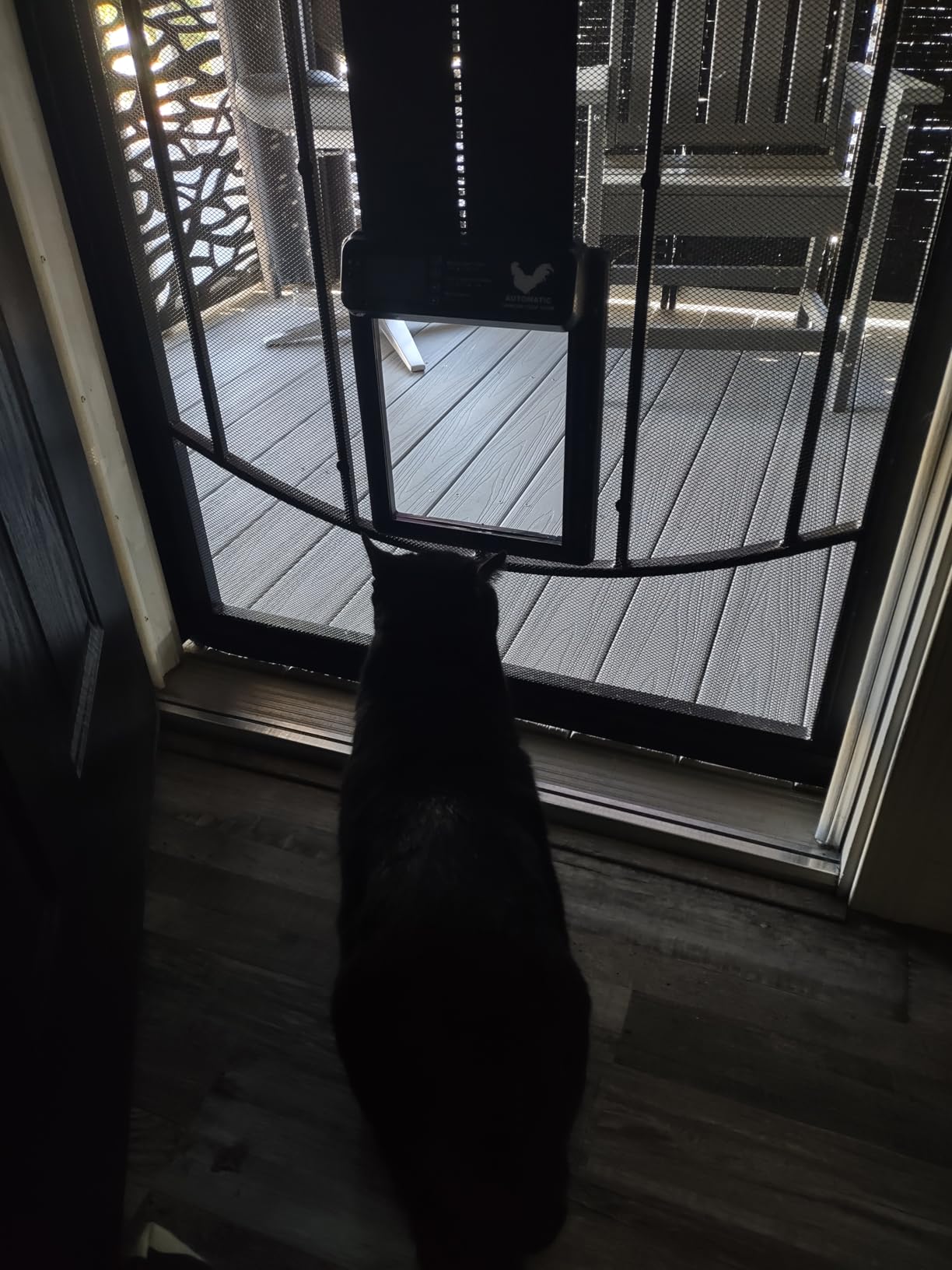
Where this door outperforms solar rivals in deep winter
Cloudy weeks are where solar units dip, and a two-centimetre lift on a dark December afternoon means birds get locked in until the sun returns. Six months of battery life, with a visible level indicator and a compartment you can open in under a minute, removes that risk entirely. For a coop where losing the flock for a night is the worst case, that predictability beats a free panel.
Where it falls short
If you want solar, the mount is the weak point, held on by a single small screw that owners repeatedly single out. AA batteries are a separate purchase, so budget for those separately. And note that some birds were hesitant around the moving panel at first, which is a normal adjustment period worth spending a few days at the door rather than rushing.
8. INNOLAND Horizontal Solar Door, Best for Low-Roof Coops
Large Size Automatic Chicken Coop Door Solar Powered – Timer/Light Sensor
- No bottom track means mud
- bedding and stones cannot jam the door
- Gap-free panels seal against drafts and predators
- Side-opening motion suits coops with little overhead clearance
- Opening accommodates birds up to 20 pounds
- One unit stopped cycling correctly after its first heavy rain
- Solar mounting bracket is the weakest part
- Keep bedding away from the door track for smooth movement
This door solves the clearance problem that rules out most vertical units. It slides sideways rather than lifting, so you need horizontal space beside the opening instead of overhead space above it. If you run a mobile chicken tractor or a low-roof pop-up coop, that is the deciding constraint, and it disqualifies doors that would otherwise be fine on a fixed coop.
Its opening is 11.6 by 8.6 inches and fits breeds up to twenty pounds, which makes it one of the few doors here that a Jersey Giant will comfortably fit through. The horizontal slide has no bottom track, so bedding, dirt and stones cannot jam it, and lateral motion puts less strain on the motor than lifting a full panel vertically. Gap-free panels seal against drafts and predators once closed.
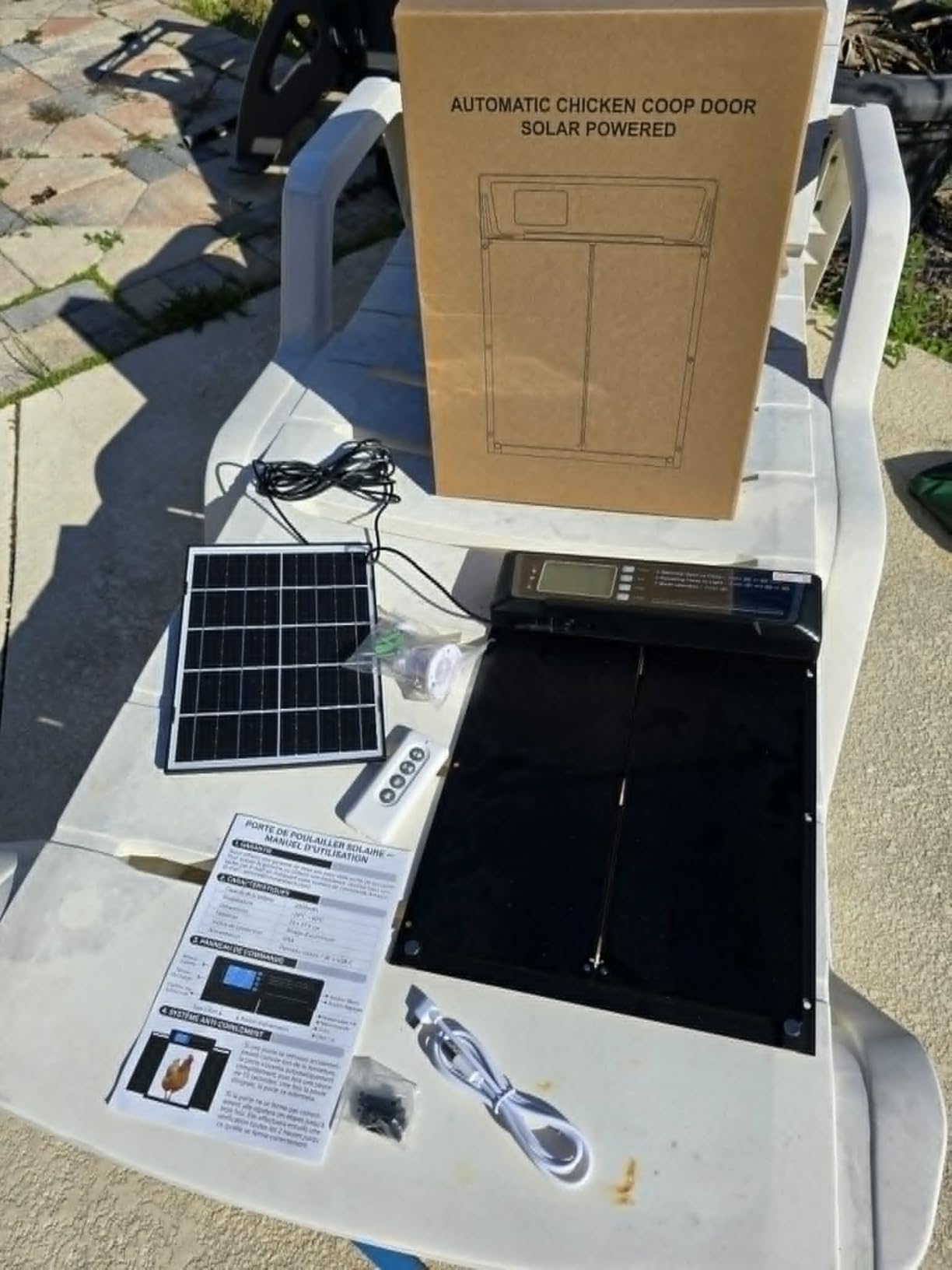
Power is a triple supply, solar panel, USB-C fast charging and a backup battery, so you are not dependent on one source. Four modes cover light sensor, timer, a 20-meter remote and manual. The monocrystalline panel still charges in cloudy weather according to owners. Pre-drilled holes mean the install is under three minutes, and the company replaced an out-of-warranty door free of charge after a shipping-damaged unit failed, which tells you something about how they handle problems.
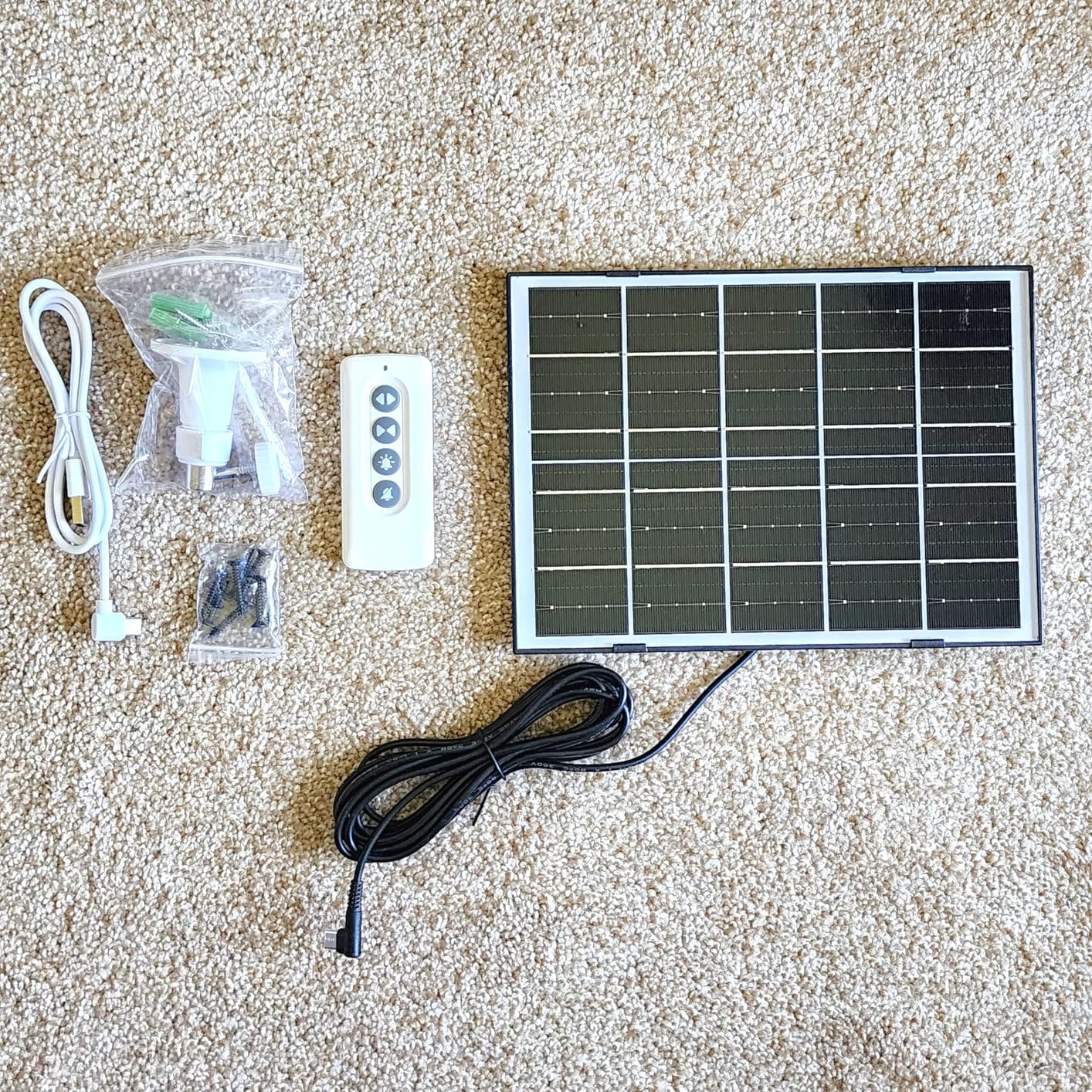
Why no bottom track matters more than it sounds
Every jam complaint in this niche traces back to a track filling with compacted dirt and bedding. A door that jams shut is an inconvenience. A door jammed partway open is a predator invitation. Removing the track removes the failure mode entirely, and the anti-pinch system with a fault alarm if the door fails to close adds a second layer on top of that.
The failure to know about
A small number of owners report the unit stopped opening and closing correctly after its first heavy rain, and the solar mounting bracket is described as the weakest part of the assembly. Keep bedding swept away from the opening, treat the bracket as the part most likely to need replacing, and keep the panel clear of low roof edges where water sheets off.
9. AsFrost Solar Powered Door, Best for Free-Ranging Flocks
- Solar and USB-C charging remove battery handling entirely
- Anti-trap function stops and reopens when pressure is detected
- Audible alarm if the door does not close completely
- Large clear display makes programming simple
- Opening suits birds under 10 lbs so it is not for larger breeds
- Solar panel needs careful positioning for good exposure
The AsFrost is a straightforward solar door with one detail that matters for a free-ranging flock: the anti-trap function stops and reopens the door when it detects pressure, and it beeps if the door has not closed completely. For birds that roam the yard all day and come back to the coop on their own schedule, an alarm is how you find out the last bird did not make it, rather than discovering it at dawn.
It runs on a 2000mAh internal battery charged by a 7W solar panel or the included USB Type-C cable, so there is no battery changing and no wiring run to the coop. Four modes cover timer, light sensor, remote control and manual. The aluminum alloy and ABS body is rated from -26C to 60C, which is among the wider temperature ranges in the roundup and is a good sign for northern coops.
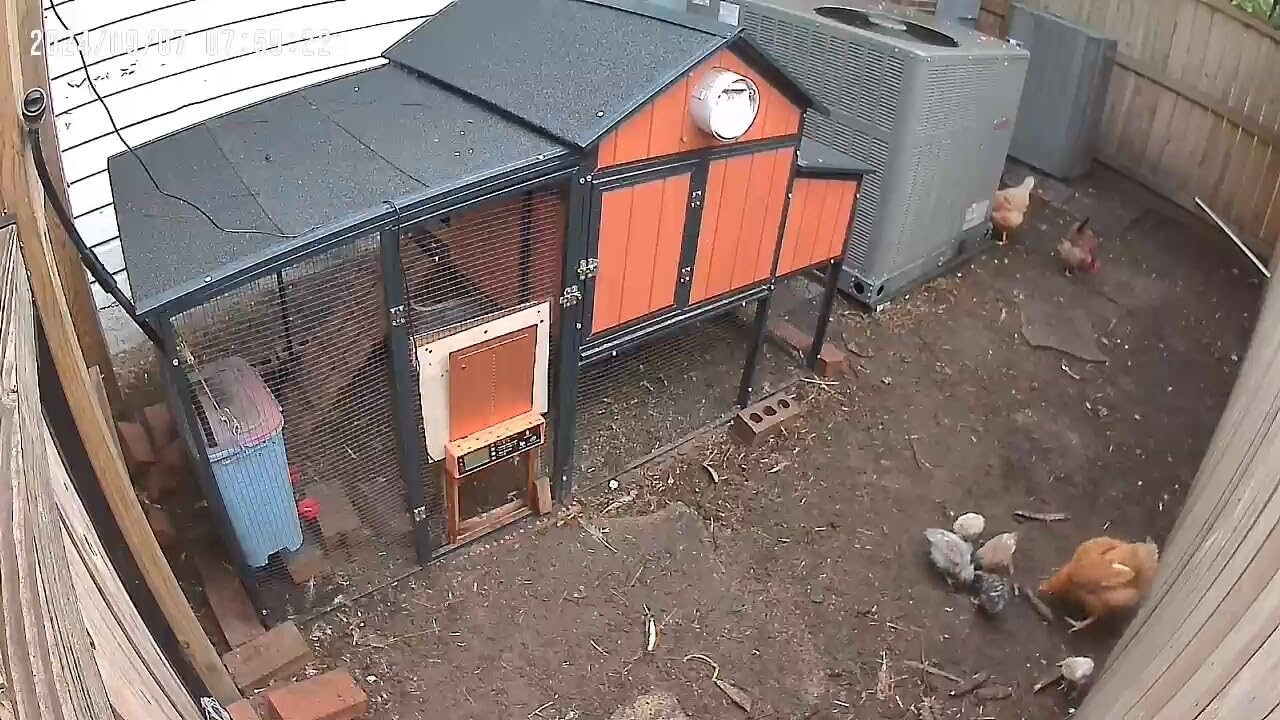
The large clear display shows the time, the light sensitivity setting and the date, with a screen timeout so it is not glowing all night. Buyers highlight the combination of solar and USB charging, the four modes and how simple the display makes programming. For an off-grid coop with no mains power nearby, this removes the wiring problem entirely, which is often the biggest obstacle to installing a door in the first place.
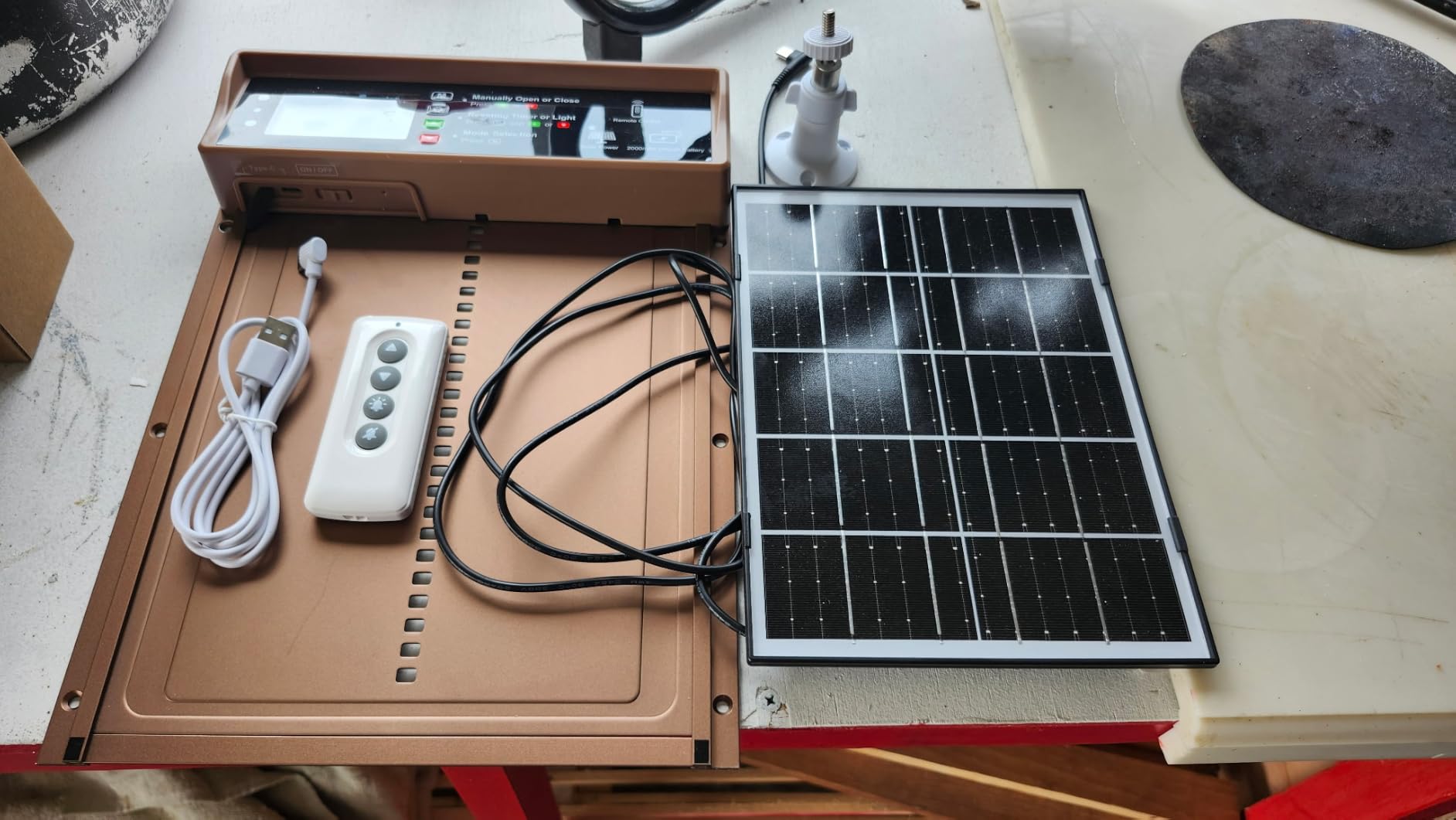
Best fit for free-ranging birds
Free-ranging means the flock controls its own schedule, so the closing decision has to be generous. Pair the timer mode with the anti-trap behaviour and the alarm, set the close late enough that the last bird is definitely in, and the door stops being a source of stress for the flock. The remote also lets you pull the birds in early if the weather turns without walking across the yard.
Where it will not do
The 9.53 by 8.27 inch opening suits poultry under ten pounds, which excludes most large breeds. Positioning is the other constraint, the panel needs real sun exposure, and if it sits under an eave or behind a fence the battery will run down faster than the specification suggests. Plan the panel position before you mount the door.
10. OKKÖBI Solar LCD Coop Door, the Longest Warranty Here
Chicken Coop Door, Solar Powered Automatic with LCD Display, Light Sensor
- Five-year warranty is the longest in this roundup
- Battery holds charge through cloudy weeks and long winter stretches
- Anti-pinch sensor reverses the door on detected resistance
- Customer support responds quickly and replaced a failed unit
- Track can jam after heavy rain when mud splashes into the rails
- Some owners report solar panel or electronics failures within a few months
- Timer occasionally resets and instructions are vague
Warranty length is an underrated buying criterion in this category, and the OKKÖBI leads the field with five years. That matters because the most common owner experience in backyard chicken forums is a cheap door that dies within a year and a manufacturer that offers a discount on a new unit rather than a replacement or a refund. A five-year term is a signal that the company expects the unit to outlast the flock it was bought for.
The hardware is conventional and good. A 2000mAh internal battery is charged by the solar panel with a USB-C backup cable, the anti-pinch technology reverses the door if resistance is detected while closing, and the aluminum alloy body with weather-resistant ABS is rated from -14F to 140F. The opening is 9.6 by 8.2 inches and is specified for poultry under ten pounds.
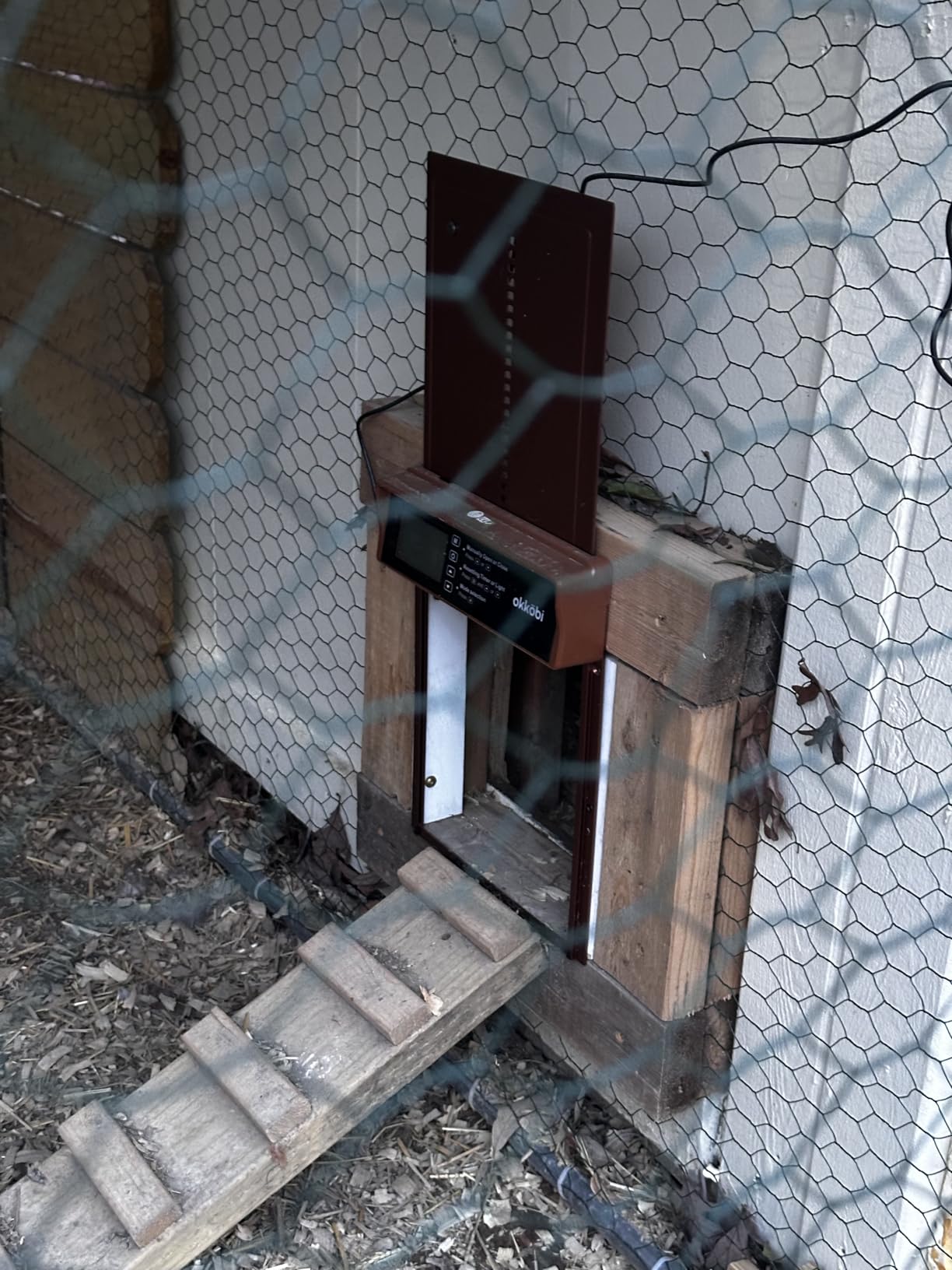
Owners praise battery life through cloudy weeks and long winter stretches, the large LCD with its range of timing options, and the support, which is described as responding quickly and replacing a failed unit. Setup is advertised at under ten minutes and the metal construction feels considerably stronger than plastic competitors in the same bracket.
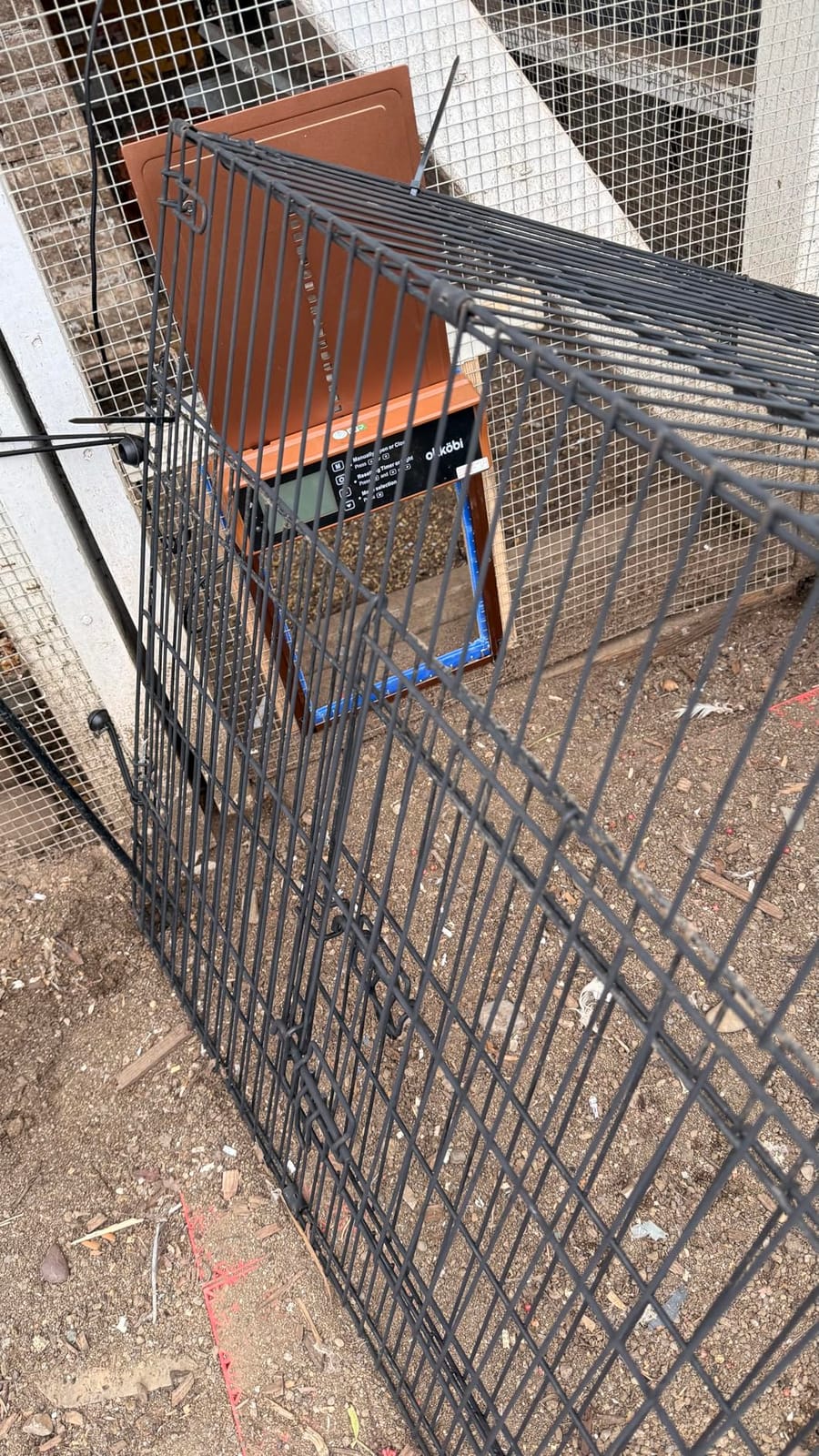
The jam problem you can solve in a minute
The recurring complaint is mud splashing up into the slide rails after heavy rain, which jams the track and can leave the door open. Owners fix it themselves with a mat or a plywood splash guard at the base of the opening. Add that on day one and the issue largely disappears, which is a better outcome than buying a different door.
Other things to watch
Some owners report the solar panel or electronics failing within a few months, and the timer occasionally resets on its own, which in the worst case means the door reverts to a default schedule. The instructions are also vague enough that a few buyers used other reviews to set it up. Budget ten extra minutes with the programming rather than assuming it will configure itself.
Predator-by-Predator Resistance Matrix
Predators fail doors in different ways, so a single predator-proof rating tells you nothing useful. Here is how the ten doors in this roundup hold up against the specific threats, based on door material, lock mechanism, closing behaviour and what owners report. Read the row for your problem predator rather than the column for your budget. If the animals around your coop are also a problem further out on your land, our picks for thermal scopes for predator hunting cover the after-dark side of the problem.
Raccoons
The AdorStore ADOR1 leads here, with a galvanized steel panel on a direct drive sprocket that mechanically locks rather than latching, followed by the JVR with its screw-rod actuator that loads the screw rather than the latch when lifted. The RUN-CHICKEN T50 and the INNOLAND units hold up because their aluminum panels seat tightly, while the smallest solar units are adequate only if the panel seats flush against the frame.
Weasels and minks
Weasels are the reason door strength matters less than opening size and panel fit. These doors all defeat a determined weasel best by being paired with hardware cloth, because a weasel that reaches the flock through the run mesh does not care how good your door is. Where a door helps is in the closing behaviour, and the FarmLite wins this row outright because its infrared sensor will not close on a bird that is still coming through.
Skunks and opossums
Both work low to the ground and dig, so what matters is the gap under the panel rather than the latch. The INNOLAND horizontal unit and the CHAMUTY roll-up both seal gap-free against the frame with no bottom track to lift, which is the right construction for this threat. An alarm on an incomplete close matters more here than anywhere, since a skunk exploiting a raised panel will not leave.
Foxes
Foxes are opportunists who test existing openings rather than defeating good hardware. Any of the aluminum units here stops a fox that is working on a structural gap, and the JVR and AdorStore stop one that is testing the panel itself. Owners running elevated coops with a RUN-CHICKEN unit report no fox problems at all, which suggests the door is rarely the weak point in that scenario.
Owls
Owls take birds from above at dusk and no door addresses that directly. The relevant variable is how long the door stays open after sunset, and that favours the CHAMUTY, whose camera and app let you check the roost after dark, and the FarmLite, whose infrared sensor keeps the panel up until movement in the doorway stops.
Bears, snakes and everything else
No door in this roundup is designed to stop a bear, and a coop that needs to is a different project entirely. Snakes are excluded by hardware cloth and by a door that sits flush to the ground when closed. If your threat list includes something not covered here, treat the door as one layer and address the run itself, which is the subject of the next section.
Key Features to Consider When Buying an Automatic Chicken Coop Door
Power source
Solar with an internal battery means no wiring to the coop and no annual battery change, which suits remote setups and keepers who travel. Battery-only, whether rechargeable or disposable cells, is the simplest to install but needs a charge or a change roughly twice a year in cold climates. AC mains power gives you the strongest motors and the JVR’s outage memory, but it requires a run to an outlet, a GFCI-protected connection, and a tolerance for trips. Our own preference order for predator safety is mains with outage memory first, solar with a large battery second, and plain batteries a distant third.
Operation modes
Light sensor mode follows real dusk and dawn and needs no seasonal adjustment, which is exactly what you want from a door you will forget about. Timer mode gives you control but requires reprogramming as daylight hours change, unless the unit self-adjusts relative to sunrise and sunset events. Manual mode matters more than it sounds, because it is the fallback you will use the night a sensor misreads.
Safety mechanisms
Anti-pinch means the motor reverses when it detects resistance in the closing gap. The versions worth paying for do more than stop: the INNOLAND large unit lifts, pauses and retries three times, and the AsFrost and NyPots units sound an alarm if the door never reaches closed. A raised alarm matters more than a raised panel, because it is the difference between a jam and a door left open all night.
Opening size and breed weight
Check the opening against your largest bird, not your average one. Units specified for poultry under ten pounds will frustrate you if you keep Jersey Giants or Cochins, and the AdorStore and the INNOLAND horizontal unit are the two here that comfortably pass birds over twenty pounds. A standard hen opening is roughly ten to twelve inches wide by ten to thirteen inches tall.
Vertical lift versus horizontal slide
Vertical doors need clear overhead space above the opening, which rules them out on low-roof coops and most mobile chicken tractors. Horizontal sliding doors need room beside the opening instead, and if your run is narrow the panel may open into the birds’ space. Measure before buying, because this is the one constraint that cannot be worked around after installation.
Warranty, parts and support
The warranty range on this list runs from one year on the AdorStore and RUN-CHICKEN T50 to five years on the OKKÖBI. Ask what replaces a failed control board and how long that takes, because a door whose parts come from overseas with a multi-week turnaround is effectively a door you will end up opening by hand. American-owned brands with support before and after the sale are worth a premium for exactly this reason.
Common Problems With Automatic Coop Doors and How to Fix Them
Every one of these failure modes shows up repeatedly in backyard chicken forums, and most of them are fixable in under ten minutes once you know what you are looking at.
The batteries died and the door is open. This is the most damaging failure and the most common. Walk the flock back in, secure the door manually, then work out why nobody noticed. A low-battery alarm is the fix, and a second battery source is the real fix. A mains-powered door with outage memory, or a solar door with a large internal battery, removes this failure mode rather than managing it.
Mud and bedding jammed the track and left the door open. Compaction is the cause, and the fix is a door with an external gear track or no bottom track at all. If you own a door with an exposed rail, add a mat or a plywood splash guard at the base of the opening and sweep the run floor back a foot from the door.
A bird is caught and the door grinds against it. This is a sensor set too high rather than a defective unit. Test the anti-pinch by putting a broom handle in the closing gap and confirming the motor reverses within a second. If it does not, adjust the sensitivity before the first night with the flock, not after.
The door is open before the flock is inside. The light sensor threshold is too tight or the close time is too early. Set the sensitivity down a few notches, add a delay function where the unit supports one, or use timer mode set deliberately later than sunset. For breeds that roost late, this adjustment is the difference between a calm flock and a hen stuck outside.
The motor stopped and the manufacturer offered a discount. Budget for this. Every unimpressive brand in this category will eventually do it. That is why warranty length and whether a replacement control board exists are on the checklist, and why the five-year OKKÖBI term is worth something concrete.
How to Predator Proof Your Chicken Run and Coop
An automatic chicken coop door closes the largest hole in your structure. It does not make the coop predator proof, and keepers who believe otherwise usually learn it the expensive way. The run, the roof and the burying job decide how many animals actually get in.
Use hardware cloth rather than chicken wire. Chicken wire is designed to hold chickens in, not to hold predators out, and a raccoon will work through it in a night. One-half inch hardware cloth with the woven wire facing predators is the standard for a reason. Cover the entire run including the top, because owls and foxes both come from above.
Add an apron. Bend the bottom eighteen inches or so of mesh outward and flat against the ground, or dig a shallow trench and bury the mesh a foot deep with a lip. Digging predators, skunks and foxes, hit a wire surface they cannot chew through and move on.
Eliminate gaps rather than relying on latches. A one-half inch gap is a weasel door, and no latch on your coop door matters if the flock can be pulled out through the run wall. Overlap doors, cap the corners of the run, and check that nothing flexes when a raccoon leans on it. Where you do need a latch, a carabiner or a two-step latch works better than a sliding bolt.
Think about the whole flock picture too. Our guide to predator-proof chicken coops for large flocks covers sizing and structure, and our picks for poultry waterers for chicken coops covers the other half of a setup that works overnight without attention.
Frequently Asked Questions
Which automatic chicken door is the most reliable?
Reliability over multiple winters comes down to two things: a power source that does not fail silently, and a supportable mechanism that does not jam. The JVR leads on physical reliability, using a screw-rod actuator that locks like a deadbolt and a memory chip that restores the schedule after a power outage. The RUN-CHICKEN T50 is the most reliable for volume and app control, while the INNOLAND gear-drive unit avoids the mud jam that causes most failures. Any door still needs a nightly glance for the first month.
Do automatic chicken coop doors work?
Yes, and they are the single most effective upgrade most backyard flocks can make. Chickens roost and cannot flee at night, so a door that reliably locks after dark removes the largest opening in the coop in one step. An automatic chicken coop door works best when it closes based on light or time, has anti-pinch protection, and is paired with hardware cloth on the run so weasels cannot reach through the mesh.
What are common problems with auto coop doors?
The most common problems are dead batteries leaving the door open all night, mud and bedding jamming the track so the door sticks partway open, a light sensor closing before the flock is inside, an anti-pinch sensor set too high so a bird is caught, a motor that dies with no replacement parts offered, and a timer that resets to defaults. Nearly all of these are preventable with a low-battery alarm, a track guard or a bottom-track-free design, and a deliberate one-month test before trusting the door.
What scares predators away from a chicken coop?
The most effective deterrent is a physical barrier the predator cannot pass. One-half inch hardware cloth over the entire run, including the top, stops raccoons, foxes and weasels. An apron of mesh laid flat on the ground or buried twelve inches deep stops diggers such as skunks and foxes. Beyond that, motion-activated lights can deter nocturnal visitors, and a livestock guardian animal such as a dog adds a layer that no amount of hardware replicates.
What is the best solar-powered automatic chicken coop door?
For most keepers the solar doors with the largest internal battery and an audible incomplete-close alarm are the strongest choice, because a solar unit fails quietly when several cloudy days run into a weak charge. The CHAMUTY has the biggest battery here at 5000mAh with a 7W panel, and the NyPots beeps when the door does not reach closed. The AsFrost is the simpler option if you never leave home and want fewer things to go wrong.
How big should a chicken coop door be?
A standard opening of roughly ten to twelve inches wide by ten to thirteen inches tall passes most hens and bantams comfortably. If you keep Jersey Giants, Cochins or Brahmas, you want an extra-large opening, and doors specified for birds under ten pounds will frustrate you. The INNOLAND horizontal unit fits birds up to twenty pounds and the AdorStore ADOR1 has the largest opening at 13 by 10.5 inches. Measure your tallest bird before cutting.
Conclusion
The FarmLite automatic chicken coop door wins this roundup because its infrared sensor makes the closing decision based on where your birds actually are, which removes the single most common way an automatic door fails a flock. Behind it, the JVR is the physically toughest door we tested and the right answer for heavy predation pressure, while the NyPots solar unit is the one to beat on value and review volume.
Whatever you choose, test it for a full month before you trust it. Check the door every night, verify the anti-pinch with a broom handle, and remember that the door is one layer in a system, not a guarantee. If you are still running a smart door system elsewhere in the house, the same philosophy applies. Measure your opening, pick the power source that fails loudly rather than silently, and pair whichever door you buy with hardware cloth on the run. That combination is what actually keeps a flock safe through 2026 and every year after it.