
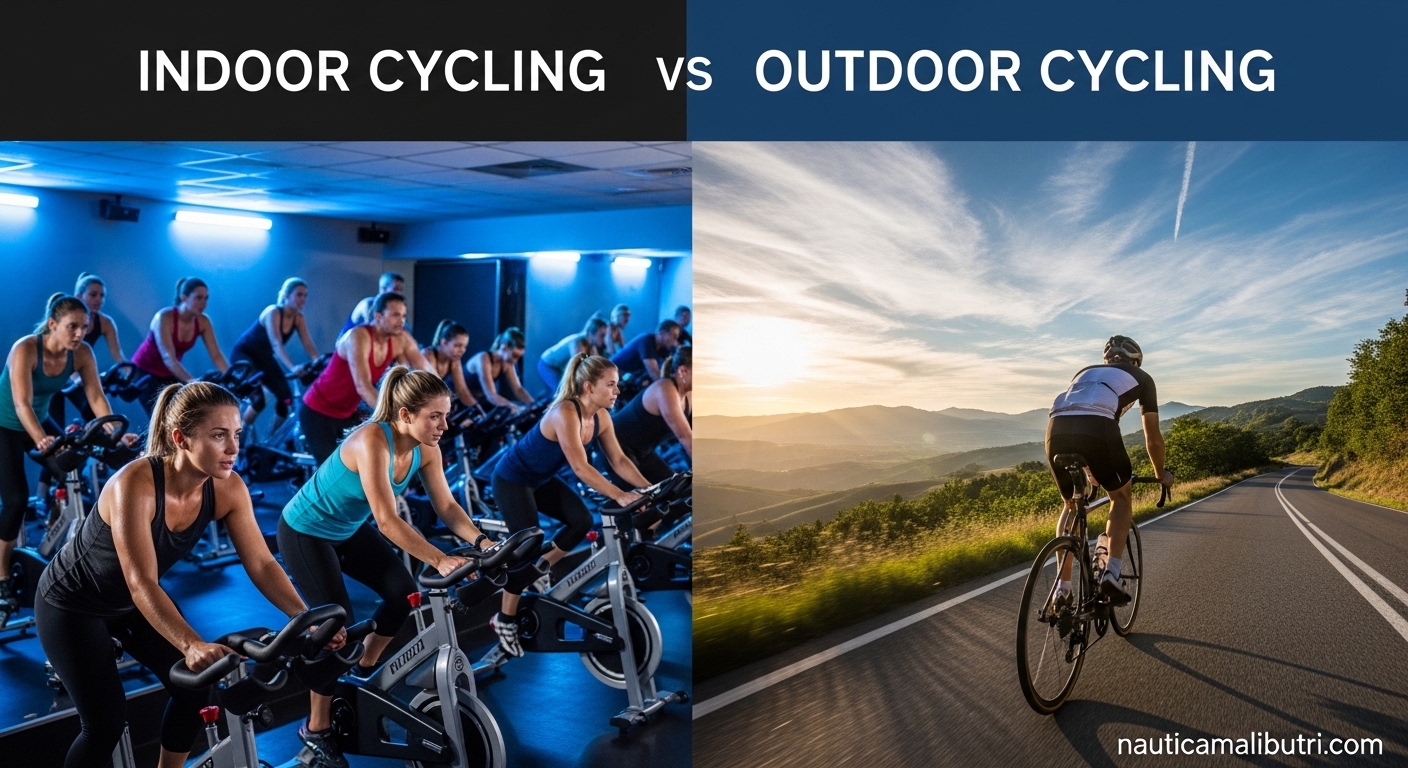
Indoor cycling vs outdoor cycling is a debate every serious cyclist eventually faces. After spending years riding on both the road and the trainer, I have experienced firsthand how each environment shapes fitness, motivation, and skill development in dramatically different ways. Both forms of cycling deliver exceptional cardiovascular benefits and build leg strength, but they create distinct physiological and psychological responses that every athlete should understand.
Indoor cycling refers to stationary riding performed on a smart trainer, stationary bike, or spin bike in a controlled environment. Outdoor cycling encompasses road riding, trail riding, and any form of pedaling on actual terrain exposed to weather, wind, and varying surfaces. While both activities engage the same primary muscle groups and cardiovascular systems, the experience, effectiveness, and practical applications differ significantly depending on your training goals.
In this comprehensive guide for 2026, I will break down the science-backed differences between indoor and outdoor cycling. You will learn why power output varies between environments, how time efficiency compares, which option builds better real-world fitness, and how to choose the right approach for your specific goals. Whether you are preparing for a triathlon, trying to maintain fitness through winter, or deciding on your first serious cycling setup, this comparison will give you the clarity you need.
Table of Contents
Key Differences at a Glance
Before diving into detailed analysis, here is a structured comparison of the major differences between indoor and outdoor cycling. Research and real-world data reveal consistent patterns that cyclists experience when switching between environments.
Power Output and Perceived Effort
Research published in the Journal of Strength and Conditioning Research shows that most cyclists produce significantly more power outdoors than indoors. The difference ranges from 11% to 70% depending on the rider and effort duration. This phenomenon stems from several factors including cooling, body position variability, and the ability to generate peak force through the full pedal stroke when the bike moves beneath you.
The cycling community often references the 20-watt rule when transitioning between environments. Many experienced cyclists find they need to reduce their indoor FTP (Functional Threshold Power) target by approximately 20 watts compared to outdoor testing to achieve similar perceived exertion. This adjustment accounts for the increased cardiovascular and thermal stress indoors despite identical power numbers.
Time Efficiency Comparison
Indoor cycling eliminates coasting, stopping at intersections, and descending, which means you maintain constant power output throughout the session. Data from TrainerRoad analysis shows that a 60-minute indoor ride typically equals 90 to 100 minutes of outdoor riding in terms of actual work performed. For time-crunched athletes, this efficiency makes indoor training highly attractive.
However, outdoor rides offer opportunities for spontaneous intensity variations and aerobic base building that structured indoor workouts cannot fully replicate. The choice between environments often comes down to whether you prioritize training precision or training volume.
Cooling and Sweat Rate Differences
Convective cooling represents one of the most significant physiological differences between indoor and outdoor cycling. When riding outdoors, moving through air at 15-20 mph creates substantial evaporative cooling that keeps core temperature regulated. Indoors, even with powerful fans, cyclists experience reduced heat dissipation leading to higher sweat rates and earlier onset of cardiac drift.
Cardiac drift occurs when heart rate increases over time despite constant power output, often triggered by dehydration and rising core temperature. Studies indicate cardiac drift begins 15-20 minutes earlier during indoor sessions compared to equivalent outdoor efforts. Managing this requires aggressive cooling strategies including multiple fans, hydration protocols, and sometimes shortened indoor sessions.
Mental Engagement Factors
Outdoor cycling provides natural visual stimulation, route variety, and the challenge of bike handling that keeps the mind engaged through associative focus. You constantly process road conditions, traffic, terrain changes, and scenery. Indoor cycling, by contrast, often relies on dissociative strategies like watching videos, listening to music, or using virtual platforms like Zwift to maintain motivation.
Many cyclists report that outdoor riding feels subjectively easier despite higher power output because the mental engagement distracts from the physical effort. Indoor cycling removes these distractions, creating a more direct connection to bodily sensations and perceived exertion. Some athletes appreciate this mindful connection while others find it mentally exhausting.
Indoor Cycling: Benefits and Limitations
Indoor cycling has transformed dramatically with the advent of smart trainers and immersive software platforms. What once felt like a punishment for bad weather days has become a legitimate training tool used by professional cyclists and triathletes year-round. Understanding both the advantages and constraints of indoor training helps you maximize its benefits.
Why Indoor Cycling Feels Harder
If you have ever wondered why a 200-watt effort on the trainer feels significantly tougher than the same power on the road, you are not imagining it. The primary culprit is reduced convective cooling. Outdoors, your movement through air creates wind chill that evaporates sweat and regulates core temperature. Indoors, even with a powerful fan, you face a fraction of that cooling effect.
The result is higher core temperatures, increased sweat rates, and earlier cardiovascular drift. Your heart works harder to pump blood to the skin for cooling, leaving less capacity for muscle oxygen delivery. This explains why the same absolute power feels subjectively harder indoors. Experienced indoor cyclists invest in aggressive cooling setups including multiple high-velocity fans, dehumidifiers, and specialized cooling vests to combat this effect.
Body position limitations also contribute to the difficulty. On a trainer, your bike remains fixed in position, eliminating the natural micro-movements and weight shifts that occur during outdoor riding. This static position can create discomfort and reduced ability to generate peak torque through the pedal stroke. Some smart trainers now incorporate motion platforms that allow limited rocking to address this limitation.
Time Efficiency and Structured Training
The elimination of coasting, traffic lights, and descents makes indoor cycling incredibly time-efficient. A one-hour indoor session delivers nearly 60 minutes of actual pedaling time compared to 40-45 minutes of active pedaling during a typical outdoor hour. For athletes balancing training with work and family commitments, this efficiency proves invaluable.
Smart trainers enable ERG mode, which automatically adjusts resistance to maintain your target power regardless of cadence. This feature allows precise execution of interval workouts without worrying about terrain, wind, or traffic interruptions. Platforms like TrainerRoad, Zwift, and Peloton provide structured workouts with real-time feedback, making it nearly impossible to underperform or overperform prescribed efforts.
The controlled environment also enables consistent testing and progression tracking. FTP tests conducted indoors eliminate variables like wind and temperature that can skew outdoor results. This consistency helps athletes accurately measure fitness improvements and adjust training zones with confidence.
Equipment and Setup Requirements
Getting started with indoor cycling requires specific equipment beyond just a bike. A quality smart trainer forms the foundation, with direct-drive trainers offering the most realistic road feel and accurate power measurement. Wheel-on trainers provide a more affordable entry point but sacrifice some accuracy and ride quality.
Cooling equipment proves equally important as the trainer itself. Plan for at least one high-velocity fan positioned at chest height, with many serious indoor cyclists using two or three fans for comprehensive airflow. A large towel draped over the handlebars protects your bike from corrosive sweat, and a dedicated training mat reduces noise and vibration.
Software subscriptions add ongoing costs to consider. Zwift, TrainerRoad, Peloton, and similar platforms charge monthly fees ranging from $15 to $45. While not mandatory, these platforms significantly enhance the indoor experience through structured workouts, virtual routes, and social competition features that improve motivation and adherence.
Outdoor Cycling: Benefits and Limitations
Outdoor cycling remains the gold standard for many cyclists despite the convenience of indoor training. The open road offers experiences that no amount of technology can fully replicate, from the sensation of speed to the mental restoration of nature exposure. Understanding what outdoor cycling uniquely provides helps you prioritize it appropriately in your training mix.
Power Output Advantages
The research consistently shows that cyclists generate higher power output outdoors across all effort durations. A 2014 study by Mieras and colleagues found that cyclists produced significantly higher mean power outdoors compared to indoor efforts. Real-world data from thousands of TrainerRoad users confirms this pattern, with most athletes showing 10-30% higher outdoor FTP values.
Several factors contribute to this power advantage. The cooling effect of moving air allows higher metabolic output before thermal limitations occur. The ability to rock the bike and shift body weight creates more natural force application through the pedal stroke. Micro-rests during brief coasting moments and cadence variations allow subtle recovery that maintains overall output.
The 20-watt rule serves as a practical guideline for cyclists transitioning between environments. If your outdoor FTP tests at 250 watts, expect to target approximately 230 watts for equivalent indoor efforts. This adjustment is not a sign of weakness but rather a recognition of the different physiological demands each environment creates. Over time, dedicated indoor training can narrow this gap as your body adapts to the specific cooling and positional constraints.
Skill Development and Real-World Transfer
Outdoor cycling develops skills that no indoor session can replicate. Bike handling, cornering technique, paceline etiquette, and wind adaptation require real-world practice. Triathletes particularly benefit from outdoor riding to prepare for race-day conditions including mounting and dismounting, cornering at speed, and handling varied road surfaces.
Descent skills represent a major outdoor advantage. Reading terrain, choosing braking points, and maintaining control at speed require practice that trainers cannot provide. These skills not only improve race performance but also enhance safety during group rides and competitive events.
The variable nature of outdoor riding also builds what coaches call “resilience fitness.” Adapting to wind gusts, pitch changes, and surface imperfections engages stabilizing muscles and develops the ability to maintain effort despite unpredictable conditions. This resilience translates directly to better race performance where conditions rarely match the controlled environment of indoor training.
Mental Health and Engagement
Research consistently links outdoor exercise to greater mental health benefits compared to indoor alternatives. Studies show that cycling in natural environments reduces cortisol levels, improves mood, and decreases symptoms of anxiety and depression more effectively than indoor workouts. The combination of physical exertion, nature exposure, and sensory variety creates a powerful psychological restoration effect.
The motivational difference between environments often surprises new cyclists. Many riders find outdoor cycling inherently rewarding due to the sense of exploration, destination achievement, and connection with the environment. Indoor cycling requires more deliberate motivational strategies, whether through virtual competition, structured programming, or entertainment distractions.
Social connection also favors outdoor riding. Group rides, cycling clubs, and impromptu encounters with other riders create community bonds that enhance long-term adherence to the sport. While indoor platforms offer virtual social features, they rarely replicate the depth of connection formed during shared physical experiences on the road.
Training Effectiveness: Which Builds Fitness Faster?
The effectiveness question ultimately depends on how you define fitness and what specific adaptations you seek. Both indoor and outdoor cycling build cardiovascular capacity, muscular endurance, and aerobic fitness. The differences emerge in specificity, efficiency, and the rate of particular adaptations.
For pure aerobic base building, outdoor long rides provide excellent stimulus through variable intensity and extended time on the bike. The 75 rule in cycling, which suggests spending 75% of training time in Zone 2 (aerobic base), proves easier to implement outdoors where terrain naturally creates intensity variation. Long outdoor rides build the capillary density and mitochondrial function that form the foundation of endurance fitness.
For high-intensity interval training and threshold work, indoor cycling often proves superior. The controlled environment eliminates variables that can interrupt outdoor interval execution like traffic, descents, and wind. ERG mode allows precise targeting of power zones, ensuring you hit the exact physiological stimulus prescribed by your training plan. Athletes targeting specific events often complete their high-intensity work indoors while building base outdoors.
TSS (Training Stress Score) accumulation differs significantly between environments. A 60-minute indoor ride at threshold generates higher TSS than a 90-minute outdoor ride with coasting and descending. However, the outdoor ride may provide superior muscular endurance adaptations and skill development. Smart athletes track both quantitative metrics and qualitative outcomes when evaluating training effectiveness.
The ideal approach for most cyclists combines both environments strategically. Use indoor sessions for structured intervals, time-efficient workouts, and bad weather days. Prioritize outdoor riding for long aerobic base rides, skill development, and mental health benefits. This hybrid approach leverages the strengths of each environment while minimizing their respective limitations.
How to Choose: Indoor vs Outdoor for Your Goals
Selecting between indoor and outdoor cycling depends on your specific circumstances, goals, and constraints. Here is a decision framework to help you allocate your training time optimally.
Choose indoor cycling if you face significant time constraints, need precise interval execution, or deal with harsh weather conditions that make outdoor riding unsafe or miserable. Indoor training excels for triathletes with specific power targets, competitive cyclists following structured training plans, and anyone trying to maximize fitness gains in minimal time. The consistency and control of indoor environments make progression tracking straightforward and reliable.
Choose outdoor cycling if you are training for outdoor events like road races, gran fondos, or triathlons where bike handling and real-world fitness transfer matter. Outdoor riding builds the resilience, skills, and mental toughness that indoor training cannot fully replicate. If your primary motivation comes from exploration, social connection, or nature exposure, outdoor cycling will likely keep you more consistent long-term.
Beginners often benefit from starting indoors to build basic fitness and confidence before tackling outdoor traffic and terrain. Platforms like Peloton and Zwift provide structured guidance that accelerates initial fitness development. Once a baseline fitness level exists, transitioning outdoors becomes more enjoyable and less intimidating. Conversely, cyclists who start outdoors may find indoor training mentally challenging and should implement strong motivational strategies from the beginning.
Transition Tips: Outdoor to Indoor Cycling
Moving from road riding to indoor training requires specific adjustments to maintain motivation and performance. Many cyclists struggle initially with the mental shift and physical sensations of trainer riding.
Invest aggressively in cooling equipment immediately. Do not underestimate the impact of inadequate airflow on your indoor experience. Position at least one high-velocity fan directly facing your chest, and consider a second fan at lower body height. The cooling difference transforms indoor riding from a sweat-drenched ordeal into a productive training session.
Adjust your power expectations downward when starting indoor training. The 20-watt rule provides a reasonable starting point, but individual variation is significant. Some cyclists see only a 5-watt difference while others experience 30-watt or greater gaps. Test your indoor FTP after several adaptation sessions rather than assuming your outdoor number transfers directly.
Use virtual platforms or entertainment to maintain mental engagement during longer indoor sessions. Zwift, TrainerRoad, and similar apps provide structured workouts, virtual routes, and competitive elements that make indoor riding more engaging. Save your favorite podcasts, shows, or music playlists specifically for trainer sessions to create positive associations with indoor training.
Frequently Asked Questions
What is the 75 rule in cycling?
The 75 rule suggests that approximately 75% of your training time should be spent in Zone 2, which is an aerobic intensity where you can maintain a conversation. This approach maximizes aerobic base development while minimizing overtraining risk. The remaining 25% includes higher intensity intervals, threshold work, and race-pace efforts. Following the 75 rule helps cyclists build the endurance foundation necessary for long events without accumulating excessive fatigue.
Does cycling affect the prostate?
Research suggests that prolonged cycling can temporarily increase prostate-specific antigen (PSA) levels and may cause numbness or discomfort in some men due to pressure on the perineum. However, moderate cycling does not appear to cause long-term prostate damage or increase prostate cancer risk. Using a properly fitted saddle, standing periodically to relieve pressure, and choosing shorts with adequate padding can minimize any potential negative effects. Men with existing prostate concerns should consult their physician and consider shorter, more frequent rides rather than extended sessions.
Does cycling lower cortisol?
Cycling and other forms of aerobic exercise generally help reduce cortisol levels over time by improving stress management and promoting recovery. Outdoor cycling appears particularly effective at cortisol reduction due to the combination of physical activity and nature exposure. Studies show that exercising in natural environments reduces cortisol more effectively than indoor exercise. However, excessive high-intensity cycling without adequate recovery can temporarily elevate cortisol. Balancing training stress with rest ensures that cycling remains a net positive for stress hormone regulation.
Why does indoor cycling feel harder than outdoor?
Indoor cycling feels harder primarily due to reduced convective cooling. When riding outdoors, moving through air at speed creates substantial evaporative cooling that regulates core temperature. Indoors, even with fans, cyclists experience higher core temperatures and increased cardiovascular strain. Additionally, the fixed position on a trainer eliminates natural bike movement that helps with power generation outdoors. Body heat accumulation causes cardiac drift to occur earlier indoors, making the same power output feel subjectively more difficult. Proper cooling setup including multiple fans can significantly reduce this difference.
Does indoor cycling translate to outdoor cycling?
Yes, indoor cycling fitness generally transfers well to outdoor riding, though some adjustment is typically needed. The cardiovascular and muscular adaptations from indoor training directly benefit outdoor performance. However, cyclists usually produce 10-30% more power outdoors due to better cooling and biomechanical factors, so indoor power targets may feel easier once you hit the road. Bike handling skills, wind adaptation, and terrain management require outdoor practice to fully develop. Most athletes find that a combination of indoor structured training and outdoor skill development produces the best overall results.
Conclusion
Indoor cycling vs outdoor cycling is not a binary choice but rather a spectrum of training options that serve different purposes. After analyzing the research and applying years of personal experience, I recommend a hybrid approach for most cyclists. Use indoor training for structured intervals, time-efficient sessions, and bad weather days. Prioritize outdoor riding for long aerobic base development, skill acquisition, and mental health benefits.
The power output differences, cooling challenges, and mental engagement factors all point to the same conclusion: both environments have unique strengths that complement each other. Smart cyclists learn to navigate between them strategically based on their current training phase, weather conditions, and available time. Whether you are preparing for a triathlon, building winter fitness, or simply trying to stay consistent year-round, understanding these differences allows you to maximize the benefits of every ride.
The best cycling routine in 2026 is the one you actually follow. If indoor training keeps you consistent during harsh winters, invest in proper cooling and entertainment to make it sustainable. If outdoor riding motivates you more, structure your life to prioritize road time while using indoor sessions strategically when needed. Fitness comes from consistency over time, and choosing the right environment for each workout helps ensure that consistency remains possible regardless of external circumstances.