
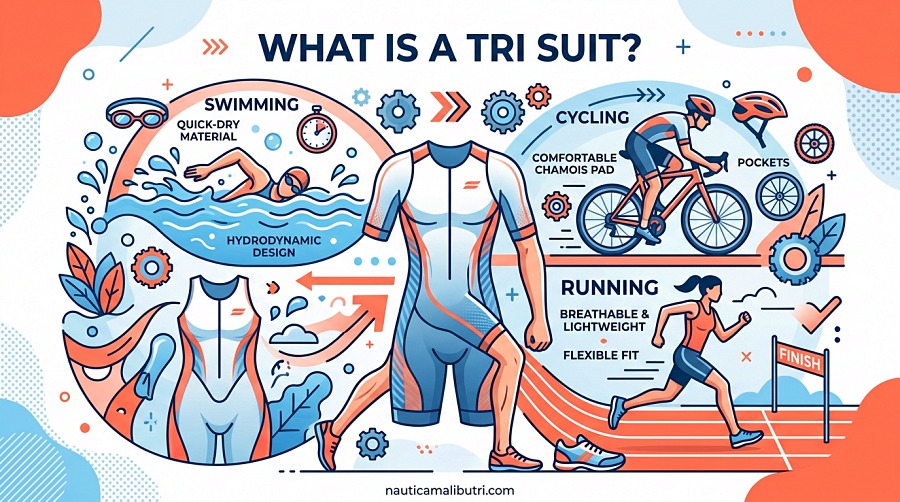
A tri suit is a one-piece garment specifically engineered for triathlon, designed to be worn throughout all three disciplines without changing. It features quick-drying materials, a low-profile chamois pad for cycling comfort, and an aerodynamic fit that works across swimming, biking, and running.
If you have ever watched a triathlon and wondered why athletes wear those tight, colorful one-piece outfits, you are looking at a tri suit. Our team has competed in dozens of races over the past decade, and we can tell you that this piece of gear is essential for anyone serious about the sport.
In this guide, we will explain everything you need to know about tri suits. You will learn what they are made of, why they matter, how to choose one, and how to make it last.
Table of Contents
What is a Tri Suit?
A tri suit, also called a triathlon suit or trisuit, is specialized multisport apparel that triathletes wear for the entire race. Unlike traditional athletic gear that requires changing between disciplines, a tri suit stays on from the starting gun through the finish line.
The design addresses a unique challenge in triathlon. You swim, bike, and run in quick succession with minimal transition time. Changing clothes wastes precious minutes. A tri suit eliminates this problem by performing adequately in all three sports.
Most tri suits are one-piece, though two-piece options exist. They fit snugly against the body to reduce drag in water and air. The materials are thin, lightweight, and hydrophobic, meaning they repel water and dry quickly.
Beginners and elites alike wear tri suits. You will see them at sprint distances and Ironman events. If the race is wetsuit-legal and you choose to wear one, the tri suit goes underneath.
The History of Tri Suits
The tri suit has come a long way since the early days of triathlon in the 1970s and 1980s. Back then, athletes improvised. Some wore speedos for the swim and pulled on shorts for the bike. Others raced in cut-off wetsuits. There was no purpose-built gear.
Everything changed when Dan Empfield founded Quintana Roo in 1984. He created the first wetsuit designed specifically for triathlon swimming. Soon after, companies began experimenting with one-piece race suits.
Early tri suits were little more than modified cycling skinsuits with thinner padding. They were hot, uncomfortable, and took forever to dry. The materials were basic nylon and spandex blends.
Modern tri suits bear little resemblance to those originals. Today’s versions use advanced synthetic fabrics that wick moisture, dry in minutes, and provide UPF sun protection. The chamois pads are engineered specifically for triathlon, much thinner than cycling shorts but more substantial than running gear.
Brands like Zoot, 2XU, and Castelli have pushed innovation forward. We have seen chamois designs improve dramatically, zipper placements become more practical, and aerodynamics tested in wind tunnels. The tri suit of 2026 is a technical marvel.
Key Components of a Tri Suit
Understanding what makes a tri suit work helps you appreciate why generic athletic wear cannot substitute. Here are the key components that set tri suits apart.
The Chamois Pad
The chamois pad is the heart of any tri suit. This padded section sits in the saddle area and provides cushioning for the bike leg. Unlike the thick pads in cycling shorts, tri chamois are deliberately thin. They dry faster and do not absorb water like a sponge during the swim.
Quality matters here. Cheap tri suits use basic foam that breaks down quickly. Premium options use multi-density foam or gel inserts that maintain comfort over long distances. The pad should be smooth against your skin with no rough edges.
According to forum discussions we reviewed, padding quality is the most valued feature among experienced triathletes. Many recommend Castelli specifically for their chamois design. The right pad prevents chafing and saddle sores during long rides.
Quick-Drying Materials
Tri suit fabric must do something seemingly impossible. It needs to perform in water during the swim, then shed that water and dry quickly for the bike and run. This requires specialized synthetic materials.
Most tri suits use polyester or nylon blends with spandex for stretch. The weave is tight enough to be hydrodynamic in water but breathable enough for the run. Many fabrics receive hydrophobic treatments that repel water rather than absorbing it.
Ventilation panels often appear in high-heat zones like the back and underarms. These mesh sections improve airflow during the run when body heat peaks. The best fabrics also offer UPF 30 to 50 sun protection.
Aerodynamic and Hydrodynamic Design
Every second counts in triathlon. Tri suits are designed to reduce drag in both water and air. The tight fit eliminates flapping fabric that creates resistance. Seams are placed strategically to guide airflow.
Some high-end suits feature textured fabrics or dimpled surfaces similar to golf balls. These create a thin turbulent layer of air that actually reduces overall drag. This technology comes directly from time trial cycling and speed skating research.
The sleeves on modern tri suits are getting longer. Many athletes now prefer suits with sleeves extending to the elbow. These provide sun protection, slight aerodynamic benefits, and often better comfort than sleeveless designs.
Pockets and Zipper Systems
Practical features make a big difference on race day. Most tri suits include pockets for nutrition, typically located on the lower back. These hold gels or bars for the bike and run legs.
Zipper placement varies. Front zippers make bathroom breaks easier. Rear zippers provide a cleaner aerodynamic profile. Some suits use half-zips or quarter-zips that balance convenience and performance.
We prefer front zippers for sprint and Olympic distances where transition speed matters most. For Ironman races, the aerodynamic advantage of a rear zip might be worth the extra hassle.
UPF Sun Protection
Triathlons happen outdoors, often in direct sun for hours. Quality tri suits include UPF (Ultraviolet Protection Factor) ratings. UPF 50 blocks approximately 98% of UV rays.
This protection matters for long-course racing. Hours in the sun without coverage leads to burns that affect performance and recovery. A good tri suit functions as athletic apparel and sun protection in one.
Darker colors typically offer more UV protection than light ones. However, they also absorb more heat. Many suits balance this with cooling technologies or strategic paneling.
Why Wear a Tri Suit? The Key Benefits
If you are wondering whether a tri suit is worth the investment, consider these benefits that our team has experienced firsthand.
Faster Transitions
The most immediate benefit is speed in transition. Without a tri suit, you face a choice. Either wear your cycling gear under your wetsuit and run in wet shorts, or waste time changing clothes in transition.
A tri suit eliminates this dilemma. You wear it for the entire race. Transition 1 (swim to bike) involves only removing your wetsuit, goggles, and cap. Transition 2 (bike to run) might be as simple as racking your bike and grabbing your race belt.
In our experience, this saves two to five minutes per transition. Over an entire race, that is significant time.
Aerodynamic Gains
Loose clothing creates drag on the bike. A tri suit’s tight fit reduces this resistance. Studies have shown that proper aero clothing saves watts at cycling speeds.
The benefits extend to the run too. While less critical than on the bike, a fitted suit feels more comfortable than flapping shorts over 26.2 miles. You can focus on your pace instead of adjusting your gear.
Hydrodynamic Advantages
In non-wetsuit swims, your tri suit is your only protection. The tight fit reduces drag compared to loose swim trunks or baggy shorts. Some suits feature hydrophobic coatings that help you glide through water.
For pool swims or warm-water races where wetsuits are banned, a good tri suit provides a slight edge.
Comfort Across All Three Disciplines
Perhaps the most important benefit is comfort. A tri suit is designed specifically for the demands of triathlon. The chamois supports you on the bike without becoming a soggy liability during the swim. The fabric breathes during the run.
Our team has tried racing without tri suits. We have done the swim in jammers, pulled on bike shorts in T1, and changed into running gear in T2. It works, but it is uncomfortable and slow. A proper tri suit makes the entire experience better.
Practical Features
Built-in nutrition pockets mean you can carry fuel without extra belts or bands. Sun protection keeps you from burning over long courses. Flat-locked seams prevent chafing during hours of movement.
These small conveniences add up on race day.
Tri Suit vs Wetsuit: What’s the Difference?
Many beginners confuse tri suits and wetsuits. They serve completely different purposes, though you might wear both in the same race.
A wetsuit is made of neoprene rubber. It provides buoyancy, warmth, and hydrodynamics for the swim leg. Wetsuits are thick, restrictive on the bike, and far too hot for the run. You put one on before the swim and remove it in transition.
A tri suit is thin synthetic fabric worn throughout the entire race. It offers minimal buoyancy and no warmth. Instead, it provides comfort across all three disciplines.
Think of it this way. The wetsuit is swim-specific gear you might wear over your tri suit. The tri suit is your base layer for the entire race.
Water temperature determines whether you wear a wetsuit. Most races allow wetsuits below 78 degrees Fahrenheit for age groupers. Below that threshold, the warmth and buoyancy benefits outweigh the transition time cost of removing the suit.
One-Piece vs Two-Piece Tri Suits
You have two main style options when choosing a tri suit. Each has advantages depending on your body type and preferences.
One-Piece Tri Suits
The traditional one-piece tri suit is a single garment combining top and bottom. This design offers several advantages.
First, there is no risk of your top riding up or your shorts sliding down. The suit stays put through all three disciplines. Second, one-piece designs are more aerodynamic. The seamless torso creates less drag than two separate pieces.
One-piece suits also tend to be lighter with fewer seams that could cause chafing. Most professional triathletes wear one-piece designs for these reasons.
The downside? Bathroom breaks are more complicated. You either need to partially undress or use the front zipper strategically. Some athletes find the tight fit restrictive around the midsection.
Two-Piece Tri Suits
Two-piece tri suits separate the top and shorts. This design has grown in popularity, especially among age groupers.
The main advantage is convenience. Bathroom breaks require only pulling down shorts, not negotiating a full suit. You can also mix and match sizes if your upper and lower body proportions differ.
Two-piece suits offer more flexibility for body types that do not fit standard one-piece sizing. You can size the top and bottom independently. Some athletes find the separate pieces more comfortable for long-course racing.
The trade-offs are aerodynamics and potential shifting. The waistband of the shorts might roll or the top might ride up. There is also a small weight penalty from the extra waistband material.
Which Should You Choose?
For sprint and Olympic distances, we recommend one-piece suits. The aerodynamic benefits and simplicity outweigh the convenience factors. For half and full Ironman distances, try both and see what feels better over long training sessions.
Your body type matters too. If you have a long torso or find one-piece suits uncomfortable, a two-piece design might fit better.
Tri Suits for Women: Special Considerations
Women’s tri suits include features designed specifically for female athletes. Understanding these helps you choose the right suit.
Many women’s tri suits include built-in shelf bras or support panels. These provide coverage and light support for the run without requiring a separate sports bra. The level of support varies by brand and price point.
Fit differs significantly between men’s and women’s suits. Women’s versions account for hip width, waist placement, and torso length differences. The chamois is also shaped differently for female anatomy.
Some women prefer two-piece suits for easier bathroom access. Others find that well-designed one-piece suits with front zippers work fine. This is personal preference.
Sizing can be tricky. Tri suit sizing varies between brands, and women’s bodies have more variation in proportions. We recommend trying suits on if possible, or ordering from retailers with good return policies.
Choosing Your First Tri Suit
If you are buying your first tri suit, here is what our team has learned from years of racing.
Set a Realistic Budget
Entry-level tri suits start around $80. Premium options from top brands run $200 to $300. For your first suit, something in the $100 to $150 range offers good quality without breaking the bank.
You do not need the most expensive suit to complete your first triathlon. Focus on fit and comfort over brand names. You can always upgrade later.
Get the Right Fit
Tri suits should fit tight. Loose fabric causes drag and chafing. However, the suit should not restrict your breathing or movement.
When trying on a suit, simulate the positions you will be in. Bend over like you are on a bike. Raise your arms like you are swimming. The suit should stay comfortable through these motions.
Pay special attention to the chamois. It should sit where you need it for cycling without feeling bulky during the run.
Consider Your Race Distance
Sprint and Olympic distance racers can get away with lighter, less padded suits. The shorter bike leg means comfort is less critical.
Half and full Ironman athletes need more substantial padding and premium fabrics. You will be in the suit for hours, so comfort becomes paramount.
Brand Reputation Matters
Based on our research and forum feedback, certain brands consistently deliver quality. Castelli receives praise for chamois comfort. 2XU and Zoot offer reliable options across price points. Roka has gained popularity for combining performance with style.
Read reviews from athletes who have actually raced in the suits. Marketing claims matter less than real-world performance.
How Long Does a Tri Suit Last? Care Tips
A quality tri suit can last several seasons with proper care. Here is what you need to know about longevity and maintenance.
Typical Lifespan
Most triathletes replace suits after 4 to 5 major races or yearly with regular training use. The chamois is usually the first component to degrade. Fabric stretching and zipper issues follow.
Signs it is time for a new suit include persistent odors even after washing, chamois flattening or hardening, loose or stretched fabric, and zipper failures.
Washing Instructions
Rinse your tri suit in cold water immediately after each use. This removes chlorine, salt, and sweat before they degrade the fabric. Hand wash or use the delicate cycle with mild detergent.
Never use fabric softener. It coats the fibers and reduces moisture-wicking performance. Avoid bleach for the same reason.
Hang dry your suit away from direct sunlight. The dryer damages elastic and synthetic fabrics over time.
Storage Tips
Store your tri suit flat or hung loosely. Avoid folding it tightly for long periods, which can crease the chamois. Keep it in a cool, dry place away from direct sun.
Do not leave your suit balled up in a gym bag. The trapped moisture breeds bacteria and damages fabric.
Frequently Asked Questions
Do you wear undies under a trisuit?
No, you do not wear underwear under a tri suit. The garment is designed to be worn directly against your skin. The chamois pad replaces the need for underwear and is engineered to prevent chafing. Adding underwear creates seams and fabric that can cause discomfort and chafing during the race.
What is the difference between a wetsuit and a trisuit?
A wetsuit is made of neoprene rubber and provides warmth and buoyancy for swimming only. You remove it in transition. A tri suit is thin synthetic fabric worn throughout all three disciplines. The wetsuit is swim-specific gear worn over your tri suit. The tri suit is your base layer for the entire race.
How long does a trisuit last?
A quality tri suit typically lasts 4 to 5 major races or about one season of regular training. With proper care including immediate rinsing after use, gentle washing, and hang drying, you can extend the lifespan. Replace your suit when the chamois flattens, fabric stretches, or odors persist despite washing.
Can you swim in just a trisuit?
Yes, you can swim in just a tri suit. Many races, especially in warm water, are non-wetsuit legal. In these cases, athletes swim in only their tri suits. The suit is designed to be hydrodynamic in water while drying quickly for the bike and run. It provides no buoyancy but offers minimal drag compared to regular clothing.
Final Thoughts
A tri suit is purpose-built gear that makes triathlon more comfortable and efficient. It combines quick-drying fabrics, a cycling-specific chamois, and aerodynamic design into one garment you wear from start to finish.
If you are new to the sport, invest in a decent entry-level suit before your first race. The time you save in transition and the comfort you gain on the course are worth the cost. As you progress, you can explore premium options with advanced features.
Remember that fit matters more than brand. Try on several options, move around in them, and choose the one that feels right for your body and race distance. Your tri suit will become your trusted companion through training and race day.
Happy racing, and we will see you at the finish line.